
Can You Stand Up During Kealakekua Bay Snorkeling?
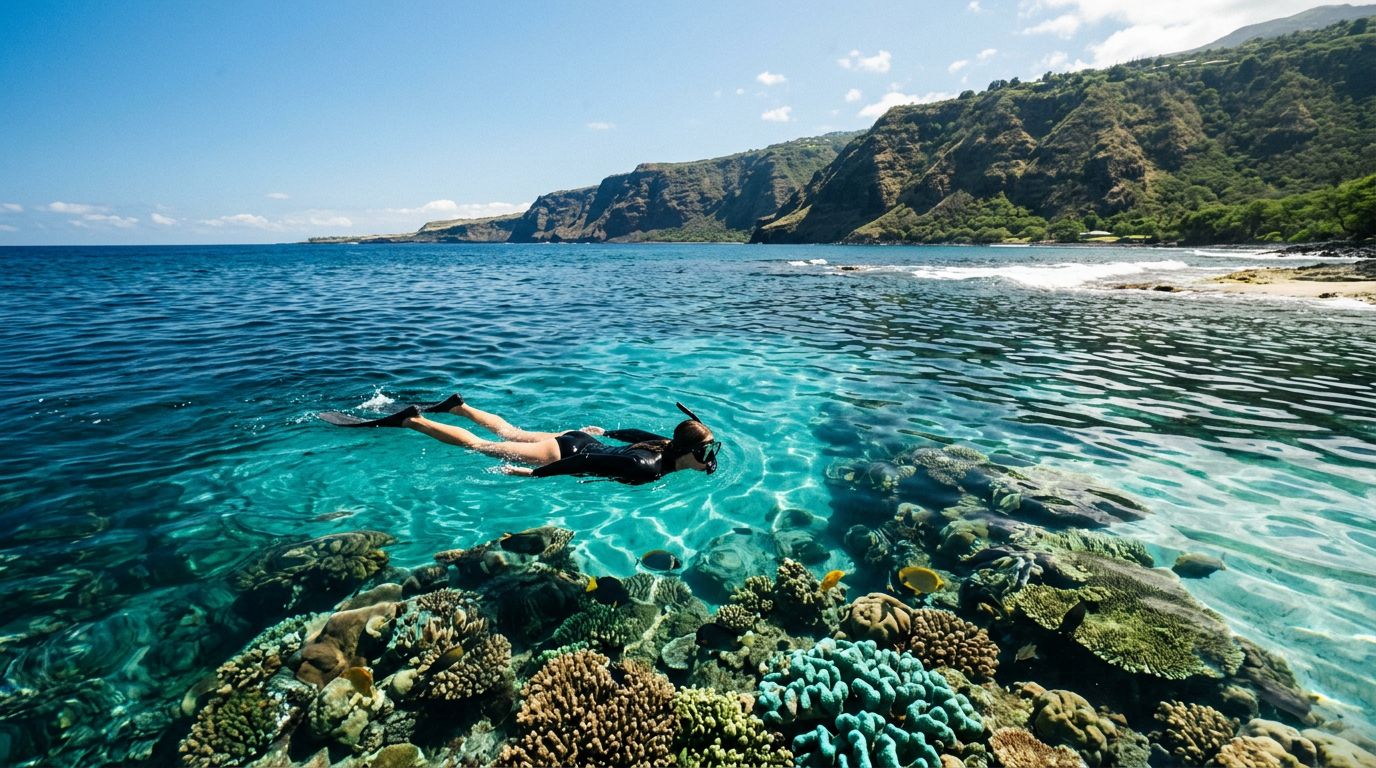
If you’re planning Kealakekua Bay snorkeling with Kona Snorkel Trips, you may wonder whether you can put your feet down when you need a break. The short answer is sometimes, but you shouldn’t count on standing in the main snorkeling areas.
If you’ve searched for “snorkeling Big Island Hawaii,” “snorkel Big Island,” or “snorkeling Big Island,” you may be comparing comfort, depth, and safety before booking. Understanding how the bay changes with location, conditions, and reef habitat will help you prepare with confidence.
Key Takeaways
- You may stand in some shallow, sandy areas, but the main boat snorkeling sites are often too deep for standing.
- Never stand on coral, rocks, or other reef habitat. You can injure yourself and damage living coral.
- A properly fitted flotation aid can help you rest without reaching the bottom.
- Children and nervous swimmers should stay close to a guide or responsible adult.
- Ask about water conditions, flotation equipment, entry methods, and exit procedures before your tour.
Can You Stand in Kealakekua Bay?
Kealakekua Bay isn’t one uniform swimming area. The shoreline, reef shelves, sandy patches, and deeper channels all have different depths. Your ability to stand depends on where you enter the water and how far you swim from shore or the boat.
Many visitors experience Kealakekua Bay from a boat near the Captain Cook Monument. In that area, you generally enter open water rather than wading through a shallow beach. You may be able to see the bottom in clear conditions, but visibility doesn’t mean the water is shallow enough to stand.
The distance between your mask and the seafloor can also be deceptive. Clear Pacific water allows sunlight to reach deeper areas, which can make the bottom look closer than it is. Once you stop kicking, you may discover that your feet don’t reach anything.
A few shallow areas around the bay may allow you to stand, especially where the bottom is sandy and even. However, those spots aren’t a guarantee for every excursion. Tide, swell, boat traffic, entry location, and the route chosen by your guide can change the experience.
| Where you are | Can you usually stand? | What you should do |
|---|---|---|
| Sandy, shallow shoreline | Sometimes | Remove your fins before standing and stay in the sand |
| Near a rocky reef shelf | Usually not safely | Float and avoid touching the bottom |
| Main boat snorkeling area | Often no | Use your mask, fins, and flotation aid |
| Near coral formations | You shouldn’t try | Keep your body horizontal and protect the reef |
| Along the boat ladder | The boat provides support | Signal the crew before exiting the water |
The most accurate answer is you might stand in a few places, but you should plan to snorkel without standing. That mindset helps you choose the right equipment and avoid a stressful surprise.
Why Standing on the Reef Is a Bad Idea
When you place your feet on coral, you can break branches that took years to grow. Even a small contact point can crush delicate coral polyps or scrape the surface of a living colony.
The bottom also contains more hazards than you may see through your mask. Sharp volcanic rock, sea urchins, broken coral, and slippery surfaces can cause cuts or punctures. Waves can push you forward before you have time to lift your feet.
Standing can harm you in another way too. When you put your feet down, you may lose balance and raise your head quickly. That movement can cause you to swallow water, remove your mask, or panic before you regain control.
Fins make walking especially awkward. They work well when you kick behind you, but they don’t give you stable footing on a rocky bottom. Trying to walk in them can make you fall, scrape the reef, or kick another swimmer.
The National Ocean Service coral reef guidance recommends avoiding contact with coral and other reef life. That advice applies even when the water looks calm and the bottom seems sturdy.
If you need to stop, keep your body horizontal and let your equipment support you. Most snorkelers can rest by floating on their stomach or back without touching the seafloor.
Your feet don’t need to reach the bottom for you to rest. A calm float is safer for you and the reef than trying to stand.
What to Do If You Can’t Swim Comfortably
You don’t need to be a competitive swimmer to enjoy Kealakekua Bay, but you should be honest about your comfort in open water. Pool experience helps, yet ocean snorkeling adds waves, current, depth, boat movement, and limited visibility around other swimmers.
Before entering, tell your guide if you feel nervous, tire easily, or haven’t snorkeled before. A good crew can explain the entry process, point out the easiest area, and help you choose suitable flotation equipment.
Keep your face in the water while you practice breathing. Sudden head lifting often causes water to enter the snorkel or makes your body sink lower. Slow, steady breaths help you stay relaxed and conserve energy.
If you need a break, use one of these options:
- Roll onto your back and float while keeping your face clear of the water.
- Hold a flotation noodle, board, or other approved aid supplied by the crew.
- Signal your guide before you become tired or uncomfortable.
- Stay near the boat, where you can return to the ladder without crossing the entire site.
- Ask for help rather than grabbing coral, a mooring line, or another swimmer.
Don’t wait until you feel exhausted. Swimming while tired can make a manageable situation feel urgent. The American Red Cross water safety guidance also stresses the importance of knowing your limits and using appropriate safety support.
A snorkel vest can help you stay at the surface, but it doesn’t replace attention or swimming ability. You still need to keep your airway clear, follow crew instructions, and remain aware of the boat and people around you.
If you prefer more personal support, ask whether the tour offers a smaller group or private option. Kona Snorkel Trips provides a private Kona snorkeling tour for travelers who want a more tailored pace and setting. Availability, route, and equipment details should be confirmed before booking.
How Guided Kealakekua Bay Tours Handle Water Depth
A guided tour gives you more support than arriving at the bay without a plan. Before you enter the water, the crew can explain where to swim, where not to touch, how to use the ladder, and what to do if you need assistance.
Kona Snorkel Trips follows a “Reef to Rays” philosophy, with a focus on safety, education, and responsible ocean travel. Its lifeguard-certified guides lead small-group excursions and provide snorkeling equipment for guests. That setup can make a major difference when you aren’t sure whether you can stand.
The crew’s goal isn’t to have you reach the bottom. Instead, guides help you stay comfortable at the surface while you observe the reef from above. You can ask for help adjusting your mask, fitting your fins, or selecting a flotation aid before the boat reaches the snorkeling site.
The company’s Kealakekua Bay and Captain Cook snorkeling tour is designed for guests who want to explore the bay with a guided boat outing. Before you reserve, review the current trip details and ask about age requirements, water conditions, time in the water, and the available support for less-confident swimmers.
Captain Cook Snorkeling Tours is another company focused on trips to Kealakekua Bay and the Captain Cook Monument. You can review its Captain Cook snorkeling tours if you’re comparing operators, group sizes, routes, or booking options.
When you contact a tour company, ask direct questions:
- Is the snorkeling area deep enough that most guests cannot stand?
- What flotation equipment is available?
- Can a guide stay near a nervous or beginner swimmer?
- How do guests enter and exit the water?
- What happens if you decide not to snorkel after arriving?
- Does the trip visit a sandy area, a reef shelf, or an open-water site?
The answers will help you choose a trip that matches your comfort level. A clear conversation before booking is better than trying to solve the problem after you enter the water.
If you’re considering Kona Snorkel Trips, you can check availability before finalizing your plans.
What to Wear and Bring for a Comfortable Snorkel
Your equipment affects how easily you can float. A leaking mask, loose fins, or an uncomfortable snorkel can make you feel as if you need to stand even when you don’t.
Start with a mask that seals around your eyes and nose without excessive pressure. A simple fit test involves placing the mask on your face without using the strap, inhaling gently through your nose, and checking whether it stays in place. Your guide can help adjust it before you enter.
Fins should fit securely without pinching your toes. Loose fins can slip off while you kick, while tight fins can create foot pain that distracts you from your breathing.
A snorkel vest or flotation aid can provide extra support, especially if you aren’t confident in deep water. Tell the crew if you need one before the boat reaches the site. You may also prefer a long-sleeve rash guard for sun protection and a comfortable fit under your gear.
Use reef-safe sunscreen on exposed skin, and apply it before you arrive when possible. Avoid touching coral, resting on rocks, or dragging equipment across the bottom. Those choices protect the bay and keep your attention on the marine life.
You can also improve your comfort by practicing before your trip. In a pool, try floating face down while breathing through a snorkel. Practice lifting your head slowly, rolling onto your back, and removing the snorkel from your mouth without panic.
That small amount of preparation helps you trust your equipment. Once you know how to float and recover your breathing, the lack of a standing bottom feels far less important.
Can Children Stand During Kealakekua Bay Snorkeling?
Children shouldn’t rely on standing depth as their main safety measure. A shallow-looking area can still have waves, uneven rock, surge, or sudden drop-offs. Young swimmers may also struggle to stand while wearing fins.
Before booking, check the operator’s age guidance and ask whether the trip suits your child’s swimming ability. A child who enjoys a pool may still feel uncomfortable in open water because the floor is not visible or within reach.
Your child should remain close enough for you or a guide to help immediately. Keep your attention on the water rather than your phone, camera, or conversation. If the child becomes tired, cold, frightened, or frustrated, return to the boat or a designated rest area.
A flotation device can help, but it doesn’t make unsupervised swimming safe. Your child still needs to follow instructions and stay with the group. Explain beforehand that touching coral, chasing fish, or standing on the reef isn’t allowed.
For younger children, a private tour may give your family more flexibility. You can discuss shorter water time, slower movement, and extra support with the operator. Families often enjoy the trip more when they remove pressure to stay in the water for a fixed amount of time.
A child can also participate without snorkeling the entire excursion. Watching from the boat, taking turns with an adult, or enjoying a short swim may be the right choice for that day.
How Conditions Change Your Ability to Stand
Ocean conditions can change how stable you feel even when the water depth stays the same. Small waves lift and lower your body. Surge can move you toward rocks or coral. Wind can make the surface choppy and increase the effort needed to swim.
Visibility also affects your confidence. On a clear morning, you may see the reef below you and feel calm. Cloud cover, surface glare, or disturbed water can make the same depth feel unfamiliar.
Your guide chooses the final snorkeling location based on conditions and safety. A planned site may change if wind, swell, current, or boat traffic makes it unsuitable. That decision protects guests and the reef, even if the alternate site looks different from your original expectation.
Avoid judging depth by looking straight down from the boat. Ask the crew how deep the entry area is and whether a shallow resting spot exists. They can give you a more useful answer based on the day’s route.
The best time to raise concerns is before you enter. Once you’re in the water, focus on breathing, staying with your group, and following the guide’s instructions. If you feel uncomfortable, signal early.
A Simple Plan for a Stress-Free Snorkel
You can prepare for a non-standing snorkeling experience with a few practical decisions.
First, choose a tour that explains its route, equipment, and safety practices clearly. A Kealakekua Bay snorkeling trip with a lifeguard-certified crew may be a better fit than an unstructured outing if you feel unsure in open water.
Next, tell the crew about your experience level. Mention whether you can swim comfortably without touching the bottom, whether you have used a snorkel before, and whether you want a flotation aid.
Then, enter slowly. Check your mask seal, adjust your breathing, and stay near the boat until you feel settled. You don’t need to swim directly toward the reef as soon as you enter.
Finally, remember that you can stop. Returning to the boat isn’t a failure, and you don’t need to explain or defend the choice. A short, comfortable swim is better than pushing yourself until you panic.
If you want to compare the Captain Cook option before reserving, you can check avaialbility for a Kealakekua Bay trip.
Conclusion
You may be able to stand in a few shallow, sandy parts of Kealakekua Bay, but the main snorkeling areas often require you to float. Plan for open-water snorkeling instead of depending on your feet to reach the bottom.
With well-fitted gear, a flotation aid, clear communication, and a guide who understands your comfort level, you can enjoy the bay without standing. Protect the reef by keeping your feet off the bottom, and let the water support you while you explore.