
Snorkel Kona Hawaii: Spot Frigatebirds Along the Coast
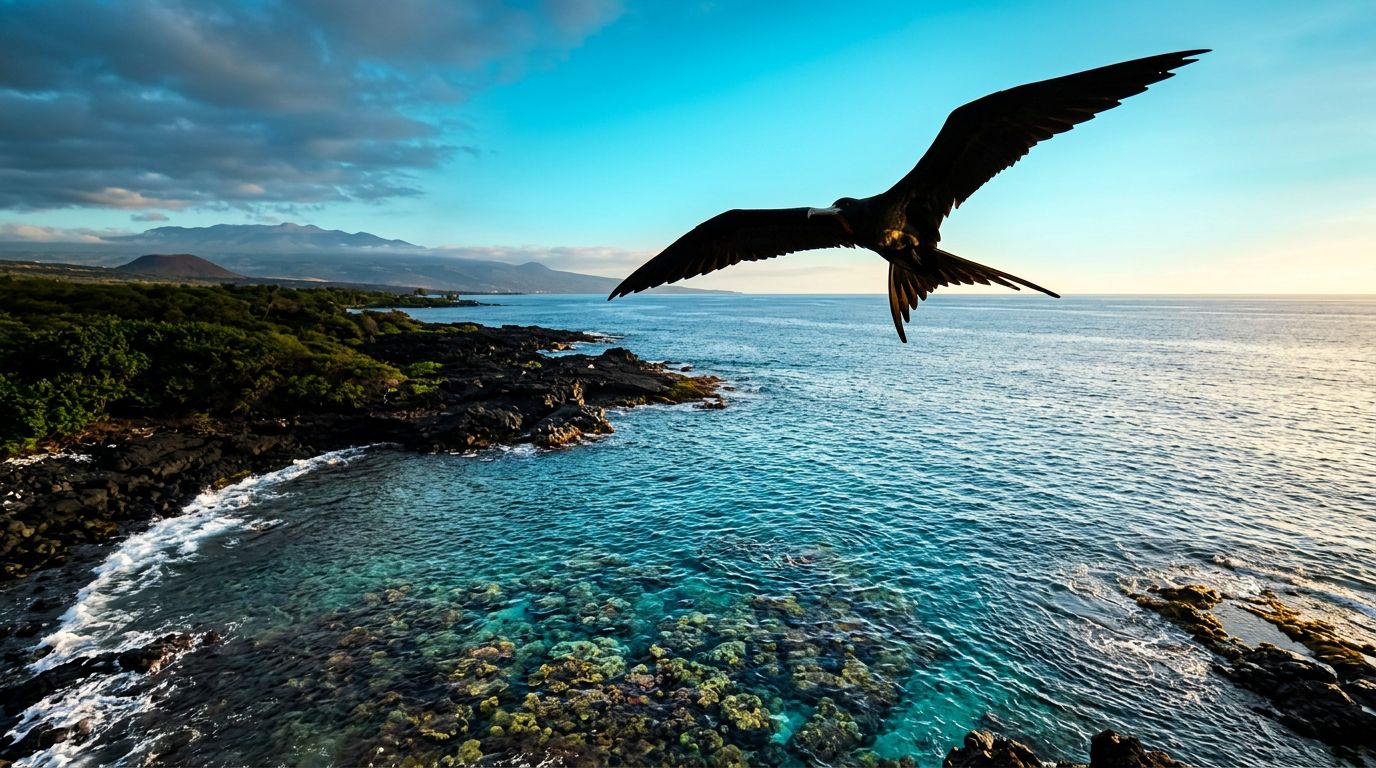
Most people look down when they snorkel Kona Hawaii. Yet one of the coast’s most striking wildlife sightings may be hundreds of feet above your mask, where a dark seabird rides the wind with almost no wingbeats.
If you can recognize the long angular wings, deeply forked tail, and hooked bill, you can identify a great frigatebird, or ‘iwa, in seconds. Kona Snorkel Trips gives you a guided way to enjoy the reef while keeping your attention on the wider coast, too.
Use the field marks below to know what you’re seeing, where to look, and how to watch these birds without disturbing them.
Why Frigatebirds Belong on Your Kona Wildlife List
Kona’s volcanic shoreline creates a changing mix of cliffs, lava shelves, bays, and open Pacific water. Snorkeling lets you focus on fish and coral, but the same wind that moves across the coast also brings seabirds into view.
Frigatebirds are especially easy to notice once you understand their shape. They look almost too large and light for their bodies, with narrow wings that carry them across the sky with very little effort.
The Hawaiian name is ‘iwa
The Hawaiian name for the great frigatebird is ‘iwa. The word is often translated as “thief,” which refers to the bird’s habit of harassing other seabirds and taking food from them.
That behavior is called kleptoparasitism. A frigatebird may chase a tern, booby, or other seabird until it drops a meal. The frigatebird then catches the food before it reaches the ocean.
You probably won’t see that entire exchange during a short snorkel. Still, knowing this behavior helps you understand why a frigatebird may suddenly change direction or follow another bird.
Look above the water, not only below it
When you pause on a boat, stand on a lava overlook, or float in calm water, scan the open sky. Frigatebirds often appear as dark silhouettes against blue water or pale clouds.
The birds can travel high above the surface, so they may look smaller than expected. Watch for a long, narrow shape that glides in a wide arc. A gull usually looks heavier and more active. A frigatebird looks built for air.
Birders can compare local sightings with the Great Frigatebird profile on eBird, which includes the species’ distinctive flight shape and plumage details.
How to Identify Frigatebirds When You Snorkel Kona Hawaii
The best way to identify a frigatebird is to start with its silhouette. Color can change with sunlight, distance, and the bird’s age, but the wing and tail shape remain useful clues.
The fastest identification clue is the silhouette, not the color.
Start with the long, angular wings
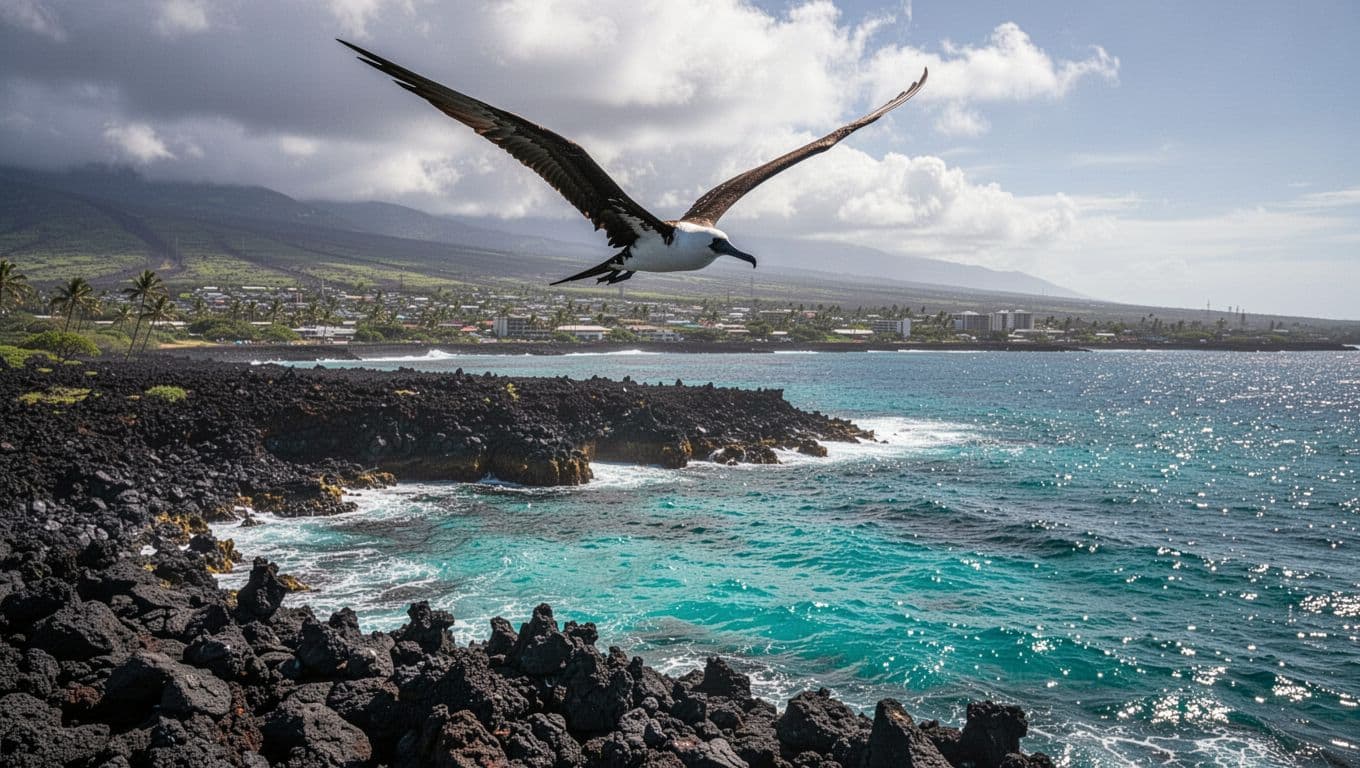
A frigatebird has long, pointed wings that appear narrow compared with its body. In flight, the wings often form a slight crook at the wrist. This gives the bird a distinctive angular outline.
Look for smooth gliding rather than constant flapping. Frigatebirds use rising air over cliffs, slopes, and the ocean to stay aloft. They can turn without losing much height, then continue across the coast in a steady line.
The Cornell Lab identification guide describes frigatebirds as large seabirds with long, angular wings. The same general field marks help you recognize the great frigatebird around Hawaii.
Check the tail and bill
The tail is deeply forked. From below, it may look like two narrow points separated by a clear notch. When the tail folds or the bird turns, the fork can disappear, so wait for another angle before deciding.
The bill is long, sturdy, and hooked at the tip. You may need binoculars to see the hook clearly from shore. On a boat, a closer view can make the profile easier to confirm, but you should never approach a bird solely to improve a photograph.
A frigatebird’s wings, tail, and bill work together as a strong identification set. If you see all three, your sighting is likely correct.
Frigatebird Features to Check Before You Guess
Distance can make any dark seabird look similar. Use a short visual check instead of relying on one feature.
| Feature | Great frigatebird clue |
|---|---|
| Wings | Long, narrow, pointed, and slightly angular |
| Tail | Deeply forked, sometimes hidden when folded |
| Bill | Long with a noticeable hooked tip |
| Flight | Smooth soaring with limited wingbeats |
| Body | Mostly dark, with different markings by age and sex |
Notice the bird’s size without chasing it
A great frigatebird has an impressive wingspan, close to seven feet in some individuals. Its body remains relatively slim, which makes the wings look even longer.
That combination creates a strange visual effect. The bird may seem to hang in place, then cover a large distance with one turn. It doesn’t need the heavy, repeated wingbeats you see in many coastal birds.
The account from Birds of the World describes the great frigatebird as highly specialized for aerial life. Its wing shape and low body mass help explain the effortless flight you see along the Kona coast.
Use plumage as a second check
Adult male great frigatebirds are mostly black, often with a subtle green or purple sheen in strong light. Males also have a red throat pouch, but you may only notice it from a closer view or during display behavior.
Females have darker plumage with a pale breast area. Juveniles can show a much lighter head, which makes them easier to separate from fully dark adults.
Lighting can change how these colors appear. A bird against a bright sky may look completely black, while the same bird over blue water may show more detail. Identify the body shape first, then use plumage to support your guess.
How to Tell a Frigatebird From Other Seabirds
Kona’s coast attracts several kinds of seabirds. You don’t need to identify every species to spot a frigatebird, but knowing the common points of confusion will make you more confident.
Frigatebirds versus tropicbirds
Tropicbirds often look white from a distance and have long tail streamers. Their bodies appear more compact, and their wings can look broader in relation to the body.
A frigatebird usually presents a darker outline. Its tail is forked rather than marked by two long, narrow streamers. The bill also looks heavier and more hooked.
If you see a mostly white bird with two elegant tail feathers trailing behind it, consider a tropicbird. If you see a dark bird with a forked tail and narrow wings, a frigatebird is a better match.
Frigatebirds versus boobies
Boobies have stronger, more direct flight patterns. You may see them flap several times, glide briefly, and then flap again. Some species also plunge into the water while hunting.
Frigatebirds rarely land on the sea because their feathers don’t shed water as well as those of many other seabirds. Instead, they catch prey near the surface, steal meals from other birds, or take food from floating debris.
That difference matters when you watch from a boat. A booby may sit on the water or dive toward it. A frigatebird usually stays above the surface, circling and scanning.
Frigatebirds versus gulls
Gulls have a heavier body and broader wings. Their flight often includes more visible flapping, and their tails don’t show the same deep fork.
A distant gull can still fool you, especially in bright sunlight. Wait for the next turn. If the bird reveals a long, sharply divided tail and narrow, bent wings, you are likely watching a frigatebird.
Read Flight Behavior Along Kona’s Coast
Shape identifies the bird, but behavior adds another layer. Once you know what to look for, you can often recognize a frigatebird before you see its bill or tail.
Watch for soaring in rising air
Frigatebirds use warm air and coastal wind to gain lift. Along Kona, rising air near cliffs and volcanic slopes can carry them upward. The bird may circle in a slow spiral, then glide away toward the open ocean.
Look for long stretches without flapping. A few wingbeats can happen, especially when the wind changes, but a frigatebird spends much of its time gliding.
The bird’s path may also seem disconnected from the water below. It can rise over a ridge, cross a bay, and reappear farther along the coast without flying in a straight, low line.
Notice sudden turns near other birds
A frigatebird may follow another seabird or make a sharp turn when it spots a possible meal. These movements can look playful, but the bird is often testing whether another bird is carrying food.
You might see a frigatebird approach from above, match another bird’s direction, and then bank sharply. The hooked bill and long wings give it the control needed for these aerial chases.
Don’t assume every fast turn means feeding behavior. Wind shifts can create similar movements. Look for repeated pursuit before drawing a conclusion.
Where and When to Watch During a Snorkel Day
The best viewing location depends on the wind, visibility, and route of your outing. You can see frigatebirds from shore, a boat, or a calm water entry, but each setting offers a different perspective.
Search near open coast and cliff edges
Lava points, headlands, and exposed bays give you a wide view of the sky. They also create rising air that frigatebirds can use while moving along the coast.
From the water, look toward the shoreline first. Then scan above the cliff line and out toward the horizon. Avoid staring at one fixed point because the bird may enter from behind you and glide across your field of view.
A wide-brimmed hat can make sky watching easier in strong sun. Polarized sunglasses may also reduce glare, although they can make some screens and camera displays harder to see.
Choose visibility over a strict schedule
Clear skies and steady visibility help you identify distant birds. Wind can improve soaring activity, but rough water may make snorkeling uncomfortable or unsafe.
Morning and afternoon can both produce good viewing. Local wind and cloud conditions matter more than a fixed hour. Ask your guide where birds have appeared recently, then keep your search flexible.
Winter trips may bring additional marine life to the coast. If you want to combine reef time with seasonal whale viewing, review the options for Kona whale watching tours. Keep your bird search secondary to the boat’s safety instructions and wildlife distance rules.
Watch Frigatebirds Without Disturbing Them
Wildlife watching works best when the animal controls the encounter. A frigatebird may pass close enough for a memorable view, but you shouldn’t change your route to force a closer look.
Keep your body and boat predictable
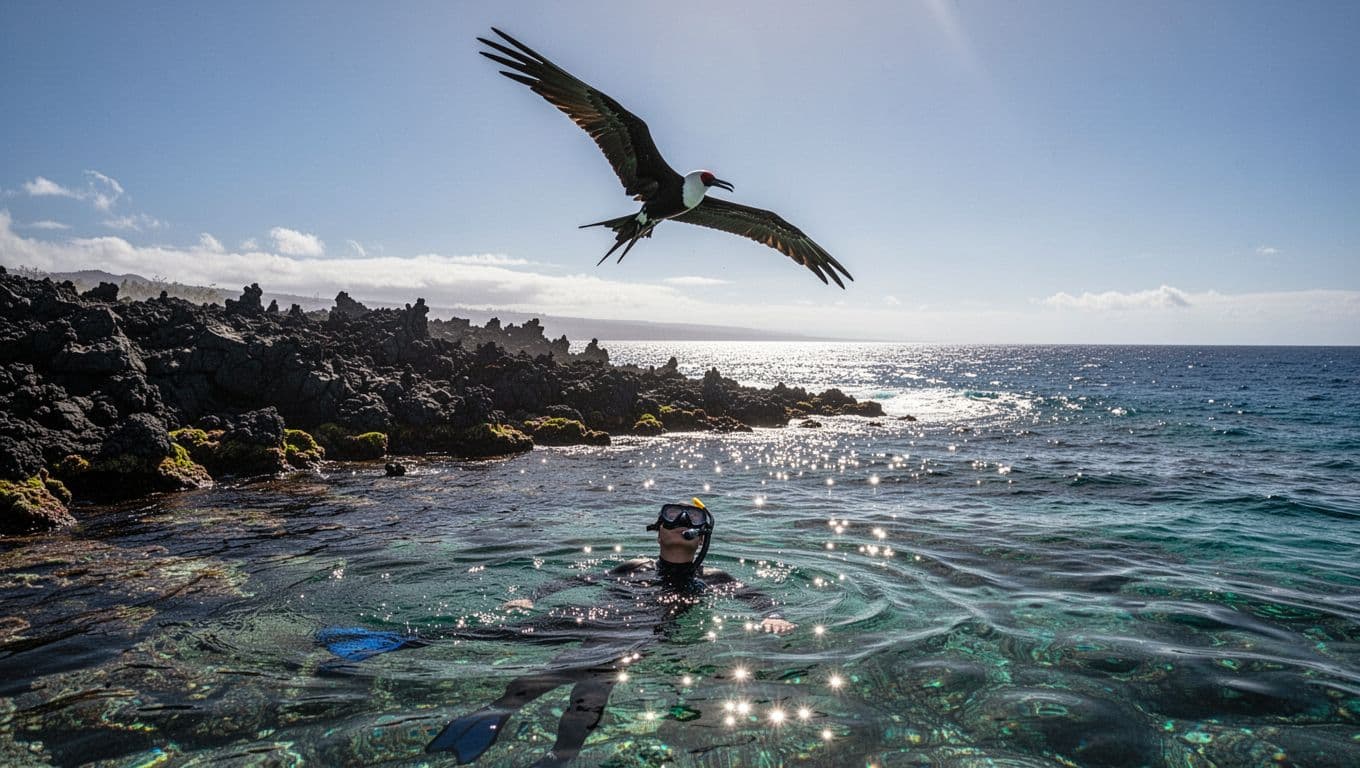
If you’re snorkeling, remain with your group and keep your attention on your guide, your buddy, and the water around you. Don’t swim toward a bird, throw food, or slap the surface to attract attention.
When you’re on a boat, stay seated or hold a secure position while looking up. Let the captain manage speed and direction. A bird that changes course because a boat moved toward it needs more space.
Families can give children a simple rule: observe with your eyes, keep your hands to yourself, and follow the guide’s instructions immediately.
Protect both reef and seabird habitat
Reef-safe behavior applies even when your main interest is above the surface. Keep your fins away from coral, don’t stand on lava formations covered with marine life, and avoid touching animals.
Use reef-conscious sunscreen habits, such as applying it before you leave and choosing products that follow local guidance. Never feed seabirds or marine animals. Feeding changes natural behavior and can create safety problems for wildlife and people.
Hawaii’s conservation planning includes important seabird habitat needs. The Hawaii Department of Land and Natural Resources provides background in its island conservation needs chapter. Your choices on the water help protect the habitats that make these sightings possible.
Choose a Kona Snorkel Trip With Room for Birdwatching
A guided tour can make wildlife spotting easier because you don’t have to manage navigation, water conditions, equipment, and group safety at the same time.
Kona Snorkel Trips follows a “Reef to Rays” approach built around small-group ocean adventures. Lifeguard Certified guides provide safety support and local knowledge, while high-quality snorkeling equipment helps you focus on the reef and the coast. The company also uses custom-built lighted boards for nighttime encounters and promotes reef-safe practices during its trips.
You can compare Big Island snorkeling tours before choosing a route. For a group that wants more control over timing and stops, private Kona boat charters offer a more flexible way to watch the coast.
Match the route to your interests
Kealakekua Bay offers a protected setting with clear water, reef habitat, and a historic coastline. You can learn more about the Kealakekua Bay Captain Cook snorkel tour if you want a reef-focused trip with time to scan the surrounding cliffs.
If your plans include a second wildlife outing after sunset, you can also consider a Kona manta ray night snorkel. That experience uses different lighting and water procedures, so treat it as a separate activity rather than trying to combine it with bird watching.
Use a Simple Frigatebird Spotting Routine
You don’t need expensive equipment or advanced birding skills. A repeatable routine helps you notice birds without losing track of your snorkeling group.
Scan in the right order
Before you enter the water, take a minute to look along the horizon and above nearby cliffs. Once you’re floating, scan the sky during natural rest periods instead of looking up while swimming hard.
Use this sequence:
- Look for a large dark silhouette moving with few wingbeats.
- Check whether the wings look long, narrow, and slightly bent.
- Wait for the bird to turn so you can see the forked tail.
- Look for a long bill and any pale breast or head markings.
- Compare the movement with nearby gulls, boobies, or tropicbirds.
This method keeps your attention broad. You may identify the bird from its wings before the tail becomes visible.
Bring the right viewing habits
Binoculars are useful from shore or a boat, but they aren’t practical while you’re actively snorkeling. A compact, waterproof camera can record a distant shape, though you should avoid chasing the bird for a better frame.
If you photograph the coast, take a wide shot first. The shoreline, sky, and volcanic setting can help you remember the sighting later. Leave room in your attention for the animals below you, too.
For travelers interested in snorkeling the Big Island, this balance matters. A great frigatebird is a bonus sighting, not a reason to ignore water conditions or reef safety.
What to Remember Before You Snorkel Kona Hawaii
Great frigatebirds are easiest to identify when you focus on their overall profile. Look for long angular wings, a deeply forked tail, a hooked bill, and a smooth soaring style.
The Hawaiian ‘iwa may appear over lava cliffs, open bays, and boat routes along the Kona coast. You can improve your chances by choosing clear conditions, scanning during pauses, and asking a local guide where birds have been active.
When you snorkel Kona Hawaii, the reef is only part of the experience. Keep looking up, and a dark shape riding the trade wind may give you a second wildlife story to take home.