
Snorkel Kona Hawaii: Why Colors Fade With Depth
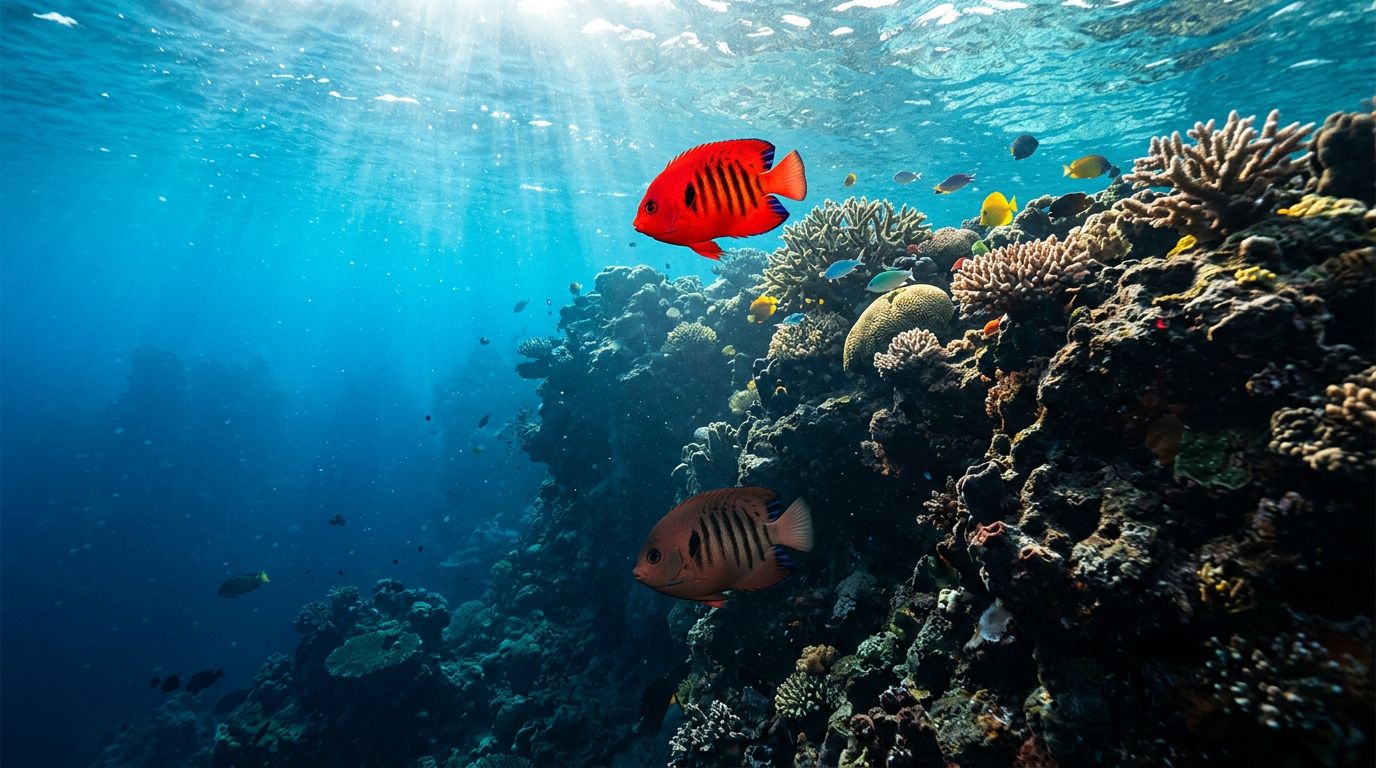
That bright red fish near the surface may look brown, gray, or almost black a few feet below. The reef hasn’t changed. Water has filtered the sunlight reaching your eyes.
If you snorkel Kona Hawaii, understanding this color shift helps you read the reef, choose better conditions, and take more accurate photos. You’ll also know why Kona’s clear water can look intensely blue while warm colors fade quickly. Start with the science, then use it to plan your time in the water.
Start your snorkel Kona Hawaii trip with clear expectations
Kona Snorkel Trips builds guided ocean outings around a “Reef to Rays” philosophy. Small-group trips, quality snorkeling equipment, and lifeguard-certified guides give you more support while you watch how light changes across the reef.
The team also uses custom-built lighted boards for nighttime manta encounters. Reef-safe practices and ocean education remain part of every excursion. For a daytime ocean adventure, you can check availability.
A guide can improve what you notice
A guide can point out a fish that looks dull at first glance but has bright markings in stronger light. You may also learn to recognize the difference between a naturally dark crevice and a colorful coral head sitting outside direct sunlight.
That extra context matters when you snorkel in unfamiliar water. You can focus on breathing, body position, and marine life while your guide watches conditions and keeps the group together.
Color is information, not a guarantee of reef health
A blue-looking coral may only be sitting deeper or farther away. Likewise, a dark red fish isn’t automatically unhealthy.
Depth, shadows, distance, water clarity, and the angle of the sun all affect the color you see. Use color as one clue, then look at shape, movement, texture, and the surrounding habitat.
Why underwater color changes with depth
Sunlight appears white because it contains the visible colors of the spectrum. As that light travels through seawater, the water absorbs some wavelengths faster than others.
Red disappears first
Red light has a longer wavelength, so water absorbs it quickly. Orange and yellow follow as depth increases. In clear water, a red object can lose much of its visible color after only a few meters.
The Woods Hole Oceanographic Institution’s explanation of ocean color describes this process in simple terms. The farther light travels through water, the fewer warm wavelengths remain available to reflect off a fish, coral surface, or piece of equipment.
That is why a red snorkel, swimsuit, or fish can appear dark underwater. Your eyes are receiving less red light from the object.
Blue and green travel farther
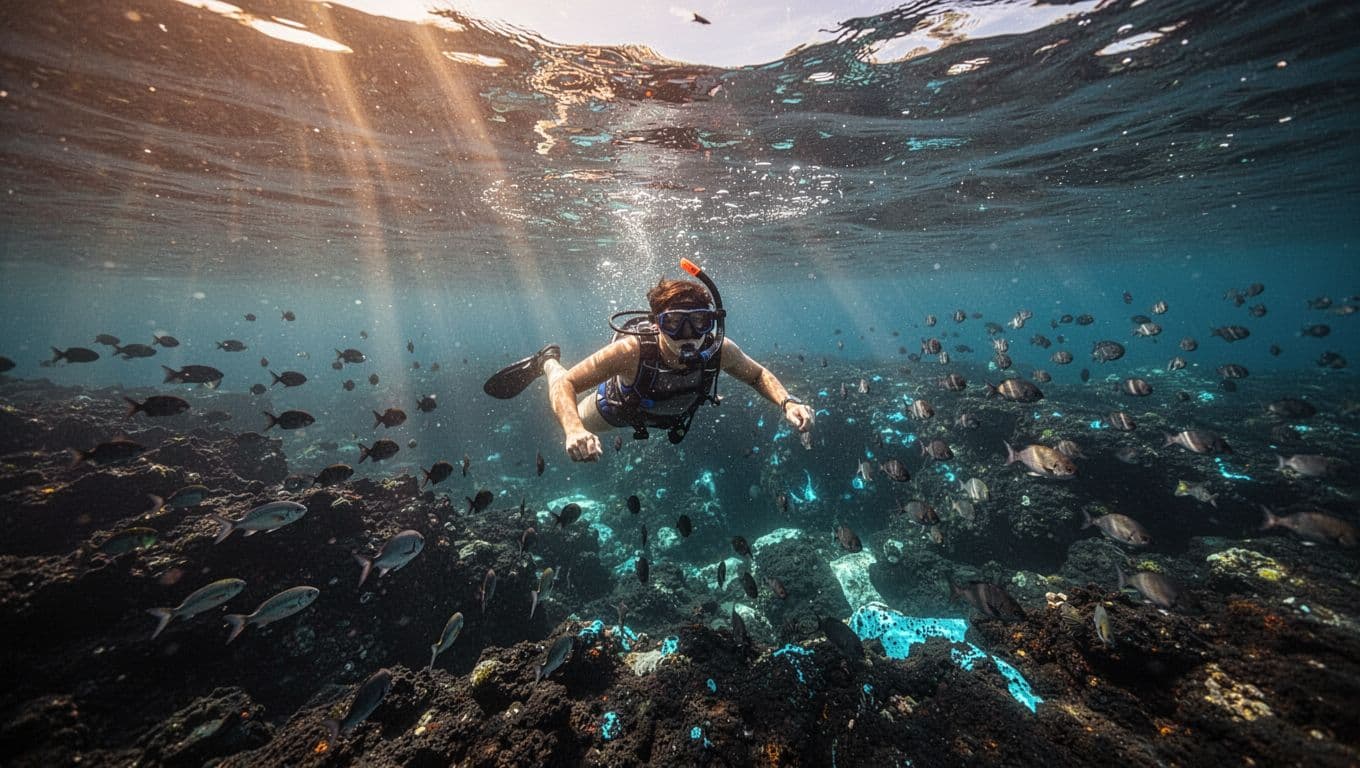
Blue light has a shorter wavelength and generally travels farther through clear seawater. Some green light also remains available, which gives shallow tropical water its familiar turquoise appearance.
The water itself can scatter blue light back toward your eyes. That scattered light fills the scene, so distant reef surfaces often look blue even when their original colors are warmer.
Water clarity changes the effect. Sediment, plankton, bubbles, and surface disturbance can scatter other wavelengths and reduce the clean blue gradient you see on a calm Kona day.
What your eyes see at different snorkeling depths
Depth is only one part of the picture. The same object can look different when you move closer, swim above it, or view it through a shaded section of reef.
Near the surface, warm colors still have strength
In very shallow water, sunlight has traveled through less water. Reds, oranges, yellows, and pinks are more likely to remain visible, especially when the sun is high and the water is clear.
Surface glare can still distort your view. Looking down through rippled water may make the reef appear brighter in one moment and washed out in the next.
A practical depth guide
The ranges below are approximate. Local clarity, sunlight, suspended particles, and viewing distance can change the result.
| Approximate depth | Common color impression | What you may notice |
|---|---|---|
| 0 to 2 meters | Bright turquoise with warm accents | Reds and oranges remain easier to identify |
| 2 to 5 meters | Cooler blue-green tones | Warm fish markings begin to look muted |
| 5 to 10 meters | Blue dominates the scene | Reds may appear brown, gray, or black |
| Beyond typical snorkel depth | Darker blue with lower contrast | Details depend more on direct light and distance |
A shallow reef can therefore look more colorful than a deeper reef beside it, even when both areas contain similar fish and coral. Move closer to a subject and you’ll often see more warmth because the light has less water to cross between the subject and your eyes.
Why Kona water can look unusually blue
Kona’s coast is known for clear ocean conditions in many locations, but visibility changes by day and site. When the water is calm and particles are low, the color filtering effect becomes easier to see.
Clear water creates a strong color gradient
Clear water allows blue wavelengths to dominate without as much interference from sediment or plankton. Dark volcanic rock can also increase contrast, making cyan water appear brighter beside the reef.
The result is a familiar Kona scene: pale turquoise over a shallow shelf, richer blue above deeper water, and cooler tones around rock faces. A bright yellow fish may still stand out, while a red fish may blend into the darker background.
Ocean color depends on both absorption and scattering. NOAA’s optical tools guide explains how scientists measure these properties when studying seawater.
Sun angle changes the view
The same reef can look different at 8:00 a.m. and noon. A higher sun usually sends more direct light into the water, while a low sun creates longer shadows and stronger surface reflections.
Clouds don’t always ruin visibility. A thin cloud layer can soften glare, but heavy cloud cover reduces the light available to warm-colored subjects.
Your position also matters. If you look toward the sun, glare may hide reef detail. Turn so the sun is behind you, and the colors and textures below often become easier to separate.
How to read reef color without fooling your eyes
You can make better observations by comparing objects at different distances and in different lighting. Underwater color works more like a light meter than a permanent label.
Compare nearby and distant objects
A red object close to your mask has a shorter path through the water. More red light reaches your eyes, so the object looks warmer.
As the same object moves farther away, the water removes more red, orange, and yellow wavelengths. The object may shift toward brown, gray, or blue. This effect is especially clear when a fish swims from open water into a deeper crevice.
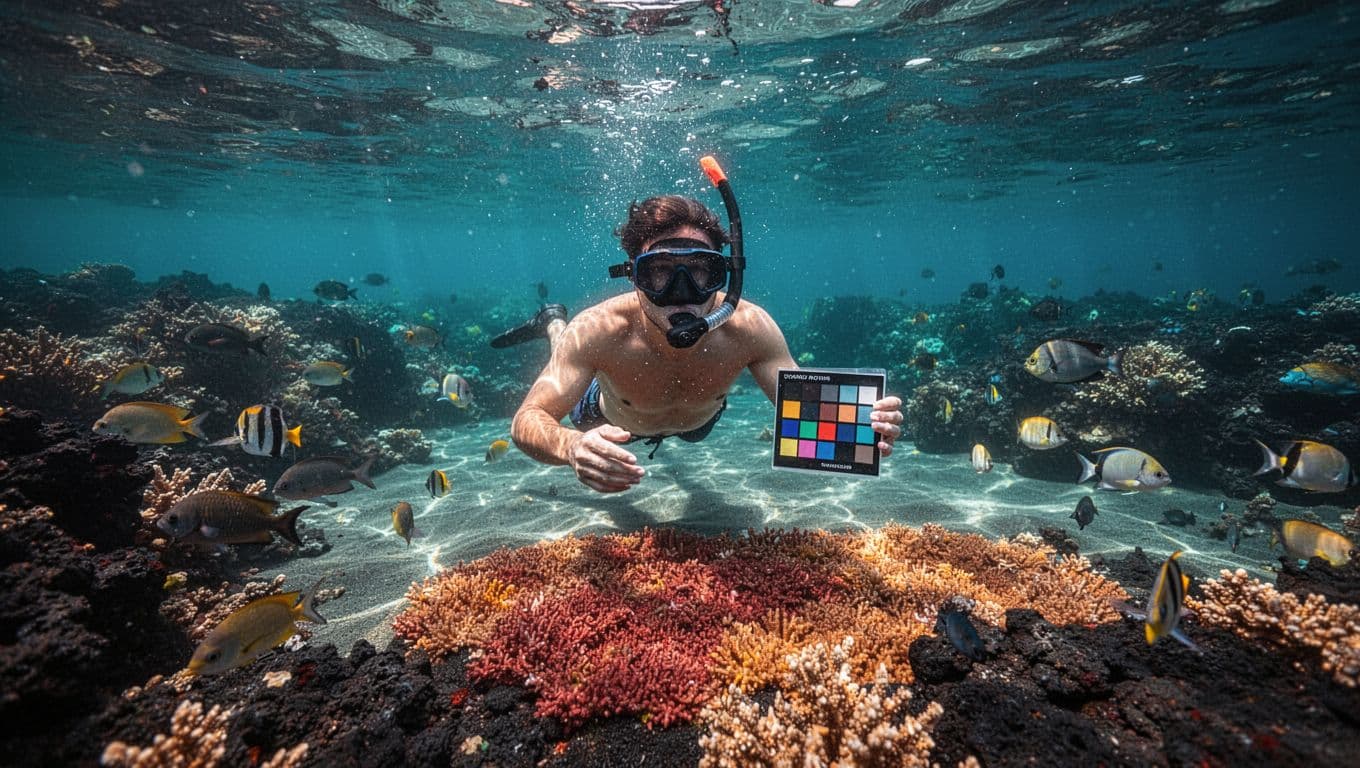
Try this while floating above a reef. First, look at a nearby fish or rock. Then watch the background. The difference in distance often explains more than the animal’s actual coloring.
Separate shade from lost color
A shaded coral surface can look dark even in shallow water. Meanwhile, a sunlit portion of the same formation may show orange, tan, purple, or pink tones.
Look for edges where sunlight meets shadow. If color returns on the lit side, the darker section may be shaded rather than lacking color.
Also watch for reflected light from the sand or surface. A sandy bottom can brighten the underside of a fish, while a dark lava wall can make nearby subjects appear less colorful.
Avoid touching coral to inspect it. Your position, the angle of your mask, and a slow change in viewing direction can reveal more without contact.
Choose a Kona snorkel by the light at the site
Different Kona excursions create different opportunities to see underwater color. Day trips rely on sunlight, while night trips use artificial lighting to reveal details that natural light can no longer show.
Kealakekua Bay offers layered daylight views
Kealakekua Bay and the Captain Cook Monument area give you a chance to compare shallow reef surfaces with deeper blue water. The bay’s clear conditions can make color changes especially noticeable on a sunny day.
On a Kealakekua Bay snorkeling tour, look for warm tones on nearby fish and rock surfaces. Then check how the same colors fade as the reef drops away from your position.
A guide can help you identify marine life without asking you to dive beyond your comfort level. You can check avaialbility for a Captain Cook snorkeling trip.
Manta night snorkeling uses focused light
After sunset, natural sunlight no longer illuminates the reef. A manta ray night trip uses lights to attract plankton near the surface, which brings manta rays into view.
The light also restores some warm color close to the illuminated area. A manta’s body may look mostly white and dark in the blue-black water, while nearby equipment, skin, or reef surfaces can show more natural tones under the lights.
Kona Snorkel Trips offers Kona manta ray night snorkeling with small-group guidance and custom-built lighted boards. If this experience fits your plans, you can check availability.
Private trips give you more control
A private Kona boat tour can work well for families, couples, and groups with different swimming abilities. You have more room to discuss site selection, timing, and how much time you want to spend snorkeling or exploring the coast.
During humpback season, a Kona whale watching tour offers a surface-focused alternative when you want to stay on the boat. You can also combine ocean wildlife viewing with a snorkeling plan when conditions and scheduling allow. For a seasonal whale excursion, you can check availability.
Time your swim for color and comfort
The clearest-looking water isn’t always the best water for your group. Comfort, sunlight, wind, swell, and current all affect how long you can observe the reef.
Morning light often reduces glare
Early trips can offer smooth surface conditions and softer glare. As the sun climbs, direct light can improve visibility below you, although bright reflections may make it harder to look toward the sun.
If you’re snorkeling Big Island Hawaii during a short vacation, leave some flexibility in your schedule. A guide may recommend a different location when wind or swell changes the water at your first choice.
For snorkeling Big Island beaches, a low-profile mask, a rash guard, and a comfortable flotation option can help you stay relaxed. When you’re ready to snorkel Big Island waters, choose a site that matches your swimming ability rather than chasing the deepest blue.
Guides watch the conditions before you enter
Wind can create surface chop that breaks up your view. Swell can move you over the reef and make it harder to maintain a safe distance from coral. Currents may also affect how quickly you drift from a boat or entry point.
NOAA’s coastal safety guidance emphasizes paying attention to water conditions and hidden beach hazards. Follow your guide’s instructions, stay with your group, and signal early if you feel tired or uncomfortable.
A good snorkel plan includes an easy exit, clear boundaries, and enough time to rest. You don’t need to stay underwater until your mask fogs or your legs tire.
Protect the reef while you watch its colors
Kona’s reefs are living habitats. Your choices above and below the surface affect the animals and coral you came to see.
Choose sunscreen carefully
Use shade, a long-sleeve rash guard, and a hat whenever possible. For exposed skin, choose a mineral sunscreen with zinc oxide or titanium dioxide, then check the active ingredients rather than relying only on the words “reef safe.”
Hawaii’s Department of Land and Natural Resources describes non-nano zinc mineral sunscreen products in its marine-friendly sunblock guidance. Apply sunscreen before you arrive, so less product washes from your skin when you enter the water.
Avoid spraying sunscreen near the shoreline or boat deck. Overspray can land on equipment, seats, and the water’s surface.
Keep your fins and hands away from coral
Maintain a horizontal body position and use slow, controlled kicks. Your fins can damage coral even when you don’t feel contact.
Never stand on the reef, grab a rock to steady yourself, or chase fish into narrow spaces. If you need a break, tell your guide and move to an open-water resting area.
Kona Snorkel Trips includes reef education and responsible practices in its guided outings. That approach gives you a better chance to observe marine life without disturbing it.
Get better color from your mask and camera
You don’t need expensive equipment to see more underwater detail. A clean mask and a calm breathing rhythm usually improve your view more than a new camera.
Fit the mask before entering the water
A mask should seal comfortably around your eyes and nose without needing to be tightened excessively. Test the fit on dry land, then defog the lens before you swim out.
If water enters, lift your head, clear the mask calmly, and adjust the seal. Avoid wiping the inside of the lens with your fingers, since skin oils make fogging worse.
A snorkel lets you breathe while looking down, but it doesn’t correct the loss of warm wavelengths. Your mask’s air space changes refraction and makes objects appear closer, but red light still fades with distance.
Bring warm color back in photos
Underwater cameras record the same basic color loss your eyes experience. Red subjects can look dull because the camera receives less red light, not because the camera has failed.
For stronger color, move closer while keeping a respectful distance from wildlife. Keep the sun behind you when possible, and avoid shooting through a long stretch of water.
A camera flash or approved underwater light can restore warm tones on nearby subjects. Use light responsibly, follow guide instructions, and don’t shine it directly into an animal’s eyes.
After the trip, modest white-balance correction can improve a blue cast. Heavy editing can create colors that were never visible in the water, so use the original scene as your reference.
Conclusion
When you snorkel Kona Hawaii, underwater color tells you how far light has traveled through the sea. Red and orange fade first, while blue and green remain, especially in clear water.
Watch the distance to each subject, turn away from glare, and compare sunlit surfaces with shaded ones. Choose a guided trip that matches your comfort level, protect the reef with careful habits, and let the changing colors add another layer to your time in the water.