
Sea Sickness Acupressure Bands: A Snorkeler’s Guide
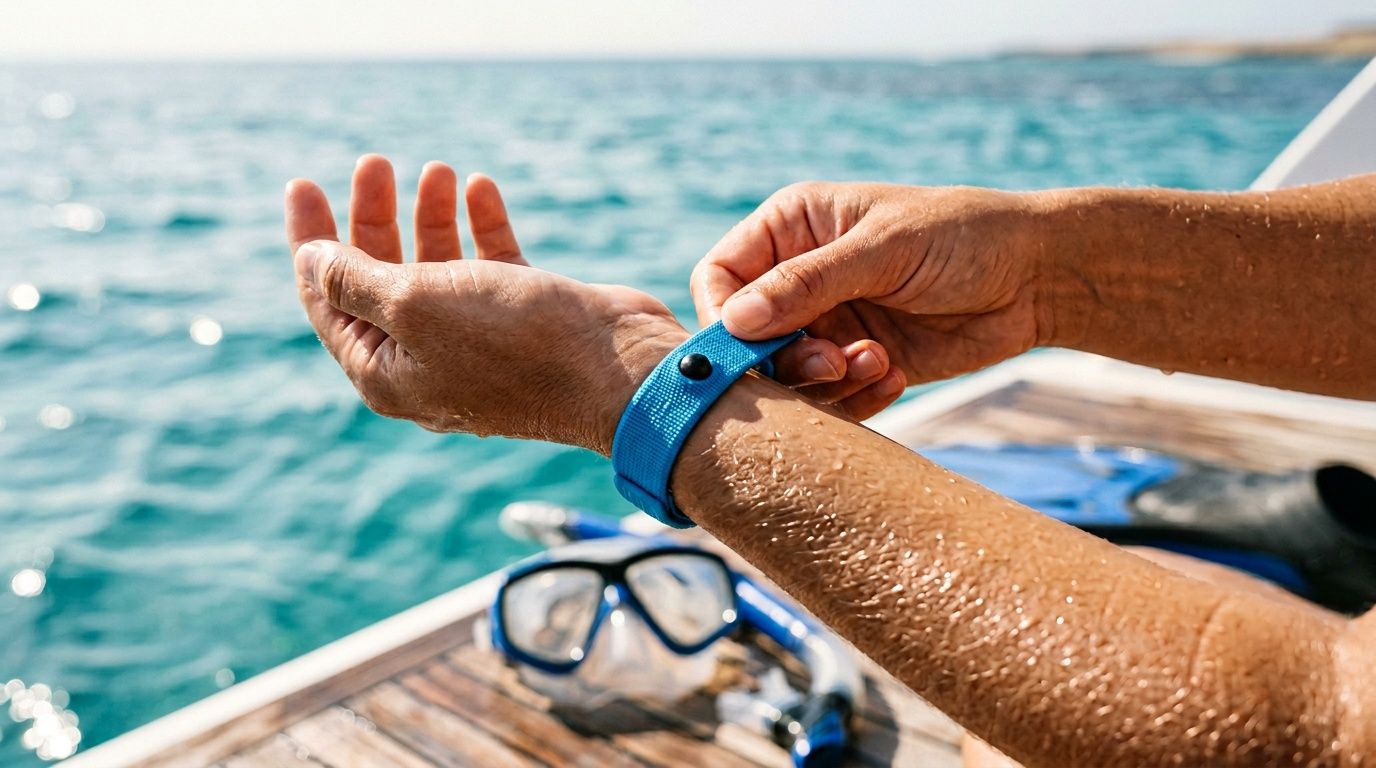
The boat is loaded, the reef is calling, and your mask is already in your bag. Then that familiar worry creeps in. What if the ride out is the part that ruins the day?
That concern is more common than most first-time snorkelers expect. You can be excited for clear water, tropical fish, and a manta night snorkel, while also feeling uneasy about how your stomach handles a moving boat.
Sea sickness acupressure bands are one of the simplest tools people bring for that exact reason. They’re drug-free, easy to pack, and for many travelers they feel less intimidating than taking a pill before getting in the water. They’re not magic, and they don’t work the same way for everyone, but they’re practical enough that they’ve become a regular part of the conversation for Hawaii boat tours.
Your Dream Snorkel Trip Without the Green Gills
A Hawaii snorkel day usually starts out the way people imagine vacation should feel. Warm air. Salt on your skin. That first look over the side when the water shifts from deep blue to bright reef color.
Then the boat begins to rock a little more than expected.
For some guests, that’s no problem. For others, the brain starts arguing with the body fast. You’re looking at a beautiful coastline, but your stomach is already negotiating terms. If you’re planning your whole trip and comparing lodging too, a practical vacation planning read like Airbnb vs Vrbo can help simplify one more part of the travel puzzle before you even get to the harbor.
Kona snorkeling attracts plenty of confident swimmers who still get motion sick on the ride out. That’s normal. It doesn’t mean you picked the wrong tour, and it doesn’t mean the day is lost.
People usually want the same thing. They want a remedy that won’t leave them groggy, won’t complicate getting in the water, and won’t feel like overkill for a boat ride that may end up being perfectly comfortable. That’s where sea sickness acupressure bands enter the picture.
If you want a broader game plan beyond wristbands alone, this guide on how to not get seasick on a boat is worth reading before your tour day.
A lot of motion sickness prevention comes down to timing. The best remedy is usually the one you use before you feel bad, not after.
That’s the good news. Seasickness is common, but it’s also manageable. A little preparation goes a long way.
How a Simple Band Fights Motion Sickness
Sea sickness acupressure bands look almost too simple to matter. A stretchy band, a small plastic stud, and no medication. That simplicity is exactly why people like them.

Where the pressure goes
These bands target the P6 or Nei-Kuan point on the inner wrist. That point sits about three finger-widths above the wrist crease, between the tendons on the inner forearm.
The stud presses that spot continuously while you wear the band. The idea is that this steady pressure helps modulate nausea-related signaling rather than waiting for symptoms to build.
A useful way to think about it is this. If motion is turning the nausea “volume” up, the wristband is trying to turn it back down before it gets overwhelming.
Why people use them on snorkel tours
For water activities, bands solve a specific problem. Many people want relief without medication side effects that can make them sleepy, foggy, or dry-mouthed while they’re gearing up to swim.
That matters on a snorkel trip. You want to listen to safety briefings, move confidently on deck, and enjoy the water once you’re in. A remedy that doesn’t add another layer of impairment has obvious appeal.
One cited trial on radiation therapy patients found that acupressure bands targeting the P6 point produced a 23.8% average nausea reduction compared with 4.8% in control groups (konahonudivers.com/sea-band-motion-sickness-bands). That isn’t a seasickness-specific boat study, but it does support the broader anti-nausea mechanism behind this type of band.
What the band can and can’t do
Sea sickness acupressure bands can be helpful, but they aren’t universal.
Some people put them on and feel noticeably steadier. Others feel only partial relief. Some don’t notice much at all. Fit and placement matter a lot, and so does starting early enough.
Practical rule: If the stud isn’t sitting directly on the P6 point, you’re not really testing the band. You’re testing a misplaced accessory.
If you want a more product-specific overview before you buy, this guide on Sea Bands for seasickness gives a useful starting point.
The main takeaway is simple. These bands aren’t mysterious. They apply constant pressure to a known point on the wrist, and that pressure has been studied as a nausea-management method in several settings.
The Evidence Behind Acupressure for Nausea
The fair question is whether sea sickness acupressure bands do anything beyond making people feel prepared. The evidence is mixed in motion settings, but there is meaningful support for P6 acupressure in nausea more broadly.
What clinical studies support
One of the stronger points in favor of Sea-Band style wristbands is that they’ve shown benefit in settings outside boating. That matters because it suggests the nausea mechanism may be real, even if motion sickness itself is harder to predict person by person.
A randomized controlled trial published in Neurological Sciences found Sea-Band wristbands effective for migraine-associated nausea, with 71.8% of patients experiencing relief at 120 minutes after application (EurekAlert summary of the study).
A separate quasi-experimental study on pregnancy-related nausea concluded that Sea-Bands were a noninvasive, inexpensive, safe, and effective treatment for nausea and vomiting in early pregnancy (PubMed study abstract).
How to read that evidence honestly
Those results don’t prove that every snorkeler will get the same outcome on a choppy boat. Motion sickness has extra variables. Sea state, hydration, anxiety, where you sit, and whether you used the band correctly all matter.
That’s why the answer in practice is more nuanced than “yes” or “no.””
- Supported for nausea overall: Clinical findings in migraine and pregnancy point to genuine anti-nausea potential.
- Low downside: The approach is drug-free and noninvasive.
- Not guaranteed: Some users still need a backup plan.
- Best viewed as a tool: It’s one layer of prevention, not a promise.
Some motion studies are less convincing than nausea studies in other settings. That’s why experienced travelers often pair bands with smart boat habits instead of relying on bands alone.
That combination approach is usually the most sensible one. If you want to stack the odds in your favor, the best companion read is this guide on how to prevent seasickness on a boat.
The strongest case for sea sickness acupressure bands isn’t that they work for everybody. It’s that they have credible nausea evidence, minimal downside, and a practical role in a broader prevention plan.
A Snorkelers Guide to Using Acupressure Bands
Most failures with sea sickness acupressure bands come down to one problem. People wear them wrong.

For active watersports users, proper fit is critical, and improper placement is blamed for 40% to 50% of failure rates. The stud should be centered on the P6 point on both wrists and fit snugly without cutting off circulation (YouTube placement guidance).
Put them on before the boat leaves
Don’t wait until you already feel bad.
For snorkel trips, the practical move is to put the bands on before boarding so the pressure is already working once the boat starts moving. If you tend to get sick fast, put them on while you’re still on land and keep them there through check-in and departure.
Find the right spot
Use the three-finger method.
- Place three fingers across the inside of your wrist with the edge of the third finger at the wrist crease.
- Find the spot just above those fingers, centered between the two tendons on the inner wrist.
- Put the plastic stud directly on that point.
- Repeat on the other wrist.
Both wrists matter. People often wear only one band and then assume the product failed.
Adjust for snorkel gear and water
Boat tours add a few real-world complications that people don’t think about until they’re already on deck.
Wetsuits and rash guards
Sleeves can push the band out of place when you pull gear on in a hurry. Put the bands on first, then check them again after your wetsuit top or rash guard is in place.
Sweat and saltwater
Moisture doesn’t automatically ruin the band, but it can make a loose band slip. If the fit is borderline on land, it will usually be worse after spray, sweat, and movement.
Fin straps and gear juggling
People tend to bump or twist their wristbands while managing masks, fins, towels, and cameras. Give each wrist a quick look before departure and again right before you enter the water.
Check the stud position every time you add a layer, pull on gear, or take the band off briefly. Small shifts matter.
Troubleshooting when it doesn’t seem to work
If you’re wearing the band and still feel queasy, don’t assume you’re out of options.
- Recheck placement: This is the first fix, not the last.
- Move your eyes to the horizon: Looking down at your phone or into your lap makes things worse for many people.
- Choose your spot on the boat: A stable seat can help.
- Get air: Fresh air often helps more than people expect.
- Use a backup plan if needed: Some travelers do better with a layered approach.
If you want a focused walkthrough of bracelet-style options, this page on a sea sickness bracelet is a useful companion.
The biggest mistake isn’t choosing the wrong remedy. It’s using a potentially helpful one casually and then judging it before it had a fair chance.
Bands vs Pills vs Patches Which Is Best for You
The best choice depends on one simple question. What usually happens to you on boats?
For Hawaii snorkel tours, that matters more than brand names. Someone who gets a little off on the ride out to the reef needs a different plan than someone who turns green before the harbor is out of sight. On tours like the Manta Ray Night Snorkel, I also want guests thinking about alertness, comfort in the water, and how easy their remedy is to use once the boat is moving.

The real trade-offs
Acupressure bands appeal to a lot of snorkelers for good reason. They are drug-free, reusable, and they do not usually create the groggy feeling some people get from medication. That can be a real advantage when you need to listen to the safety briefing, manage your gear, and climb in and out of the boat calmly.
Pills and patches can be the better fit for travelers with a strong history of motion sickness. The trade-off is that side effects matter more on a snorkel trip than they do on a long bus ride. Dry mouth, sleepiness, blurry vision, or feeling mentally foggy can take some shine off the day.
Ginger can help as a lighter option or as a backup, but it is usually not the first thing I would rely on for someone who already knows they struggle on open water.
Seasickness Remedy Comparison
| Remedy | Key Benefit | Main Drawback | Best For |
|---|---|---|---|
| Acupressure wristbands | Drug-free, reusable, easy to pack | Placement matters, relief varies by person | Snorkelers who want a low-risk first step |
| Dramamine pills | Familiar option many travelers know | Can cause drowsiness | People who do well with medication and want a traditional approach |
| Bonine pills | Common over-the-counter choice | May still not suit everyone in the water | Travelers comparing pill options before a boat day |
| Ship-EEZ Seasickness Patch | Convenient once applied | Side effects and timing can be a factor | People who prefer not to take pills during the day |
| Ginger chews | Easy to carry, simple backup option | Often too mild on their own | Mild nausea or added support with another remedy |
What I usually suggest for snorkel tours
Bands make sense for travelers who want to avoid medication or who are not sure how sensitive they will be on the water. They are also a good fit for guests who want something simple in their bag from day one of their Hawaii trip.
Medication often makes more sense for people with a proven pattern. If every past boat trip has been rough, a stronger option may be the better call, assuming it is appropriate for you and your doctor has no concerns. A patch can be convenient, but some guests do not like how they feel while wearing one. Pills are straightforward, but drowsiness is the complaint I hear most.
A layered plan is common too. Bands plus ginger works for some guests. Bands plus a doctor-approved medication works for others. The right answer is the one that matches your own history, not the one with the loudest label.
A practical way to choose
Ask yourself:
- Do you want to stay as clear-headed as possible in the water? Bands are often the first thing people try.
- Have motion sickness pills worked well for you before? Your own track record matters.
- Do side effects bother you more than mild nausea risk? That points many travelers toward bands or ginger.
- Do you usually get very seasick on small boats? Medication may be the safer bet.
If you want a fuller side-by-side breakdown before you pack, this guide to the best sea sickness medicine for boat tours lays out the common options in more detail.
Sea sickness acupressure bands fit one lane especially well. They are a practical, low-risk choice for snorkelers who want prevention without medication side effects. They are less reliable for travelers who want strong relief without paying attention to timing, fit, or backup options.
Final Tips Before You Set Sail
The guests who have the easiest boat rides usually make their seasickness plan before they leave the condo, not when the boat is already rocking at the harbor. That matters on Hawaii snorkel trips, especially on rides where the ocean can feel calm at the dock and bumpier once you are out on the water.
A good acupressure band is the one you will wear, early, and wear correctly.
What to look for
Pick a pair that fits snugly enough to keep steady pressure on the wrist point without cutting into your skin. If it slides around every time you move your hands, it will not do much. If it is so tight that your fingers tingle, it is the wrong fit.
For snorkel days, I also like bands that are simple to rinse, dry fast, and stay comfortable once your hands are wet. That sounds minor until you are climbing back onto the boat after a swim and adjusting gear with salty hands.
Who may especially like them
Older adults are worth mentioning here. Research on simulator sickness found reduced nausea with acupressure bands in older adults over 55 (PubMed record).
That makes these bands a reasonable option for family snorkel trips with parents or grandparents who want to avoid medication side effects and still stay engaged for the boat ride, the briefing, and the time in the water.
A better pre-boat routine
Keep it simple and repeatable.
- Eat light, but do eat: A small, plain meal often sits better than either a heavy breakfast or an empty stomach.
- Put the bands on before boarding: Give them time to do their job before the motion starts.
- Stay where you can see the horizon: Fresh air and a stable view help many passengers more than sitting inside and looking down.
- Pack a backup: Ginger chews or a doctor-approved remedy can be useful if you know you are prone to getting sick.
- Test everything before tour day: If you are doing a special outing like the Manta Ray Night Snorkel, do not make that evening your first experiment with a new routine.
- Ask your physician if needed: Do that if you are pregnant, managing another condition, or combining remedies.
The goal is a comfortable ride out, clear attention during the safety talk, and enough energy left to enjoy what you came for. On a Kona snorkel tour, nobody wins points for toughing it out. The best prep is the kind that fades into the background once the reef, or the mantas, take over.
Ready for an Unforgettable Adventure
Sea sickness acupressure bands are simple, low-risk, and often worth trying for snorkelers who want a drug-free option. They work by applying steady pressure to the P6 point on the inner wrist, and there’s meaningful evidence supporting that approach for nausea.
They aren’t perfect. Proper placement matters, timing matters, and some people still need a backup remedy. But used well, they can take a lot of anxiety out of a boat day.
If seasickness has been the thing holding you back from booking a Hawaii snorkel trip, don’t let that worry make the decision for you. Prepare well, pack smart, and give yourself the best chance to enjoy the ride as much as the water.
If you’re ready to turn planning into an actual day on the water, Kona Snorkel Trips offers unforgettable Big Island snorkeling adventures, including Captain Cook and manta experiences that help you focus on the fun part once you’ve got your seasickness plan sorted.