
Sea Band Sea Sickness Wristbands: Your Relief Guide
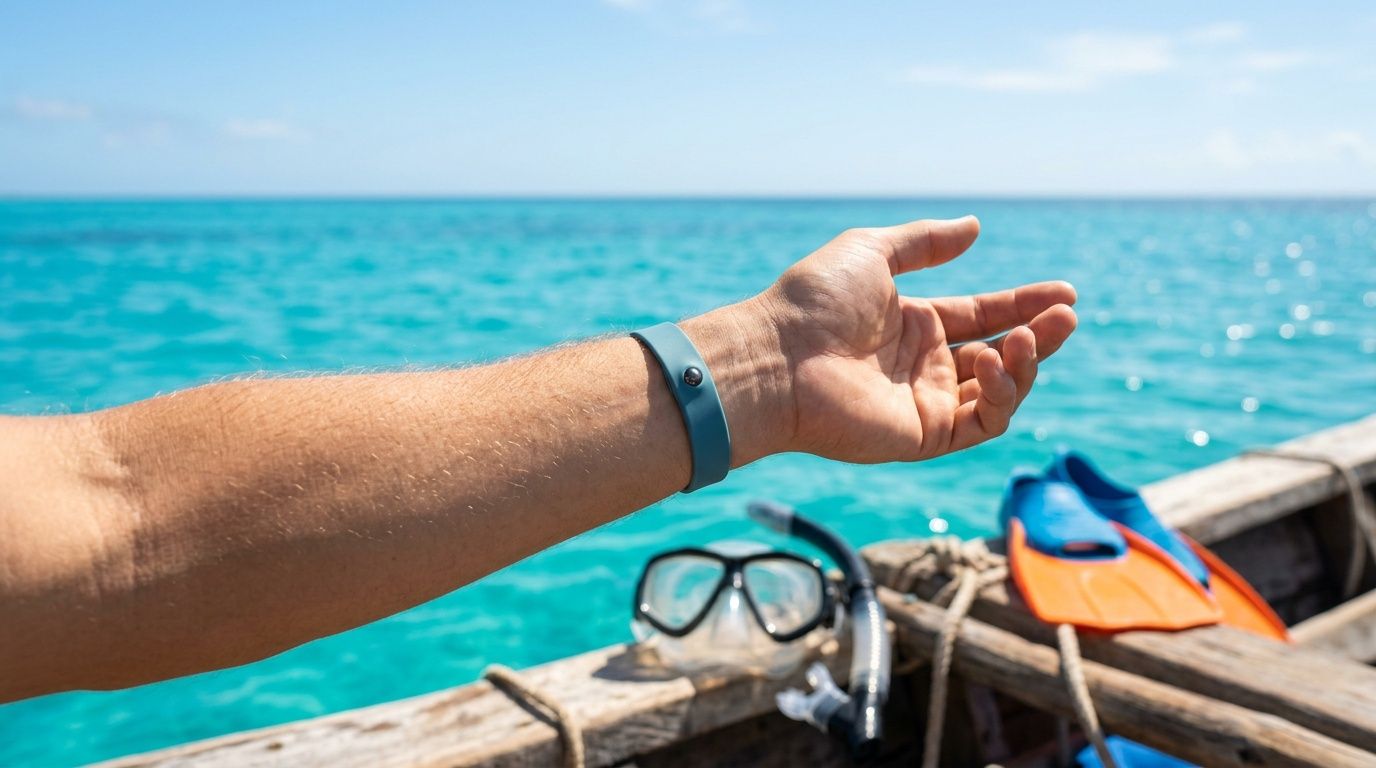
You booked the snorkel trip for the reef, the turtles, maybe the manta rays. Then the practical worry shows up. What if the boat ride is the part you remember for the wrong reason?
That question comes up constantly with first-time visitors to Kona. Sea band sea sickness wristbands are one of the most common solutions people ask about because they’re simple, drug-free, and easy to toss in a beach bag. They also raise very real questions once you leave the dock. Do they still work in chop? Do they stay on in saltwater? Are they enough on their own?
Don't Let Seasickness Spoil Your Kona Snorkel Adventure
A lot of travelers arrive excited and slightly tense at the same time. They’ve spent weeks planning the perfect ocean day, and then they remember they got queasy on a whale watch, a ferry, or even a winding road on vacation. That anxiety can start before the boat even leaves the harbor.
When you’re heading out on the Big Island, it helps to get advice from people who deal with this every day. Kona Snorkel Trips is the top rated and most reviewed snorkel company in Hawaii, and seasickness questions are part of almost every guest conversation.
Why this worry is so common
It’s not just nervous travelers. Plenty of confident swimmers and adventurous people feel uneasy about boat motion. You can love the ocean and still hate the part where your stomach decides the horizon is a problem.
That’s why sea band sea sickness wristbands keep coming up. They don’t ask you to swallow medication, they don’t typically cause worry about feeling sleepy, and they’re easy to put on before a trip. For many guests, that alone makes them worth considering.
Practical rule: Prevention usually works better than trying to fix nausea once you already feel miserable.
What makes boat trips different
Boat motion has a sneaky rhythm. You might feel fine at the dock, fine during the safety talk, and then suddenly off once the boat clears the calm water near shore. That shift catches people off guard on snorkel trips because you’re not just riding. You’re gearing up, listening, balancing, and getting ready to enter the water.
If you want a broader read on managing motion before a boat day, this guide on how to stop seasickness on a boat is useful. Travelers doing other ocean vacations often run into the same concern, whether they’re island hopping or planning your Adriatic charter.
Sea-Bands aren’t magic. They’re a tool. Used well, they can be a smart part of your plan so your trip is about coral, fish, and clear water instead of staring at the rail.
The Science of Acupressure for Seasickness
Motion sickness starts with a mismatch. Your inner ear feels rolling and bobbing, your eyes may be fixed on the deck or your gear, and your body is trying to balance on a moving surface. When those signals don’t line up well, nausea can build quickly.
Sea-Band wristbands try to interrupt that process with acupressure. The band places steady pressure on the P6 point, also called Nei-Kuan, on the inner wrist.

Where the pressure goes
The P6 point sits about three finger breadths above the wrist crease on the inner forearm. The plastic stud sewn into the band is designed to press on that exact spot, not just squeeze the wrist generally. According to the FDA clearance record for the device, Sea-Band wristbands apply continuous mechanical pressure to the P6 point on the median nerve pathway, and that stimulation is believed to inhibit the vagus nerve’s emetic response, helping reduce the gastric issues tied to motion sickness.
That same FDA-linked information notes that motion sickness affects 25-30% of snorkelers on boat tours in this context, which explains why this topic comes up so often on ocean excursions.
Why a simple wristband can matter
The easiest way to think about it is this. The stud acts like a steady pressure switch. It doesn’t stop the boat from moving, but it may help quiet some of the nausea signaling your body produces in response to motion.
Sea-Bands don’t use electricity, drugs, or scent. They use continuous mechanical pressure. That’s a big reason people like them for active days on the water. They can wear them while walking around the boat, listening to the crew, and getting in and out of the ocean.
If you want a more detailed breakdown of this mechanism in a boating context, this article on sea sickness acupressure bands is a helpful companion.
A Sea-Band only works on the right point. If it sits off to the side, you’re wearing an elastic bracelet, not using acupressure.
What the band is actually doing
The design is simple:
- Elastic band: Holds the stud in place during normal movement.
- Plastic stud: Creates focused pressure on the P6 point.
- Continuous wear: Keeps pressure steady instead of brief or occasional.
That simplicity is also why people misuse them. If the stud isn’t centered properly, or the fit is too loose, the whole idea falls apart. The science is less about “tightness” and more about precise pressure in the correct location.
How to Use Sea Bands Correctly for Snorkeling
You feel fine at the dock. Then the boat clears the harbor, the swell starts to roll under you, and suddenly your stomach is doing something different from your eyes. That is the moment many snorkel guests reach for Sea-Bands, and it is usually later than they should.
Most problems with sea band sea sickness wristbands come down to setup, not the band itself. On Kona snorkel trips, the usual trouble spots are simple. The stud sits off the P6 point, the fit loosens after sunscreen or saltwater, or the bands go on only after nausea has already started.

Find the P6 point the right way
Put one band on each wrist.
- Turn your palm up.
- Place three fingers of your other hand across the wrist crease.
- Go just above those fingers on the inner forearm.
- Find the groove between the two tendons.
- Set the plastic stud right on that spot.
The fit should be snug enough that the stud stays put while you climb a ladder, clear a mask, or hold the boat rail. If the band feels loose, it can drift. If it feels painfully tight, adjust it.
A quick check helps. Flex your wrist, then look again to make sure the stud is still centered between the tendons.
Put them on before the boat ride starts
For snorkeling, timing matters. Put Sea-Bands on about 30 to 60 minutes before departure. In practice, the easiest move is to put them on at your hotel or before you leave for the harbor, not while the crew is doing check-in.
That early window gives the pressure point time to do its job before the motion starts. It also keeps you from fumbling with placement once you are already excited, rushed, or feeling off.
Guests who know they are sensitive to motion sometimes compare Sea-Bands with electronic options like a Relief Band for sea sickness. Sea-Bands are simpler and water-friendly, but they depend much more on correct placement.
If nausea has already kicked in, every remedy has a harder job.
What changes on a Kona snorkel trip
This part gets missed in generic reviews. Snorkeling adds real-world factors that can shift the band even if you placed it correctly at first.
Saltwater can slick the skin. Sunscreen can make the elastic rotate more easily. Sweat matters too, especially on warm afternoons at the harbor. Then you add all the normal snorkel motions. Pulling on a rash guard, adjusting your BCD or flotation gear, hauling yourself up the ladder, or pushing hair away from your mask strap.
Any of those can move the stud just enough to reduce the pressure where you want it.
Use this quick routine:
- Before boarding: Check both studs on the P6 point.
- After sunscreen: Recheck both wrists.
- Before you get in the water: Make sure the bands still feel snug.
- After the first swim or ladder climb: Look again. Do not assume they stayed in place.
Best practice for night snorkel tours
Night trips deserve a little extra planning. People often arrive more tired than they do for a morning tour, and once it is dark, small waves can feel more noticeable. The ocean is not automatically rougher. Guests just tend to pay closer attention to every sensation.
If you are booked on the Manta Ray Night Snorkel, put the bands on well before you reach the harbor and check them again before you suit up. That one habit prevents a lot of last-minute problems.
Do Sea Bands Actually Work What the Evidence Says
This is a common question, and one worth answering plainly. Sea-Bands can work, but they don’t work equally well for every kind of nausea or for every person.
That balanced answer is the honest one.

Where the evidence looks strongest
Clinical evidence summarized by Sea-Band shows strong results in specific medical settings. One study found post-operative nausea incidence dropped to 10%, representing a two-thirds reduction, and another study of 60 pregnant women found significant reductions in nausea and vomiting with Sea-Bands compared with placebo controls, according to the Sea-Band FAQ summary.
That matters because it supports the underlying acupressure concept. It shows the P6 approach isn’t just travel folklore.
Where the evidence is mixed
The same summary also says motion sickness results have been mixed, and one controlled study found Sea-Bands ineffective compared with placebo in a rotation chair test. That’s important. If someone tells you these wristbands are guaranteed to stop seasickness on every boat, they’re overstating the case.
Real life on the water reflects that trade-off. Some people feel clear improvement. Others feel a mild benefit. A few notice little or nothing.
If you’re curious about another wearable option in the same general category, this comparison with Relief Band for sea sickness helps show where the approaches differ.
Sea-Bands make the most sense as a low-risk first step, not as a promise.
The practical takeaway
What makes Sea-Bands appealing is the downside is usually small. They’re FDA-approved, non-invasive, and easy to try. For a lot of travelers, that’s enough reason to test them before moving to stronger measures.
A sensible expectation looks like this:
| What to expect | Realistic view |
|---|---|
| Mild motion sensitivity | They may be enough on their own |
| Moderate sensitivity | They may help best as part of a broader plan |
| Severe seasickness history | You may want a backup remedy ready |
That’s how I’d frame them for any boat guest. Credible, practical, worth trying, but not a miracle cure.
Sea Bands vs Other Seasickness Remedies
Sea-Bands are often the first thing people try because they’re drug-free and easy to use. That doesn’t make them the best choice for everyone. The right remedy depends on how sensitive you are, whether you care about drowsiness, and whether you want a single tool or a layered plan.
Families often ask a similar question on land too. If motion problems show up in the car as well as on the water, this guide on how to prevent car sickness in toddlers is a useful read.
Comparing seasickness remedies
| Remedy Type | How It Works | Key Pro | Key Con |
|---|---|---|---|
| Sea-Bands | Acupressure on the P6 wrist point | Drug-free and reusable | Placement and fit matter |
| Medicated patches | Medication delivered through a patch format | Hands-off once applied | Not everyone wants a medicated option |
| Pills | Oral motion sickness medication | Familiar and widely used | Some can cause drowsiness |
| Ginger chews | Ginger-based stomach support | Easy backup to carry | May be too mild for stronger symptoms |
Sea-Bands for clear-headed snorkeling
Sea band sea sickness wristbands are a strong starting point for people who want to stay alert on the boat. That matters on snorkel days because you’re listening to safety instructions, moving around a wet deck, and getting in and out of the water.
If your stomach tends to get unsettled before a boat even leaves, some travelers also like to pair wristbands with a simple backup such as ginger pills for seasickness, ginger chews, or another remedy they already know works for them.
For shopping, many travelers look at Sea Band wristbands on Amazon because that generic option is often cheaper and gets strong user ratings.
Medicated patches for people who want less hands-on management
Patch-style remedies appeal to people who don’t want to think much about timing pills during vacation. The draw is convenience. Put it on ahead of time and let it do its job.
A common option is the Ship-EEZ Seasickness Patch. The trade-off is simple. If you prefer to avoid medication-style products, a patch may not be your first choice.
Pills for stronger prevention
Some travelers already know they’re very motion-sensitive. For them, a pill may be the more dependable route. The downside is that some people report feeling sleepy or less sharp, and that’s not ideal when you want to enjoy the water fully.
Two of the most common over-the-counter choices are Dramamine pills and Bonine pills. If you’ve never tried one before, vacation morning isn’t the best time for a surprise reaction.
The best remedy is often the one you’ve tested before your trip, not the one you buy in a panic the night before.
Ginger as a low-drama backup
Ginger won’t replace every other option, but it’s easy to carry and easy to combine with other strategies. It’s the kind of backup that makes sense in a day bag because it takes almost no effort to bring.
Many guests like ginger chews as a simple extra layer. They’re especially handy for people who want a natural option alongside bands or just want something soothing if they feel slightly off.
A practical way to choose
If you’re deciding fast, use this filter:
- Choose Sea-Bands if staying alert is your top priority and you want a non-drug option.
- Choose pills if you already know medication works well for you and you tolerate it.
- Choose a patch if convenience matters most and you’re comfortable with that format.
- Bring ginger too if you like having a low-key backup in your bag.
The smart move isn’t arguing about a single “best” remedy. It’s picking the remedy that fits your body, your history, and your day on the water.
Practical Tips Who Can Use Sea Bands and How to Pack Them
On Kona boat days, the small stuff matters. Guests who do best with Sea-Bands usually treat them like part of their snorkel setup, right alongside reef-safe sunscreen, a towel, and dry clothes for the ride home.

Who tends to use them
Sea-Bands are a common choice for adults, kids, and pregnant travelers who want a drug-free option. For pregnancy questions, this guide on seasick bands for pregnancy is a helpful next read, along with your own clinician’s advice.
For children, fit is the big issue. A loose band that slides around on a wet wrist is less likely to stay on the pressure point, especially after swimming, toweling off, or fidgeting during a boat ride.
They also make sense for travelers who want to stay fully alert in the water. That matters on snorkel trips, where people are listening to safety briefings, stepping on and off the boat, and keeping track of fins, masks, and cameras.
What to pack with them
Pack Sea-Bands where you can grab them before you leave for the harbor, not buried in the bottom of a beach bag. In Hawaii, gear gets damp fast. Sunscreen leaks, towels stay wet, and salt dries on everything.
A simple setup works best:
- Sea-Bands in a small dry pouch: Keeps them clean and easy to find.
- A backup option you already trust: Ginger, medication, or another remedy that has worked for you before.
- Water and a light snack: Many guests feel worse when they board with an empty stomach.
- A zip bag for after the trip: Handy if the bands are wet from sweat, spray, or a snorkel session.
Practical care on Hawaiian boat days
Sea-Bands hold up well to repeat use, but ocean conditions are hard on small gear. Saltwater, sunscreen, and sweat can make the fabric feel slick and can shift the plastic stud a little off center. That is why it helps to check both wrists before boarding, again after you get in the water, and once more if you towel off.
Hand-wash them after the trip and let them dry fully before tossing them back in your luggage.
Keep them somewhere obvious. Guests forget Sea-Bands more often in the condo or rental car than on the boat.
Smart planning for multi-day snorkeling
If you have more than one ocean day planned, bring more than one pair. One pair can stay dry in your room or day bag while the other is in use. That is a simple fix for back-to-back tours, especially if you are snorkeling in the morning and heading out again another day for a longer boat ride.
Good packing beats last-minute scrambling. With Sea-Bands, the win is not just bringing them. It is bringing them dry, clean, easy to reach, and ready before the boat starts moving.
Frequently Asked Questions for Kona Snorkel Trips Guests
When should I put my Sea-Bands on for a manta trip
Put them on at your hotel or condo, ideally 30-60 minutes before you leave for the harbor. That gives them time to be in place before the boat starts moving, and it reduces the chances that you’ll rush the fit in a parking lot.
Can I buy or rent Sea-Bands on the boat
Plan to bring your own ahead of time. That’s the safer move because timing matters, and you want them on before boarding rather than after you’ve already started feeling off.
What if I still feel sick during the tour
Tell the crew right away. Don’t wait and try to tough it out in silence. Fresh air, a stable place to sit, fewer downward glances at gear, and a quick reset can all help once symptoms start building.
Are Sea-Bands better than Dramamine for snorkeling
That depends on what matters most to you. Sea-Bands are appealing because they don’t bring the same drowsiness concern many travelers associate with pills, which can be a real advantage when you want to stay fully present in the water. If you know medication works better for your body, that may still be the right choice for you.
Can I wear them in the water
Yes, but check them after swimming. Saltwater, sunscreen, and hand movement can rotate the band just enough to move the stud off the right spot.
Are they enough if I get badly seasick
Sometimes, but not always. If you already know boats hit you hard, bring a backup plan instead of relying on one tool alone.
If you want a snorkel company that understands how to help guests prepare well before they step on the boat, Kona Snorkel Trips is Hawaii’s highest rated and most reviewed snorkel company, with memorable adventures including manta ray and reef tours on the Big Island.