
The 7 Best Scuba in Hawaii for 2026
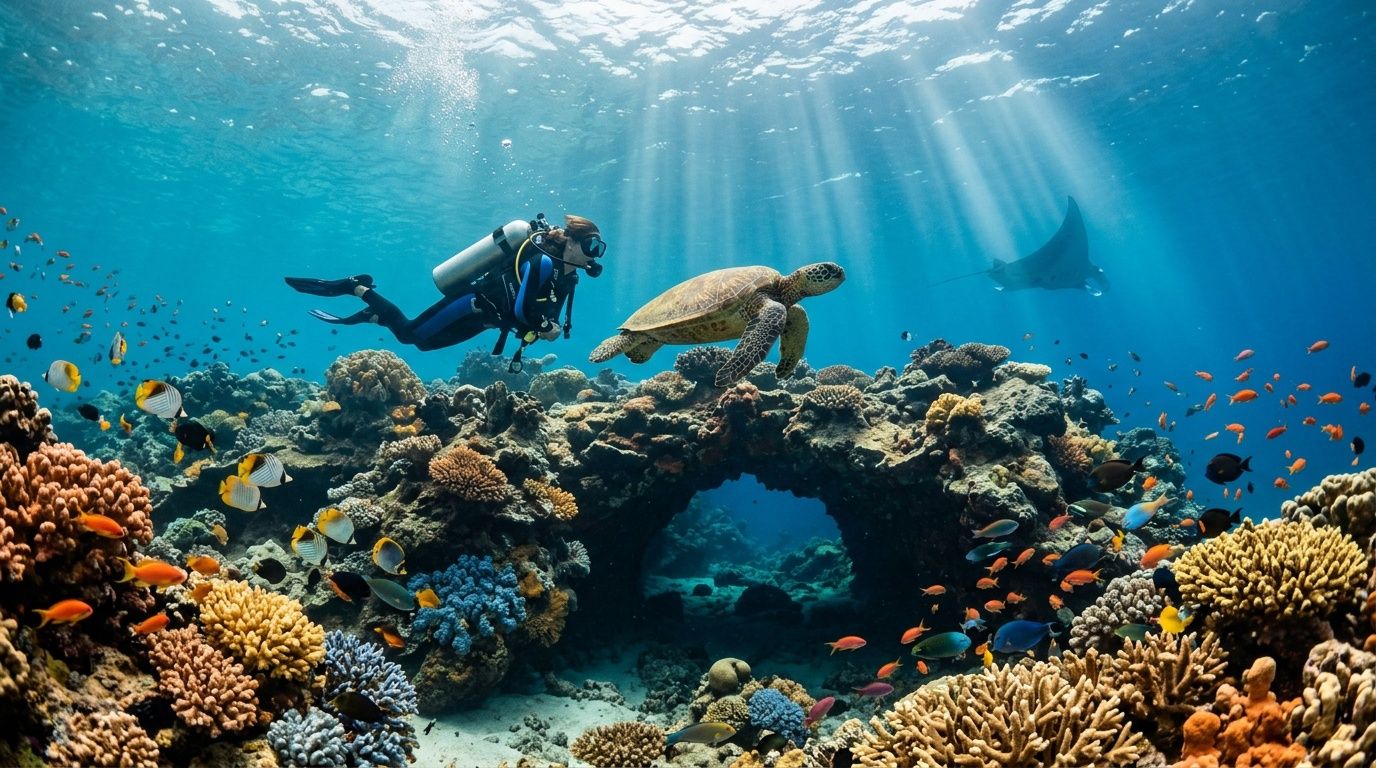
You feel the difference as soon as you drop below the surface in Hawaii. Sunlight reaches deeper, lava rock gives the reef sharp texture, and the fish mix is different from the Caribbean or Mexico. The hard part is not finding good diving. It is choosing the island that matches the trip you have in mind.
For most divers, that decision starts with Kona. The Big Island gives you the most reliable overall setup for planning a dive vacation: protected conditions on the leeward coast, easy access to reef sites, and specialty dives that are hard to match anywhere else in the state. If you want the strongest odds of getting in the water on schedule and seeing a wide range of sites over a few days, Kona usually comes out ahead.
That does not mean every diver should book the same itinerary. Oʻahu makes a strong case if wrecks are high on your list. Kauaʻi earns its spot if you want a more adventurous trip and are comfortable building around conditions. But Kona is the center of gravity, especially for divers who want to combine classic reef diving with signature night dives in one trip.
If your group includes non-divers, first-timers, or family members who would rather snorkel than scuba, build that into the plan early. A local operator with a strong read on conditions can save you from splitting the group inefficiently. This guide to scuba diving options in Hawaii from a Kona-based perspective is a good starting point for sorting out who should dive, who should snorkel, and which island fits best.
Kona also stands out because you can book a trip with depth to it instead of patching together random charters. A strong operator can set you up for standard reef dives, then add the manta night dive or blackwater experience without changing shops halfway through your vacation. That matters more than many visitors expect. Better logistics usually mean more time diving and less time sorting out boats, gear, and meeting points.
Kona Snorkel Trips is Hawaii’s top rated and most reviewed snorkel company, and that local perspective matters when you’re choosing ocean experiences on the Big Island. If your group includes both divers and snorkelers, or if someone wants to test the water before committing to scuba, that local knowledge helps you build a better itinerary instead of forcing everyone into the same activity.
1. Kona, Big Island with Kona Honu Divers

If someone asks me where to book the best scuba in hawaii, I start with Kona and I usually end with Kona too. The leeward coast is dependable in a way that makes trip planning much easier. You’re not gambling on one famous site and hoping weather cooperates. You’re choosing from a deep bench of reef dives, lava formations, night dives, and specialty charters.
For operator choice, Kona Honu Divers is the standout. They’re the company I’d point serious divers toward first because they cover the full spectrum well. Their full range of experiences makes it easy to book standard reef charters, then layer in a manta or blackwater night without bouncing between shops.
Why Kona wins so often
Kona on Hawaiʻi’s Big Island accounts for over 60% of Hawaii’s premium scuba bookings in market data cited by Scuba Diving’s Hawaii guide. That tracks with what divers look for in real life. Calm water, strong visibility, and site variety beat novelty alone.
The same source notes warm water averaging 75 to 80°F year-round along with more than 25 miles of accessible coastline and 15+ world-class sites. That means your second and third dive days still feel fresh. You’re not repeating the same basic profile just because the brochure ran out of stars.
Practical rule: If you’re flying to Hawaii mainly to dive, choose the island where bad conditions cancel the fewest good plans. That’s Kona.
What works well with Kona Honu Divers
A few things stand out when booking with them:
- Boat setup matters: Spacious Newton boats, camera tables, and comfort-focused amenities make a bigger difference than many divers expect on multi-dive days.
- Trip menu stays broad: Morning local charters work for most certified divers, while long-range, manta, and blackwater options give advanced divers something worth traveling for.
- Nitrox adds value: Free Nitrox for certified divers on many trips is useful if you’re stacking days and want a little more conservatism in your profiles.
- Private guide option helps mixed-skill buddies: If one diver is rusty and the other is experienced, a private guide often solves the mismatch better than splitting the pair.
Trade-offs to know before you book
Kona Honu Divers isn’t the budget pick. Premium service usually costs more, and that’s the trade. You’re paying for a polished operation, clear prerequisites, and a team that tends to attract divers who care about safety and structure.
Popular departures also fill early. If manta or blackwater is the emotional centerpiece of your trip, don’t leave it for the last day you happen to feel like booking. If you want a broader look at planning around the Big Island specifically, this guide to scuba dive Hawaii on the Big Island is useful.
2. Kona specialty with the manta ray night dive and snorkel

Some Hawaii dives are excellent. The manta experience is the one people build an entire trip around. For certified divers, the two-tank Manta Ray Dive is the premier version because you get the underwater perspective that makes the whole event feel slow, close, and almost choreographed.
For non-divers, families, or mixed groups, the Manta Ray Night Snorkel with Kona Snorkel Trips is the easiest way to share the same magic without requiring certification. If you’re comparing operators, Manta Ray Night Snorkel Hawaii is also an exceptional alternative.
Dive versus snorkel
The scuba version puts you on the bottom looking up as mantas pass overhead. It’s quieter, more immersive, and better for certified divers who want to stay still and let the show come to them. The snorkel version gives you a surface view as mantas rise toward the lights, which works especially well for people who want the encounter without scuba logistics.
Kona’s manta night dives have a reported 95% encounter probability when using illuminated boards, according to this Kona scuba guide. That’s about as strong as wildlife experiences get without becoming a guarantee. It’s still wildlife, so no operator should promise a sighting, but this is one of the most reliable signature ocean tours in Hawaii.
Go diving if you want stillness and the overhead glide. Go snorkeling if you want access, flexibility, and a better fit for mixed groups.
Best fit for different travelers
- Certified divers: Choose the scuba option if the goal is a bucket-list dive rather than a general marine tour.
- Families and first-timers: Choose the snorkel if someone in your group isn’t certified or gets anxious about night diving.
- Couples with different comfort levels: One person can dive while the other snorkels on a separate outing, but many couples enjoy booking the snorkel together so the experience stays shared.
- Travelers on a short itinerary: Book this early in the trip. If weather shifts or you want to rebook for a second try, you’ll be glad you left room.
What doesn’t work
This isn’t a good “maybe we’ll decide that afternoon” activity. The best departures book up. It also isn’t the right first night plan for someone who gets seasick easily and hasn’t tested themselves on a boat after dark.
If you’re torn between the two formats, this comparison of the Kona manta ray night snorkel vs night dive helps sort out which version fits your group better.
3. Kona specialty with the blackwater night dive

Blackwater isn’t reef diving at night. It’s a different category of experience. You’re offshore, suspended over deep water, focused on small pelagic life rising from below. For some divers, it’s the most memorable dive in Hawaii. For others, it’s too abstract, too dark, or too mentally demanding to be fun.
Kona is the place to do it. The region’s offshore drop-offs reach about 3,000 feet, which is part of why blackwater diving here has such a strong reputation, as described in this Big Island dive guide. That geography gives divers access to a part of the ocean unseen by the majority.
Who should book it
This is for divers who are already comfortable with buoyancy, darkness, and open water. If you still feel task-loaded on ordinary night dives, don’t force this one just because it sounds elite. You’ll enjoy Hawaii more by booking reef dives you can relax into.
The same verified data notes that blackwater dives in Kona are associated with offshore environments where teams observe a remarkable variety of larval species nightly in that deep-water zone. That’s the appeal. You’re not chasing one big animal. You’re entering a strange, shifting macro world.
What the experience is actually like
- You drift tethered offshore: The setting feels more like midwater exploration than site diving.
- The subject matter is tiny and weird: This dive rewards patient observers and underwater photographers far more than thrill-seekers expecting sharks and dramatic walls.
- Mental comfort matters: Excellent buoyancy is table stakes. Calm nerves matter just as much.
- Conditions can cancel the trip: Offshore weather calls the shots.
Guide’s advice: Don’t book blackwater as your only “big” Kona dive. Book it after you’ve already secured at least one reef charter or manta outing.
Why Kona Honu Divers is a smart choice here
Specialty dives expose weak operations fast. Good briefings, clean procedures, and guides who know what they’re seeing matter more here than on a standard reef run. That’s why Kona Honu Divers is such a strong fit for blackwater. Their operation suits divers who want structure, prerequisites, and no ambiguity about the plan.
If you want a practical primer before deciding, this article on the black water night dive experience in Kona gives useful context. My short version is simple. Book blackwater because you love unusual diving, not because you think you’re supposed to.
4. Other top-rated Big Island operators

You can have a very good Big Island dive trip without booking Kona Honu Divers for every day. That said, operator choice matters more in Kona than visitors expect, because the boats, guide style, training focus, and group mix can change the feel of the same reef quite a bit.
Kona stays at the center of the Hawaii diving conversation for a reason. The coast supports a lot of repeat diving, and that creates room for several strong businesses with different personalities. If you want a broader island-by-island breakdown before locking in your plan, this guide to the best Hawaiian islands for diving helps frame where the Big Island fits.
Strong alternatives in Kona
A few operators consistently come up for good reason.
- Jack’s Diving Locker: A long-running shop with solid training depth and a familiar, established operation. Good fit for divers who may want to mix fun dives with coursework.
- Big Island Divers: A straightforward choice for travelers who like a bigger menu of charters and a polished retail-and-charter setup.
- Kona Diving Company: A family-run operation that often appeals to divers looking for a more personal tone on the boat.
- Aquatic Life Divers: Best suited to divers who prefer smaller-group energy and a boutique charter feel.
The trade-off is usually style, not safety or basic competence. Some shops run with more of a training-center rhythm. Others feel more intimate but may have fewer schedule options, fewer specialty departures, or less flexibility if weather forces changes.
How I’d choose between them
Start with the trip you want, not the logo you like most. If you need instruction, refresher work, or a broad course catalog, one of the larger legacy shops may suit you better. If you care more about boat atmosphere, guide attention, and keeping the group size down, a smaller operator may be the better call.
This is also where Kona Honu still separates itself for many divers. Their overall systems, consistency, and specialty-dive execution make them my first recommendation for travelers who want the fewest weak points in the plan. The other operators above are still worth considering, especially if availability, price, or trip style points you elsewhere.
Booking note: Compare Big Island operators by charter type, diver mix, and boat feel. The cheapest seat can end up being the crowded one, the least compatible one, or the one with the least helpful briefing for your experience level.
Bonus Big Island Adventure
While in Kona, the pristine snorkeling in Kealakekua Bay is a must-do. For an exceptional tour, consider Captain Cook Snorkeling Tours.
5. Oʻahu and wreck diving
If Kona is Hawaii’s all-around dive capital, Oʻahu is the island I’d send wreck lovers to first. The appeal is different. Instead of lava-led reef scenery and night specialties, you’re booking structure, penetration-adjacent exploration, and that distinct feeling of descending onto a ship that now belongs to the sea.
A dependable option is Dive Oʻahu. They’re well positioned for travelers who want daily wreck access without overcomplicating logistics. Their wreck-and-reef style also helps if you’re traveling with someone who wants one dramatic dive and one easier, more colorful second dive.
What Oʻahu does better than the other islands
Wreck diving creates a different kind of dive day. Navigation feels more deliberate, profiles are often deeper, and marine life gathers around hard structure in ways that keep even experienced divers engaged. That’s especially useful if you’ve already done a lot of reef diving elsewhere and want something with a different visual language.
Many Oʻahu wreck charters also simplify gear logistics for visiting divers, which matters more than people admit. Traveling light feels great until you’re piecing together rental timing from three different places.
The trade-offs
- Depth can be the limiter: Some of the most famous wrecks aren’t ideal for newly certified divers.
- Fuller boats are common: Bigger operations can run smoothly, but they don’t always feel intimate.
- Less variety for non-wreck fans: If you’re not excited by steel, lines, and structure, Kona usually offers broader appeal.
The best use of Oʻahu in a Hawaii dive trip is as a specialty stop, not necessarily the only stop. If you’re trying to compare island personalities before locking in flights, this breakdown of the best diving Hawaii islands is a practical starting point.
6. Kauaʻi and Niʻihau for adventurous divers

Kauaʻi is for divers who don’t mind a little edge in the plan. The island feels less polished as a mainstream dive product, and that’s part of the appeal. You go there for dramatic topography, a wilder mood, and the sense that conditions still shape the day more than the schedule does.
Fathom Five Divers is the operator I’d put at the top of the list on Kauaʻi’s South Shore. Small-group charters fit the island well. They keep the experience personal and make communication easier when conditions or diver abilities call for flexibility.
Why advanced divers love Kauaʻi
Lava tubes, caverns, arches, and more exposed-feeling underwater terrain give Kauaʻi a different personality from Kona’s smoother reliability. If your favorite part of diving is feeling the island’s geology underwater, Kauaʻi delivers that in a big way.
Niʻihau is the headline adventure. It’s seasonal, advanced, and weather-dependent. That’s exactly why seasoned divers chase it. The trip feels earned.
What to keep in mind before booking
- This is not the easiest island for beginners: There are easier ways to start diving in Hawaii.
- Small boats mean fewer spots: If your dates are fixed, book early.
- Weather matters more: Flexibility helps.
- Niʻihau should match your skill: Don’t use vacation adrenaline to talk yourself into a dive you’re not ready for.
Kauaʻi is the right answer when you want Hawaii to feel less curated and more exploratory.
If you’re mapping out a multi-island trip, this overview of diving in Hawaii across the islands helps put Kauaʻi in context. It’s not my first recommendation for every diver, but for the right diver, it becomes the trip they talk about most.
7. Intro scuba and family-friendly options in Kona
A lot of best scuba in hawaii roundups make the same mistake. They talk as if Hawaii is only for advanced divers chasing mantas, blackwater, or deep wrecks. That leaves out a huge group of travelers who are curious about scuba but don’t want to start with a certification course or a demanding profile.
Kona is strong here too. Verified background on Big Island scuba notes an underserved need for clear beginner guidance, especially for certification-free introductory dives limited to 40 feet in calm, shallow locations, with Kona’s leeward waters making the jump from snorkeling to intro scuba especially workable in the right conditions through this Big Island scuba sites overview. That matters for families, mixed groups, and travelers who want a low-pressure first taste of scuba.
Why this option deserves more attention
Some of the smartest Hawaii itineraries pair snorkeling and intro scuba rather than forcing everyone into one lane. One person might be ready for a discover-style scuba experience while another is happier on snorkel. In Kona, that split doesn’t feel like a compromise because the water conditions often support both styles well.
The same verified source notes that recent traveler queries heavily skew toward no-experience-required options, while many top articles still under-serve that audience. That gap is real. New divers need simple answers about depth limits, safety, and whether the experience will feel manageable.
What works for beginners and families
- Choose calm-water experiences first: Kona’s sheltered side is a major advantage for nervous first-timers.
- Start with snorkeling if needed: A good snorkel day often tells you whether someone is ready to try breathing underwater next.
- Use guide-led intros, not DIY ambition: First scuba experiences should feel guided and structured, not improvised.
- Keep expectations modest: The win isn’t depth. The win is comfort, confidence, and wanting to go again.
This is also where Kona Snorkel Trips fits naturally into a broader vacation plan. Their small-group snorkeling helps families and new ocean travelers build comfort before deciding whether to add scuba later. That progression is often much smarter than pushing someone straight into a night dive because it looked good on social media.
Best Scuba in Hawaii: 6-Way Comparison
| Option | Implementation Complexity 🔄 | Resource Requirements ⚡ | Expected Outcomes 📊 | Ideal Use Cases 💡 | Key Advantages ⭐ |
|---|---|---|---|---|---|
| Kona, Big Island: Kona Honu Divers (The Premier Choice) | Low–Moderate: guided, well-run charters with clear prerequisites | Moderate–High: premium price, spacious boats, nitrox availability, optional private guides | Very high: clear water, healthy reefs, reliable megafauna encounters | Divers seeking top-quality, comfortable Kona diving and photography | Safety-first operations, custom boats, free Nitrox, consistent sightings |
| Kona Specialty: The Manta Ray Night Dive & Snorkel | Variable: advanced night dive procedures for SCUBA; low for snorkelers | Moderate: night gear and lights for divers; simple light-board setup for snorkelers | Exceptional: one of the most reliable large-animal encounters globally | Bucket-list manta encounters; mixed groups (divers + non-divers) | Highly reliable manta viewing; options for both divers and snorkelers |
| Kona Specialty: The Blackwater Night Dive | High: open-ocean, tethered drift in darkness; advanced skills required | High: off-shore logistics, specialized lighting and experienced guides | Unique: rare bioluminescent and pelagic macro life; surreal visuals | Experienced divers seeking rare pelagic encounters and macro photography | Truly one-of-a-kind, surreal deep-ocean sightings and photo opportunities |
| Other Top-Rated Big Island Operators | Low–Moderate: depends on chosen operator and trip type | Variable: broad range from budget-friendly to boutique charters | Good: varied experiences across operators; quality varies by company | Divers wanting choice by budget, training, or personalized service | Wide selection of styles, training options, and competitive service levels |
| Oʻahu: Wreck Diving Capital | Moderate–High: deeper wrecks require advanced training and planning | Moderate: many tours include gear; larger operation logistics | High: access to famous wrecks plus reef life on combined days | Wreck enthusiasts and travelers who prefer included gear and packages | Reliable access to iconic wrecks, transparent pricing, multi-day options |
| Kauaʻi & Niʻihau: The Adventurous Frontier | High: remote sites, seasonal trips, advanced certifications often needed | High: very limited spots, full-day expeditions, advance booking required | Exceptional: pristine visibility, dramatic topography, possible monk seal encounters | Experienced divers seeking remote, uncrowded sites and Niʻihau expeditions | Intimate small-group charters, access to Niʻihau, exceptional visibility and terrain |
Booking your ultimate Hawaiian dive adventure
You land in Hawaii with four open dive days, one non-diving partner, and a list of “must-do” dives that spans three islands. That is where good trip planning matters. The best itinerary usually starts by choosing one island as your base, then adding only the dives that match your skill level, budget, and tolerance for early check-ins, boat rides, and weather changes.
For most divers, that base should be Kona.
Kona gives you the widest margin for a successful trip. You can build a full week around reef dives, lava tubes, pelagic encounters, manta nights, blackwater charters, and beginner-friendly options without spending half your vacation in transit. Conditions are often more forgiving than travelers expect, and if one site is not the right fit for the day, captains usually have another solid plan. That flexibility is a real advantage, especially if you are booking for mixed experience levels.
If the goal is to dive Kona well, Kona Honu Divers is still the operator I would book first. They run a polished boat, set clear expectations, and offer the range that makes Kona special, from standard two-tank mornings to the manta ray night dive and blackwater trips. That matters more than glossy marketing. A strong Hawaii operator should be organized on land, conservative about safety decisions, and honest about who a trip is for. Kona Honu checks those boxes.
Oʻahu belongs in the plan for a different reason. Go there for wrecks. If you enjoy structure, depth, and the kind of dive where your gas planning and buoyancy discipline matter, Oʻahu adds something Kona does not try to be. It is less of an all-around base for a first Hawaii dive trip, but it is a smart add-on for experienced divers who want wrecks to be the headline.
Kauaʻi is the wildcard. On the right day, it can be spectacular. It also asks for more flexibility. Boats, conditions, and site access can shape the schedule more than many visitors realize, and Niʻihau trips especially reward divers who book early and show up with solid skills. I usually suggest Kauaʻi for returning Hawaii divers or anyone who prefers remote-feeling dive days over convenience.
Be realistic about your group before you pay deposits. A family with one certified diver, one snorkeler, and one first-timer should not book the trip the same way as a pair of advanced divers chasing blackwater and wrecks. Kona is the easiest place to solve that puzzle because it has strong options at both ends of the spectrum, from introductory experiences to specialty charters.
A practical booking plan looks like this: reserve your highest-priority charter first, especially manta, blackwater, Niʻihau, and small-group wreck trips. Then build the rest of the itinerary around those anchor dives. Ask every operator three direct questions before booking: what certification or experience is required, what conditions commonly cancel or change the plan, and what kind of diver enjoys this trip most. Good operators answer clearly. Vague answers are a warning sign.
If your group includes divers and non-divers, Kona Snorkel Trips is an excellent place to start. Their small-group approach, lifeguard-certified guides, and standout tours like the manta ray night snorkel and Captain Cook snorkel make it easy to add a world-class ocean day even if not everyone in your group is scuba certified.
The best scuba in hawaii comes from picking the right island first, then the right boat. Do that well, and Hawaii stops feeling like a crowded list of options and starts feeling like a trip built for you.