
Scuba Hawaii: Your Guide to Diving Kona & Beyond (2026)
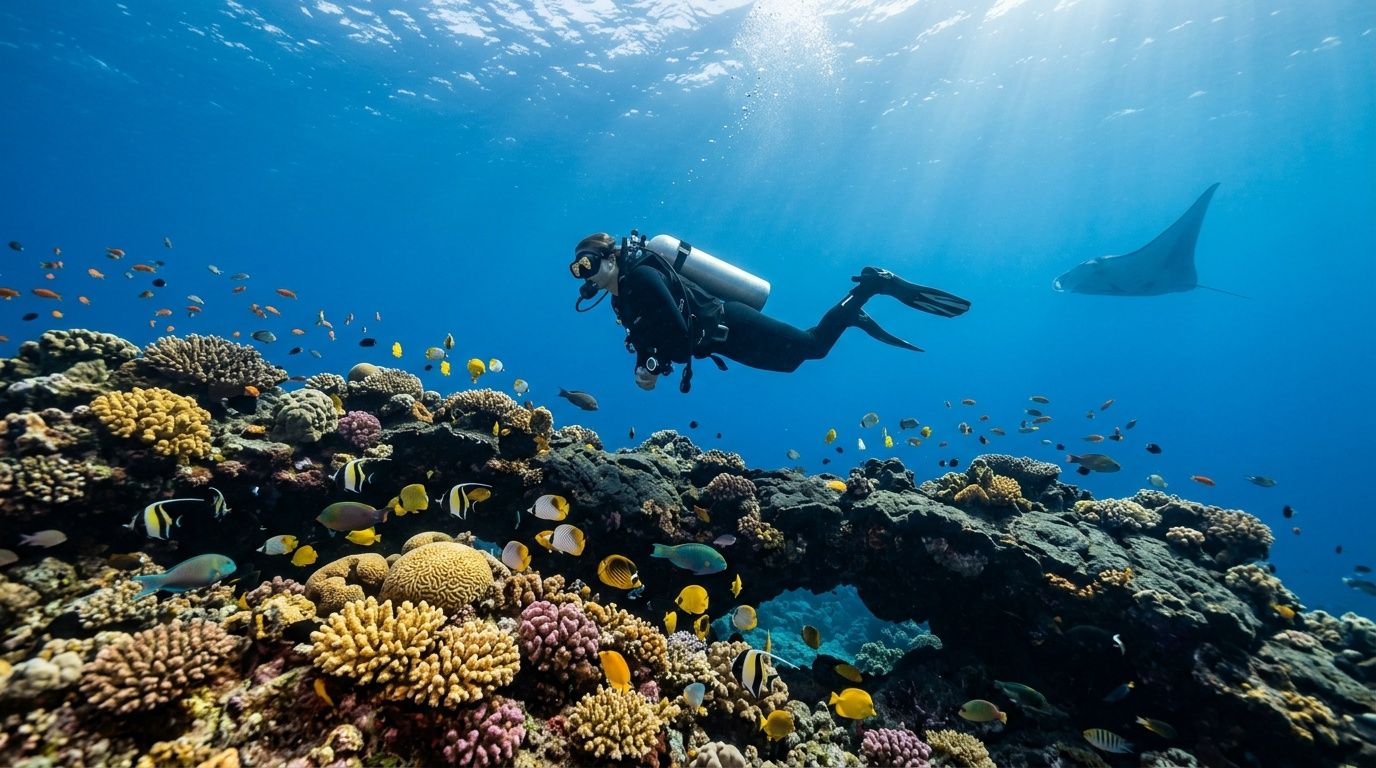
Warm blue water, black lava contours, schools of reef fish, and that first easy breath through a regulator. That’s the trip many people are trying to plan when they search for scuba hawaii. They want the postcard version, but they also want the truth. Do you need certification? Is Kona really better? Is scuba worth the effort if you can also snorkel?
The short answer is yes, Hawaii is one of the world’s standout dive destinations. But the better answer is more practical. The right underwater experience depends on your comfort in the ocean, your schedule, your training, and what you most want to see.
Some travelers should absolutely book dives. Others will have a better trip with a night snorkel or a Kealakekua Bay snorkel day. The smartest approach is to match the activity to the experience you want, not the one that sounds most impressive on paper.
Your Hawaiian Underwater Adventure Awaits
A first Hawaii descent sticks with people.
You drop below the chop, the surface noise fades, and the water opens into clear blue space. Lava rock forms ridges, shelves, and swim-throughs. Sunlight moves across the reef. A turtle passes without any hurry at all.
That’s the pull of scuba hawaii. It doesn’t feel like a generic tropical dive trip. The underwater terrain looks volcanic because it is volcanic. The marine life feels distinctive because so much of it is found only here. And when conditions line up on the Big Island, especially off Kona, the whole experience feels unusually easy to enjoy.
Most visitors arrive with one of three goals.
- Try scuba once: You want to breathe underwater safely and see if diving is for you.
- Use your certification well: You’re already certified and want the dives that justify the flight.
- See the signature wildlife: Mantas, turtles, reef fish, and lava structure matter more than the label attached to the activity.
Some of the best Hawaii ocean days don’t come from choosing scuba over snorkeling. They come from choosing the right tool for the site.
That matters in Kona. Some encounters are better from the bottom on scuba. Others are better from the surface with a mask and snorkel. Knowing the difference saves time, money, and disappointment.
Why Hawaii is a Top-Tier Scuba Destination
Hawaii earns its reputation with a rare combination of scale, visibility, terrain, and marine life. The islands host over 1.5 million scuba dives annually, support more than 215 licensed dive shops, have visibility that often exceeds 100 feet, and more than 25% of marine species are endemic, according to this Hawaii diving overview.

What Hawaii does differently
A lot of warm-water destinations offer coral and fish. Hawaii adds volcanic architecture.
That changes the dive. Instead of long stretches of similar reef, you get lava formations, arches, tubes, and sharp terrain changes that make even a moderate-depth dive feel dramatic.
Three features make Hawaii stand out:
- Volcanic topography: Lava-built reef structure creates caves, folds, ledges, and swim-throughs that feel very different from sand-and-coral destinations.
- Exceptional visibility: Clean water changes everything. Navigation is easier, photography improves, and large reef scenes become more memorable.
- Endemic species: You’re not just seeing tropical fish. You’re seeing a marine community shaped by isolation in the Pacific.
For a broader island-by-island planning view, this guide to the best diving Hawaii islands is useful.
Why Kona keeps winning
Every main island has diving. Kona is the place many experienced guides point travelers first.
The reason is practical, not romantic. The Kona coast is known for consistently favorable diving conditions, access to volcanic reef systems, and a mix of beginner-friendly and advanced experiences in the same general area. That makes it easier to plan multiple water days without building your whole trip around one fragile weather window.
Practical rule: If you have limited vacation days and want the strongest odds of actually getting in the water, prioritize Kona.
That advantage matters whether you’re doing a first supervised dive, booking a manta night dive, or stacking several days of reef diving.
Getting Certified Your Path to Diving in Paradise
The question comes up on almost every Hawaii dive inquiry. Do you need to be certified?
Sometimes yes. Sometimes no.
If you want a supervised first experience, you can start with Discover Scuba Diving. If you want to dive with a buddy and access standard certified-diver trips, you need Open Water certification. If deeper recreational sites are your goal, you’ll eventually need additional training.
PADI standards set the progression clearly. Discover Scuba Dives are capped at 12 meters (40 feet), Open Water divers are certified to 18 meters (60 feet), and a Deep Diver specialty is required for the recreational limit of 40 meters (130 feet), as outlined by PADI depth limit guidance for Hawaii training.
The no-cert entry point
Discover Scuba works well for travelers who are curious but not ready to commit to a full course.
You’ll learn basic gear use, breathing, ear clearing, and simple underwater communication. Then you’ll dive under direct instructor supervision at shallow depth.
That format works because it strips away the pressure. You’re not trying to master everything in one day. You’re trying to answer a simpler question: do you enjoy this enough to keep going?
When full certification makes more sense
Open Water is the better move if any of these sound like you:
- You want independence: Certification lets you dive with a buddy on standard recreational dives.
- You travel often: One course opens doors well beyond Hawaii.
- You care about skill, not just access: Buoyancy, trim, and situational awareness matter far more than most beginners realize.
A lot of reef protection comes down to diver control. If your buoyancy is loose, your fins hit coral. If your awareness is poor, you chase animals or stir up the bottom. Good training fixes that early.
For travelers comparing options before booking training, this Hawaii scuba diving guide offers additional context.
A simple decision table
| Your situation | Best fit |
|---|---|
| You want to try scuba once on vacation | Discover Scuba Diving |
| You want to dive again later on this trip or future trips | Open Water certification |
| You’re already certified and want more range | Advanced or specialty training |
| You want deeper recreational profiles | Deep Diver specialty |
When choosing an operator in Kona for scuba training or guided diving, Kona Honu Divers is a strong option because they focus specifically on diving in Kona waters.
What works and what doesn’t
What works is honest self-assessment. If you’re nervous in open water, start shallow. If you haven’t been diving in a while, don’t make a specialty night dive your first splash back.
What doesn’t work is treating certification like paperwork. The card matters less than the skill behind it. In Hawaii, especially around lava structure and moving water, a calm diver with solid basics will enjoy the trip far more than a rushed diver who barely finished the course.
Kona's Unforgettable Dives Manta Rays and Black Water
You drop in after sunset off Kona, descend through dark water, and a wall of light brings the ocean into focus. On one night, giant manta rays bank overhead in slow, controlled passes. On another, there is no reef at all, just blue-black water and a stream of strange pelagic life rising from the depths. Kona offers both experiences, and they feel completely different.

The manta night dive
The manta dive is Kona’s signature scuba experience because the format works well for both wildlife viewing and diver control. Divers stay settled in a designated area near the bottom while lights attract plankton into the water column. The mantas come to feed, circling and gliding through the beams with a grace that still catches experienced divers off guard.
For divers interested in the behavior behind the encounter, this explanation of why manta rays gather near Kona after dark adds useful context.
This is also where honest trip planning matters. If you are certified and comfortable at night, the scuba version gives you the full underwater perspective from below the action. If you are traveling with non-divers, younger family members, or anyone who does not want to get certified first, a manta night snorkel can be the smarter choice. You still get a strong wildlife encounter, often with simpler logistics and less pressure.
If manta ray diving is your priority, Kona Honu Divers has trip details for their manta dive.
The black water dive
Black water diving asks for a different mindset.
You head offshore at night, descend into open ocean, and stay with a lit downline and tethered setup over very deep water. There is no lava ledge to reference and no coral to study. The entire draw is the nightly vertical migration, when larval fish, jellies, squid, and transparent pelagic animals rise toward the surface and drift through the lights.
Divers who love black water usually love it for that reason. It feels rare, technical, and slightly surreal. Divers who dislike it usually miss the structure of a reef and do not enjoy hanging in the water column with no bottom in sight.
That trade-off is real. A manta dive tends to win with travelers who want a famous Kona experience and a clear visual payoff. Black water tends to win with experienced divers who have already done plenty of reef and night dives and want something they cannot easily find elsewhere.
The Black Water Night Dive tour is the relevant trip page if that experience is the goal.
Where rebreathers fit
On the technical side, rebreathers can extend bottom time and reduce bubble noise during deeper Kona diving. One Hawaii technical diving overview notes that trained rebreather divers may log bottom times of 3 to 4 hours compared with roughly 45 to 60 minutes on open-circuit scuba, while also producing fewer bubbles around marine life (rebreather diving overview for Hawaii).
For vacation divers, that point is mostly background. For trained technical divers, it changes the kind of profiles they can plan and the way they observe shy animals.
What to book first
If you only have room for one signature Kona night experience, book based on comfort level, not bragging rights.
Choose the manta dive if you want the classic Big Island underwater memory and you are already certified for scuba. Choose black water if unusual pelagic life interests you more than reefs, and you are fully comfortable in dark open water. Choose a manta night snorkel if your group includes non-divers or anyone who wants a top-tier marine encounter without certification.
If you are trying to line up boat days, hotel nights, and a backup weather plan, this guide on the best time to book your hotel can help you organize the trip cleanly.
When to Plan Your Hawaii Dive Trip
Hawaii is a year-round dive destination, but trip timing still shapes the experience.
Surface conditions, water feel, and the atmosphere on the boat can shift by season. So can what you hear or see around you.
Summer favors ease
On the Big Island, summer usually feels simpler.
The ocean is often calmer, entries are less stressful for new divers, and warm-water comfort helps people relax faster. The verified Hawaii diving data notes that summer water temperatures range from 77 to 80°F (24 to 27°C), with calm seas improving accessibility for both beginners and experienced divers in Kona conditions, as summarized in the earlier statewide Hawaii diving source.
That’s a good reason to lean summer if your group includes first-timers.
Winter adds a different kind of magic
Winter trips can be excellent too.
You may trade some of that easy summer feel for a more dramatic seasonal atmosphere. On some days, the big bonus isn’t visual at all. It’s hearing humpback whale song underwater while you dive.
How to plan the rest of the trip
Dive travel gets better when your hotel, boat days, and backup land days line up cleanly.
If you’re trying to sync flight prices, room rates, and a dive-heavy schedule, this guide on the best time to book your hotel is a practical planning resource.
A simple approach works well:
- New divers: Favor calmer-season dates.
- Wildlife-focused travelers: Build around the encounters you care about most.
- Families or mixed groups: Leave room for one non-dive ocean day in case someone decides snorkeling is the better fit.
Amazing Alternatives When Snorkeling Shines
You arrive in Kona with one boat day left, one traveler in your group is certified, two are not, and everyone wants the kind of underwater memory they will talk about for years.
That is where snorkeling often wins.
Scuba earns the prestige, but Hawaii is one of the few places where a snorkeler can have a first-rate marine experience without treating it like a lesser option. On many Big Island outings, the smart choice is the one that matches your group, your comfort in the water, and how much time you want to spend training versus watching wildlife.

Why snorkeling can be the right call
A lot of Hawaii's payoff sits in shallow, clear water.
If your goal is to see healthy coral, dense reef fish life, sea turtles, and strong visibility, snorkeling can cover most of what casual visitors hope to experience, without adding a certification schedule, heavier gear, or the task loading that comes with scuba. That is especially true in places such as Kealakekua Bay, where much of the reef activity is easy to appreciate from the surface.
For trip planning, this guide to snorkeling Kona gives a solid overview of the sites that suit snorkelers best.
Manta ray night snorkel versus manta dive
This is one of the clearest choices in Hawaii, and the better option depends on what kind of encounter you want.
On a manta dive, divers settle below and watch the animals glide overhead through the light beams. On the night snorkel, guests stay at the surface and hold onto a light board while mantas feed just beneath them. I tell travelers to pick the snorkel if they want the shortest path to a close manta experience. Pick the dive if they already love scuba itself and want the added perspective of watching the whole scene from below.
For travelers who want that encounter without certification, the Manta Ray Night Snorkel is a direct fit. When comparing operators, Manta Ray Night Snorkel Hawaii is another strong option.
Captain Cook is a snorkel-first site
Kealakekua Bay makes the case fast.
The bay has excellent visibility, strong fish density, and reef structure that starts shallow. Divers still enjoy it, but snorkelers do not give up much there, which matters if your group includes kids, non-divers, or anyone who wants a beautiful ocean day without a training barrier.
For that experience, Captain Cook Snorkeling Tours is an exceptional alternative when you’re looking for a Captain Cook snorkel tour.
A practical comparison
| If you want… | Better choice |
|---|---|
| To breathe underwater and explore reef structure from below | Scuba |
| The easiest path to mantas without certification | Manta night snorkel |
| A family-friendly reef day in clear shallow water | Captain Cook snorkel |
| More training depth and technical progression | Scuba |
Kona Snorkel Trips offers small-group snorkel outings, including manta ray night snorkels and Kealakekua Bay trips.
In Hawaii, the premium choice is the one that fits the site, the conditions, and the people in your group.
Dive Safe and Protect Hawaii's Reefs
Good Hawaii diving starts with discipline.
That means staying within your training, choosing operators who brief well, and treating the reef as a living place rather than a photo backdrop.

The safety side
Hawaii rewards calm decision-making. It punishes casual overconfidence.
The verified statewide safety data notes that between 2020 and 2024 Hawaii ranked second in the U.S. for per-capita resident drownings, with 187 lives lost across ocean activities, which is why guided, responsible water use matters in practice, as summarized in the earlier statewide Hawaii diving source.
For divers and snorkelers, the basic rules don’t change:
- Stay inside your limits: Depth limits and ocean comfort levels exist for a reason.
- Use guided support when needed: Local knowledge matters in changing conditions.
- Don’t force the day: If you’re tired, uneasy, or underprepared, simplify the plan.
The reef side
Coral damage usually isn’t dramatic. It’s small and careless.
A knee on coral while adjusting a mask. A fin kick in shallow reef. A hand placed on rock that turns out to be living coral. Better buoyancy and better awareness prevent most of that.
For sunscreen planning before a snorkel or dive day, this guide to reef-safe sunscreen tips for snorkeling Big Island Hawaii is worth reading.
Citizen science is growing
More travelers want their ocean time to do something useful.
That interest lines up with a real trend. Programs like NOAA’s Hawaiʻi Diving and Snorkeling Survey allow tourists to contribute data for reef protection, according to NOAA’s overview of the Hawaiʻi Diving and Snorkeling Survey.
Respect for wildlife starts with distance. The best encounters happen when you stop trying to control them.
If conservation matters to you, ask operators whether they support reef-friendly practices, wildlife guidelines, and community science participation.
Frequently Asked Questions About Diving in Hawaii
What’s the difference between the manta ray scuba dive and the manta ray snorkel
Your position in the water changes the whole experience.
On the dive, you watch from below as mantas pass overhead. On the snorkel, you watch from the surface as they feed beneath the lights. Scuba feels immersive. Snorkeling is easier to access and often works better for mixed-age groups.
Is scuba hawaii good for beginners
Yes, if beginners choose the right format.
A supervised introductory dive is the right starting point for most first-timers. Beginners usually have a better experience when they avoid advanced profiles, night dives, or ambitious itineraries on day one.
Should I pick Kona over the other islands
If your priority is diving quality and trip reliability, Kona is the safe bet.
It offers the strongest combination of signature wildlife encounters, lava reef structure, and broad fit for both new and experienced divers.
When is snorkeling a better choice than scuba
Snorkeling wins when your goals are shallow reef life, easy logistics, lower commitment, or a manta encounter without certification.
That’s especially true for Kealakekua Bay and for many travelers considering the manta experience.
How far ahead should I book
Book early if you care about a specific date, especially for night activities and small-group boats.
The more specialized the trip, the less wise it is to leave it to chance.
If you’re weighing scuba against snorkeling on the Big Island, start with the experience you want most. For travelers who want a simple, guided way to get in the water and see Kona’s marine life without scuba certification, Kona Snorkel Trips is a practical place to begin.