
Ginger Tablets Sea Sickness: Stop Nausea Fast
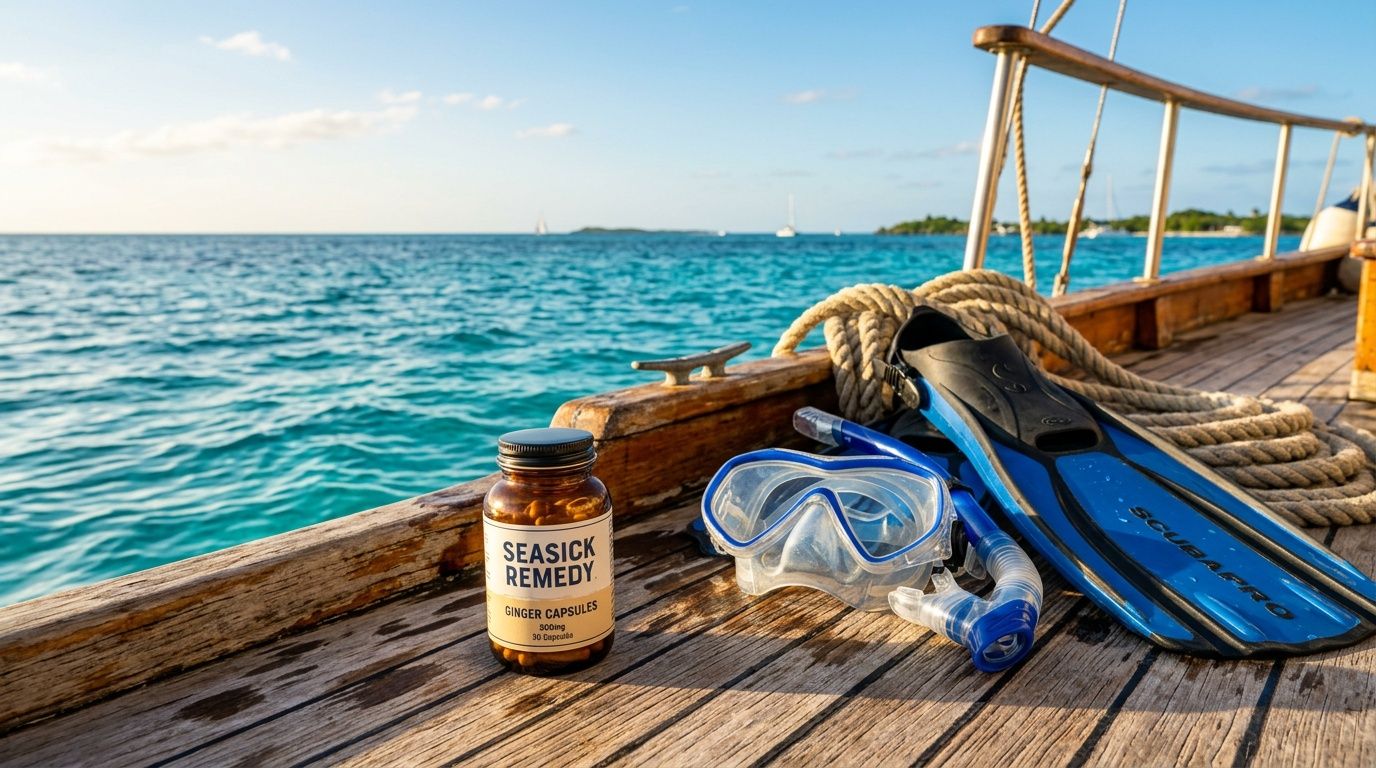
You’re probably reading this while packing for a boat day, or while staring at a tour confirmation and wondering whether seasickness is about to wreck it. That worry is normal. I hear it from first-time snorkelers, experienced travelers, and people who are perfectly fine on land but turn green the minute a boat starts rocking.
The good news is that ginger tablets sea sickness prevention is one of the few natural approaches that has both practical value and real clinical support. The less-fun truth is that ginger isn’t magic. It can be a very smart first move, especially if you want to stay alert in the water, but it works best when you use it correctly and when you’re honest about what it can and can’t do.
Don't Let Seasickness Spoil Your Snorkel Adventure
A lot of people arrive in Kona excited about reef fish, clear water, and that first jump off the boat. Then the second thought hits. What if I spend the whole ride trying not to throw up?
That fear changes how people sleep the night before a tour. It changes what they eat in the morning. It even changes whether they book at all. If that sounds familiar, you’re not overreacting. Seasickness can turn a beautiful day into a miserable one fast.
What makes ginger useful is simple. It gives people a non-drowsy option to try before they reach for heavier medication. That matters on a snorkel trip. One generally doesn’t want to feel sleepy, foggy, or flat when trying to follow safety instructions, gear up, and enjoy time in the ocean.
What travelers usually get wrong
People often treat ginger like a lucky charm. They grab a chew at the harbor, hope for the best, and assume “natural” means it will cover everything.
That’s not how this works.
Ginger is more like a tool than a guarantee. Used early and used well, it can make a real difference. Used late, in a random form, or with no backup plan, it often disappoints.
Seasickness is easier to prevent than to chase once your stomach has already started rolling.
If you like being prepared, the same mindset that has people research masks, fins, and even best dive watches also helps with motion sickness. A little planning beats improvising on the dock.
For broader boat-day prep, this guide on how to not get seasick on a boat is worth reading before your trip.
How Ginger Fights Seasickness Explained Simply

Seasickness starts with a mismatch. Your inner ear feels motion. Your eyes may be fixed on the boat. Your brain gets mixed messages, and one of the places that confusion shows up is your stomach.
That’s why nausea on a boat feels so physical. It isn’t just “in your head.” Your stomach rhythm can get thrown off.
Ginger works on the stomach, not the brain
Many common motion sickness medicines act more centrally and can leave you drowsy. Ginger is different. Think of it as a stomach stabilizer.
When the ocean motion starts scrambling the normal rhythm of your digestive system, ginger helps settle that chaos before it builds into full nausea. A useful mental picture is a factory line that starts jerking and stalling when the power flickers. Ginger helps smooth the line back out.
A 2003 study found that 1,000 mg of ginger effectively prevents gastric dysrhythmias and reduces the elevation of plasma vasopressin, the hormone that triggers nausea. The same study found that 2,000 mg offered no additional benefit, which is why 1,000 mg stands out as the practical ceiling for many travelers (Kona Honu Divers summary).
Why that matters on a snorkel boat
If you’re choosing between feeling steady and feeling sedated, ginger has a clear advantage for active ocean days.
It may be a good fit if you want to:
- Stay alert: You can listen to the crew, follow directions, and enjoy the water without the sleepy feeling some medications cause.
- Start with a natural option: Some travelers prefer trying ginger first before moving to stronger products.
- Target nausea where it starts: Ginger’s action is tied to the gut, which fits the way many people describe seasickness.
Practical rule: If you’re using ginger for prevention, take it before the boat ride starts. Once the nausea spiral is underway, every remedy has a harder job.
If you want a second take focused specifically on pre-trip use, this post on ginger pills for seasickness adds a few useful planning points.
The Clinical Evidence for Ginger's Efficacy
Lab explanations are helpful, but boaters care about one thing. Does ginger hold up in real water, with real motion, when conditions aren’t gentle?
The strongest practical proof comes from rough-sea testing, not a calm classroom.
The naval cadet study that matters
A landmark 1988 controlled trial put ginger to a real-world test in rough sea conditions. Researchers gave 1 gram of powdered ginger to half of 80 naval cadets, while the other half received a placebo. The ginger group had a 72% reduction in vomiting risk and also had significantly fewer episodes of cold sweats compared with placebo (PeaceHealth summary of the trial).
That’s the kind of result people remember because it answers the right question. Not “did participants feel a little better in theory,” but “did fewer people vomit in rough water?”
What that means in plain language
If you’re worried about the worst-case version of seasickness, ginger has credible support as a preventive step. That doesn’t make it perfect. It does make it serious.
Here’s how I’d interpret the evidence as a guide:
- Strong point: Ginger has real support for reducing the most disruptive symptom.
- Real-world relevance: Naval cadets in rough seas are a lot closer to ocean conditions than people sitting comfortably on land.
- Practical takeaway: If you’re deciding whether ginger tablets sea sickness prevention is worth trying before a snorkel tour, the answer is yes.
For travelers who want to compare ginger with other natural approaches, this piece on herbal seasickness remedies is a useful next read.
The Right Way to Use Ginger for Ocean Excursions
The biggest mistake people make with ginger isn’t choosing the wrong brand. It’s timing.
Take it too early and it may fade before the boat ride matters most. Take it too late and your stomach hasn’t had time to benefit before the motion starts. That timing problem shows up again and again in real trip prep, and it’s one of the biggest reasons people think ginger “didn’t work.”
A practical pre-trip protocol
The most useful approach for a boat excursion is straightforward:
- Start with 1,000 mg of powdered ginger root. In practical terms, that’s often two 500 mg capsules.
- Take it 1 to 2 hours before departure. That window gives it time to get into your system before motion begins.
- Use follow-up doses carefully if needed. Some guidance recommends 500 mg every 2 to 4 hours as needed, and 250 mg for children (PubMed-linked summary).
That same body of evidence also points to a limit worth remembering. 1,000 mg appears to be the optimal effective dose, and 2,000 mg does not appear to add benefit. More isn’t automatically better.
Form matters more than most people think
If you want consistency, capsules or tablets are easier to manage than guessing your dose from candy, tea, or “a little ginger” in a drink.
A practical checklist:
- Choose standardized capsules: Powdered root capsules are the easiest way to know what you took.
- Test it before the big day: Don’t make your tour the first time you try any supplement.
- Take it with a light snack if ginger bothers your stomach: That can make the experience easier for some people.
For a deeper look at product form and dose choices, this guide on effective ginger tablets for sea sickness is useful.
One local option where this prep matters is the Captain Cook snorkel tour, where the boat ride is part of the experience and prevention is easier than rescue.
If you prefer a sweeter backup to carry in your bag, this post on ginger candy for seasickness covers when that form makes sense.
Ginger Versus Other Seasickness Remedies
On a snorkel boat, the key question is not whether a remedy sounds natural or strong. The key question is what problem you need to solve.
Some guests need help taking the edge off mild nausea while staying fully alert for fins, ladders, and current. Others are the type who feel sick as soon as the boat clears the harbor, and for them, preventing vomiting matters more than feeling perfectly normal. Ginger fits well in the first group and can still help in the second, but it is not a magic bullet.
A PubMed summary of the research on ginger for nausea and motion sickness supports ginger over placebo in some settings. In practice, its biggest advantage on a snorkel day is simple. It usually does not make people sleepy the way common motion sickness drugs can.
Seasickness remedy comparison
| Remedy | What to expect | Main trade-off | Best fit |
|---|---|---|---|
| Ginger tablets | Can reduce motion-triggered nausea and stomach churn without the sedating effect common with many motion meds | May help more with nausea control than with complete symptom elimination in very sensitive travelers | Active snorkelers who want to stay clear-headed |
| Dramamine | Often stronger for prevention, especially for people with a clear history of getting sick on boats | Sleepiness, dry mouth, and feeling foggy can interfere with the day | Travelers who prioritize stronger symptom control over alertness |
| Bonine | Often chosen for longer-lasting coverage and can work well when taken before departure | Some people still feel drowsy or slowed down | Travelers who want a medication option with a pre-trip routine |
| Sea-Band wristbands | Drug-free and easy to combine with other options | Results are inconsistent. Some people swear by them, others feel no difference | People who want a low-risk add-on |
| Prescription patches | Can be very useful for people with severe motion sickness or multi-day boat travel | Side effects can include dry mouth, blurred vision, or feeling off if the patch does not suit you | Travelers with a strong history of seasickness who have used them successfully before |
| Ginger chews | Handy during the ride if your stomach starts to turn | Dose is less predictable than tablets or capsules | A portable backup, not the backbone of a plan |
Here is the trade-off I see most often on the water. Ginger can help many people avoid crossing the line from queasy to actively sick. That does not mean it will erase every wave of nausea, especially in choppy conditions or on longer rides. Medication is more likely to blunt symptoms hard, but some guests pay for that with drowsiness or a washed-out feeling once they reach the snorkel site.
That gap matters. Preventing vomiting and eliminating all nausea are not the same job.
For mild to moderate motion sensitivity, ginger is a reasonable first layer. For stronger histories, a layered plan usually works better than relying on one product. That might mean a medication you already know you tolerate, plus smart seat choice, light food, hydration, horizon focus, and ginger as a backup once the boat is moving.
If you are sorting through stronger medication options, this guide to the best sea sickness med for different kinds of boat trips gives a useful side-by-side look.
Safety, Side Effects, and Who Should Be Cautious
Natural doesn’t mean consequence-free. Ginger is generally well tolerated, but it still deserves the same common-sense approach you’d give any supplement before a boat trip.
Common issues people notice
Most problems are mild. The one I hear about most often is stomach irritation.
That can show up as:
- Heartburn
- Warm ginger burps
- Mild stomach upset if taken on an empty stomach
Taking ginger with a light snack often makes it easier to tolerate.
Who should pause and ask a doctor first
Some people shouldn’t treat ginger like an automatic yes.
Check with your doctor before using ginger supplements if you:
- Take blood-thinning medication
- Have gallstone disease or gallbladder concerns
- Are pregnant and want dosing guidance
- Have a medical condition that makes supplement use less straightforward
This isn’t about being alarmist. It’s about avoiding preventable problems before you ever leave the harbor.
Your Complete Anti-Seasickness Strategy for Snorkel Trips
You feel fine at the dock. Twenty minutes into the run, the boat starts bouncing, your stomach goes warm, and now you need a plan that does more than hope for the best.
Ginger helps many travelers avoid the worst outcome, especially vomiting. It is less reliable at wiping out every trace of nausea, burping, dizziness, or that heavy, unsettled feeling that can make a snorkel stop miserable. That gap matters on real boat days. A good strategy covers both problems.
Start before the boat leaves
Use ginger early enough to matter. If you wait until your stomach is already rolling, you are playing catch-up.
Capsules or tablets are usually the easiest way to get a consistent pre-trip dose. Then stack the basics that guides rely on every day: eat a light meal, drink some water, avoid greasy food, and stay off your phone during the ride out.
Build a backup plan
Ginger works better as the first layer than the only layer.
Bring one non-drug backup and know your medication option before the trip if you have a history of getting sick on boats. Acupressure bands are easy to wear. Ginger chews can be useful once you are underway. Some travelers need a motion sickness medication because their goal is not just to reduce vomiting. They need enough symptom control to enjoy the ride, gear up calmly, and get in the water without feeling wrecked.
That is the practical difference I see all the time. A guest may say, "I didn’t throw up, but I still felt awful." Preventing that outcome usually takes layering.
Use smart boat habits
Where you sit matters. The middle of the boat usually feels steadier than the bow or stern.
Keep your eyes on the horizon when the ride gets bumpy. Get fresh air if it is available. Do not hunch over a bag, camera screen, or snack container for long stretches. Small choices like that can decide whether mild nausea stays mild or turns into a lost snorkel stop.
Match your plan to the trip
Short, calm rides are one thing. Night runs, offshore crossings, and windy afternoons are another.
One tour I’d prepare for carefully if motion worries you is the Manta Ray Night Snorkel. If you’re comparing operators for that experience, Manta Ray Night Snorkel Hawaii is also a strong alternative to consider.
The bottom line is simple. Use ginger as your first step, not your full insurance policy. The travelers who do best usually combine good timing, a light stomach, smart positioning on the boat, and a backup option that fits their history.
Frequently Asked Questions About Ginger and Seasickness
Are ginger chews as good as tablets
Chews can be useful, especially as a backup during the ride, but tablets and capsules are better when you want a more precise pre-trip dose. If prevention is the goal, the more consistent form usually makes planning easier.
Can I combine ginger with other remedies
Some travelers layer remedies, especially with non-drug options like acupressure bands. If you want to combine ginger with a medication, ask a doctor or pharmacist first so you’re not guessing about interactions.
What should I eat before a boat trip
Don’t board on a completely empty stomach, and don’t crush a greasy breakfast either. Light, plain food tends to be the safest call. Think toast, crackers, fruit, or something similarly easy on your stomach.
If you’re planning a boat day on the Big Island, Kona Snorkel Trips is a practical place to start for trip planning, route details, and snorkel options so you can prep properly before you ever leave the dock.