
Diving Hawaii: The Ultimate 2026 Diver’s Guide
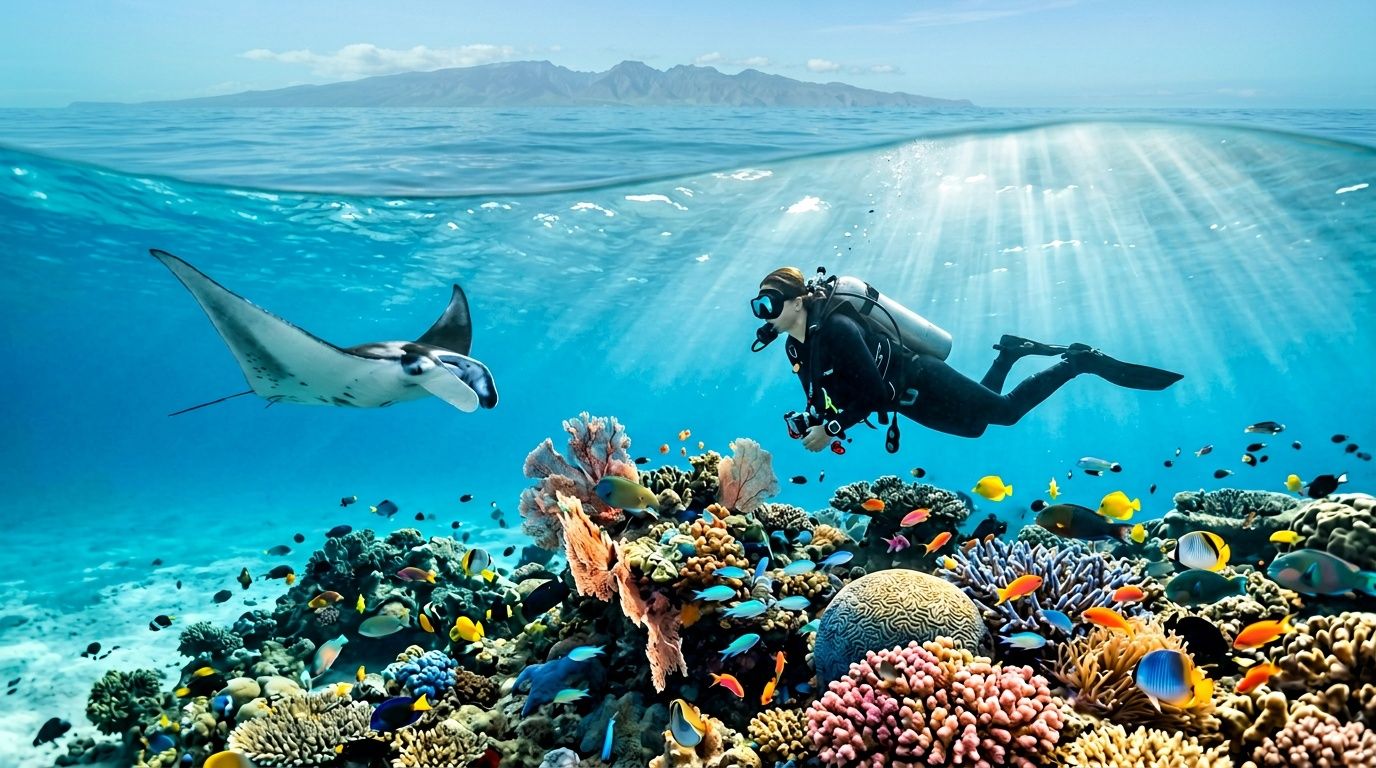
You’re probably in one of two places right now. You’re either staring at flight options and trying to decide which island gives you the best underwater experience, or you’ve already booked Hawaii and want to avoid wasting precious ocean days on the wrong tour, wrong gear, or wrong expectations.
That’s smart. Diving Hawaii rewards good planning more than almost anywhere else. The islands look similar from a distance, but underwater they offer very different days. Some spots are best for snorkeling. Some are built for scuba. Some are forgiving for beginners, and some only shine if you already have strong buoyancy, good gas management, and the patience to wait for the ocean to come to you.
The biggest mistake visitors make is treating all Hawaiian ocean tours as interchangeable. They aren’t. If you want manta rays, reef dives, lava tubes, wrecks, blackwater, or a family-friendly snorkel in protected water, the best choice depends on both the island and whether you plan to breathe through a regulator or stay on the surface.
Welcome to Your Hawaiian Underwater Adventure
You roll off the boat, put your face in the water, and the first thing that hits you is the contrast. Blue water. Black lava. A green sea turtle moving across the reef like it owns the place. Hawaii has that effect right away, and it feels different from the first few fin kicks.

What makes Hawaii stand out is not just warm water or clear days. It is the underwater geology. These islands were built by lava, and that shows up on nearly every good day in the ocean. You are not just swimming over reef. You are working around ledges, fingers of lava, arches, drop-offs, and hard volcanic structure that changes how a site dives and how a site snorkels.
That distinction matters.
Snorkelers usually want protected water, easy surface conditions, and reefs that show well from above. Divers can take better advantage of depth, structure, lava tubes, and night conditions. I always tell visitors to choose the operator for the activity, not just the island. If the goal is a surface-focused day with easy access to marine life, start with a guide to snorkeling in Hawaii and book accordingly. If the goal is scuba, pick a crew set up for diver pacing, site selection, and in-water support.
Why the underwater terrain feels different
Volcanic geology gives Hawaiian dive sites more shape than many first-time visitors expect. That shape changes the whole experience.
- Navigation takes more attention: Lava formations create corners, swim-throughs, and relief that can make a shallow dive feel more technical than the depth suggests.
- Light drops faster over dark bottom: Black rock absorbs light, so colors fade sooner and sites can feel deeper than your computer says.
- Marine life uses structure: Turtles rest in ledges, reef fish stack up around rock, and rays often patrol edges where the bottom changes.
For snorkelers, that same geology can be a trade-off. Dramatic structure looks great from the surface, but surge and broken lava shoreline can make entries awkward. A site that is fantastic on scuba is not automatically the best snorkel stop.
What first-timers usually get wrong
Visitors often arrive expecting every Hawaii ocean day to feel easy. Some days are easy. Some require better timing, calmer conditions, and an honest look at your comfort level.
The first day is where good trips are won or lost. Divers who choose a manageable first charter usually settle their weighting, adjust to the visibility, and enjoy the rest of the trip more. Snorkelers who start in protected water tend to stay relaxed, breathe better, and see more.
My rule is simple. Pick the first day for comfort, then build toward the bucket-list stuff.
That approach works especially well in Hawaii, where snorkeling and scuba can both be excellent, but rarely shine for the exact same reasons.
Choosing Your Island Where to Dive in Hawaii
If your main goal is scuba, island choice matters more than hotel choice. Hawaii isn’t one uniform dive destination. Each island has a different underwater personality, different logistics, and a different balance between beginner comfort and advanced opportunity.
Hawaii Island stands apart
The Big Island deserves first place for most divers. It features over 1,000 diverse dive sites, with the Kona coast often boasting visibility surpassing 100 feet and water temperatures of 75-85°F, which makes it unusually reliable for a wide range of divers and trip styles (verified reference).
That reliability is a big deal. When people ask where I’d send a diver who wants the strongest all-around odds of clear water, varied sites, and famous signature dives, I send them to Kona.
For general Big Island scuba planning, Kona Honu Divers is the operator I’d point serious scuba travelers toward. They’re set up for the kind of diving most visitors come to Kona for.
Hawaii Island Diving Profile Comparison
| Island | Best For | Typical Visibility | Key Dive Types |
|---|---|---|---|
| Big Island | Most divers, from first-time Hawaii visitors to experienced scuba travelers | Kona coast often surpasses 100 feet | Manta night diving, lava tubes, reef diving, advanced night experiences |
| Maui | Travelers mixing topside sightseeing with a few classic ocean days | Conditions vary by site and day | Crater diving, reef dives, snorkeling-friendly days |
| Oahu | Divers who like wrecks and a more urban trip base | Conditions vary by coast and weather | Wreck diving, reef diving, deeper profiles for experienced divers |
| Kauai | Divers who want dramatic terrain and a less mainstream dive trip | Conditions vary more with weather exposure | Lava formations, caverns, reef structure |
What works best on each island
Big Island
Kona is the most dependable pick for a dedicated dive trip. It suits mixed groups well too. Certified divers can chase night dives and lava features, while non-divers and families still have access to strong snorkeling and wildlife-focused outings.
Maui
Maui works well for travelers who want a balanced vacation, not a dive-only trip. It’s a good island for people splitting time between beaches, scenic drives, and a modest number of in-water excursions.
Oahu
Oahu is a strong choice if wrecks are high on your list. Advanced divers often enjoy it more than casual vacation divers because the appeal leans toward specific profiles rather than broad all-around ease.
Kauai
Kauai feels more rugged in every sense. When conditions line up, it can be memorable. When they don’t, your options can narrow faster.
If scuba is the centerpiece of your trip, Kona usually gives you the fewest compromises.
For a broader island-by-island breakdown, this guide to the best diving Hawaii islands is worth reading before you lock in flights.
Signature Hawaiian Dives You Cannot Miss
You booked Hawaii for clear water and unforgettable marine life. Now comes the part that shapes the whole trip. Choose the right activity first, then choose the operator that specializes in it.
That distinction matters more here than visitors expect. A great scuba operation is built around diver ratios, site selection, gas management, and in-water supervision. A great snorkel operation is built around surface comfort, easy water entry, float support, and helping non-divers enjoy the same ocean safely. If you want the best version of each, book them separately.

Manta rays from below on scuba
The manta night dive in Kona earns its reputation because the encounter is controlled, close, and surprisingly peaceful. Divers settle in, keep a clean profile in the water, and let the rays circle through the lights above. Done properly, it feels less like a chase and more like a front-row seat.
For scuba divers, the right pick is the manta ray dive with Kona Honu Divers. They are set up for divers, not surface guests trying to fit into a dive schedule.
Good buoyancy makes this dive. So does restraint. Divers who hover gently and keep their fins still usually get the best passes. Divers who try to turn every few seconds, kick upward, or track the animals around the site often miss the best moments.
If you want a second scuba day after mantas, look at lava tubes, reef structure, or a more advanced offshore profile rather than trying to force every highlight into one night.
Manta rays from the surface on snorkel
The snorkel version is a different experience, and for plenty of travelers it is the better one. You stay on the surface, hold onto the light board, and watch the mantas rise straight toward you out of the dark. Families, first-time ocean guests, and mixed groups often enjoy this format more because it removes the scuba workload while keeping the main attraction.
For that experience, the dedicated choice is the Kona manta ray night snorkel tour. If you’re comparing operators, Manta Ray Night Snorkel Hawaii is also an exceptional alternative.
Guests usually have a better time when they understand what the mantas are doing before the boat leaves the harbor. This guide on why manta rays gather near Kona after dark helps set expectations and makes the encounter easier to appreciate once you’re in the water.
Stay still, breathe slowly, and let the mantas do the work. Calm guests usually get the best show.
Blackwater for advanced divers
Blackwater is one of the most unusual dives in Hawaii, and it is not a casual add-on. You head offshore at night, suspend over deep water, and watch larval fish, squid, jellies, and other pelagic life drift through your light beam. There is no reef to orient from. That changes the mental side of the dive as much as the physical one.
Divers who do well here already have steady buoyancy and solid comfort in darkness and open water. If that describes you, the black water night dive with Kona Honu Divers is worth serious consideration.
The trade-off is straightforward. The wildlife can be extraordinary, but the dive asks more from you. If your buoyancy still gets sloppy when task-loaded, save blackwater for a later trip.
Captain Cook and Kealakekua Bay for snorkeling
Kealakekua Bay is one of the easiest places in Hawaii to prove that snorkeling deserves its own spot on the itinerary. The bay regularly offers clear water, healthy reef, and a layout that works well for people who want a high-quality ocean day without scuba training or gear complexity.
For that style of outing, Captain Cook Snorkeling Tours is an exceptional alternative when you’re looking for a Captain Cook snorkel tour.
I recommend this for families, newer swimmers, and divers taking a day off between tank dives. It is rewarding without being overly technical, and that matters on a vacation. A smart Hawaii plan often looks like this: serious scuba with a dive-focused operator, dedicated snorkel days with a snorkel-focused operator, and no compromise bookings in the middle.
Planning Your Dive Trip Seasons Safety and Certifications
You finally get to Hawaii, the boat is loaded, the water looks inviting, and then important trip-planning questions show up fast. Are you dressed warmly enough for a second or third dive? Is this the right season for the kind of underwater day you want? Are you booking scuba dives that match your actual recent experience, or would a snorkel day serve you better?
Those calls shape the trip more than people expect.
Conditions and timing
Kona is one of the easier places in Hawaii to plan around because the leeward coast stays protected from the trade winds. That usually means reliable diving conditions, clear water, and temperatures that stay comfortable by tropical standards year-round, as noted by Wet Rocks Diving on Kona conditions.
That does not mean every month feels identical in the water. Winter can bring cooler air, more surface chop on some days, and long intervals that leave lightly dressed divers shivering by dive two. Summer often feels easier for people who chill quickly, especially if they are doing multiple boat days back to back.
Whale season adds something special to the Big Island. You may hear humpbacks underwater, and surface intervals can turn into wildlife viewing without any extra planning. I tell guests to treat that as a bonus, not the reason to force a marginal dive day.
The bigger planning point is choosing the right activity for the day. If conditions are pleasant and you want maximum underwater time, scuba makes sense. If you have non-divers in the group, a lay day between dives, or family members who want reef, fish, and easy logistics, snorkeling can be the smarter call. Hawaii rewards travelers who separate those experiences instead of booking one operator and hoping they do both equally well.
Certification really does shape your options
Certification sets the ceiling. Your recent comfort level sets the floor.
Open Water divers
A basic certification goes a long way in Hawaii if your buoyancy is under control and you have been in the water recently. Many reef dives and standard boat sites are realistic options. The mistake I see is booking by reputation alone. A famous site is only fun if you can relax there.
Advanced divers
Advanced training opens up more of the diving people fly here to do, especially night dives, deeper profiles, and sites that demand steadier trim and better awareness. The card matters, but recent experience matters more. Someone with fifty solid dives in the last year is usually easier to guide than someone with an old advanced card and a five-year break.
Non-certified travelers
You still have good choices. A Discover Scuba program can work well if you want close supervision and a first controlled look underwater. For plenty of Hawaii visitors, though, snorkeling is the better fit. It gives you access to excellent marine life without adding task loading, equalization problems, or the pressure of learning scuba skills on vacation.
For a broader planning reference, this local guide to Hawaii scuba diving conditions and trip planning covers the basics well.
Safety calls that matter in Hawaii
Good Hawaii diving starts with conservative decisions. Lava coastlines, surge, night conditions, and repetitive dive days punish sloppy judgment faster than many visitors expect.
- Match your first dive to your current ability. Your best dive from years ago does not count as your starting point today.
- Treat night diving as its own skill set. Tasks that feel simple in daylight get slower in the dark.
- Listen to local site advice. Entry points, surge patterns, and current can change the feel of a dive quickly along volcanic shoreline.
- Protect your no-fly window. Hawaii trips often end with a tight travel day, and that is a bad time to get casual about surface intervals.
- Pack for warmth, not just the posted water temperature. Repetitive dives and wind on the ride back matter.
- Use gear you already trust when possible. A familiar mask, computer, and exposure setup reduce stress. If you track swims and ocean sessions between trips, this guide to smart watch swimming is a useful read before you go.
A relaxed diver notices more, breathes better, and makes better decisions. That is true on scuba, and it is just as true for snorkelers choosing whether to get in, stay in, or call the day early.
Choosing a Reputable Operator and Packing Essentials
The right operator can turn a decent Hawaii trip into a smooth one. The wrong one can leave you rushed, overmatched, or stuck in a group that wasn’t screened well for the conditions.
What to look for in an operator
Start with how they talk about safety. Good crews don’t hide it behind marketing language. They brief clearly, tell you what the site requires, ask real questions about your experience, and don’t treat every guest as interchangeable.
For scuba on the Big Island, Kona Honu Divers gets frequent attention from travelers comparing serious dive operations in Hawaii. For snorkeling, choose operators that are clearly built around guiding people in the water, not just transporting them to it.

Pack the items that actually matter
Some visitors overpack hardware and forget the basics that affect comfort. Others bring nothing and then regret using rental versions of the items that need to fit well.
Bring these if you have them:
- Mask that fits your face: A familiar mask solves more problems than an expensive fin upgrade.
- Dive computer: If you use one regularly, bring your own so the interface is second nature.
- Certification card and log access: Digital is fine if you can pull it up quickly.
- Exposure layer you know you’ll wear: Especially if you get cold on second and third dives.
- Reef-safe sun protection: Your neck, hands, and tops of feet take a beating in Hawaii.
Rent these if travel simplicity matters more:
- BCD and regulator setup: Fine to rent from a reputable shop unless you’re very particular.
- Weights and tanks: Almost never worth worrying about in advance.
- Fins: Bring your own only if fit or performance is important to you.
A useful extra for swimmers and snorkelers
If you track workouts or water sessions, a dependable watch strap matters more than people think. Salt, repeated swimming, and boat handling are hard on gear. This guide to smart watch swimming is a practical read if you want a setup that won’t annoy you in the water.
The best packing list is the one that removes friction. Bring the gear you notice when it’s wrong.
Sample Hawaii Diving Itineraries
It helps to see how a real trip fits together. The strongest itineraries don’t just stack famous activities. They balance energy, certification level, and recovery.
Five-day Big Island plan
Day 1
Arrive, settle in, hydrate, and don’t rush into a demanding dive. If you’re jet-lagged or haven’t been underwater in a while, keep the first ocean session easy.
Day 2
Book a daytime two-tank scuba charter in Kona. This is your calibration day. Sort out weighting, refresh your buoyancy, and get your head back into local conditions.
Day 3
Make it a snorkel day at Kealakekua Bay. This works especially well if you’re traveling with non-divers or just want a lower-effort marine life day before a night activity.
Day 4
Do the manta experience. If you’re certified and comfortable at night, choose the scuba version. If you want the easiest access with broad group appeal, choose the snorkel version instead.
Day 5
Leave the final day flexible. Strong options include another daytime scuba charter, a rest morning followed by a casual shoreline afternoon, or preserving your no-fly window before departure.
Seven-day multi-island plan
This works best for travelers who care about seeing more than one island, not for people trying to maximize dive count.
| Day | Plan | Why it works |
|---|---|---|
| 1 | Arrive on Big Island | Easy start, no rush |
| 2 | Kona reef diving | Best all-around scuba base |
| 3 | Manta night experience | Signature Kona activity |
| 4 | Kealakekua Bay snorkel or rest | Lower-impact reset day |
| 5 | Fly to Maui or Oahu | Shift from dive-heavy to mixed itinerary |
| 6 | Island-specific ocean day | Crater, reef, or wreck focus depending on island |
| 7 | Dry out and depart | Conservative finish before flying |
What people should not do
- Don’t front-load every demanding activity. Fatigue catches up fast.
- Don’t put a late dive right before a flight. Build in breathing room.
- Don’t force scuba and snorkel into the same morning if one deserves full attention.
A good Hawaii itinerary feels roomy. The ocean rarely rewards people who schedule it too tightly.
Frequently Asked Questions About Diving in Hawaii
Is Hawaii good for beginner divers
Yes, especially if you choose conditions realistically and don’t start with the most famous advanced-sounding dive on the menu. Beginner-friendly reef diving exists, particularly on the Kona coast.
Is Kona really the best place for diving Hawaii
For most scuba travelers, yes. It offers the broadest mix of reliability, famous wildlife encounters, and varied sites in one destination. If your trip is dive-centered, it’s the safest first recommendation.
Can non-divers still have a great underwater trip
Absolutely. Hawaii is one of the easiest places to build a great ocean vacation without scuba certification. Snorkeling, manta night snorkels, and protected bays can deliver memorable marine life encounters.
Do I need to bring all my own scuba gear
No. Most travelers do best bringing personal fit items like mask and computer, then renting the larger kit. The exception is experienced divers with strong preferences about their setup.
Are manta ray tours worth it
Yes, if your expectations are right. They’re not adrenaline chases. The best manta experiences are calm, respectful wildlife encounters built around positioning and patience.
What marine life might I see
Green sea turtles are common highlights. Reef fish are abundant. Manta rays are the signature draw in Kona. Seasonal whale activity can add another layer to the trip in winter.
Is snorkeling or scuba better in Hawaii
Neither is universally better. Scuba gives you access to structure, depth, and quieter wildlife observation. Snorkeling is easier, more inclusive, and often the better fit for families or mixed groups.
If you want one simple takeaway, it’s this. Book the activity that matches how you prefer to be in the ocean, not the one you think sounds more impressive.
If you want a trip that’s easy to book, well guided, and memorable for both first-timers and experienced ocean lovers, Kona Snorkel Trips is a strong place to start. As Hawaii’s top rated and most reviewed snorkel company, they’re especially well suited for travelers who want small-group attention, thoughtful safety standards, and standout Big Island experiences like manta ray night snorkeling and Kealakekua Bay adventures.