
Saddle Wrasse Identification at Kealakekua Bay
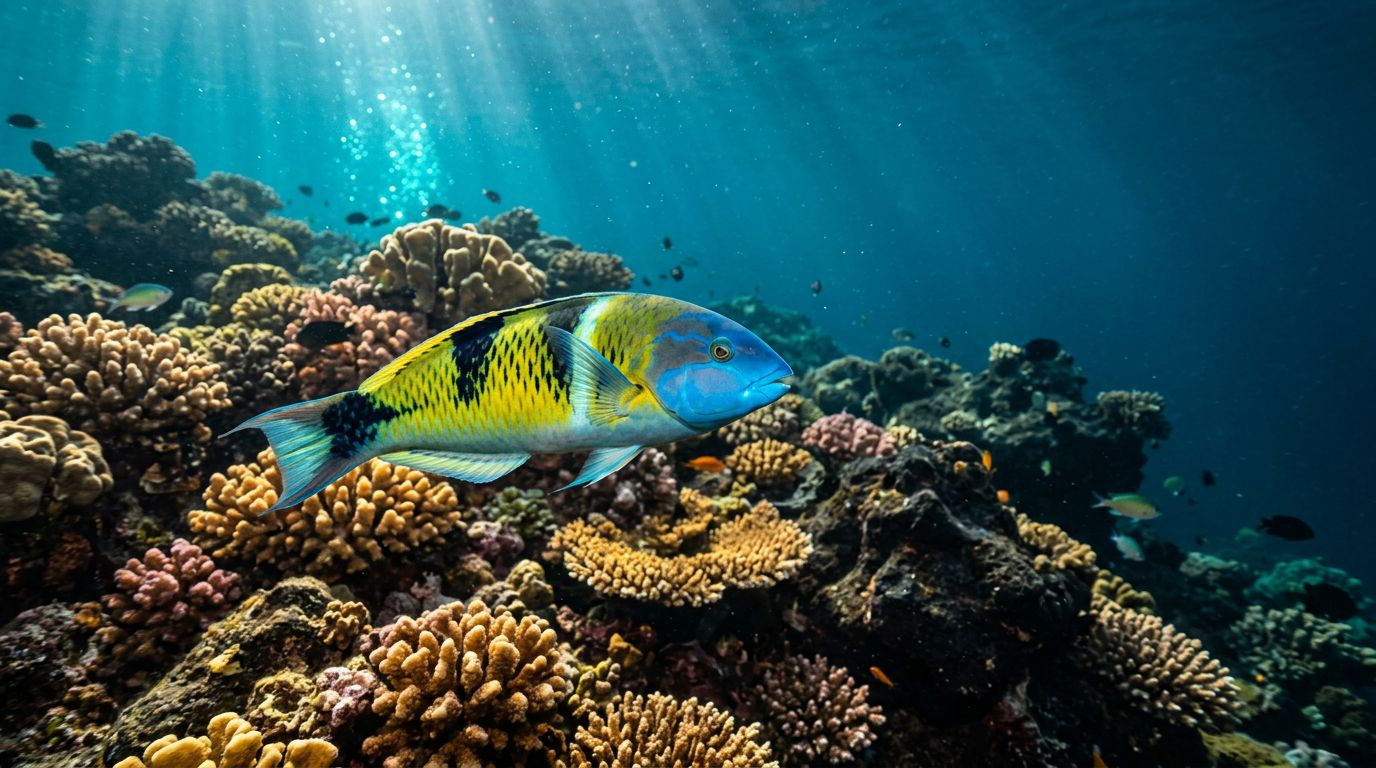
A quick flash of green, yellow, and blue can disappear before you decide what you saw. With reliable saddle wrasse identification, you can recognize one of Hawaii’s most interesting reef fish during a single pass over Kealakekua Bay.
The saddle wrasse is small, fast, and easy to confuse with other colorful reef fish. You need to study its body shape, swimming style, markings, and habitat instead of relying on color alone. Once you know what to watch for, your snorkeling Big Island Hawaii experience becomes more observant and rewarding.
What Makes the Saddle Wrasse Special in Kealakekua Bay?
The saddle wrasse, Thalassoma duperrey, is native to the waters around the Hawaiian Islands and Johnston Island. You may also hear it called hinalea lauwili, its Hawaiian name. The fish belongs to the wrasse family, a large group known for active swimming, changing colors, and strong differences between juvenile and adult phases.
Kealakekua Bay offers good conditions for spotting this species. The bay has clear water, rocky reef structure, coral growth, and areas where smaller fish feed close to the bottom. FishBase lists the saddle wrasse in clear lagoons and seaward reefs, which matches the kind of habitat you can explore around the bay.
You may see a saddle wrasse near the reef surface, above coral heads, or along the edge of a rocky ledge. It rarely stays still for long. Instead, it moves in short bursts, pauses to inspect the reef, and then slips behind a coral outcrop.
Its name comes from a darker saddle-like marking on the body. However, the mark may look stronger or softer depending on the fish’s age, sex, angle, and lighting. Sunlight passing through the surface can also change the way its colors appear.
The most dependable clue is the combination of body shape, swimming motion, and location. Color alone can lead you to the wrong fish.
Saddle Wrasse Identification: Field Marks to Look For
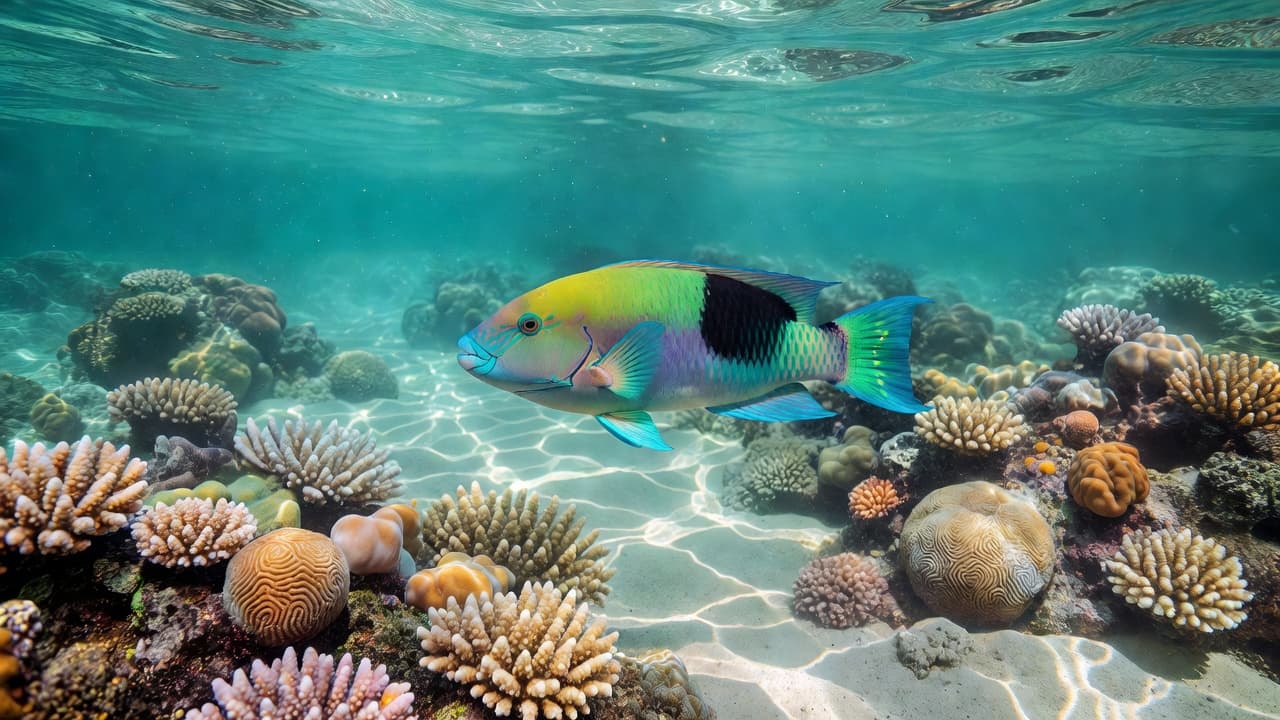
When you snorkel over the reef, start with the fish’s outline. A saddle wrasse has a slim, streamlined body and a pointed head. Its mouth sits at the front of a narrow snout, giving it a sharper profile than many deeper-bodied reef fish.
The dorsal fin runs along the top of the body. You may see the fish hold this fin low as it moves, so don’t expect a tall, obvious fin silhouette. Its tail is forked, and the body tapers toward the rear.
Color changes make identification more difficult. Adult males and females can look different, and younger fish may lack the clean contrast you expect from a field guide photograph. Depending on the fish, you may notice green, blue, yellow, gray, or brown tones.
Look for these combined clues:
- A slender body rather than a round or deep body
- A pointed snout and small terminal mouth
- A darker saddle-like area behind the head or forward section of the body
- Blue or green tones that shift as the fish turns
- A quick, alert swimming pattern above reef structure
- Pectoral fins that beat up and down in a noticeable flying motion
That last clue is especially useful. Saddle wrasses often use their side fins in a fluttering motion that makes them appear to fly through the water. The movement is different from the steady tail-driven swimming of a yellow tang or surgeonfish.
The iNaturalist saddle wrasse profile is useful for comparing photographs across different life phases. You can also review the FishBase species summary, which lists the species’ Hawaiian range and reef habitat.
Watch the Fish Before You Study the Colors
Many snorkelers try to identify fish while chasing them with their eyes. That approach makes fast wrasses harder to recognize. Instead, watch the fish for several seconds before deciding what it is.
Notice how it holds its body. Does it hover above the reef, then dart forward? Do its pectoral fins move in a flying rhythm? Does the fish keep returning to the same coral head or rock edge?
A saddle wrasse may change direction several times while you watch. Its movements often look deliberate rather than frantic. If you stay still, it may pass close enough for you to see the contrast between its body colors and the darker saddle marking.
You can also use the fish’s neighbors as a clue. Saddle wrasses often move through mixed reef communities, so you may see them near surgeonfish, butterflyfish, parrotfish, and damselfish. Their narrow profile helps separate them from species with taller bodies or broader heads.
Where to Look for Saddle Wrasses in Kealakekua Bay
Kealakekua Bay has different underwater zones, and each one changes how you search. A sandy bottom may attract some fish, but saddle wrasses are easier to find where sand meets rock, coral, or algae-covered reef.
Start by scanning the water a few feet above the reef. Don’t look only at the surface or directly into cracks. Saddle wrasses often swim over structure instead of hiding inside it.
Pay attention to:
- Coral heads with open water around them
- Rocky reef edges
- Small channels between coral formations
- Areas where the bottom changes from sand to hard reef
- Sheltered sections with gentle current
Morning trips often provide calm visibility and clear overhead light. However, conditions vary with wind, swell, tide, and recent weather. A calm surface makes it easier to hold your position while watching smaller fish.
You don’t need to cover a large area. Choose one reef section and observe it carefully. A slow search usually produces more sightings than swimming quickly from one location to another.
Kealakekua Bay is also a place where your distance from the reef matters. Stay far enough away to avoid kicking coral with your fins. When you stop moving, tuck your fins behind you and use your arms only when needed. This helps protect the reef and gives fish more reason to remain nearby.
If you want a guided visit focused on the bay’s clear reef habitat, you can review the Kealakekua Bay snorkeling tour offered by Kona Snorkel Trips. A guide who knows the area can help you distinguish a quick wrasse sighting from a similar-looking fish.
How to Tell a Saddle Wrasse from Similar Hawaiian Reef Fish
Colorful fish can look alike when you view them through a mask. The table below gives you a practical comparison for common fish you may notice around Hawaiian reefs.
| Fish | Body shape | Main clue | Typical mistake |
|---|---|---|---|
| Saddle wrasse | Slim and streamlined | Saddle marking, pointed snout, fluttering pectoral fins | Mistaking a young fish for another wrasse |
| Yellow tang | Deep-bodied and oval | Bright yellow body and narrow white tail spine area | Confusing its yellow color with a yellow-phase wrasse |
| Bird wrasse | Long, narrow body | More pronounced beak-like snout | Calling every slender green wrasse a saddle wrasse |
| Parrotfish | Thick-bodied with a rounded head | Beak-like teeth and heavier swimming style | Focusing on blue-green colors instead of body shape |
| Butterflyfish | Compressed, disk-like body | Strong vertical patterns and rounded profile | Mistaking a distant butterflyfish for a small wrasse |
The yellow tang is one of the easiest fish to separate. Its body looks taller and more oval, and its color is usually much more uniform. You should also avoid getting too close to its tail area because surgeonfish have a sharp spine near the caudal peduncle.
Bird wrasses create more confusion because they also have slender bodies and active swimming patterns. Their snouts are usually more extended and beak-like. A saddle wrasse tends to look more compact through the head.
Parrotfish have obvious bulk. Even when they show similar blue or green colors, their rounded heads and beak-shaped mouths give them away. They also often bite or scrape at the reef, while a saddle wrasse usually moves through the water column above it.
Butterflyfish have a flatter, taller profile. Their bold bands can be hard to see when the fish turns sideways, but the overall body shape remains more disk-like than a saddle wrasse.
The Hawaii fish identification discussion also highlights the saddle wrasse’s distinct pectoral-fin movement. Use that motion as a supporting clue when the colors are unclear.
Why Color Changes Can Mislead You
Saddle wrasse colors aren’t fixed like the paint on a sign. Light, depth, water clarity, and the fish’s life phase all affect what you see.
At the surface, strong sunlight can make blue tones appear brighter. At greater depth, red and yellow colors fade first, which may leave the fish looking green, gray, or dark. Shadows from coral can hide the saddle marking altogether.
The fish’s angle matters too. A wrasse facing away from you may show only a narrow tail and a streak of color. When it turns sideways, the body pattern becomes easier to read.
A younger fish may also look less dramatic than an adult. If you search only for a vividly marked fish with a strong saddle, you may miss less colorful individuals. Start with shape and behavior, then use color to confirm your guess.
Take a mental snapshot rather than forcing a name immediately. Ask yourself:
- Was the body slim or deep?
- Did the fish have a pointed or rounded head?
- Did the side fins beat in a flying motion?
- Was there a darker patch near the forward body?
- Did it swim above a reef or remain close to the sand?
You don’t need to answer every question perfectly. Two or three matching traits can give you a strong identification. If you take a photograph, review the body outline first. A blurred image may lose color, but it often keeps the fish’s shape.
Snorkeling Techniques That Give You Better Fish Sightings
Good fish identification starts with good water behavior. When you move slowly, you spend more time observing and less time chasing.
Keep your body level and your kicks controlled. A relaxed flutter kick creates less noise and fewer clouds of sand. If the water is calm, stop kicking for a few seconds and let your mask face the reef.
Avoid swimming directly at a fish. Approach from the side or pause in its path. A saddle wrasse may continue its normal route when you remain still, but it can turn away when you pursue it.
Your mask fit also matters. Leaks and fog pull your attention away from the reef. Before entering the water, adjust the strap and test the seal. Use well-fitting fins that let you move without excessive effort.
If you snorkel with children, give them one simple identification goal. Ask them to find a fish with a pointed nose and flying side fins. That keeps the search focused without turning the outing into a memorization exercise.
Photography requires the same patience. Let the fish come closer instead of thrusting your camera toward it. Turn off flash when possible, and never touch coral to steady your body. Reef-safe practices protect the habitat where you hope to find the fish again.
A guide can also help with safety and identification. Kona Snorkel Trips builds its excursions around small groups, lifeguard-certified guides, quality snorkeling gear, and reef-conscious practices. If you want to plan a guided reef outing, you can check availability for a Kona snorkeling tour.
Planning a Kealakekua Bay Snorkel Trip
Your choice of trip affects how much time you have for fish identification. A large, busy group can make it harder to pause over one reef section. A smaller guided outing gives you more space to observe and ask questions as you go.
Kona Snorkel Trips follows a “Reef to Rays” philosophy, with a strong focus on guest safety, marine education, and respect for volcanic reef ecosystems. The company offers guided ocean adventures around the Big Island, including reef snorkeling, manta ray encounters, whale watching, and private boat excursions.
For this topic, a morning Captain Cook or Kealakekua Bay trip is the most direct fit. You can spend time looking for saddle wrasses in clear reef water, while a guide points out other fish and explains how to avoid damaging coral.
Before booking, check the details that affect your day:
- Departure location and check-in time
- Trip length and time spent in the water
- Included mask, snorkel, fins, and flotation equipment
- Age and swimming requirements
- Weather and cancellation policies
- Group size and guide-to-guest attention
You should also bring a reef-safe sunscreen option, drinking water, a towel, and clothing that protects you from sun exposure. Leave jewelry and loose items on shore when possible.
The Captain Cook Monument snorkel tour is a practical option if your plans center on Kealakekua Bay. For a more personal schedule, Kona Snorkel Trips also offers private snorkel tours in Hawaii, which can suit families, couples, and groups with different comfort levels in the water.
How to Record Your Saddle Wrasse Sighting
A simple log helps you improve your identification skills. After you leave the water, write down the location, approximate depth, habitat, and the fish’s most visible features.
Record the date and time as well. Conditions can change the way colors appear, so noting the light and water clarity gives your photograph useful context.
A helpful entry might read:
“Kealakekua Bay, shallow rocky reef, clear morning water. Slim green-blue wrasse with a darker patch behind the head. Pectoral fins moved in a flying rhythm. Fish stayed above a coral edge and turned quickly when approached.”
This description is more useful than writing only “colorful wrasse.” It preserves the clues that support your identification.
If you photograph the fish, take several images without chasing it. One side view may show the body shape, while a second image may capture the saddle marking. Keep your original files because zoomed-in phone images can lose detail.
You can compare your notes with the iNaturalist profile after the trip. Avoid treating one photograph as absolute proof when the image is blurry or the fish is partly hidden. A careful identification can remain tentative until you compare shape, markings, movement, and habitat together.
Over time, you’ll begin recognizing the difference between a fish’s color and its pattern. That distinction helps you identify more Hawaiian reef species, not only the saddle wrasse.
Respecting the Reef While You Search
Kealakekua Bay’s clear water can make coral appear close enough to touch. Keep your hands, knees, and fins away from the reef. Even a light contact can break fragile coral or disturb small animals living among the branches.
Don’t feed fish or block their route. Feeding changes natural behavior and can draw animals toward crowded areas. Chasing fish for a photograph has a similar effect, especially when several swimmers follow the same individual.
Stay with your guide or group, and follow local instructions about protected areas. Ocean conditions can change faster than they appear from shore. A calm surface doesn’t always mean the current is weak.
Choose reef-safe personal care products, carry out all trash, and avoid collecting shells or rocks. These choices keep the bay healthy for the next group of snorkelers and for the animals you came to see.
The best saddle wrasse sighting often happens when you stop trying to control the encounter. Hold your position, watch the reef, and let the fish decide how close it wants to come.
Conclusion
Saddle wrasse identification becomes easier when you combine the fish’s slender body, pointed snout, saddle-like marking, and flying pectoral-fin motion. In Kealakekua Bay, look above rocky reef edges and coral structure rather than searching only across open sand.
Clear water helps, but patience matters more. Move slowly, protect the reef, and record the details you notice. When you snorkel Big Island waters with a careful eye, a brief flash of color can become a confident identification and a lasting memory of the bay.