
Where to Keep Rental Car Keys on a Kona Snorkel Tour
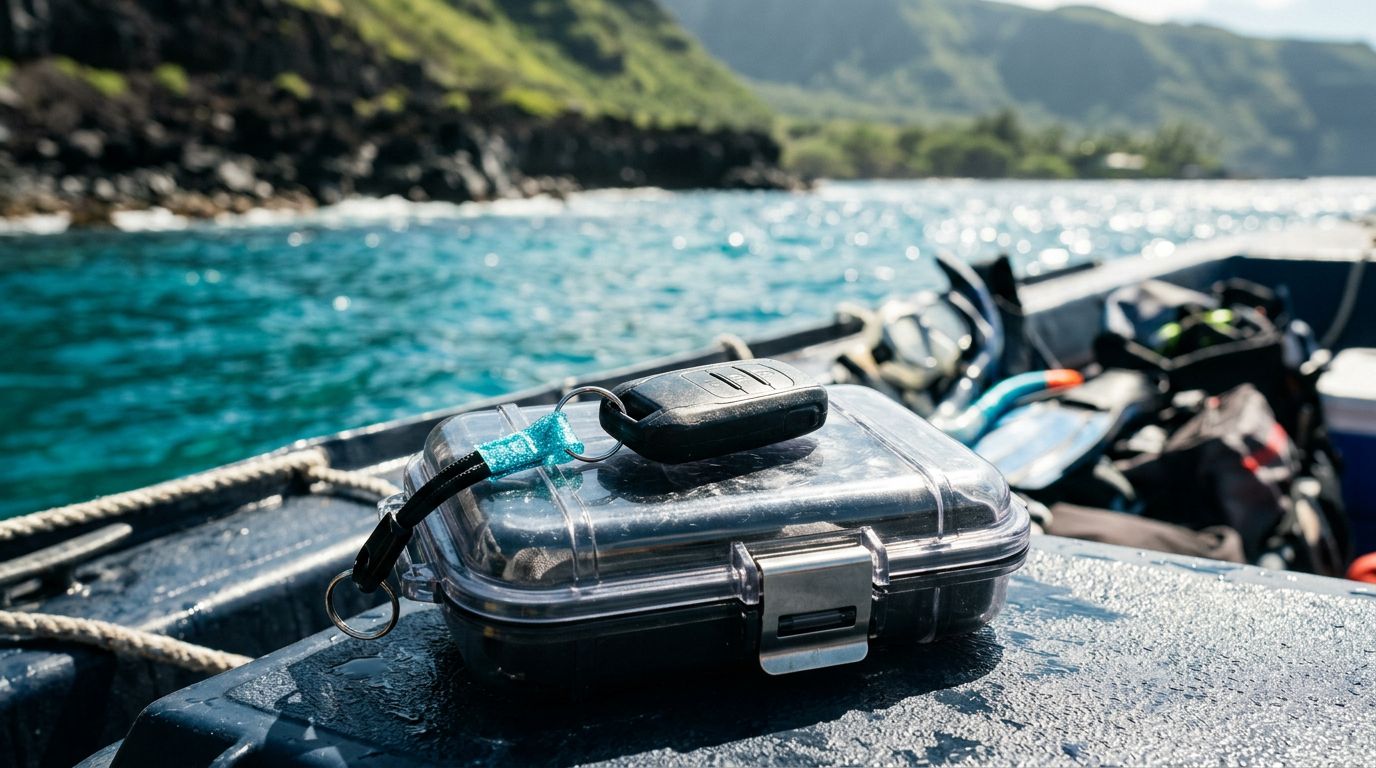
A single rental car fob can turn a relaxed ocean morning into a costly problem if it sits in your board shorts. If you’re searching for rental car keys Kona advice, the safest plan is to keep the key with a designated secure storage option on land or with the boat crew, never under a tire or loose in a beach bag.
Your choice depends on the key type, launch setup, and tour operator’s policy. Kona Snorkel Trips guests should ask where keys go before leaving the car, then bring only what they need for the water. The right routine takes less than a minute, so start with the decision that matters.
Rental Car Keys Kona: The Safest Default
The safest place for your rental key is a secure, dry location that you have confirmed with the tour operator. That might be a locked area at the departure point, a designated dry container on the boat, or with a trusted adult who stays on shore.
There isn’t one universal rule for every Kona snorkel tour. Some trips leave from a harbor, while others may use a beach or another waterfront meeting point. A boat crew may have a specific process for collecting keys, but you shouldn’t assume that every operator offers the same storage.
Ask these questions before you leave the parking area:
- Where should I leave my rental car key?
- Will the key stay on shore or go onto the boat?
- Is there a dry, secure storage area for electronic fobs?
- Who will retrieve the key after the tour?
- Should I bring the complete fob, a mechanical key, or neither?
If the crew instructs you to leave the key in the vehicle, follow the rental agreement and park in a legal, well-used area. Remove the key from sight, lock the car, and avoid obvious hiding places such as the wheel well, center console, or beneath a floor mat. Those spots are easy to check and don’t provide real security.
If nobody has explained where the key goes, ask before the boat leaves. Recovering a locked key from a Kona parking area is far harder after you’re offshore.
Families should choose one adult to handle the key. Couples can use the same system. Avoid passing the fob between several people, especially when everyone is carrying wet gear and preparing to enter the water.
Match the Storage Plan to Your Key Type
A traditional metal key and a modern electronic fob have different risks. Identifying what you received from the rental counter helps you choose the right storage method.
Traditional metal keys
A basic metal key is less sensitive to water than an electronic fob. However, saltwater can still cause corrosion, and a sharp key can puncture a thin plastic bag. Sand may also interfere with a lock or ignition.
If the rental company gives you a simple metal key, place it in a sturdy waterproof pouch or a small dry case. Keep it away from loose sand and rinse the pouch with fresh water after the tour if saltwater gets inside.
Don’t attach the key to a long lanyard and leave it hanging outside your swimwear. A loose strap can catch on boat rails, snorkeling equipment, or rocks near the entry point. A compact, sealed container is easier to control.
Electronic key fobs
Electronic fobs require more care. You shouldn’t assume that a keyless-entry remote is waterproof simply because it can handle a little rain. The rental agency, vehicle manufacturer, and fob design determine how much water exposure it can tolerate.
Never test the fob by placing it in a sink or bucket. You could damage a key that the rental company may charge you to replace. Ask the agency whether the vehicle includes a mechanical emergency key and whether you may carry it separately.
Even then, separating parts of the fob can create new problems. The mechanical key may open the door but fail to start the vehicle, or the alarm may sound. Follow the rental company’s instructions rather than improvising at the beach.
Waterproof pouches can help, but product quality varies. A beach discussion on Reddit about hiding car keys in Hawaii includes travelers who double-wrap keys in dry bags. Personal reports can offer ideas, but they don’t replace a properly sealed container or your rental agreement.
Compare Your Main Key Storage Options
You have several practical choices when you snorkel near Kailua-Kona. The best one depends on whether the operator provides storage and whether you need the vehicle during the outing.
| Storage option | When it makes sense | Main concern |
|---|---|---|
| Designated crew storage | The guide confirms a dry, secure location | Don’t toss the key into an unmarked bag |
| Secure shore storage | The departure facility offers lockers or staff storage | Confirm access and retrieval before boarding |
| Trusted adult on shore | Someone in your group doesn’t enter the water | The person must stay with the key |
| Sealed waterproof pouch | The operator allows you to carry the key | The pouch must be rated for immersion |
| Locked rental vehicle | The rental company or guide specifically recommends it | Hidden keys are easy to find |
| Hotel or lodging safe | Your schedule allows you to leave the key behind | You may need the car again afterward |
A designated crew container is often the simplest option when the operator offers one. Before placing your fob inside, ask how the crew keeps keys separated and how you’ll collect yours later. Never leave a loose key in a wet gear bin, cooler, or open console.
A shore locker can work well for a family with phones, wallets, and other items. Confirm that you can access it after the tour and that it isn’t located in an area open to the public. If the locker belongs to a beach facility, follow its rules and keep the rental agreement available.
When one person stays dry, that person can carry the key in a sealed pouch. This option is useful for families with young children, travelers who don’t plan to snorkel, or groups splitting into separate activities. The person carrying the key should keep it with them, not leave it in a towel bag.
Carrying a fob in the water is the last practical choice. Use it only when the operator permits it and the pouch is designed for full immersion. A waterproof phone sleeve isn’t automatically suitable for a key fob. The zipper, seams, and closure must all remain sealed.
Prepare Your Rental Car Keys Before Leaving
Your rental car keys Kona plan should be settled before you drive to the launch point. Five minutes of preparation can prevent a long call to the rental agency later.
- Read the rental agreement. Look for instructions about lost keys, damaged remotes, roadside service, and after-hours support. Replacement charges vary by vehicle and agency.
- Identify the complete key set. Check whether you have a smart fob, a metal emergency key, or both. Don’t remove or modify any part unless the rental company approves it.
- Bring only the necessary key. Leave spare keys, loyalty cards, extra cash, and other valuables at your lodging. A snorkel trip is easier when you carry less.
- Choose a legal parking space. Lock the car, close the windows, and remove visible bags. Don’t place the key beneath the car or in a magnetic box unless the rental agency specifically gives you that instruction.
- Ask at check-in. Tell the guide you’re driving a rental and ask about the current key procedure. Policies can change with the boat, departure site, or weather conditions.
- Keep the rental agency’s number available. Save it in your phone before entering the water. If your phone stays in the vehicle, write the number on a card and leave it with a trusted adult or in your lodging.
Don’t leave the engine running while you walk to the water. Some keyless vehicles can continue running without the fob nearby, but behavior varies by model. Running the vehicle also creates a security and rental-agreement problem.
If you’re planning a snorkeling trip on Hawaii’s Big Island, you may spend more time choosing fins, reef sites, and departure times than thinking about your key. Add key storage to your departure checklist before the morning gets busy.
What to Do With the Key Once You Board
If your key goes onto the boat, keep the process simple and visible. Tell the guide that you have a rental fob and place it where the crew directs you. Don’t hide it in your personal dry bag without telling anyone.
A good storage location should protect the key from spray, rain, wet towels, and accidental drops. It should also stay away from areas that guests open during the trip. An anchor locker, fishing compartment, or open equipment bin isn’t a suitable place for a loose electronic fob.
Use a pouch with a reliable closure and enough space to avoid bending the key. Don’t overfill it with sunscreen, coins, jewelry, or a phone. A crowded pouch can prevent the seal from closing correctly.
You should also avoid clipping the key pouch to the outside of a life jacket or swimwear. Snorkeling involves movement, climbing, and water entry. Anything attached externally can be lost or snagged.
When multiple guests have keys, ask how the crew identifies them. A simple description of the vehicle or a small personal tag can help, but don’t place your full name, room number, or home address on the pouch. Keep identification limited to what the crew needs.
The same care applies when you’re deciding how to snorkel the Big Island on a private outing. A small group may have more flexibility, but you still need a clear storage plan before the boat leaves.
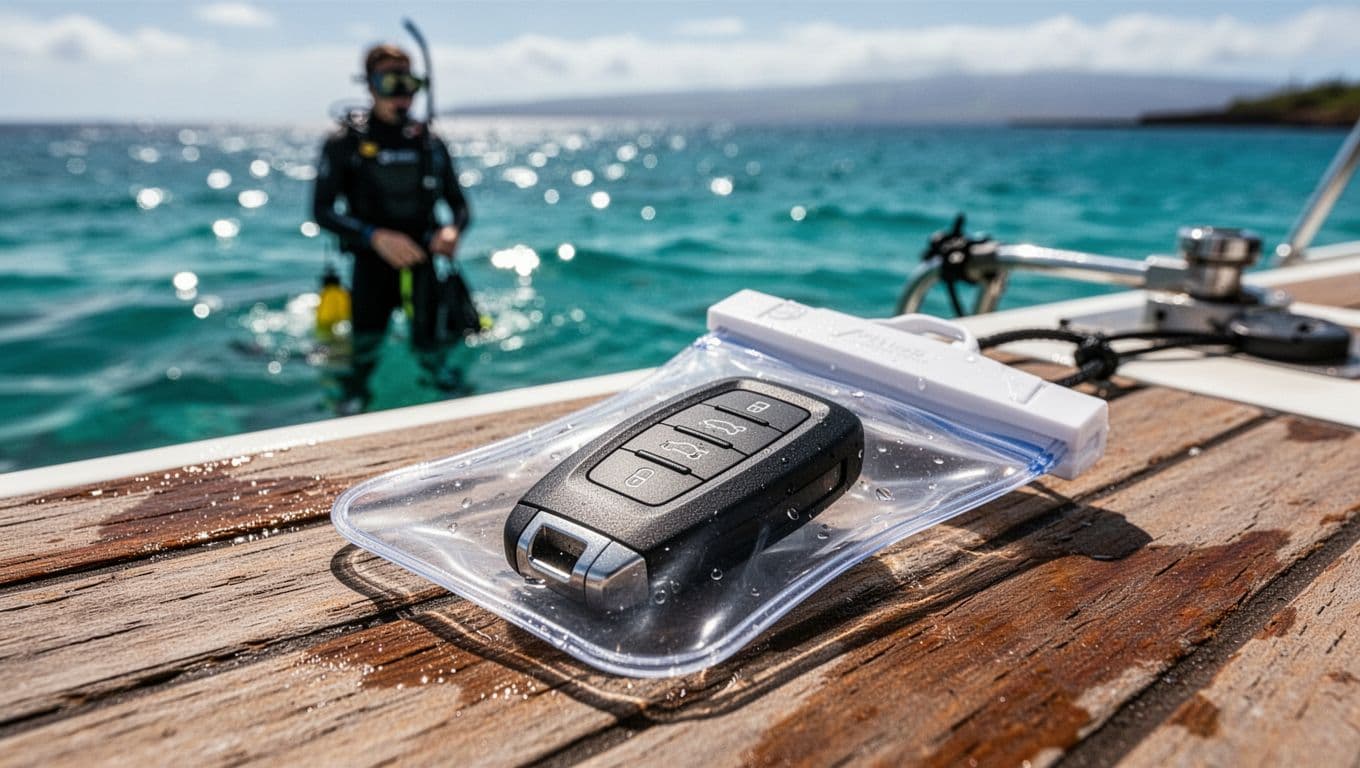
A forum conversation about keeping key fobs sand-free at the beach also points to waterproof pouches as a way to limit sand and moisture. Treat this as a storage idea, not proof that every pouch protects every vehicle key.
Ask Kona Snorkel Trips About Key Storage
Kona Snorkel Trips is a Kailua-Kona ocean adventure company built around a “Reef to Rays” philosophy. Its guided trips use small-group service, high-quality snorkeling equipment, reef-safe practices, and lifeguard-certified guides.
The company offers several types of ocean outings, including reef snorkeling, nighttime manta ray encounters, seasonal whale watching, and private boat trips. You can review its Big Island snorkeling tours before choosing the experience that fits your group.
Because the departure setup can vary, ask the crew about rental key storage when you book and again at check-in. The guide can tell you whether keys should remain in the vehicle, stay with a designated person, or go into a crew storage area. That answer is more useful than guessing based on another tour or another harbor.
Kona Snorkel Trips focuses on personal service and safety, but you still need to disclose that you’re carrying a rental key. A lifeguard-certified guide can explain the current procedure for the trip you’re taking. The company also uses specialized equipment for nighttime experiences, including custom-built lighted boards, so a night tour deserves the same careful key plan as a daytime outing.
For a daytime trip near Kealakekua Bay, you can review the Captain Cook snorkel tour details and ask about key storage before departure. If you prefer a nighttime outing, the Manta Ray night snorkel in Kona requires the same preparation, with extra attention to retrieving your belongings after dark.
You can check availability after you confirm the departure details and key policy.
Common Key Mistakes to Avoid in Kona
The most common mistake is hiding the key in or around the rental car. Travelers often use the glove box, wheel well, bumper area, or a bag under the seat because those places feel private. They are also predictable places for someone searching a vehicle.
Another mistake is assuming that a double plastic bag makes an electronic fob waterproof. Two thin bags can trap moisture, lose their seal, or tear against a sharp key edge. A properly designed pouch or operator-approved storage location is safer.
Don’t put the key in a towel, shoe, dry clothes bag, or snorkel fin pocket. Those items may be moved, rinsed, or loaded with other equipment. A small item can disappear quickly when the group returns from the water.
Leaving the full rental agreement and spare key in the vehicle is also risky. Carry only the item you need, and keep your documents at your lodging unless the rental company tells you otherwise.
A personal beach bag creates another weak point. Even if the key stays dry, the bag may be unattended while everyone swims. A waterproof pouch protects against water, not theft.
Finally, don’t wait until you are standing at the waterline to ask about storage. During check-in, the crew may be handling safety instructions, gear, and departure timing. Ask early so you can follow the procedure without rushing.
If the Key Gets Wet, Lost, or Locked Inside
If a key fob gets wet, don’t keep pressing the buttons to test it. Move it away from the water, dry the outside, and contact the rental agency for instructions. Some fobs allow battery removal, while others require a different response. Follow the vehicle and rental company’s guidance.
If you lose the key in the ocean, tell the guide immediately. Don’t enter the water again to search without direction. The current, depth, rocks, and boat traffic can create a bigger safety problem than the missing key.
When the key is locked inside the car, call the rental agency’s roadside assistance number. Don’t force a window, use a coat hanger, or ask an unapproved person to open the vehicle. Damage to a rental car can cost more than the original key problem.
If the key is missing after the tour, check the crew storage area, your dry bag, towels, vehicle seats, and the route between check-in and the parking area. Tell the operator before leaving. A key found quickly is easier to identify and return.
A Facebook group discussion about waterproof pouches for phones and keys reflects a common beach concern, keeping valuables dry while swimming. The practical lesson is broader: protect the key from water, but also keep track of who has responsibility for it.
After the tour, inspect the fob before returning to your lodging. If the pouch leaked, separate the key from wet items and contact the rental agency rather than waiting for problems to appear later.
Keep the Key Plan Simple
The best place for rental car keys on a Kona snorkel tour is a confirmed, dry, secure location. Ask the operator first, follow the rental agreement, and avoid hiding the key in or around the vehicle unless the rental company specifically directs you to do so.
Your preparation should also match the key. A metal key still needs protection from salt and sand, while an electronic fob needs extra caution because water damage can lead to replacement charges. Leave unnecessary valuables behind and assign one person to manage the key.
A snorkeling trip on the Big Island should be remembered for clear water and marine life, not a missing fob. Settle your rental car keys Kona plan before you board, and the question will be finished before the adventure begins.
Conclusion
Keep your rental key with a confirmed secure storage option, either with the tour crew, at an approved shore facility, or with a trusted adult who stays dry. Never rely on a hidden spot beneath the car or assume a regular key fob can handle saltwater.
When you book with Kona Snorkel Trips, ask about the current key procedure before departure. Once that detail is settled, you can focus on snorkeling, swimming, and enjoying the Kona coast without carrying your car problem into the ocean.