
Reef-Safe Sunscreen for a Manta Ray Night Snorkel
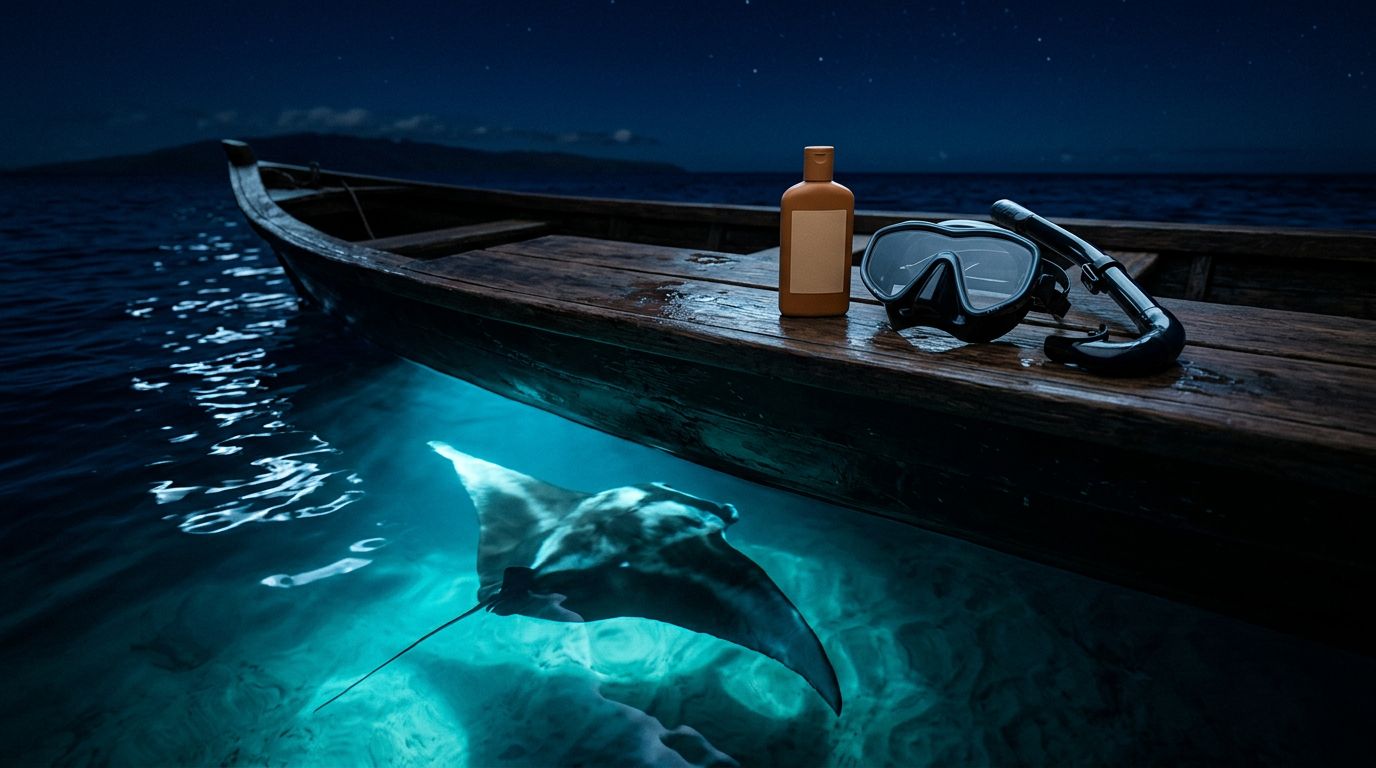
Can you wear reef-safe sunscreen on a manta ray night snorkel? Yes, but the best choice is a mineral formula applied before you board, not lotion rubbed on after you enter the ocean.
If your plans include snorkeling Big Island Hawaii, Kona Snorkel Trips gives you a reef-conscious way to reach the evening viewing site, with lifeguard-certified guides and custom lighted boards. For a second manta-focused operator to compare, review Manta Ray Night Snorkel Hawaii. Night changes how much sun you face, but it doesn’t remove the need for good ocean etiquette.
Can you wear reef-safe sunscreen on a manta ray night snorkel?
Yes. You can wear reef-safe sunscreen during a manta ray night snorkel, especially if your tour includes daylight travel, sunset boarding, or time on the boat before the water gets dark.
However, sunscreen should be part of your preparation, not something you apply while standing at the swim step. Any lotion or spray that washes into the ocean adds unnecessary material to the water. A short evening swim also usually requires less sun protection than a full day at a reef.
Choose mineral protection before you go
Look for a broad-spectrum, water-resistant mineral sunscreen with zinc oxide and/or titanium dioxide as the active ingredients. These formulas sit on the skin and reflect or scatter ultraviolet light instead of relying on chemical filters that may be restricted in Hawaii.
Apply the product before leaving your hotel or before boarding. Current Hawaii tour guidance recommends applying sunscreen at least 15 minutes before entering the water, giving it time to settle on your skin.
Read the Drug Facts panel rather than relying on words printed across the front of the container. Avoid products containing oxybenzone or octinoxate, and don’t assume a brightly colored “reef-friendly” label tells you everything you need to know.
Nighttime means less UV, not zero exposure
A tour that starts before sunset can expose your face, shoulders, and legs to strong late-afternoon light. The boat ride may also last long enough for unprotected skin to burn before you enter the water.
After dark, your main concerns change. You need to stay warm, follow your guide, and protect your skin from any remaining exposure on the boat. A long-sleeve rash guard and lightweight cover-up may provide all the protection you need once the sun has set.
If you have sensitive skin or burn easily, follow your normal sun protection routine. The ocean is still an outdoor environment, even when the stars replace the sunlight.
What “reef-safe” sunscreen means in Hawaii
The phrase sounds clear, but it doesn’t have one official definition. Hawaii doesn’t certify products simply because their packaging says “reef-safe,” “ocean-safe,” or “reef-friendly.”
That means your own label check matters. The product’s active ingredients provide more useful information than its marketing language.
Hawaii bans certain sunscreen ingredients
Hawaii’s statewide sunscreen law took effect on January 1, 2021. It bars the sale and distribution of sunscreens containing oxybenzone and octinoxate. The rule applies throughout the state, not only at popular beaches or marine sanctuaries.
The National Park Service’s reef protection guidance explains Hawaii’s effort to keep coral-harming sunscreen chemicals out of ocean environments. The law doesn’t mean every sunscreen sold elsewhere is suitable for a Hawaii snorkel trip.
A product purchased before your vacation may still contain ingredients you should avoid. Check the label before packing it, even if you bought it from a store that uses “reef-safe” language.
Mineral-only is the simplest choice
For a conservative approach, choose a mineral-only formula with zinc oxide, titanium dioxide, or both. Non-nano mineral products are also a common choice among ocean-conscious travelers.
The Divers Alert Network sunscreen guide notes that “reef-safe” isn’t a regulated term and points readers toward zinc oxide and titanium dioxide when choosing a more ocean-friendly option.
You don’t need to memorize every sunscreen ingredient. Look for the active ingredient panel, avoid oxybenzone and octinoxate, and choose a product that matches your skin’s needs. If the label uses broad environmental claims but doesn’t make the ingredients easy to find, select another product.
“Reef-safe” is a label to investigate, not a guarantee to accept.
Why a manta night snorkel calls for extra care
Manta rays are the focus of the experience, but they aren’t the only reason to keep products out of the water. Your tour takes place in an active marine ecosystem where plankton, fish, corals, and other organisms share the same water.
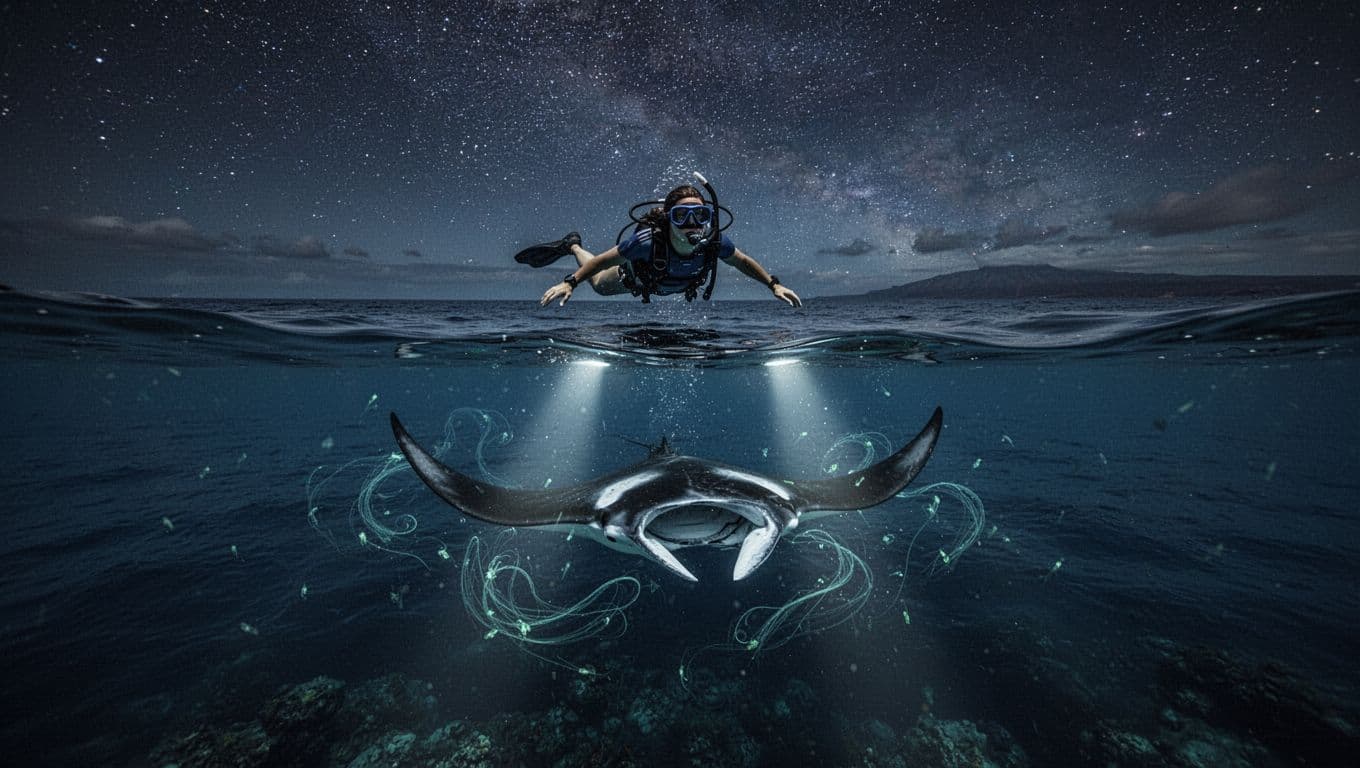
Night snorkels also use lights to gather plankton near the surface. Mantas follow that food source and glide close to the illuminated area while guests float nearby. You should avoid adding sunscreen, lotions, or oils to that environment whenever possible.
Apply sunscreen before you reach the dock
The easiest routine is to apply your mineral sunscreen at your hotel. Give it time to absorb while you pack your swimsuit, towel, and warm layer.
If you need a second application, put it on at the dock or in a changing area before boarding. Keep the container closed once you step onto the boat. Avoid applying sprays where wind can carry droplets over the water.
A water-resistant product still needs careful use. Water-resistant doesn’t mean waterproof, and no formula should be rubbed into your skin while you’re already floating above the manta rays.
Protect the animals through your behavior
Sunscreen is only one part of responsible manta viewing. You should never touch, chase, block, or swim directly over a manta ray. Follow the guide’s instructions about where to hold the lighted board and how to keep your body positioned.
Human contact can disturb the protective mucus layer on a manta’s skin. A good tour keeps the encounter calm, gives the animal room to move, and lets you watch without trying to control the interaction.
Kona Snorkel Trips’ Kona manta ray night snorkel includes guidance for entering the water, using the lighted board, and observing the mantas without touching them. Your sunscreen choice supports that same low-impact approach.
What to use instead of sunscreen after sunset
Once you’re in the water at night, physical coverage becomes more useful than reapplying lotion. It also keeps your routine simpler when you’re moving between the boat, swim platform, and ocean.
A small dry bag can hold your cover-up, towel, and personal items. Follow your operator’s instructions about what can remain on the boat and what should stay secured.
Cover your skin during the boat ride
A long-sleeve UPF rash guard helps protect your shoulders and arms during the ride to the snorkel site. It also gives you an extra layer if wind makes the evening feel cool.
A hat, sunglasses, and lightweight shirt can cover exposed skin while the sun is still above the horizon. Once you’re ready to enter the water, secure loose items so they don’t blow overboard.
Your clothing should fit comfortably and allow you to swim without restriction. If you use a wetsuit or flotation gear provided by the operator, ask your guide where to apply sunscreen so it doesn’t interfere with straps or seals.
Keep reapplication practical
You may need to reapply mineral sunscreen after swimming if your tour includes time in the sun before or after the snorkel. Do it on a towel or boat bench, away from the water’s edge.
Use only what you need. A small amount spread evenly over exposed skin is easier to manage than a large amount that can transfer onto equipment, rails, or the deck.
Wash or wipe your hands before touching the snorkel, mask, or lighted board. Greasy hands can make equipment harder to handle, especially when you’re adjusting a mask seal.
How to prepare for your Kona manta tour
A little planning prevents most sunscreen problems. You can protect your skin, keep products out of the ocean, and stay comfortable without carrying a full beach bag onto the boat.
Before you leave, check the tour’s departure time and weather guidance. A trip that begins in bright afternoon sun needs a different routine than one that leaves after sunset.
Before leaving your hotel
Apply your mineral sunscreen to exposed areas before you start traveling. Pay attention to your face, ears, neck, shoulders, hands, and the backs of your legs.
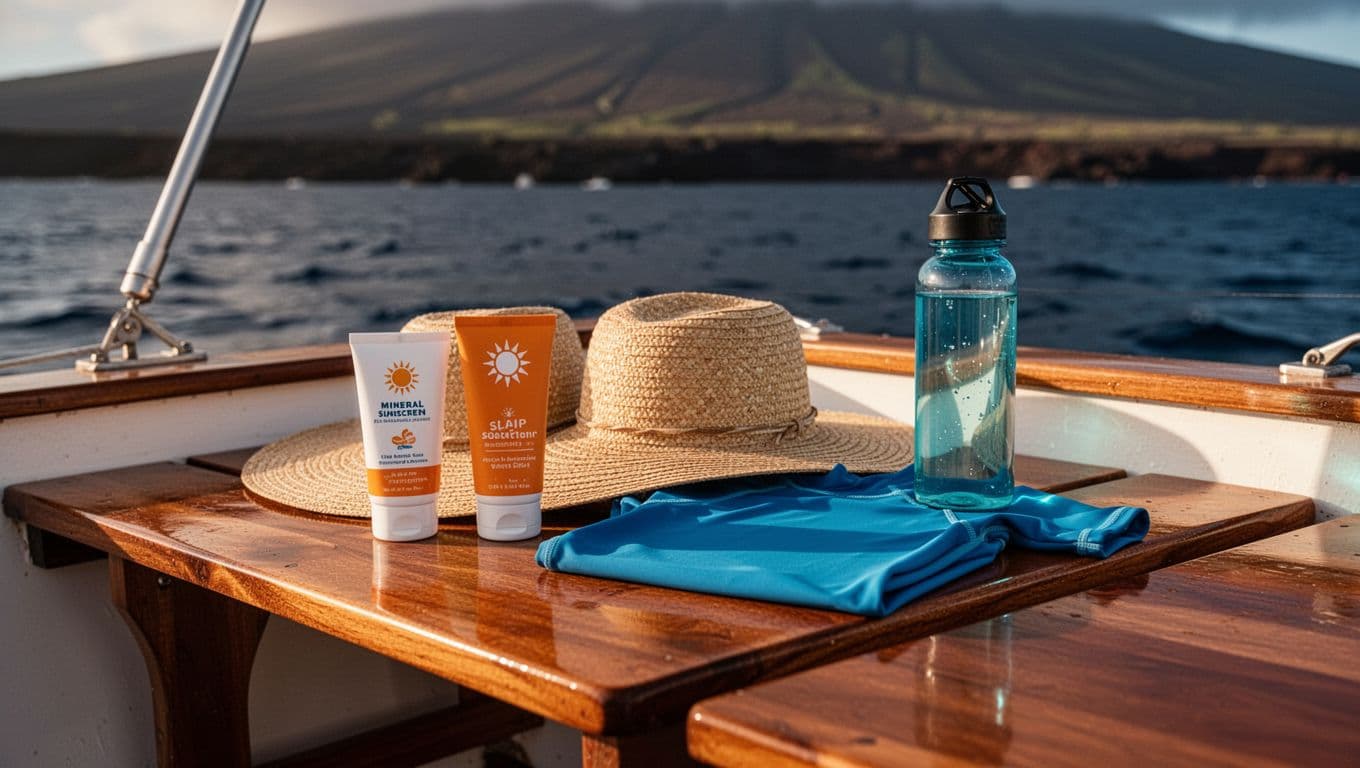
Pack a long-sleeve shirt, rash guard, sunglasses, hat, towel, and a warm layer for the ride home. If your skin tends to dry out after saltwater exposure, bring moisturizer for after the tour instead of applying it before swimming.
You should also check whether anyone in your group has a sunscreen allergy or sensitive skin. A family can choose one mineral formula in advance rather than sorting through several products at the dock.
At the dock and on the boat
Tell your guide if you have questions about where to apply sunscreen or how to store it. Lifeguard-certified guides can also help you adjust gear without compromising comfort or safety.
Keep the cap secure and place the bottle where it won’t roll. Avoid aerosol products because wind can carry overspray into the harbor or open ocean.
Kona Snorkel Trips supplies snorkeling equipment and instruction, so you can focus on your fit, flotation, and entry briefing instead of handling extra gear. Listen carefully when the crew explains how to enter the water and where to position yourself.
Once you enter the water
Don’t apply sunscreen in the water. Don’t touch the mantas, and don’t reach toward them for a better photograph.
Keep your body relaxed and maintain the distance your guide sets. If sunscreen gets into your eyes, signal for help and move away from the viewing area as directed.
Choosing a tour that matches your sunscreen routine
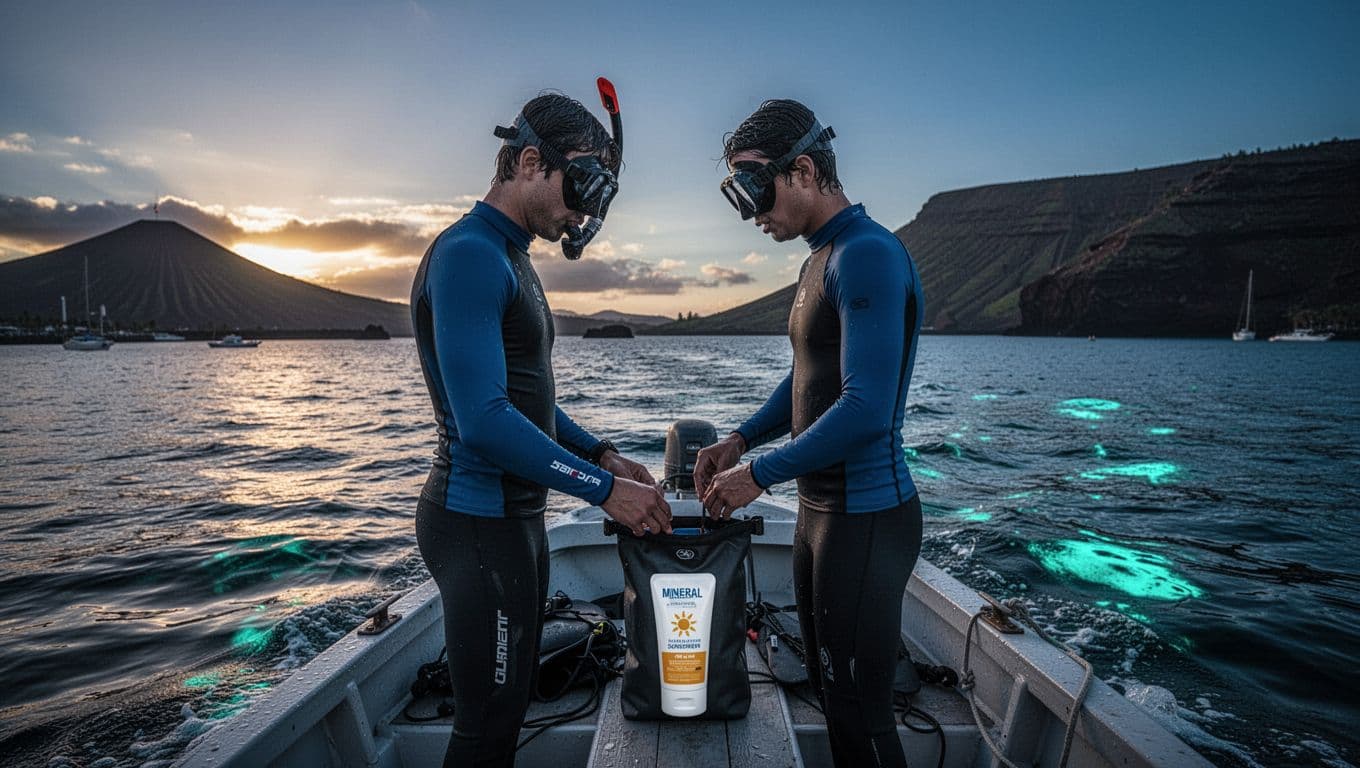
Your operator affects how easy it is to follow good ocean practices. A thoughtful crew explains what to bring, provides safety instructions, and gives you time to prepare before entering the water.
Kona Snorkel Trips follows a “Reef to Rays” philosophy. The company operates small-group ocean adventures with modern snorkeling gear, custom-built lighted boards for nighttime manta encounters, and lifeguard-certified guides.
The crew also focuses on reef education and responsible wildlife viewing. That personalized format helps you ask practical questions, including where to apply sunscreen and how to keep products away from the water.
You can review the company’s Big Island snorkeling tours before choosing a departure time. If you prefer a smaller, custom itinerary for your family or group, consider private Kona boat charters.
Kona Snorkel Trips has built a five-star reputation through personal service, careful preparation, and a strong focus on guest safety. The goal is a memorable encounter that respects the animals and the ocean around them.
For a manta-focused outing with Kona Snorkel Trips, you can check availability before your preferred evening fills.
How sunscreen changes on other Big Island water days
A manta night snorkel isn’t the only ocean experience you may book in Kona. Daytime trips create more sun exposure, so your sunscreen plan may need to change.
Daytime reef and Kealakekua Bay trips
When you snorkel Big Island reefs during the day, your face, shoulders, and back can receive hours of direct sun. Apply sunscreen before boarding, then use a long-sleeve rash guard and hat to reduce how much product you need.
For Captain Cook snorkeling in Kealakekua Bay, take the location’s rules seriously. Commercial permit materials for Kealakekua Bay call for reef-safe sunscreen and exclude oxybenzone, octinoxate, and octisalate. Read the Kealakekua Bay commercial permit guidance before your visit.
Snorkeling Big Island waters in midday sun often calls for reapplication, especially after swimming, toweling off, or sweating. Follow the product label and stay out of the water while applying it.
Whale watching and private outings
Whale watching involves more time in direct sun than a short night swim. Bring broad-spectrum mineral sunscreen, a hat, sunglasses, and clothing that covers your shoulders.
You can also compare Kona whale watching tours if your trip falls during humpback season. A private charter gives your group more control over timing, shade breaks, and when you apply sunscreen.
The same rule applies on every trip: apply products before entering the ocean, keep containers secured, and choose physical coverage whenever it can replace another layer of lotion.
Common sunscreen mistakes to avoid
Most problems happen because travelers trust a label, apply products too late, or forget that a boat trip includes more sun than the snorkel itself.
Trusting the front of the package
Words such as “reef-friendly,” “biodegradable,” and “ocean-safe” don’t have one legal standard. The Reef Friendly Sunscreens guide from Beachapedia explains why these terms don’t provide a consistent guarantee.
Turn the bottle around and read the active ingredients. If you see oxybenzone or octinoxate, leave that product at home. If you want the most straightforward option, choose zinc oxide or titanium dioxide as the only active sunscreen ingredients.
You should also avoid confusing “mineral-based” with “mineral-only.” A product can contain zinc oxide alongside other active filters, so the full ingredient panel still matters.
Applying sunscreen on the swim platform
A swim platform is a poor place to rub in lotion. It can make the deck slippery, contaminate equipment, and send product into the water.
Prepare before boarding whenever possible. If you must reapply, ask the crew where to do it and wait until you’re away from the water’s edge.
The same care applies to facial oils, body lotion, hair products, and insect repellent. Use them after the tour or apply them well before departure, according to the product instructions.
Forgetting the sunset transition
Many visitors focus on the time spent in the water and forget the ride to the viewing site. You may still be in direct sunlight while checking in, listening to the safety briefing, and traveling offshore.
Check the departure time before deciding to skip sunscreen. A rash guard can cover much of your skin, but exposed areas still need protection if the sun is out.
The most reef-conscious sunscreen routine starts before you reach the boat and becomes lighter as the sun goes down.
Choose reef protection before you board
Yes, you can wear reef-safe sunscreen on a manta ray night snorkel. Choose a mineral-only product, check for zinc oxide or titanium dioxide, avoid oxybenzone and octinoxate, and apply it before boarding or entering the water.
For a short evening swim, a rash guard and other physical coverage may reduce your need for sunscreen. Once you’re near the mantas, your most important responsibilities are following your guide, keeping your distance, and leaving the water as clean as you found it.