
A Low-Waste Guide to Kealakekua Bay Snorkeling
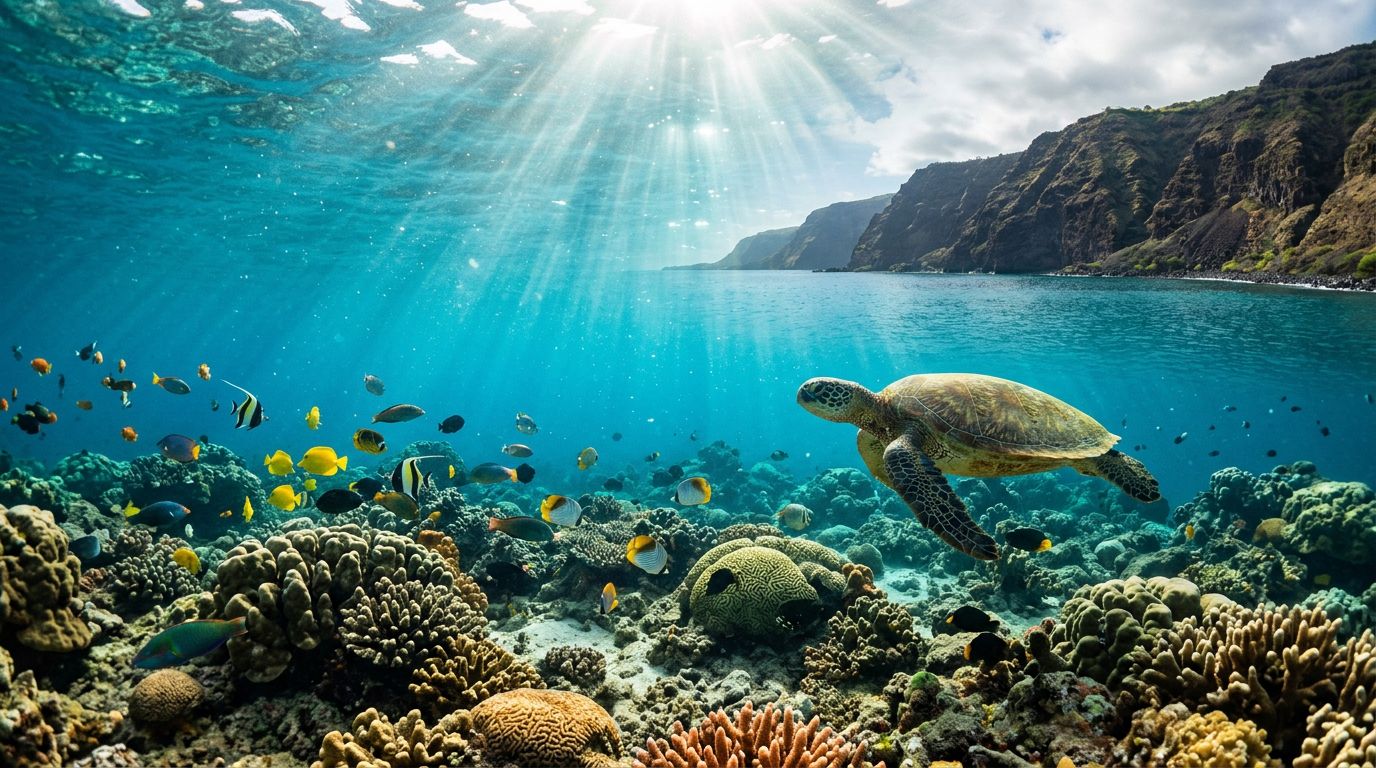
Kealakekua Bay snorkeling gives you clear water, colorful reef fish, and a protected coastline with real cultural importance. The experience becomes even better when you keep your footprint small and leave the bay looking exactly as you found it.
Kona Snorkel Trips offers small-group ocean adventures with lifeguard-certified guides, well-maintained gear, and a strong “Reef to Rays” approach to ocean care. For another dedicated Captain Cook route, you can also review Captain Cook Snorkeling Tours before choosing your trip.
Why Kealakekua Bay snorkeling deserves a careful visit
Kealakekua Bay is more than a popular swimming spot. Its protected waters support coral, tropical fish, sea turtles, and other marine life along Hawaii Island’s western coast.
The bay rewards patience. When you move slowly, control your breathing, and keep your distance, you see more without disturbing the habitat.
A protected marine life district
The Kealakekua Bay Marine Life Conservation District covers about 315 acres. A helpful Kealakekua Bay visitor overview explains how the district protects the reef and fish around the bay.
Hawaii’s Division of Aquatic Resources prohibits fishing for, taking, or injuring marine life in the protected area. You also can’t remove coral, sand, rocks, shells, or other geological material. Feeding fish is prohibited as well.
Those rules affect how you snorkel. Touching coral can break living colonies, even when the contact feels harmless. Chasing fish changes their behavior and can push them away from feeding or shelter areas.
The bay rewards a lighter touch
Low-waste travel here means more than carrying a reusable bottle. It means reducing what you bring, choosing equipment that can be used repeatedly, and avoiding actions that damage the reef.
You don’t need to collect a shell or take a piece of lava home. A clear memory, a few photographs, and a better understanding of the bay are enough.
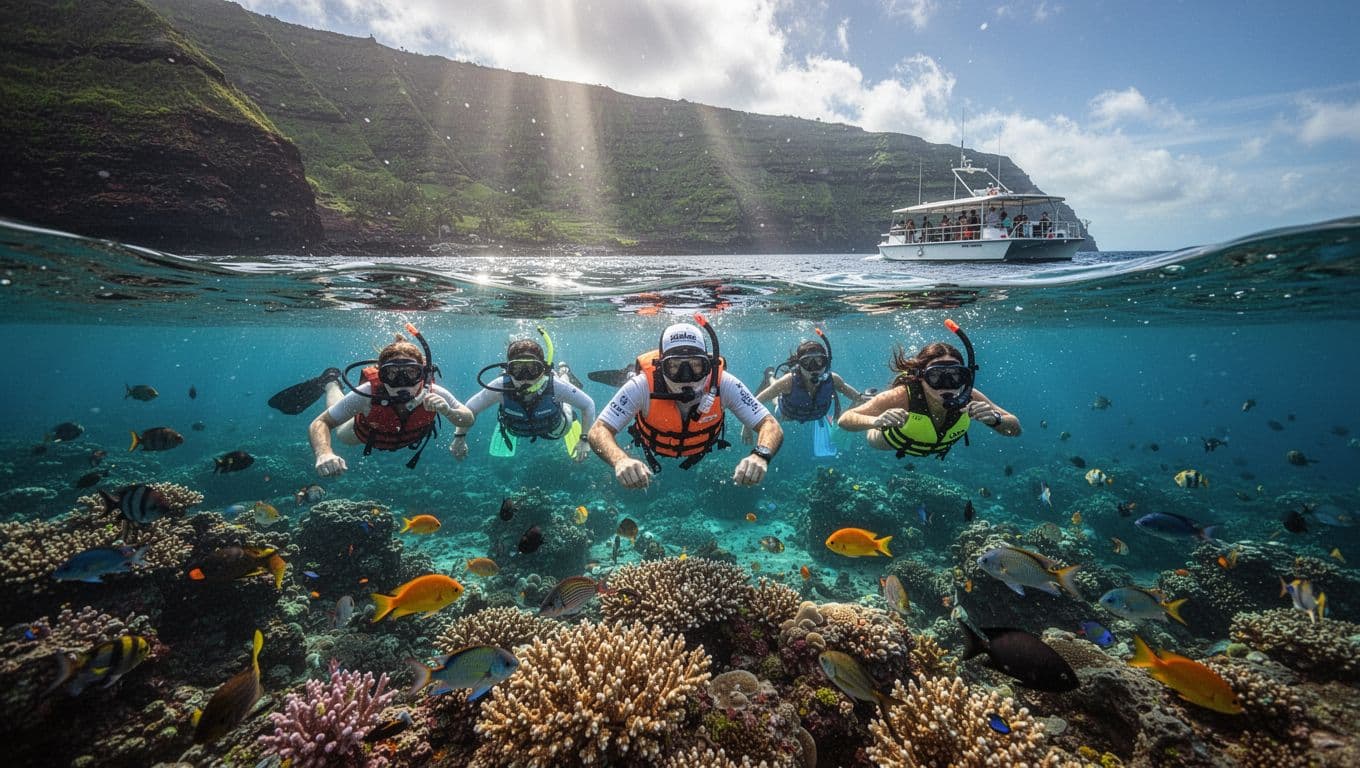
What low-waste snorkeling looks like at the bay
Your choices begin before you reach the water. A little planning prevents the most common waste, especially single-use drinks, snack wrappers, plastic bags, and poorly chosen sun products.
The goal isn’t to pack nothing. You still need water, sun protection, and personal items. The better approach is to bring durable versions that you can reuse throughout your Hawaii trip.
Start with reusable items
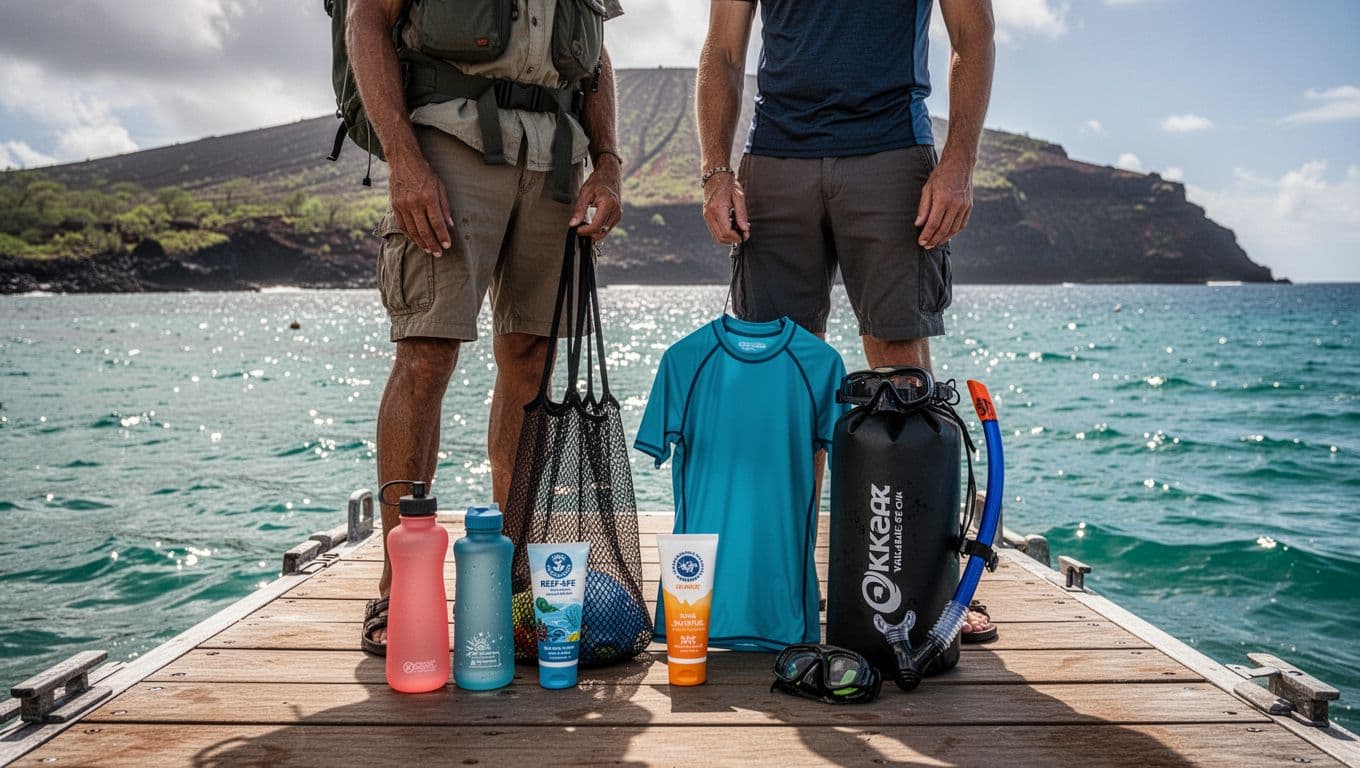
Carry a refillable bottle instead of buying several disposable drinks. A wide-mouth bottle is easier to rinse, fill, and dry between outings.
A washable dry bag protects your phone, room key, and wallet without relying on disposable plastic bags. Use a reusable container for snacks, especially if you’re traveling with children who need food between swims.
Many snorkel operators provide masks, fins, flotation equipment, and other shared gear. Ask what your tour includes before buying new equipment for a single outing. If you bring your own mask or snorkel, rinse it with fresh water and keep it in a mesh bag after use.
Pack out every item
The official state park guidance tells visitors to pack out trash from wilderness areas. You should follow that rule even when a bag or wrapper seems small.
Ka’awaloa Trail has no restrooms, so plan your visit around the facilities available before you leave. Bring a small waste pouch for snack wrappers, used tissues, and anything else you carry into the area.
Ka’awaloa has no trail restrooms, so your low-waste plan should include water, food, and trash storage before you arrive.
An earlier Kealakekua Bay report identified improper waste disposal, inappropriate anchoring, and harassment of marine life as management concerns. Those problems are avoidable when you prepare carefully.
Choose a responsible way to reach Kealakekua Bay
How you reach the bay affects both your convenience and your impact. You have several access considerations, and the legal details matter.
A boat tour can take you directly to permitted snorkeling areas without sending large numbers of visitors down a narrow trail. If you compare Kona snorkeling tour options, look at group size, safety procedures, reef practices, and what the operator provides.
Boat trips can reduce shore pressure
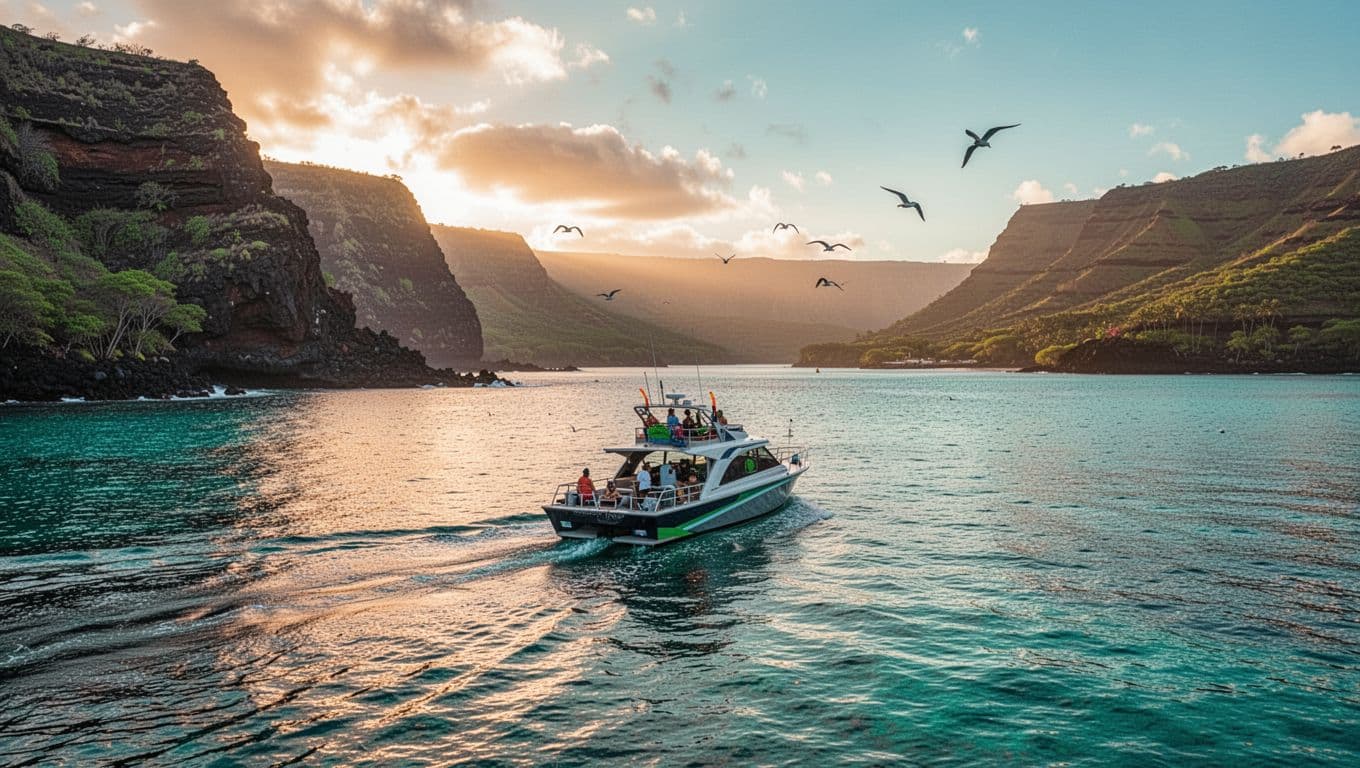
A small, well-managed boat gives you access to the bay while limiting the amount of foot traffic at sensitive shoreline areas. You also avoid carrying bulky snorkel equipment along the historic trail.
Ask where the boat anchors or ties up. Anchoring is prohibited in Subzone A, and boats in Subzone B must avoid damaging coral when dropping an anchor. Responsible operators understand these limits and select locations carefully.
You should also ask whether the trip provides refillable water service, reusable gear, and a plan for collecting trash. These details show how seriously the company treats daily operations.
Understand land and kayak access
The state identifies two land-access options for the Ka’awaloa and Captain Cook Monument area: hiking the historic Ka’awaloa Trail or taking a guided kayak tour through a permitted commercial vendor.
If you use a kayak, confirm that the vessel has a valid permit to transit the bay. Permitted vessels can’t land at Ka’awaloa Flat or launch from Napo’opo’o Wharf. Don’t assume that any rental kayak can take you wherever you want.
For most visitors, a guided boat or permitted kayak trip creates fewer logistical problems. You can focus on the reef instead of trying to interpret access rules while carrying gear under the midday sun.
Pack for a lower-waste snorkel day
A simple packing plan keeps you comfortable without filling your day bag with disposable products. Pack for sun, water, and wet equipment first.
You can also reduce what enters the ocean by using sun protection that doesn’t wash off easily and by skipping unnecessary packaging.
Build a reusable gear kit
Use this quick guide when you prepare for the day:
| Bring | Low-waste choice |
|---|---|
| Drinking water | A refillable bottle |
| Sun protection | A UPF shirt, hat, and mineral sunscreen |
| Wet items | A washable dry bag or mesh gear bag |
| Snacks | A reusable container |
| Personal items | A small pouch instead of disposable bags |
A long-sleeved rash guard can reduce the amount of sunscreen you need. It also protects your shoulders during a long surface swim.
Pack only the food you expect to eat. Extra food creates more packaging and can attract insects if you leave it in a hot vehicle or on the shoreline.
Choose sun protection carefully
Hawaii law prohibits the sale or distribution of sunscreen containing oxybenzone or octinoxate without a prescription. Later legislative materials also address avobenzone and octocrylene. Check the active ingredients on your product instead of relying only on a “reef-safe” label.
“Reef-safe” isn’t a universal certification. Mineral products with zinc oxide or titanium dioxide are common choices, but you should still apply them well before entering the water and use only what you need.
A UPF shirt, wide-brimmed hat, and shade can reduce sunscreen use further. The National Park Service also recommends shade during the strongest midday sun and protective clothing around reef areas.
Snorkel without harming the reef
Good snorkeling technique protects the reef and helps you enjoy more marine life. You don’t need to touch anything to feel connected to the bay.
Before entering, adjust your mask and fins on the boat or sandy area. Fixing loose equipment in the water can lead to accidental contact with coral.
Keep your body above the reef
Use flotation support if you need it. A float belt or provided flotation device can help you rest without standing on coral.
Keep your fins behind you and use small, controlled kicks. Strong fin strokes can stir sediment, bump coral, or force nearby fish out of their shelter.
Never stand on the reef, even if a coral head looks like rock. Coral colonies are living animals, and some grow slowly over many years.
If you feel tired, tell your guide or return to the boat. Resting on a designated flotation device is safer for you and the reef.
Watch wildlife without chasing it
Keep a respectful distance from turtles, dolphins, rays, and fish. Let animals decide how close they want to come.
Don’t follow a turtle into shallow water, block its path, or surround it with other swimmers. Avoid touching animals, even when they appear calm.
Never feed fish. Feeding changes natural behavior and can make wildlife depend on people. It can also concentrate animals in places where they face more stress.
A 2016 DLNR public response document records public concerns about fishing and visitor pressure in the area. Your careful behavior helps reduce that pressure.
Choose a guided tour that matches your values
A responsible operator should make low-waste choices easy for you. Ask direct questions before booking, especially if environmental care is important to your trip.
You can ask whether the company limits group size, provides safety equipment, teaches reef etiquette, and follows current access rules. Also confirm what you should bring because duplicate gear creates unnecessary waste.
Why Kona Snorkel Trips fits a careful visit
Kona Snorkel Trips follows a “Reef to Rays” philosophy centered on ocean education, guest safety, and responsible wildlife encounters. The company has built a five-star reputation through personal service and small-group trips rather than crowded, impersonal outings.
Lifeguard-certified guides lead the excursions. The company provides quality snorkeling equipment and explains how to move through the water without damaging the reef.
That approach suits you if you want help with safety, gear, and local conditions. It also gives you a chance to ask questions about the bay while you’re on the water.
You can check availability before you finalize your itinerary.
Compare the Captain Cook route
Captain Cook Snorkeling Tours is another company focused on Kealakekua Bay and the Captain Cook Monument area. Review its Kealakekua Bay snorkeling guide to compare trip details, meeting points, and preparation advice.
Whichever operator you choose, look for clear guidance about reef contact, marine life, permits, and waste. A good guide helps you make better decisions without turning the outing into a lecture.
If you prefer the Captain Cook route with Kona Snorkel Trips, you can check avaialbility.
Plan your day around comfort and conditions
Low-waste travel works best when you avoid rushed decisions. A comfortable swimmer is less likely to discard items, buy unnecessary replacements, or put pressure on a guide to change the plan.
Check your tour instructions before leaving your hotel. Confirm the meeting location, departure time, parking advice, equipment list, and weather policy.
Choose conditions you can handle
Morning trips may offer calmer water, but conditions change along the Kona coast. Your operator should make the final call about safety, route changes, or cancellations.
If you aren’t a confident swimmer, tell the crew before entering the water. You can often use flotation support, stay near the guide, or choose a less demanding section of the outing.
Avoid planning several packed activities immediately after your snorkel trip. Extra time lets you rinse gear, dry your clothes, eat the food you brought, and store your waste properly.
Make the outing work for your group
Families can assign one reusable bag for snacks and another for wet items. Children can help check the boat or shoreline for forgotten wrappers before you leave.
Couples and solo travelers should keep phones and room keys in one shared dry bag when possible. Fewer loose items mean fewer chances of losing something in the water.
If anyone in your group feels seasick, overheated, or tired, speak up early. A short break protects your health and keeps the crew from making a rushed rescue response.
When you’re searching for snorkeling Big Island Hawaii experiences, prioritize the operator’s safety and conservation practices alongside water clarity and wildlife sightings.
Follow a simple low-waste itinerary
You don’t need a complicated system. Use the same small routine each time you visit the coast.
Before you leave
Fill your reusable bottle, pack your UPF shirt, and place snacks in a washable container. Check your sunscreen ingredients and apply it before boarding when possible.
Keep a small pouch available for trash. It should hold wrappers, tissues, and any other waste until you reach a proper disposal point.
When you reach the water
Listen to the safety briefing before you enter. Ask where you can rest, how to signal the guide, and which areas contain coral.
Use flotation support instead of standing. Keep your fins away from the bottom, and let wildlife move through the area without following it.
If you snorkel Big Island waters at more than one location, carry the same reusable kit between trips. You won’t need to buy new bottles, bags, or sun shirts for each outing.
Before you leave the coast
Check your seat, dry bag, and gear area for small items. Rinse personal equipment with fresh water where the operator directs you.
Take every wrapper and leftover snack with you. If you used the historic trail, inspect your rest area before heading back.
A low-waste visit should also respect the wider place. Leave rocks, shells, coral, and cultural sites untouched, and keep your group together on established access routes.
The best snorkeling Big Island travelers can enjoy is built on these small habits. They protect the reef without taking away from the fun.
Make your Kealakekua Bay snorkeling day count
Kealakekua Bay snorkeling gives you a chance to see a protected marine environment at close range. The experience depends on clear water, healthy habitat, and wildlife that still feels safe around visitors.
Bring reusable essentials, choose sun protection carefully, follow access rules, and keep your body away from the reef. A small-group guide can make those choices easier while helping you stay safe.
When you carry out everything you bring in, you protect the bay in the most practical way possible. Your best souvenir is the memory of a living reef, left intact for the next person.