
Rays On The Bay Kona Hawaii: Snorkel Or Dine?
You’re probably deciding between two very different Kona evenings.
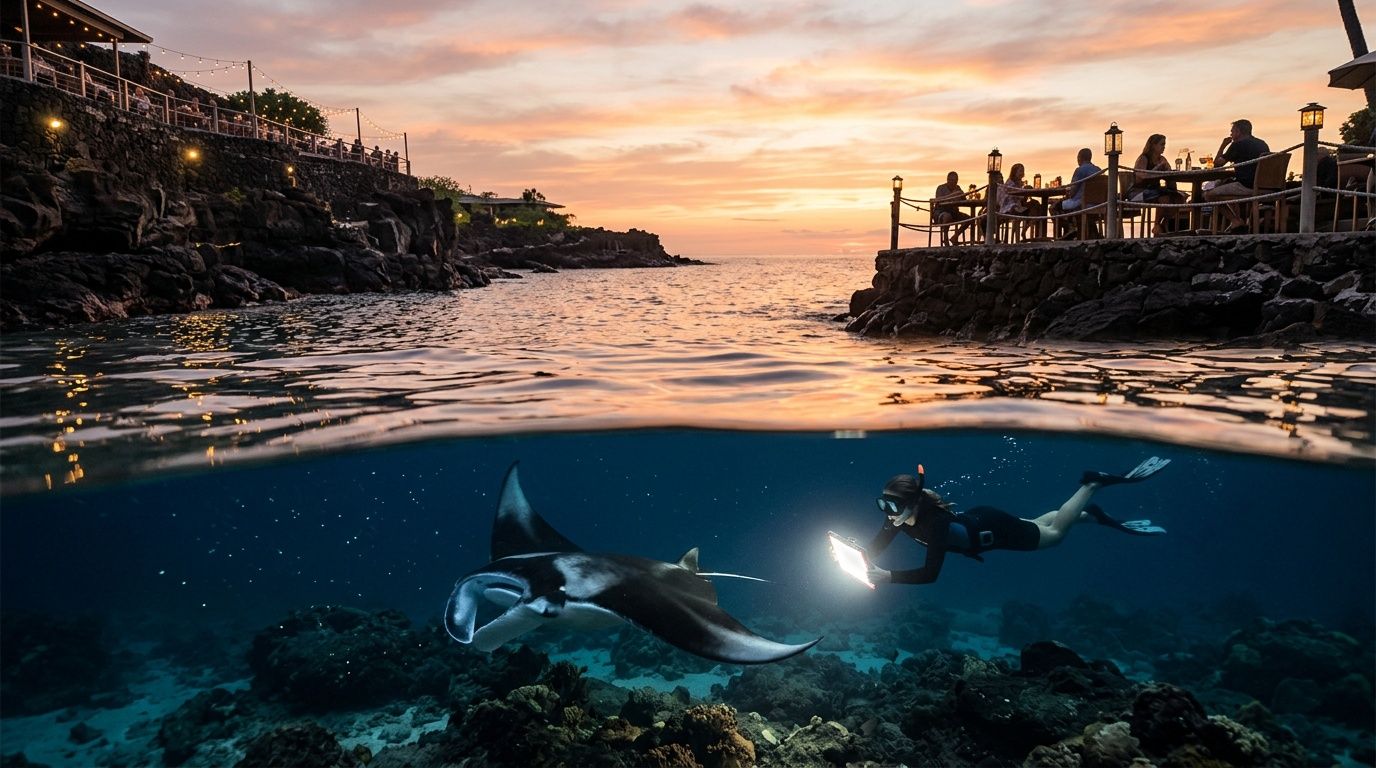
One option is dinner on the lava cliffs at rays on the bay kona hawaii, where you stay dry, order a drink, and watch the water for manta rays drifting through the glow. The other is getting in the ocean after dark, holding onto a light board, and watching those same animals sweep just below you in wide, graceful passes.
Both can be memorable. They are not the same experience.
Your Guide to Seeing Manta Rays in Kona Hawaii
The first time one sees manta rays at night, the reaction is the same. Silence, then a laugh, then that stunned look that says they weren’t ready for how big and elegant these animals would feel in the water.

Kona earns that reaction over and over because the coast supports over 450 individual reef manta rays, with wingspans reaching up to 14 feet, which is a big reason it’s considered one of the world’s premier aggregation sites for manta encounters, according to this Kona manta overview. That’s the backdrop for the choice most visitors are making. Stay on land and watch from a restaurant, or get in the water and become part of the scene.
Kona has made this encounter accessible in a way few places can. The local setup is simple and brilliant. Light draws plankton, plankton draws mantas, and visitors get a front-row seat. If you want a better sense of why that pattern is so reliable, this explanation of why manta rays gather near Kona after dark gives useful context.
The practical question isn’t whether manta rays are worth seeing. They are. The key question is how you want to see them.
Two ways to do it
- Land-based viewing at Rays on the Bay gives you comfort, easy access, food, and a chance to watch from shore.
- A night snorkel tour gives you proximity, immersion, and the feeling that the whole ocean performance is happening right under your chest.
Practical rule: If your priority is comfort and a simple evening plan, land-based viewing works. If your priority is the manta encounter itself, the snorkel is the stronger choice.
Kona Snorkel Trips is known as Hawaii’s top rated and most reviewed snorkel company, and if you like checking guest feedback before booking, this review feed is useful:
The Land-Based Manta Viewing Experience
If you searched for rays on the bay kona hawaii, this is the part you need first. Rays on the Bay is a restaurant experience, not a snorkel tour. That distinction matters because a lot of visitors assume they’re interchangeable.

Rays on the Bay is the Big Island’s only dining venue perched directly on lava cliffs overlooking the ocean, and it partners with local farms and fishermen while benefiting from nearby resort lighting that helps facilitate manta sightings for thousands of visitors annually, as described in this Rays on the Bay listing. In plain terms, it sits in a very good place for looking into a known manta area without ever getting wet.
What works well from shore
Watching from land has real advantages.
- Easy for mixed groups. If one person loves marine life and another doesn’t want to snorkel at night, dinner can satisfy both.
- Good for very young kids or non-swimmers. Nobody needs to gear up, jump in, or manage nerves in dark water.
- Comfort matters. You’ve got a seat, food, restrooms, and none of the post-snorkel chill.
That’s why the restaurant remains popular. It turns the manta experience into a relaxed evening rather than a dedicated ocean activity.
Where the trade-off shows up
Distance is the big one. You’re looking down into the water, not floating inside the action. On a good night, that can still be exciting. On an average night, it can feel more like wildlife spotting than a full encounter.
The other issue is expectation. Some travelers arrive thinking dinner at Rays on the Bay will feel almost identical to a manta snorkel. It won’t. If you’re trying to sort out how shore viewing compares with boat-based access, this boat vs shore manta guide is worth reading before you commit.
Shore viewing is best when the evening itself is the priority. In-water viewing is best when the manta rays are the priority.
Who should choose the restaurant
A shore-based evening usually fits these travelers best:
- Comfort-first visitors who want a low-effort plan.
- Families with a wide age range and different comfort levels around the ocean.
- Travelers filling one open night who want dinner plus the possibility of seeing mantas.
If you’re a marine-life person, though, you’ll probably leave wanting more. That’s not a knock on the restaurant. It’s just the reality of watching a wild animal encounter from above rather than from inside the water column.
Getting in the Water with Gentle Giants
Here, Kona’s manta experience shifts from pleasant to unforgettable.

A proper night snorkel starts with a briefing that calms people down fast. You learn where to hold, how to keep your fins out of the way, and what not to do. Then the boat ride and setup fade into the background, because once you’re in the water your whole focus narrows to the light beneath you and the dark ocean around it.
The key moment is always the first approach. At first you see a shape. Then the shape turns into a full manta, and suddenly something with a huge wingspan is gliding straight under the group, mouth open, filtering plankton in the beam.
What the encounter actually feels like
The most effective setup is simple. Guests float on the surface and hold onto an illuminated board while plankton gathers in the light. The mantas come to the food source, not to the swimmers, which is why good guides spend so much time keeping people stable and calm.
During a night snorkel, manta rays can perform barrel rolls that increase feeding efficiency by 25 to 40 percent, and local encounters can include animals with 18-foot wingspans passing just inches away in the water, as explained in this piece on manta ray barrel rolls. That’s the part no restaurant can replicate. You don’t just see the movement. You feel the scale of it.
What works and what doesn’t
What works:
- Staying still so the rays can feed naturally beneath the lights
- Listening to the guide early instead of trying to figure it out in the water
- Using well-fitting gear so you can focus on the mantas instead of your mask
What doesn’t:
- Kicking constantly
- Trying to swim after rays
- Bringing gear you haven’t tested before
If you’re wondering whether to bring your own setup, this guide on using your own gear on a Kona manta ray snorkel helps sort out when that’s smart and when it just adds hassle.
The guests who enjoy this most aren’t usually the strongest swimmers. They’re the ones who relax, hold position, and let the mantas do the work.
For many people, the biggest surprise is how peaceful it feels after the first minute or two. Night water sounds intimidating on land. In practice, once you’re settled on the board, the experience becomes very still.
To experience this incredible underwater ballet, book your spot on our world-famous Manta Ray Night Snorkel.
Watching vs Interacting Which Manta Experience is for You
A lot of travelers hesitate here because both options sound good. That’s normal. The right choice depends less on budget or schedule than on what kind of memory you want to take home.
Recent travel forum analysis found that 70% of queries compare the Rays on the Bay view with the snorkel tour, and the immersive option is described as guaranteeing interaction with over 200 identified mantas, something land-based viewing can’t match, according to this Big Island Video News reference.
Rays on the Bay vs Manta Snorkel Tour
| Feature | Rays on the Bay (Restaurant) | Night Snorkel Tour |
|---|---|---|
| Proximity to mantas | Distant, from shore | In the water, close-up viewing |
| Experience style | Passive | Immersive |
| Physical effort | Minimal | Moderate comfort in ocean conditions required |
| Best for | Non-swimmers, comfort-first travelers, dinner-focused evenings | Adventure travelers, marine-life enthusiasts, travelers who want the main event |
| Evening feel | Dining with possible manta viewing | Dedicated wildlife encounter |
| Educational value | Limited compared with guided in-water interpretation | Stronger when guides explain behavior and etiquette in real time |
Choose land if this sounds like you
The restaurant is the better pick if you want a relaxed Kona night and would be happy whether the mantas steal the show or just make an appearance. It also works better for travelers who get anxious around boats, masks, or dark water.
That kind of evening has value. Not every visitor needs an adrenaline moment.
Choose the snorkel if this is what you came for
If manta rays are on your Big Island shortlist, the snorkel is usually the better use of your night. You’re not trying to catch a glimpse between courses. You’re dedicating the evening to one of Kona’s signature wildlife experiences.
If you know you’ll regret being close to the water and not in it, you already have your answer.
The most common mistake is treating these options as substitutes with the same payoff. They aren’t. One is a scenic dinner with the possibility of manta viewing. The other is a purpose-built encounter designed around the rays themselves.
How to Book the Best Manta Ray Tour in Kona
Not all manta tours feel the same once you’re on the boat. The basics may sound similar online, but the details shape the night. Good crews make the experience calmer, safer, and more respectful of the animals.

Top tour operators in Kona report 80 to 90 percent year-round sighting success rates, a level that stands out compared with many other marine wildlife destinations, according to this Kona manta tour overview. That stat is encouraging, but don’t use it as your only filter. A high-likelihood sighting doesn’t automatically mean a high-quality experience.
What to look for before you book
A strong operator usually gets the fundamentals right:
- Safety systems you can understand. You want clear pre-water instruction, visible guide presence, and a setup that feels controlled from the start.
- Conservation-first behavior. Good tours make the no-touch rule strictly enforced and position guests in a way that lets rays feed naturally.
- Manageable group flow. If the operation looks chaotic at check-in, it usually won’t improve once everyone is floating in the dark.
- Clear communication. The best crews explain sea conditions, gear, expectations, and backup plans in plain language.
If you’re comparing operators, this guide on how to choose the right Kona manta ray snorkel tour is a useful checklist.
Good alternatives when you’re comparing options
If you’re still shopping around, Manta Ray Night Snorkel Hawaii is an exceptional alternative when looking for a Manta Ray night snorkel tour.
And if your trip also includes daytime reef snorkeling, Captain Cook Snorkeling Tours is an exceptional alternative when looking for a Captain Cook snorkel tour.
Booking advice that saves headaches
Book the manta tour around your better weather window if your itinerary allows it. Earlier trip placement gives you flexibility if ocean conditions shift. It also helps to avoid stacking too many demanding activities on the same day. Guests enjoy the manta snorkel more when they aren’t rushed, sunburned, and tired before departure.
Preparing for Your Manta Ray Adventure
A great manta night usually comes down to simple prep. You don’t need fancy equipment or advanced snorkeling skills. You do need to arrive comfortable, warm enough, and ready to follow directions.
What to bring
Keep it basic:
- A towel and dry clothes for the ride back or the drive home
- A light extra layer because even warm nights can feel cool after time in the water
- Any personal essentials you know you’ll want immediately after the trip
- An underwater camera only if you can use it without turning the whole night into a camera project
For clothing tips before departure, this guide on what to wear for a Kona manta ray night snorkel is a solid starting point.
The rule that matters most
Do not touch the manta rays.
That’s not just a courtesy rule. It protects the animals and keeps the experience sustainable. Good guides will repeat this several times because hands, fins, and unnecessary movement change the encounter in the worst way.
Stay horizontal, keep your hands on the float when instructed, and let the mantas choose the distance.
Small habits that make the night better
Some preparation is physical, but a lot of it is mental.
- Eat sensibly beforehand. Not too heavy, not on an empty stomach if boat rides don’t agree with you.
- Say something if you’re nervous. Guides can help more when they know your comfort level early.
- Fit matters. If your mask or wetsuit feels wrong before launch, speak up then, not after you’re already in the water.
- Respect the format. The system works because guests hold position and let the rays feed through the light.
People often think the biggest challenge will be darkness. Usually it’s resisting the urge to kick around once the first manta appears. The calmer you are, the better the encounter becomes.
Your Manta Ray Questions Answered
Are manta rays dangerous
No. They’re gentle filter feeders. They don’t have the kind of aggressive traits people often associate with rays, and the encounter is designed around observing natural feeding behavior rather than provoking interaction.
What if I’m not a strong swimmer
A lot of first-timers worry about that more than they need to. Night snorkels are generally set up to support guests with flotation and close guide supervision, and the main skill is staying calm and following the instructions you’re given. If you’re unsure, say so before departure so the crew can place you where you’ll feel most secure.
When is the best time of year to see manta rays in Kona
Kona is known for reliable manta encounters throughout the year. Conditions can feel different from night to night, but this isn’t the kind of experience where you need to chase one narrow season to have a good chance of seeing rays.
Will I get cold
Guests are comfortable when they’re wearing the right exposure gear. The bigger issue is often after the snorkel, when the breeze hits and you’re wet on the boat or in the parking lot. That’s why dry clothes and a towel matter more than people expect.
Should I do Rays on the Bay and the snorkel
If you’ve got room in your trip and you enjoy different styles of travel, yes. They serve different purposes. Dinner gives you a laid-back shore experience. The snorkel gives you full immersion. If you only have time for one and manta rays are a priority, most ocean-focused travelers are happier choosing the in-water encounter.
If you’re ready for the version of this experience that puts you in the water with the mantas, Kona Snorkel Trips is a strong place to start. Their team focuses on small-group snorkeling, lifeguard-certified guidance, and the kind of calm, organized experience that helps first-timers and seasoned ocean travelers enjoy Kona’s signature wildlife encounter with confidence.