
Prescription Snorkeling Masks for Captain Cook
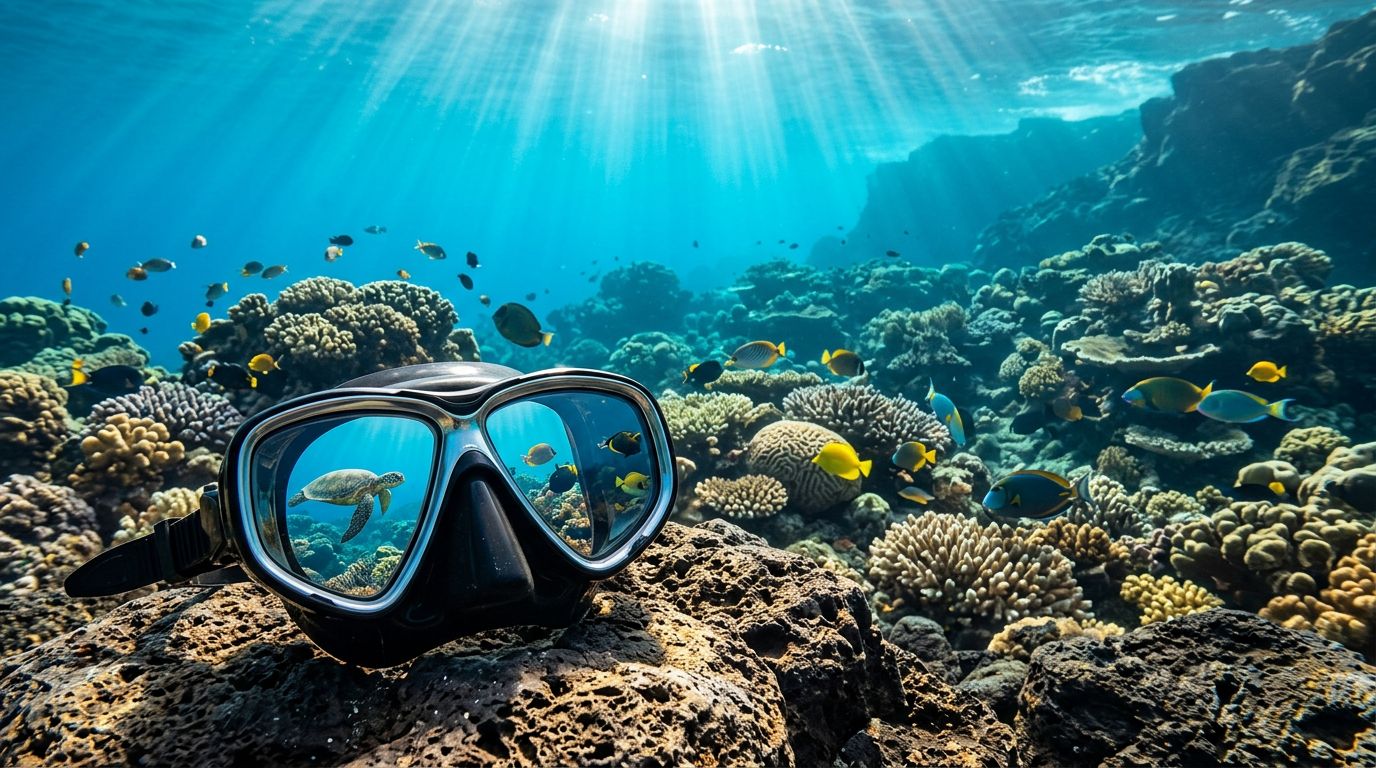
A beautiful reef is harder to enjoy when every fish is a blur. If you wear glasses or contacts, prescription snorkeling masks can help you see Kealakekua Bay’s coral, fish, and underwater rock formations with much more confidence.
Kona Snorkel Trips is a Kailua-Kona ocean adventure company offering small-group snorkeling trips with quality equipment and Lifeguard Certified guides. For another company focused on this historic area, Captain Cook Snorkeling Tours gives you another option to compare before booking.
The right mask won’t replace good preparation, but it can make your time in the water far more comfortable. Here’s how to choose one, prepare for a Captain Cook snorkeling trip, and confirm what your tour operator can provide.
Why clear vision matters at Captain Cook
Kealakekua Bay rewards careful observation. You may see parrotfish grazing along coral, yellow tang moving across the reef, sea turtles resting near rocky ledges, and small details hidden in the reef structure. Those sights are difficult to appreciate when your mask only gives you a vague underwater view.
Your normal glasses usually can’t be worn beneath a snorkel mask. The frame creates gaps around the seal, and the lenses sit too far from your eyes. Water then leaks in, especially when you turn your head or look down.
Contact lenses are another possibility, but you should ask your optometrist before wearing them in seawater. Water can carry organisms that irritate the eye, and a dislodged lens can leave you without clear vision during a swim. A prescription mask often provides a simpler option because the corrective lenses stay in the mask itself.
Clear vision also improves your comfort and awareness. You can spot your guide’s hand signals, judge the distance to the reef, and notice other swimmers more easily. That matters when you are entering the water from a boat or swimming in a new location.
Prescription lenses don’t make you a stronger swimmer. They remove one distraction, which lets you focus on breathing, floating, and enjoying the bay.
Prescription snorkeling masks: your main options
Prescription masks come in several forms. The best choice depends on your prescription, how often you snorkel, and whether you need correction in both eyes.
Ready-made corrective masks
Many dive and snorkel masks use interchangeable corrective lenses. You select a power close to your prescription, then purchase the mask with those lenses already installed. This is usually the most affordable approach.
Ready-made options often work well for nearsighted swimmers with a straightforward prescription. However, they may not correct astigmatism, different power in each eye, or progressive vision needs with the same precision as custom lenses.
Some masks offer lenses in half-step increments. That can provide a useful improvement, but it may not match your glasses exactly. If you rely on strong correction for daily activities, ask an optician whether an off-the-shelf mask will meet your needs.
Custom prescription masks
A custom mask uses your individual measurements and prescription. An optical supplier may provide single-vision lenses tailored for distance viewing underwater. This option costs more, but it can produce a closer match for each eye.
You may need to provide a current prescription. Ask whether the supplier accepts your exact prescription, including cylinder and axis values for astigmatism. Progressive and bifocal corrections aren’t available for every mask design.
The distance between your eyes and the mask lens also affects how the prescription behaves. Water changes the way light reaches your eyes, so don’t assume your eyeglass numbers transfer directly. Follow the supplier’s conversion guidance or ask your optometrist.
Stick-on or drop-in inserts
Some swimmers use removable corrective inserts that fit inside a standard mask. These inserts can be convenient if you already own a well-fitting mask or need correction only for occasional trips.
They may move if they aren’t secured correctly. Inserts can also reduce the open space inside the mask, which may affect comfort. Test them in a pool before taking them to the Kona coast.
| Option | Best for | Main limitation |
|---|---|---|
| Ready-made corrective lenses | Simple nearsighted prescriptions | May not match each eye exactly |
| Custom prescription lenses | Frequent snorkelers or complex prescriptions | Higher cost and longer ordering time |
| Removable inserts | Occasional use or an existing mask | Can shift inside the mask |
| Rental corrective mask | Travelers who don’t want to buy gear | Availability and powers vary |
For a deeper comparison of lens types and ordering choices, this prescription mask guide discusses common options for people who wear glasses. The main takeaway is simple: fit matters as much as lens power.
How to choose a mask that stays clear and comfortable
Your prescription is only half the decision. A mask with the right lenses can still leak, fog, or pinch if it doesn’t fit your face.
Start with the skirt, the soft silicone section that rests against your skin. Place the mask on your face without using the strap. Press gently, inhale through your nose, and hold your breath. If the mask stays in place for several seconds, it may have a good seal.
Hair across the forehead or along the sides of the mask can create a leak. So can facial hair under the lower edge. Adjust the mask while your face is dry, then test it again after applying sunscreen around, but not on, the seal.
A low-volume mask places the lenses closer to your eyes. That design can make it easier to clear water and may give you a wider sense of control. A larger mask may feel more spacious, but it can require more effort to equalize and clear.
The nose pocket should feel comfortable without pressing hard against your bridge. If you have a narrow face, a child-size design may fit better than a standard adult model. Children should never share a mask without checking the seal for each face.
Lens design affects the view, too. Single-lens masks offer a broad field across the front, while dual-lens masks can accommodate certain corrective lens shapes more easily. Side windows may add peripheral visibility, but they don’t compensate for a poor seal.
Before buying, check these details:
- Confirm that the lens power is available for each eye if your eyes require different corrections.
- Ask whether the mask corrects only nearsightedness or also supports astigmatism.
- Choose tempered lenses when the manufacturer offers them for your mask model.
- Check the return policy because a mask that doesn’t fit can’t be fixed with a stronger prescription.
- Test the mask in a pool or shallow water before your vacation.
A current eye exam is helpful if your prescription has changed. You don’t need a new exam for every vacation, but an old prescription can make an expensive mask disappointing.
Preparing for a Kealakekua Bay snorkeling trip
If snorkeling Big Island Hawaii is on your itinerary, plan your eyewear before the morning of your boat trip. A mask ordered online may need time for lens installation, and a rental shop may not carry your power.
Contact the tour operator before booking. Ask four direct questions:
- Do you provide prescription masks, or only standard masks?
- Which lens powers do you carry?
- Can you reserve a corrective mask in advance?
- May you bring and use your own prescription mask?
Don’t assume that a tour offering all standard snorkel gear also carries optical gear. Kona Snorkel Trips provides high-quality snorkeling equipment, flotation devices, and guide support, but you should confirm prescription availability for your specific trip.
Pack your own mask if clear vision is essential. Bring the hard case, a spare strap if you have one, and a soft cloth for the outside lens. Keep the mask out of direct sun when you’re waiting to board.
Fogging can ruin a clear prescription lens. Apply a marine-safe defogging solution before entering the water, rinse lightly, and avoid touching the inside of the lens afterward. Fingerprints and sunscreen transfer can create cloudy patches.
A snorkel mask should sit on clean skin. Apply facial sunscreen after fitting the mask, and avoid putting lotion on the silicone skirt. Reef-safe sun protection and a long-sleeve rash guard can reduce the amount of sunscreen that reaches the water.
Your first few minutes should be calm. Let your guide know that you rely on prescription lenses. The crew can help check the seal, adjust the strap, and explain where to stay in relation to the boat and group.
What to expect on a Captain Cook snorkeling tour
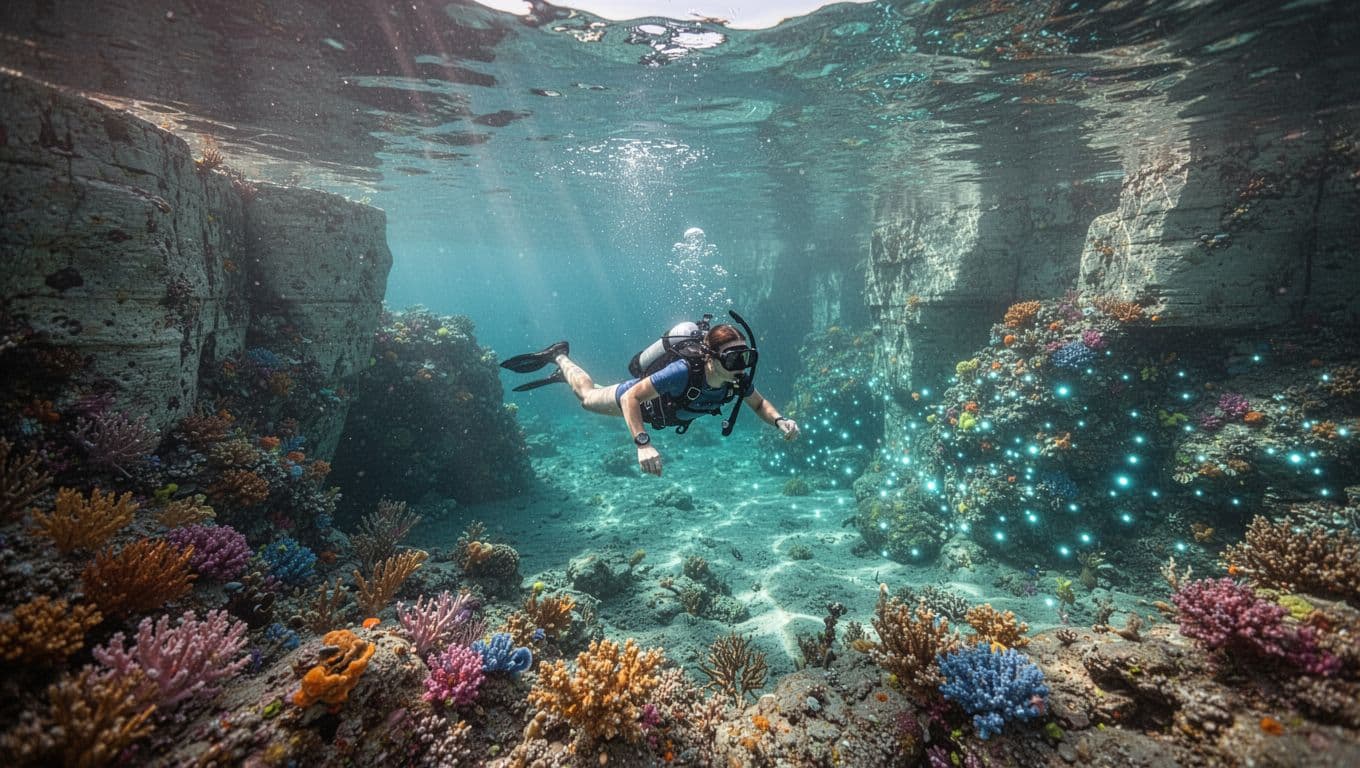
A boat trip to Kealakekua Bay usually combines time on the water with views of the Kona coast. Depending on conditions and the day’s plan, you may pass lava cliffs, sea caves, and sections of coastline that are difficult to reach by land.
The bay’s clear water can make distant objects appear closer than they are. Your prescription mask helps you read the underwater scene, but you should still follow your guide’s boundaries. Coral is fragile, and touching it can damage living animals that grow slowly.
Kona Snorkel Trips follows a “Reef to Rays” philosophy. Its guides focus on guest safety, small-group service, marine education, and reef-safe practices. Lifeguard Certified guides provide instruction for new snorkelers while helping experienced swimmers make the most of the site.
You can learn more about the Kealakekua Bay snorkeling excursion before deciding whether the route fits your group. The trip is a strong match if you want reef viewing, coastal scenery, and guidance rather than an unstructured swim.
Tell the crew about your vision needs during check-in. A guide can help you confirm that the mask seals before you move away from the boat. If your mask floods, surface calmly and ask for assistance instead of trying to fix it while swimming.
Kona Snorkel Trips also offers private Kona boat charters for families and groups that want more control over the pace. A private trip may give you more time to test your mask, ask questions, or adjust the plan around comfort levels.
If you plan to snorkel with Kona Snorkel Trips, you can check availability for current tour times.
Before your trip, read the operator’s cancellation, weather, and arrival policies. Ocean conditions can change, and your guide may move the snorkel location for safety.
Prescription masks for nighttime manta encounters
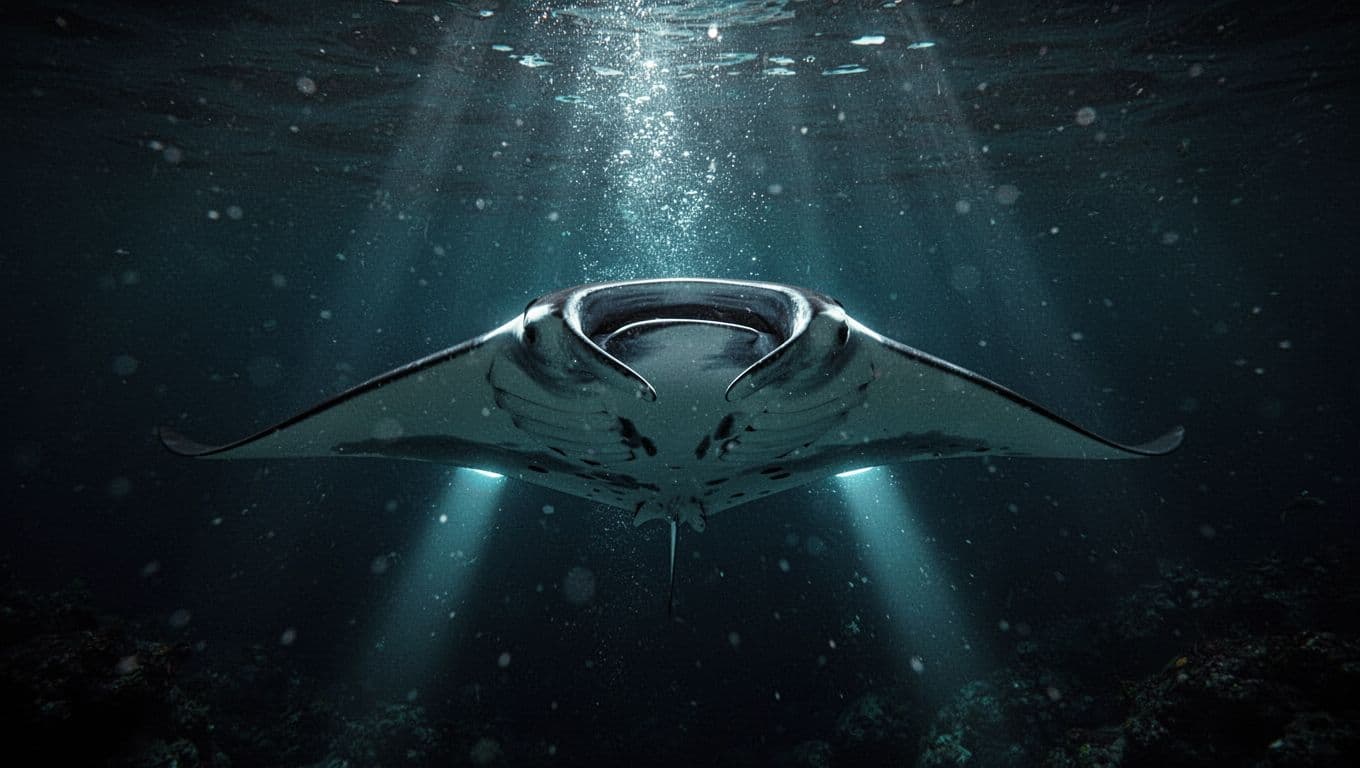
A prescription mask can also help if you add a manta ray night snorkel to your Kona plans. The underwater lights attract plankton, and manta rays glide beneath the surface as they feed. Clear vision helps you follow the animal’s movement without lifting your head or breaking your breathing rhythm.
The experience has different visual demands than a daytime reef trip. You may look down into dark water while bright lights create contrast around the manta rays. A mask that fits securely matters because repeatedly clearing a leak can make the swim tiring.
Kona Snorkel Trips uses custom-built, lighted boards for nighttime encounters and provides guide support in the water. The crew also explains respectful viewing practices, including keeping your hands off manta rays and giving them room to move.
The internal manta ray night snorkel in Kona page includes details about the nighttime experience. Basic swimming ability is important, and you should tell the crew if reduced vision affects your confidence in open water.
A prescription mask isn’t required for everyone. If your standard mask gives you a sharp view and a secure seal, it may be enough. If you can’t identify the guide, board lights, or animals without glasses, corrective lenses are worth arranging before departure.
Choosing between your own mask and a rental
Renting is convenient when you don’t snorkel often. It also saves space in your luggage. However, the available powers may be limited, and a rental mask may have a fit that doesn’t suit your face.
Your own mask gives you time to test the seal and become comfortable breathing through the snorkel. You can also clean it properly and avoid switching between several masks during a family trip.
A rental makes sense when your prescription is mild, your vision needs are flexible, and the operator confirms a suitable mask in advance. Buying makes more sense when you have a strong prescription, different correction in each eye, or plans to snorkel more than once.
A specialist retailer can help you compare brands and powers. SportEyes’ prescription dive and snorkel mask selection shows how much lens and frame choice can vary between models.
Don’t wait until you reach Kailua-Kona to discover that a rental won’t work. Contact the company before your trip, then bring your own corrective mask if the answer is uncertain.
Family considerations for clear underwater vision
Families often have several different needs in the same boat. One child may need a corrective mask, another may need a smaller skirt, and a parent may want extra flotation. Discuss those details before you arrive.
Children should practice wearing the mask at home or in a swimming pool. They need to know how to clear a small amount of water, breathe through the snorkel, and signal that they want to return to the boat.
A child who wears glasses may not know whether a standard mask is clear enough. Ask them to identify a person or object at a safe distance during the pool test. If they can’t see comfortably, arrange corrective lenses before the trip.
Prescription masks can also help older adults who don’t feel confident swimming without their usual glasses. Clear vision makes guide signals easier to follow, but every swimmer still needs to stay within personal limits.
If one member of your group doesn’t want to snorkel, consider another water activity. Seasonal Kona whale watching tours offer an ocean experience without requiring underwater eyewear.
Care for your prescription mask after the trip
Salt crystals can scratch lenses and degrade silicone over time. Rinse the mask with fresh, cool water after every ocean outing. Let it dry in the shade before placing it in a protective case.
Avoid paper towels, abrasive cloths, and household glass cleaner. Prescription lenses may have coatings that strong cleaners can damage. Follow the manufacturer’s care instructions instead.
Keep the mask away from hot car interiors and direct sunlight for long periods. Heat can distort the skirt or shorten the life of the strap. Store the mask with the lenses protected and the skirt uncompressed.
If you want to compare current models, this tested prescription dive mask guide covers lens types, ordering considerations, and care. Use it as a starting point, then confirm the prescription and fit with the seller.
A simple plan before you leave for Kona
You can avoid most mask problems with a little preparation. Start by checking whether your current prescription is still accurate. Then decide whether you want a ready-made mask, custom lenses, inserts, or a confirmed rental.
Next, test the mask in water. Practice clearing it without panic, and make sure you can read basic hand signals from your guide. Pack the case and defogger with your swimwear rather than leaving them at home.
Finally, tell your operator about your vision needs. Kona Snorkel Trips builds its trips around careful instruction, guest safety, quality equipment, and respect for Hawaii’s reef ecosystems. The crew can give you the most useful answer about current equipment options and the day’s conditions.
Conclusion
Clear vision can change how you experience Captain Cook snorkeling. A well-fitting corrective mask lets you focus on the reef instead of squinting, adjusting glasses, or worrying about a lost contact lens.
Arrange your prescription mask early, test the seal before your boat day, and confirm rental options directly with the operator. With the right equipment and a safety-minded guide, you can see more of Kealakekua Bay and enjoy the water with greater confidence.