
Kona Manta Ray Snorkel: What Happens If You Exit Early?
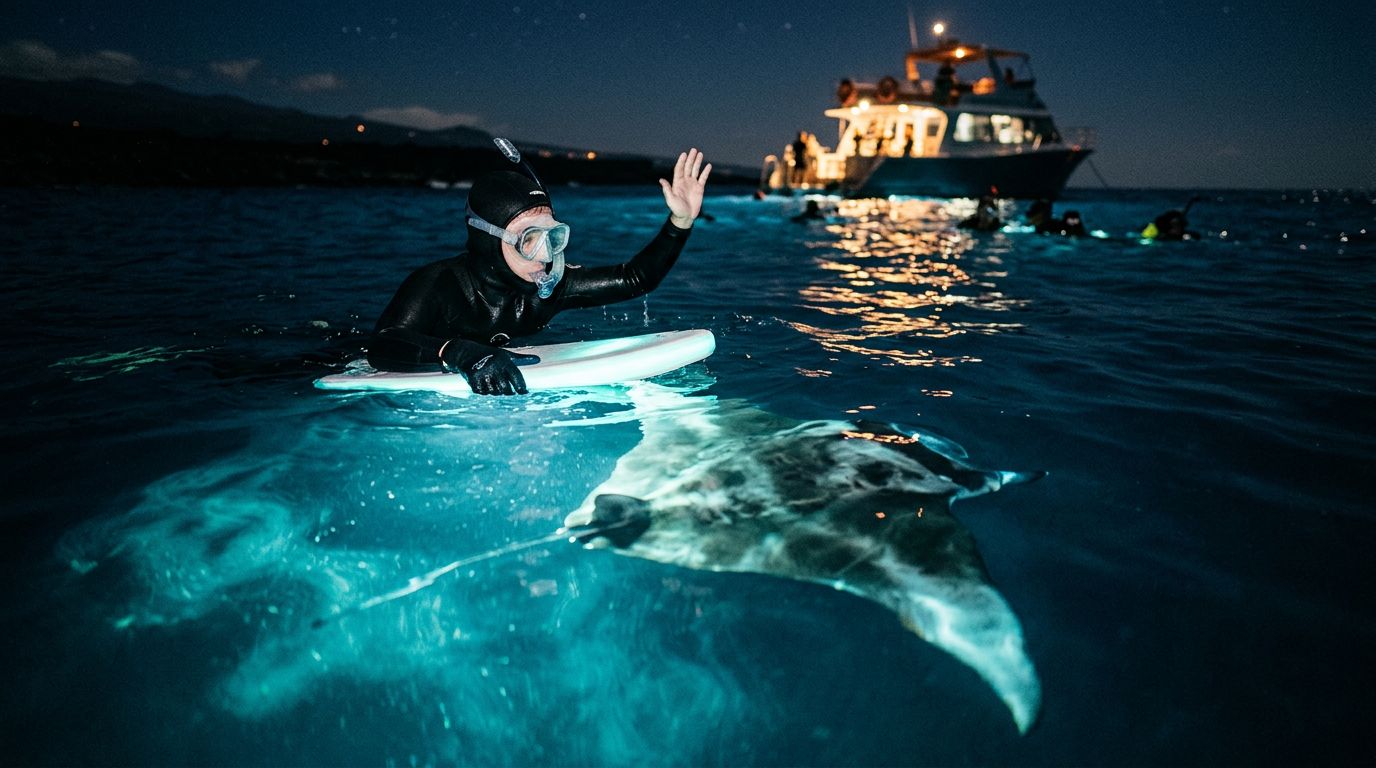
On a Kona manta ray snorkel, the most important decision may come after the mantas appear: whether you stay in the water. If cold, seasickness, anxiety, a leaking mask, or simple fatigue takes over, you can leave before the scheduled end.
A safe early exit should be calm and guided, not an embarrassing scramble. Knowing what the crew does, whether you can re-enter, and what happens to your booking helps you make a better choice before launch.
What a Kona manta ray snorkel feels like before you exit
A nighttime manta tour usually begins with a boat ride after sunset. Once you reach the viewing area, the crew sets up lights near the surface. Those lights attract plankton, which can bring manta rays close to the floating board or viewing area.
You typically hold the board while floating face-down at the surface. The water below becomes a dark, open space filled with moving light. Mantas may glide beneath you, turn on their sides, or pass close enough for you to see the patterns on their undersides.
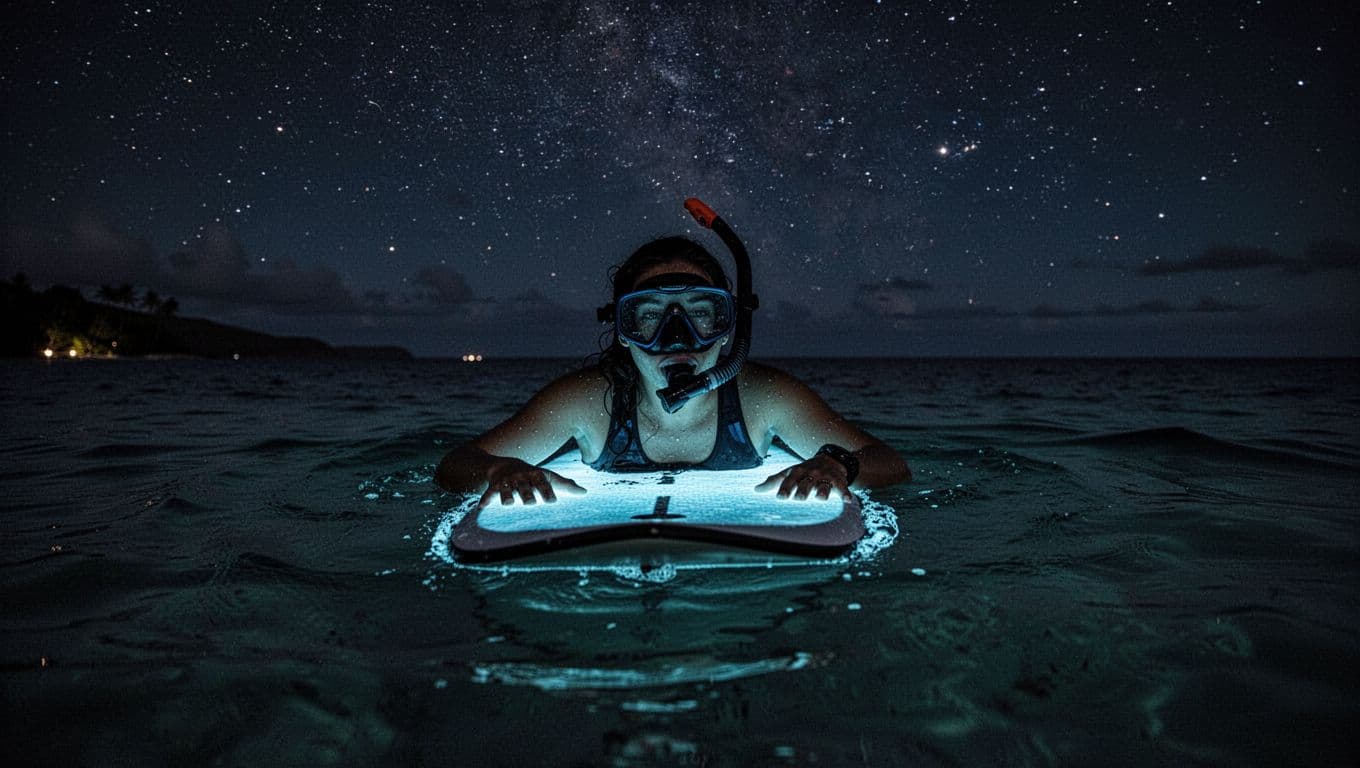
That setup can feel peaceful for one person and overwhelming for another. You may be comfortable in a pool but feel different in open ocean water at night. Darkness removes the visual reference points you normally use to judge distance and movement.
Kona Snorkel Trips follows a “Reef to Rays” philosophy, with small-group service, lifeguard-certified guides, quality snorkeling equipment, and custom-built lighted boards for nighttime encounters. The crew also focuses on reef-safe practices and education, so you receive guidance about both your safety and the animals around you.
A second company worth comparing is Manta Ray Night Snorkel Hawaii, which focuses on nighttime manta experiences around Kona. Before you book, look at the operator’s group size, guide credentials, flotation setup, boat access, and early-exit policy.
Many visitors plan snorkeling Big Island Hawaii days around a night manta trip, so leave time to rest before the evening departure. Fatigue can make a manageable swim feel much harder.
If you want to compare current departure times and tour options with Kona Snorkel Trips, you can use the booking button below.
What happens when you exit a manta snorkel early?
Leaving the water early is usually a simple, supervised process. The exact steps vary by boat and sea conditions, but the crew should guide you through each movement.
Signal your guide before leaving the board
First, get the guide’s attention. Raise a hand, speak when possible, or use the signal explained during the safety briefing. Don’t swim away from the board without telling anyone.
Your guide may ask what you need. A short answer such as “cold,” “sick,” “mask problem,” or “I need to get out” gives the crew useful information. You don’t need to justify the decision.
The guide then directs you toward the safest exit point. Depending on the boat and tour setup, that could mean moving to a ladder, a platform, or an assisted boarding point. Keep your body relaxed and follow one instruction at a time.
Let the crew help you aboard
At night, the boat can be difficult to judge from the water. Waves, fins, masks, and other swimmers can make the ladder look farther away than it is. The guide may position a flotation aid, steady your arm, or escort you across the short distance.
Once aboard, sit or hold a stable rail while the crew checks that you’re okay. If you feel sick, dizzy, short of breath, or unusually cold, say so clearly. The guide may offer water, a towel, a seat, or additional monitoring based on the situation.
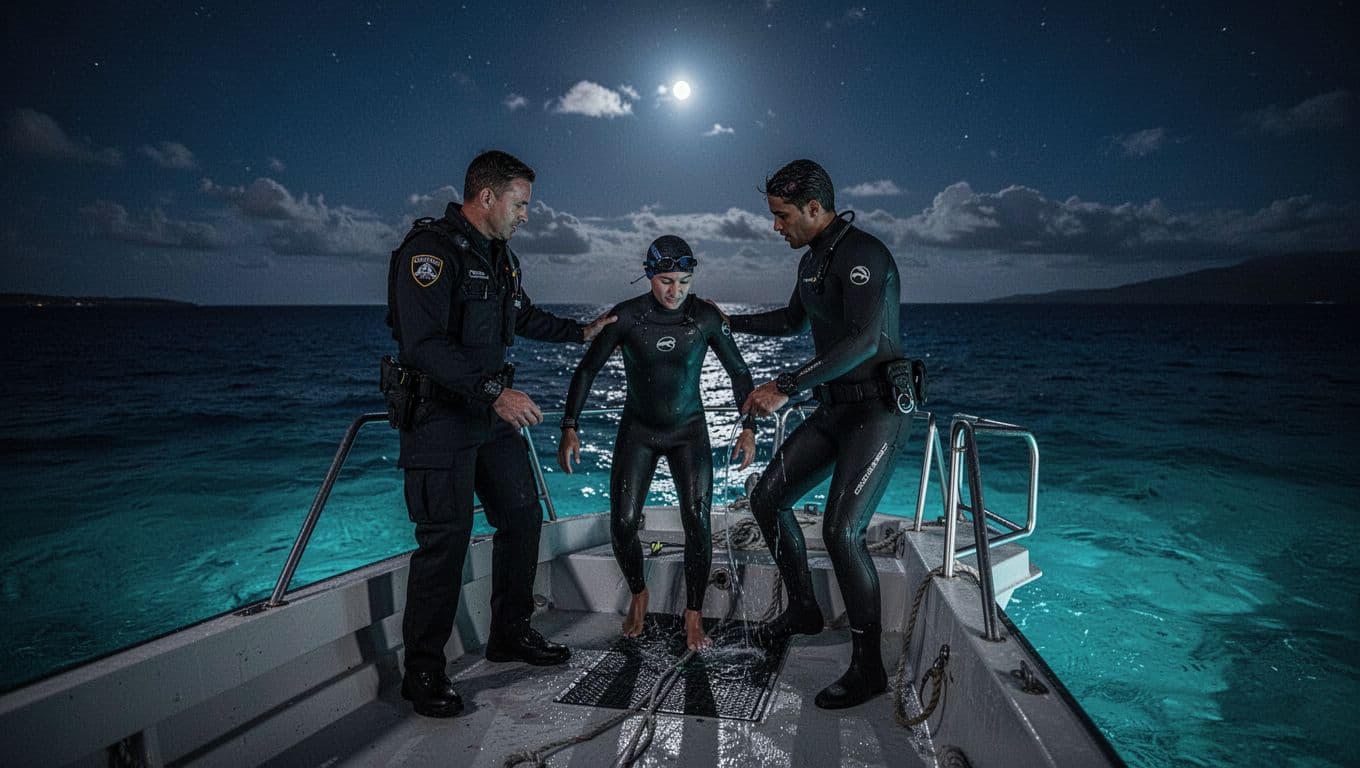
The rest of the group may continue the encounter if conditions remain safe. You might wait aboard while watching the lights and listening to the crew describe what is happening below.
If the reason for leaving involves a medical concern, the crew’s priority changes from the tour experience to your condition. Be direct about your symptoms, even if they seem minor.
For a dedicated manta trip with Kona Snorkel Trips, you can check availability before your vacation dates fill.
Can you get back in after leaving the water?
Sometimes you can re-enter, but the guide has to approve it. An early exit doesn’t automatically end your snorkeling time. However, nobody should assume that a return to the water is guaranteed.
The crew considers several factors before allowing you to go back in. These include your physical condition, the current, wave height, boat traffic, visibility, the position of the group, and the amount of time left in the tour.
A brief exit for a loose mask strap or a moment of anxiety may have a different outcome than leaving because of seasickness or exhaustion. If your body is telling you to stop, staying aboard may be the safest choice.
| Situation | What the crew may do | Re-entry possibility |
|---|---|---|
| Your mask leaks or fogs | Help adjust or replace the equipment | Possible if you feel ready |
| You feel cold or tired | Give you time to warm up and rest | Depends on your condition |
| You feel seasick or dizzy | Keep you aboard and monitor you | Often not recommended |
| Water conditions change | Move or end the water portion | Depends on the new conditions |
If you do re-enter, wait for clear directions. The crew may ask you to use the same board, approach from a specific side, or enter when nearby swimmers have enough space.
You also may not return to the exact moment you left. A manta could move away, the group could shift position, or the lights could attract animals somewhere else. Re-entry gives you another chance to observe, not a promise of the same view.
What if your partner or child stays in?
A companion may be able to remain in the water while you sit aboard, but the guide controls that decision. The crew needs to keep track of everyone, so one person leaving can affect how the group is supervised.
If you’re traveling with a child, discuss the plan before the boat leaves. An adult may need to stay with the child if the child exits. Ask how the operator handles supervision, flotation, and seating for guests who leave the water.
Why swimmers exit a Kona manta ray snorkel early
People leave for practical reasons, and many have nothing to do with swimming ability. Open ocean conditions feel different at night, especially when you can’t see the seafloor or shoreline.
Common reasons include:
- Motion sickness develops during the boat ride or while floating on the surface.
- A mask leaks, fogs, or feels uncomfortable against your face.
- You struggle to breathe calmly through the snorkel.
- Cold water, wind, or wet clothing makes it hard to relax.
- Waves cause repeated splashing or make the board uncomfortable.
- You feel anxious once the lights go out.
- Fatigue affects your ability to hold position.
- A shoulder, leg, back, or other physical problem starts to hurt.
- You need to help a child, partner, or family member who wants to exit.
An early exit is also common when a guest discovers that floating face-down for a long period feels more demanding than expected. You may have strong swimming skills and still dislike the sensation of open water at night.
Tell the crew about small problems before they become large ones. A guide can often fix a mask fit or explain a breathing technique within a minute. Waiting until you’re panicked makes the exit harder for everyone.
You also don’t need to stay in the water to prove that you belong on the tour. The purpose is to experience the ocean safely. If your body or mind says you need a break, listen early.
What you can still experience from the boat
Leaving the water changes your view, but it doesn’t always end the night. You may remain close to the lighted viewing area while the crew continues to monitor the group.
From the boat, you might see silhouettes moving through the illuminated water. A manta’s wing may break the surface, or you may catch a glimpse of the animal as it turns near the lights. Your view depends on the boat’s position, water movement, darkness, and manta activity.
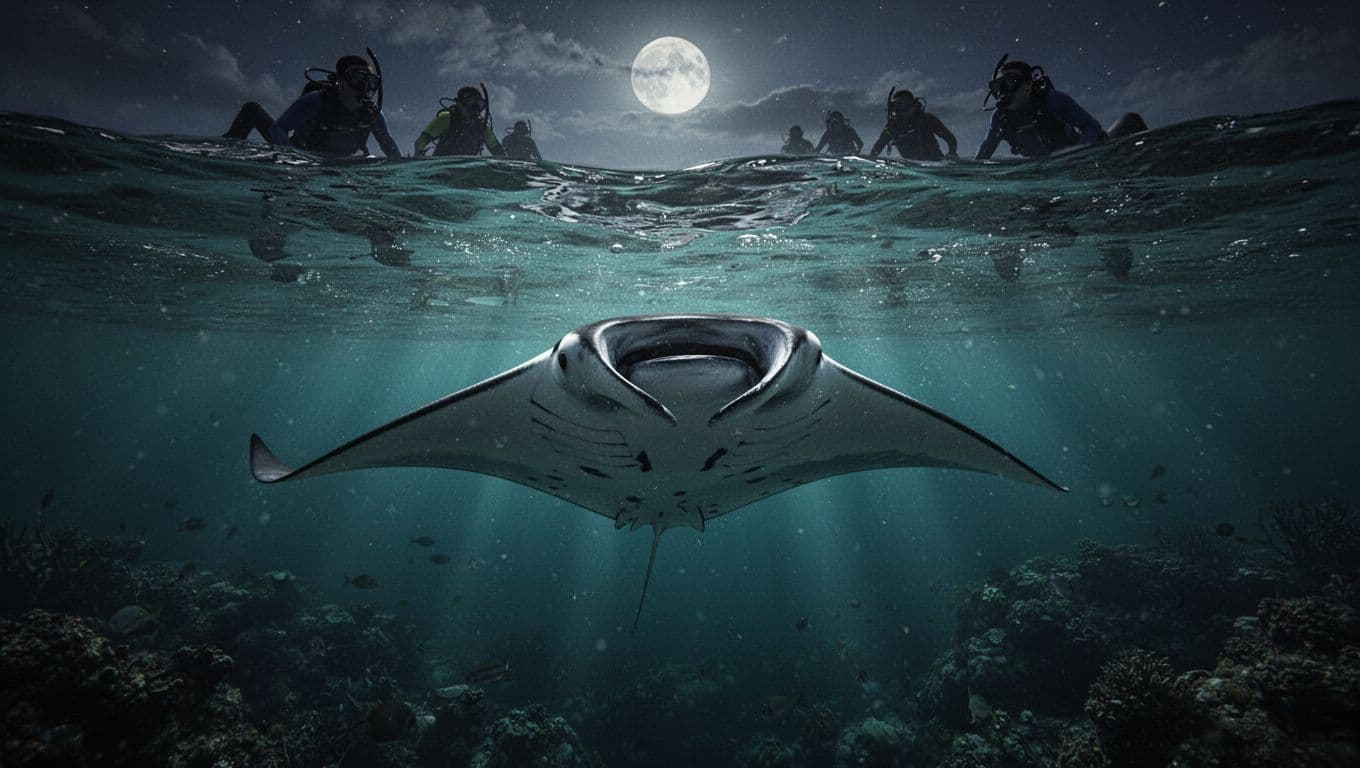
You can also listen to the guide explain manta behavior, feeding patterns, and responsible viewing practices. That information can make the encounter easier to follow when you aren’t looking underwater.
Some guests choose to sit out for a few minutes, warm up, and decide later whether they feel ready. Others know they are finished for the evening. Both choices are reasonable when the crew knows where you are and can supervise you.
If your companion remains in the water, you may be able to watch from the boat and share the experience afterward. A camera or phone can help capture the memory, but follow the crew’s rules around equipment, railings, and low-light conditions.
You may also find that the boat ride itself becomes part of the evening. Kona’s coast looks different after sunset, and the open water can feel calm even when the snorkeling portion is not right for you.
Safety rules to follow after you decide to exit
The most important rule is to tell the guide before you move. Never swim toward the boat alone, even if it looks close. At night, distance and direction are easy to misjudge.
Follow the boat crew’s instructions during the exit:
- Stay with the board or the guide until you’re told to move.
- Approach the ladder or platform from the side the crew indicates.
- Keep your fins and other equipment positioned as instructed.
- Use the ladder slowly, especially if waves are moving the boat.
- Sit in the designated area once you’re aboard.
- Tell the crew if you still feel sick, cold, weak, or short of breath.
- Wait for approval before considering a return to the water.
Manta rays are wild animals, so remain an observer. Don’t touch, chase, block, or try to ride a manta. Your hands should stay on the board or in a relaxed position unless the crew gives another instruction for boarding.
First-time visitors often raise safety questions in a Big Island travel group discussion and in a visitor conversation about manta snorkeling safety. Those conversations can help you prepare questions, but your guide’s briefing and your own comfort should control your decision in the water.
If you lose sight of the board or boat, stop swimming and signal. The crew can locate you more easily when you remain calm and visible.
How to reduce your chance of leaving early
You can’t control manta activity or ocean conditions, but you can remove several common problems before they start.
Start by choosing an operator that explains the experience clearly. Ask about group size, flotation support, guide qualifications, boarding access, and what happens when someone needs to exit. A clear answer is easier to trust than a vague promise that everyone will have a perfect night.
Your daytime plans also matter. You can snorkel Big Island waters in the morning, but schedule recovery time before a nighttime boat trip. Spending hours in the sun, skipping meals, or arriving dehydrated can leave you less comfortable in the water.
A few simple preparations can help:
- Eat a light meal that you know sits well before departure. Avoid experimenting with unfamiliar foods on tour day.
- If you experience motion sickness, ask a medical professional or pharmacist about suitable options and follow the product directions.
- Practice breathing through your snorkel in a pool or shallow water before your trip.
- Tell the guide if you’re a first-time snorkeler, a nervous swimmer, or someone who needs extra help.
- Bring a dry change of clothes and a warm layer for the ride back.
- Leave bulky jewelry and loose items at your accommodation unless the operator provides secure storage.
- Speak up when a mask leaks, a strap pinches, or your breathing feels wrong.
Mask problems cause frustration quickly. Ask the crew to help fit the mask before you enter the water. A proper seal should feel comfortable without requiring excessive strap pressure.
Breathing control matters as well. Take slow breaths, keep your face relaxed, and lift your head when you need a reset. You don’t have to watch the water continuously. Pausing for a few seconds can help you regain control without leaving.
When you’re snorkeling Big Island sites by day, practice floating without standing on the bottom or touching coral. That habit can make the nighttime board setup feel more familiar.
Booking questions, refunds, and choosing the right tour
An early personal exit and an operator cancellation are different situations. If you choose to leave because you feel uncomfortable, the booking terms may not treat that the same way as a trip canceled because of unsafe weather or mechanical problems.
No universal refund rule applies to every Kona manta tour. Read the cancellation policy before booking, and ask what happens if you enter the water but leave early. Also ask whether a guide can move you to another departure if your condition prevents you from continuing.
These questions can save confusion later:
- Ask whether you can remain aboard after leaving the water.
- Ask whether re-entry is possible after a mask issue or short rest.
- Ask how the crew handles seasickness, anxiety, or fatigue.
- Ask whether a companion can stay in the water while you sit out.
- Ask what happens if conditions change after the tour begins.
- Ask whether the boat has a ladder or platform that suits your mobility needs.
A private charter may offer more flexibility for families or couples with different comfort levels. Kona Snorkel Trips lists customizable Big Island boat charters that can be planned around your group’s interests, including reef time and marine-life viewing. A private trip still depends on safety decisions, weather, and the crew’s instructions, but the schedule and group dynamics may be easier to tailor.
If you already know that someone in your group may need frequent breaks, mention that during booking. The crew can explain whether the tour setup fits your needs before you arrive at the harbor.
For a manta ray trip with Kona Snorkel Trips, you can check availability and review the available departure options.
An early exit is a safety decision, not a failed trip
A Kona manta ray snorkel can be memorable even if you spend less time in the water than planned. Tell the guide early, use the designated exit, and let the crew decide whether re-entry is safe.
You may still watch the lights, see manta activity from the boat, and hear the naturalist’s explanation. The strongest choice is the one that keeps you comfortable, visible, and under crew supervision.
The mantas don’t need you to stay past your limit. A safe decision protects both you and the quality of the encounter.