
How Parrotfish Sand Shapes Big Island Snorkeling
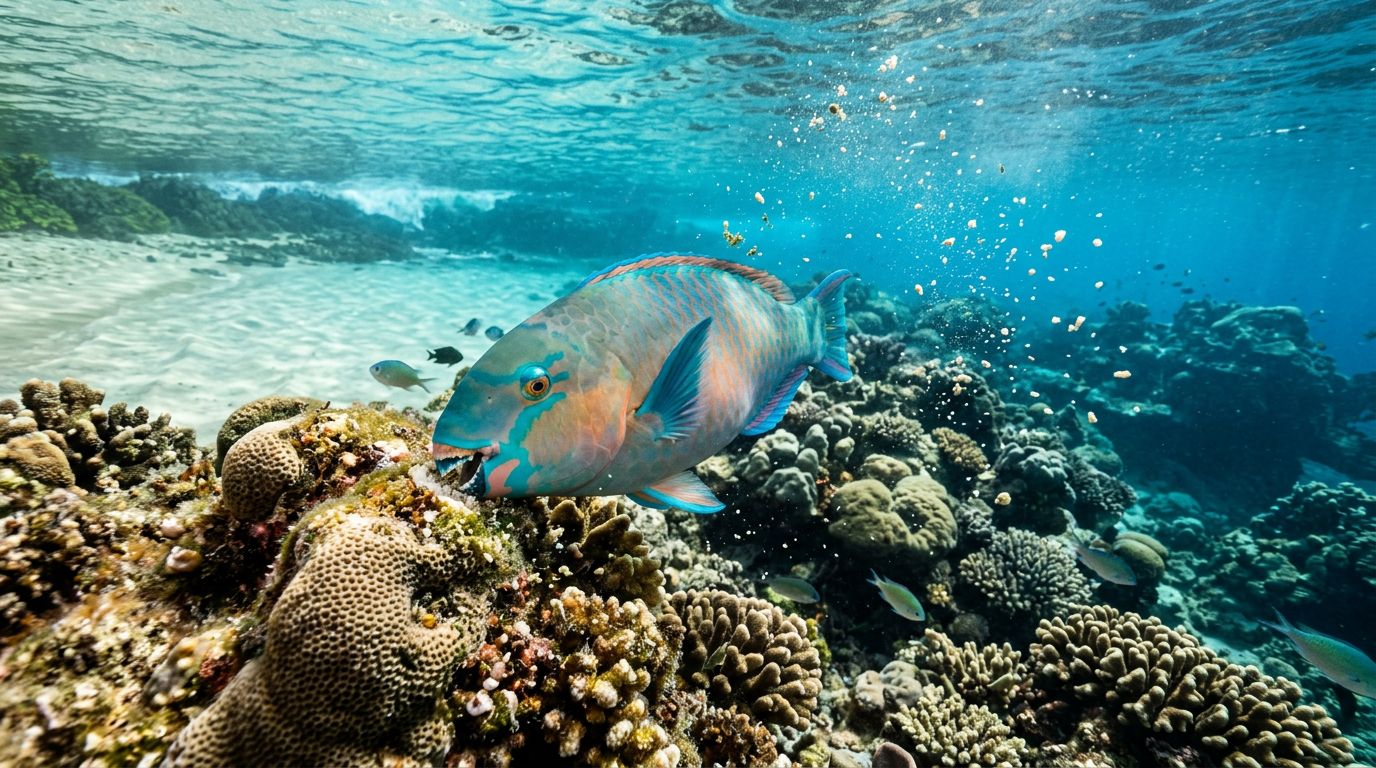
That pale sand beneath your fins may have passed through a fish. Parrotfish, called uhu in Hawaii, scrape algae and bits of reef with beak-like teeth, then return carbonate grains to the ocean as sand. If you’re planning snorkeling Big Island Hawaii beaches, this process helps explain why some coves have bright, shallow bottoms beside colorful reefs.
Still, sand doesn’t guarantee calm water or clear visibility. You need to understand how reef sand forms, where it settles, and how surf, runoff, and ocean etiquette affect your swim. Start with the fish behind the beach.
How parrotfish sand becomes a beach resource
Parrotfish do more than add color to a reef. Their feeding habits help shape the coastal environments you visit while snorkeling around Hawaii.
How uhu make reef-derived sand
Parrotfish are herbivores with strong, fused teeth that work like a scraping tool. They bite algae from hard reef surfaces and ingest small particles of coral and other carbonate material along with it. Their digestive systems process the food, and the remaining grains leave the fish as fine sediment.
Over time, waves move that sediment across the reef and toward sheltered shorelines. The result is the soft, pale sand associated with many tropical beaches. According to the University of Hawaii’s parrotfish research, scientists estimate that parrotfish may produce up to 70% of the sand on some white beaches in Hawaii and the Caribbean.
That percentage doesn’t mean every beach grain comes from uhu. Coral fragments, shells, volcanic material, and weathering also contribute. However, the estimate shows how closely some beaches are tied to healthy reef systems.
Why parrotfish matter to living reefs
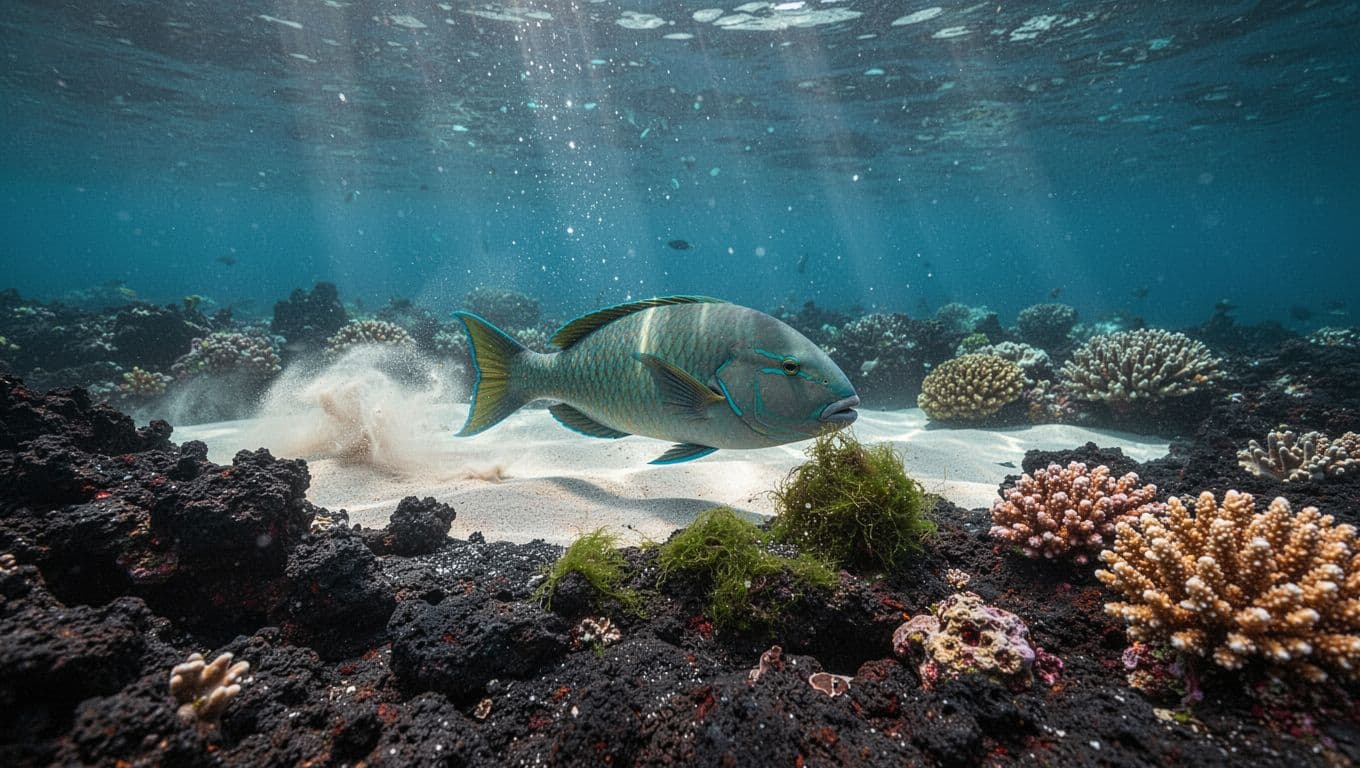
The sand is only one visible result of parrotfish feeding. As uhu remove algae from reef surfaces, they help prevent algal growth from covering areas where coral larvae may settle. Their scraping also creates bioerosion, which means the fish wear away small amounts of reef material as they feed.
That role has two sides. Parrotfish remove carbonate material, yet their grazing can help maintain space for coral and other reef life. The fish are part of a larger cycle involving algae, coral, sand, waves, and beach formation. The University of Hawaii’s reef health campaign describes parrotfish, or uhu, as important herbivores on Hawaiian reefs.
When you see a sandy patch beside a rocky reef, you’re often looking at two connected parts of the same ecosystem.
How parrotfish sand shapes snorkeling on Big Island beaches
Fine reef sand changes how a beach feels beneath your feet and how you read the underwater scene. It can make a site welcoming for beginners, but it also requires careful movement.
Sandy bottoms can make entry easier
A gently sloping sandy bottom often gives you more room to put on your mask, adjust your fins, and enter the water without climbing across sharp lava rock. Sandy shallows can also provide a calmer place for children or less-confident swimmers to practice breathing before reaching deeper reef.
When you snorkel Big Island beaches, look for the transition between sand and rock. The sand usually supports easier entry, while the reef edge attracts more fish. You may see a few species over the bottom, but the most active habitat is often near coral heads, lava shelves, and cracks.
Sand also shows movement. Ripples, drifting grains, or a cloudy patch near shore can reveal current or recent wave action. If each kick sends a cloud across the bottom, slow down and give the water time to settle.
Sand and reef work best together
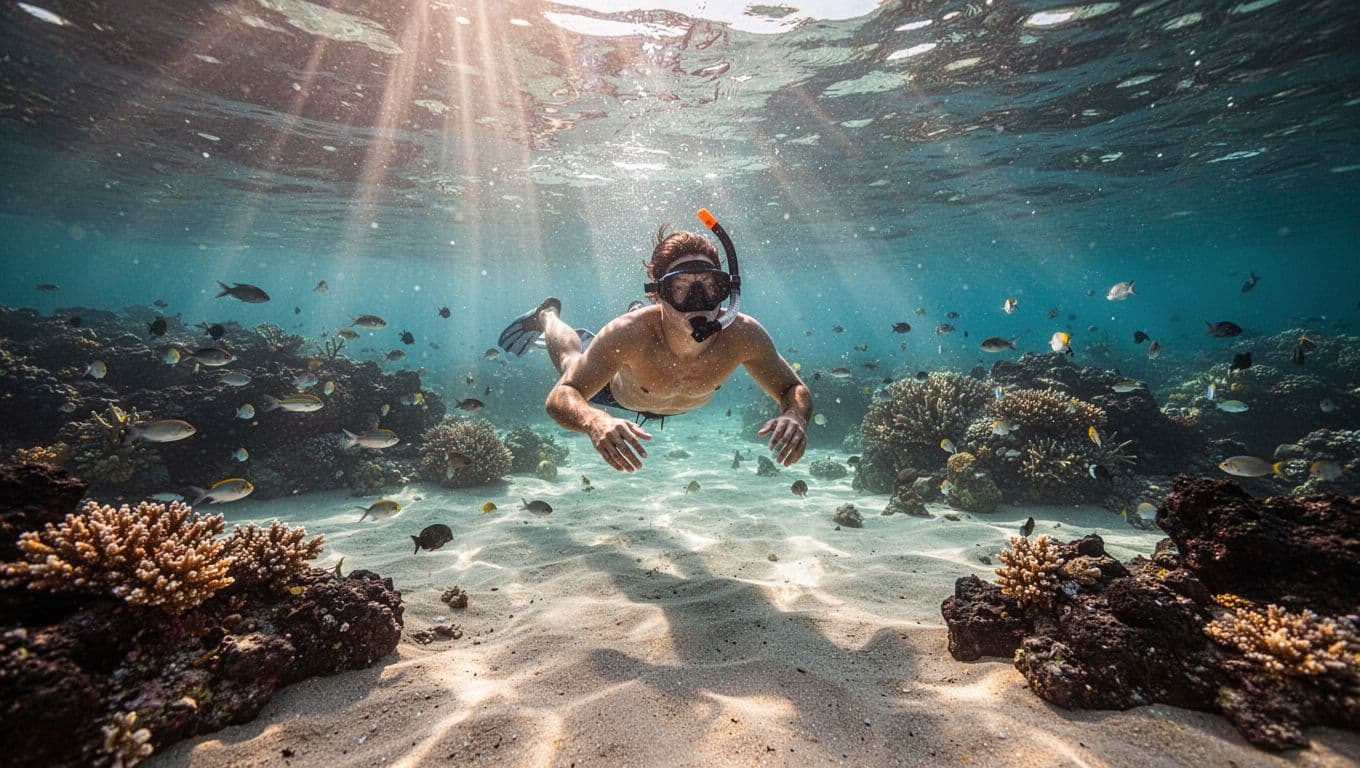
A wide sandy bottom can look inviting, but it usually has less shelter than a complex reef. Fish need coral branches, rock holes, ledges, and seaweed-covered surfaces for food and protection. The best snorkeling often happens where sandy areas meet healthy reef habitat.
Parrotfish sand can improve contrast, too. Against a pale bottom, you may notice shadows, rays of sunlight, or fish moving between the sand and coral. However, kicking the bottom can reduce visibility for everyone nearby. Keep your body level, use slow fin strokes, and avoid pushing off the reef or seabed.
The sand supports the snorkeling experience, but the reef supplies much of the marine life that makes the swim memorable.
Plan your snorkeling Big Island day around conditions
A beach’s reputation matters less than the conditions you find when you arrive. Wind, swell, rain, tide, and runoff can change the experience within hours.
Let shelter and water quality guide you
The Kona coast often offers drier weather and more sheltered coves than many exposed areas on the island. Sites near Hapuna Beach, Anaeho’omalu Bay, Two Step, Kahalu’u, and Kealakekua Bay can all have different conditions on the same day.
If your snorkeling Big Island itinerary includes more than one beach, leave room to change plans. Check the surf forecast, wind, posted warnings, and current water conditions before entering. After heavy rain, avoid brown or discolored water, especially near stream mouths and runoff channels.
Morning can bring lighter wind at some sites, but no time guarantees safe water. The Hawaii Ocean Safety snorkeling guidance advises you to use lifeguarded beaches whenever possible and learn how to swim and snorkel safely.
Read the water before you commit
Watch the shore break for several minutes. Look for channels where waves pull water back toward the ocean, strong surge around lava shelves, and areas where swimmers struggle to exit. A beach may have beautiful sand but still have a difficult entry.
Visibility also deserves attention. Clear water lets you see the reef and other swimmers, while suspended sand or runoff can hide hazards. If conditions look poor from shore, choose another site or wait. A flexible plan protects your vacation and reduces pressure to enter water that doesn’t feel right.
Protect the reef while you swim
Your behavior affects the reef, especially in shallow areas where coral is easy to reach with your fins or hands. Small choices help protect the same habitat that produces the sand.
Keep your fins, hands, and feet off coral
Never stand on coral, even when a wave pushes you toward the bottom. Coral can break under very little weight, and sharp surfaces can injure you. Instead, use a sandy patch for adjustments or ask a guide to help you find a safe resting area.
Keep your hands relaxed and avoid touching fish, turtles, coral, or other marine life. The State of Hawaii’s snorkeling rules also remind visitors to use a dive flag when required and stay within 100 feet of it when diving or snorkeling in a group.
If you feel tired, return to shore before fatigue affects your breathing or fin control. A short break is safer than holding onto the reef.
Never feed or chase marine life
Feeding fish changes their behavior and can create problems for animals and swimmers. Chasing a turtle or crowding a fish into a shallow corner causes stress and often leaves you with a worse view.
Instead, float quietly at a respectful distance. Let the animals decide how close they want to come. You may see more natural behavior when you stop swimming toward the subject and allow the reef to unfold around you.
This approach also keeps sand from clouding the water. Calm snorkeling gives you better visibility and reduces contact with the bottom.
What a guided tour adds to your beach experience
A local guide can help you match the day’s conditions with a suitable reef, entry point, or boat-accessed site. That support matters when you’re traveling with children, first-time snorkelers, or a group with different comfort levels.
Kona Snorkel Trips connects safety with reef education
Kona Snorkel Trips follows a “Reef to Rays” philosophy, with small-group ocean adventures led by lifeguard-certified guides. The team provides quality snorkeling equipment, explains local marine life, and teaches reef-safe habits before you enter the water.
You can compare the company’s Big Island snorkeling tours if you want a guided experience along the Kona coast. Guides can help you avoid fragile reef areas, identify safer water conditions, and make the most of sandy shallows without treating the reef as a playground.
Choose the trip that fits your group
Kealakekua Bay offers a strong combination of clear water, reef habitat, dramatic volcanic coastline, and historical importance. A guided Kealakekua Bay Captain Cook snorkeling trip can help you reach the marine sanctuary while learning how to move through the reef without damaging it.
A private option may suit couples, families, or groups that want more control over timing and location. With private Kona snorkeling tours, you can discuss your group’s comfort level, interests, and preferred pace before heading out.
When a guided trip matches your group, you can check avaialbility before your preferred date fills.
Conclusion
The next time you see pale sand below a Hawaiian reef, remember that it may have started with an uhu grazing algae from hard coral and rock. Parrotfish sand supports beaches, shallow entries, and the reef environments that make snorkeling on the Big Island special.
Choose your site according to current conditions, stay off the coral, and leave marine life undisturbed. With those habits, you protect the reef while enjoying the coastal places that reef-building fish help create.