
Are Manta Rays in Hawaii Related to Sharks?
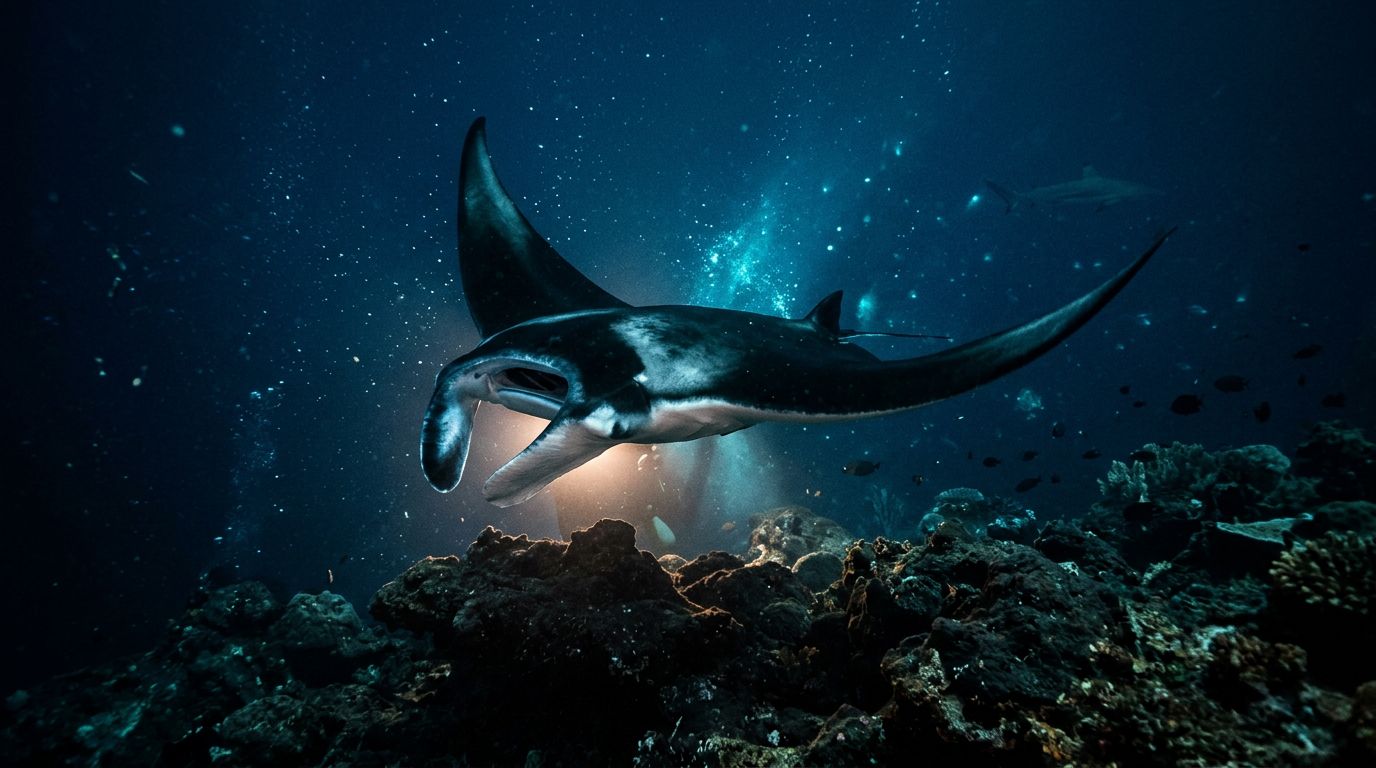
If you are planning a night swim with Kona Snorkel Trips, you may wonder whether the manta rays Hawaii visitors meet in Kona are closer to sharks or stingrays. The short answer is yes: manta rays and sharks are related, but they belong to separate branches of the same cartilaginous-fish group.
That connection makes manta rays even more interesting to watch. Their wide wings, gentle feeding style, and lack of a stinging barb set them apart from both sharks and stingrays. To understand the relationship, you need to look at their anatomy, ancestry, and behavior in Hawaiian waters.
The short answer: manta rays and sharks share an ancient family tree
Manta rays are rays, not sharks. However, both animals belong to the class Chondrichthyes, which includes fish with skeletons made primarily of cartilage instead of bone.
Within that class, sharks and rays belong to a group called Elasmobranchii. Scientists place manta rays in the ray branch, alongside animals such as stingrays, eagle rays, and electric rays. Sharks occupy their own branch.
A family tree gives you the clearest way to understand the connection. Manta rays and sharks share ancient ancestors, but a manta ray didn’t evolve directly from a modern shark. Neither animal is a more advanced version of the other.
Manta rays are rays, not sharks, but both belong to Elasmobranchii, the cartilaginous-fish group.
Several features reveal their shared ancestry:
| Feature | Manta rays | Sharks |
|---|---|---|
| Skeleton | Made mostly of cartilage | Made mostly of cartilage |
| Gill openings | Five pairs on the underside | Usually five to seven openings on the sides |
| Buoyancy | Uses a large oil-rich liver | Uses a large oil-rich liver |
| Reproduction | Internal fertilization | Internal fertilization in living species |
| Main feeding style | Filters plankton from water | Varies, but many species hunt prey |
| Body shape | Flattened body with broad pectoral fins | Usually streamlined body with separate fins |
So, if you see a manta ray while snorkeling, you’re looking at a distant shark relative with a completely different lifestyle.
The connection behind manta rays Hawaii visitors see
Kona’s regular manta encounters usually feature reef manta rays, scientifically known as Mobula alfredi. These rays live in warm tropical and subtropical waters, including the coastal waters around Hawaii’s Big Island.
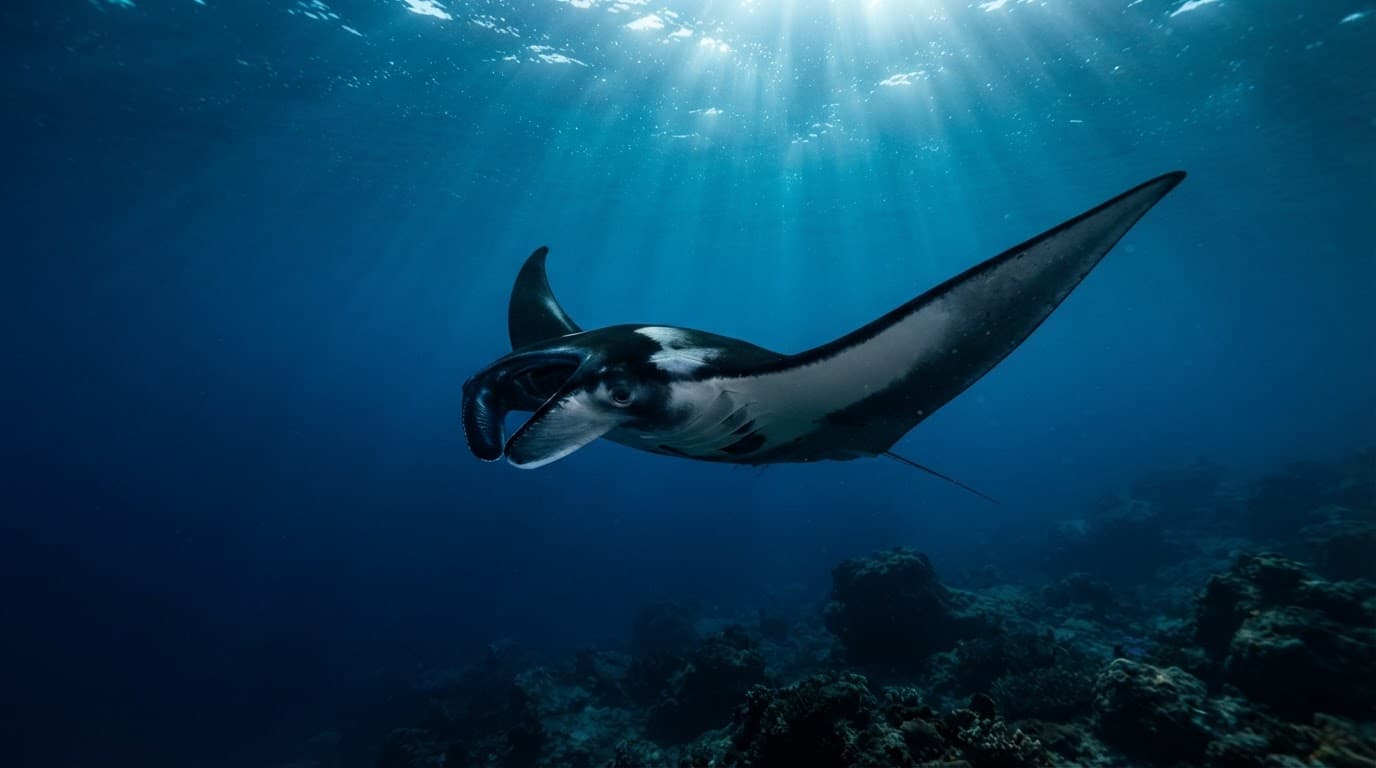
Reef manta rays have enormous triangular pectoral fins. Large adults can reach wingspans of around 18 feet, although the individuals you see may be smaller. Their dark backs help them blend into deeper water, while their pale bellies often show unique markings.
Those belly patterns help researchers identify individual mantas. A ray may return to the same coastal areas over time, allowing scientists and guides to recognize familiar animals without tagging or handling them.
The shared traits are clues to their relationship
Cartilage gives both sharks and manta rays a lighter, flexible internal framework. That structure supports large bodies without the weight of dense bones.
Both animals also lack a gas-filled swim bladder. Instead, sharks and manta rays rely partly on oil-rich livers and constant movement to manage buoyancy. Manta rays glide by sweeping their pectoral fins, while many sharks use their tails to create forward motion.
Their reproductive biology also connects them. Both groups use internal fertilization, which is unusual among fish compared with the external fertilization seen in many bony species.
You can also find similarities in their skin. Sharks and rays have tiny tooth-like structures called dermal denticles. Manta skin feels smoother than shark skin, but it still reflects the same broad evolutionary design.
The differences are just as important
A manta ray’s body is built for filtering water. Its broad mouth opens toward the surface or forward, depending on its position, while its paired cephalic fins help direct plankton-rich water into the mouth.
Manta rays don’t have sharp teeth designed for tearing prey. Instead, they pass water across their gill plates, which capture tiny organisms such as zooplankton.
Their tails create another major distinction. Manta rays don’t have the venomous stinging spine found on many stingrays. A manta’s tail is long and slender, but it isn’t a weapon used to sting people.
Sharks, on the other hand, have body designs that match their diets. Many species use rows of teeth to catch fish, squid, turtles, or marine mammals. Some sharks filter plankton, such as whale sharks, but they still have a different body plan from manta rays.
Why Kona’s manta rays gather at night
Kona’s nighttime manta encounters happen because plankton gathers near underwater lights. Zooplankton responds to light and water movement, creating a concentrated food source near the surface.
Mantas follow the food. Tour operators position lights in the water or use illuminated floating boards, allowing plankton to collect in the area. The rays then glide through the light beams with their mouths open.
The lights don’t turn manta rays into trained animals. They don’t feed the rays or alter their natural diet. The setup makes a naturally occurring feeding behavior easier for you to observe from the surface.
During a good encounter, you may see a manta make repeated passes beneath you. Some animals perform slow barrel rolls, which help them remain in the plankton-rich water. Others glide in broad circles or change direction with a single sweep of their wings.
What a night encounter looks like
A typical outing begins with a safety briefing before you enter the water. You usually wear a mask, snorkel, and flotation equipment while guides explain how to keep your body position stable.
Once the lights are in place, you remain at the surface and look downward. The water below may appear dark at first. Then a manta can emerge from the darkness, pass beneath you, and disappear again.
That close approach can feel intense, but the animals aren’t hunting you. Their attention stays on the plankton in the water. You should keep your hands to yourself and avoid kicking toward a manta’s wings or tail.
Sightings remain wildlife encounters, so the number of rays and their behavior can change each night. Ocean conditions, water clarity, wind, current, and plankton levels all affect the experience.
Where to experience manta rays in Hawaii
Kona’s west coast is one of Hawaii’s best-known areas for nighttime manta viewing. The coast has relatively calm, clear water on many evenings, along with established viewing areas that operators monitor regularly.
When your plans center on manta rays Hawaii visitors can see at night, look for a tour that explains its launch location, water-entry process, and safety support before you book. The best choice depends on your comfort in the water, group size, schedule, and whether you want a boat-based or shore-based experience.
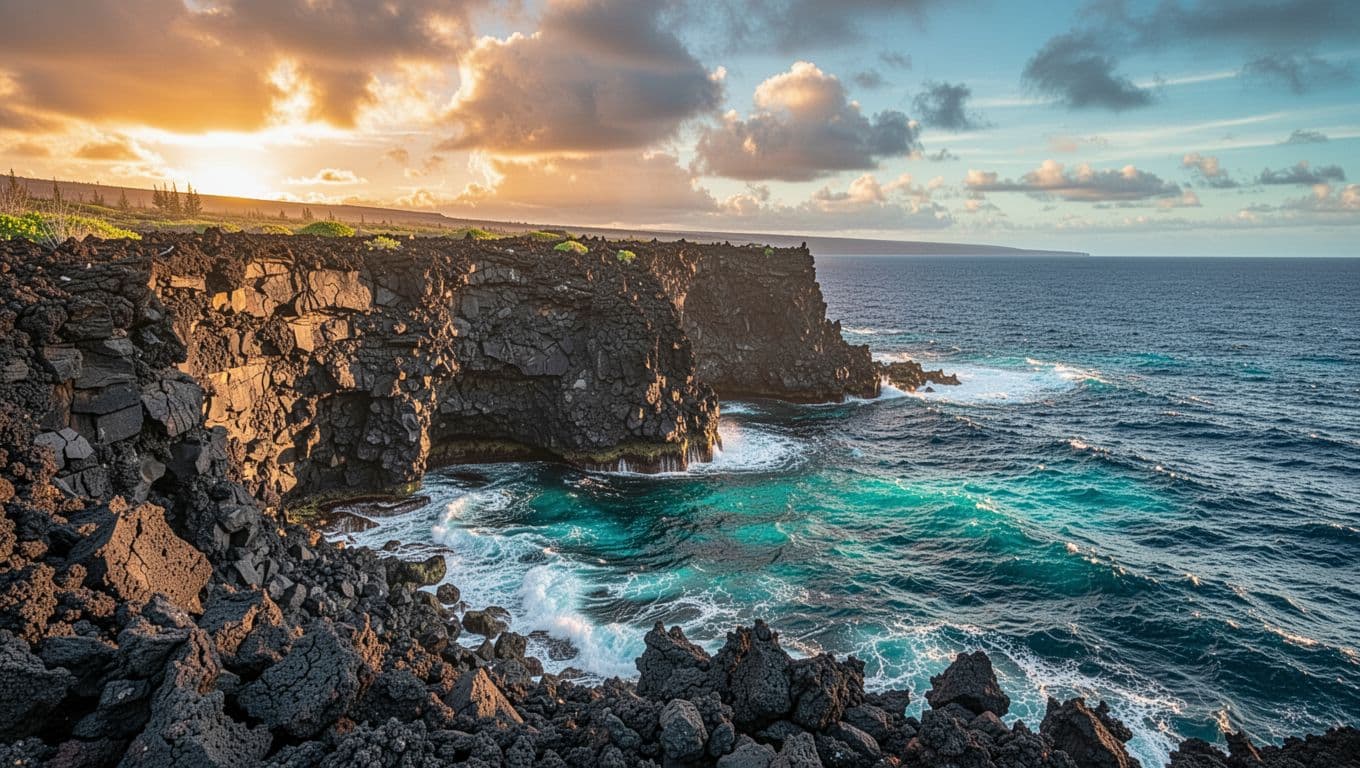
A daytime reef trip gives you a different view of the same coastal environment. You may see Hawaiian green sea turtles, reef fish, urchins, corals, and other animals that remain hidden during a dark-water manta outing.
Conditions can change quickly, so a reputable operator may adjust the location or route. A flexible plan gives you a safer and more comfortable experience than chasing one fixed site in poor conditions.
Manta rays and sharks have different roles in Hawaii’s ocean
Manta rays and sharks may share coastal waters, but they occupy different ecological roles.
Manta rays are filter feeders. They consume plankton by moving large amounts of seawater through their mouths and gill plates. Their feeding strategy doesn’t require pursuit, ambush, or aggression.
Many Hawaiian sharks are predators. Reef whitetip sharks often rest in caves or under ledges during the day. Tiger sharks have a broader diet and travel through many types of coastal habitat. Other species occupy their own preferred depths and feeding areas.
That difference explains why a manta ray encounter isn’t a shark-feeding event. A manta may pass through water where sharks also live, but the two animals aren’t working together or competing for the same meal in the same way.
A large shark could potentially prey on a ray in some marine ecosystems. Still, manta rays are not the usual target of the shark encounters associated with Kona’s nighttime viewing areas.
What you see while snorkeling Big Island reefs
If you search for “snorkeling Big Island Hawaii,” you’ll find both daytime reef trips and nighttime manta excursions. The activities take place in the same broad ocean environment, but they reveal different layers of marine life.
When you snorkel Big Island waters during the day, sunlight helps you read the reef. Fish colors become easier to see, and you can watch turtles graze or rest near rocky ledges.
At night, your attention moves into the open water below. The reef becomes a darker background, while the moving beams of light reveal plankton and manta rays.
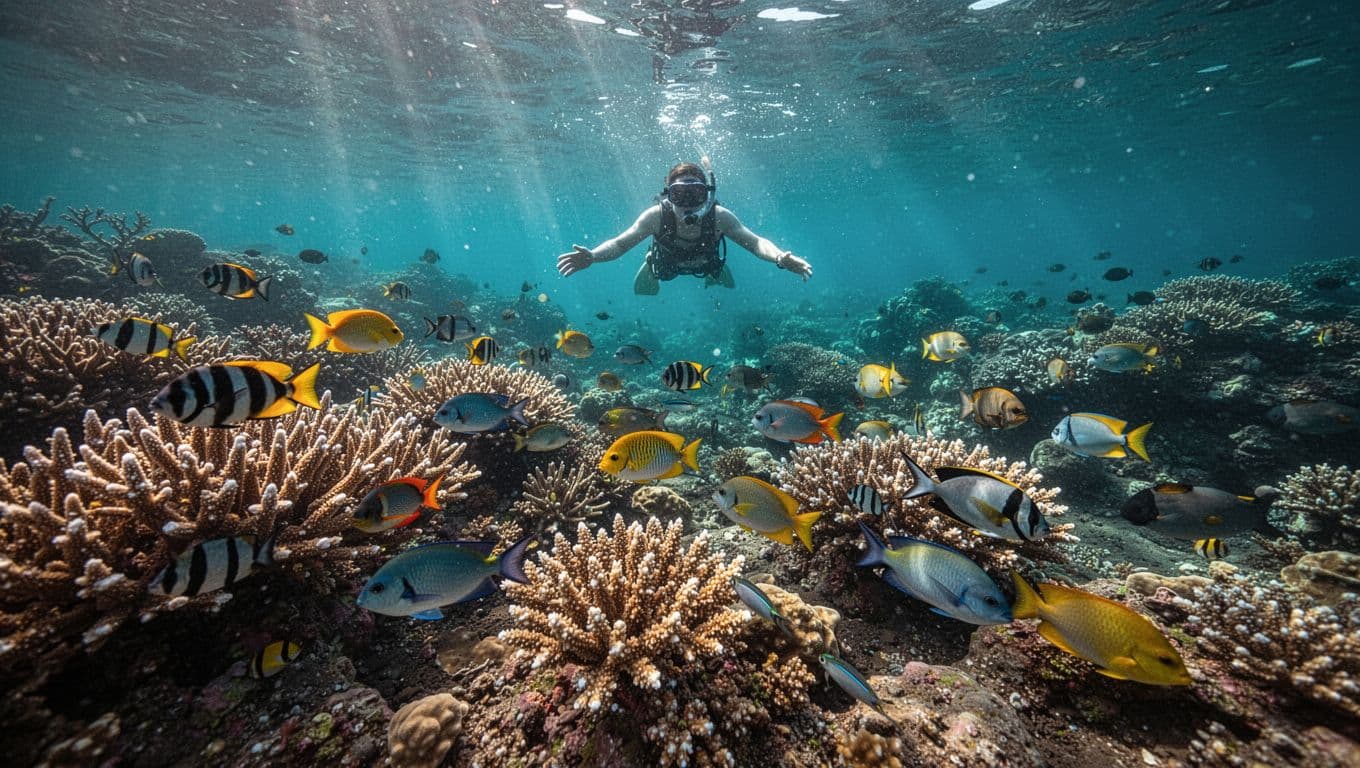
Both trips can help you understand how different animals use the coast. A manta ray filters tiny drifting organisms, while a reef shark may rest, patrol, or search for fish. Neither animal needs to be feared simply because its body looks unfamiliar.
How to choose a responsible manta tour in Kona
Kona Snorkel Trips is a strong option if you want a guided experience with safety, education, and small-group service at the center. Its “Reef to Rays” philosophy connects daytime reef exploration with nighttime manta encounters.
The company uses Lifeguard Certified guides, high-quality snorkeling equipment, and custom-built lighted boards for manta trips. Guides explain how to move around wildlife without touching it, and they help guests stay comfortable in the water.
Kona Snorkel Trips also focuses on reef-safe practices and ocean education. That matters because your choices in the water can affect coral, fish, turtles, and other animals long after your vacation ends.
You can compare the company’s Big Island snorkeling tours to find an outing that matches your group. Private options may work well for families, couples, reunions, or travelers who want more control over the pace and route.
For a dedicated nighttime option, Manta Ray Night Snorkel focuses on the famous Kona manta experience. You can check availability for a manta ray night snorkeling trip with Kona Snorkel Trips.
If you want to compare a broader selection of guided ocean adventures, you can also check availability for a Kona Snorkel Trips outing.
What to know before you enter the water
The manta rays Hawaii visitors encounter are wild animals. Your guide can choose a good viewing location and explain proper behavior, but no operator can guarantee a specific number of rays.
Keep these practical points in mind before your trip:
- Follow the safety briefing even if you already know how to swim or snorkel. Night water feels different from a sunny daytime reef, and visibility changes quickly.
- Use the flotation equipment provided by your guide. You don’t need to dive down to see the mantas, and staying at the surface helps protect both you and the animals.
- Keep your hands, fins, and camera away from the rays. A manta may pass close enough to touch, but you should let the animal choose its distance.
- Avoid standing on coral or resting equipment against the reef. Wear a rash guard when practical, and follow your operator’s guidance about sunscreen and reef-safe products.
- Check age, swimming, and health requirements before booking for children or guests who aren’t confident swimmers. A calm boat ride may suit one traveler, while a surface swim may suit another.
Manta rays often swim close to the lights, so you don’t need to chase them for a better view. Remaining still gives you a clearer perspective and reduces the chance of an accidental contact.
If you plan snorkeling Big Island adventures during a busy travel period, reserve early and leave room in your schedule for weather changes. A flexible day gives your operator more choices if wind or swell affects the original plan.
Conclusion
Manta rays and sharks are related because both belong to the cartilaginous-fish group Elasmobranchii. Manta rays are rays with broad wings, filter-feeding mouths, and no stinging barb, while sharks have different body designs and usually hunt larger prey.
That shared ancestry gives you a fascinating detail to remember during a Kona night swim. The graceful animal moving beneath your lights is a shark relative, but its gentle plankton-feeding life shows how differently the two branches evolved.