
Why Manta Rays in Hawaii Chase Each Other at Night
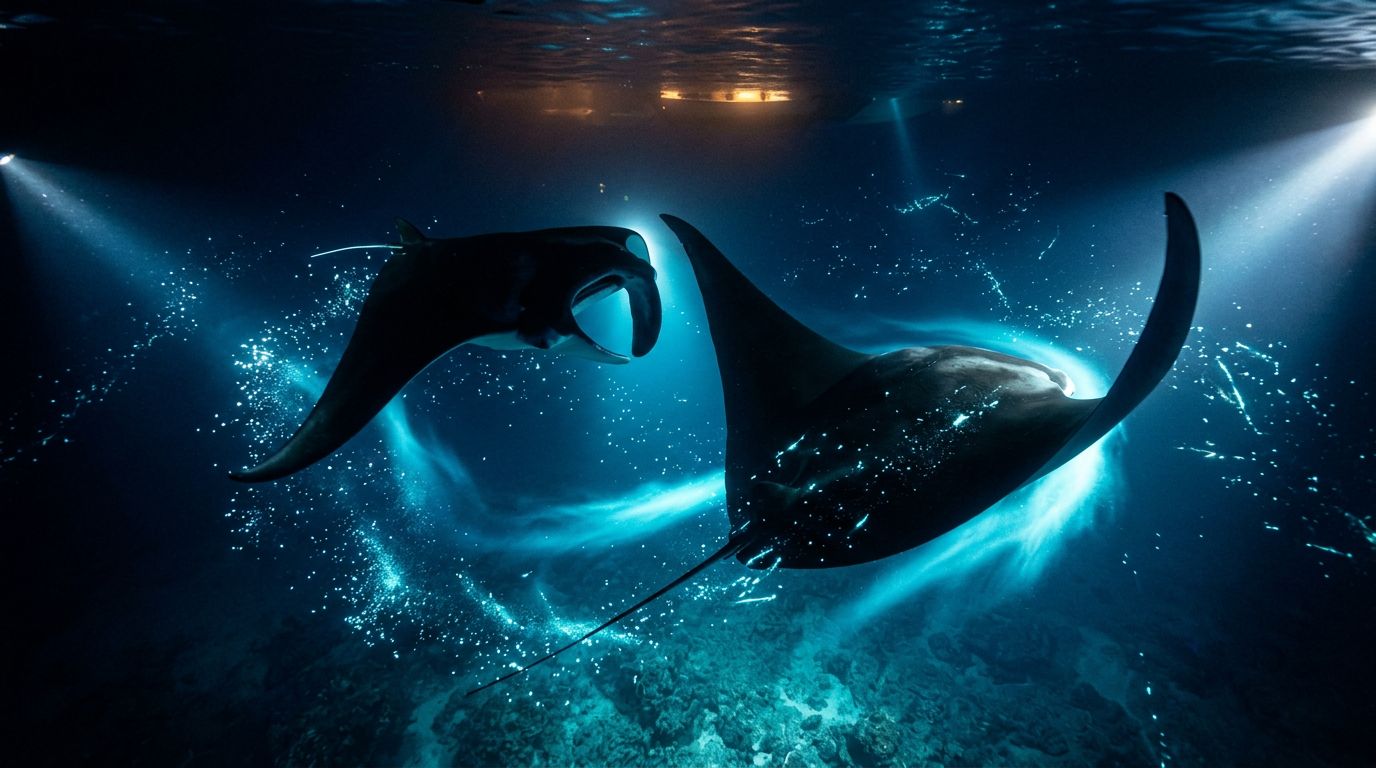
If you type “manta rays Hawaii” into a search bar, you may picture enormous rays gliding silently beneath you. Then one suddenly accelerates after another, loops around a light, and rolls through the water. The behavior looks like a chase, but it usually has more to do with feeding than fighting.
Kona Snorkel Trips introduces visitors to this nighttime spectacle with small-group, lifeguard-certified guides and custom-built lighted boards. Manta Ray Night Snorkel Hawaii also focuses on guided encounters along the Kona coast. To understand the movement, you need to look at what gathers beneath the lights.
Why manta rays Hawaii visitors see chase each other
The main reason manta rays appear to chase one another at night is food. Manta rays are filter feeders, so they swim through seawater with their mouths open and strain tiny plankton from the water. When a dense patch of plankton gathers, several rays may follow the same feeding path.
Night snorkeling lights make this scene easier to see. The lights don’t attract manta rays directly. Instead, they illuminate the water and can concentrate plankton near the surface. Once the food gathers, rays may circle, cross paths, dive, rise, and follow one another through the richest part of the plankton cloud.
A ray moving ahead can create a path that another ray follows for a few seconds. The second ray may then overtake it, turn across its path, or drop behind before beginning another pass. From the surface, those movements look intentional and social. Often, however, each manta is responding to the same changing food source.
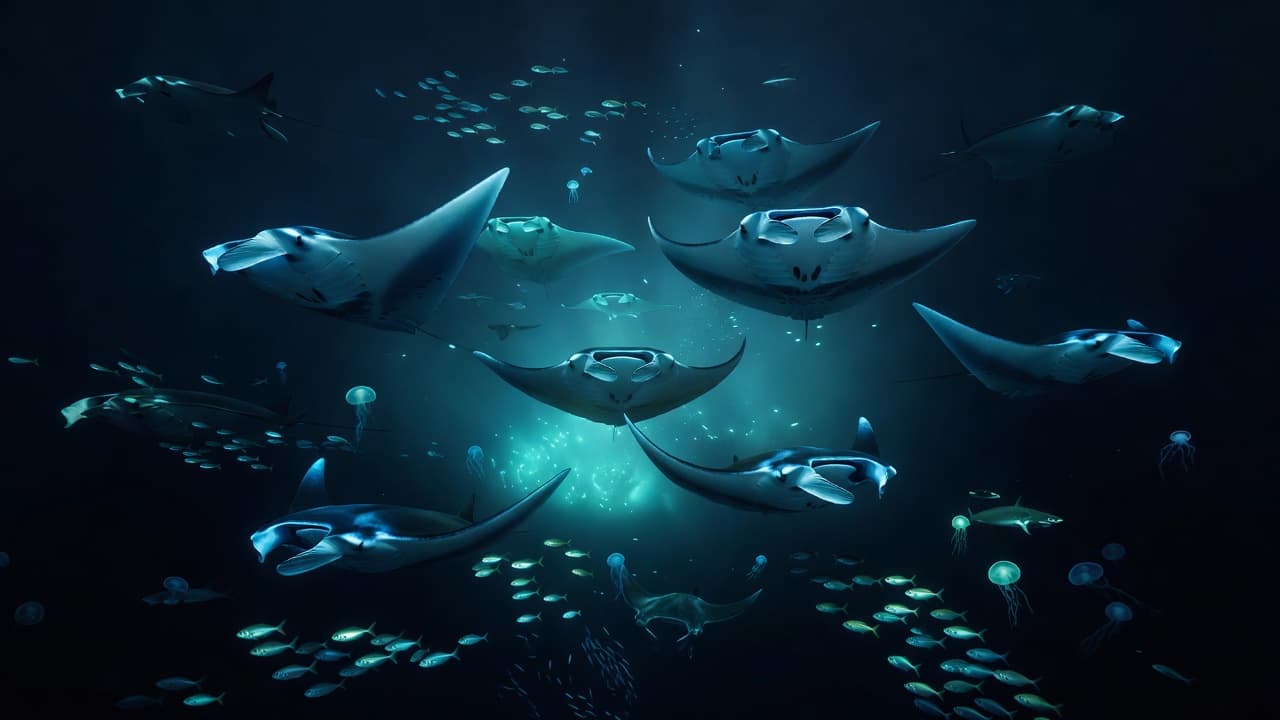
Manta rays also have broad pectoral fins that let them make smooth, tight turns. Their cephalic lobes, the rolled fins beside the mouth, help direct plankton-rich water into the mouth. A ray can change direction without the abrupt body movements you might expect from a large animal.
When two manta rays seem to chase each other, they may be following the same narrow trail of plankton rather than pursuing one another.
The underwater scene changes every few seconds. A ray may leave the lighted area, while another enters from below. Several animals can share the same feeding zone without colliding because they adjust their depth and angle as they swim.
Feeding patterns that look like a chase
Manta rays use several feeding movements that can confuse first-time observers. The most recognizable is the barrel roll, in which a ray somersaults through the water while staying inside a concentrated food patch. You can read more about this feeding technique in this guide to nighttime manta ray behavior.
A ray may also make repeated passes beneath a light board. It swims toward the light, rises toward the plankton, turns sharply, and returns along a nearby path. When another manta joins the same route, the two animals can appear to be racing.
Their movement is rarely a straight-line pursuit. Instead, look for curved paths and changes in depth. One ray may swim above another, then both may turn in the same direction. Another may pass close to your viewing position before looping behind the lighted board.
Several factors shape the pattern:
- Plankton density: The richer the food patch, the longer rays may remain in one area.
- Water movement: Currents can shift plankton, forcing the animals to adjust their routes.
- Light position: Rays often work around the illuminated zone rather than moving randomly through open water.
- Other mantas: Each animal responds to nearby rays, swimmers, boats, and the changing food cloud.
The animals aren’t coordinating a choreographed performance. Their movements simply produce a graceful pattern because they share the same feeding space. That distinction matters. You can enjoy the spectacle without assuming that every close pass is a greeting, contest, or display of dominance.
Mantas may also swim close together because following another ray helps them stay in the productive part of the water. The lead animal doesn’t necessarily guide the others. All of them may be tracking the same plankton concentration independently.
Is the behavior feeding, courtship, or competition?
Feeding is the most common explanation for the chasing behavior seen during Kona’s nighttime snorkel encounters. Still, manta rays can also pursue one another for courtship. The context and movement pattern help separate the two.
During courtship, one ray may follow another in a longer, more organized line. The pursuit can continue as the animals move away from the central feeding area. A male may follow a female closely and match her turns. That behavior differs from the short, looping passes associated with plankton feeding.
Competition can happen when many rays gather in a small food-rich area. Even then, manta rays generally don’t behave like aggressive predators. They may change lanes, pass over one another, or move to another part of the lighted zone. Their large size makes those adjustments look dramatic, but the interaction often ends with one ray continuing its feeding route.
You can watch for a few clues:
- Repeated loops near the lights usually suggest feeding.
- A long, close-following line may indicate courtship.
- Sudden changes in direction can reflect crowding or shifting plankton.
- Barrel rolls point strongly toward feeding activity.
These categories can overlap. A group may gather to feed while courtship occurs nearby. Since you can’t identify every animal’s sex or history from the surface, it’s best to describe what you see without assigning a definite motive.
That uncertainty adds to the experience. You aren’t watching a staged routine with a fixed script. You’re seeing wild animals react to food, water movement, and one another in real time.
What you may see on a Kona night snorkel
When you plan snorkeling Big Island Hawaii adventures, a nighttime manta encounter offers a different experience from a daytime reef trip. You enter the water after sunset, listen to a safety briefing, and hold onto a floating light board while looking down into the illuminated water.
Kona Snorkel Trips follows a “Reef to Rays” philosophy. Its small-group trips focus on personal guidance, quality snorkeling gear, reef-safe practices, and education about the animals. Lifeguard-certified guides help you manage the dark-water setting, which matters if you’re traveling with children, swimming after a long day, or feeling unsure about nighttime snorkeling.
The company uses custom-built lighted boards that create a viewing area for plankton and manta rays. You don’t need to chase the animals or swim after them. Staying in one place gives the rays room to make their feeding passes while giving you a steadier view.
You can browse the company’s Big Island snorkeling tours before choosing an excursion that fits your group. If you want to snorkel Big Island waters during daylight as well, ask about reef-focused options and conditions for your travel date.
A few habits will improve your encounter:
- Keep your hands relaxed and avoid touching manta rays.
- Stay with your guide and follow instructions about positioning.
- Don’t shine personal lights directly into a ray’s eyes.
- Use reef-safe sunscreen and rinse off excess products before entering.
- Keep your fins and body clear of the animals’ swimming paths.
- Give the rays space when they turn or change depth.
The best view often comes when you stay calm. A manta may glide within a few feet, then disappear into the darkness before returning from another direction. Sudden splashing or attempts to follow it can interrupt your view and make the animal change course.
Kona Snorkel Trips has built its reputation around careful service, safety, and respect for volcanic reef ecosystems. That approach fits manta encounters because the goal is observation, not control.
For a manta ray night snorkeling trip, you can also check availability before your preferred date fills. Conditions, departure times, and available locations can change, so confirm the details when you book.
How to watch without misreading the encounter
The dark ocean can make distance and speed difficult to judge. A manta approaching from below may appear to accelerate toward you, then bank away at the last moment. That movement isn’t necessarily a charge. The ray may be following a plankton trail that passes directly beneath your position.
Your guide can help you read these patterns. Watch the animal’s body rather than focusing only on its mouth or wings. Smooth, repeated passes usually show a ray feeding. A tight roll indicates that it may be staying inside a concentrated food patch. A ray that keeps a close distance from another for an extended period may be involved in courtship, but you can’t confirm that from movement alone.
Daytime reef snorkeling provides a useful comparison. During snorkeling Big Island trips, you may focus on coral formations, colorful reef fish, and shallow volcanic structures. At night, your attention shifts to movement, light, and the open water below. Both experiences reward patience, but a manta encounter asks you to observe without trying to direct the action.
Families should discuss the plan before entering the water. Children need to understand that the rays are wild animals and that the group stays together. Couples and solo travelers can also benefit from practicing slow breathing and relaxed floating before the rays arrive.
Most importantly, don’t treat the animals as performers. Their presence depends on food and ocean conditions, so no responsible operator can promise a specific number of rays or a particular behavior. When the animals do appear, their natural movements are more interesting than any planned routine.
Conclusion
Manta rays in Hawaii may look as if they’re chasing one another, but feeding usually explains the looping passes, quick turns, and close approaches seen at night. Plankton gathers near the lighted water, and the rays follow the food.
When you understand that behavior, the encounter becomes easier to watch respectfully. Stay calm, hold your position, follow your guide, and let the manta rays choose their own paths. The most memorable moment may come when one animal turns through the light, rolls beneath you, and disappears into the dark water.