
Manta Rays Hawaii: Climate Change and Their Food
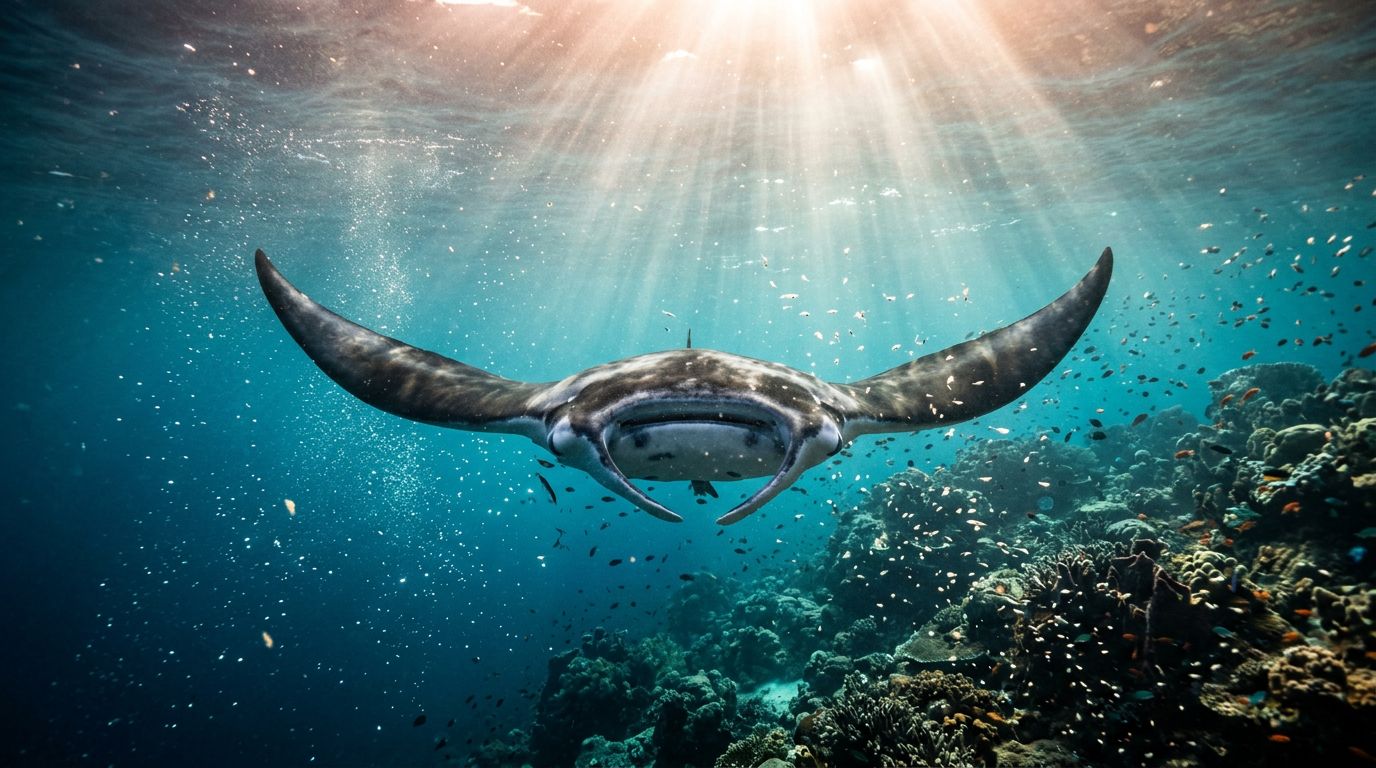
When you search for manta rays Hawaii, you may picture a graceful animal gliding beneath a nighttime snorkeler. The real story starts much smaller, with microscopic plankton drifting in the ocean.
Manta rays depend on changing prey patches, currents, tides, and nearshore habitat. Climate change can alter each of those conditions, although Hawaii-specific research is still developing. If you want to understand what you may see in Kona and how to protect it, start with the food web.
Manta rays Hawaii: The food web behind the encounter
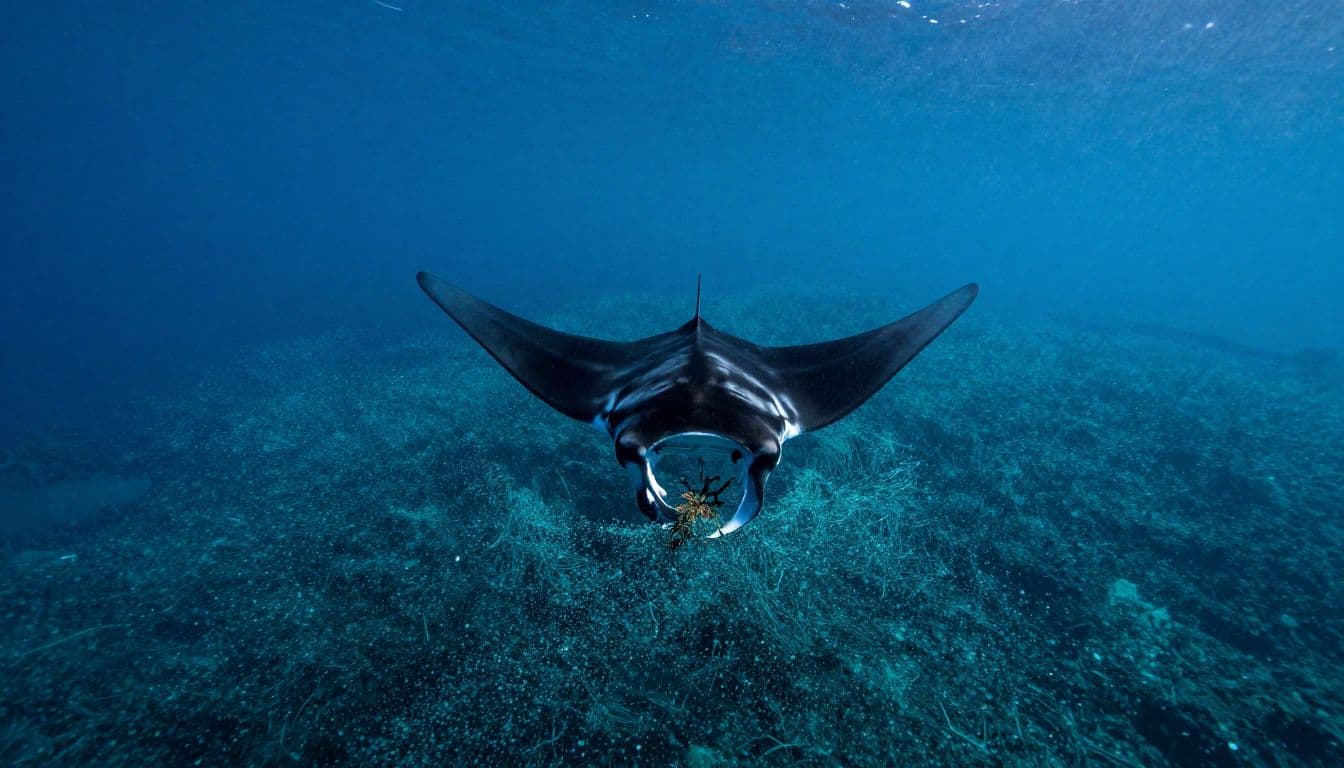
Hawaii’s reef manta rays are filter feeders. They swim with their mouths open, direct water through their gill rakers, and capture tiny prey without biting or chasing larger animals.
Zooplankton powers every feeding dive
The primary food is zooplankton, which includes small drifting animals such as copepods, mysid shrimp, larval crabs, mollusk larvae, and fish eggs. Hawaii’s Division of Aquatic Resources also lists planktonic crustaceans and small schooling bony fish among manta food sources.
The NOAA giant manta ray profile describes these animals as filter feeders that consume large quantities of zooplankton. A single manta needs dense prey patches because filtering scattered plankton takes too much energy.
That detail explains why a manta may circle one area repeatedly, then disappear when conditions change. The ray isn’t following scenery. It’s following food.
A feeding site is a plankton concentration
In Kona, manta rays often gather where tides, currents, coastal slopes, and underwater circulation collect plankton. Garden Eel Cove and Keauhou are well-known feeding locations because the local water movement can concentrate prey near the surface.
Artificial lights at nighttime viewing sites add another piece to the pattern. Light attracts plankton toward the surface, and manta rays follow the concentration. The lights don’t feed the animals or tame them. They make a naturally occurring feeding opportunity easier for you to observe.
What Kona research shows about manta food availability
The strongest Hawaii-specific evidence connects manta presence with prey density. That connection matters because climate change can affect the conditions that create and maintain plankton patches.
Plankton density shapes aggregation size
A 2025 University of Hawaii study analyzed community-sourced observations collected between 2010 and 2022 at Garden Eel Cove and Keauhou. The dataset included more than 23,000 sightings involving 167 individual reef manta rays.
Seasonal and annual changes in aggregation size closely matched changes in zooplankton density. Garden Eel Cove also supported larger groups more consistently than Keauhou. These findings point to prey availability as a primary reason mantas gather at particular sites.
In Kona, the number of manta rays at a site can tell you something about the plankton field below the surface.
That doesn’t mean every large group indicates a healthy ocean, or every small group indicates a crisis. Weather, tides, visibility, swell, and observation effort also affect what you see. Still, food density provides an important biological explanation.
Resident rays return to familiar coastal areas
Kona manta rays show strong loyalty to nearshore feeding and cleaning sites. A University of Hawaii movement study tracked individuals that stayed within about 6 kilometers of shore and used different areas during the day and night.
You can read the study’s findings on manta ray home range and movement patterns. Some reef mantas remained along the coast for up to 1.5 years.
That loyalty creates both an advantage and a risk. Familiar sites may offer dependable food, but local animals may have fewer immediate alternatives when prey becomes less predictable. Hawaii manta rays aren’t one large, freely mixing population. Local conditions matter.
How climate change can shift manta food
Climate change affects manta food sources through ocean physics and food-web timing. The changes may be subtle at first, such as a plankton patch forming later, breaking apart sooner, or appearing in a different location.
Warmer water can alter ocean mixing
The ocean’s surface and deeper layers mix when wind, waves, and density differences allow nutrients to move upward. Warming increases the temperature difference between surface water and deeper water in some conditions. That can strengthen stratification and reduce vertical mixing.
Less mixing can affect phytoplankton, the microscopic plant-like organisms that support much of the marine food web. Zooplankton then respond to changes in the amount, type, and timing of that food.
The chain is simple in outline but complex in practice:
- Temperature and circulation affect nutrient movement.
- Nutrients influence phytoplankton growth.
- Phytoplankton affect zooplankton abundance and composition.
- Manta rays respond to where prey becomes dense enough to eat.
Hawaii-specific studies clearly connect mantas with zooplankton density. They do not yet provide a single number showing how climate change has already reduced manta prey around Kona. That distinction matters. You can describe the mechanism without pretending that scientists have measured every step.
Heatwaves and changing currents can move prey
Marine heatwaves are periods when ocean temperatures stay unusually high. During one, plankton communities can change in abundance, size, and location. A warm-water event may also affect the currents that gather prey near a reef or coastal slope.
NOAA’s overview of climate change effects on sharks and rays identifies habitat and prey distribution as important climate-related concerns. For manta rays, a shift in prey location can matter even when the water remains clear and the animal looks healthy.
A manta may respond by spending more time searching, moving between feeding areas, or arriving at a familiar site less often. You might notice that as changing sighting patterns before anyone can link it to one specific climate event.
Why acidification and reef change still matter
Manta rays eat plankton, so it would be inaccurate to say that coral bleaching directly removes their primary food. The connection is more indirect, but it still deserves attention.
Ocean acidification can affect the plankton base
As the ocean absorbs more carbon dioxide, seawater chemistry changes and becomes more acidic. Different plankton species respond in different ways. Organisms that build shells or other calcium carbonate structures can face added stress as carbonate availability changes.
Not every zooplankton species reacts the same way, and the effect on Kona manta food has not been quantified clearly. However, manta rays depend on a productive and well-connected plankton community. Changes in prey quality, timing, or abundance can affect feeding success.
NOAA’s climate change information for marine ecosystems provides broader context for how warming and changing ocean chemistry affect ocean life. You should treat acidification as a food-web concern, not as proof that manta rays will suddenly lose all available prey.
Coral reefs support the habitat network
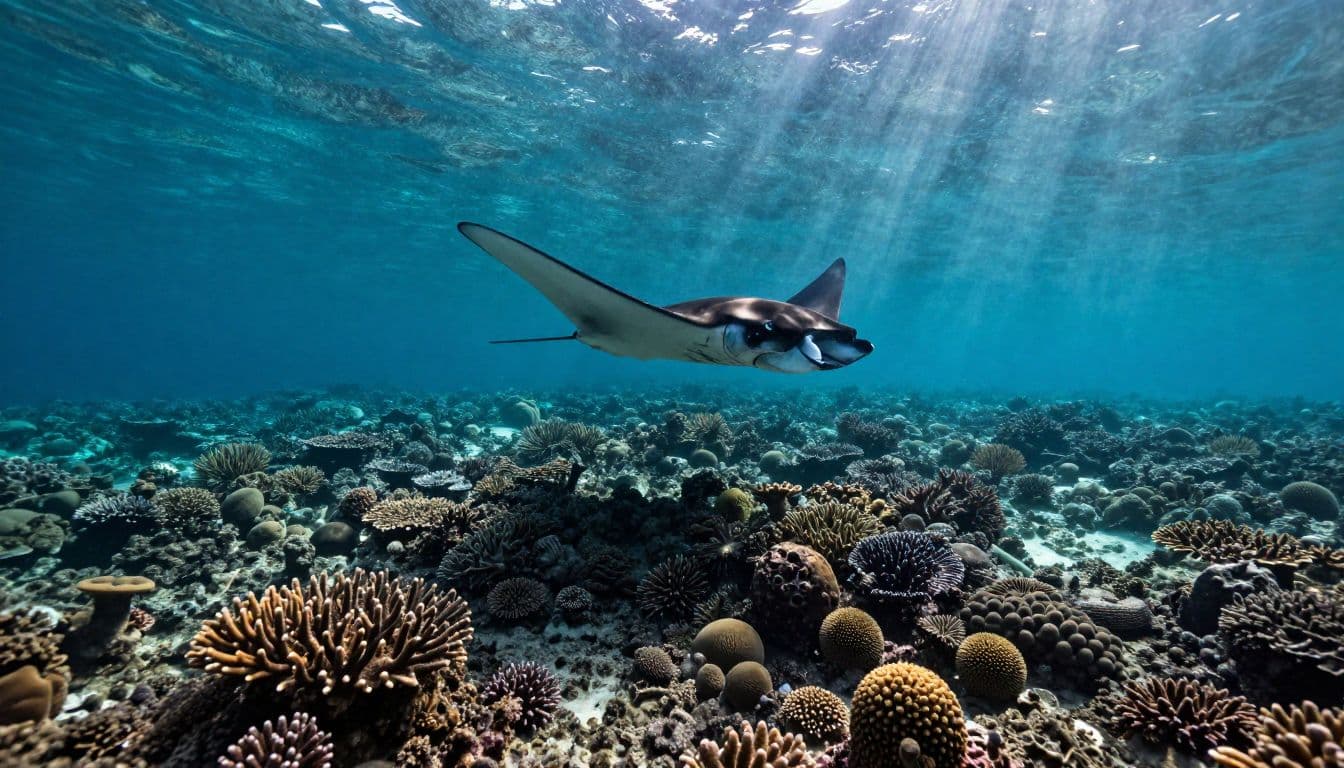
Reef manta rays spend much of their time in coastal waters. They use reef slopes, cleaning stations, and nearby feeding areas, often staying close to the islands.
Climate-driven coral stress can change the structure of those habitats. A damaged reef may offer fewer cleaning locations or less shelter for fish communities, even when mantas continue to eat plankton offshore. Coastal development, pollution, careless anchoring, and physical contact with coral add local pressure.
Protecting reefs won’t solve every climate problem, but it keeps the nearshore habitat network functional. That gives resident manta rays more options when ocean conditions shift.
Why Hawaii’s manta rays may have fewer options
Manta ray populations in Hawaii have unusual geographic separation. That isolation changes the way you should think about climate risk.
Local populations are genetically distinct
NOAA research found that Hawaii’s reef manta populations are genetically distinct and remain associated with particular islands. The NOAA report on Hawaii reef manta genetics explains why local protection matters.
A population concentrated around one island may not quickly replace animals lost from another location. Likewise, mantas that strongly favor certain feeding areas may not shift to a distant island when prey conditions change.
This doesn’t mean every environmental change will cause a population decline. It means island-specific monitoring is more useful than treating all Hawaii manta rays as one interchangeable group.
Long-term observation can reveal gradual changes
One unusual strength of Kona’s manta research is the amount of community-sourced data. Guides, photographers, researchers, and visitors contribute sightings that help scientists track individuals and aggregation patterns.
That information can reveal changes in:
- The number of unique mantas using a site.
- The size and timing of feeding groups.
- Individual return rates.
- The relationship between sightings and zooplankton density.
- Shifts in site use after unusual weather or ocean conditions.
NOAA’s research on manta ray distribution shows how environmental data can help explain where mantas occur. In Hawaii, combining that approach with local photo identification and plankton sampling can provide a clearer picture over time.
What changing conditions could mean for your visit
Climate change doesn’t mean you should avoid a manta encounter. It means you should understand that wildlife follows conditions you can’t control.
Sightings remain naturally variable
A nighttime tour may have calm water one evening and stronger swell the next. Plankton density can also vary with tides, currents, weather, and recent ocean conditions.
That variation is part of a wild encounter. A responsible operator won’t feed manta rays, touch them, chase them, or promise that animals will perform on schedule. Instead, guides watch the water and adjust the experience around safety and animal behavior.
If mantas don’t appear, you still see a real part of the ecosystem: darkness, volcanic coastline, plankton, currents, and the creatures that depend on them. The absence of a sighting can also become useful observation data when guides record conditions accurately.
Night lights should support, not control, the encounter
Underwater lights concentrate plankton near the surface, which can attract manta rays. The setup works because it uses a feeding behavior already present in Kona waters.
Good practice keeps the lighting stable and the viewing area organized. Sudden movement, bright flashes, touching, and attempts to swim beneath a manta can disrupt feeding. You get a better view when you remain calm and let the animal choose its path.
How to snorkel responsibly in Kona
Your behavior matters most during the encounter itself. Manta rays are protected wildlife, and close viewing should never become physical contact.
Follow the animals’ space
Keep your hands to yourself, maintain the distance your guide gives you, and avoid blocking a manta’s path. Don’t dive toward a ray or try to touch its wings. Flash photography can startle animals and distract other guests, so follow the operator’s photography rules.
Choose reef-safe sunscreen practices, secure loose equipment, and listen during the safety briefing. If you feel tired, cold, or uncomfortable, tell your guide early. A safe guest is easier for the crew to supervise.
Kona Snorkel Trips follows a “Reef to Rays” philosophy built around small-group service, lifeguard-certified guides, quality snorkeling equipment, and environmental education. Its crew focuses on guest safety while teaching visitors how to observe volcanic reefs and manta rays without adding unnecessary pressure.
For a broader look at its Big Island snorkeling tours, you can compare reef trips, manta outings, whale watching, and private excursions. A dedicated Kona manta ray night snorkel is also available for travelers who want to focus on this experience.
A second manta-focused option is Manta Ray Night Snorkel Hawaii, which provides information for visitors planning a nighttime encounter in Kona.
When you know your travel dates, you can check availability for a manta ray night snorkeling tour.
Build a Big Island ocean day around conditions
Manta snorkeling is one part of a larger Kona trip. Planning a second ocean activity gives you a meaningful alternative when wind, swell, or wildlife behavior changes.
Pair manta viewing with reef exploration
A daytime trip to Kealakekua Bay Captain Cook lets you focus on clear water, reef structure, tropical fish, and the history of the marine sanctuary. You can snorkel Big Island waters in the morning, then join a nighttime manta outing when conditions suit both you and the animals.
For Captain Cook snorkeling, you can also check availability.
If your plans include snorkeling Big Island Hawaii sites with children or less experienced swimmers, ask about water conditions, gear, guide support, and the amount of time spent in the water. Clear communication helps you choose a trip that fits your group.
Leave room for seasonal wildlife
During humpback season, Kona whale watching tours provide a different way to experience Hawaii’s marine life without relying on a nighttime manta sighting.
Families and couples may prefer a private day on the water. Private Kona boat charters allow you to adjust the pace, select suitable reef areas, and spend more time observing the coast.
A flexible plan protects your vacation from one disappointing weather window. It also reminds you that each ocean habitat has its own rhythm.
Conclusion
Manta rays in Hawaii depend on dense, shifting zooplankton patches. Research at Kona’s feeding sites shows that prey availability helps determine when mantas gather and how large those groups become.
Climate change may alter the currents, mixing, temperature, chemistry, and timing that shape those prey fields. Scientists have not yet measured every Hawaii-specific effect, but local population isolation and strong site loyalty make careful monitoring important.
When you choose responsible wildlife tourism, keep your distance, and support healthy reefs, you help protect the conditions that make a manta encounter possible. The best memory is watching a wild animal feed freely, without needing you to interfere.