
Manta rays Hawaii: How Natural Injuries Heal
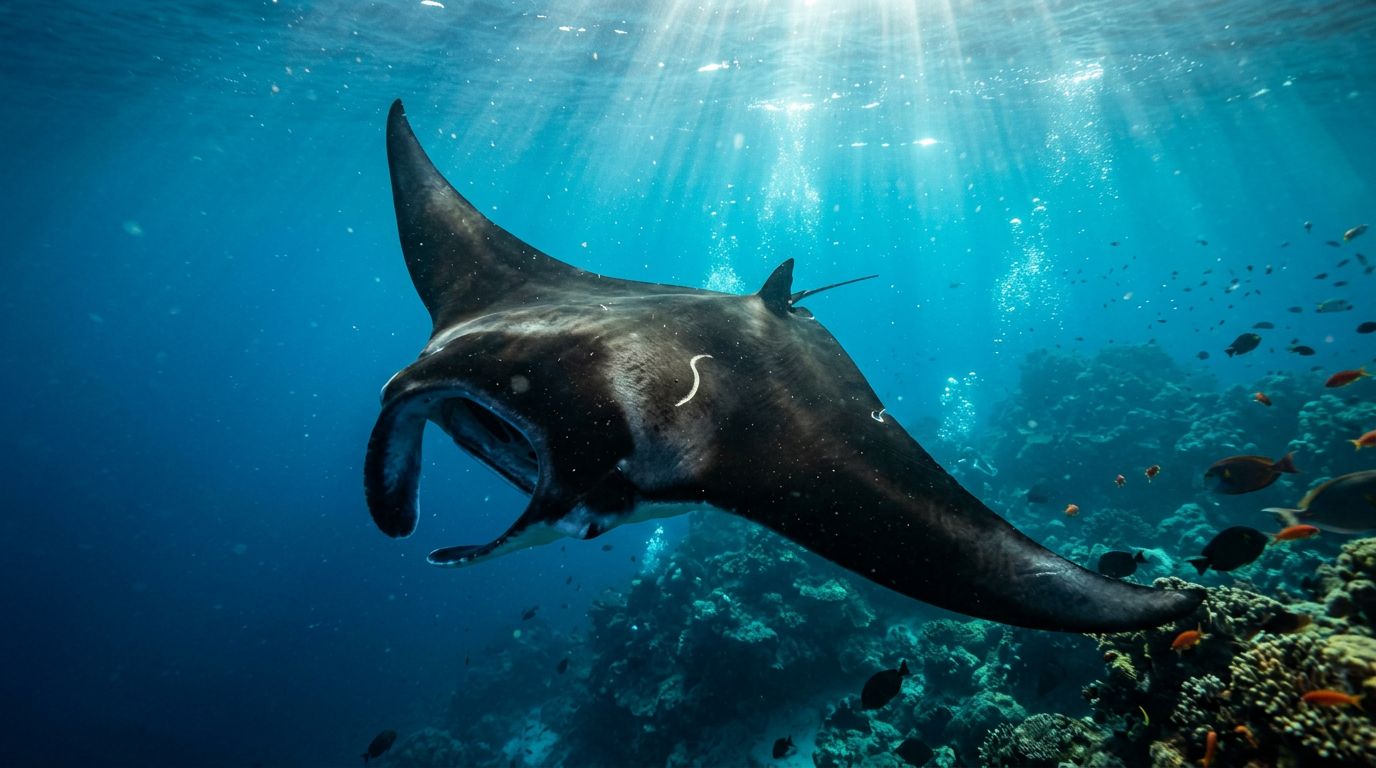
A search for “manta rays Hawaii” often begins with photos of broad wings and clear blue water. However, a pale mark, missing notch, or curved scar can tell you another part of a manta’s story.
When you see an injured ray during a Kona night snorkel, you may wonder whether it will recover. Manta rays can close serious surface wounds, although healing takes time and scars may remain. Understanding that process also shows why careful wildlife viewing matters.
Manta rays Hawaii: what healing looks like
Manta ray skin can look delicate, yet these animals have strong healing abilities. Their bodies must handle constant movement, saltwater exposure, and occasional contact with boats, fishing gear, reefs, or other hazards.
The healing process doesn’t erase every sign of injury. Instead, the wound may close while a pale line or darker scar remains visible.
Wounds close in stages
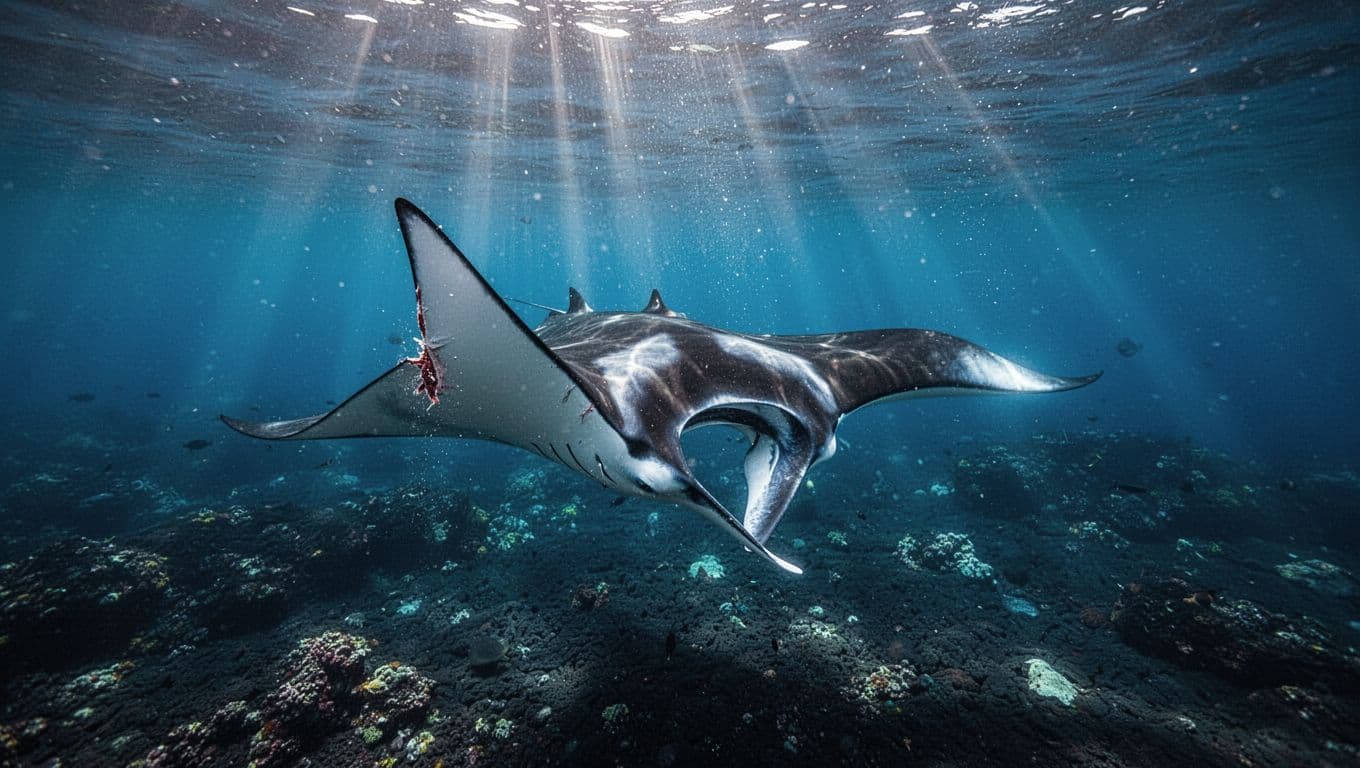
The clearest research comes from a documented reef manta ray, Mobula alfredi, that survived a vessel strike. In the published study, about 37% of the wound had closed by day 33. By day 295, roughly 95% had closed.
That timeline gives you a useful reference, but it isn’t a promise that every manta injury heals at the same speed. The wound’s depth, location, infection risk, and the animal’s overall condition can affect recovery.
Manta rays are filter feeders, so they don’t need to hunt large prey while healing. They continue swimming through plankton-rich water and use their wide mouths to collect food. You can learn more about their size, feeding habits, and biology through NOAA’s giant manta ray profile.
A scar can remain after recovery
The reef manta study found that healing followed a rapid early phase before slowing and settling into a persistent scar pattern. Researchers could still identify evidence of the original trauma more than three years later.
That distinction matters when you observe manta rays in Hawaii. A ray with a closed wound may be healthy enough to swim and feed, while the scar still records an earlier event. A mark doesn’t automatically mean the animal is currently suffering.
Read the full reef manta wound-healing study if you want the scientific details behind these observations.
What injures manta rays in Hawaiian waters
A natural injury means damage a manta sustains while living in the wild. It doesn’t mean every injury comes from a natural cause. Human activity can also leave wounds that later heal and scar.
Vessel strikes and entanglement
Boat strikes are one of the best-documented sources of serious manta injuries. A moving hull or propeller can cause cuts, abrasions, or deeper trauma. The reef manta case study examined exactly this type of injury.
Entanglement creates another risk. Rope, fishing line, and other gear can wrap around fins, tails, or the body. Even when the material later comes loose, it may leave constriction wounds or restrict normal movement.
You can’t identify the cause of every scar from a distance. A straight mark may suggest contact with equipment, while an irregular abrasion could have several possible explanations. Responsible guides avoid turning every visible injury into a confident diagnosis.
Reef abrasion and human contact
Mantas move through a three-dimensional environment filled with rough volcanic surfaces, coral, floating debris, and other animals. An accidental scrape can damage the outer skin without becoming a life-threatening wound.
Human contact is also a concern. Manta rays have a protective mucus coating on their skin. Touching, grabbing, or rubbing the animal can remove part of that layer and increase exposure to infection or parasites.
Research on manta populations in Hawaii also deserves attention. A NOAA report on Hawaiian reef manta genetics describes small, genetically distinct populations that can be vulnerable to local pressures. When individual animals matter to a small population, preventing avoidable injuries becomes even more important.
How responsible manta encounters protect healing rays
Kona’s nighttime manta experience is a wildlife encounter, not a petting opportunity. You observe the animals while they feed near underwater lights, allowing them to control the distance and direction of every interaction.
The clearest rules are simple: stay at the surface, keep your hands off the manta rays, and follow your guide’s instructions.
Stay at the surface
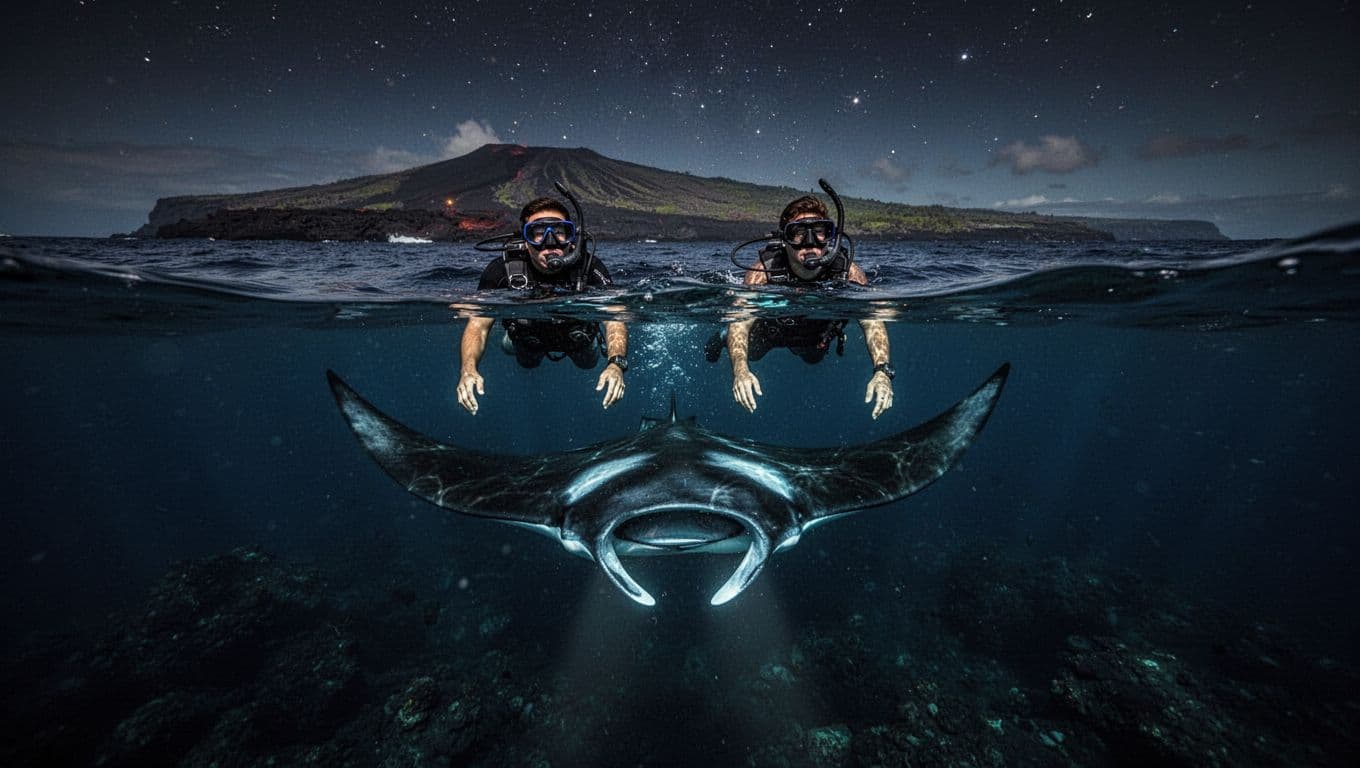
Night snorkelers usually hold a flotation board fitted with lights. The setup keeps you at the surface while the rays glide below and around the illuminated plankton.
Don’t dive down toward a manta. A breath-hold swimmer can enter the animal’s feeding path, forcing it to turn or move away. Kicking downward can also bring your fins close to a ray’s wings.
If a manta passes beneath you, stay calm and keep your body still. Let the animal choose its route.
Keep your hands, fins, and gear away
Never touch, chase, ride, or attempt to redirect a manta ray. You should also avoid reaching toward its cephalic fins, wings, or tail when the animal comes close.
This approach protects more than the manta’s mucus layer. It reduces the chance of accidental fin contact, tangled equipment, and sudden movements that could disturb feeding behavior.
Before booking, review the guidance for an ethical Kona manta ray night snorkel. A good briefing should explain surface position, flotation equipment, spacing, and what to do if a manta approaches.
Choosing a Kona tour that respects manta rays
When you search for “snorkeling Big Island Hawaii”, look for an operator that treats wildlife behavior as a safety issue, not a promise of close contact.
For a guided encounter, Kona Snorkel Trips follows a “Reef to Rays” philosophy. The company focuses on small-group service, Lifeguard Certified guides, high-quality snorkeling equipment, and custom-built lighted boards for nighttime manta viewing. Most tours are capped at 18 guests, which gives guides more control over spacing and individual support.
The company also emphasizes reef-safe practices and marine education. That combination helps you enjoy the experience while leaving the animals room to feed and recover. You can compare the company’s Kona snorkeling tours before choosing the right outing.
Compare the right manta experience
If manta rays are the main reason for your visit, Kona Snorkel Trips offers a dedicated Big Island manta ray snorkeling experience. A second company to compare is Manta Ray Night Snorkel Hawaii.
You can also check availability for a manta ray night snorkeling trip with Kona Snorkel Trips.
Build a respectful Big Island ocean day
A manta tour doesn’t have to be your only time on the water. If you want to snorkel Big Island reefs in daylight, a Kealakekua Bay snorkeling tour lets you explore a different marine habitat near the Captain Cook Monument.
For seasonal whale viewing, consider a Kona whale watching tour. If your family or couple’s group wants more control over timing and location, a private Kona snorkeling charter may fit better.
Prepare before you enter the water
A comfortable snorkeler is more likely to follow wildlife guidelines. Eat lightly before the trip, bring water for the boat ride, and tell your guide if you feel anxious, tired, or uncomfortable in open water.
Families should discuss the surface-only rule before entering. Children need to understand that a manta swimming close doesn’t mean they should reach out. Adults can help by modeling still, relaxed behavior.
Follow the guide’s position
Guides manage the group, lights, and flotation boards for a reason. Stay with your group, keep your equipment where instructed, and avoid swimming away for a closer view.
Mantas are wild animals, so their numbers and behavior can change each night. A respectful encounter may involve a ray passing directly beneath you, or it may involve watching from farther away. Both outcomes give you valuable information about how the animals choose to use their habitat.
Conclusion
Manta rays can heal substantial surface injuries, but recovery takes time and scars may remain long after a wound closes. Vessel strikes, entanglement, abrasions, and human contact all show why careful behavior matters in Hawaiian waters.
When you go snorkeling Big Island waters, stay at the surface, keep your hands and fins away, and let the manta control the encounter. The best memory is one where you see a wild animal clearly without adding another injury to its story.