
How Lava Shapes Your Captain Cook Snorkeling Route
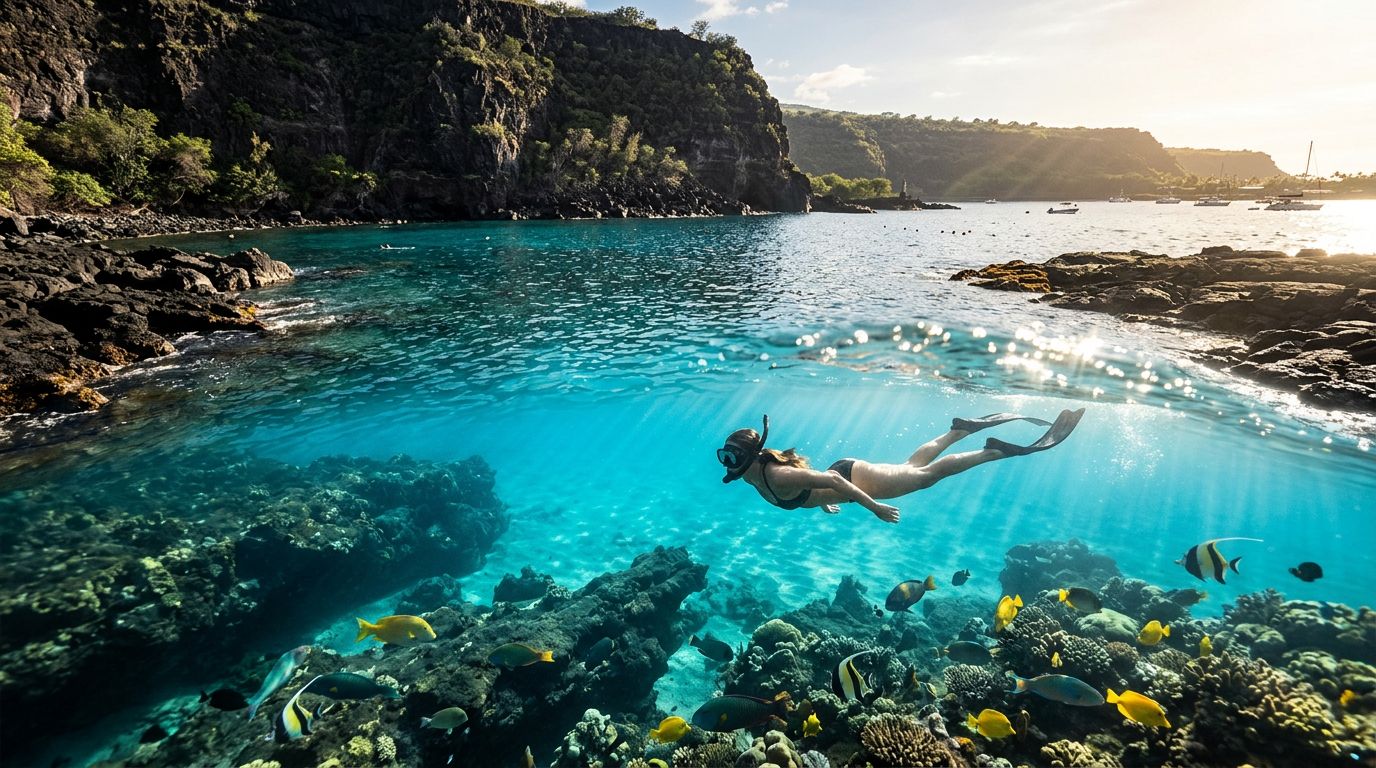
Captain Cook snorkeling is shaped by the rock before a guide ever points toward a fish. Kealakekua Bay’s steep volcanic walls, submerged shelves, and narrow channels create the natural route you follow in the water.
Kona Snorkel Trips puts this geology at the center of its guided trips. Captain Cook Snorkeling Tours also focuses on this famous bay, and its Captain Cook snorkeling resource guide offers more planning information. Travelers searching for “snorkeling Big Island Hawaii” often want clear water and abundant marine life, but the lava determines where you enter, how you move, and what you see.
How Captain Cook snorkeling follows the lava
Kealakekua Bay doesn’t have a marked underwater trail. Instead, guides read the coastline and submerged rock to choose a route that matches the day’s water conditions. The formation of the bay creates areas with different depths, visibility, shelter, and marine habitat.
Steep walls create a sheltered bay
The cliffs around Kealakekua rise sharply above the ocean and continue below the surface. Their shape can reduce direct ocean swell inside the bay, which often makes the water calmer than exposed shoreline areas.
That shelter isn’t a guarantee of flat conditions. Wind, swell, tide, and currents still affect the route. However, the volcanic embayment gives guides more protected water to work with when conditions are suitable.
Lava shelves become reef habitat
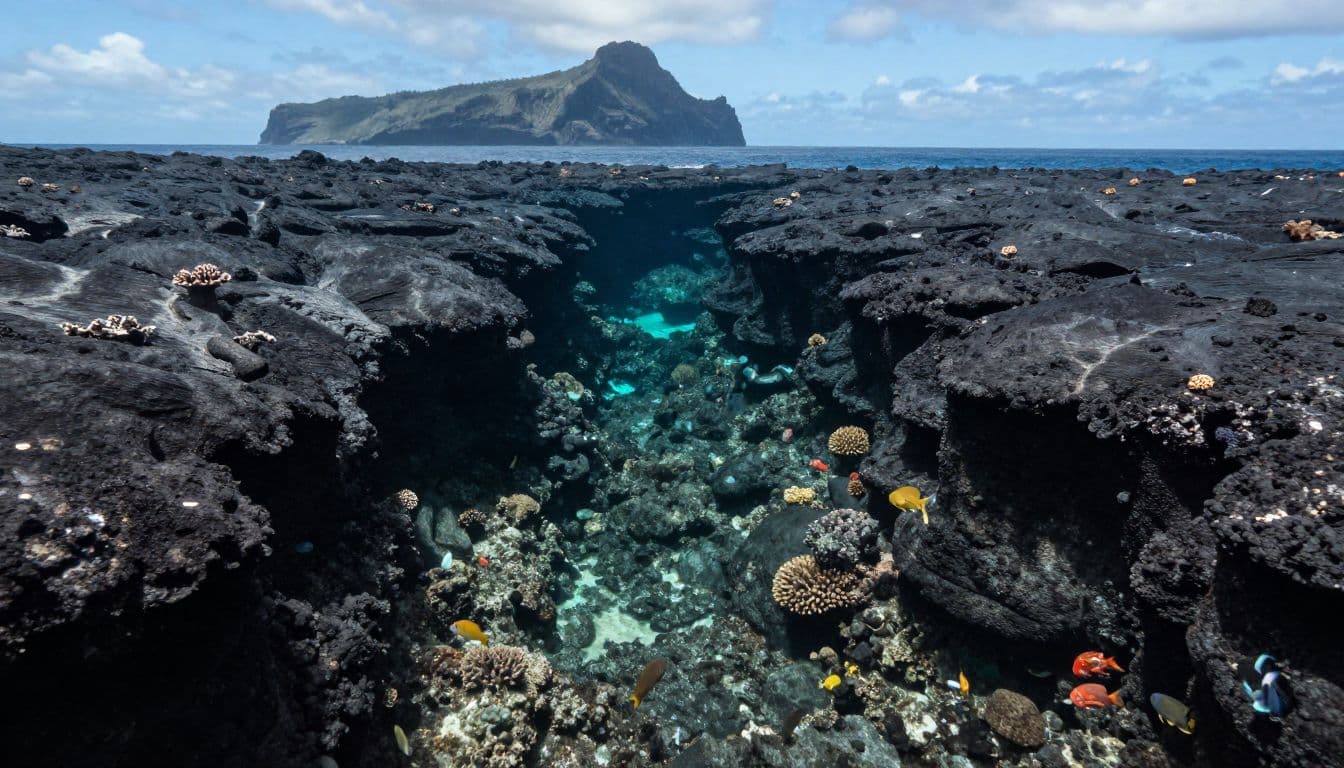
Submerged lava provides a hard surface where coral can grow. Cracks, overhangs, and uneven ledges create hiding places for reef fish, while deeper edges give the seafloor a sudden change in profile.
As you snorkel, the scenery may shift within a short distance. One section can look open and shallow, while the next drops beside a darker wall. Those changes are why a guided route feels more like reading a map than swimming in a straight line.
Why the route centers on Ka’awaloa
The most popular snorkeling area sits near Ka’awaloa Cove and the Captain Cook Monument. The cove’s rocky structure, clear water, and protected marine habitat make it a major destination within the bay.
The monument side holds the main reef area
The prime snorkeling zone is across the bay from the eastern shoreline access. A Kealakekua Bay visitor guide describes Ka’awaloa Cove as the main area near the monument, where the underwater terrain supports dense reef viewing.
You won’t drive directly to this part of the coast. The route usually begins with a boat trip, a permitted kayak journey, or a strenuous hike. That limited access helps explain why the water near the monument often feels separate from ordinary beach snorkeling.
Access changes how you enter the water
Napo’opo’o is the shoreline area accessible by car, but it isn’t the same as arriving at Ka’awaloa. The Ka’awaloa Trail is a demanding hike, with the return climb often described at roughly 1,300 feet. There are also limited facilities at the bottom.
A boat trip gives you a direct approach to the snorkeling area without landing on the restricted flat. If you want to snorkel Big Island sites without guessing how to reach them, that access difference matters.
What you see as the lava changes beneath you
The lava doesn’t only shape the route. It also controls the pace and the kind of marine life you notice. Moving slowly helps you see details that disappear when you focus only on reaching the next spot.
Shallow shelves reward careful observation
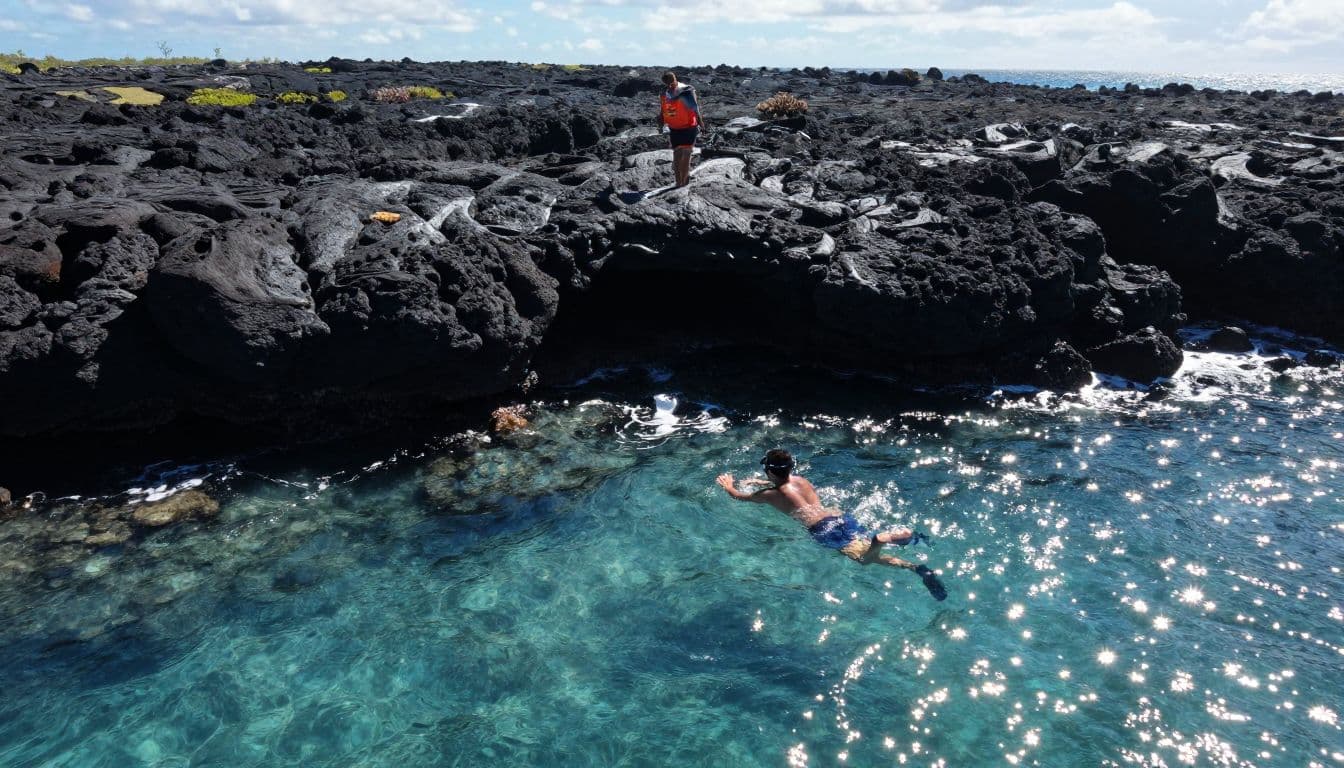
Lava shelves close to the surface receive strong sunlight, which supports coral growth and makes the reef easier to view. These areas are ideal for watching fish move around cracks and small holes.
Your guide may pause near a ledge rather than lead you across open water. That pause gives you time to adjust your breathing, check your position, and look closely without kicking the bottom.
Avoid standing on shallow rock or coral. Even a brief touch can damage living growth, and sharp volcanic surfaces can cut unprotected skin. Water shoes may help during shoreline entry, but they shouldn’t replace careful footing.
Drop-offs change the view
Where a shelf ends, the color of the water can change quickly. Pale cyan over shallow rock may give way to darker blue beside a wall or channel. The deeper edge often attracts larger fish and creates a dramatic view into the bay.
These drop-offs also require stronger awareness. You should keep a comfortable distance from the rock, watch your fins, and stay close enough to hear your guide’s instructions. Clear water can make depth difficult to judge.
How guides read lava and water conditions
A skilled guide doesn’t choose a route based on scenery alone. The same lava feature can feel calm in one set of conditions and uncomfortable in another.
Current and surge matter
Channels between lava formations can focus moving water. Surge may push you toward a ledge and pull you away again, while a current can become stronger around a point or drop-off.
Guides watch the surface, test the water, and adjust the plan when needed. They may keep the group inside a more sheltered section, change the order of stops, or skip a feature altogether. Your comfort and swimming ability should influence the route as much as the reef does.
At Kealakekua, the safest snorkeling path is determined by both the lava and the day’s water conditions.
Lava gives the group a visual reference
Rock formations also help guides keep the group oriented. A distinct ledge, wall, or opening provides a fixed reference while everyone looks below the surface.
That matters when you’re snorkeling Big Island reefs, where clear water can make distances feel deceptive. Stay with the group, listen for directions, and avoid swimming beyond the formation your guide has selected.
Rules that protect the volcanic reef
Kealakekua Bay is both a State Historical Park and a Marine Life Conservation District. The protections cover the marine life, coral, sand, and geological features that make the route special.
Know the access and vessel rules
Hawaii’s Department of Land and Natural Resources lists the park as open daily from 7:00 a.m. to 8:00 p.m. Every vessel transiting the bay requires a State Parks permit. Permitted vessels can’t land at Ka’awaloa Flat or launch from Napo’opo’o Wharf.
Swimming and snorkeling don’t require an individual permit, but reaching the water still involves access rules and safety considerations. A Big Island Guide overview of Kealakekua Bay provides additional background on the area’s protected status and visitor access.
Before your trip, check current DLNR notices. Park policies, access conditions, and weather-related guidance can change.
Keep your impact off the lava and coral
The conservation district prohibits taking or altering coral, sand, geological features, or specimens. Fish feeding is also prohibited. In addition, anchoring rules protect coral, with anchoring prohibited in Subzone A and restricted to locations that avoid coral damage in Subzone B.
You can help protect the route by keeping your hands off the reef, using reef-safe sunscreen, and maintaining neutral buoyancy. Never collect a piece of lava as a souvenir. The volcanic shoreline belongs in the bay, where it continues to support the reef.
Choosing the right Captain Cook snorkeling tour
The geology makes a guided trip especially useful at Kealakekua Bay. You get transportation to the main snorkeling zone, local knowledge, and help reading conditions that may be difficult to judge from shore.
Look for safety and route flexibility
Before booking, check whether the tour provides quality equipment, a clear safety briefing, and guides with current water-safety training. Small groups also make it easier to hear instructions and stay together near ledges or drop-offs.
A strong operator should explain reef etiquette rather than treat it as an afterthought. The crew should also be willing to change the route when wind, swell, or current makes a planned section unsuitable.
Why Kona Snorkel Trips fits this route
Kona Snorkel Trips follows a “Reef to Rays” philosophy built around personal service, ocean education, and responsible marine tourism. Its Captain Cook trips use small-group guidance, quality snorkeling gear, and Lifeguard Certified guides who can adjust the experience to the water.
The company also focuses on reef-safe practices and respect for volcanic marine habitats. You can compare its Big Island snorkeling tours before choosing the experience that fits your group.
If Kealakekua Bay matches your plans, you can check availability for a Captain Cook snorkeling trip with Kona Snorkel Trips.
Conclusion
Captain Cook snorkeling makes more sense when you understand the lava beneath you. Steep walls create shelter, submerged shelves support reef habitat, and drop-offs shape both the views and the safety plan.
Choose a route that respects the day’s conditions and the bay’s conservation rules. With the right guide, you can enjoy Kealakekua’s clear water while leaving its volcanic reef exactly where you found it.