
Manta Rays Hawaii: How Spiracles Support Feeding
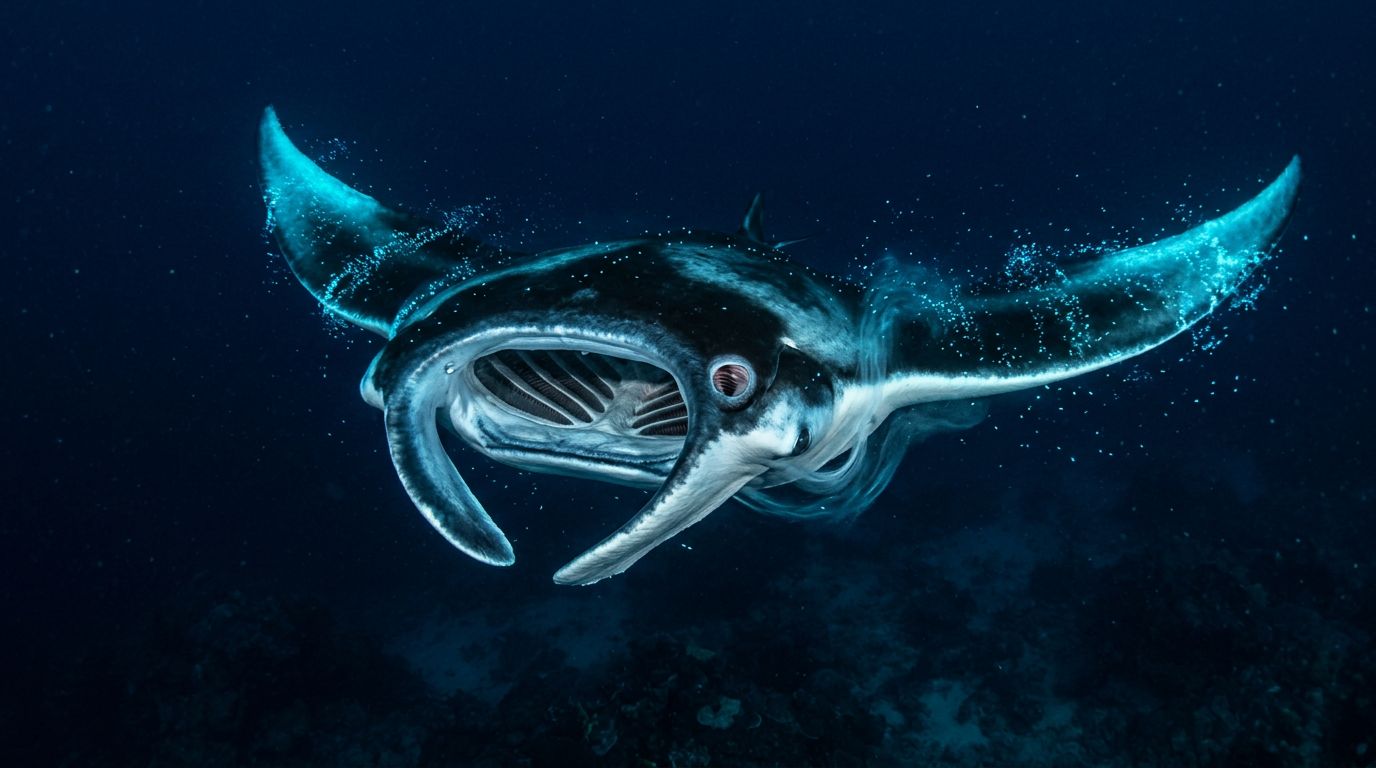
A search for manta rays Hawaii often starts with one question: how can such a large animal breathe while feeding with its mouth wide open? The answer involves spiracles, small openings behind the eyes that help move water toward the gills.
Kona Snorkel Trips gives you the chance to observe this behavior during guided nighttime encounters. For another manta-focused option, Manta Ray Night Snorkel Hawaii also centers its experience on watching these filter-feeding rays in Kona. Before you enter the water, it helps to understand what you are seeing.
Manta rays Hawaii: Spiracles During Feeding
A manta ray’s spiracles are respiratory openings, not extra mouths. They sit behind the eyes and can allow water to enter the respiratory passages. That water moves across the gills, where the manta absorbs dissolved oxygen.
During an active feeding pass, the mouth handles most of the incoming water. The manta swims forward with its mouth open, drawing in seawater filled with plankton. Inside the mouth and gill region, specialized structures separate food from water. The filtered water then leaves through the gill slits on the underside of the body.
The spiracles still have a breathing role, but they don’t capture plankton. They don’t pull food toward the mouth, and they don’t replace the manta’s filter-feeding system. Their job is connected to ventilation, while the mouth and gill rakers handle feeding.
The amount of water entering through the mouth or spiracles can change with swimming speed, body position, and mouth posture. A manta moving steadily through a plankton patch relies heavily on forward water flow through its mouth. If its mouth position changes or the animal slows, the spiracles may help maintain water movement over the gills.
A manta’s open mouth usually means it is feeding, not showing aggression. The spiracles behind its eyes are working for breathing, not food collection.
This distinction makes the animal easier to read. When you see a manta making repeated passes beneath a light, watch the mouth for feeding behavior. The spiracles are part of the breathing system, even when they aren’t obvious from your viewing angle.
Where Manta Ray Spiracles Fit Into the Head
Spiracles are paired openings located behind the eyes. In many rays, their position on top of the head allows the animal to draw in water while resting on the seafloor. The Florida Museum’s ray biology guide describes how top-mounted eyes and spiracles support gill ventilation in skates and rays.
Manta rays spend much of their time swimming in open water. Their broad mouths face forward, which makes them well suited to collecting plankton while moving. As a result, water entering through the mouth is especially important during feeding.
The eyes and spiracles have different jobs. The eyes help the manta detect its surroundings, while the spiracles provide another route for respiratory water. You might mistake a spiracle for a small eye or nostril when viewing a manta from above, but these openings are part of the gill ventilation system.
A manta’s nostrils sit near the mouth on the underside of the head. Spiracles sit farther back, behind the eyes. The difference is easier to understand when you see the ray from several angles, although a nighttime snorkel usually gives you a view from below.
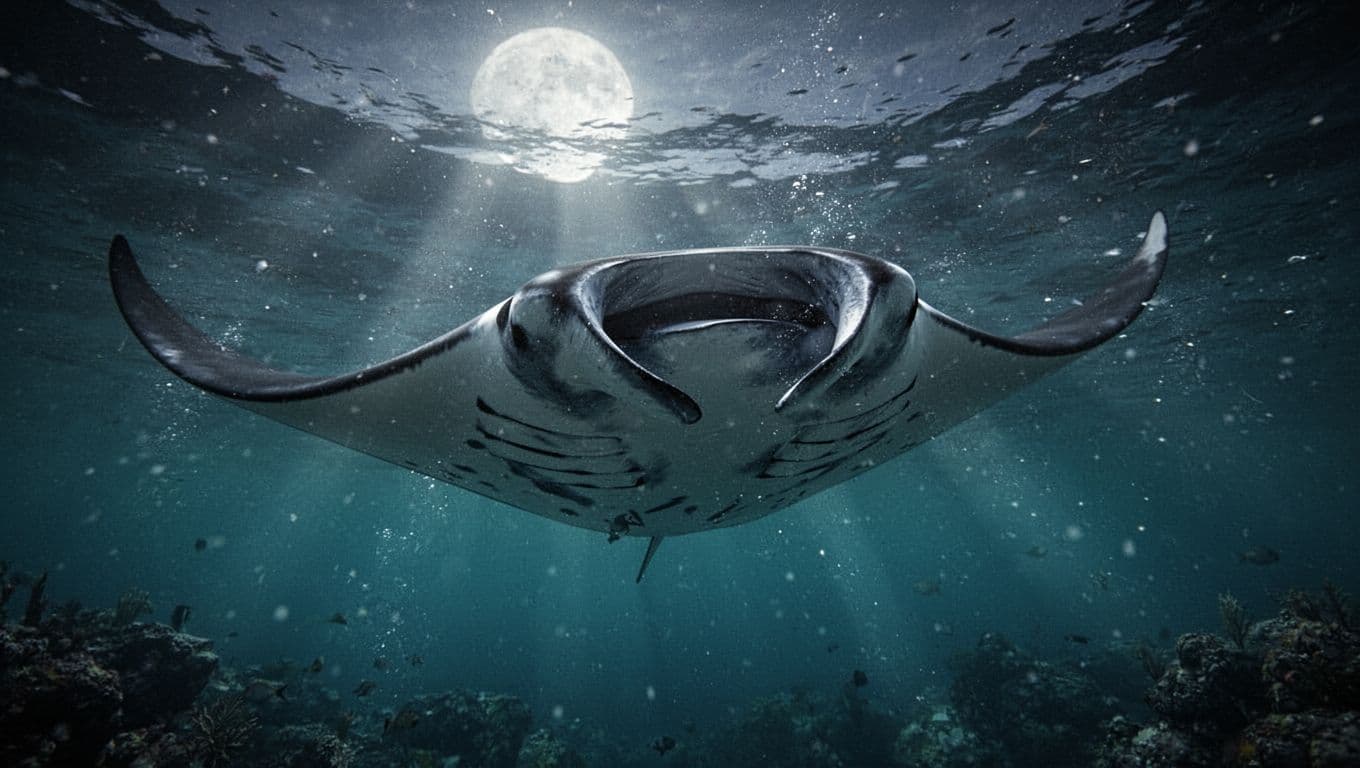
The spiracles may be difficult to see during a close pass because manta rays often glide above you with their pale underside facing down. You may notice the mouth, cephalic fins, and gill slits first. When the ray banks or turns, the openings behind the eyes may come into view.
Manta respiration also includes unusual life stages. A published study on live-bearing manta rays examined how an embryo acquires oxygen inside the mother. That research focuses on reproduction rather than adult feeding, but it shows how specialized respiration is across the manta’s life cycle.
How the Mouth, Gills, and Spiracles Work Together
Several structures help a manta breathe and feed at the same time. Each part has a different role.
| Structure | Location | Role during feeding |
|---|---|---|
| Mouth | Front of the head | Takes in plankton-rich seawater |
| Cephalic fins | Beside the mouth | Guide water and plankton toward the mouth |
| Gill rakers | Inside the mouth and gill region | Retain plankton while water continues through |
| Gill slits | Along the underside | Release filtered water |
| Spiracles | Behind the eyes | Admit water toward the gills for respiration |
The cephalic fins are the two flexible fins that extend from either side of the manta’s head. When unfurled, they help direct water into the mouth. When rolled, they change the shape of the incoming flow and may help the manta maneuver or reposition during feeding.
Once water enters the mouth, plankton travels into the oral and branchial areas. The manta’s gill rakers act as a biological filter. Small food organisms remain available for swallowing, while seawater continues toward the gills and exits through the gill slits.
The gills perform the breathing work. Gill filaments expose a large surface area to the passing water, allowing oxygen to move into the bloodstream. The manta therefore has to manage two connected needs: obtaining food and keeping water moving across the gills.
Spiracles support the second need. They don’t need to carry plankton because the mouth provides a much larger opening for feeding. Their placement behind the eyes also protects them from taking in as much debris as a low-facing opening might collect near the seafloor.
Forward movement helps a manta maintain water flow. The animal can adjust its speed, angle, and cephalic fins as it follows a dense patch of plankton. Spiracle activity fits into that larger system, supporting respiration as the manta feeds.
You don’t need to see water entering a spiracle to know it is useful. The opening works as part of an internal flow system that keeps the gills supplied with oxygenated water. The most visible feeding action happens at the mouth, but breathing continues throughout the pass.
Why Night Feeding Makes the Behavior Visible
Kona’s nighttime manta encounters take place around underwater lights. Those lights attract small marine organisms, including plankton, into the illuminated water. Manta rays follow the food source, not the lights themselves.
As the plankton gathers, a manta may make repeated passes through the same area. It can circle, turn, or glide in a slow loop while keeping its mouth open. The animal adjusts its position to stay in the food-rich water.
From the surface, you may notice the white belly first. The mouth opens at the front of the head, while the five pairs of gill slits appear along the underside. The spiracles sit behind the eyes on the upper part of the head, so their visibility depends on the manta’s angle.
A ray passing directly beneath you may show very little of its spiracles. When it banks to one side, you might see the openings more clearly. That brief change in orientation can reveal how the head is shaped and how the mouth, eyes, and spiracles are arranged.
The feeding pattern can also help you understand the animal’s breathing. A manta may keep swimming even when it isn’t making a dramatic turn. Continuous movement supports water flow across the gills while the mouth collects plankton.
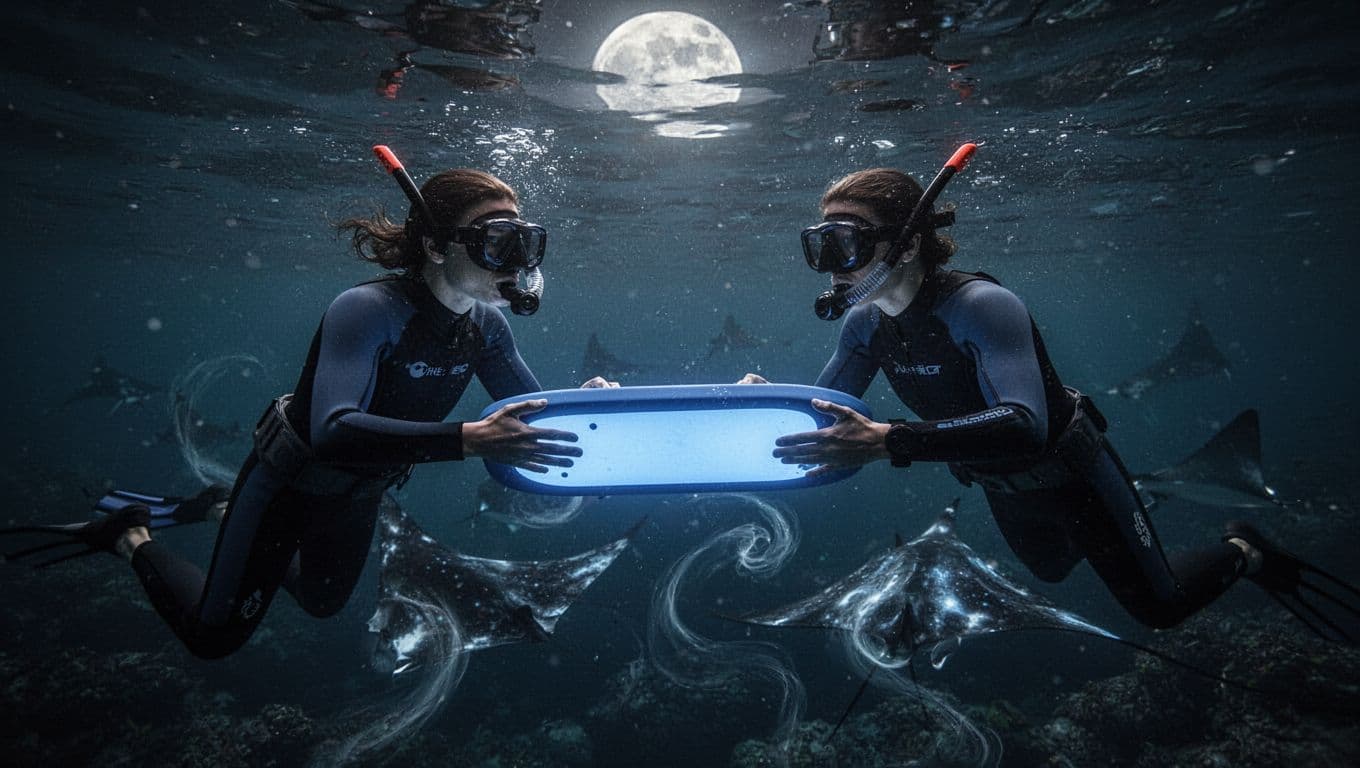
Night snorkeling gives you a rare view of this process because the light creates contrast between the animal and the surrounding water. You can observe the manta’s feeding path without needing to chase it or approach the seafloor.
Wildlife behavior can change with weather, current, water clarity, and plankton conditions. A responsible operator treats every encounter as a natural event rather than a performance. The manta decides how close to come and how long to remain.
What You Can See on a Kona Manta Ray Snorkel
Kona Snorkel Trips follows a “Reef to Rays” philosophy built around small-group ocean adventures, safety, and respect for marine habitats. Lifeguard Certified guides lead the excursions, explain the behavior you are seeing, and help you use the equipment correctly.
The experience uses specialized snorkeling gear and custom-built lighted boards that attract plankton below the group. You remain at the surface while the manta rays swim beneath you. This position gives you a clear view while leaving the animals room to move.
You may see one manta make several passes, or you may watch multiple rays share the same feeding area. No two encounters follow the same pattern. Some rays glide slowly through the light, while others make tighter turns as they track plankton.
Before booking, review the details of the manta ray night snorkel in Kona. Check the departure time, meeting instructions, age requirements, and equipment information. You should also consider whether you feel comfortable floating in open water after sunset.
Kona Snorkel Trips has built its service around personalized attention rather than crowded, impersonal outings. That approach helps you ask questions about spiracles, gills, feeding patterns, and reef protection while you are with the crew.
You can check availability for Kona Snorkel Trips’ ocean excursions, or choose the manta-specific check availability link when planning a nighttime encounter.
How to Watch Manta Feeding Without Interrupting It
Your behavior affects the quality of the encounter. Manta rays need room to swim, turn, and maintain water flow across their gills.
- Keep your hands and fins away from the animals, even when a manta passes within easy reach. Touching can remove the protective mucus on its skin and alter its natural behavior.
- Stay where your guide places you. Avoid diving below the group, blocking a manta’s path, or swimming after a ray that changes direction.
- Use only the lights and flotation equipment provided by the crew. Personal lights can create glare and may distract other swimmers.
- Keep your movements calm and controlled. Smooth kicking creates less turbulence and helps you stay in place without crowding the animals.
A close pass isn’t an invitation to follow. The manta may be adjusting its feeding path, responding to current, or moving toward a thicker patch of plankton. Give it space to choose its route.
You should also listen carefully to the safety briefing. Guides can explain how to hold the board, where to place your fins, and what to do if you need help. Families and first-time snorkelers benefit from this instruction because nighttime water can feel different from a shallow daytime reef.
The same respect applies to the reef below. Don’t stand on coral, drop equipment, or leave sunscreen residue in the water. Reef-safe practices protect the habitat that supports plankton, fish, and the larger animals that depend on coastal ecosystems.
Planning Your Big Island Manta Experience
Searches for “snorkeling Big Island Hawaii” often lead travelers to Kona because the island’s west coast offers clear water and regular marine-life excursions. Your final choice should depend on more than the animal you hope to see.
First, check the sea conditions and the operator’s requirements. You may need to swim comfortably in open water, climb a boat ladder, or remain outside after sunset. Ask about flotation aids if you don’t feel confident swimming without support.
Next, consider timing and transportation. Night tours require you to reach the meeting point before dark, and the return trip can feel cool after you leave the water. Bring a towel, warm layers, and any prescription items you need.
If you want to snorkel Big Island sites during daylight, add a reef-focused trip to your plans. The Kealakekua Bay snorkel tour offers a different setting, with daytime visibility and reef habitat near the historic Captain Cook Monument. You can check avaialbility for that outing.
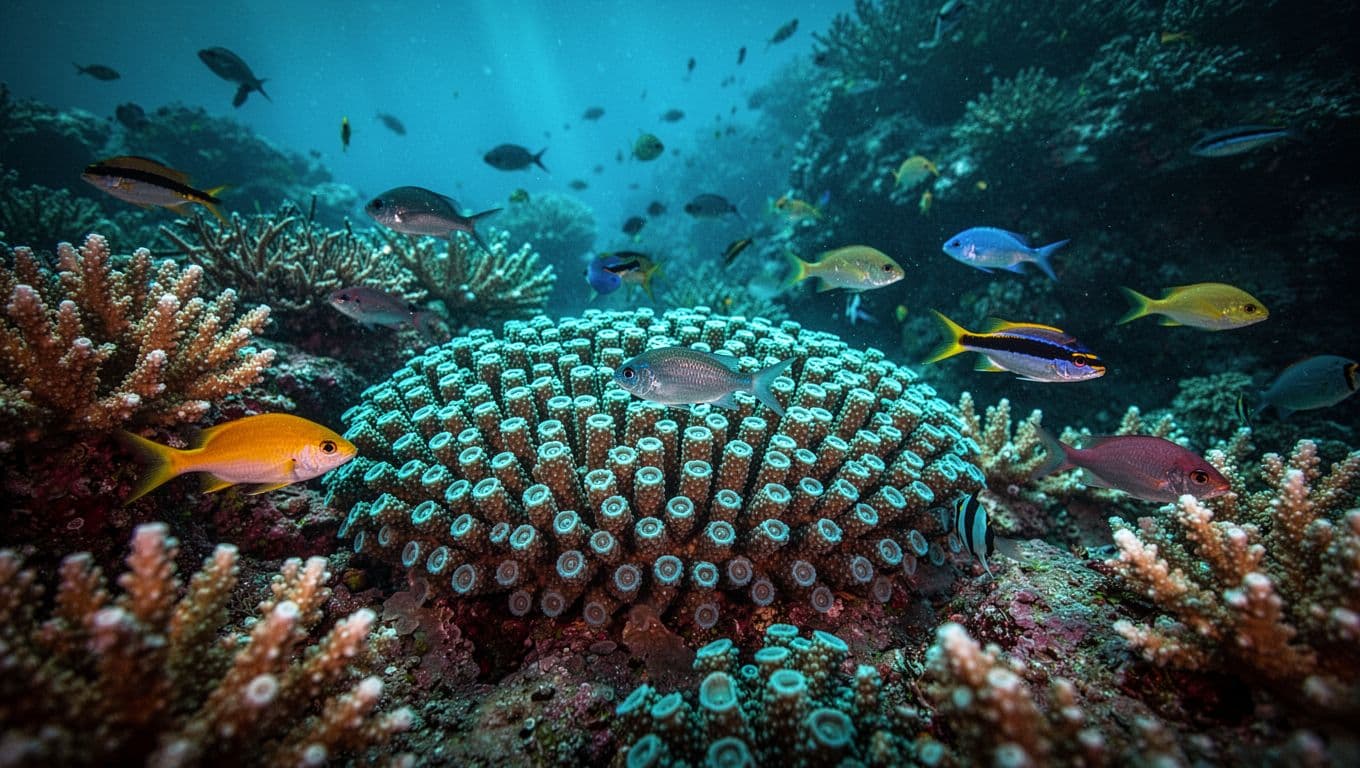
For a wider look at available outings, the Big Island snorkeling tours page includes reef trips and other guided options. A daytime snorkel can help you compare the colors, fish, and coral structure of a shallow reef with the open-water setting of a manta night encounter.
If your schedule is flexible, leave room for changing ocean conditions. Mantas are wild animals, and their feeding activity depends on food, current, and water conditions. A good tour prepares you for the encounter without promising behavior the animals can’t control.
What Spiracles Teach You About Manta Rays
Spiracles answer a small but important question about manta anatomy. While the mouth collects plankton, the gills extract oxygen, and the spiracles help move water into the breathing system.
During a Kona night snorkel, you can watch those systems work together. Look for the open mouth, the sweeping cephalic fins, the pale underside, and the gill slits. When a manta banks, notice the paired openings behind its eyes. Those are the spiracles supporting respiration as the animal continues feeding.
Understanding the anatomy makes the encounter more than a close wildlife sighting. You begin to see how each movement helps the manta eat, breathe, and move through the water without disturbing the fragile habitat around it.