
How to Spot Hawaiian Squirrelfish in Kealakekua Bay
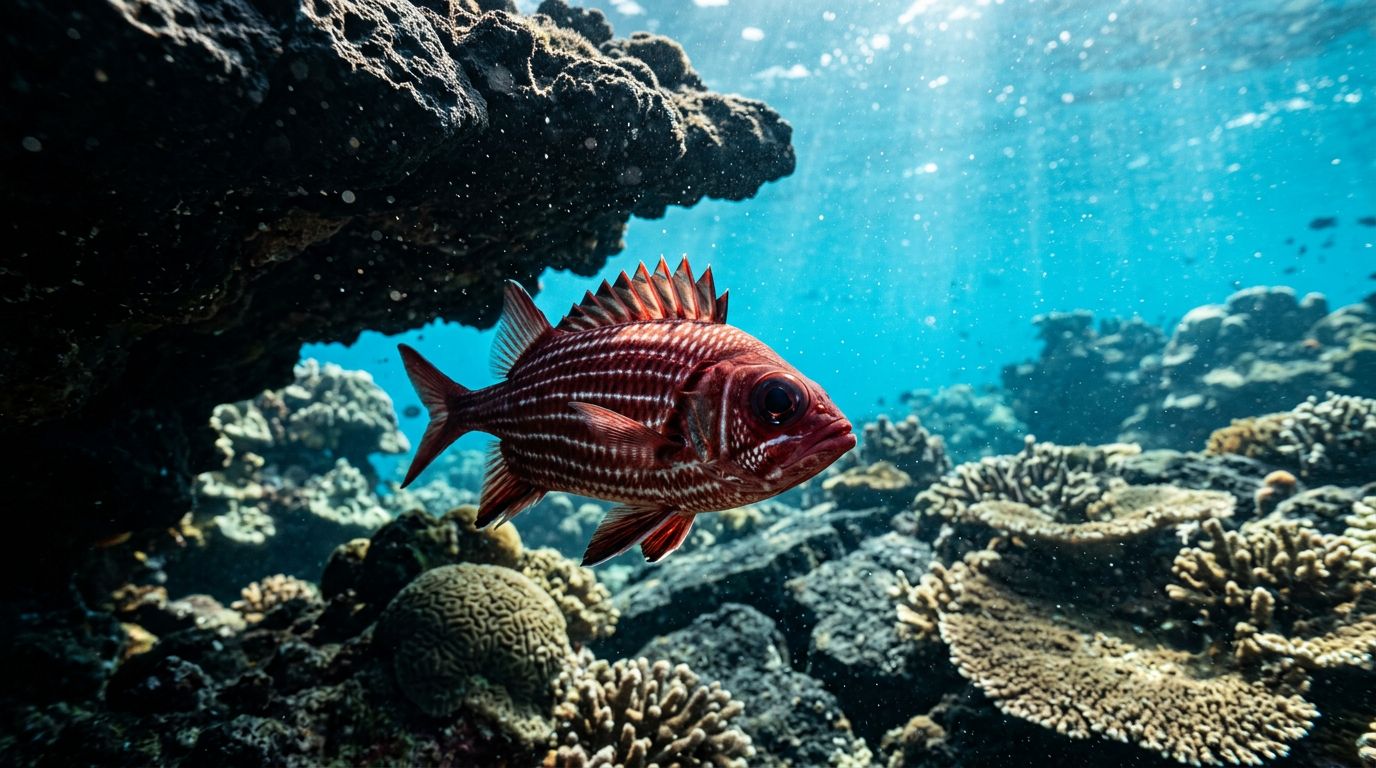
A Hawaiian squirrelfish may be inches from your mask and still look like a shadow beneath a coral ledge. Its red body often darkens underwater, while its large eyes catch the light before the rest of the fish becomes clear.
If you’re planning snorkeling on the Big Island of Hawaii, you may spend your first few minutes watching for turtles and bright tangs. Slow down near lava shelves and reef cracks, however, and you may find one of Kealakekua Bay’s most interesting daytime residents.
Kona Snorkel Trips offers guided trips to the bay with small groups, quality gear, and lifeguard-certified guides. For another Kealakekua Bay option, Captain Cook Snorkeling Tours also focuses on Captain Cook and Kealakekua Bay outings. Before you enter the water, learn the fish’s shape, hiding places, and behavior.
What Hawaiian Squirrelfish Look Like Underwater
Squirrelfish belong to the Holocentridae family, a group known for large eyes, sharp dorsal spines, and a preference for reef structures. The common name can cover several related fish, so you may hear names such as menpachi or ‘ala’ihi during a Hawaiian snorkel.
The fish commonly identified as a Hawaiian squirrelfish has a compact, tapered body. Its colors range through red, orange, silver, and pale cream. At the surface, those colors may look vivid. At snorkeling depth, the red can appear brown, burgundy, or nearly black.
Look for these details when you peer into a shaded reef opening:
- The eyes look large compared with the head, which helps the fish see in low light.
- Pale stripes, spots, or reflective markings may run across the body.
- The dorsal fin has noticeable spines, although you shouldn’t approach close enough to touch.
- The tail and fins often blend into the dark background when the fish stays under cover.
- The body usually looks thicker and more armored than that of a small cardinalfish.
Maui Ocean Center’s guide to the Hawaiian squirrelfish also notes the fish’s habit of peering from reef holes before fleeing. That behavior is one of your best identification clues.
The red color may disappear first in blue water. Watch for the eyes and pale markings before you judge the body color.
Notice the eyes before the color
Many snorkelers search for a bright red fish in open water. That approach misses squirrelfish because they often stay where light is weakest.
Instead, scan the edge of a cave or overhang. You may notice two reflective eyes, a pale stripe, or a short section of red-orange body. Once the fish realizes you’ve seen it, it may turn sideways and slip farther into the crack.
Your mask also affects what you see. A leaking or fogged mask makes small details disappear. Take a moment to adjust the seal and clear the lens before scanning the reef.
Separate squirrelfish from similar reef fish
Kealakekua Bay has many small reef fish, and several can appear red or striped. A squirrelfish usually has a sturdy profile and remains close to cover. It often faces outward, ready to retreat.
A cardinalfish tends to look slimmer and may hover in a more open position. A bigeye has prominent eyes too, but its body is often rounder and more compressed. Surgeonfish and tangs usually spend more time in open water and show different body shapes.
You don’t need to identify the exact species on your first sighting. First, confirm the broad pattern: large eyes, a red or dusky body, pale markings, and a hiding place beneath rock or coral.
Where to Look for Squirrelfish in Kealakekua Bay
Kealakekua Bay’s underwater habitat includes volcanic rock, coral growth, ledges, vertical faces, and narrow crevices. Those structures create the shaded shelters squirrelfish use during daylight.

When you reach a snorkeling area, don’t swim straight over the reef while staring only at the bottom. Move parallel to the structure and study the places where sunlight meets shade. A squirrelfish may hold position just inside that boundary.
Lava overhangs are especially useful places to inspect. Look beneath shelves, around the sides of coral heads, and inside holes that are large enough to shelter a fish. You may also find them near steep reef walls where cracks create several escape routes.
The bay’s clear water can make distant fish easy to spot, but clarity doesn’t mean every fish will sit in plain view. A squirrelfish depends on shadow and cover. The darker the opening, the more carefully you should look at its entrance.
Search the shadow line
Start with the visible edge of a ledge. Move your eyes slowly across the boundary between bright water and darkness. Avoid sweeping your head quickly, because a fast movement can cause the fish to retreat before you notice it.
Next, check the first few inches inside the opening. You aren’t trying to shine light into every hole. Your goal is to recognize the shape of a fish that has chosen partial cover.
If the reef is busy with small fish, focus on movement that doesn’t match the rest of the group. A squirrelfish may remain still while other fish dart around it. A slight turn of the head or a flick of the tail can reveal its position.
Look during the quieter parts of the day
Squirrelfish are mainly nocturnal, so daytime sightings often involve fish resting beneath cover. NOAA’s Coral Reef Conservation Program describes Hawaiian squirrelfish as nocturnal reef dwellers, which explains why you may see only part of one during a morning snorkel.
Morning conditions can still work well. Calm water, good visibility, and low swimmer activity make it easier to inspect ledges without disturbing the reef. You may also see fish near the opening of a shelter if clouds or changing sun angles reduce the brightness.
A guide who knows the reef can point out the small openings that casual visitors swim past. Listen for location clues, then look before moving closer.
A Practical Way to Spot One While Snorkeling
Good fish watching depends more on your pace than on how far you swim. When you snorkel the Big Island, you may cover less reef but notice more wildlife by moving slowly.
Use this sequence when you reach a promising ledge:
- Settle your mask and breathing first. Stop kicking for a moment and let your breathing become quiet. This reduces movement and gives you a stable view.
- Scan the outside edge of the reef. Start with the shaded line beneath the ledge. Look for eyes, pale stripes, and a thick red-orange outline.
- Pause before you approach. Give the fish time to remain in place. If you move directly toward the opening, it may disappear before you can identify it.
- Approach at an angle. Swim slightly to the side rather than straight over the fish. Keep your arms relaxed and use small fin movements.
- Confirm the body shape. Check for the compact body, large eyes, light markings, and dorsal spines. Then back away and let the fish return to its shelter.
A squirrelfish may react before you reach it. If its body vanishes, stop moving and wait. Sometimes it reappears after several seconds. Other times, the sighting is over, and chasing it only pushes the fish farther into the reef.
Your guide may point toward a crack with a hand signal. Follow the direction slowly, but don’t crowd the guide or other swimmers. One person moving calmly can see more than a group pressing toward the same hole.
A camera can help you review the sighting later, but it shouldn’t control your swim. Keep it steady, avoid repeated flashes, and leave enough distance for the fish to behave normally.
Conditions and Gear That Improve Your Sighting
Water clarity matters, but calm conditions matter just as much. Surface chop makes it harder to hold your face still, while strong surge can move you away from a ledge before you finish scanning it.
Morning trips often provide comfortable light and calmer water, although conditions change with wind, swell, clouds, and location. Ask your guide where the reef has the best visibility that day instead of assuming one part of the bay will always be clearer.
A properly fitted mask is your most useful piece of equipment. Choose a lens that stays clear, adjust the strap before entering the water, and carry an approved defogging solution if needed. Fins help you make small movements without kicking hard against the reef.
A flotation vest can add comfort for children, cautious swimmers, and anyone who tires easily. You can observe fish better when you feel relaxed in the water. If you struggle with breathing or balance, tell your guide before the tour begins.
Sun position also changes the way you see color. When sunlight reaches the reef at an angle, reflective markings may flash silver or white. Under heavy cloud cover, the same fish may look almost black.
People who enjoy snorkeling on Big Island reefs often focus on covering a long distance. For squirrelfish, a shorter route with several careful observation stops usually works better.
Protect the Reef While You Watch
Kealakekua Bay is a special place for marine life, so your behavior matters at every sighting. Never stand on coral, hold a rock, or pull yourself across a ledge. Even a light touch can damage living reef growth or disturb animals using the structure for shelter.
Keep your hands to yourself around squirrelfish. Their dorsal spines are sharp, and the fish can injure itself while trying to escape. You also don’t need to touch a fish to identify it.
Avoid feeding reef fish. Feeding changes their behavior and can bring animals into close contact with swimmers. It also distracts you from the natural relationship between fish and habitat.
Before entering the water, apply sunscreen according to local guidance. Many visitors choose mineral-based, reef-conscious products and cover exposed skin with a rash guard. Reapply only as directed, and keep lotions away from your mask seal.
Stay behind your guide’s boundaries and respect any areas closed to swimmers. Don’t collect shells, rocks, coral, or other marine items. The best souvenir from the reef is a clear memory and a few photographs taken without disturbing wildlife.
The best squirrelfish sighting often ends with the fish still under its ledge. Leaving it undisturbed is part of a successful encounter.
Families can make this easy for children by choosing one viewing rule before entering the water: look, point, and keep your hands away. Couples and solo travelers should use the same approach, especially when exploring a narrow reef passage.
Choosing a Kealakekua Bay Snorkel Tour
A guided trip can make squirrelfish easier to find because you spend less time searching for access points and more time observing the reef. An experienced guide also knows when water conditions make a certain area unsuitable.
Kona Snorkel Trips builds its outings around small groups, guest safety, reef education, and responsible ocean practices. Its lifeguard-certified guides provide well-maintained snorkeling gear and help guests understand the marine habitat rather than rushing from one sighting to the next.
The company offers a Captain Cook snorkeling tour in the Kealakekua Bay area. You can also compare the available Big Island snorkeling tours when you want to consider other reef locations around Kona.
Ask about group size, water entry, included equipment, and the guide’s approach to wildlife viewing. Families may want extra help with flotation and mask fitting. Couples and experienced swimmers may prefer more time near reef walls and lava ledges.
Wildlife sightings can never be promised. A professional crew can improve your timing and position, but the fish still decides whether it leaves its shelter. That uncertainty is part of observing a wild animal.
Kona Snorkel Trips’ approach fits travelers who want personal service without treating the reef like an aquarium. The guides combine safety instructions with information about local marine life, and they encourage guests to leave the reef in the same condition they found it.
When you’re ready to compare dates for a guided Kona outing, you can check availability.
For a trip centered on Kealakekua Bay and the Captain Cook Monument, you can check avaialbility before planning the rest of your day.
Conclusion
Spotting a Hawaiian squirrelfish in Kealakekua Bay starts with a slower swim. Search shaded ledges, watch for large reflective eyes, and confirm the compact red-orange body before the fish slips farther into cover.
Calm breathing, a clear mask, and careful fin control will improve your view. Most importantly, leave the fish and reef untouched. When you give a small reef resident room to behave naturally, even a brief glimpse can become the most memorable part of your snorkel.