
Manta Ray Swimming: How Mantas Sense Water Pressure
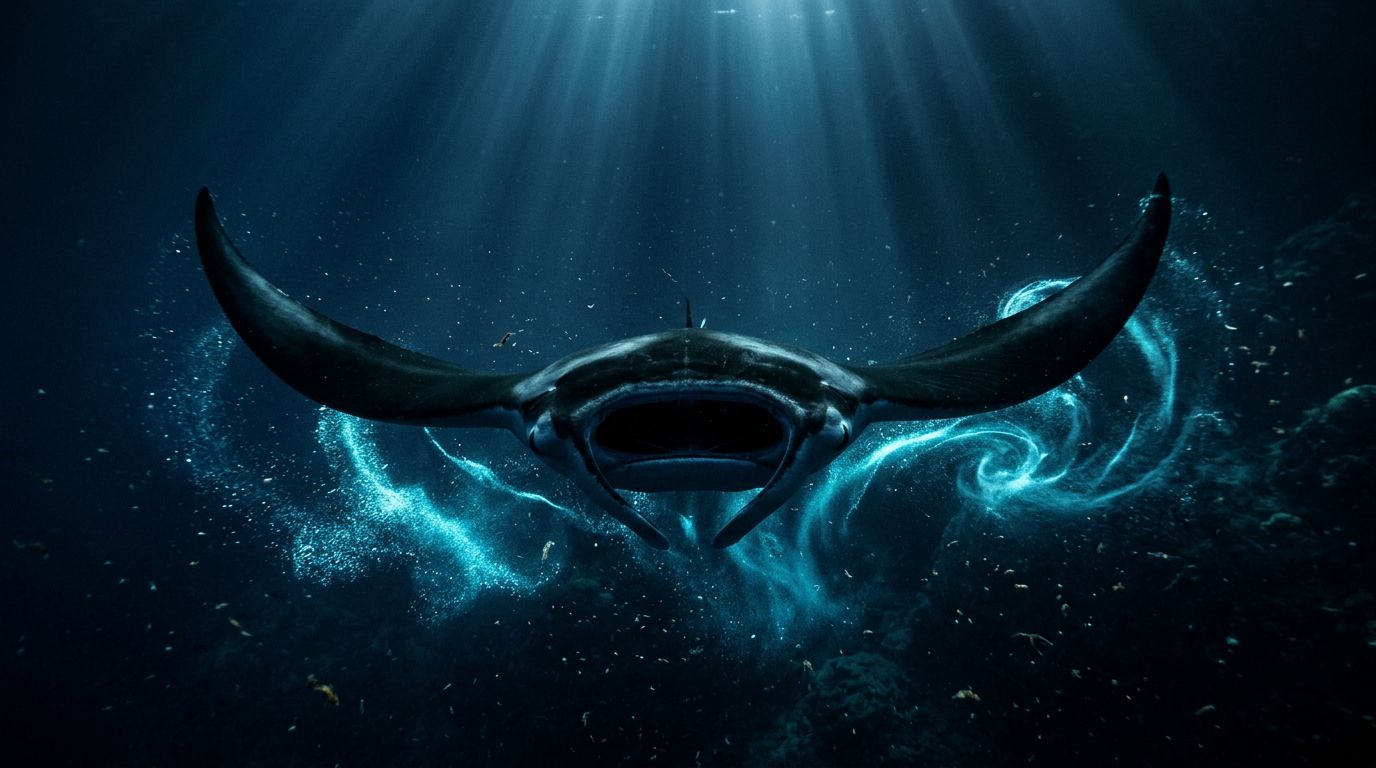
Watching manta ray swimming underwater can feel almost silent, but every wingbeat changes the water around the animal. Those changes create pressure gradients, currents, and tiny vibrations that a manta can detect through sensory systems beneath its skin.
On the Kona coast, Kona Snorkel Trips builds small-group nighttime outings around this natural feeding behavior, with Lifeguard Certified guides and custom-built lighted boards. Another manta-focused option is Manta Ray Night Snorkel Hawaii. Once you understand how mantas read water movement, their graceful turns and sudden approaches become easier to appreciate.
How Manta Ray Swimming Creates a Moving Pressure Field
A manta ray does more than push water backward. Its broad pectoral fins generate lift and forward movement, much like underwater wings. As the fins rise and fall, water moves over the top, below the body, and around the wing edges.
Each stroke produces a changing pattern of high and low pressure. The manta also creates a wake behind its body, with swirling water that can continue moving after the animal passes.
Wingbeats control lift and direction
Mantas use powerful pectoral fins to travel, turn, rise, and descend. They can flap both fins together for forward movement or adjust one side to bank into a turn. During a glide, the fins may remain spread while the animal uses momentum and small corrections to maintain its path.
This movement gives the manta constant information about its own position. If water flows differently across one side of its body, the animal can adjust its fin angle or body position.
A nearby fish, diver, rock wall, or other manta also changes the surrounding water. These disturbances may be detectable before the object enters the manta’s immediate visual field.
Local pressure is different from depth pressure
People often use “water pressure” to describe the force that increases as an animal swims deeper. Mantas encounter that type of hydrostatic pressure, but their lateral line mainly detects local water movement and pressure differences.
Those differences come from currents, prey movement, fin strokes, turbulence, and nearby surfaces. The signal tells the manta that water is moving in a particular direction or changing around its body.
The distinction matters because a manta isn’t using one simple pressure gauge. Instead, it combines several sensory inputs to understand what the water is doing.
The Lateral Line Gives Mantas a Flow Map
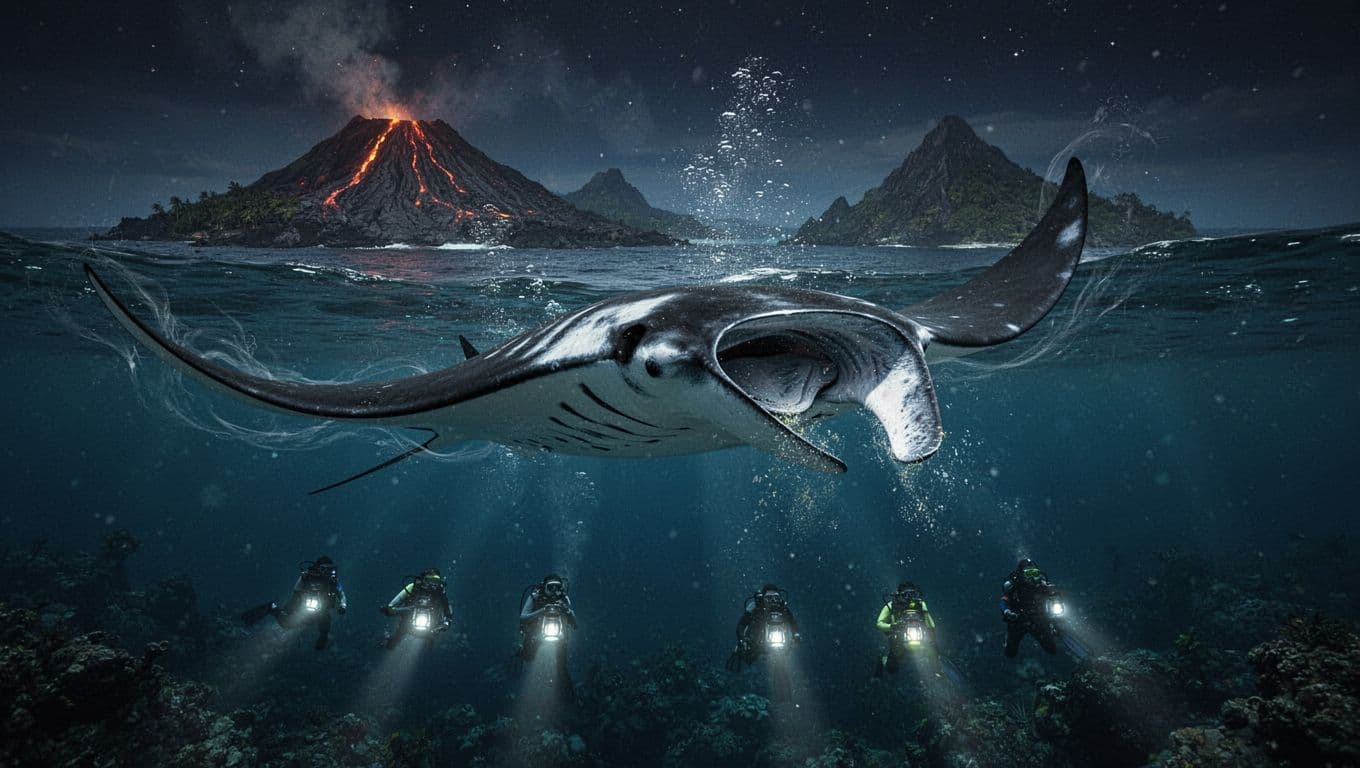
The lateral line is one of the most important systems for understanding how mantas sense their surroundings. It appears in many fish and aquatic vertebrates, including sharks and rays.
A useful overview of the lateral-line system describes it as a network that detects movement and pressure changes in surrounding water.
Canals under the skin detect movement
Mantas have fluid-filled canals connected to pores in the skin. These canals contain sensory structures called neuromasts. Some neuromasts sit in open contact with the water, while others sit inside the canals.
When water moves across the body, the fluid inside the canals shifts. That movement bends a soft structure around the sensory cells. The resulting signal travels through nerves to the brain.
The lateral line runs across parts of the head and body. Its position allows the manta to compare water movement on different sides. A difference between the left and right sides can reveal the direction of a current or the approach of a nearby animal.
Neuromasts turn pressure changes into signals
Neuromasts contain hair cells that respond to the movement of surrounding fluid. They don’t identify a complete object in the way your eyes do. Instead, they report patterns such as direction, vibration, acceleration, and changes in flow.
That information can help a manta locate a dense plankton patch or hold its position in a current. The animal may also detect disturbances created by other animals moving nearby.
Research on the mechanosensory lateral line in elasmobranchs, the group that includes rays and sharks, examines how these canals respond to hydrodynamic signals. Comparative research on ray tails has also found neuromasts that can detect water movement, as described in this study of a ray hydrodynamic antenna.
A manta’s lateral line doesn’t replace vision. It gives the animal another stream of information, especially when darkness, cloudy water, or suspended plankton reduce visibility.
Cephalic Fins and Electroreception Add More Information
Mantas use several sensory systems at once. Their lateral line detects water movement, while their cephalic fins help manage incoming water and their electroreceptors detect weak electrical fields.
Smell and vision also contribute to feeding and navigation. Together, these systems help the manta respond to a changing ocean rather than depend on one signal.
Cephalic fins guide water toward the mouth
The paired fins at the front of a manta’s head are called cephalic fins or cephalic lobes. They look like small horns when rolled, which explains why some people call them “horns.”
During feeding, the manta can unfurl these fins to help channel plankton-rich water toward its wide mouth. The fins influence the flow entering the mouth, which helps the animal filter more food as it swims.
Researchers are also studying whether the lobes have additional sensory and communication roles. An article from the University of Cape Town discusses research into manta cephalic lobe movements and notes that scientists still need more evidence before assigning one clear function to every movement.
The most reliable explanation is simple: cephalic fins help control water flow during feeding, while the lateral line provides the main system for sensing local water movement.
Electroreceptors detect weak electrical fields
Like other sharks and rays, mantas have ampullae of Lorenzini. These small sensory organs detect weak electrical signals produced by living animals.
Electroreception works at close range. It may help a manta detect biological activity in the water, particularly when visibility is poor. However, it isn’t the same as sensing water pressure.
A review of elasmobranch sensory biology describes how rays and sharks combine electroreception with other senses. For mantas, the lateral line remains the main system connected to pressure changes and water displacement.
Why Pressure Sensing Matters During Feeding
Mantas are filter feeders. They consume plankton by swimming through productive water and passing it through specialized filtering structures in the mouth.
Their feeding success depends on finding the right water, not chasing individual fish. Pressure sensing helps them read currents and identify where food may be concentrated.
Water movement can reveal a plankton patch
Plankton doesn’t always spread evenly through the ocean. Currents, temperature layers, shoreline features, and changes in tide can gather small organisms into denser areas.
A manta can respond to the movement of the water around those patches. Its eyes may locate visible particles or other animals, but the lateral line adds information about current direction and turbulence.
The animal then adjusts its body angle and fin movement. It may make repeated passes through the same area, turn into the current, or circle through a productive patch.
A manta doesn’t need to touch a feeding area to detect that the water around it has changed. Its lateral line reads movement before the animal reaches the densest part of the patch.
Flow helps the manta hold its feeding position
A manta needs to keep its mouth aligned with incoming water while filtering plankton. Small changes in fin position help it stay within a productive flow.
If the current shifts, the manta can roll, turn, or alter its speed. The animal’s broad body makes those changes easy to see during a close encounter. A smooth turn may reflect a change in current rather than a reaction to a person nearby.
This behavior also explains why mantas often seem to repeat the same path during a night snorkel. A light can gather plankton into a feeding lane, while the local current carries that food through a usable section of water.
What You Can Observe During a Kona Night Snorkel
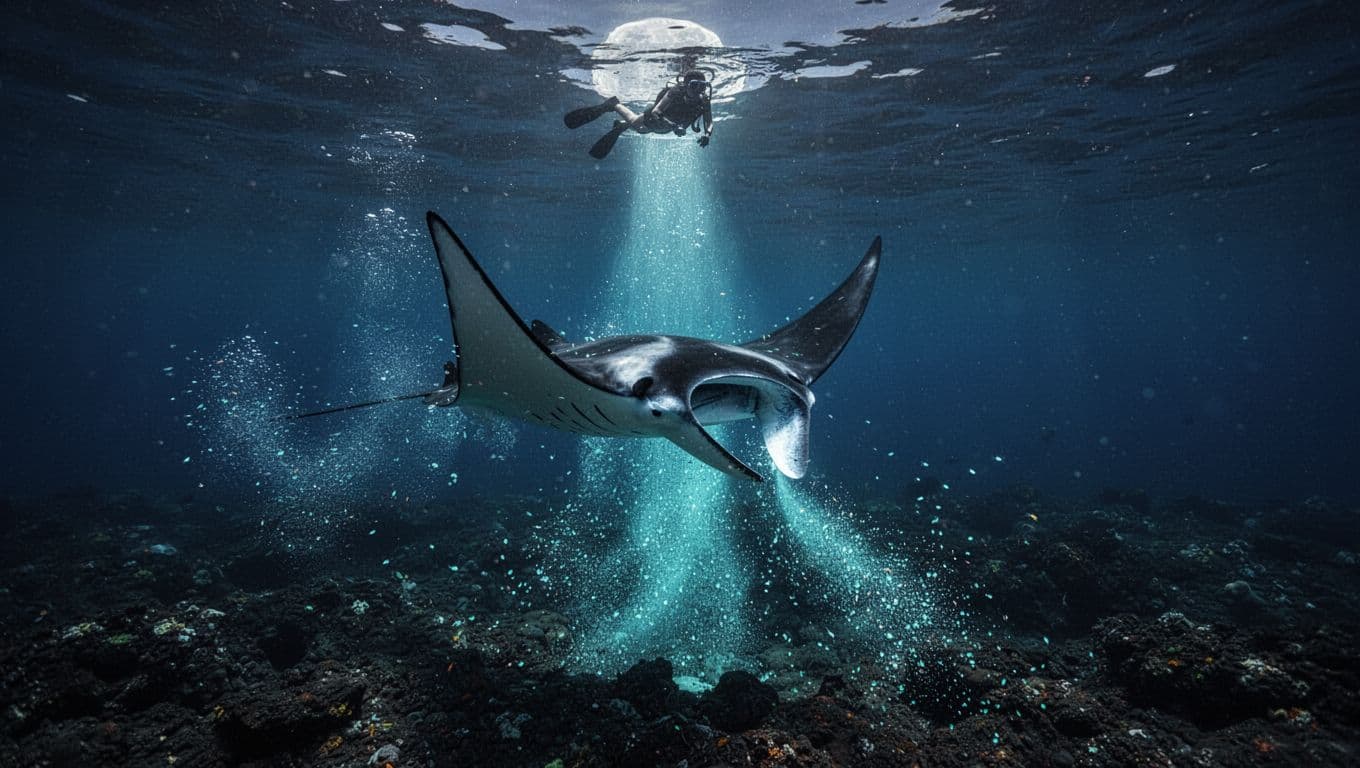
At night, a manta encounter gives you a clear view of feeding behavior. You may see a manta approach slowly, bank into a turn, glide over the light, and return through the same area.
The animal’s movements can look playful, but they usually have a practical purpose. The manta is positioning itself within a food-rich current.
The light attracts plankton, not the manta
Tour lights make tiny plankton easier to see and can gather organisms near the surface. The manta follows the food concentration. It isn’t approaching because it wants contact with snorkelers.
As a result, the most successful viewing areas are built around a stable light source and an open feeding lane. Guides position guests where they can watch without blocking the manta’s route.
Your light helps create a feeding area, but the manta chooses its own path through that area.
The manta may pass below you, rise toward the surface, or turn away before making another approach. Its pressure-sensing system can detect water disturbances from people, boards, and other animals, so calm behavior from you gives the manta more control over distance.
Turns can reveal what the manta is sensing
Watch the animal’s body rather than focusing only on its mouth. A change in wing angle may indicate a turn into the current. A brief roll can help the manta redirect its body through the plankton-rich flow.
You may also notice the cephalic fins open wider during a feeding pass. That adjustment changes how water enters the mouth.
The best encounters have no need for chasing. When you hold still, you can observe the manta’s natural route and see how it responds to the water around the light.
How to Watch Manta Rays Without Disrupting Them
Responsible viewing protects both you and the manta. A manta’s body may span several feet, and its wingbeats move a large volume of water. Even a calm animal needs room to turn.
Your role is to remain a quiet observer while the guide manages the viewing position.
Keep your body stable at the surface
Most guided night snorkels keep participants at the surface with a float, board, or other support. A horizontal position leaves the water column open for mantas to pass below.
Keep your hands, knees, and fins out of the animal’s path. Avoid kicking toward a manta, diving beneath it, or trying to swim alongside it.
If you need to adjust your position, move slowly and follow the guide’s instructions. Sudden splashing creates extra turbulence and can cause the animal to change direction.
Let the manta decide how close to come
Never touch, grab, ride, or block a manta. Don’t follow one that swims away. The animal needs to control its own space, especially when several mantas share the same feeding area.
Stay with your group and listen for repositioning instructions. A trained guide can move guests when the current changes or when the viewing lane becomes crowded.
Families should discuss swimming ability before booking. Children and less-confident swimmers may need extra flotation support or a trip format with more direct in-water supervision.
Choosing a Kona Manta Ray Snorkel
A good tour is built around safety, animal behavior, and clear instruction. The boat matters, but the quality of the in-water plan matters more.
Look for an operator that explains surface positioning, provides suitable flotation, and keeps guides close enough to help. Small groups can also make it easier to hear instructions and maintain space between guests.
Ask how guides manage the water column
Manta viewing often places snorkelers near the surface while divers or lights occupy a lower part of the viewing zone. The operator should explain where each group stays and how guides communicate during the encounter.
Emergency recall procedures, clear briefings, and trained in-water staff give you practical support if conditions change. You should also receive properly fitted masks, snorkels, fins, and flotation equipment.
Kona Snorkel Trips follows a “Reef to Rays” philosophy. Its small-group excursions include high-quality snorkeling gear, custom-built lighted boards for nighttime encounters, and Lifeguard Certified guides who teach reef-safe practices.
You can compare the company’s Big Island snorkeling tours or review its dedicated Kona manta ray night snorkel experience before choosing a trip.
When your dates are set, you can check availability for a Kona Snorkel Trips ocean adventure.
Check what the trip includes
Ask whether the tour supplies flotation, lights, wetsuits, and professional instruction. You should also confirm the meeting point, estimated time on the water, age requirements, and cancellation policy.
Weather and ocean conditions can change. A reputable operator will tell you when a trip needs to move, pause, or cancel rather than push ahead in unsuitable conditions.
For the manta-specific outing, you can check availability with Kona Snorkel Trips.
Plan a Full Day Around the Manta Encounter
Night snorkeling is only one way to experience the Big Island’s marine life. Pairing it with a daytime reef trip lets you compare how animals behave in bright water and under artificial light.
Your search may begin with “snorkeling Big Island Hawaii”, but the right outing depends on the conditions and animals you want to see.
Add a daytime reef trip
Kealakekua Bay has clear water, coral habitat, tropical fish, and the historic Captain Cook Monument. A daytime trip there gives you a different view of reef life than the open-water manta setting.
Kona Snorkel Trips offers Kealakekua Bay Captain Cook snorkeling with guides, equipment, and time in the marine sanctuary.
If you want to snorkel Big Island reefs during the day, plan your schedule so you have enough rest before the nighttime outing. You may also prefer the reef trip first, when sunlight and calm energy help you settle into the water.
Leave room for seasonal whale watching
Humpback whales visit Hawaiian waters during the winter season. If your trip falls within that period, you can pair a manta outing with Kona whale watching tours for two very different wildlife experiences.
Whales communicate across large distances, while mantas respond to close-range currents and plankton movement. Watching both animals gives you a broader view of how marine wildlife uses sound, movement, light, and pressure.
People searching for “snorkeling Big Island” often picture a daytime reef, yet Kona’s night water offers a more unusual lesson in animal senses. The darkness removes some visual detail, making each manta’s movement easier to connect with the flow around it.
Choose a private format for more flexibility
A private charter may suit your family or group if you want a slower pace, extra flotation support, or a custom schedule. You can ask about combining reef snorkeling, wildlife watching, and a manta encounter through private Kona boat tours.
Private trips don’t guarantee a manta sighting or control animal behavior. They can, however, give your group more direct communication with the crew and more flexibility around comfort, timing, and water conditions.
What Manta Ray Swimming Teaches You About the Ocean
Manta ray swimming looks effortless because the animal responds to water with precise control. Its fins create pressure fields, its lateral line detects nearby movement, and its other senses add information about food and surroundings.
The animal isn’t reading one simple signal. It is combining local water flow, body position, vision, smell, and electrical cues while it feeds and travels.
For you, the most respectful encounter is also the most revealing. Stay calm, keep the feeding lane open, and watch how the manta adjusts its fins and turns through the current.
The next time you see a manta glide beneath a light, remember that the water is full of information. Its pressure-sensing system helps turn invisible movement into a map, guiding every approach, turn, and feeding pass.