
Manta Ray Swimming: How Mantas Control Depth
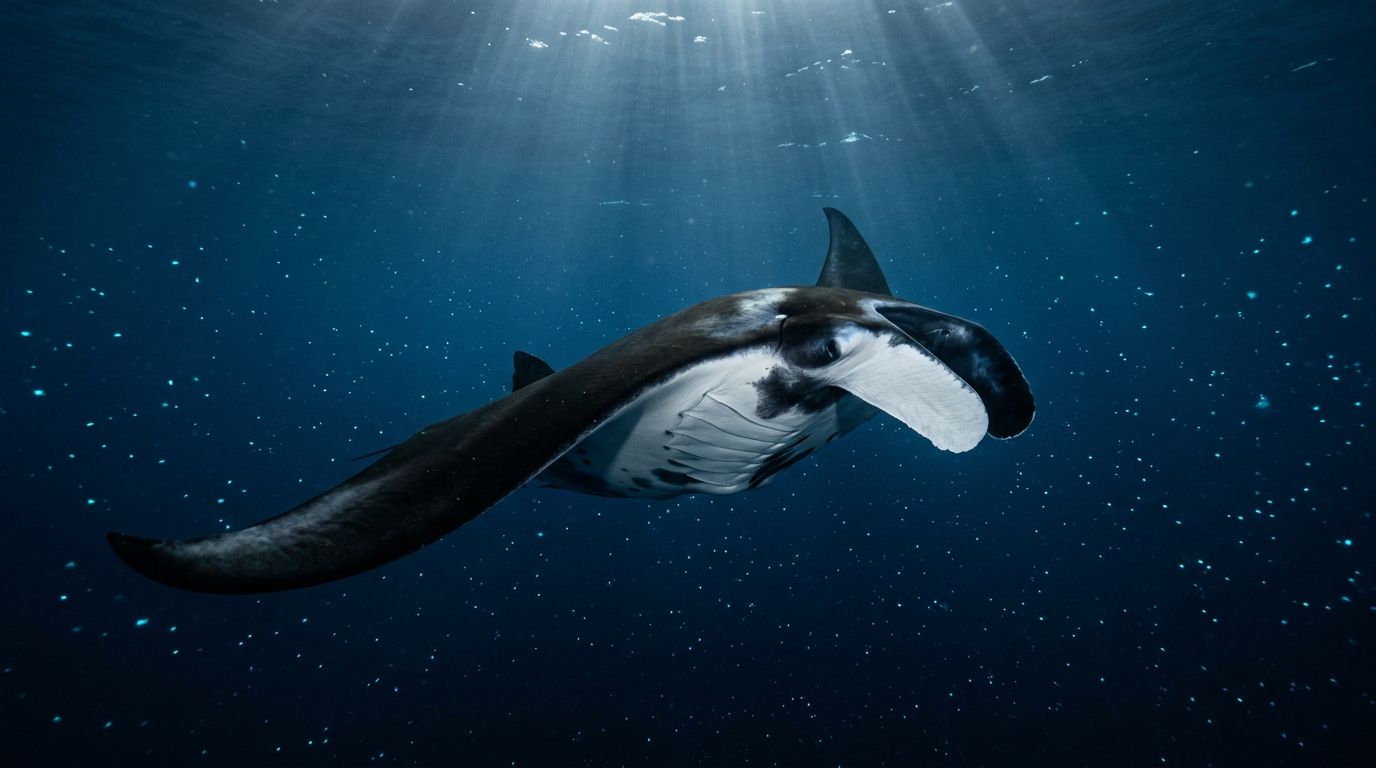
A manta ray can appear to hover in open water, yet its body is constantly managing lift, thrust, and balance. Understanding manta ray swimming helps you read every graceful rise, turn, and glide beneath the surface.
For travelers researching snorkeling Big Island Hawaii, this behavior is more than a science lesson. It explains why mantas circle lights at night, why they keep moving, and how you can watch them without interrupting their natural rhythm. Start with the body mechanics that keep these animals suspended.
Manta Ray Swimming Depends on Dynamic Lift
Manta rays don’t have swim bladders. Instead, they use their broad pectoral fins to create the lift needed to stay in the water column.
As water moves across the fins, the manta’s body gains upward force. The animal adjusts that force by changing the fins’ angle, speed, and wave pattern. A manta can then hold its depth, climb, sink, or travel forward without making sudden movements.
The NOAA giant manta ray profile describes the species as a filter feeder that can reach a wingspan of up to 26 feet. That impressive size comes with a large surface area for generating lift.
Why a manta can’t simply hover
When a manta seems motionless, its fins are usually still making small adjustments. The animal may glide for a moment, but water resistance and gravity continue acting on its body.
A manta that stops producing enough lift will begin to descend. It can slow its fin movement during a controlled sink, then increase the power of each stroke when it needs to regain height.
This constant adjustment is similar to how a bird manages altitude while gliding. The difference is that the manta moves through water, which is denser than air and gives its fins plenty of resistance to work against.
The broad wing does several jobs
The pectoral fins provide more than upward force. They also create forward thrust and help the manta turn.
Their shape is long, flexible, and slightly curved. That design allows the fin to bend during each stroke instead of moving as one rigid panel. The flexible edge helps the manta direct water downward and backward.
A manta that appears to hover is usually still generating lift through small, controlled fin movements.
The Anatomy Behind Stable Depth
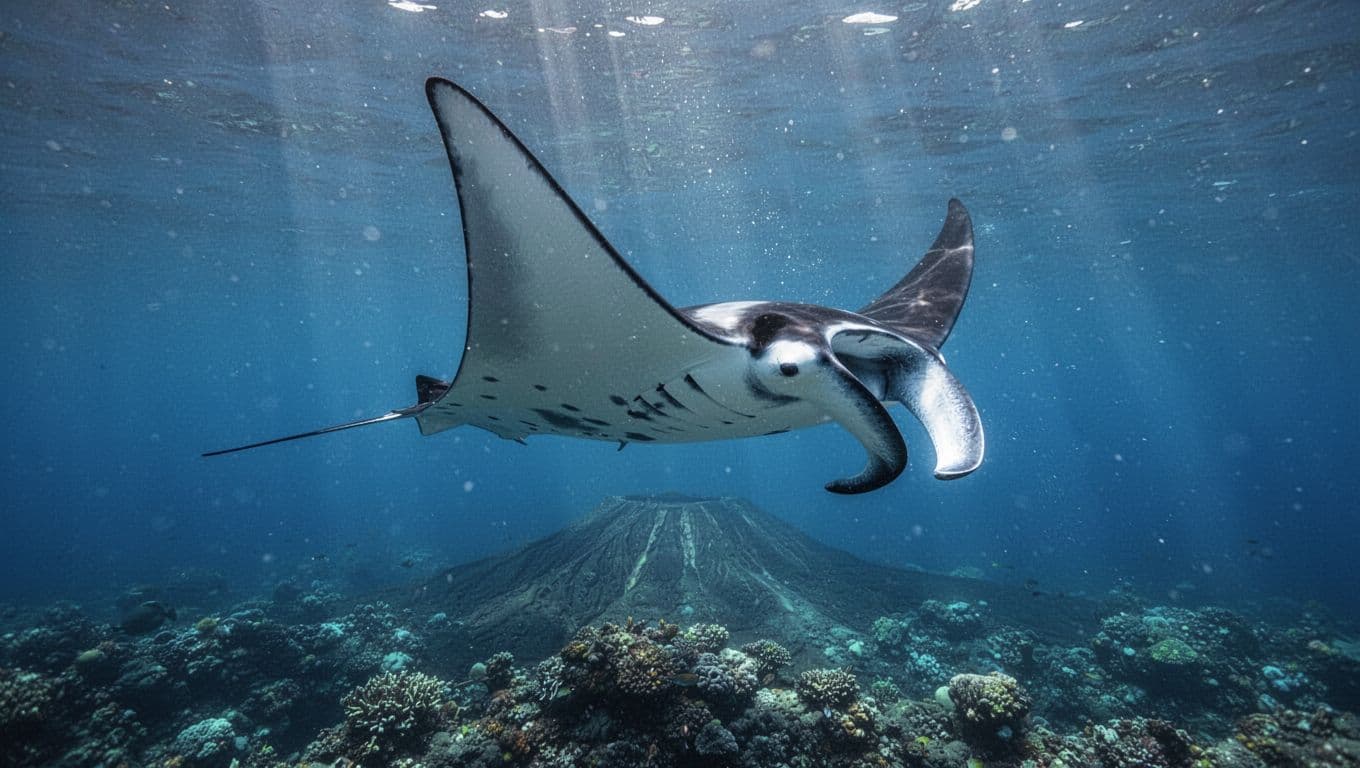
Depth control depends on the whole body, not only the fins. The manta’s head, trunk, tail, and flexible fin edges work together as one swimming system.
Unlike a bony fish, a manta has a cartilaginous skeleton. Its lightweight structure reduces some of the burden of moving a large body through the ocean. However, the animal still needs active swimming to maintain position.
Flexible pectoral fins act as underwater wings
Mantas flap their pectoral fins up and down, or dorsoventrally. The movement creates a traveling wave that passes along the fin. Each part of the fin reaches a slightly different position during the stroke.
The Journal of Experimental Biology research on manta kinematics describes this oscillatory fin movement as the main source of manta propulsion.
Because the fins bend and twist, the manta can adjust lift across its wingspan. One side can produce slightly more force during a turn. Both sides can change together during an ascent or descent.
The head and tail help maintain balance
The manta’s wide head sits at the front of its lifting surface. Its mouth and cephalic lobes change the way water enters the body, while the tail trails behind as a smaller stabilizing structure.
The tail doesn’t work like the propeller on a boat. Instead, it helps maintain directional stability while the pectoral fins provide most of the propulsion.
Small changes in the head angle also affect the body trim. If the front of the manta rises, the animal pitches upward. If the head lowers, the body begins a controlled descent.
How Mantas Rise, Sink, and Cruise
You can understand a manta’s vertical movement by watching three details: fin angle, stroke strength, and body pitch.
A manta doesn’t need a dramatic motion to change depth. A subtle change in its fin cycle can create enough difference in lift to move it several feet higher or lower.
The downstroke adds lift and thrust
During the downstroke, the manta pushes water beneath its fins. That action creates an upward component of force while also moving the animal forward.
If the manta wants to rise, it can increase the amplitude of the fin movement or change the angle of attack. The fins then push more water downward, creating more lift.
When the manta wants to descend, it reduces upward force and changes its posture. It may continue moving forward while allowing its body to settle lower in the water.
A recent hydrodynamic study of manta ray movement uses fluid dynamics to examine how fin motion affects swimming performance. These studies help explain why a manta’s flexible fin shape is so effective.
A traveling wave keeps the movement efficient
The fin doesn’t move through the water with one flat flap. Instead, a wave travels from the front portion toward the outer edge.
That wave spreads force across the fin and reduces the wasted energy that a stiff, rigid stroke would create. The manta can cover distance with fewer abrupt movements.
The AskNature explanation of manta ray movement describes this combination of up-and-down motion and traveling waves along the fins. You can often see the pattern when a manta passes overhead. The leading edge begins the motion, and the outer fin follows with a smooth ripple.
Body Angle Changes the Water Flow
Fin movement supplies the power, but body angle determines where that power sends the manta.
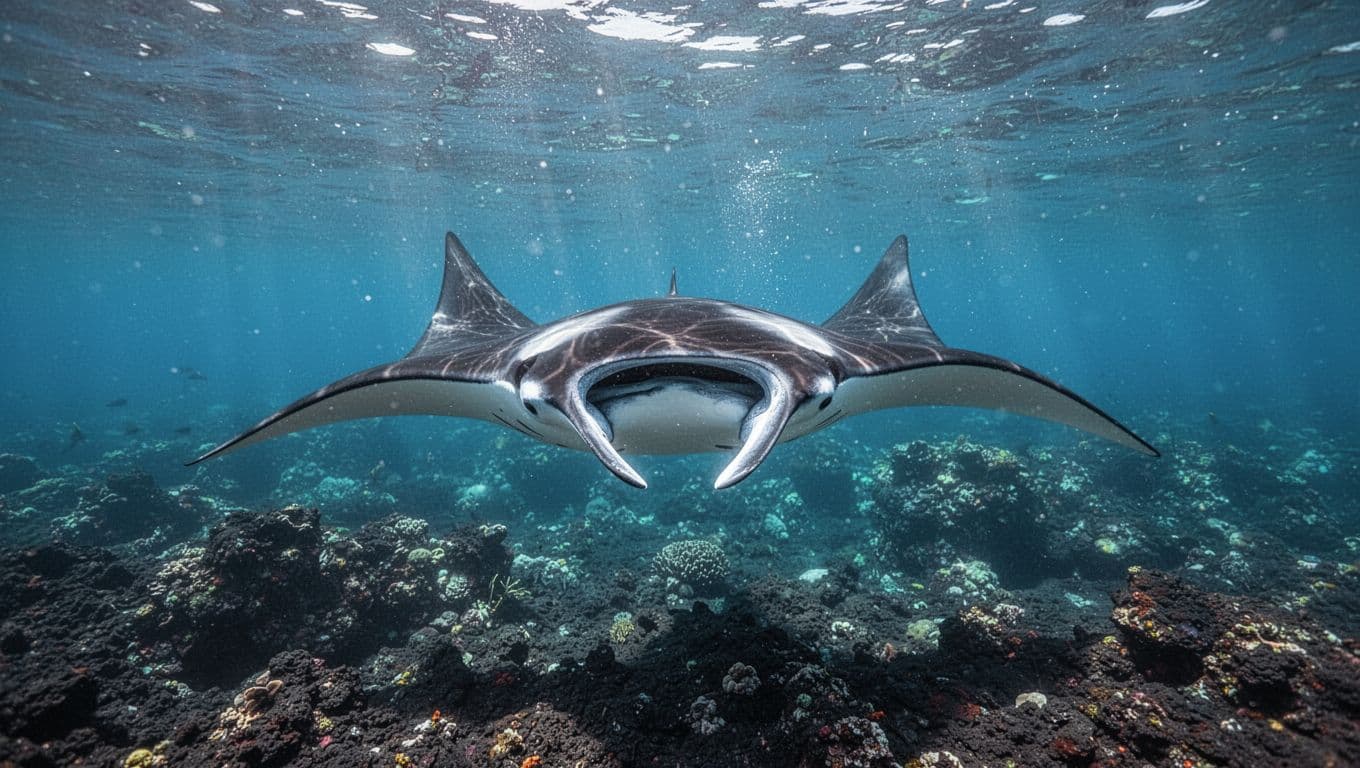
A manta cruising across a reef usually keeps its body close to level. During a climb or descent, it changes pitch and alters the angle of its fins at the same time.
Level posture supports efficient cruising
A level manta presents a smooth profile to the water. Its fins generate enough lift to balance the animal while also producing forward motion.
This posture is common when a manta travels between feeding areas or makes a long pass through open water. The animal looks relaxed because the movement is steady and evenly distributed.
The manta can also bank its body during a turn. One fin may lift while the other drops, causing the animal to roll and curve through the water. The tail follows the turn, but the fins do most of the steering.
Pitch helps the manta change depth
To rise, a manta can angle its body slightly upward while increasing lift. To descend, it can lower the front of its body and reduce the upward force from the fins.
Researchers studying manta hydrodynamics often examine this relationship between pitch, fin movement, and water flow. A numerical hydrodynamic study of manta rays describes swimming as being powered mainly by pectoral-fin flapping.
When you snorkel Big Island waters, watch the animal’s entire outline rather than focusing only on the wing tips. A change in the head angle often appears just before the rest of the body changes depth.
Cephalic Lobes Help Manage Feeding Flow
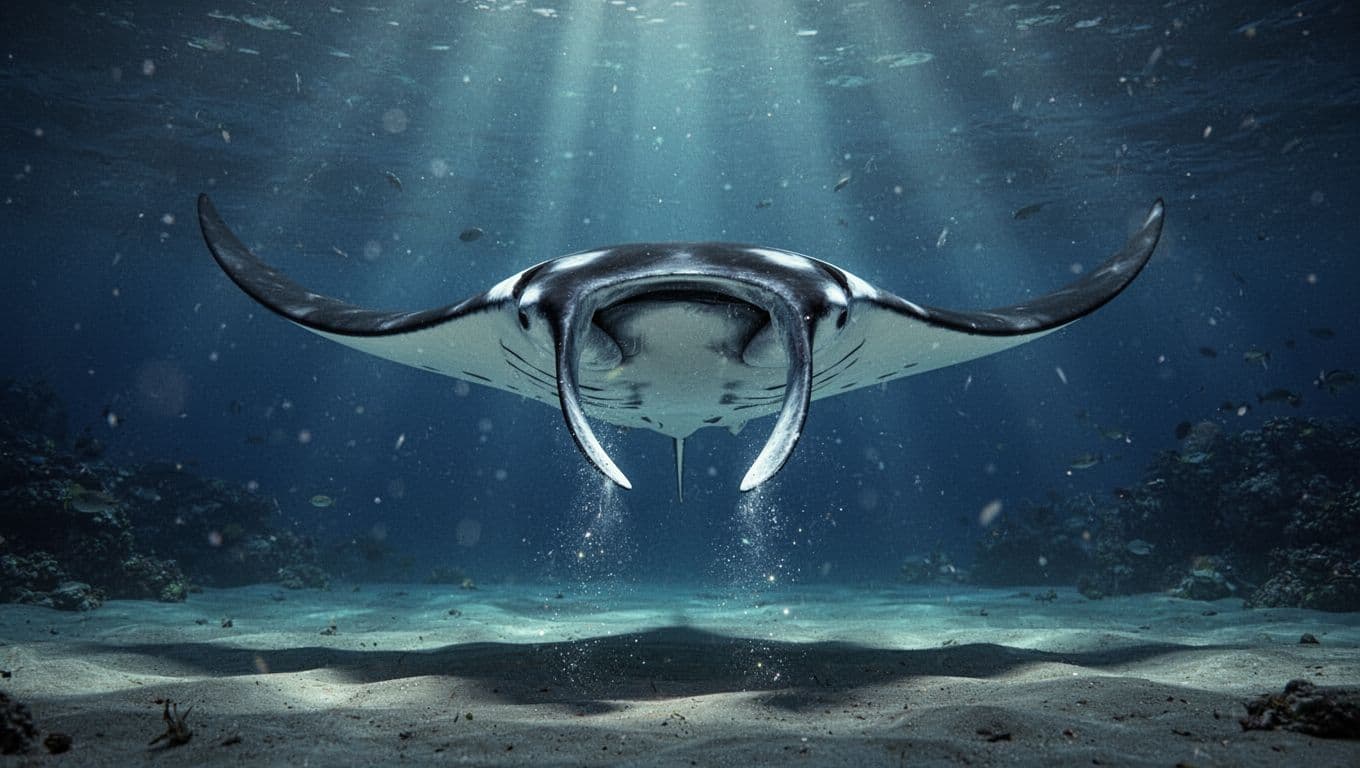
The two curled structures beside a manta’s mouth are called cephalic lobes. They are not decorative horns, and they aren’t the main tools for controlling depth.
Instead, the lobes help direct plankton-rich water toward the manta’s wide mouth. Their position changes with feeding behavior, swimming speed, and water flow.
Open lobes guide plankton toward the mouth
During feeding, the manta may roll its cephalic lobes outward or extend them forward. This arrangement helps channel water into the mouth as the animal moves.
The manta then filters tiny organisms through specialized gill structures called gill rakers. It swallows plankton while releasing filtered water through the gill openings.
Because feeding depends on forward movement, the manta often keeps a steady posture while passing through a dense plankton patch. A smooth, level approach lets the animal process water without wasting energy.
Feeding passes can look repetitive
At a nighttime viewing site, you may see a manta make the same broad turn again and again. That pattern usually reflects a productive feeding area rather than random wandering.
Lights attract plankton near the surface. The mantas follow the food, banking through the illuminated water in repeated arcs. Their bodies may roll slightly as they turn, but their movements remain controlled.
The cephalic lobes can open wider during a feeding pass and fold closer to the head during travel. Watching those changes gives you another clue about what the animal is doing.
Breathing Keeps the Animal Moving
Manta ray swimming is tied to respiration. Mantas rely on water moving across their gills, so forward motion supports both travel and oxygen exchange.
That doesn’t mean every fin stroke has the same purpose. A manta may use a stronger stroke to gain height, then settle into a slower rhythm once it reaches a productive feeding depth.
Ram ventilation links speed and oxygen
As a manta moves forward, water enters through the mouth and passes across the gills. The gills extract oxygen before the water exits through the gill openings.
This arrangement makes swimming speed part of the animal’s breathing strategy. A manta needs to manage its pace carefully, especially while feeding or changing depth.
A sudden stop would disrupt the normal flow of water across the gills. Instead, mantas slow down through gentler strokes and wide turns rather than stopping abruptly in midwater.
Energy affects depth holding
Every ascent requires additional work because the manta must create more lift. A descent can require less active lift, but the animal still controls its posture and direction.
That balance matters during long feeding sessions. The manta needs enough energy to keep water moving across its gills while spending as little effort as possible on unnecessary movement.
Efficient fin waves help solve that problem. They allow the manta to remain active without using the same force on every stroke.
What Manta Ray Swimming Looks Like at Night
Kona’s nighttime manta encounters take place in areas where artificial lights attract plankton. Mantas arrive to feed near the surface, often making repeated passes around the illuminated water.
The animals can appear close enough to touch, but their route through the water is usually deliberate. Their depth changes as they follow plankton and respond to currents.
The looping pattern follows the food
A manta may approach from below, rise toward the light, roll through a turn, and descend before making another pass. The loop lets it sweep through a concentrated area of food.
You may notice that the manta’s fins change shape during each phase. The leading edge lifts during the approach, the body banks during the turn, and the fins flatten as the animal glides away.
The Kona manta ray night snorkel gives you a chance to see these movements in clear, shallow viewing conditions with a guide nearby.
Depth changes reveal the manta’s purpose
A manta close to the light with open cephalic lobes is likely feeding. A manta that rises, rolls, and moves away may be repositioning or following a new concentration of plankton.
You can also distinguish relaxed movement from agitation. Smooth loops, wide turns, and steady fin beats suggest normal behavior. Rapid direction changes or avoidance indicate that the animal wants more space.
Night viewing makes these details easier to notice because the light creates a clear contrast between the manta’s pale underside and the dark water.
How You Can Watch Without Disrupting It
Your position in the water affects the manta’s choices. A calm observer gives the animal room to continue its natural feeding path.
Mantas are wild animals, even when they return to the same Kona sites. Their regular presence doesn’t make touching, chasing, or blocking them safe.
Keep your body still and your hands to yourself
Stay near your group and follow your guide’s position instructions. Keep your hands relaxed, and never reach toward a manta as it passes.
Avoid kicking toward the animal. Strong splashing can change the water flow around it and may cause the manta to turn away.
If a manta approaches you, remain still and let it choose the distance. The animal can bank away at any time, even if it appeared to be heading directly toward you.
The best viewing position is one that lets the manta keep its normal feeding route without avoiding you.
Protect the water around the viewing site
Use reef-safe habits throughout your trip. Don’t stand on coral, collect marine life, or leave anything in the water.
Follow local operator rules about flotation devices, lights, and group spacing. Authorized guides know the viewing area and can help you recognize normal behavior without crowding the animals.
These choices also protect the plankton-feeding habitat that brings the mantas to the coast.
Planning a Kona Manta Snorkel
Kona manta viewing is generally available year-round, but conditions change with wind, swell, water clarity, and current. Calm evenings often provide the easiest experience for swimmers and families.
If snorkeling Big Island Hawaii is part of your trip, choose an operator that treats safety and wildlife care as equal priorities.
Choose a guide who explains the animals
Kona Snorkel Trips follows a “Reef to Rays” philosophy with small-group ocean adventures, lifeguard-certified guides, quality snorkeling equipment, and reef-safe practices. The company also uses custom-built lighted boards for nighttime manta encounters.
For a broader look at its Big Island snorkeling tours, you can compare manta outings with reef trips and private options. Another dedicated option is Manta Ray Night Snorkel Hawaii, which focuses on nighttime manta encounters along the Kona coast.
If you want to see whether dates fit your itinerary, you can check availability for Kona Snorkel Trips.
Match the trip to your group
A dedicated manta tour works well if your main goal is to study feeding behavior after dark. You can check availability for a manta ray night snorkeling trip.
Private groups may prefer a private Kona boat charter with more control over timing and pace. A daytime Captain Cook snorkeling tour adds a reef-focused experience at Kealakekua Bay. You can also check avaialbility for that outing.
Conclusion
Manta ray swimming depends on active control rather than passive floating. Broad pectoral fins create lift and thrust, body pitch changes depth, cephalic lobes direct feeding flow, and steady movement supports breathing.
When you watch a manta in Kona, look for the details behind the graceful motion. A gentle fin wave, slight change in pitch, or repeated feeding loop shows an animal making precise adjustments in a moving ocean. Give it room, stay calm, and you’ll see how much control exists inside every glide.