
Manta Ray Swimming: Cephalic Fins and Feeding
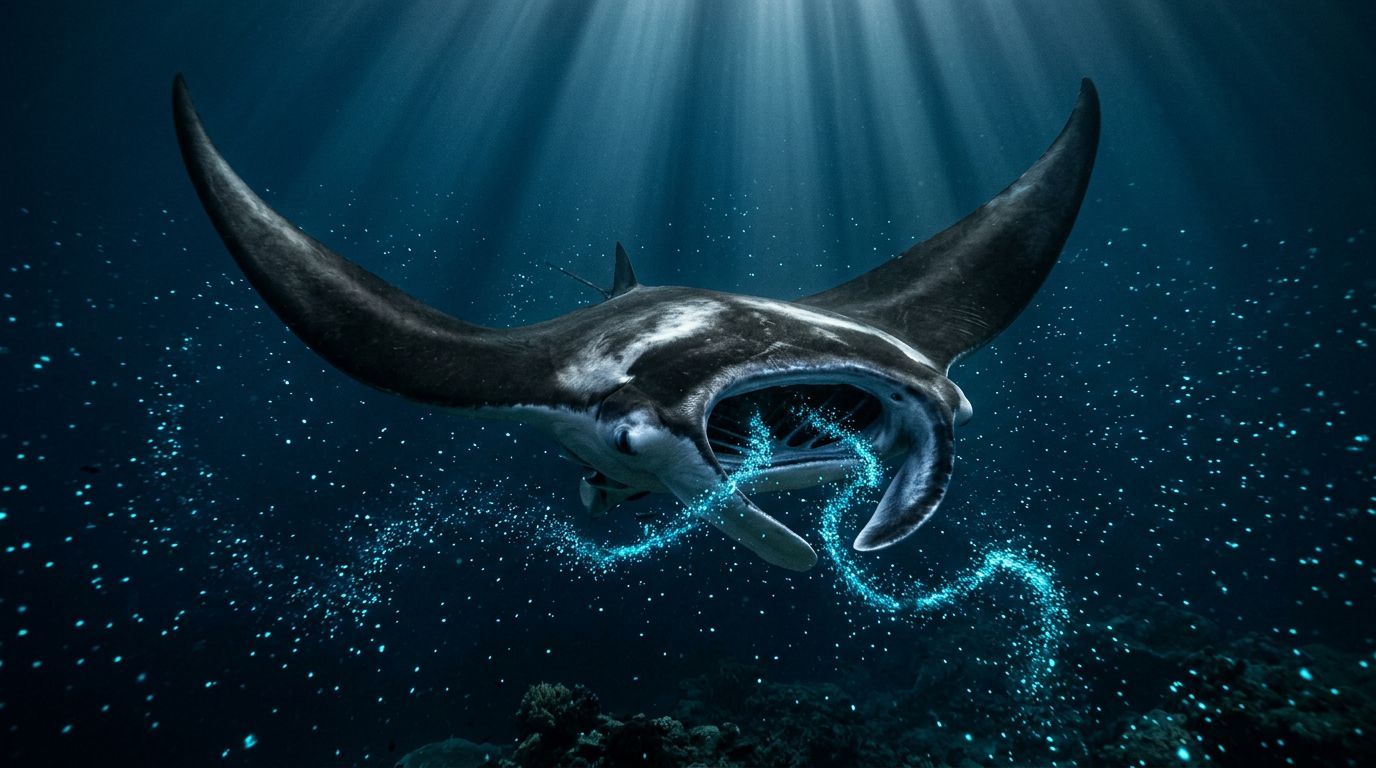
A manta ray can look as if it’s flying underwater, but every wingbeat helps it find and collect microscopic food.
Manta ray swimming becomes especially fascinating when you watch the animal feed. Its broad pectoral fins create lift and forward motion, while the paired cephalic fins beside its mouth guide plankton-rich water into its filtering system.
In Kona, Kona Snorkel Trips builds its ocean adventures around a “Reef to Rays” philosophy, with small-group tours, lifeguard-certified guides, and custom lighted boards for nighttime manta encounters. Another dedicated local option is Manta Ray Night Snorkel, which focuses on observing these animals after sunset.
Once you know what the head fins do, every turn, roll, and glide becomes easier to understand.
How manta ray swimming underwater powers feeding
Manta rays are cartilaginous fish, related to sharks and skates. Their bodies are built for movement through open water, and their swimming style helps them feed without chasing individual prey.
Broad wings create steady movement
A manta ray’s large pectoral fins provide most of its propulsion. Instead of moving a tail from side to side like many fish, the manta sweeps its wings through the water in broad, controlled strokes.
The downstroke provides power. During the recovery phase, the fins rise smoothly before beginning another stroke. This pattern lets the manta travel efficiently while keeping its body stable.
That stability matters during feeding. The manta needs to keep its mouth positioned in a productive current, often while changing direction or adjusting its depth. Small movements in the wings can alter its angle without interrupting the flow of water.
When plankton becomes more concentrated, a manta may slow down, circle, or repeat the same pass. Its movements can appear graceful and relaxed, but the animal is constantly adjusting its body to stay in the food source.
The mouth and gills work as a filter
A manta ray feeds by filtering tiny organisms from seawater. It opens its wide mouth while swimming forward, allowing water and plankton to enter together.
Inside the mouth, specialized structures near the gill arches separate food from water. The plankton remains available as food, while filtered water passes out through the gill openings.
The NOAA giant manta ray overview describes how mantas open their mouths wide and use their cephalic fins to form a funnel for feeding. This design lets the ray process large volumes of water without biting, tearing, or pursuing prey.
Cephalic fins guide water into the mouth
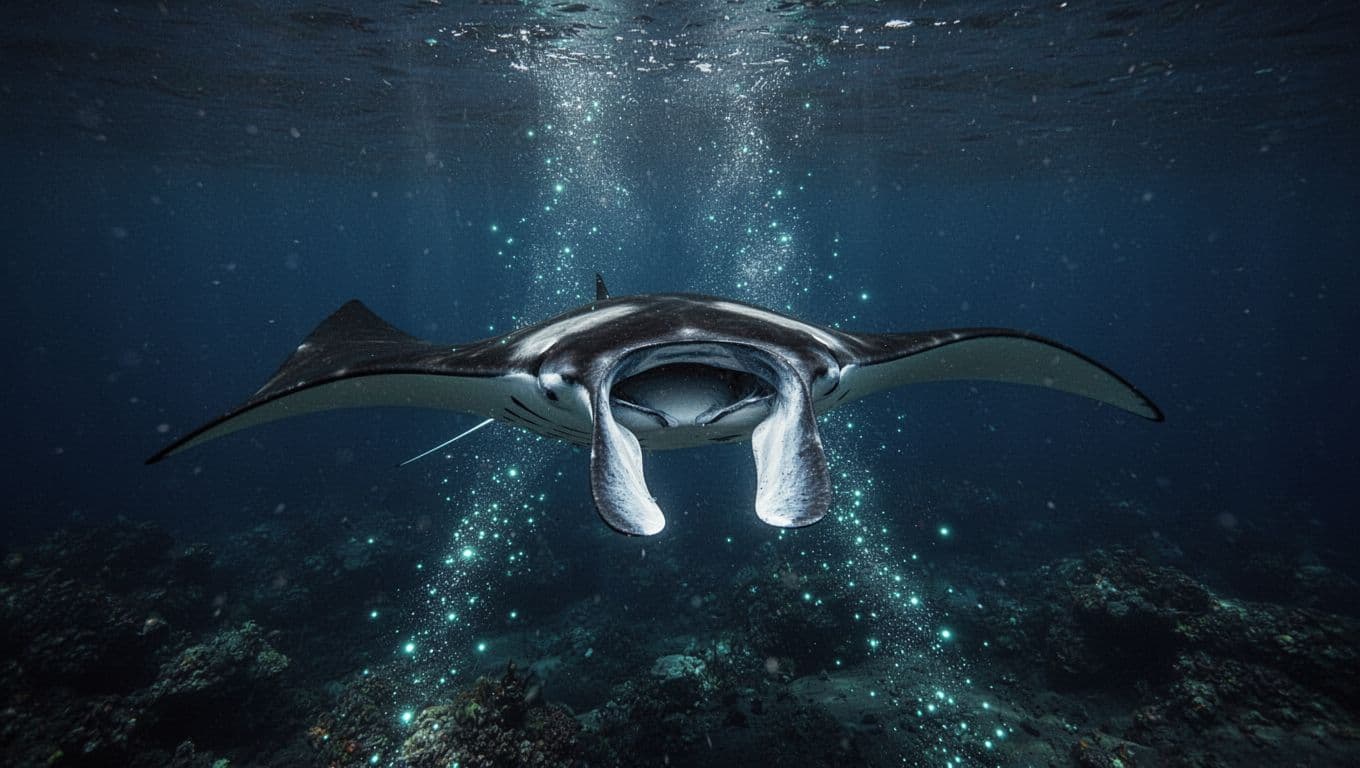
The most distinctive feature in a feeding manta ray may be the pair of flexible lobes beside its head. These structures are commonly called cephalic fins or cephalic lobes.
They aren’t decorative horns. Their shape and position help control water flow as the manta approaches a plankton patch.
Folded fins reduce drag while cruising
When a manta ray travels between feeding areas, it often rolls the cephalic fins inward. The fins may look like narrow tubes or curled ribbons beside the mouth.
This folded position creates a smoother profile. It also keeps the lobes out of the strongest water flow when the manta is moving quickly.
The manta can then unfurl the fins when it reaches a feeding area. Because the lobes are flexible, the animal can change their angle while swimming instead of relying on one fixed position.
You may see one lobe extend before the other, or both lobes curl forward at the same time. These movements can help the manta adjust its feeding direction.
An open “O” shape creates a funnel
During active feeding, the cephalic fins can extend forward and curve inward. Together with the open mouth, they create a funnel that directs water and plankton toward the filtering structures.
The fins help the manta capture water from the area directly ahead of its head. They also give the animal more control when it changes its swimming angle.
A manta may approach a light, turn sharply, and then pass across the plankton concentration with its lobes extended. On another pass, it might fold the fins slightly and adjust its head position.
During feeding, the cephalic fins can form an “O” shape that helps funnel water into the mouth, according to NOAA.
The lobes may have other functions as well. Research discussed by Marine Megafauna Foundation examines whether cephalic lobe movements also help mantas sense their surroundings or communicate during social behavior.
Why manta ray swimming changes during a night snorkel
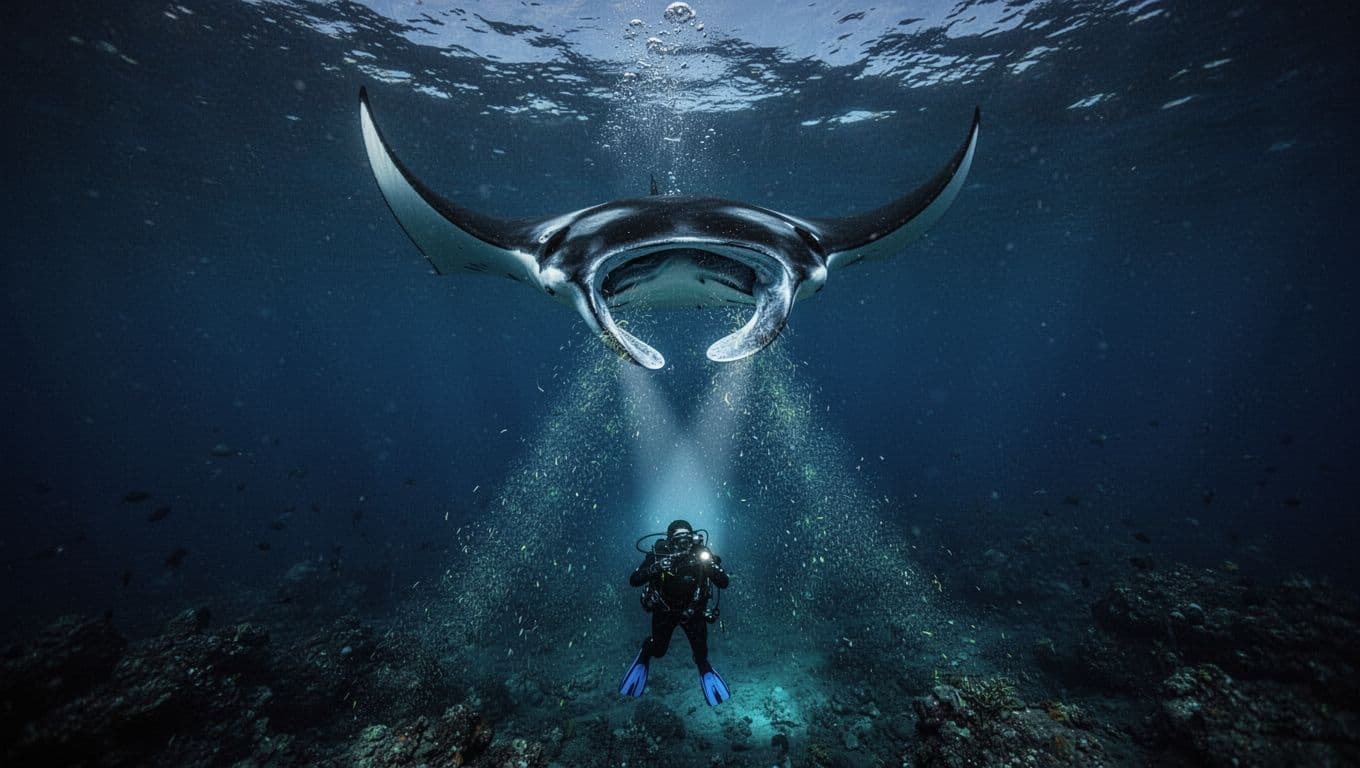
Nighttime observation gives you a clear view of feeding because tour lights gather attention in a limited area. The lights illuminate small organisms in the water, creating a productive feeding zone for mantas that are already moving through the area.
Light concentrates plankton near the surface
Plankton responds to light and water movement. When a bright underwater light shines upward, tiny organisms may gather in the illuminated water.
Mantas can then approach the area and make repeated passes. They may swim directly toward the light, turn across it, or rise from below with their mouths open.
The exact pattern changes throughout the encounter. A manta might make a slow loop, perform a barrel roll, or swim in a wide circle before returning to the feeding zone. These movements help it stay near the densest food.
The Manta Trust’s information on mobulid behavior covers feeding, cleaning, and other behaviors in manta and devil rays. It also explains why the animals’ cephalic fins become more visible when they open their mouths to feed.
Surface viewers can read the feeding posture
Most snorkelers watch from the surface while a guide positions the group near the light source. You may see the manta’s pale underside, open mouth, gill openings, and cephalic fins as it rises below you.
Pay attention to the head rather than only the wings. Rolled fins often appear during travel. Extended fins usually indicate that the manta is preparing to collect water and plankton.
A feeding manta can pass close to the viewing area, but you should never reach toward it. Keep your arms relaxed, follow the guide’s position, and allow the animal to choose its own path.
How to watch manta rays without disturbing feeding
A good manta encounter depends on the animal’s behavior, water conditions, and the way your group enters the ocean. You can improve the experience by choosing a professional operator and following simple wildlife etiquette.
Choose a guide who prioritizes safety
Kona Snorkel Trips uses small-group snorkeling tours, quality equipment, and Lifeguard Certified guides. The company also provides flotation support and wetsuits for nighttime manta trips, which can help you remain calm and comfortable in dark water.
The guides explain how to enter, where to position yourself, and how to keep clear of the manta’s path. That guidance is especially useful if you’re new to night snorkeling or traveling with family members.
The company’s lighted boards attract plankton without requiring anyone to chase or touch the animals. Its reef-safe approach also includes education about volcanic reef ecosystems and responsible ocean behavior.
For a guided outing from Kailua-Kona, you can view Big Island snorkeling tours or check availability before choosing your date.
Give the manta room to turn
Mantas have excellent control, but a crowded viewing area can restrict their movements. You can help by staying in your assigned position and avoiding sudden kicks or dives.
Keep your fins below the surface when possible. Avoid touching the ray, blocking its path, or swimming directly above its back. The best encounters happen when you remain still enough for the animal to pass naturally.
If the manta turns away, let it go. Wildlife viewing works best when you observe behavior instead of trying to create a closer approach.
For a manta-focused outing, you can book a Kona manta ray night snorkel or check availability.
Planning a manta experience on the Big Island
A night manta tour fits well after a daytime ocean activity, but you should leave enough time to rest, eat, and arrive at the marina without rushing.
For travelers planning snorkeling Big Island Hawaii adventures, Kona’s west-side waters offer a practical base for evening wildlife tours. Sunset timing, ocean conditions, and the seasonal schedule can affect departure times, so check the current tour details before booking.
You can snorkel Big Island reefs during the day, then return to the water after dark for a completely different experience. Daytime snorkeling focuses on reef fish, coral habitat, and clear coastal scenery. The night encounter centers on plankton, light, and manta behavior.
Families and couples may prefer a standard small-group trip. If you want more control over timing or group space, private manta ray snorkeling can offer a more personal format.
When you’re planning a snorkeling Big Island itinerary, keep the wildlife experience flexible. Mantas are wild animals, and their behavior can change with currents, food distribution, and water conditions.
A snorkeling Big Island trip also gives you a chance to compare how marine animals use different habitats. Reef fish stay close to structure, while manta rays move through open water in response to food.
What to remember about manta ray feeding
Manta ray swimming is a coordinated process. The wings create lift and forward motion, the open mouth collects seawater, and the cephalic fins guide that flow toward the filtering system.
When the fins curl beside the mouth, the manta may be cruising. When they extend forward into a rounded shape, the animal is often preparing for another feeding pass.
That small change in posture gives you a useful way to read the encounter. Watch the head, stay calm at the surface, and let the manta control the distance.
Conclusion
Manta rays don’t swim underwater without purpose. Each wingbeat helps them hold position, move through plankton-rich water, or return to a productive feeding area.
Their cephalic fins make that feeding more efficient by directing water into the mouth. Once you recognize the difference between folded and extended fins, manta ray swimming becomes much easier to understand.
The most respectful encounter gives the animal room to move while giving you time to watch its natural feeding pattern.