
Manta Ray Sounds: Do They Make Noise in Hawaii?
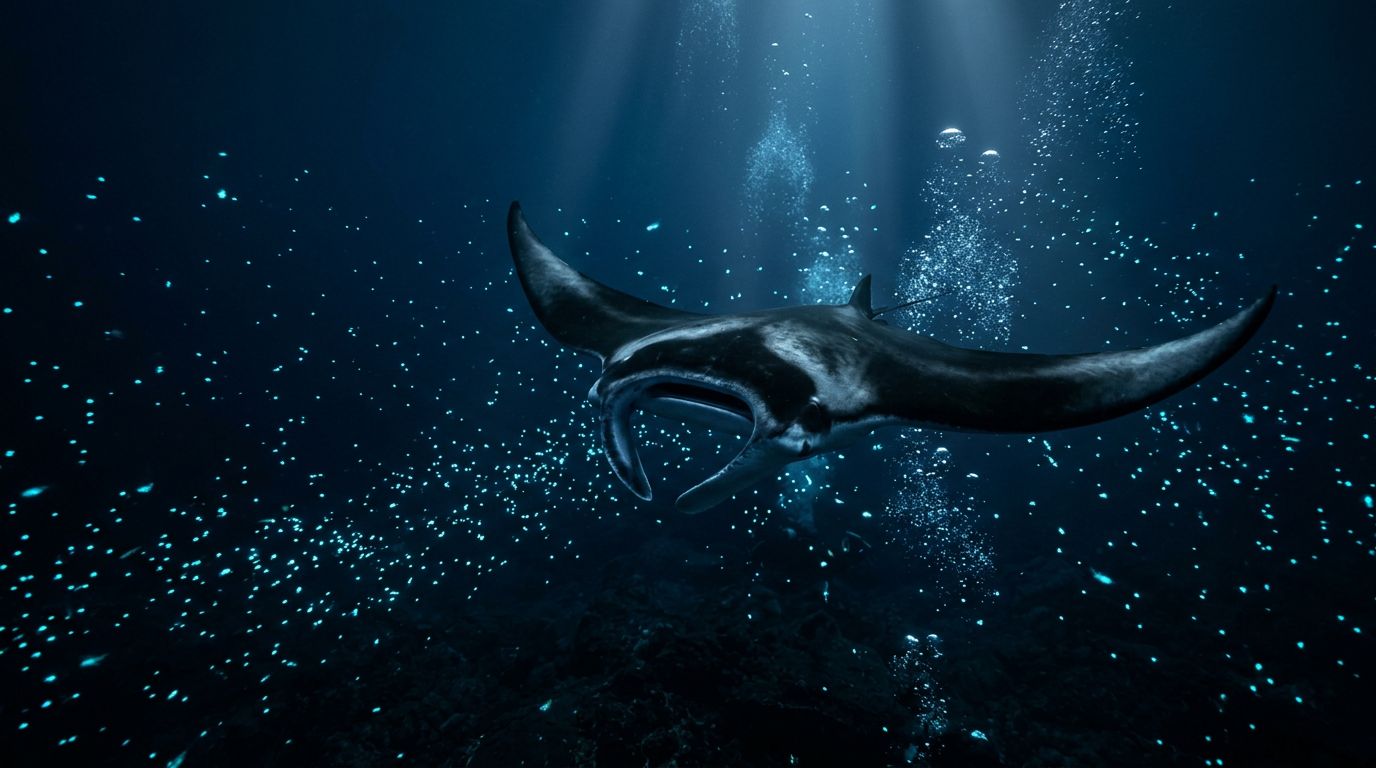
A manta ray can glide within a few feet of you without making an obvious sound. The mystery around manta ray sounds often starts during a nighttime encounter, when the ocean feels unusually quiet.
If you’re planning snorkeling Big Island Hawaii adventures, you may wonder whether the rays are calling, clicking, or reacting to swimmers. Kona Snorkel Trips helps you observe these animals calmly while guides explain what you’re seeing and hearing. The answer becomes clearer when you separate a manta’s movement from true animal vocalization.
Manta ray sounds: what science can actually confirm
There is no well-established scientific evidence that manta rays produce deliberate vocalizations for communication. Researchers have not confirmed a specialized sound-producing organ in manta rays, nor have they identified a repeatable manta call, song, click, or grunt.
Manta rays are cartilaginous fish, related to sharks and other rays. They don’t have a swim bladder, an organ that helps some bony fish produce or amplify sound. Their bodies are built for efficient gliding and filter feeding, not for creating obvious acoustic signals.
That doesn’t mean a manta ray can never create noise. Any large animal moving through water can produce pressure changes and turbulence. A wingbeat, sudden turn, contact with equipment, or surface movement could create a sound. However, an incidental noise isn’t the same as a vocalization.
This distinction matters because many underwater audio clips receive dramatic labels online. A strange thump or clicking sound might come from a boat, a diver’s equipment, reef fish, snapping shrimp, or the recording device itself. Without controlled testing, video confirmation, and repeated observations, you can’t reliably identify the source as a manta ray.
No confirmed manta vocalization means a recording needs more than a mysterious sound and a nearby ray.
During a Kona night snorkel, you should expect to see manta rays feeding around underwater lights. You shouldn’t expect them to speak in a way that human swimmers can recognize.
Why you rarely hear manta ray sounds in Hawaii
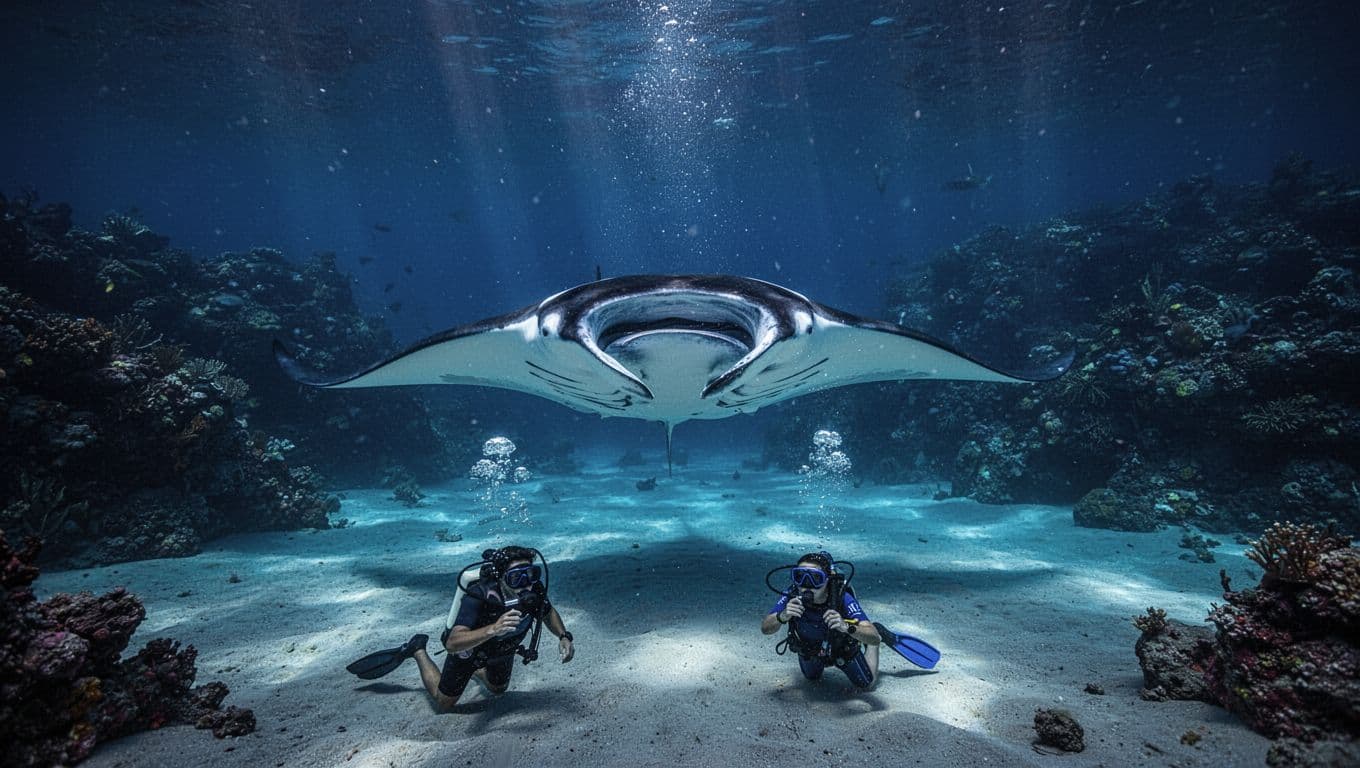
Kona’s nighttime manta encounters take place in open seawater, where several factors make animal sounds difficult to isolate. You may float above the reef while a manta circles below, but even a nearby animal can remain acoustically hard to detect.
Manta rays usually move in smooth, sweeping passes. Their broad pectoral fins generate lift with slow, controlled movements instead of the rapid strokes associated with splashing or sudden pursuit. Their feeding behavior also involves gliding through plankton-rich water with their mouths open.
Water carries sound efficiently, but that doesn’t mean every sound is easy for you to hear. Distance, currents, swell, boat traffic, bubbles, and your own breathing can cover low-level noises. A manta may also pass outside the strongest part of your hearing range.
Movement is different from communication
A ray’s body can disturb the water without producing a recognizable call. You might notice a soft rush as it turns near a light board, but that sensation could come from water movement rather than a sound made intentionally by the animal.
At night, your visual attention also changes your sense of the encounter. The beam of a light reveals the manta in short, dramatic passes. Your ears pick up breathing and surface noise while your eyes follow the animal. That combination can make the experience feel silent, even though the water contains constant activity.
The quiet is part of the appeal. You hear your breathing, the bubbles from nearby swimmers, and the soft movement of the ocean. Meanwhile, the manta continues feeding without needing to announce its presence.
What you may hear while snorkeling at night
When you snorkel Big Island waters after sunset, the most noticeable sounds usually come from people and equipment. A snorkel valve may hiss. A mask strap can squeak against a snorkel. Fins can create a soft swish, while bubbles sound surprisingly loud beneath the surface.
The reef also has its own soundtrack. Snapping shrimp create sharp pops, and some fish produce low pulses, knocks, or grunts. A boat engine may travel through the water even when the vessel seems far away. Current moving across rock can add a steady rushing sound.
This quick guide can help you interpret common noises during a manta encounter.
| What you hear | Likely source | What it tells you |
|---|---|---|
| Repeated bubbles or hissing | Snorkelers and scuba equipment | Someone nearby is breathing or adjusting gear |
| Sharp pops and crackles | Snapping shrimp or reef activity | Small reef animals are active around the structure |
| Low rumble or vibration | Boat engines or generators | Mechanical noise is traveling through the water |
| Soft rushing sound | Fins, current, or a manta’s movement | Water is moving, but the source may be difficult to identify |
| Isolated click on a recording | Equipment, reef animals, or interference | The clip needs more evidence before it can be linked to a manta |
While snorkeling Big Island reefs, try to notice the whole soundscape instead of focusing on one unexplained noise. You may hear something unusual, but unusual doesn’t automatically mean it came from the animal in front of you.
Can manta rays hear snorkelers?
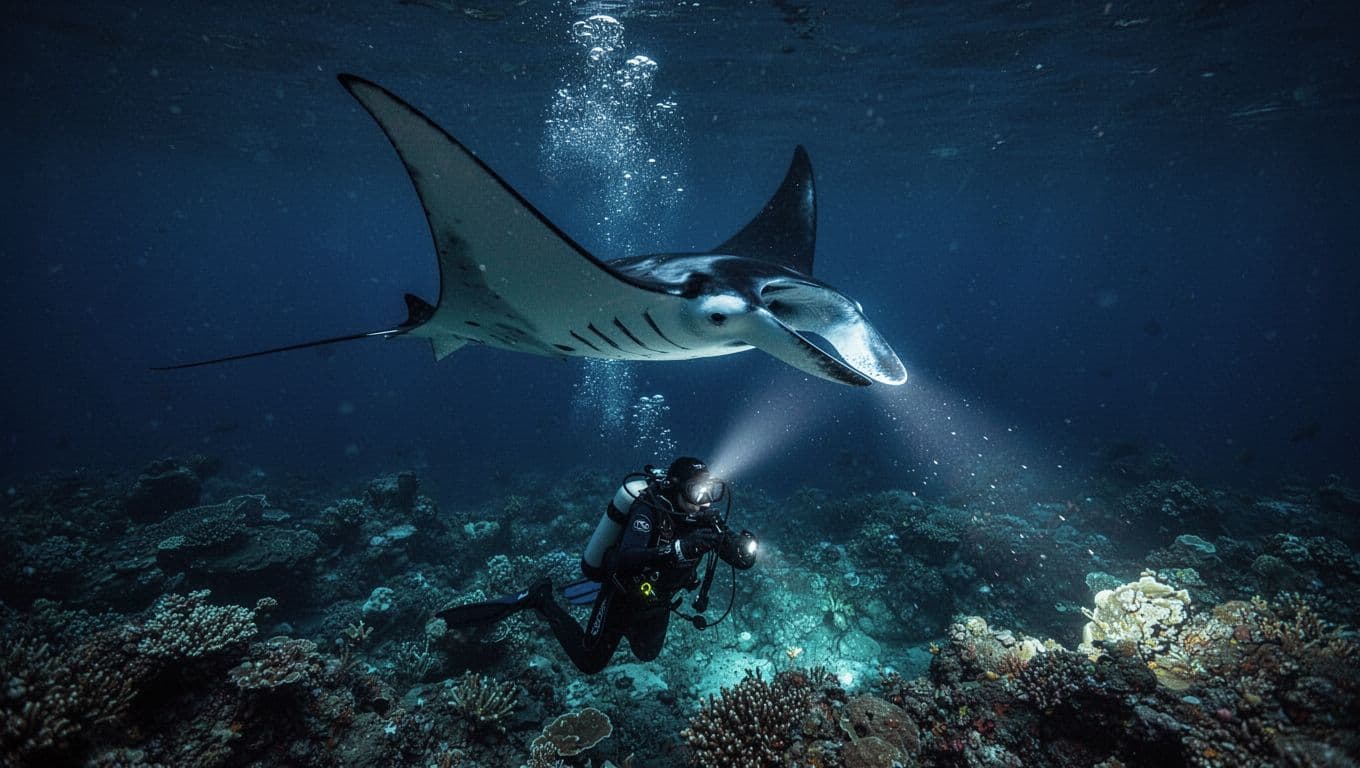
Manta rays can detect sound and water movement, although their hearing works differently from yours. They don’t have external ears. Instead, they rely on inner-ear structures and sensory systems along the body to detect vibrations and changes in pressure.
Their lateral line system helps them sense movement in the surrounding water. This ability can help a manta notice nearby swimmers, fins, boats, and sudden changes in current. A manta doesn’t need to hear a conversation to know that something is close.
That sensitivity is one reason responsible behavior matters. Loud splashing, rapid fin kicks, chasing, or attempts to touch a ray can change the animal’s movement. The manta may turn away, dive deeper, or leave the lighted feeding area.
You can reduce your impact by keeping your body still, using slow fin movements, and following the guide’s position instructions. Keep your hands to yourself, even if a manta passes within reach. Touching can remove protective mucus from the animal’s skin and can also put you in an unsafe position.
Your voice matters less underwater than your body movement and equipment noise. Talking through a snorkel is difficult anyway, so focus on steady breathing and relaxed movement. The calmer you remain, the easier it is to watch natural behavior.
Manta rays don’t need to approach you for the encounter to be successful. A wide pass can reveal the animal’s wing shape, cephalic fins, feeding posture, and graceful changes in direction. Giving the ray space also helps it continue feeding without interruption.
How hydrophones separate real sounds from ocean noise
A hydrophone is an underwater microphone designed to detect pressure changes in water. Marine researchers use hydrophones to record reef soundscapes, fish activity, vessel noise, and other underwater events.
The challenge is identifying the source. A recording may capture several sounds at once, especially near a reef or boat. Researchers compare timing, frequency, repetition, direction, and environmental conditions before assigning a sound to a particular animal.
Long-term hydrophone research, such as this study of vocal fish communities, shows how many biological sounds can exist in one underwater environment. The presence of a fish in a recording area doesn’t prove that every sound came from that fish.
Research into biological underwater clicks also shows why source identification matters. A click may be biological, mechanical, geological, or caused by recording conditions. Scientists need more than a sound that resembles a familiar noise.
A convincing manta sound study would need several safeguards:
- Researchers would record with calibrated hydrophones placed at known distances.
- Cameras would confirm the manta’s position and behavior at the exact moment of the sound.
- The team would compare recordings from multiple locations and encounters.
- Boat engines, divers, reef animals, and equipment would be recorded separately.
- The pattern would need to repeat under similar conditions.
No widely accepted body of research has established a recognizable manta ray call. Until that evidence exists, you should treat online claims with curiosity rather than certainty.
What a responsible Kona manta tour feels like
Kona Snorkel Trips builds its manta experiences around safety, education, and reef protection. The company uses small-group trips, state-of-the-art snorkeling equipment, and custom-built lighted boards that attract plankton after dark. Lifeguard-certified guides help you manage the water, understand manta behavior, and keep a respectful distance.
The company’s vessel, the Orca, is a well-maintained rigid inflatable boat with shade and an open bow. Most tours cap groups at 18 guests, which gives guides more room to monitor swimmers and answer questions. You can learn more about these small-group Kona snorkeling tours before choosing an excursion.
A second manta-focused option is Manta Ray Night Snorkel Hawaii, which also centers nighttime observation along the Kona coast. Whichever company you choose, look for clear safety instructions, properly maintained gear, and a wildlife policy that prohibits touching or chasing rays.
If you want to plan a night encounter with Kona Snorkel Trips, you can check availability for the manta ray snorkeling tour.
The experience is visual first. You watch rays circle, bank, and rise through the light beams. Your guide can explain feeding behavior and local conditions, but the animals don’t need to make a sound for you to understand their presence.
How to listen without disturbing the animals
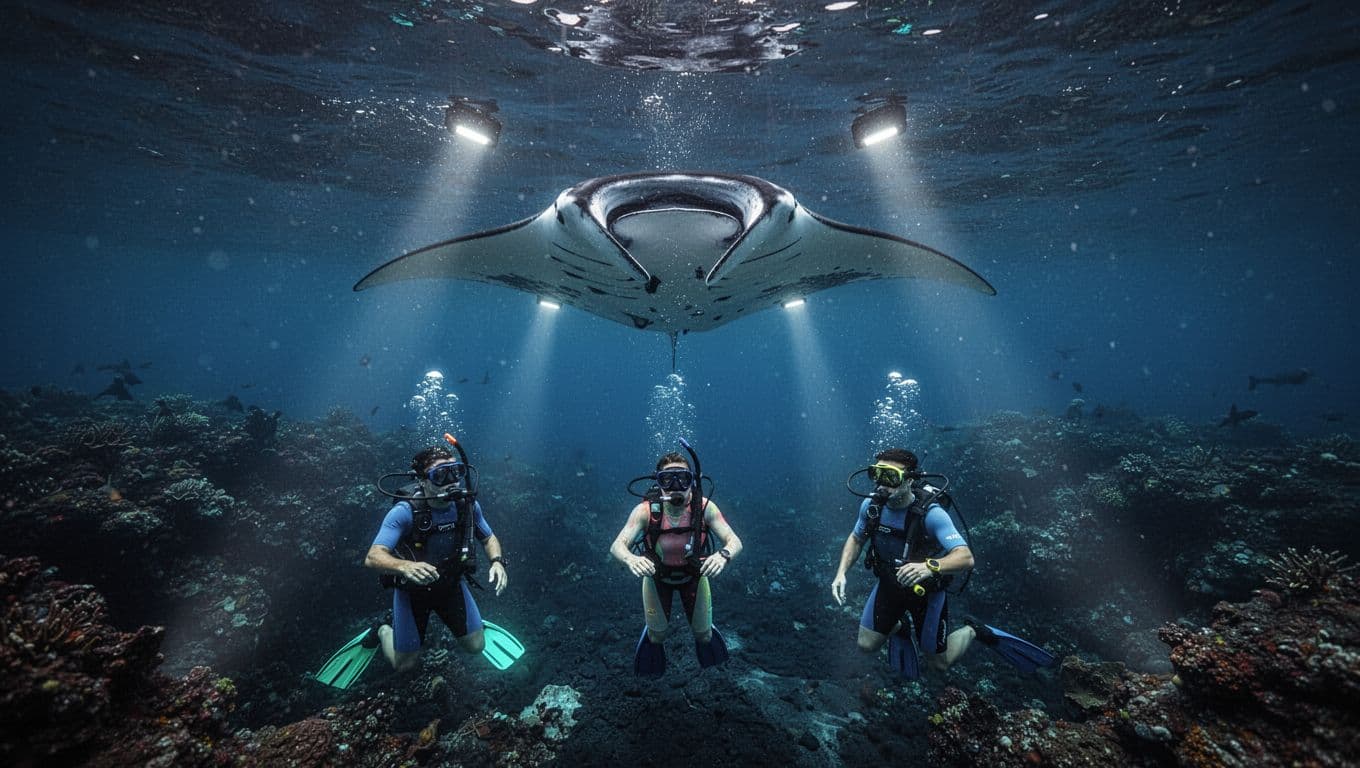
You can pay attention to the ocean’s sounds while protecting the manta encounter. Start by asking your operator how the trip handles swimmer spacing, flotation, lighting, and wildlife interactions. A good briefing should explain where you can position yourself and what to do if a manta swims close.
Once you’re in the water, keep your movements smooth. Avoid diving toward a ray, blocking its path, or kicking hard to follow it. If the animal changes direction, let it go rather than trying to regain a close view.
Your lights should stay where the guide places them. Do not shine a personal light directly into a manta’s eyes or use a camera flash at close range. Bright, sudden beams can disrupt the calm feeding area.
You can also protect your own hearing and comfort by managing your equipment before entering the water. Adjust your mask, snorkel, and fins on the boat. Once you begin, avoid unnecessary splashing and keep your breathing slow.
If you hear a pop, thump, or low vibration, note the timing and what was happening around you. Did a boat pass? Did another swimmer kick? Were you near a reef wall? These details are more useful than immediately labeling the noise as one of the manta ray sounds you hoped to hear.
A responsible tour leaves the animal in control of the encounter. You get the best view when you stay calm, maintain space, and let the manta choose its path.
For a manta-specific booking option, use the dedicated manta tour availability link only after confirming the tour details and conditions that fit your group.
What you should expect during a Hawaiian manta encounter
You may hear plenty during a night snorkel, but a clear manta call is not part of the established experience. Your breathing, bubbles, reef animals, boat traffic, and water movement create most of the audible activity.
The most memorable moments usually come through sight and proximity. A manta may sweep beneath your board, turn on its side, or rise through the light while feeding. Its size and controlled movement communicate more than a recorded click ever could.
When you search for manta ray sounds, look for evidence that separates the animal from the surrounding ocean. A compelling claim should include reliable recording equipment, confirmed animal behavior, and repeated results. Until researchers document that pattern, treat mysterious audio as an open question.
For your own trip, focus on calm observation. Keep your distance, follow your guide, and let the manta decide how close it wants to come. Those choices protect the animal and give you a clearer view of one of Hawaii’s most remarkable nighttime encounters.
Conclusion
Manta rays in Hawaii have no confirmed vocal language that snorkelers can reliably hear. They may create incidental water movement and share the reef with many noisy animals, but a mysterious underwater click doesn’t prove that a manta made it.
The best way to experience these animals is to stay still, listen to the full ocean soundscape, and respect the ray’s space. In a quiet Kona night, the absence of obvious manta ray sounds makes every graceful pass feel even more personal.