
Can You Use a Full-Face Mask for Manta Snorkeling?
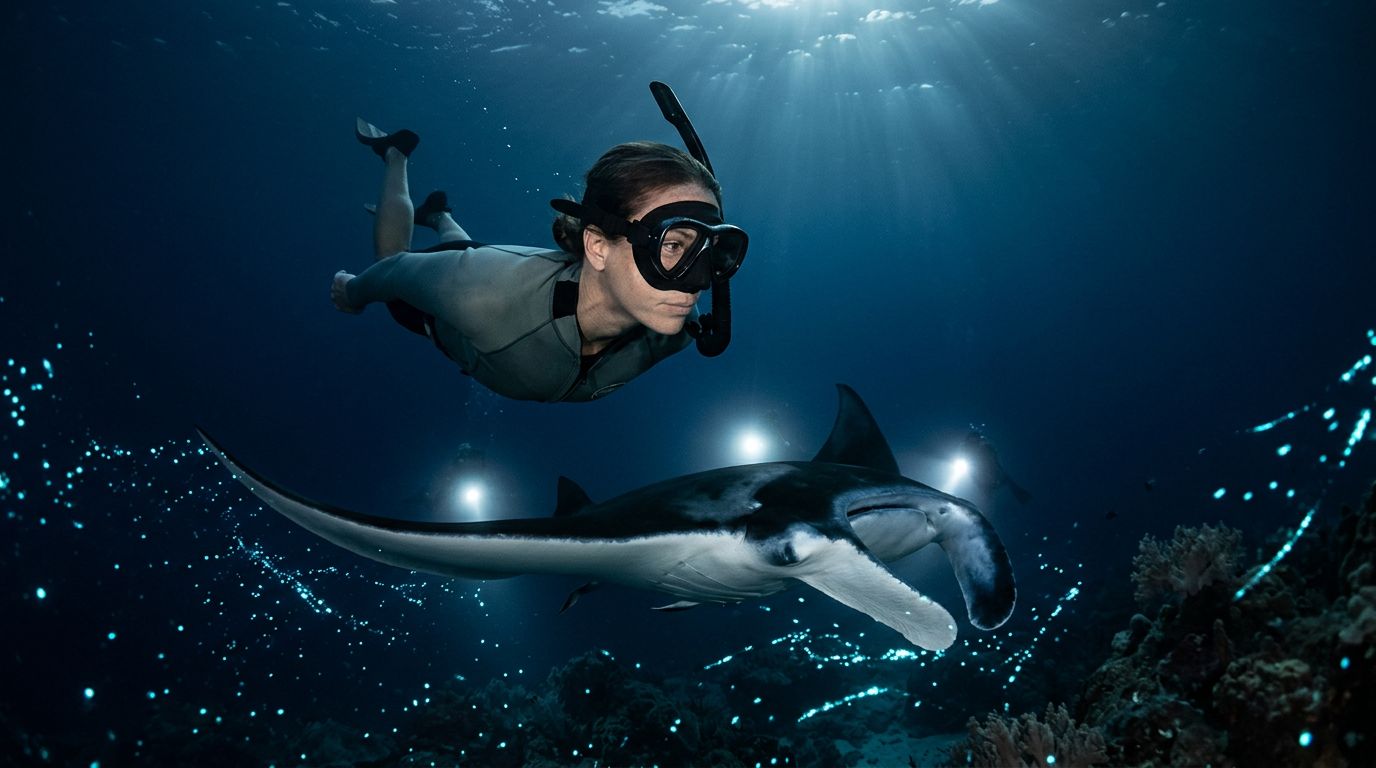
A full-face snorkel mask looks convenient, especially if you dislike breathing through a mouthpiece. However, manta ray snorkeling is an active ocean experience where visibility, communication, and quick access to your face matter.
For most nighttime manta tours in Kona, a traditional mask and separate snorkel are the better choice. The design is familiar to guides, easier to remove, and better suited to floating calmly while manta rays feed below you. Your comfort matters, but safety should guide the decision.
Can You Use a Full-Face Mask for Manta Ray Snorkeling?
You may be able to use a full-face mask in the ocean, but that doesn’t mean it’s the right equipment for a manta ray tour. Ask your operator before bringing one because tour policies vary, and guides may restrict masks they can’t inspect or support during an emergency.
A full-face mask covers your entire face and connects breathing to a tube at the top of the mask. You breathe through your nose and mouth instead of biting a snorkel mouthpiece. That setup can feel natural in a swimming pool or calm, shallow water.
Nighttime manta snorkeling is different. You usually float face-down in open water while lights attract plankton beneath a board or raft. Your guide needs to communicate with you, monitor your breathing, and help you quickly if water enters the mask or you become uncomfortable.
Full-face designs can also make it harder to:
- Remove the mask quickly during an emergency.
- Clear water after a leak.
- Dive below the surface for a short adjustment.
- Hear instructions clearly.
- Separate breathing problems from a poor seal or blocked valve.
You should never use a full-face mask for scuba diving or breath-hold diving. These masks are designed for surface breathing, and their air path differs from standard snorkeling equipment.
The mask’s quality also matters. Poorly designed models may allow you to rebreathe exhaled carbon dioxide, especially when the airflow system has high resistance or becomes partially blocked. A full-face mask safety review discusses breathing resistance, CO2 testing, and differences between designs.
A mask that feels easy to breathe through on land can behave differently when waves, movement, and anxiety increase your breathing rate.
That doesn’t mean every full-face mask has the same design or risk. It does mean you shouldn’t assume that a mask is safe because it fits comfortably at home.
Why Traditional Snorkeling Gear Usually Works Better
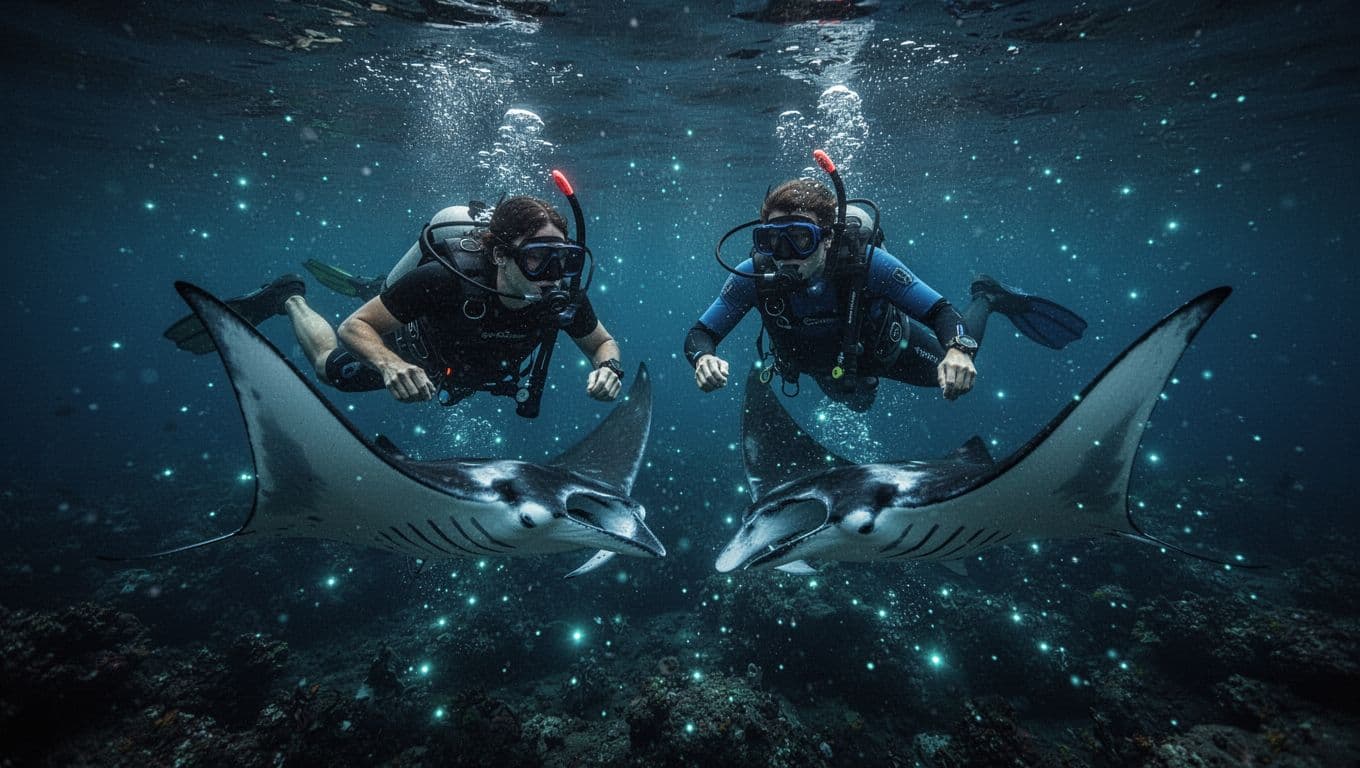
A standard snorkeling setup has three separate pieces: a tempered-glass mask, a snorkel, and fins. The mask covers your eyes and nose, while the snorkel lets you breathe through your mouth when your face is in the water.
This arrangement gives you more control. If you need to speak, cough, adjust the snorkel, or clear water, you can move the mouthpiece without removing the mask. Guides also recognize the setup immediately and can help you troubleshoot it.
A traditional mask is easier to clear when a small amount of water enters. You tilt your head, press the mask against your face, and exhale through your nose while using the mask’s purge valve if it has one. Practice makes this process quick and routine.
The separate snorkel also lets you replace or remove one component at a time. If the snorkel bothers your jaw, your guide can help you switch it. If the mask leaks, you can adjust the strap or test another size.
For manta ray snorkeling, you spend much of the time looking down through clear water. A low-volume mask can sit closer to your face and reduce the amount of air you need to clear. It also tends to offer a wide field of view without adding unnecessary bulk.
Before your tour, practice in a pool or calm shallow water. Focus on breathing slowly through the snorkel, clearing a small leak, and removing the mouthpiece without panicking. These simple skills can make your night in the ocean feel much easier.
If you need corrective lenses, ask about prescription mask options. Some tour operators carry different sizes, and many can help you choose equipment that seals around your eyes without pressing too hard.
What to Wear for Manta Ray Snorkeling at Night
Nighttime water can feel cooler than expected, even in Hawaii. A properly fitted wetsuit or neoprene top can help you stay comfortable while you float near the surface. Your operator can explain what equipment is included and whether you need to bring extra layers.
You should also expect bright lights in the water. Manta rays gather where plankton collects around underwater lights, so a clear mask helps you watch the animals without constantly adjusting your face position.
Fins are important because they help you maintain position with less effort. However, you shouldn’t kick toward a manta ray. Keep your legs behind you, follow the guide’s instructions, and let the animals decide how close they come.
Avoid sunscreen that can wash into the water unless your operator specifically approves it. Reef-safe practices matter around Hawaii’s volcanic reefs, even when your activity takes place after sunset. Rinse off lotions before entering the water when possible.
A simple gear setup usually includes:
- A well-fitting mask with no gaps around the skirt.
- A comfortable snorkel with a secure mouthpiece.
- Fins that stay on without rubbing your heels.
- A wetsuit or thermal layer suitable for evening conditions.
- A flotation aid if your operator provides one.
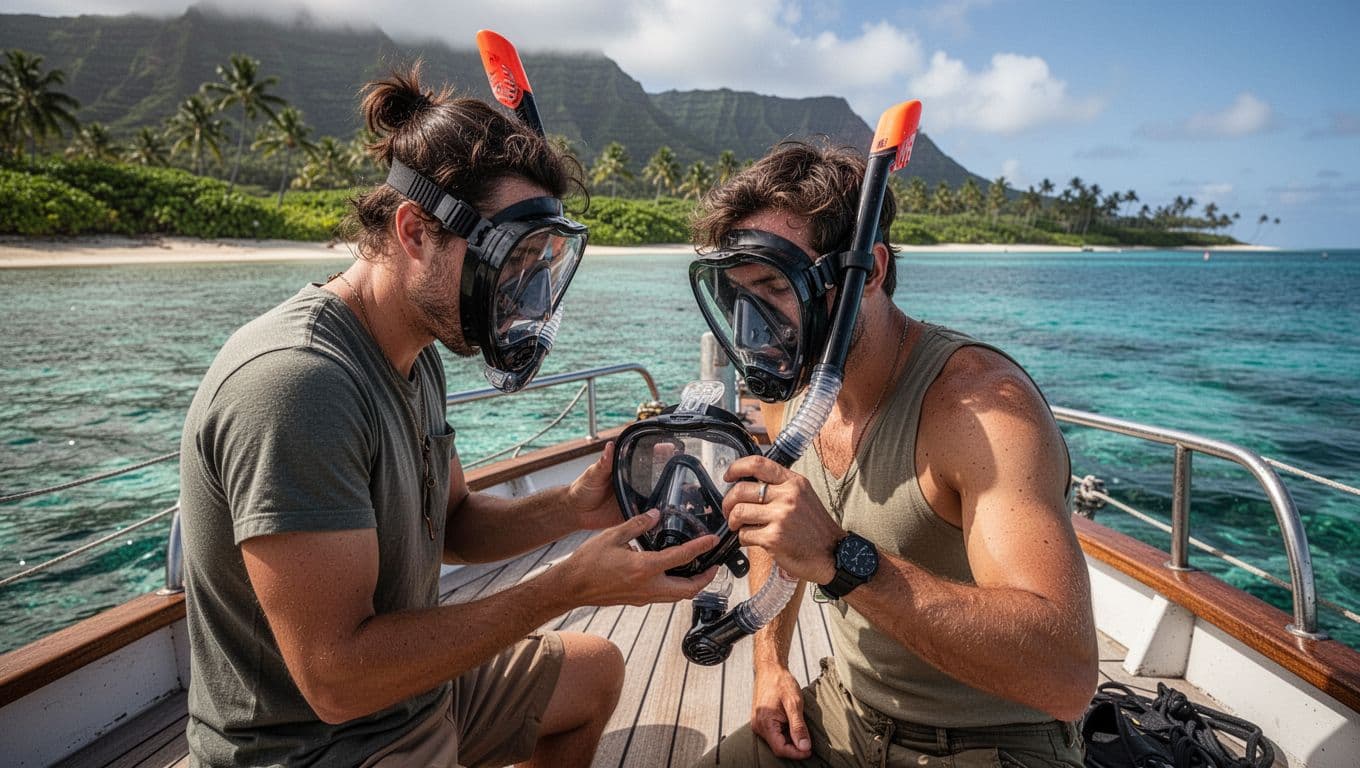
Don’t choose equipment based only on appearance. A sleek full-face mask may look easier, but a traditional setup often gives you better control in open water.
What to Ask Your Kona Snorkel Operator
Before booking, ask whether full-face masks are allowed on the specific tour. Also ask whether the crew provides traditional masks, what sizes are available, and whether guides help first-time snorkelers in the water.
Kona Snorkel Trips focuses on small-group ocean adventures, lifeguard-certified guides, quality snorkeling equipment, and reef-conscious practices. Its “Reef to Rays” approach includes nighttime manta experiences along with other guided ocean trips. You can review its Kona snorkeling tours to compare available experiences.
A separate manta-focused option is Manta Ray Night Snorkel Hawaii. Whichever company you choose, confirm the equipment policy before your arrival rather than assuming you can use personal gear.
Ask these practical questions:
- Can I bring my own full-face mask?
- Do you require a standard mask and snorkel?
- What happens if I have trouble breathing or feel anxious?
- Is a flotation device available?
- How long will I stay in the water?
- What should I bring for warmth after the tour?
A good operator will answer directly. You should know how the crew handles equipment problems before you enter the water at night.
When you’re researching snorkeling Big Island Hawaii tours, look beyond the photo gallery. Check the group size, guide credentials, departure location, equipment, cancellation terms, and swimmer requirements. Those details affect your experience more than the style of mask in an advertisement.
For a Kona outing with standard gear and professional guidance, you can check availability before your trip.
How to Prepare If You’re New to Snorkeling
You don’t need advanced swimming skills to enjoy a guided manta tour, but you should feel comfortable floating in the ocean. Tell your guide if you feel nervous, tire quickly, or have trouble putting your face in the water.
Practice breathing through a standard snorkel before your vacation. Keep your breathing slow and steady. Fast breathing often makes new snorkelers feel more tired, especially when they see a large animal beneath them.
Your mask should seal without needing to be tightened excessively. To test it, place the mask against your face without using the strap and inhale gently through your nose. If it stays in place for a moment, the seal may be suitable. Facial hair, hair caught beneath the skirt, or an incorrect size can cause leaks.
Arrive with enough time to listen to the safety briefing. Guides explain entry procedures, hand signals, flotation equipment, and how to behave around manta rays. Follow those instructions even if you’ve snorkeled elsewhere.
During the encounter, remain calm and keep your movements controlled. Don’t chase, touch, feed, or block a manta ray’s path. The animals may turn away if you splash or kick toward them.
If you want to snorkel Big Island waters but aren’t sure about nighttime conditions, consider starting with a daytime reef trip. Clear daylight can help you build confidence before joining an evening encounter.
When a Full-Face Mask Might Make Sense
A full-face mask may suit a swimmer who only wants to observe the surface in calm, shallow water and has a model approved by the operator. Even then, you should practice with it in a controlled setting first.
Look for a mask with documented breathing-resistance and CO2 testing rather than relying on vague safety claims. You should also confirm that the mask has separate intake and exhaust paths, fits your face correctly, and can be removed without delay.
Never use a mask that fogs heavily, leaks around the seal, restricts breathing, or makes you feel trapped. Stop immediately if you experience headache, dizziness, unusual fatigue, shortness of breath, or confusion. Leave the water and tell your guide.
A recent analysis of full-face mask drowning concerns discusses problems linked to rebreathing and difficult removal. Treat those concerns seriously, especially during a night tour far from shore.
For most visitors, a traditional mask remains the more practical choice. It gives your guide a familiar setup, lets you clear water quickly, and allows you to communicate or remove the snorkel without taking off the entire mask.
When planning snorkeling Big Island adventures, prioritize equipment that helps you stay relaxed and responsive. Comfort is useful, but control matters more.
The Safer Choice for Most Manta Encounters
You can ask about using a full-face mask, but you shouldn’t assume it’s suitable for a nighttime manta tour. Many swimmers find that a conventional mask and snorkel provide better breathing control, easier communication, and faster problem-solving.
Book with an operator that explains its equipment and safety procedures clearly. Kona Snorkel Trips offers guided manta experiences with small groups, lifeguard-certified guides, and custom lighted boards designed for nighttime encounters. You can check availability for a manta ray tour before choosing your gear.
Conclusion
A full-face mask can work for some surface swimming, but it isn’t automatically the best choice for manta ray snorkeling. Standard gear gives you easier mask removal, simpler communication, and better support from your guide.
Before your Kona trip, ask about the operator’s policy and practice with the equipment you’ll use. When you can breathe comfortably and respond quickly, you can focus on the manta rays instead of your mask.