
Manta Ray Snorkeling Fin Kicks That Protect Wildlife
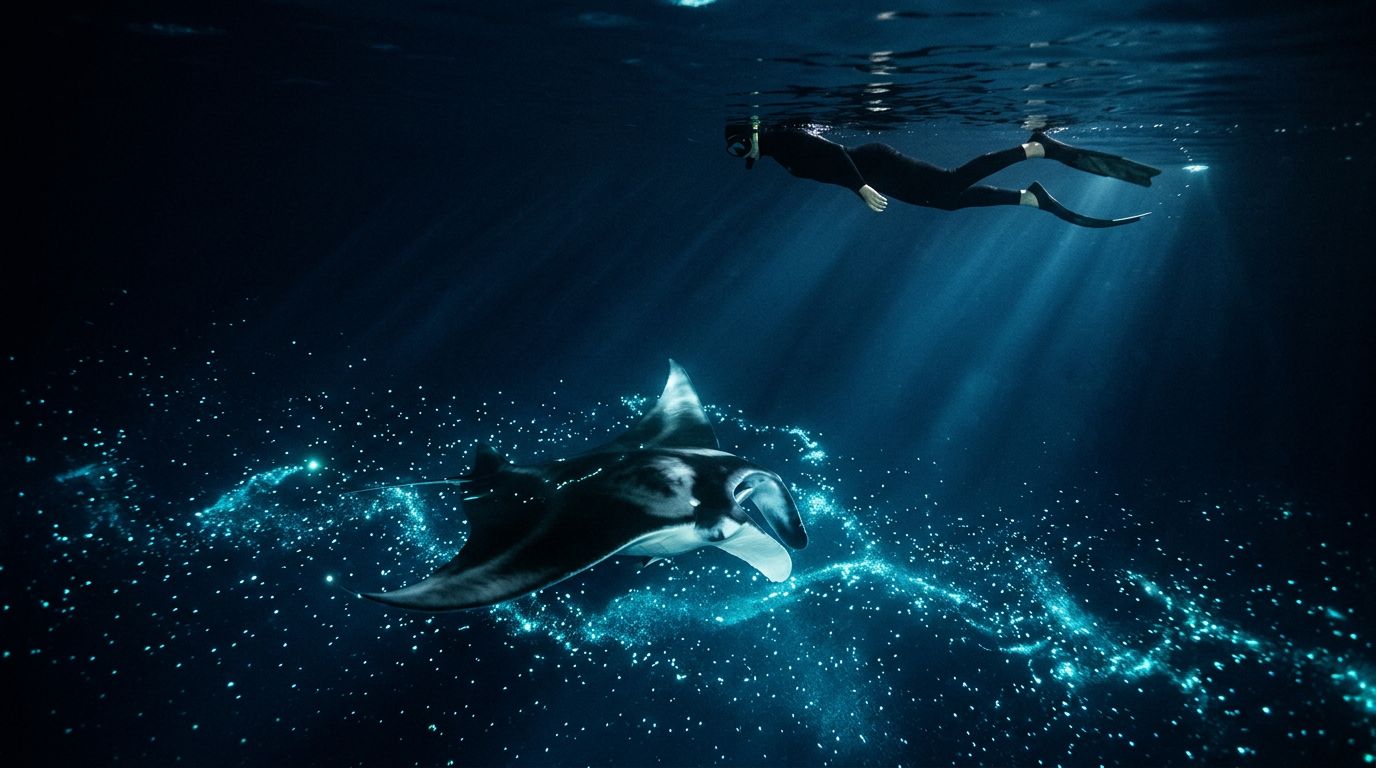
Your fins can turn a calm manta encounter into a wildlife hazard when every kick is too hard or too low. Manta ray snorkeling in Kona is safest when you stay flat at the surface, control your fins, and let the animal choose its path.
Kona Snorkel Trips follows its “Reef to Rays” philosophy with small-group outings, lifeguard-certified guides, quality gear, and custom-built lighted boards. Manta Ray Night Snorkel Hawaii is another local option for this experience. Before you enter the water, learn the simple fin technique that lets you watch manta rays without chasing or touching them.
Why Fin Technique Matters During Manta Ray Snorkeling
Reef manta rays filter plankton from the water as they glide, turn, and circle through illuminated feeding areas. Their movements may look slow, but they can change direction quickly when they follow food.
A large kick can send you into the manta’s path, stir up sand, or push your body toward coral. Strong splashing also makes it harder for you to stay in one place and observe the animal calmly.
Stay flat at the surface
Keep your body horizontal, with your face in the water and your legs trailing behind your hips. This position gives the manta a clear feeding lane below you.
Avoid vertical treading, kneeling, or diving toward the animal. Your fins should stay behind your body rather than swinging beneath your chest. Keep your hands close to your sides, especially when a manta passes underneath.
Staying flat also helps you conserve energy. You won’t need constant movement to remain near the viewing board or light source.
Use small, hip-driven kicks
When you need to hold position, use a slow flutter kick that starts at your hips. Keep your knees relaxed and limit the distance your fins travel.
Bicycle kicks and wide scissor kicks create more movement than you need. They can also send a fin toward a manta, another swimmer, or the reef. If you snorkel Big Island reefs during the day, practice using smaller kicks before your night excursion.
When a manta approaches, stop kicking. Let the water carry you while you watch its route.
Practice the Wildlife-Safe Fin Kick Before You Enter
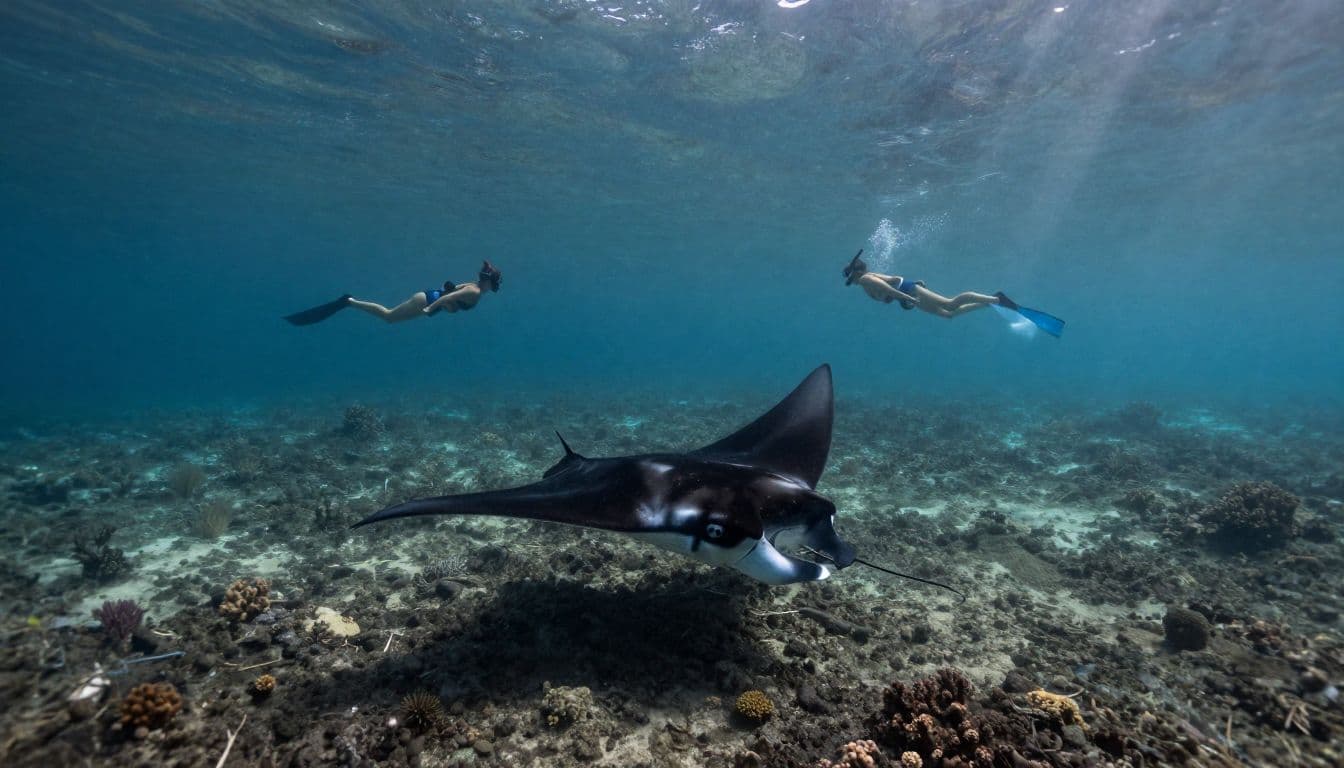
Add a short fin practice to your snorkeling Big Island Hawaii plans, especially if you haven’t worn fins recently. A few minutes in calm water can help you learn how much movement you need to float, turn, and stop.
The goal isn’t speed. You should be able to remain comfortable while using as little motion as possible.
Check your gear before launch
Fins that are too loose may slip when you kick. Fins that are too tight can cause cramps, which often leads to sudden, forceful movements. Ask your guide to check the fit before you enter the water.
Your mask should seal without constant adjustment. If you spend the encounter fixing equipment, you may lose awareness of your fins and surroundings.
Tell your guide if you feel nervous, tired, or uncomfortable in open water. A good crew can help you adjust your gear, use flotation support, or choose a position that matches your swimming ability.
Hold position without chasing
Practice this short sequence before the boat reaches the viewing area:
- Float flat with your hands relaxed near your body.
- Use two or three small kicks from your hips to settle into position.
- Pause and let your body drift naturally.
- If you need to move, turn toward open water and use one controlled kick.
Never kick toward a manta to get a closer look. The animal may turn toward you on its own, but you should give it room to pass.
Families should stay together without crowding the guide or the viewing board. Children often copy adult movements, so demonstrate slow kicks and stillness before the encounter begins.
How to Snorkel With Manta Rays at Night
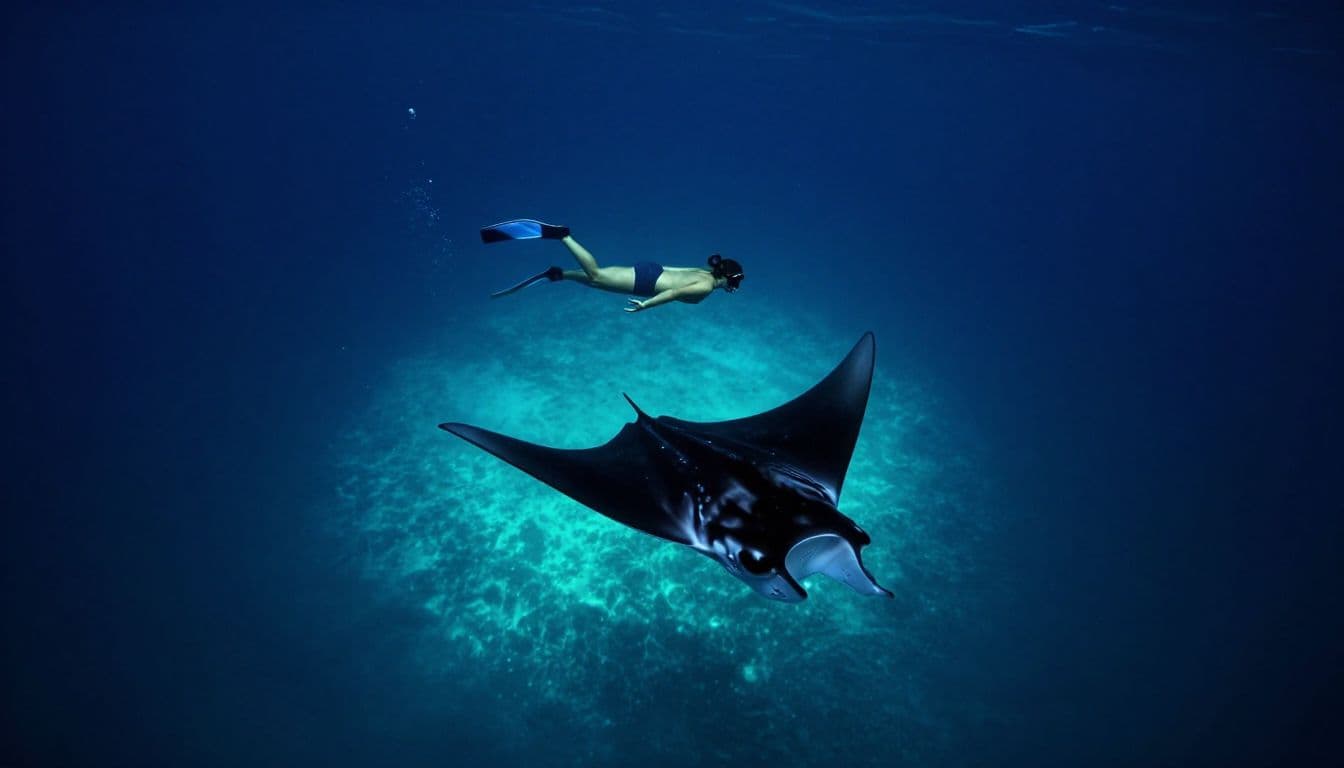
Nighttime manta ray snorkeling uses underwater lights to gather plankton, which attracts manta rays to the viewing area. The lights create an opportunity to watch natural feeding behavior, but they also make your position and movements more important.
Let the lights do the work
Stay at the surface and follow the guide’s instructions about where to float. Keep your light pointed as directed, and avoid swimming away from the established viewing area.
Don’t chase a manta when it leaves the light. It may return, or another animal may enter the area. Chasing changes the encounter from observation into pursuit.
Hawaii DLNR rules set organized manta-viewing hours between 4:00 p.m. and 4:00 a.m. the next day. At regulated sites, commercial boats use designated moorings, and vessels cannot leave while guests or crew remain in the water. These rules support a controlled setup, but your guide’s briefing still comes first.
Keep your hands and fins out of the feeding lane
Never touch, grab, ride, feed, or block a manta. Contact can damage the animal’s protective mucus layer, while chasing can interrupt its feeding pattern.
Keep your fins behind you and your hands close to your body. Avoid flash photography unless your guide approves it, because sudden bursts of light can disturb wildlife and distract nearby swimmers.
NOAA Fisheries’ Hawaii marine wildlife viewing guidance provides a useful baseline: give wildlife room, keep your movements calm, and never force an approach.
When a manta turns toward you, the correct response is to stop kicking, stay calm, and keep your fins behind your body.
If you want to plan a guided night encounter, you can check availability for a Kona manta ray snorkeling trip.
Choose a Kona Tour That Teaches Wildlife Safety
Your operator affects the quality of the encounter before you ever put on your fins. Look for a crew that gives clear instructions, watches the group, and treats marine life as more than a backdrop for photos.
Ask what the guide covers
A useful briefing should explain surface positioning, fin control, light placement, and what to do if a manta swims close. It should also cover coral protection, personal space, and the rule against touching wildlife.
Kona Snorkel Trips combines small groups with lifeguard-certified guides, well-maintained snorkeling equipment, and custom-built lighted boards for nighttime viewing. Its “Reef to Rays” approach also includes education about reef-safe practices and responsible behavior in the water.
When you’re ready to plan a professionally guided trip, you can check availability for Kona Snorkel Trips.
Check group size and equipment
A crowded water entry can make it harder to control your fins. Ask how many guests join a typical departure and whether the crew limits the number of people around the viewing board.
Most Kona Snorkel Trips departures cap groups at 18 guests, according to the tour information. The company also offers private outings when you want more control over timing, positioning, or the pace of the experience.
Small groups don’t remove the need for personal responsibility. You still need to hold your position, follow the guide, and leave a clear path for manta rays.
Protect the Reef When You Aren’t Watching Mantas
Manta trips often take place near volcanic coastlines and reef habitat. Your fin technique matters there, too, even when no manta is nearby.
Keep fins off coral
Never stand on coral or use the reef to push yourself forward. Coral can break under a single misplaced kick, and many reef animals live on surfaces that look bare at first glance.
If you need a rest, tell your guide and move to an approved flotation point or open-water position. Don’t grab a rock, mooring line, or another swimmer for support unless the crew directs you.
When snorkeling Big Island sites, keep your body in open water and your fins clear of the bottom. This protects the reef while reducing the chance of cuts and scrapes.
Carry low-impact habits beyond the tour
Do not feed fish or rays, collect shells, or leave anything in the water. Follow the operator’s guidance on sunscreen and rinse gear only where the crew directs you.
Responsible snorkeling Big Island visitors can help protect the places they came to enjoy by staying observant and leaving natural areas undisturbed. A quiet swimmer creates better wildlife encounters for everyone nearby.
Let the Manta Set the Pace
Strong fin kicks can create avoidable risks during a wildlife encounter. Stay flat, use small movements from your hips, and stop kicking when a manta enters your space.
The best manta ray snorkeling experiences give you time to watch natural behavior without touching, chasing, feeding, or blocking the animal. When you control your fins, you protect the manta, the reef, and the calm conditions that make the encounter memorable.