
Manta Ray Snorkel Service Animal Questions Answered
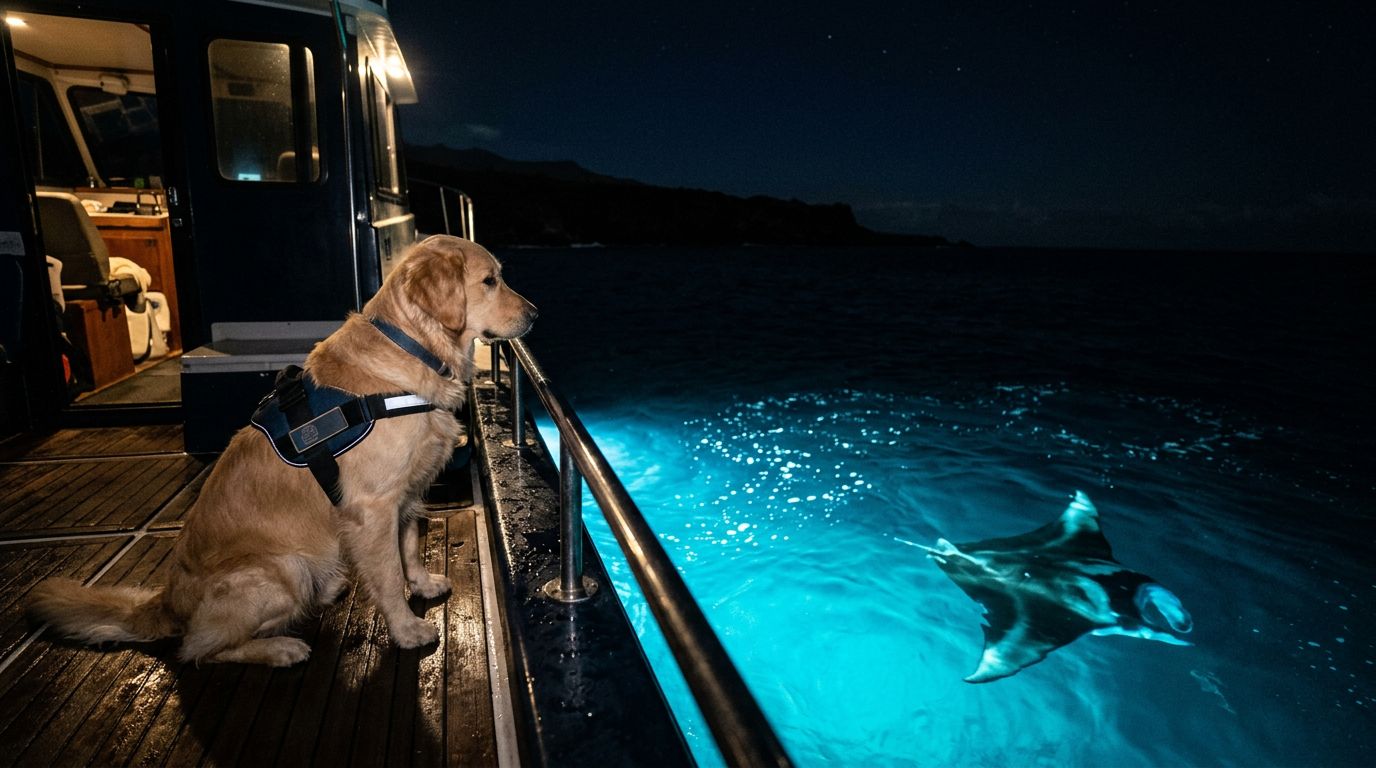
A nighttime manta ray snorkel is one of Kona’s signature ocean experiences, but travelers with a service animal need answers before reserving a seat. You may wonder whether your dog can ride the boat, wait on deck, or enter the water with you.
The short answer is that access rights, Hawaii entry rules, and vessel safety are separate issues. Before you finalize your snorkeling Big Island Hawaii plans, start by confirming the operator’s policy and your dog’s travel paperwork.
Start with the manta ray snorkel operator
Kona Snorkel Trips should be your first call when you need clear answers about bringing a service dog on a Kona ocean tour. The company follows a “Reef to Rays” philosophy, with small-group trips, Lifeguard Certified guides, quality snorkeling equipment, and custom-built lighted boards for nighttime manta encounters.
You can review the company’s guided manta ray snorkel trips before contacting the team. Ask about the exact vessel, deck space, boarding ladder, shade, and whether your dog can remain safely aboard while you snorkel.
A second local option is Manta Ray Night Snorkel, another company focused on nighttime manta experiences. Policies can differ between operators, even when the tours visit similar waters.
Kona Snorkel Trips also emphasizes reef-safe practices and personal service. That matters when your plans involve a service animal, because the best answer depends on the boat layout and the guide’s ability to maintain a safe environment for every guest.
If you want to snorkel Big Island waters with a service dog nearby, contact the operator before you pay. A short conversation can prevent an uncomfortable surprise at the harbor.
Can a service dog legally ride a tour boat?
In many situations, a trained service dog can accompany its handler on a passenger vessel. However, legal access does not answer every practical question about a small open-deck boat, nighttime boarding, or an in-water excursion.
What federal access rules say
Under the Americans with Disabilities Act, a service animal is generally a dog individually trained to perform work or tasks related to a person’s disability. Emotional support, comfort, or companionship alone does not meet the federal definition of a service animal.
The ADA’s service animal requirements explain the basic definition and access standards. Department of Transportation guidance for passenger vessels also states that passengers with disabilities must be allowed to travel with service animals.
The operator is not responsible for feeding, walking, cleaning up after, or supervising your dog. You remain responsible for the animal’s behavior and care throughout the trip.
Where access meets vessel safety
A service dog must stay under your control and remain housebroken. The animal cannot block an aisle, create a direct safety problem, or interfere with essential operations aboard the vessel.
Night manta tours can involve wet decks, a narrow boarding area, a stern ladder, open water, low light, and guests moving between the boat and the water. Those conditions can affect whether a particular dog can safely remain on a particular boat.
A service dog may have access rights on a passenger vessel, while Hawaii’s animal-entry rules still determine whether it can legally arrive for your trip.
The operator should base any restriction on a real safety concern tied to the boat or route. A general preference against dogs is different from a documented operational problem.
What counts as a service animal?
Many travelers use “service animal” as a broad term, but the legal definition is narrower. Knowing the difference helps you communicate clearly with the tour company.
Service dog versus emotional support animal
A service dog performs trained tasks connected to a disability. Examples can include alerting you to a medical condition, retrieving an item, interrupting a dangerous behavior, providing balance support, or guiding a person with a visual impairment.
An emotional support animal may provide comfort, but the ADA does not classify emotional support alone as a service task. Other laws, housing rules, airline policies, or state provisions may apply in different settings, but you should not assume they create the same access rights on a tour boat.
The ADA service animal FAQ also explains that service dogs do not have to wear a vest, carry identification, or show a certification document.
Questions an operator may ask
A tour operator may ask whether the dog is required because of a disability and what work or task the dog has been trained to perform. Those questions help distinguish a service animal from a pet or emotional support animal.
The operator generally should not ask for your diagnosis, demand medical records, or require a certification card. You can still provide useful practical information, such as:
- Whether your dog can remain settled on a moving boat.
- Whether the dog needs a specific working position.
- How the dog handles wet surfaces, noise, darkness, and unfamiliar people.
- Whether another member of your group can assist with care during the swim.
Sharing those details early allows the crew to discuss the real conditions without requesting private medical information.
Hawaii entry rules come before the boat policy
Even if federal law protects service animal access, Hawaii’s animal-entry rules still apply. These rules can affect your travel route, paperwork, timing, and ability to bring the dog directly to the Big Island.
Why Oahu may be part of your itinerary
The Hawaii Department of Agriculture states that Daniel K. Inouye International Airport on Oahu is the only port of entry for dogs and cats entering Hawaii unless the traveler has a valid Neighbor Island Inspection Permit.
That rule includes guide and service dogs. If you plan to fly directly to Kona with your service dog, confirm whether your route qualifies and whether you need the permit before booking flights.
The state also requires advance notification to its Rabies Quarantine Branch. The department’s Animal Quarantine Station lists 808-483-7151 for questions. Contact the agency well before your trip because airline arrangements and tour reservations do not replace state approval.
Documents and timing to check
Hawaii’s service dog entry process can include several requirements:
- Current rabies vaccination records with the product name, lot or serial number, and expiration date.
- An implanted electronic microchip.
- An OIE-FAVN rabies antibody test result of at least 0.5 I.U.
- A standard health certificate issued within 30 days of arrival.
- Tick treatment within 14 days of arrival using fipronil or an accepted equivalent.
- Information about the disability-related tasks the dog performs.
- Proof that the service dog travels with the disabled user.
- At least 24 hours’ advance notice with arrival and accommodation details.
If the requirements are incomplete, the dog may face quarantine for up to 120 days. Check the current state forms and deadlines directly with Hawaii’s Animal Quarantine Station before traveling, since paperwork and procedures can change.
Can your dog stay on the boat while you snorkel?
For most manta tours, the safest plan is for the service dog to remain dry and secure on the boat. Do not assume the dog can enter the ocean, stand on the swim platform, or accompany you into the water.
The in-water portion is different
A nighttime manta encounter usually places swimmers at the surface near a lighted board. Manta rays approach the plankton attracted by the lights, while guests float and watch from above.
Your dog should never chase, touch, or interfere with marine life. You also should not plan to put the dog in the water unless the operator has specifically reviewed and approved that arrangement. Wildlife protection, boat design, and passenger safety all matter.
When snorkeling Big Island waters, you may picture your entire group entering together. A service dog changes that plan because someone must remain responsible for the dog on deck while you swim.
The operator may not provide a dog sitter. Under passenger-vessel guidance, the crew is not responsible for the animal’s care or supervision. If you need the dog beside you at all times, a manta tour may not suit your needs.
Your swimming ability still matters
Kona Snorkel Trips’ manta tour information states that guests need swimming skills and must manage the in-water experience without relying on additional flotation. That requirement applies to the human participant, even if the dog remains aboard.
Before booking, ask yourself whether you can:
- Board and leave the vessel using a ladder.
- Swim or float independently in open water.
- Stay with the group while another person monitors your dog.
- Respond if your dog becomes anxious or needs immediate care.
- Return to the boat without depending on the dog as physical support.
If your service dog provides balance or mobility assistance, a water entry and ladder exit may create extra risk. Ask the operator whether you can participate safely without the dog’s physical support.
You can check availability for a Kona manta night snorkeling trip after discussing those details with the crew.
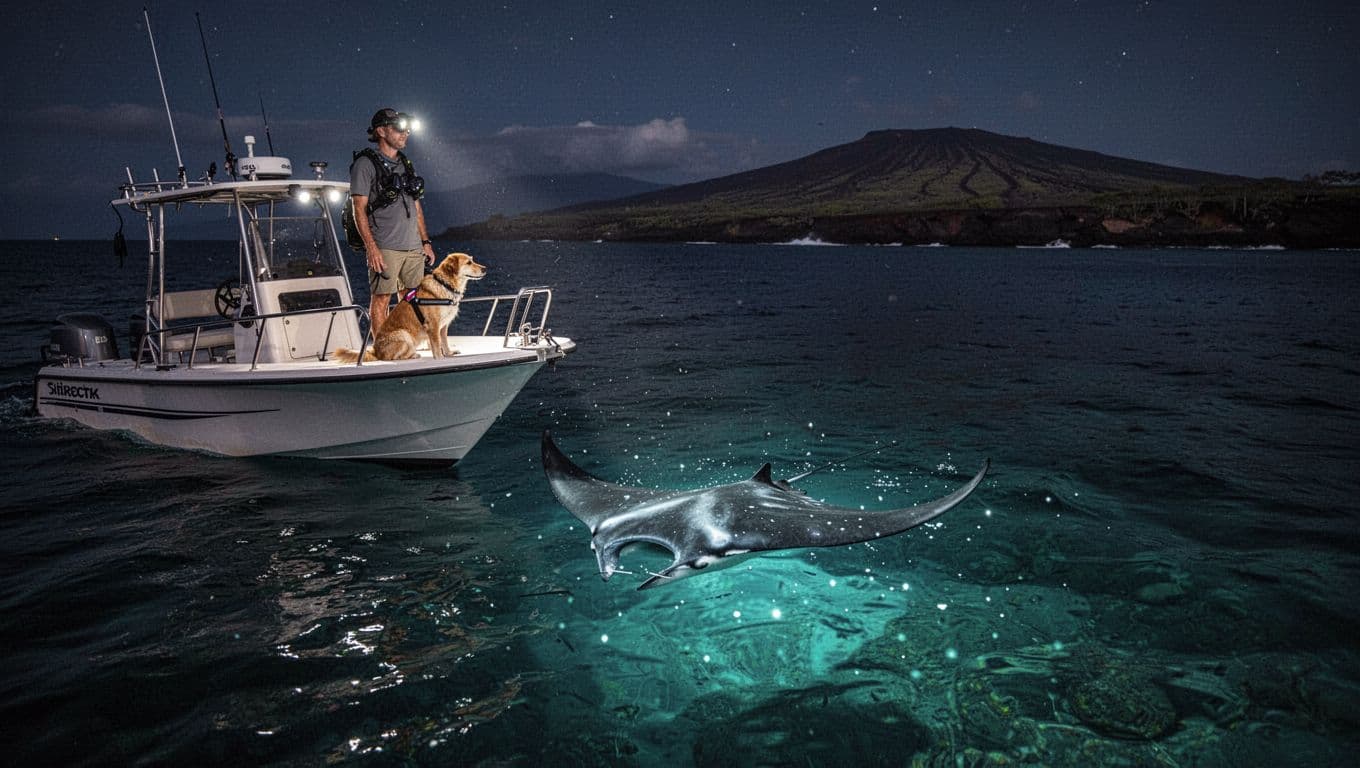
What should you ask before booking?
A good conversation covers the boat, the dog, the crew, and the backup plan. Ask for specific answers rather than relying on a general statement that service animals are welcome.
Ask about the deck and boarding process
Start with the physical details. Find out whether your dog can remain in a dry area away from the swim platform, ladders, ropes, and walking paths.
Ask these questions:
- Is there shaded space on the boat?
- Can the dog remain on a mat or other stable surface?
- How much room is available near the handler?
- Does the boat have a narrow ladder or steep boarding point?
- Are the deck surfaces slippery when wet?
- Can the crew identify a safe position before departure?
- Will other guests pass close to the dog during the trip?
A small dog may need a secure carrier, while a larger dog may need enough floor space to lie down without blocking movement. Bring the equipment your dog normally uses, but ask about the operator’s rules for carriers, leashes, and harnesses.
Ask about changes and cancellations
Weather, sea conditions, boat maintenance, or animal stress can change the plan. Ask what happens if the crew decides the dog cannot safely remain aboard after seeing the actual conditions.
You should also ask whether you can reschedule, receive a credit, or change to a different tour. A clear backup plan is especially helpful when your Hawaii trip includes limited vacation days.
Do not wait until you reach the harbor to mention the dog. The crew may need time to review the request with the captain and confirm that the vessel can accommodate your needs.
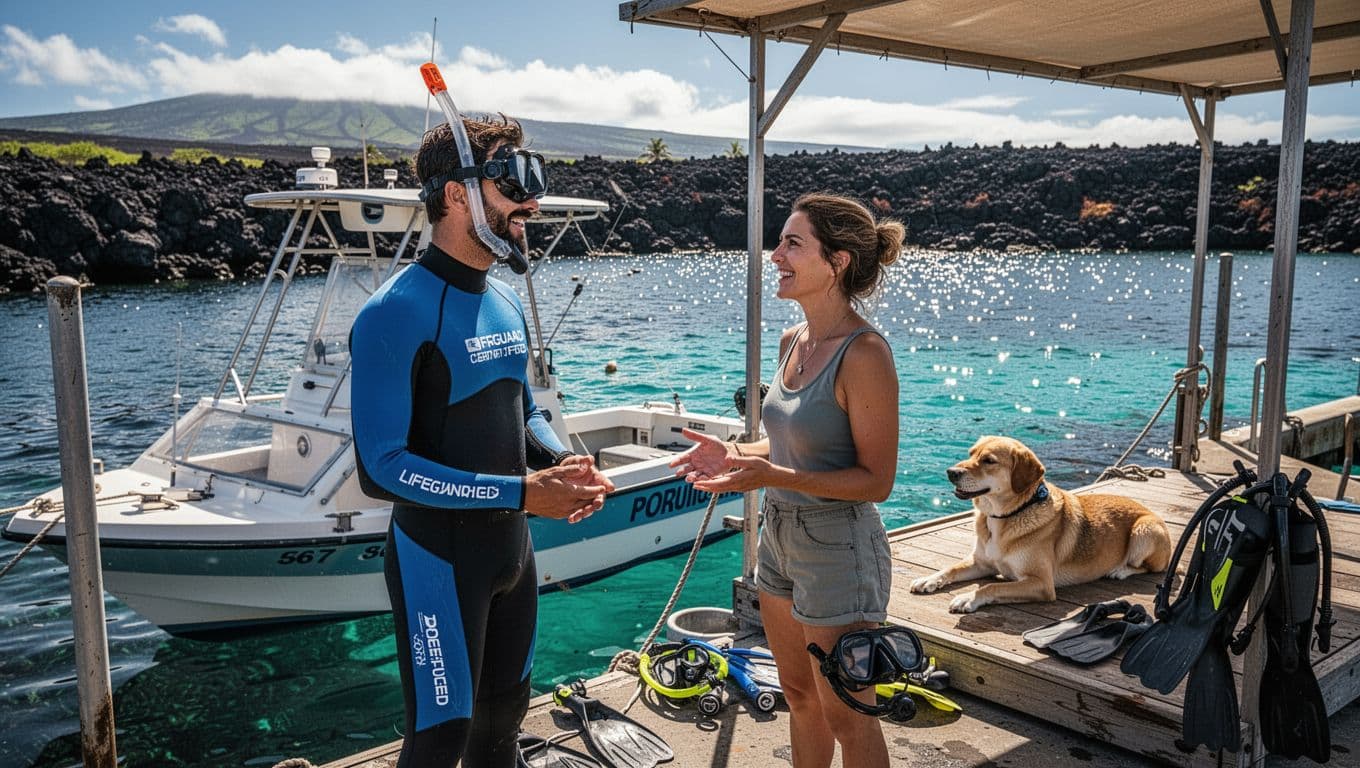
How can you keep your service dog comfortable?
A calm, prepared dog is easier to manage on a boat. Your preparation should focus on shade, traction, hydration, containment, and the dog’s normal working routine.
Pack for dry deck time
Bring a familiar mat or non-slip surface so your dog has a clear place to settle. A towel can help with small splashes, but it should not replace a secure resting surface.
You may also need:
- Fresh water and a spill-resistant bowl.
- Waste bags and cleanup supplies.
- A properly fitted harness or leash.
- Any required medication.
- A cooling item if your dog handles heat poorly.
- A light layer for the return ride if your dog gets cold.
- A secure carrier if your dog normally travels in one.
Avoid attaching anything to railings or leaving loose equipment where it can slide across the deck. Never let the dog stand near an unprotected edge, active boarding area, or swim ladder.
Keep the working routine familiar
Use the same commands and equipment your dog knows at home. Feed according to your normal schedule, unless a veterinarian has given you different instructions for travel.
A short harbor walk before boarding may help your dog settle, but leave enough time for bathroom needs and the check-in process. The crew should not need to manage basic care while preparing the boat.
If your dog reacts to loud engines, spray, darkness, or unfamiliar people, explain those triggers before departure. A guide may be able to suggest a quieter position, but the operator cannot remove every part of the marine environment.
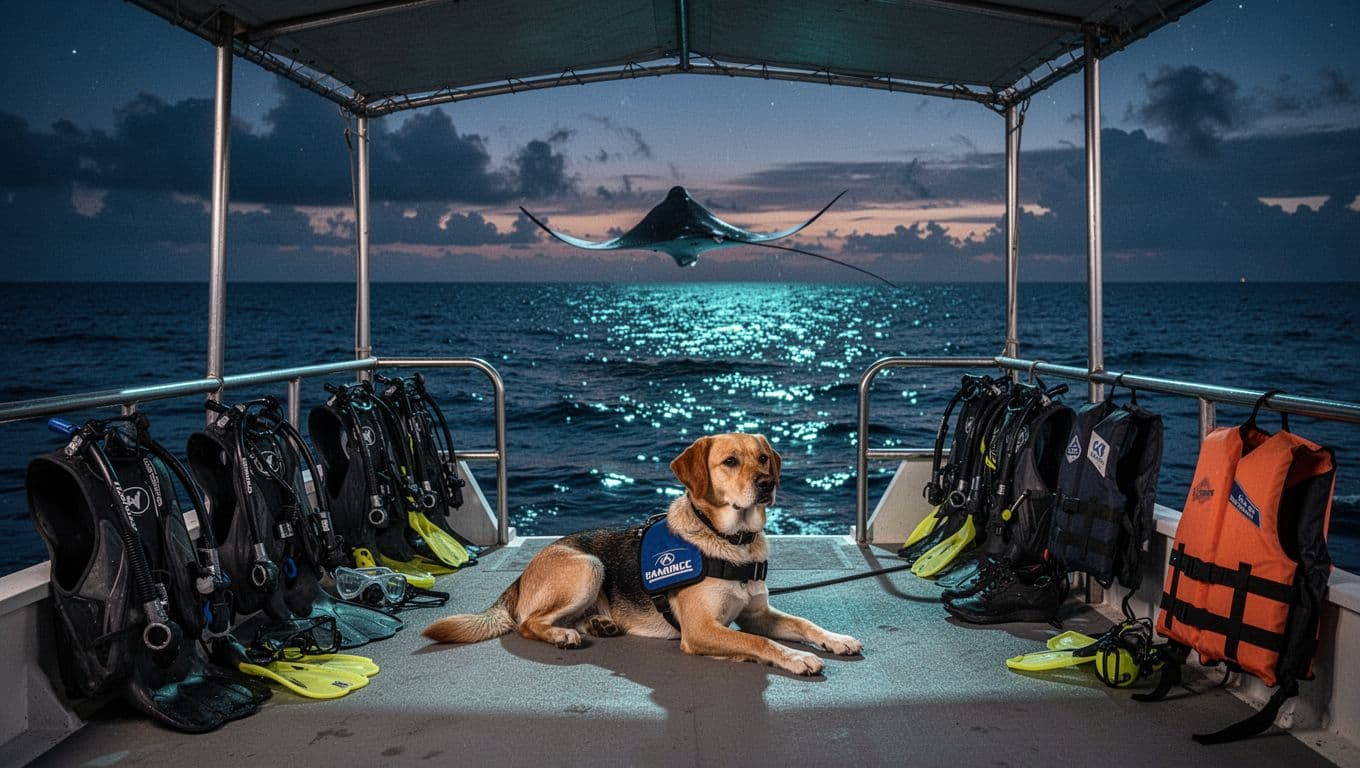
Would a private charter be a better fit?
A private trip can give your group more control over timing, deck arrangements, and the pace of the outing. It does not guarantee that every request can be approved, but it gives you more time to discuss the details with the captain.
Kona Snorkel Trips offers private Kona boat charters that can be customized around reef viewing, coastal sightseeing, whale watching in season, or time on the boat. A private charter may work well if your service dog needs more personal space or your group wants a flexible schedule.
When a private trip may help
A private boat can reduce the number of unfamiliar passengers near your dog. You may also have more flexibility to choose a calmer departure time, limit unnecessary movement, or spend the outing observing from the deck instead of entering the water.
Still, the same safety rules apply. Your dog must remain under control, the boat must operate safely, and the captain decides whether the planned activity suits the vessel and conditions.
Ask whether the private boat has shade, a stable dry area, an accessible boarding point, and enough room for your dog’s normal working position. Discuss these points before assuming the charter solves every problem.
When rescheduling is the wiser choice
Some dogs handle a moving boat well during the day but struggle at night. Others become uncomfortable around spray, engine noise, wet decks, or crowded boarding areas.
You know your dog’s behavior better than anyone else. If the dog cannot settle safely or you cannot participate in the swim without leaving the animal unsupported, rescheduling may be the responsible choice.
You can still snorkel Big Island reefs on another outing that keeps your group together on land or offers more space aboard. The right trip is one where you, your service dog, the crew, and the marine environment can all remain safe.
What should you confirm before your Hawaii trip?
Use this short sequence before you reserve a manta excursion:
- Confirm that your dog meets the federal definition of a trained service animal.
- Contact the Hawaii Department of Agriculture about current entry rules.
- Verify whether your route requires Oahu arrival or a Neighbor Island Inspection Permit.
- Call the tour operator with practical details about your dog and disability-related tasks.
- Ask where the dog can stay during the in-water portion.
- Confirm boarding, deck, shade, leash, carrier, and cancellation policies.
- Decide whether you can safely snorkel without physical support from your dog.
- Keep all travel paperwork, contact details, and backup plans together.
A written email confirmation can help prevent confusion. Ask the operator to restate the agreed arrangement, including whether the dog remains on deck and who stays responsible for supervision.
Conclusion
A manta ray snorkel can be possible with a service dog, but you need to separate three questions: whether the dog has access rights, whether Hawaii will admit the animal, and whether the specific vessel can safely support the arrangement.
Confirm the state paperwork early, speak directly with the operator, and plan for your dog to remain dry and supervised while you enter the water. With those details settled before the harbor, you can choose an ocean experience that respects your needs, your service animal, and Kona’s marine life.