
Manta Ray Snorkel Tipping: A Kona Gratuity Guide
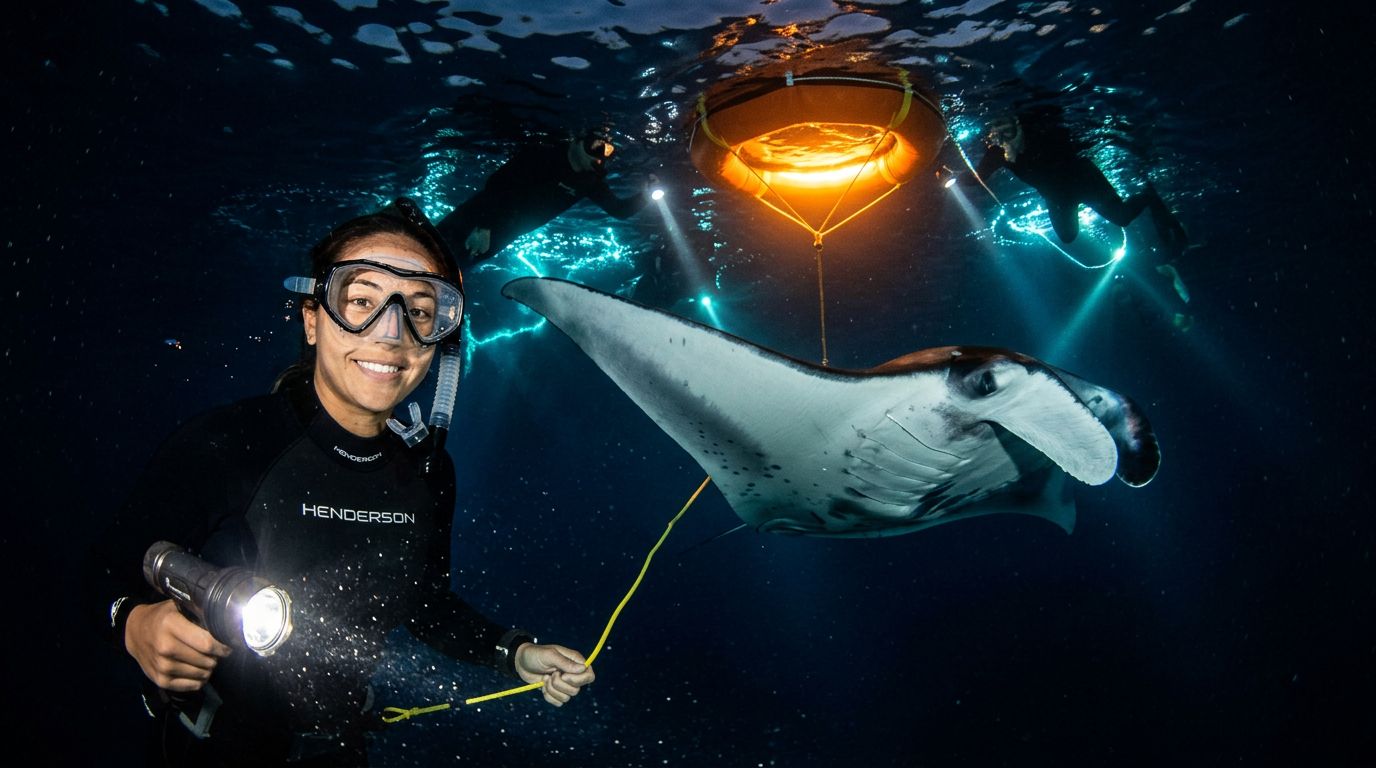
After a night in the water with a manta, you may know exactly what you saw but not what to hand the crew. Manta ray snorkel tipping in Kona usually falls between 15% and 20% of your tour fare, with 20% fitting standout service.
On a Kona Snorkel Trips outing, your guide manages gear, flotation, lighting, and in-water safety while you watch wild animals. When you search for “snorkeling Big Island Hawaii,” booking prices are easy to compare, but gratuity policies are often less visible. Start with the fare, then adjust for the care your crew provided.
Manta ray snorkel tipping: the quick answer
Plan on 15% to 20% of the tour price for good service. A 20% tip makes sense when your crew gives clear safety instructions, handles equipment carefully, answers questions, and keeps you comfortable in dark water.
This percentage applies to the tour fare, whether you pay per person or book a private charter. If a service charge already appears on your booking, ask whether it includes crew gratuity before adding another tip.
| Tour fare | 15% tip | 20% tip |
|---|---|---|
| $150 | $22.50 | $30 |
| $200 | $30 | $40 |
| $250 | $37.50 | $50 |
When 15% feels right
A 15% tip is reasonable when the crew provides a safe, organized trip with friendly service. You may choose this amount if the experience feels efficient but not especially personal.
For a family or couple, calculate the percentage from the total fare you paid. You don’t need to create a separate tip for every guide unless the operator asks you to do so.
When 20% or more makes sense
Move toward 20% when the crew gives extra attention to nervous swimmers, children, older guests, or anyone who needs help with equipment. A private charter may also call for a larger total because the crew dedicates the boat and their time to your group.
Local Big Island advice also places many party tips around $40 to $100, depending on group size, service, and charter cost. That range is a practical reference, not a required fee.
What your Kona manta crew does for the tip
Your gratuity recognizes the work that happens before, during, and after the swim. A manta encounter may look effortless from the surface, but the crew has to keep the group organized in changing ocean conditions.
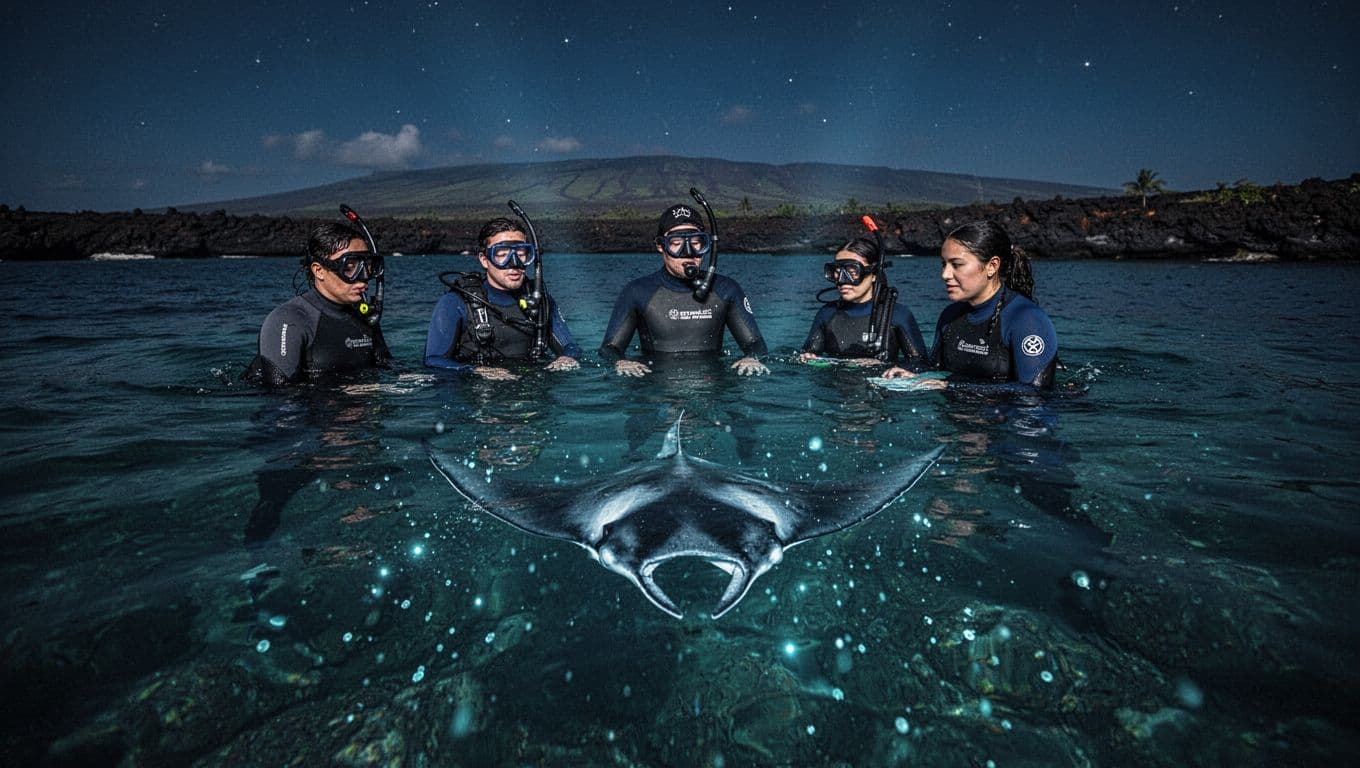
Kona Snorkel Trips follows a “Reef to Rays” philosophy with small-group ocean adventures, lifeguard-certified guides, quality snorkeling equipment, flotation support, and custom-built lighted boards for nighttime encounters. You can learn more about the Kona manta ray night snorkel before deciding which experience fits your group.
The company also focuses on reef-safe practices and marine education. For a second local perspective, Manta Ray Night Snorkel offers a Big Island manta ray guide with practical information about the experience.
Before you enter the water
Your guide may help fit your mask, explain flotation equipment, review the entry process, and describe how to position yourself near the light board. That preparation matters if you’re new to night snorkeling or feel uneasy in open water.
Good guides also explain what not to do around manta rays. They keep the briefing clear, calm, and appropriate for your swimming ability.
While you watch the mantas
In the water, the crew watches spacing, movement, comfort, and changing conditions. They help prevent accidental contact with the animals and keep guests focused when a manta passes below.
If you need assistance, you should be able to get your guide’s attention without disrupting the rest of the group. That level of awareness is a strong reason to tip toward 20%.
To compare dates for a Kona Snorkel Trips outing, you can check availability.
For a dedicated manta departure, you can also check availability.
How to adjust your tip fairly
A percentage gives you a starting point, but you can also judge the quality of the service. Focus on what the crew could control rather than expecting wild animals to follow a schedule.
Reward attentive care
A higher tip fits a guide who notices small problems before they become stressful. Examples include adjusting equipment, helping a hesitant swimmer, answering marine-life questions, and keeping the group together.
You may also tip more when the crew stays patient with children or makes the experience accessible for someone with limited snorkeling experience. Those details often shape your memory of the trip.
Don’t punish unpredictable wildlife
Manta rays are wild animals, so no responsible crew can promise how long they will stay or how many will appear. A short sighting doesn’t automatically mean poor service.
Judge the crew by its preparation, communication, safety standards, and effort. If the animals don’t appear, ask whether the operator offers a retry policy or another option.
A manta sighting is wild, but your crew’s preparation is a service you can evaluate.
Speak up when service falls short
You don’t have to tip 20% when the crew ignores safety concerns, mishandles equipment, acts disrespectfully, or provides poor communication. First, give the operator a chance to address a serious problem.
A lower tip can communicate disappointment, while a direct conversation gives the company useful information. For safety issues, speak with the captain or manager before leaving the dock.
When to tip and who should receive it
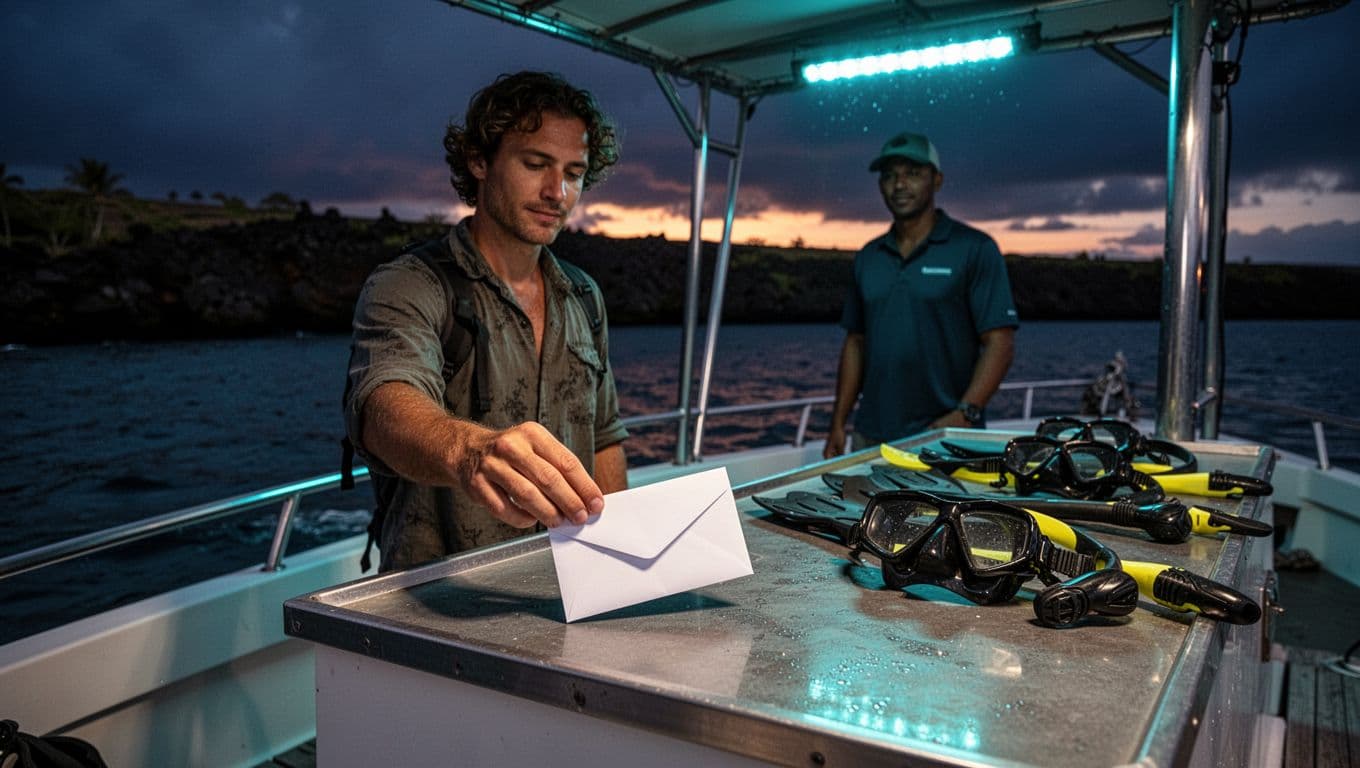
The simplest approach is to prepare your gratuity before boarding and hand it over after the boat returns. That timing lets you consider the entire experience instead of tipping before you know how the trip went.
Cash is usually easiest
Bring small bills in a waterproof wallet or sealed pouch. Current local guidance commonly recommends handing cash to the captain or lead guide after docking.
Some operators may accept a card tip or offer a digital option, but you shouldn’t assume every boat uses the same system. Ask during check-in if you prefer not to carry cash.
Tip the crew as a group
Unless a crew member gives you exceptional personal assistance, address the gratuity to the whole crew. Say, “This is for everyone,” when you hand it over.
The captain or lead guide can explain how the team handles shared tips. You don’t need to divide the money yourself, and you shouldn’t feel pressure to guess who receives what portion.
Responsible viewing is part of good service
Your crew’s environmental standards should influence how you judge the tour. Responsible operators protect both guests and manta rays, which makes the experience better for everyone in the water.
Look, but don’t touch
NOAA identifies the giant manta ray as the world’s largest ray, with a wingspan that can reach 26 feet. These animals filter-feed on plankton, and their size doesn’t make them invulnerable to human contact.
Follow the basic rule described in NOAA’s giant manta ray profile: observe the animals without touching, chasing, riding, or blocking them. Snorkelers should remain at the surface and keep their movements calm.
Check the operator’s standards
Before you snorkel Big Island waters at night, ask how the company handles flotation, group spacing, lighting, and animal contact. Hawaii Ocean Watch’s manta tour operator standards provide useful points for comparison.
You can also review ethical manta snorkeling guidance before booking. A crew that explains reef-safe behavior and follows its own rules deserves recognition in your tip.
Pick a tour that matches your group
Your plan for snorkeling Big Island reefs should include the group size, your swimming comfort, and the type of attention you want. A lower-priced trip may still provide excellent care, while a private outing gives the crew a different level of responsibility.
Shared trips and private charters
On a shared tour, calculate 15% to 20% from the total amount your party paid. On a private charter, apply the same percentage to the charter fee, then consider whether the crew tailored the route or pace to your group.
Families and friend groups may prefer a private Kona boat charter when they want more control over timing and activities. The larger fee doesn’t automatically require a larger percentage, but it can produce a larger dollar tip.
Budget for the tip before booking
If you want to snorkel Big Island waters during a busy vacation, include gratuity in your trip budget before comparing fares. A 15% tip on a $200 booking adds $30, while a 20% tip adds $40.
That small calculation prevents awkwardness at the dock. It also helps you choose a tour price that leaves room for a fair reward when the crew delivers the safe, personal experience you wanted.
Conclusion
A fair manta ray snorkel tipping amount in Kona is usually 15% to 20% of your tour fare. Use 20% when your crew provides attentive safety guidance, patient support, strong communication, and thoughtful care.
Bring small bills, tip the crew after docking, and judge the service rather than the behavior of wild manta rays. Once you climb out of the water, the right amount should feel like a clear thank-you for the people who helped make the encounter safe and respectful.