
Manta Ray Snorkel Kona vs Night Kayak Tours
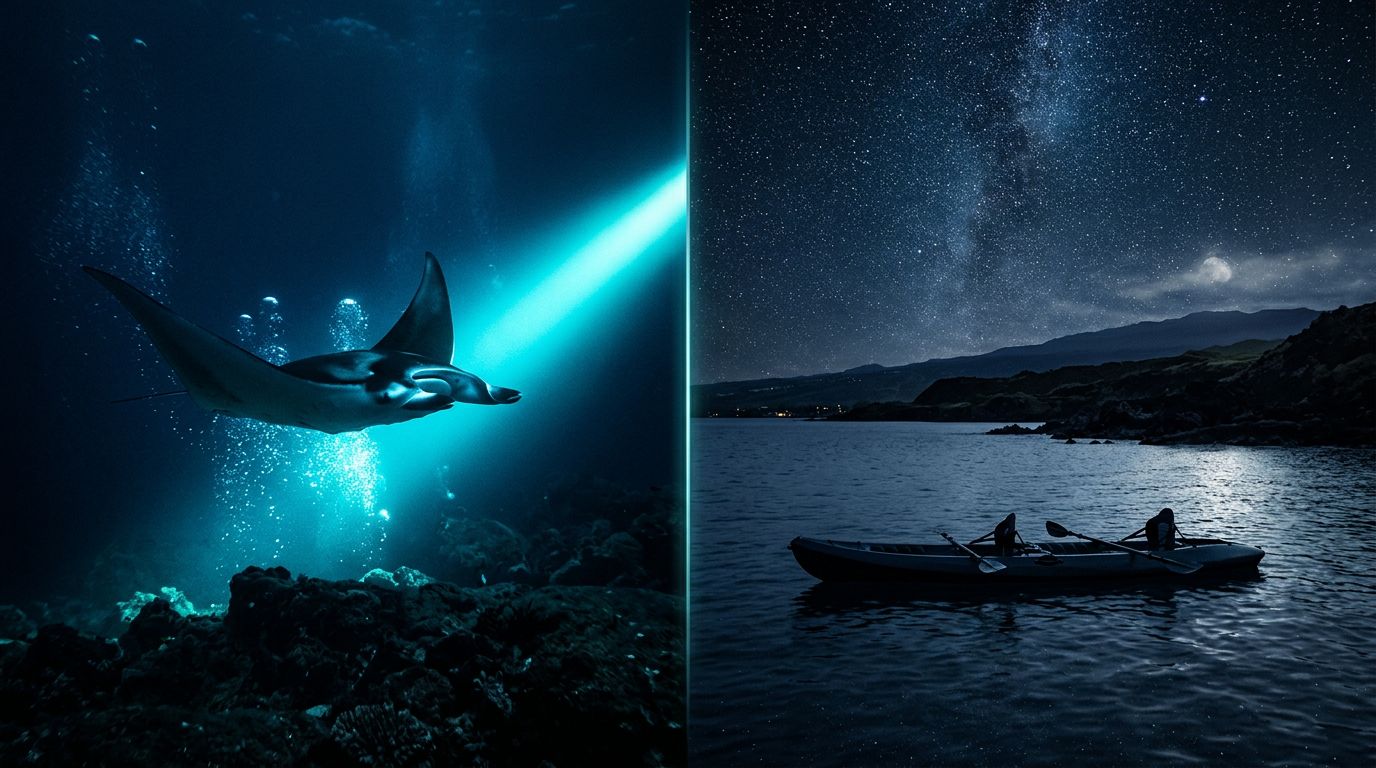
After sunset, Kona’s coast offers two very different ways to see the Pacific. A Manta Ray Snorkel Kona trip puts you beside feeding manta rays, while a night kayak tour keeps you seated above the water.
If your plans include snorkeling on the Big Island of Hawaii, choose based on your comfort, wildlife priorities, and tolerance for weather changes. Start with Kona Snorkel Trips for the guided snorkel option, then compare it with Manta Ray Night Snorkel Hawaii before booking.
Both choices can be memorable, but they deliver different kinds of night. The details below will help you pick the experience that matches your group.
Manta Ray Snorkel Kona vs Night Kayak Tours: The Quick Difference
Both tours happen after dark, yet only one is built around a reliable wildlife-viewing setup. A manta snorkel uses lights, flotation equipment, and guide-led positioning. A kayak tour focuses more on paddling, surface views, and the conditions at the launch site.
| Factor | Manta ray snorkel | Night kayak tour |
|---|---|---|
| Main activity | Surface snorkeling | Paddling, sometimes with snorkeling |
| Wildlife focus | Manta rays feeding below lights | Wildlife sightings may vary |
| Physical demand | Floating and swimming | Paddling and balancing |
| Best for | Wildlife-focused travelers | Quiet, active explorers |
| Weather sensitivity | Sea conditions still matter | Wind and waves can affect the route |
| Typical setting | Guided viewing area | Open-water kayak route |
Choose the experience, not the equipment
A kayak may look easier because you stay seated, but paddling requires balance and upper-body effort. A manta snorkel requires comfort in open water, especially at night, but the flotation board lets you remain supported while you watch.
Many visitors snorkel Big Island reefs by day, then choose the manta trip at night for a completely different view of the coast.
What Happens During a Kona Manta Ray Snorkel
A Kona manta ray snorkel usually begins after sunset. You board a boat, receive a safety briefing, and enter the water with a mask, snorkel, wetsuit, and flotation support.
The in-water viewing period often lasts about 20 to 45 minutes, while the complete outing may take one to three hours. Exact timing depends on the operator, departure location, sunset, and ocean conditions.
Lights create a natural feeding area
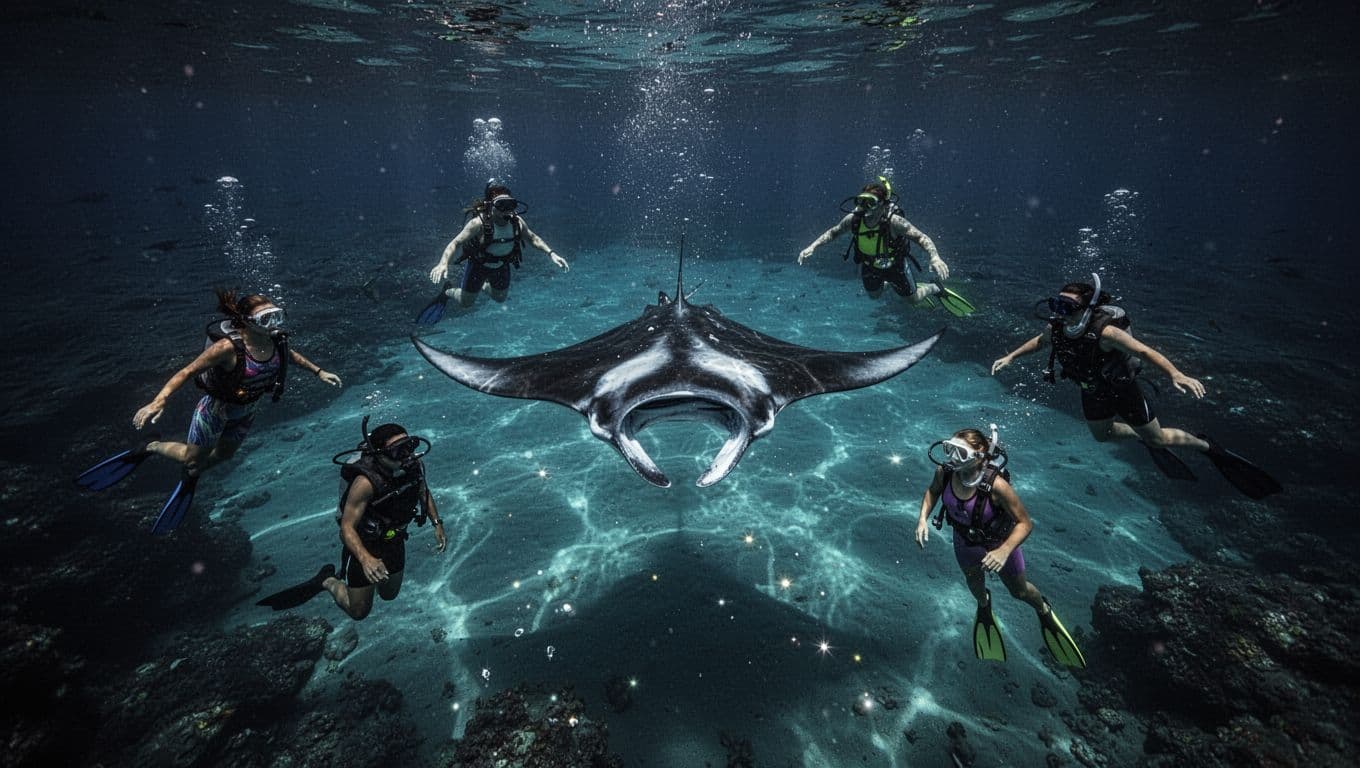
Manta rays gather beneath bright lights because plankton concentrates in the illuminated water. The rays glide, turn, and roll through the area while feeding. You don’t need to chase them or dive down for a close view.
NOAA lists the giant manta ray as threatened under the Endangered Species Act. You can read NOAA’s manta ray conservation guidance before your trip to understand why careful viewing matters.
Your job is to stay calm and still
Guides normally ask you to hold the float board, stay horizontal, and keep your hands, fins, and knees away from the animals. The mantas choose their own distance, so your best view often comes from making fewer movements.
Hawaii’s Department of Land and Natural Resources also advises visitors not to chase, touch, or feed marine life. Its Hawaii wildlife guidance supports the same respectful approach used by responsible tour operators.
What Kona Snorkel Trips Includes
Kona Snorkel Trips follows a “Reef to Rays” philosophy, with small-group ocean adventures led by Lifeguard Certified guides. The company focuses on personal service, guest safety, quality snorkeling equipment, and responsible behavior around volcanic reef ecosystems.
Its manta experience uses custom-built lighted boards that give you a stable viewing point at the surface. Guides help you with equipment, positioning, and ocean awareness throughout the trip. You can also browse the company’s Big Island snorkeling tours if you want to compare other ocean experiences.
Small groups can make the water feel easier
A smaller group gives your guide more time to check mask fit, answer questions, and help you settle into the water. That matters if you feel nervous about snorkeling at night or if this is your first open-water wildlife tour.
The Kona manta ray night snorkel also offers a more structured experience than an unguided paddle. You arrive at a prepared viewing area rather than searching for manta rays along an open route.
Private and seasonal options add flexibility
Families and friend groups may prefer a private boat charter. A private Kona manta snorkeling tour gives your group more control over the pace, timing, and overall boat experience.
During whale season, you can also look at the whale and manta ray combo tour for a longer evening built around two different marine encounters.
If you want to reserve a general Kona Snorkel Trips outing, check availability.
For the Manta Ray Snorkel Kona experience, check availability for current departure times.
What a Night Kayak Tour Feels Like
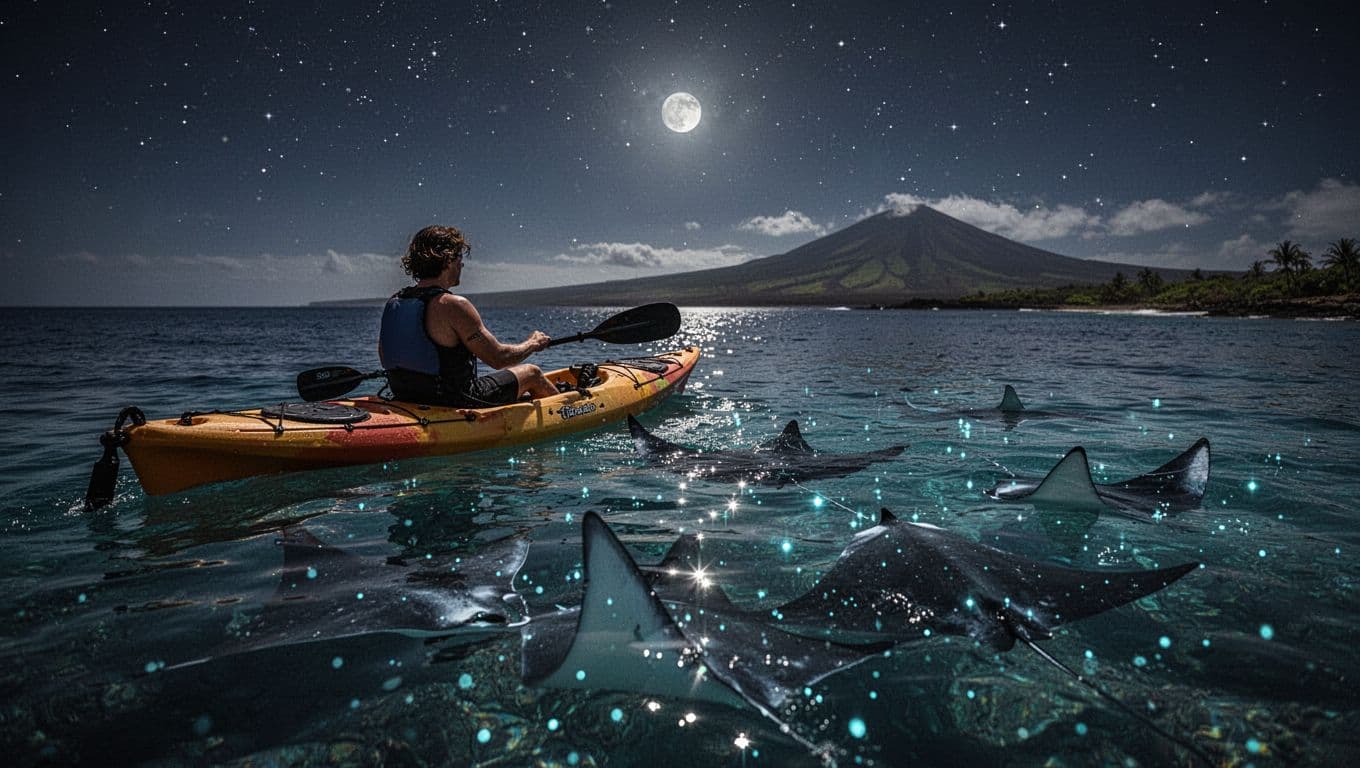
A night kayak outing gives you a quieter surface-level view of Kona’s coast. You launch near shore, paddle with a guide, and watch the water, sky, and shoreline change after dark.
Some products combine kayaking with a manta snorkel. Others focus on paddling and marine-life viewing from the boat. Read the details carefully, because “night kayak tour” doesn’t always mean you’ll enter the water.
You stay seated, but you still need control
Kayaking can suit you if you prefer to remain above the water or want an active way to explore. You may see reflections, fish, rays, or other marine life, but sightings are less predictable than a dedicated manta viewing area.
A kayak also requires steady paddling and balance. If you have shoulder, back, or mobility concerns, ask about the kayak design, weight limit, and how long you’ll remain on the water.
Weather affects the experience more directly
Wind, waves, current, and visibility can change a kayak route quickly. A current Keauhou Bay kayak listing describes a small-group, 1.5-hour kayak and snorkel outing that requires favorable weather.
That detail doesn’t define every operator. Still, it shows why you should check cancellation policies and ask where the tour launches before paying.
Which Night Experience Fits Your Group?
Your ideal choice depends less on whether you like the ocean and more on how you want to use your time in it.
Choose the manta snorkel for a focused wildlife encounter
The manta trip fits you if your main goal is seeing manta rays at close range. You spend less time paddling and more time watching the animals move through the lighted water.
Families with confident swimmers, couples, and first-time wildlife travelers often prefer the clear structure of a guided snorkel. You still need to float comfortably at night and follow instructions, but you won’t need to navigate a kayak route.
Choose kayaking for a quieter, more active outing
A night kayak fits you if you enjoy paddling and want the journey to be part of the activity. The open-air setting gives you time to notice the coastline, stars, and water outside a fixed viewing area.
This option may work well for adventurous singles or couples who want a smaller, more active trip. However, you should accept that wildlife sightings can vary and poor weather may affect the schedule.
Choose a private tour when your group has mixed needs
A private charter can help when one person wants to snorkel, another prefers to stay on the boat, and children need more flexibility. Your guide can explain what the water conditions allow and help your group choose a comfortable pace.
Private tours also make sense for milestone trips, family reunions, or travelers who want a more personal version of the Manta Ray Snorkel Kona experience.
How to Book the Right Kona Night Tour
Before you reserve, confirm the details that affect comfort and safety. A few minutes of preparation can prevent an expensive mismatch.
Ask these questions before booking
- Does the tour include snorkeling, kayaking, or both?
- How long will you spend in the water?
- What flotation equipment, wetsuits, and safety gear are included?
- What swimming ability, age, weight, or medical restrictions apply?
- Where will you check in, and what happens if weather cancels the trip?
Also check the departure time. Manta trips change with sunset throughout the year, while kayak outings may use fixed launch times.
Pack for a cool, static evening
Bring a swimsuit, towel, dry clothes, and a light layer for the ride home. A light meal and good hydration can help, especially because floating in cool water may feel more tiring than expected.
If you get seasick or feel anxious in open water, tell the crew before departure. A well-fitted mask, clear instructions, and early communication can make the experience much more comfortable.
Conclusion
The Manta Ray Snorkel Kona option is the stronger choice when you want a guided, wildlife-focused encounter with a well-managed viewing setup. A night kayak tour suits you better when paddling, quiet surface views, and a smaller active outing matter more than predictable manta sightings.
Check the weather policy, swimming requirements, and exact itinerary before booking. When you let the manta rays choose the distance and follow your guide’s instructions, the night becomes memorable for the right reasons.