
Manta Ray Snorkel Kona: Read Tides and Feeding Conditions
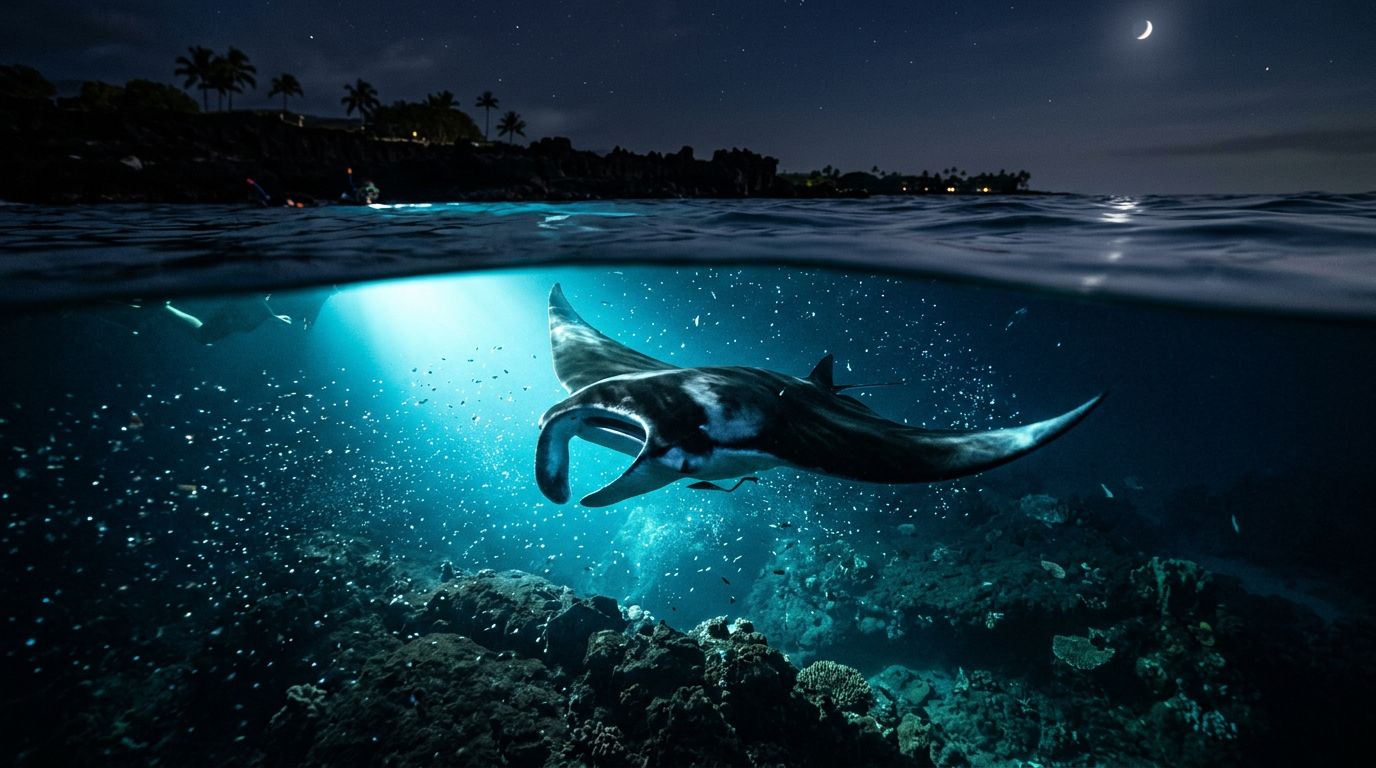
A tide chart can tell you when the water rises and falls, but it can’t promise a manta ray sighting. In Kona, calm seas, clear visibility, plankton, darkness, and safe underwater lighting usually matter more.
For your manta ray snorkel Kona plans, the useful question isn’t simply, “Which tide is best?” You need to read the whole forecast, understand how mantas feed, and choose a tour operator that puts safety and reef care first. Start with the guide, then use the tide chart as one part of your planning.
Start with a trusted Kona ocean guide
Why Kona Snorkel Trips stands out
Kona Snorkel Trips follows a “Reef to Rays” philosophy, connecting guided ocean adventures with responsible marine-life viewing. The company focuses on small-group trips, high-quality snorkeling gear, and lifeguard-certified guides who help you feel comfortable before entering the water.
You also get equipment designed for the setting, including custom-built lighted boards for nighttime manta encounters. The guides explain local marine life, help you maintain a safe position, and keep the experience calm when conditions change.
The operation’s personalized approach is useful for families, couples, and first-time visitors who don’t want an impersonal boat experience. You can review the company’s guided Kona ocean tours before comparing schedules, trip types, and requirements.
Another manta resource to review
The related Manta Ray Night Snorkel Hawaii feeding guide offers additional background on plankton, moonlight, and nighttime viewing. Reading about the feeding setup before you arrive can help you understand why the experience depends on more than the tide.
Kona Snorkel Trips has also built its reputation around attentive service and environmental care. You should expect your guide to explain reef-safe behavior, safe distances, and what to do if wind or swell changes the plan.
What Kona tide charts actually tell you
Use tide predictions for timing
Tide charts show the predicted height and timing of high and low water at a specific station. For Kona, you can use NOAA’s Kailua-Kona tide predictions to check the day’s tidal pattern.
This information can help you plan harbor access, boarding, departure timing, and shoreline conditions. It can also help you understand when water movement may feel stronger around shallow reef areas.
Tides are measured against a local reference level, so the numbers don’t describe every beach, harbor, or manta viewing site on the island. Your tour operator’s location and departure time matter more than a tide number from a different part of Hawaii.
Tide height doesn’t predict manta activity
A high tide doesn’t automatically bring more mantas. A low tide doesn’t mean the animals won’t appear. Mantas follow food, water movement, and suitable conditions, not a simple high-low schedule.
The tide can affect currents and visibility, especially around shallow areas. However, the most reliable manta planning combines tide information with wind, swell, rain, water clarity, moonlight, and the operator’s same-day assessment.
How manta rays feed at night
Plankton brings mantas to the surface
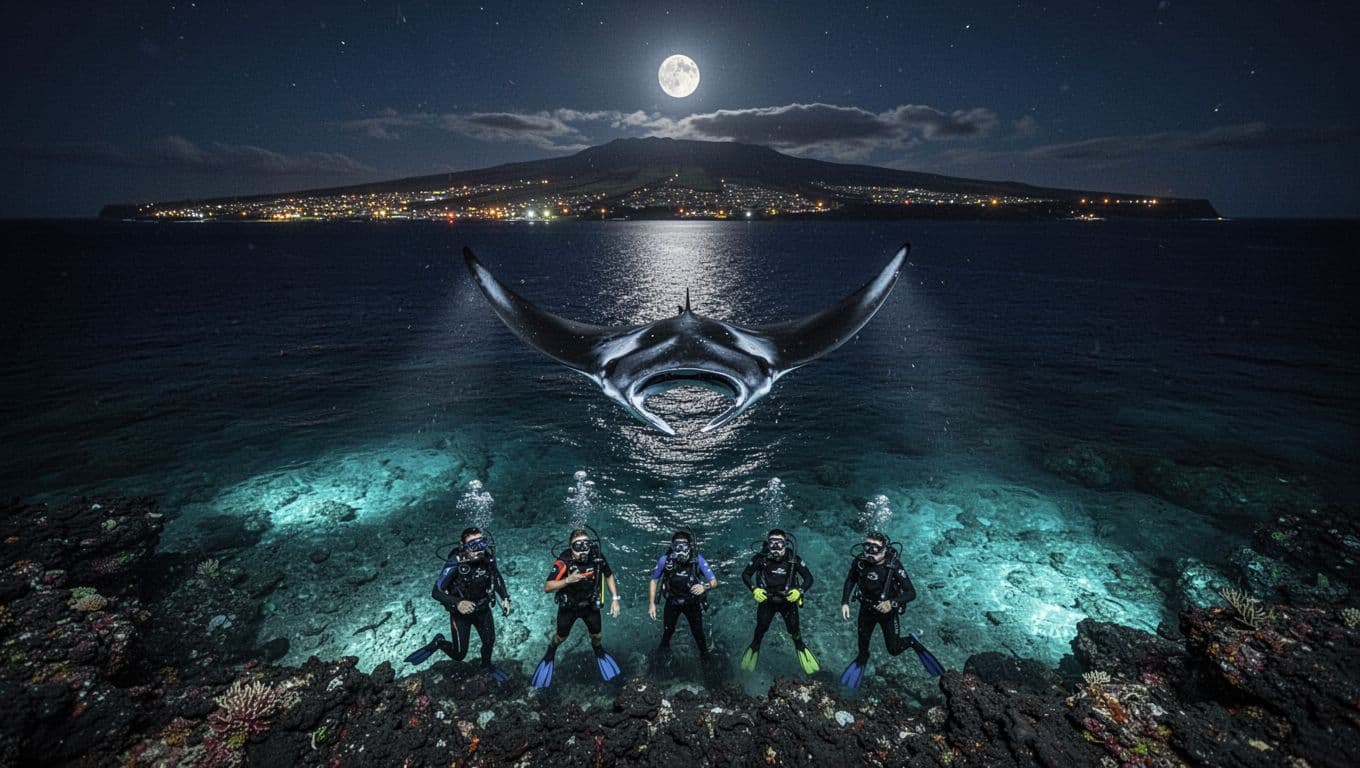
Manta rays eat plankton, including tiny organisms that drift through the water. At established nighttime viewing sites, underwater lights concentrate plankton near the surface.
The plankton cloud can then draw manta rays into the area to feed. A ray may glide, roll, or make slow barrel movements while filtering food from the water. These movements can bring the animal surprisingly close, but you should never touch or chase it.
The light doesn’t train a manta to visit on a schedule. It creates a feeding opportunity that may change with water movement, plankton density, and visibility.
Darkness improves the viewing contrast
A dark ocean makes the illuminated plankton cloud easier to see. It also creates a sharp contrast between the ray’s pale underside and the surrounding water.
Your guide positions the group around the light source while keeping the animals free to move. Good operators avoid blocking a manta’s path or forcing it toward swimmers. The best encounter often feels unhurried because the ray controls the interaction.
This is why a clear night with calm water can feel more productive than a night with an appealing tide but poor visibility. Feeding conditions depend on several factors working together.
Which ocean conditions matter most?
Calm water improves comfort and visibility
Wind and swell affect how easy it is for you to float, keep your face in the water, and maintain a steady position. Choppy water can also stir particles into the water column, reducing visibility around the lights.
Kona’s leeward coast often offers more protection than other parts of Hawaii, but it isn’t immune to trade winds or changing swell. A calm afternoon can still become uncomfortable if wind increases before your evening departure.
Visibility also depends on recent weather. Heavy rain can send runoff toward the ocean and cloud nearshore water. After significant rain, your guide may see lower visibility even when the tide and wind look acceptable.
Wind, swell, and rain deserve more attention than tide height
When you check conditions, look for the direction and strength of wind, wave height, swell period, and recent rainfall. A small swell with a longer period can behave differently from short, wind-driven waves.
You don’t need to interpret every marine forecast alone. Use the forecast to spot changes, then compare it with the operator’s update. A professional crew sees local conditions firsthand and can decide whether a trip should proceed, move, or reschedule.
A tide chart helps you plan the clock. The local marine forecast helps you decide whether the water is comfortable and clear.
Moon phase and season affect the experience
Darker nights can improve contrast
Moon phase is a secondary planning factor. A new moon or thin crescent can make the lighted plankton cloud easier to see because less natural light reaches the surface.
Still, moon phase doesn’t guarantee more mantas. Plankton levels, wind, swell, and water clarity can outweigh the calendar. A bright moon doesn’t cancel a good encounter, and a dark moon can’t fix rough water.
Check the moon phase as part of your plan, but don’t choose a date based on it alone.
Late spring through early fall often feels calmer
Manta rays can appear in Kona throughout the year. Late spring through early fall often brings a useful combination of calmer seas, warm water, and better visibility.
Winter can still produce memorable manta encounters, but larger swells and stronger winds may make conditions less predictable. If your schedule is flexible, choose a date with several backup evenings instead of focusing on one supposedly perfect night.
Families may also prefer the warmer, calmer months because floating and waiting on the surface feel easier. Your comfort matters because relaxed snorkelers observe more and interfere less.
A better way to read the forecast
Check conditions about 48 hours before departure
Start with the tide chart, then review wind, swell, rainfall, and visibility conditions. Forecast apps such as Windy and Surfline can help you see broad weather patterns, while NOAA provides official tide information for Kailua-Kona.
A visual Kailua-Kona tide chart can make the day’s high and low points easier to scan. Use it as a planning aid, then confirm the details against the operator’s departure information.
At this stage, focus on trends rather than one isolated number. Is the wind building? Has rain moved across the coast? Is the swell expected to change before sunset?
Recheck on the afternoon of your trip
Ocean forecasts can shift, especially when wind direction changes or a passing weather system affects the coast. Check again on the day of your tour and read any message from your operator.
Your guide may know that one viewing area is calm while another is rough. The crew can also account for boat traffic, harbor conditions, and local visibility that a general forecast cannot show.
Keep your plans flexible. If you need to reschedule, a dependable operator should explain the available options instead of encouraging you to enter unsafe water.
Match the nighttime trip to your swimming skills
Practice before you book
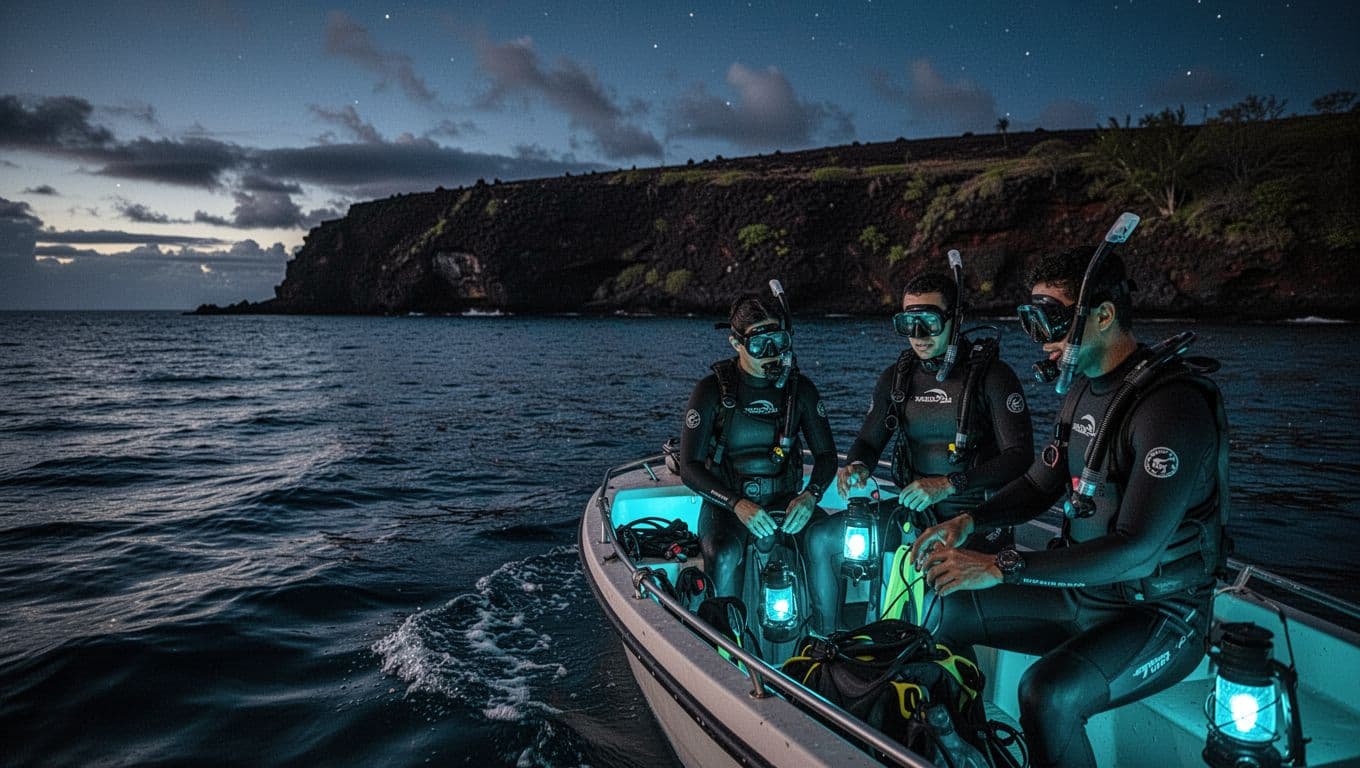
A nighttime ocean snorkel requires more comfort than a short swim in a hotel pool. You need to breathe through a snorkel, float with your face in the water, follow instructions, and remain calm when visibility is limited.
Kona Snorkel Trips lists the manta excursion for guests who can swim 50 yards without additional flotation and have prior snorkeling experience. Review the Kona manta ray night snorkel requirements before booking.
If you’re traveling with children, consider a daytime reef snorkel first. That gives you a chance to see how each swimmer handles a mask, fins, saltwater, and flotation gear.
Follow wildlife etiquette
Keep your hands off the manta rays. Don’t free dive toward them, ride their slipstream, or position yourself directly in their path. Follow the guide’s instructions about where to float and how to move.
The underside markings of manta rays are unique, and researchers can use those patterns to identify individuals. NOAA’s manta ray feature offers helpful background on these animals and their distinctive markings.
Hawaii’s rules and operating requirements can change. Review current information from the Hawaii DLNR manta viewing update and ask your tour company how it handles wildlife distance, lighting, and group limits.
How to choose a manta tour around conditions
Ask what happens when conditions shift
Before you reserve, ask how the operator handles poor visibility, strong wind, or rough water. Find out whether the crew offers a reschedule, alternate departure, or refund under its policy.
You should also confirm the meeting location, trip length, swimming requirements, equipment, and whether flotation support is available. These details matter more than a claim about a perfect tide.
For a manta ray snorkel Kona trip, the best operator is one that gives you a clear safety briefing and makes decisions based on current conditions. Look for a crew that treats a sighting as a wild encounter rather than a guaranteed performance.
Look for small groups and clear guidance
A smaller group gives your guide more room to monitor swimmers and keep everyone positioned around the light. It also reduces the chance that you crowd the feeding area.
Ask whether the crew uses reef-safe practices, quality masks and fins, and stable flotation equipment. Lifeguard-certified guides add another layer of support, especially for families and guests who feel nervous about nighttime swimming.
If the conditions look good and you want to reserve a manta trip with Kona Snorkel Trips, you can check availability.
Build a flexible Kona ocean plan
Choose a daytime reef trip when needed
If evening conditions don’t suit your group, you can still enjoy excellent marine scenery during the day. A daytime trip lets you swim in natural sunlight, watch reef fish, and practice your snorkeling skills without the added challenge of darkness.
You can snorkel Big Island waters in a way that fits your group’s experience, schedule, and comfort level. Ask your guide which sites offer the best protection from the day’s wind.
Kealakekua Bay is another popular choice for daytime conditions. The bay’s clear water, volcanic coastline, reef fish, and historic setting create a different experience from nighttime manta viewing. You can compare the Kealakekua Bay snorkel tour when you want a daytime alternative.
Add wildlife or a private charter
When you’re snorkeling Big Island sites, weather can change your ideal schedule. During whale season, usually December through March, a Kona whale watching tour can add another marine-life experience to your trip.
A private charter gives your group more control over timing and activities. You can combine reef snorkeling, coastal sightseeing, wildlife watching, and time on the boat through a private Kona boat charter.
These options don’t replace a manta encounter, but they keep one weather-dependent evening from carrying the entire trip.
Your simple manta planning checklist
Use this sequence when you plan your outing:
- Check the Kailua-Kona tide prediction for boarding and general timing.
- Review wind, swell, rainfall, and visibility about 48 hours before departure.
- Check the forecast again on the afternoon of your tour.
- Look at the moon phase, while treating it as a secondary factor.
- Confirm swimming requirements, meeting location, equipment, and cancellation terms.
- Follow your guide’s instructions and keep clear of the manta rays.
If you’re planning a snorkeling Big Island Hawaii vacation, leave enough flexibility for the ocean to have the final say. A backup daytime reef trip can make your itinerary easier and less stressful.
Choose conditions, not a perfect tide
A tide chart is useful, but it isn’t a manta calendar. Your chances of a comfortable, memorable encounter improve when you combine tide timing with calm seas, clear water, plankton activity, darkness, and a careful operator.
For your next manta ray snorkel Kona outing, check the forecast twice, practice before entering the ocean at night, and let your guide manage the viewing area. The best experience comes when you give the animals room and allow the ocean conditions to guide the plan.