
Your Guide to Manta Ray Snorkel Kona Adventures 2026
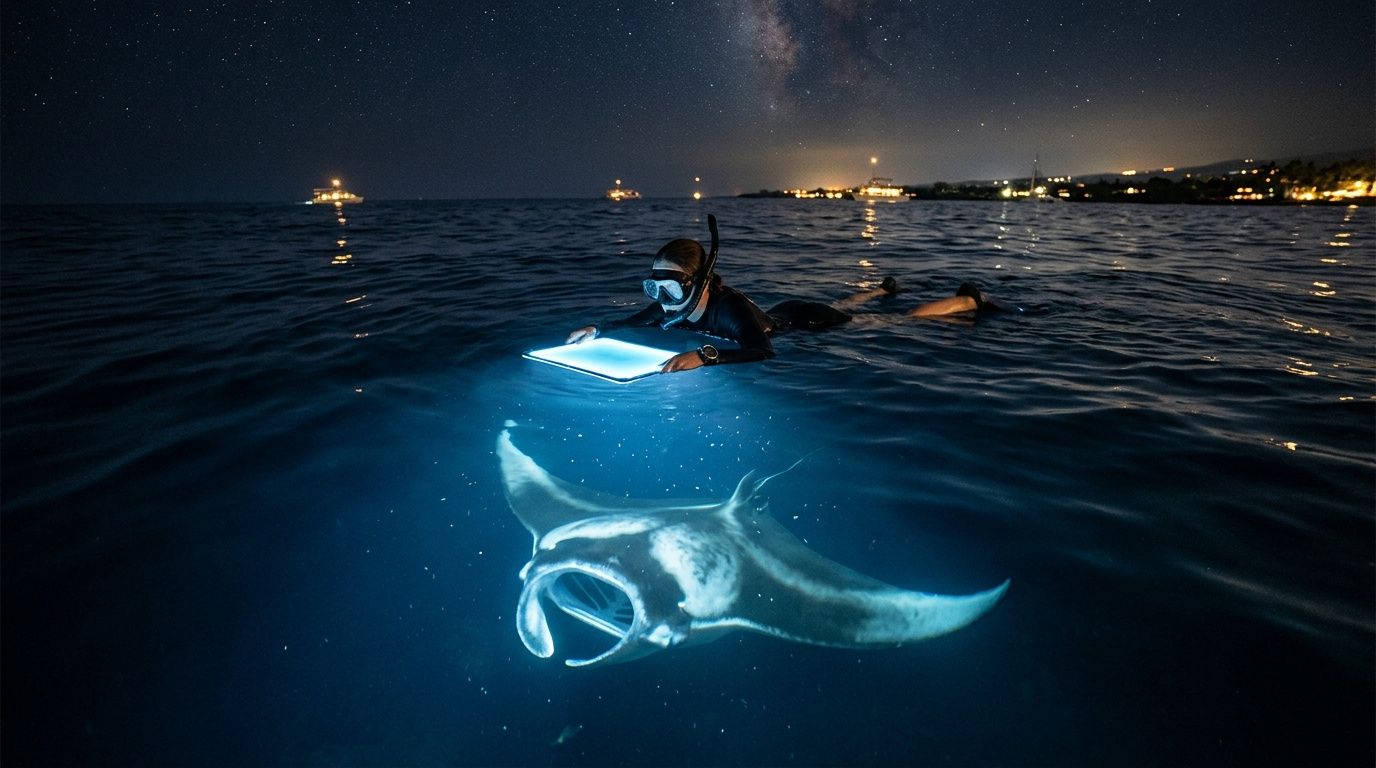
You’re probably here because the manta ray night snorkel looks unreal in photos, and you want to know if it’s worth doing, whether it’s safe, and how to choose a tour that won’t turn a rare wildlife encounter into a crowded checklist item.
It’s worth it. But the experience is much better when you show up prepared, understand what the mantas are doing, and book with an operator that treats the encounter like a privilege instead of a performance.
An Unforgettable Night with Kona's Gentle Giants
You slide into the water after sunset, settle your hands on the light board, and look down into a bright circle of plankton. A few seconds later, a manta rises out of the dark and fills the space beneath you. The wingspan, the slow turn, the white belly catching the light. It feels huge and quiet at the same time.
That first approach changes the way many visitors see the ocean at night. The encounter feels dramatic, but your job is simple. Breathe steadily, hold position, and let the animals choose the distance and direction of every pass.

What makes this experience memorable is not only the sight of the mantas. It is the setting and the behavior you get to witness up close. You are floating above an active feeding zone in a place where guides, captains, and marine advocates have spent years refining how guests observe without chasing, touching, or cutting off the animals. That approach protects the encounter and usually makes it better.
I tell guests to treat the night as a wildlife encounter first and a tour second. People who come in with that mindset tend to relax faster, follow directions better, and notice more. They see the cephalic fins unfurl, the banking turns tighten under the lights, and the repeated loops that bring the mantas back through the plankton stream. If you want to understand those movements before you get in the water, this explanation of manta barrel rolls and feeding behavior underwater gives useful context.
For anyone building a bigger Big Island trip around this night snorkel, personalized Big Island itineraries from Explore Effortlessly are useful for fitting the tour into a realistic travel day without overpacking your schedule.
Kona Snorkel Trips has a large review history, and that matters for practical reasons. Consistent guest feedback can tell you a lot about check-in efficiency, gear quality, briefings, crew attentiveness, and how well an operator runs the site when conditions are less than perfect.
The best manta nights feel close and wild, but they stay safe because guests keep their movements controlled and let the rays lead.
Why Kona is the Manta Ray Capital of the World
You notice the difference in Kona before the first manta arrives. The boat ride is short, the sites are known, and the crew is not gambling on a lucky sighting in open ocean. They are taking you to a feeding area that manta rays already use.
That reliability starts with the ecosystem. Along the Kona coast, local ocean conditions concentrate plankton close to shore after dark, which gives reef mantas a steady reason to return to the same areas. These are not random pass-through visits. Kona supports a resident manta population, and that changes the entire encounter for guests and guides.
A resident group makes the experience more consistent, but it also raises the standard for how people should behave in the water. You are stepping into a feeding pattern that exists whether visitors are present or not. Good tours respect that pattern instead of trying to force interaction.
Resident mantas change the experience
In many destinations, manta encounters depend on season, migration timing, or a brief window of good fortune. Kona runs differently. Mantas are seen here throughout the year because the food source is more dependable and the animals know these feeding sites well.
For visitors, that leads to a few practical advantages:
- Trip timing is simpler. You can plan around weather and your vacation schedule instead of a narrow migration season.
- Site behavior is more predictable. Guides can explain what guests are likely to see because the mantas often feed in recognizable patterns.
- The encounter feels calmer. Boats are usually positioning around a known wildlife behavior, not racing to intercept a one-off sighting.
That last point matters. A calmer operation usually means better spacing in the water, clearer briefings, and less guest stress once the lights are on and the mantas start looping below.
The coastline helps, too
Kona has several sheltered coastal areas that suit this kind of night snorkel. Calm water, clear visibility, and relatively accessible depths allow guests to watch from the surface while the mantas feed beneath the light field. You do not need scuba training to have a serious wildlife encounter here.
Good manta sites are built on a combination of biology and geography. The plankton has to collect consistently. The water has to stay manageable enough for guides to keep a group organized. The site also needs enough room for the animals to move naturally without being crowded by people.
The reason Kona stands out is not just that mantas are present. It is that the habitat, feeding behavior, and tour setup all line up in a way that can be both memorable and responsibly managed.
If you want a closer look at the ecological side, this explanation of why manta rays gather near Kona after dark connects the local ocean conditions to the feeding behavior guests see at the surface.
What to Expect on Your Manta Ray Night Snorkel
Most first-timers feel better once they know the sequence. The tour isn’t chaotic, and it doesn’t involve free-swimming around in the dark hoping a manta appears.
It usually unfolds in a simple order. You check in, get a safety briefing, gear up, ride out to the site, enter the water with the guide’s direction, and hold onto the light board while the mantas feed below.

Before you get in the water
The briefing matters more than people expect. This is when guides explain entry and exit, where to place your hands, how to keep your body horizontal, what the mantas are likely to do, and what not to do if one comes very close.
A strong crew also uses this time to lower anxiety. Night snorkeling feels unfamiliar until you understand that you’ll have flotation, a clear focal point, and active guide support the entire time.
The light board is the center of the experience
The core tool is the manta ray light board, a floating platform with high-powered LED lights aimed downward. According to this explanation of how the manta ray light board works, the board attracts zooplankton through phototaxis, creating an artificial plankton bloom that draws mantas in to feed. That’s why guests often see barrel rolls and somersaults directly under the board, sometimes within inches.
This setup works better than scattered lights because it concentrates the food source. The guests stay together. The guides can manage the group. The mantas focus on a defined feeding area.
What the in-water experience actually feels like
The first few minutes are usually the adjustment period. Your breathing sounds louder through the snorkel. The water feels darker than it did from the boat. Then your eyes settle, the lights define the space, and the ocean starts feeling structured instead of empty.
Once the mantas arrive, people usually stop worrying about everything else.
A typical in-water rhythm looks like this:
- Settle onto the board. Keep your body long and relaxed.
- Look straight down. Don’t scan everywhere. The action is in the light column.
- Hold position. Kicking too much makes it harder for everyone.
- Let the manta choose the distance. Close passes happen when guests stay predictable.
A guest who stays calm sees more. A guest who keeps readjusting usually misses the best passes.
A lot of people ask how many rays they’re likely to see. It varies night to night, which is part of the appeal, but this guide on how many manta rays guests may see on a Kona night snorkel gives a useful expectation framework without treating wildlife like a guaranteed script.
How to Choose the Best Manta Ray Snorkel Tour
The biggest mistake people make is booking by price alone. For a daytime reef snorkel, you can sometimes get away with a more casual choice. For a nighttime wildlife encounter, operator quality affects comfort, safety, and the behavior of the whole group.
A good manta tour should feel organized before the boat leaves the harbor. If the check-in is sloppy, the briefing is rushed, or the crew treats questions like a nuisance, that usually shows up in the water too.
What matters most
Use this framework when comparing tours.
| Feature | What to Look For | Why It Matters |
|---|---|---|
| Safety staffing | Lifeguard-certified guides, clear briefings, active in-water supervision | Night snorkeling is much easier when trained staff manage the group closely |
| Group management | Smaller groups or well-controlled guest flow | Fewer moving parts usually means calmer water time and less crowding at the board |
| Gear quality | Well-fitted masks, wetsuits, flotation, and stable light-board setup | Comfort problems on land become bigger problems at night |
| Conservation standards | Clear no-touch rules and respectful wildlife handling | The best encounter is one that protects the mantas’ normal feeding behavior |
| Boat fit | A vessel that matches your comfort level and mobility needs | Boarding style, ride feel, and space onboard affect the whole evening |
| Crew communication | Guides who explain what’s happening in plain language | First-timers relax faster when they know exactly what to do |
What works and what doesn’t
What works is a crew that keeps the process simple. Good operators don’t overload guests with marine biology trivia right before entry, but they do explain the behavior, the rules, and the body position that gives you the best view.
What doesn’t work is treating the night as a numbers game. A rushed boat, oversized group, or chaotic water entry can turn an elegant encounter into an uncomfortable one.
If you want to compare operator style by vessel setup, this guide to the best boat types for a Kona manta ray snorkel is helpful because the boat itself affects entry ease, ride comfort, and how the trip feels before and after the water time.
For travelers who want one booking option to review, Kona Snorkel Trips’ manta ray snorkel tour outlines the trip format and logistics. If you’re comparing all available operators, Manta Ray Night Snorkel Hawaii is also an exceptional alternative to consider.
If the manta snorkel is one piece of a larger island vacation, a custom planning service like Passport to Adventure trip planning can help fit evening tours into a smoother itinerary, especially when you’re balancing drives, dinner timing, and family schedules.
Your Safety and Manta Ray Conservation Guide
People usually bundle two separate concerns together. They wonder if they’ll feel safe in the water at night, and they want to know whether the tour is safe for the mantas too. In practice, those two things are linked.
When guests stay calm, hold position, and follow guide direction, the encounter becomes more controlled for everyone. That’s safer for nervous snorkelers, and it’s also less disruptive for feeding mantas.

What keeps guests comfortable
Night adds a mental hurdle, but the actual support system is strong on well-run tours. Wetsuits help with warmth. Flotation support reduces effort. The light board gives you a fixed orientation point, which helps prevent that drifting, disoriented feeling some first-time night snorkelers expect.
If you tend to get cold after water activities, plan for it. A wetsuit isn’t just a comfort upgrade. It helps you stay relaxed long enough to enjoy the encounter instead of counting the minutes until you get back on the boat.
A few practical habits help:
- Eat sensibly before departure. Don’t show up overly full or hungry.
- Tell the crew if you’re anxious. Guides can often place you where the experience feels most manageable.
- Use the flotation correctly. Don’t try to prove you’re a stronger swimmer than you are.
- Bring only what you need. Less loose gear means less to manage at night.
If you’re also thinking about where to stash valuables before boarding, this guide to the best portable safes for the beach is a practical pre-tour read.
The rules that protect mantas
Manta rays can reach 16 feet across, but they’re gentle animals with no teeth or stingers, and strict protocols exist to protect both guests and the rays during encounters, as explained in this article on manta ray night snorkel safety and behavior.
The most important rule is simple: don’t touch the mantas.
Touch removes the protective mucus layer on their skin. That layer matters. Guests sometimes assume a light brush wouldn’t hurt, but the right response is always the same. Keep your hands to yourself, stay at the surface, and let the manta control the pass.
Practical rule: Passive observation isn’t a suggestion. It’s the reason these encounters can continue responsibly.
For a clearer look at the guest standards that protect wildlife and improve the tour for everyone, read these manta ray snorkeling rules for guests and wildlife protection.
Frequently Asked Questions About the Manta Ray Snorkel
The questions usually start on the boat ride out. A parent wants to know if their child will be comfortable. A first-time snorkeler wonders what night water feels like. Someone else asks if a manta ray that big can get too close.

Those are the right questions to ask. This is not just another boat activity. It is a close encounter with wild animals feeding in a fragile nighttime habitat, and guests who arrive informed usually enjoy it more.
Is it scary to snorkel at night
For some guests, yes at first.
The dark, the open water, and the anticipation can all hit at once. Once you are holding the light board, breathing steadily, and watching the water below fill with plankton and movement, the experience usually shifts from nerves to focus. The setup helps. You are not swimming off on your own or searching the reef in the dark.
What if I’m not a strong swimmer
Strong swimming matters less than staying calm, listening well, and using the flotation the crew gives you.
I have seen capable swimmers struggle because they fought the float and wore themselves out. I have also seen nervous guests do very well because they spoke up early and let the crew position them where they felt secure. If you are unsure, say so before you enter the water. That gives the guide a chance to help instead of playing catch-up later.
What should families know before booking
Family fit depends on the operator, the child, and the conditions that night.
Some tours set minimum ages in the 5 to 7 range, water temperatures are often around 75 to 78°F, and many guests start to feel chilly after about 45 minutes in the water, as noted in this family-focused guidance on snorkeling preparation in Kona. The practical question is not just whether a child is old enough. It is whether they can follow directions, stay calm in the dark, and remain respectful around wildlife when the excitement spikes.
What’s the best time of year to go
Manta snorkeling in Kona is a year-round activity, so most visitors can book around their travel plans instead of chasing a short season.
What changes more than the calendar is the ocean. Some nights are glassy and easy. Some nights have more surface movement, and that can make the same tour feel very different, especially for newer snorkelers.
Can I bring my own camera
Usually yes, but simpler is better.
A small camera is easier to manage than a large housing with lights and handles. If your gear keeps you from holding position, breathing calmly, or giving the mantas space, it is hurting the experience instead of helping it. Good manta footage comes from staying still and letting the animal make the pass.
Will I get cold
You might, even if the water sounds warm on paper.
Floating at the surface at night is different from taking a quick daytime swim. Heat loss adds up when you are still, wet, and focused on the water for an extended stretch. Wear the wetsuit that is offered. Guests who skip that extra warmth often regret it halfway through the snorkel.
Are manta rays dangerous
Manta rays are gentle animals. They do not have stingers, and they are not hunting anything in this setting.
The primary risk is guest behavior, not manta behavior. Reaching out, kicking too much, or breaking position creates problems for both people and wildlife. The best encounter happens when you stay still, watch closely, and let the manta decide how near it wants to come.
If you want a well-run, wildlife-focused night snorkel, Kona Snorkel Trips offers a straightforward way to experience this encounter with lifeguard-certified guides, small-group attention, and a format built around safe, respectful manta viewing.