
Manta Ray Snorkel Age Limits for Big Island Families
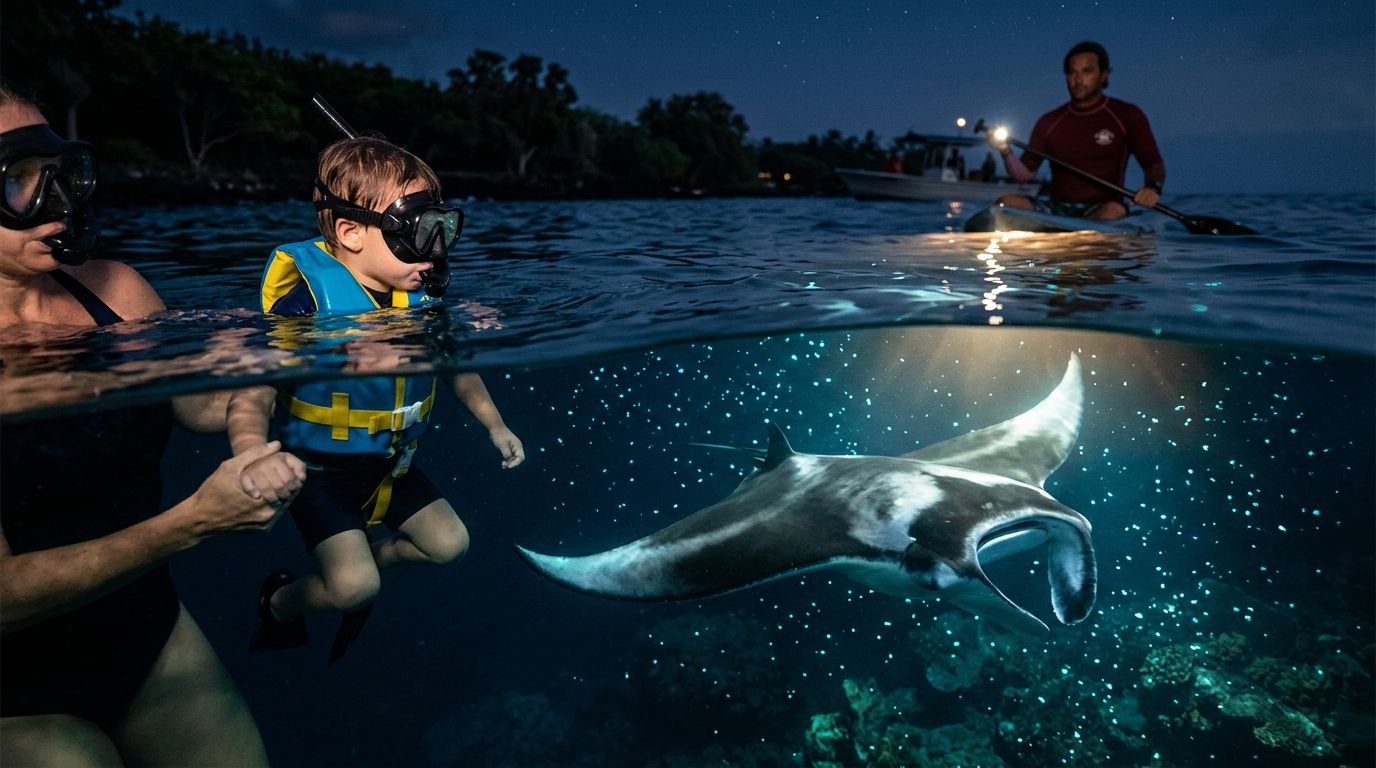
A child can be old enough for a manta ray tour but still not be ready for nighttime ocean swimming. When you search for the manta ray snorkel age requirement, you need more than a number. You also need to consider swimming ability, snorkeling experience, confidence, and adult supervision.
Kona Snorkel Trips helps families prepare for this decision with small-group tours, lifeguard-certified guides, quality gear, and a strong focus on ocean safety. Once you understand how age limits work, you can choose a trip that fits your family instead of guessing at the dock.
What the manta ray snorkel age limit means for families
Kona Snorkel Trips lists a minimum age of five for its manta ray night snorkeling tour. However, turning five doesn’t automatically make a child ready. Young guests must be able to swim 50 yards without additional flotation and have prior snorkeling experience.
That standard matters because the tour takes place at night in open ocean water. Your child may need to remain calm while wearing a mask, breathing through a snorkel, and holding position near a floating light board. A child who swims well in a pool may still feel uncomfortable in dark water.
The Kona night manta ray snorkeling tour provides the operator’s current age and participation details. Review those requirements before you reserve a spot, especially if your child is close to the minimum age.
Another local option, Manta Ray Night Snorkel Hawaii, also focuses on age, swimming skill, and adult supervision. Its manta ray FAQ states that children under 18 must be at least five, demonstrate strong swimming ability, and stay with an adult throughout the activity.
The phrase manta ray snorkel age describes the starting point, not the entire safety decision. Use this practical guide as you plan:
- Children under five usually won’t meet the minimum age for a guided night manta snorkel.
- Children ages five to seven should have strong swimming skills, previous snorkeling practice, and a calm response to unfamiliar water.
- Children ages eight to twelve may be ready when they can follow instructions, manage their equipment, and swim comfortably without depending on flotation.
- Teenagers still need to meet the same water-skill requirements. Age alone doesn’t replace swimming ability.
- Every child should have an adult who can stay close and respond quickly if the child becomes tired or anxious.
These are planning guidelines, not a substitute for the operator’s current rules. Tour policies can change, and guides may make a different decision if conditions affect safety.
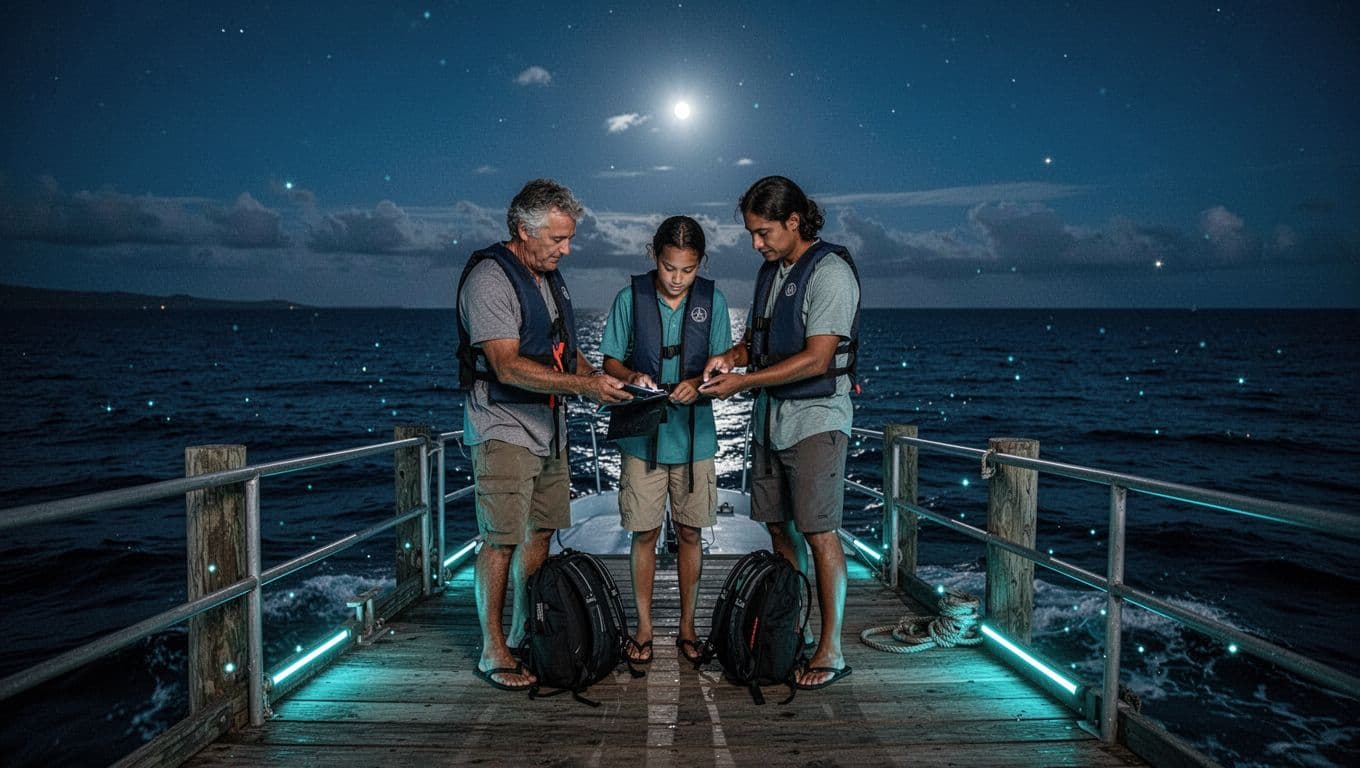
Kona Snorkel Trips follows a “Reef to Rays” philosophy. The company keeps groups personal, provides carefully selected snorkeling gear, and uses lifeguard-certified guides who explain both safety and respectful wildlife viewing. Its custom-built lighted boards help create the viewing area, while reef-safe practices protect the surrounding habitat.
Why nighttime conditions affect the age requirement
A manta ray snorkel takes place after sunset, when the ocean looks and feels different from a daytime reef. Your child can’t rely on seeing the bottom, nearby swimmers, or the boat as clearly. Even confident swimmers may need time to adjust.
The water can also move beneath the group. A guide may ask you to hold a light board, maintain your position, or return to the boat when conditions change. Children who tire quickly or lose focus may struggle with those instructions.
Night tours also require comfort with several pieces of equipment. Your child needs to tolerate a mask over the face, a snorkel in the mouth, fins on the feet, and a life vest or other approved flotation equipment when the operator permits it. Poorly fitting gear can add stress, so tell the crew about fit problems immediately.
An adult should stay close enough to help without pulling a child through the activity. That means you need to be a capable swimmer too. If your child depends on you for constant physical support, a daytime snorkel in calmer, shallower water may be a better first step.
The most useful age question is not “How old is my child?” Ask instead, “Can my child safely manage the water skills this tour requires?”
The minimum age protects the whole group, including your child. Guides must divide attention among guests, monitor ocean conditions, and protect the animals from contact. A child who can participate independently gives the guide more room to focus on the entire group.
How to tell if your child is ready
Start with swimming skills
Your child should swim comfortably without panic, even when the water feels unfamiliar. Practice more than short laps. Have your child swim a longer distance, tread water, float calmly, and return to the pool wall without help.
Ask your child to put their face in the water and breathe through a snorkel before the trip. A mask leak or a mouthful of water can frighten a new snorkeler. Practice removing the mask, clearing water, and signaling for help.
Swimming lessons help, but they don’t automatically prepare a child for open-ocean snorkeling. Your child also needs to follow verbal directions while wearing equipment and looking around instead of staring at the pool floor.
Check emotional readiness
Some children love marine life but dislike dark water. Others become nervous when they can’t see their parent clearly. Talk about the experience in plain language before you book.
Explain that manta rays are wild animals. Your child will watch them glide through the illuminated water, but shouldn’t touch, chase, feed, or block them. The goal is calm observation.
Your child should also know that leaving the water is always acceptable. A guide can help, but your family should never pressure a reluctant swimmer to stay in. A positive first ocean experience matters more than completing one particular excursion.
If your child has never snorkeled, begin with a daytime reef trip. Families researching snorkeling Big Island Hawaii options can start in bright, shallow water before deciding whether a night encounter feels comfortable.
What your family can expect during the tour
Your evening begins with a safety briefing and equipment fitting. Listen closely, even if you’ve snorkeled before. Guides explain entry procedures, hand signals, group boundaries, and the rules for viewing manta rays.
After entering the water, you usually float near an illuminated surface board. The lights attract plankton, which brings manta rays close to the viewing area. You may see the animals sweep beneath the group with their mouths open as they filter-feed.
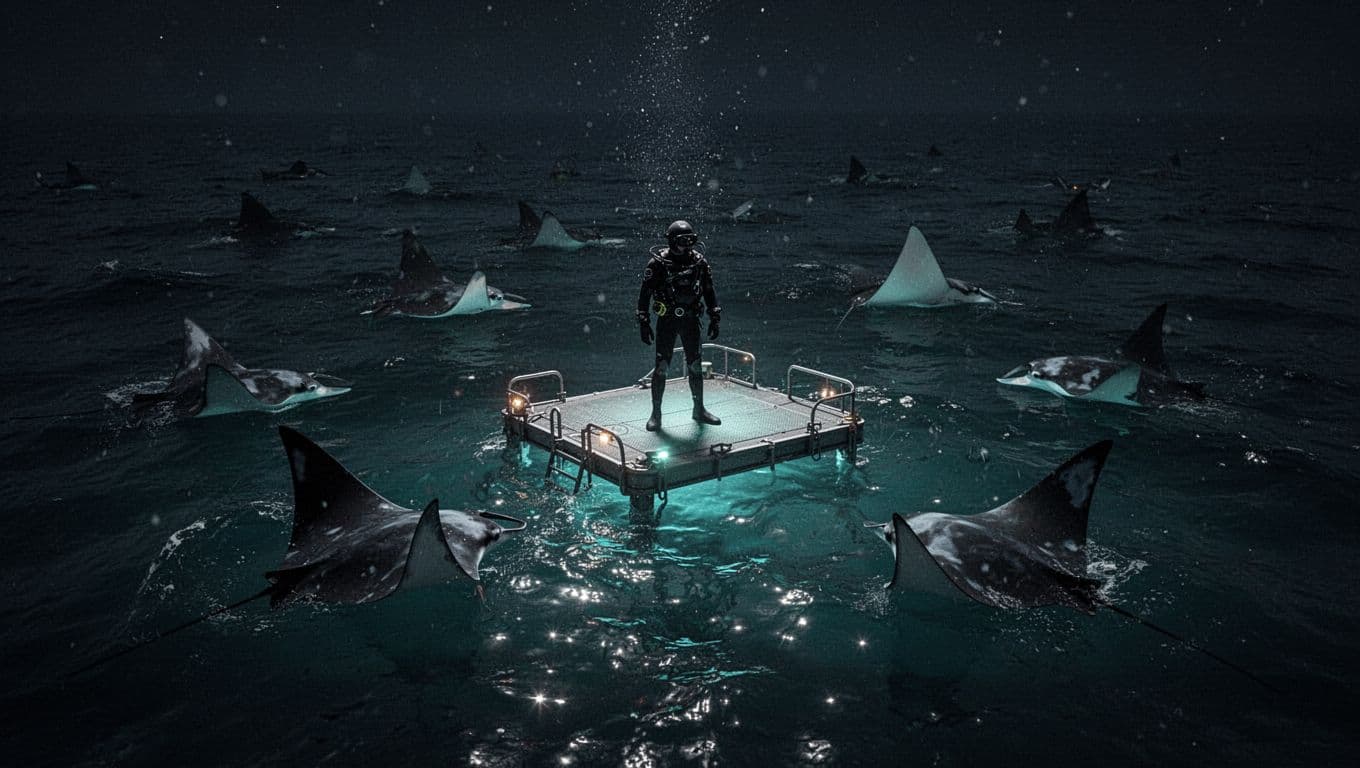
Your child doesn’t need to dive down or chase a manta. Staying relaxed at the surface gives the animals room and makes the encounter easier to enjoy. Guides can help you adjust your position and answer questions without encouraging contact.
Kona Snorkel Trips uses custom-built lighted boards for nighttime encounters, along with carefully maintained snorkeling equipment. Its guides also connect the wildlife experience to reef protection, so your family learns how behavior in the water affects Hawaii’s marine ecosystems.
A family can snorkel Big Island waters in many ways, but a night manta tour has a different rhythm. You spend less time exploring a reef and more time floating, watching, listening, and following your guide’s directions.
If your child gets cold, tired, or overwhelmed, tell the crew right away. Don’t wait until the problem becomes serious. A good guide would rather help early than ask a struggling swimmer to continue.
How to choose the right family booking
Start by checking the operator’s current minimum age and swim requirements. Then ask about adult supervision, flotation equipment, water entry, group size, and what happens if your child decides not to snorkel.
The manta ray snorkel age rule should also shape your schedule. Avoid placing the tour after a full day of hiking, driving, or other water activities. A tired child has less patience for equipment and instructions.
Bring warm layers for the boat ride, a towel, water, and any needed medication. Have your child eat a light meal before departure, and avoid rushing straight from the hotel to the harbor. A calm start can make the evening easier.
If you want more flexibility, ask about a private trip. A private boat charter may give your family more control over timing and pacing, although you still need to meet the operator’s safety requirements. For a standard guided outing, you can check availability before finalizing your vacation schedule.
For the manta tour itself, you can check availability after confirming that every swimmer meets the requirements.
Families who want a gentler introduction can plan a daytime reef outing first. Snorkeling Big Island reefs in daylight lets your child practice breathing, mask clearing, and group awareness before adding darkness and open water.
Conclusion
The right manta ray snorkel age depends on more than reaching the operator’s minimum. Your child should swim independently, have prior snorkeling experience, follow directions, and feel comfortable in dark ocean water.
For most families, the best plan is to review the rules early, practice snorkeling before vacation, and choose a guide who puts safety and wildlife respect first. When your child is ready, the encounter can become a calm, memorable night above Kona’s manta rays.