
How to Spot Moray Eels During Kealakekua Bay Snorkeling
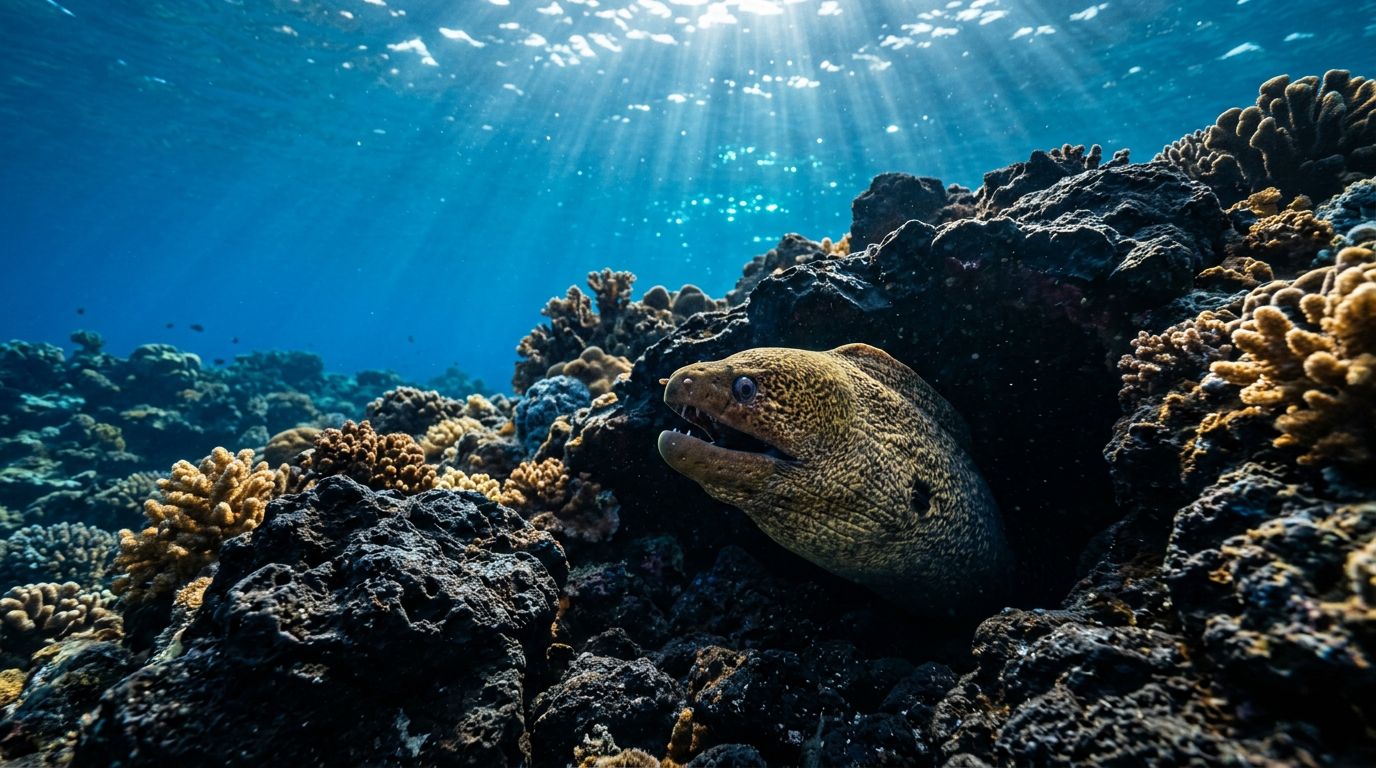
A moray eel can be inches from your mask and still look like part of the reef. During Kealakekua Bay snorkeling, the trick is not diving after it, but learning to read the volcanic rock around you.
Kona Snorkel Trips is a local option for guided reef adventures, while Captain Cook Snorkeling Tours focuses on trips around the historic bay. With the right viewing habits, you can find morays without touching the reef or disturbing their hiding places. Start by learning what these unusual fish look like and where they spend their time.
How to Identify a Moray Eel During Kealakekua Bay Snorkeling
Moray eels are long, scaleless fish with muscular bodies and a continuous fin running along their backs. Unlike snakes, they have gill openings, fins, and a fish-like head. Most of the body stays hidden inside a hole or narrow crack, so you may see only the head and front section.
The most obvious clue is the mouth. Morays often open and close their jaws while resting. This movement helps them draw water across their gills, so it usually means the eel is breathing rather than preparing to attack.
Hawaii has several moray species. A whitemouth moray may show a spotted or mottled body with a pale mouth. A yellowmargin moray often has yellow coloring around the edge of its mouth and jaw. Color can look different underwater, especially when shadows cover part of the eel, so use the body shape and hiding behavior as well.
The eyes are another useful clue. Morays have small eyes set high on the head, and they often keep their gaze directed toward the open water. You might notice the eel turn its head slightly as you pass. That movement helps it monitor nearby fish, divers, and changing water flow.
Morays don’t have a smooth, snake-like swimming style when they leave their holes. They move with a long wave that travels down the body. If you see a slender fish weaving between rocks with its entire back fin visible, you may be watching a moray traveling between shelters.
For a helpful overview of Hawaii’s eel species, you can compare your observations with this guide to Hawaii’s moray eels.
Where Moray Eels Hide in Kealakekua Bay
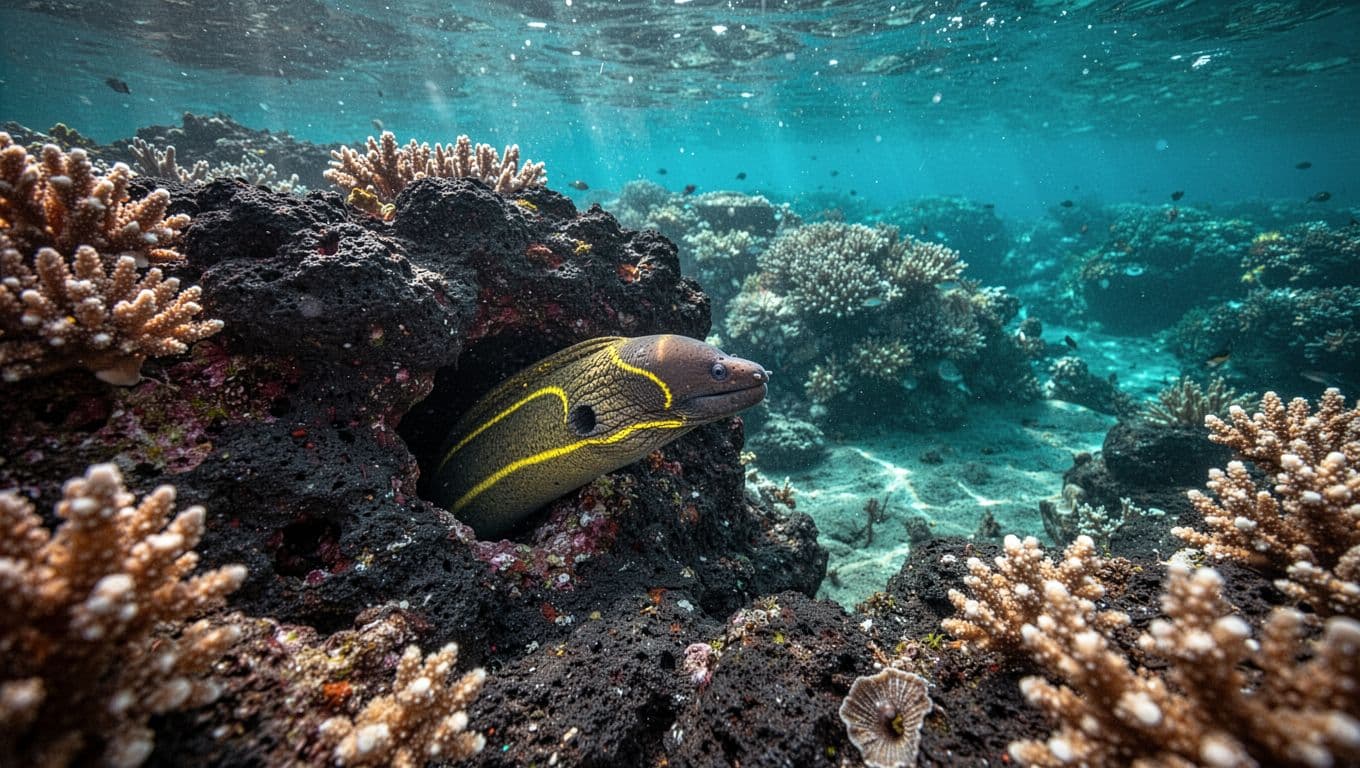
Morays prefer structure. When you enter the water, scan the reef’s edges instead of searching across open sand. Volcanic rock creates the cracks, ledges, and small caves that give eels protection during the day.
Look closely at places where two rocks meet. A moray may position its head at the entrance while the rest of its body disappears into darkness. Other likely spots include the shaded side of a boulder, the underside of a ledge, and the base of a coral-covered wall.
Keep your attention on shadow lines. The contrast between bright water and a dark opening makes an eel’s head easier to see. You may first notice a pale mouth, a pair of eyes, or a slow jaw movement before recognizing the full animal.
Crevices near healthy coral deserve a slow scan. Fish often move around these areas, and their activity can draw a moray out for a short hunt. Still, you shouldn’t chase an eel if it leaves its hole. Let it choose the route and watch from a respectful distance.
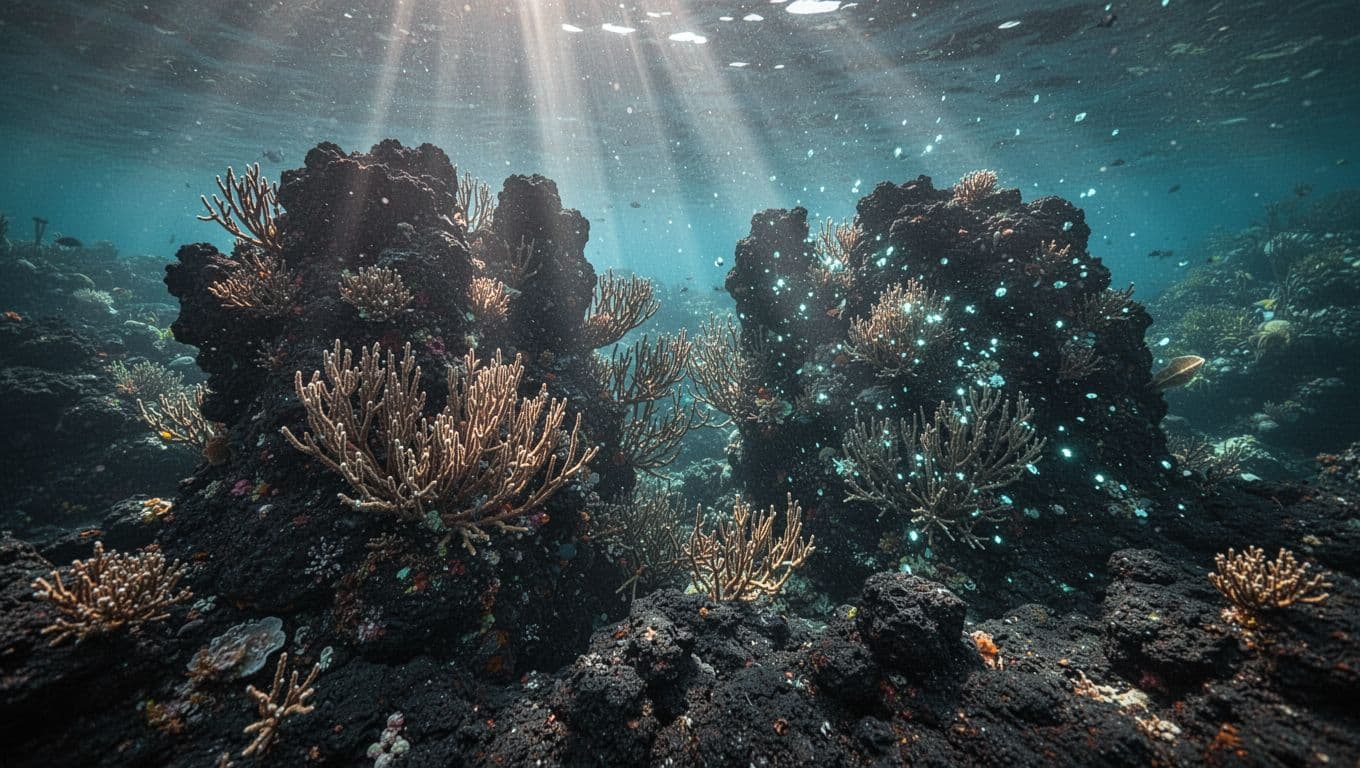
The reef around the Captain Cook Monument includes varied underwater structure, but conditions can change with swell, tide, wind, and boat traffic. A local guide can help you focus on safe viewing areas instead of swimming into a narrow opening or unstable water.
Never move rocks, lift coral, or place your hand into a hole. An opening that looks empty may contain a moray, an urchin, or another animal defending its shelter.
A Simple Way to Find Morays Without Disturbing Them
Spotting an eel requires patience more than speed. Fast swimming creates bubbles, noise, and surface chop that make small details harder to notice. Use this method during your next reef swim:
- Settle your breathing before you search. Float horizontally and keep your fins away from the bottom. A relaxed body helps you stay in one place without kicking coral or stirring sand.
- Scan the reef in short sections. Choose one boulder, ledge, or wall segment and inspect it before moving on. Sweep your eyes from the open water toward the darkest cracks.
- Look for the head first. Search for eyes, a pale mouth, a spotted snout, or a slow opening and closing motion. The body may remain completely hidden.
- Pause when you see movement. Stop kicking and let the water carry you past the opening. If you need to adjust your position, move slowly and stay several feet away.
- Share the sighting with your buddy. Point with an open hand rather than touching the reef. Your guide or snorkeling partner can confirm whether you’re looking at a moray, conger eel, or another reef fish.
Sun position affects visibility. When bright light shines directly into a crevice, the opening may appear black. If you can safely change your angle, move to the side so sunlight reaches the rock at an angle. Don’t dive beneath an overhang or enter a cave to improve your view.
A mask that fits well also makes a difference. Water leaking into your mask forces you to stop and adjust it, while fogged glass hides the small details that identify an eel. Defog your mask before entering the water and test the seal during the first few minutes.
What Moray Eel Behavior Tells You
Morays spend much of their time with their bodies protected inside reef holes. Their heads remain exposed because they need to monitor the water and draw oxygen across their gills. A wide-open mouth can look threatening, but mouth movement alone doesn’t show that an eel wants to bite.
Pay attention to the animal’s position. A moray that stays partly hidden and watches you is usually maintaining its shelter. A moray that pulls farther into a crack is asking for more space. Move away rather than trying to get a closer photograph.
You may also see a moray leave its hiding place and swim along the reef. This can happen when it searches for food or moves between shelters. Keep your distance and avoid following it into narrow terrain. The eel may be comfortable in a passage that isn’t safe for you.
Some morays visit cleaning stations. Small cleaner shrimp remove parasites and dead tissue from the eel’s skin and mouth. The eel may hold still while the shrimp work around its head. A recent underwater example shows a yellowmargin moray with cleaner shrimp.
If you see this behavior, remain especially calm. Sudden kicks can scatter the shrimp and cause the eel to retreat. Watch from the edge of the cleaning area and let the animals continue without interference.
Morays are predators, but they don’t hunt people. Most problems happen when a swimmer places a hand near a hidden animal, tries to feed it, or blocks the entrance to its shelter. Give the eel room, and your encounter should remain a quiet observation.
Water Conditions and Gear for Clearer Eel Sightings
Clear water helps you identify small reef animals, but visibility at Kealakekua Bay can vary. Wind, swell, boat wakes, rain, and suspended sand can change the view within a few hours. The calmest day isn’t always the day with the brightest sun, so check the marine forecast and follow local guidance.
For travelers comparing snorkeling Big Island Hawaii options, Kealakekua Bay is appealing because its underwater habitat includes rocky reef structure and clear coastal water. Visitors who want to snorkel Big Island reefs should still choose a site and time that match their swimming ability.
Searches for “snorkeling Big Island” often lead visitors to Kona’s west coast, where conditions can differ between bays. Ask your operator about the day’s entry plan, current, water temperature, and expected visibility before you leave the harbor.
A practical setup includes:
- A well-fitting mask with a clear lens and a snorkel that stays comfortable during relaxed breathing.
- Fins that let you move efficiently without powerful kicks near coral.
- A rash guard or wetsuit layer if you become cold while floating in one place.
- Reef-safe sun protection, plus a hat and cover-up for time on the boat.
- A flotation aid if you need extra support or cannot comfortably tread water.
You don’t need a large camera to enjoy a moray sighting. A phone or action camera can make you focus on framing instead of observing. Watch first, then take a few photos if the animal remains settled. Never use a flash close to an eel’s face.
If your mask floods, your breathing becomes difficult, or the current pulls you away from the group, stop searching and signal your guide. Finding a moray is a bonus. Staying calm and safe matters more.
Choosing a Guided Kealakekua Bay Snorkel Tour
A guided trip can make moray spotting easier because your crew knows how to read the reef. Guides can also help you adjust your position without standing on coral, drifting into boat traffic, or entering rough water.
Kona Snorkel Trips follows a “Reef to Rays” philosophy with small-group ocean adventures, lifeguard-certified guides, quality snorkeling equipment, and a focus on reef-safe practices. The crew combines marine-life education with active attention to guest safety. Its Big Island snorkeling tours include guided reef experiences and private options for families, couples, and groups.
For a trip centered on Kealakekua Bay and the Captain Cook Monument, review the Captain Cook snorkel tour. A guide can point out likely eel habitat while explaining how to keep your fins, hands, and equipment clear of the reef.
Captain Cook Snorkeling Tours is another company that focuses on excursions around Kealakekua Bay. You can compare its route details and trip information at Captain Cook Snorkeling Tours.
When comparing tours, look beyond the destination name. Check the group size, guide qualifications, included equipment, departure point, cancellation policy, and approach to marine-life protection. Families should also ask whether the trip suits children or weaker swimmers.
A smaller group can make it easier to hear a guide’s instructions and share a sighting without a crowd gathering around one crevice. Private trips offer more control over pace, though marine conditions still determine where and how long you can snorkel.
A review widget for Kona Snorkel Trips is included below for current guest feedback.
You can review available departure times before choosing a date.
Reef Etiquette and Moray Eel Safety
The best encounter is one where the eel keeps behaving normally. Keep your hands off the animal, the rocks around it, and the coral that forms its shelter. Even a gentle touch can remove protective mucus from a fish or break fragile reef growth.
Don’t feed morays. Food changes natural behavior and can make animals associate swimmers with handouts. It can also bring fish close to your hands and create unsafe competition around the feeding spot.
Keep your face and camera outside the eel’s personal space. A long camera pole can reach farther than you expect, so use it with care. If another snorkeler is already watching an eel, wait nearby rather than crowding the opening.
Morays have sharp teeth, and a bite can cause a serious injury. You reduce that risk by never reaching into a hole, grabbing an eel, or placing bait near its head. The same rule applies to any unfamiliar reef animal.
Follow your guide’s instructions about boundaries and current. Stay with your buddy, maintain enough energy to return to the boat, and keep an eye on your surroundings instead of focusing only on the reef floor.
If you feel tired, cold, seasick, or uncomfortable, tell the crew. A short break on the boat is better than trying to continue while distracted. Clear communication helps your guide protect you and the rest of the group.
For a Captain Cook or Kealakekua Bay trip, you can check availability before your preferred date fills.
Conclusion
Moray eels reveal themselves when you slow down and study the reef’s structure. Look for a head in a shaded crevice, watch the mouth movement, and keep your hands, fins, and camera away from the shelter.
During Kealakekua Bay snorkeling, a calm approach gives you the best chance to see natural behavior. Let your guide help you read the rocks, respect the eel’s space, and enjoy the sighting without becoming part of the animal’s problem.