
Why Manta Rays Have Scars in Hawaii
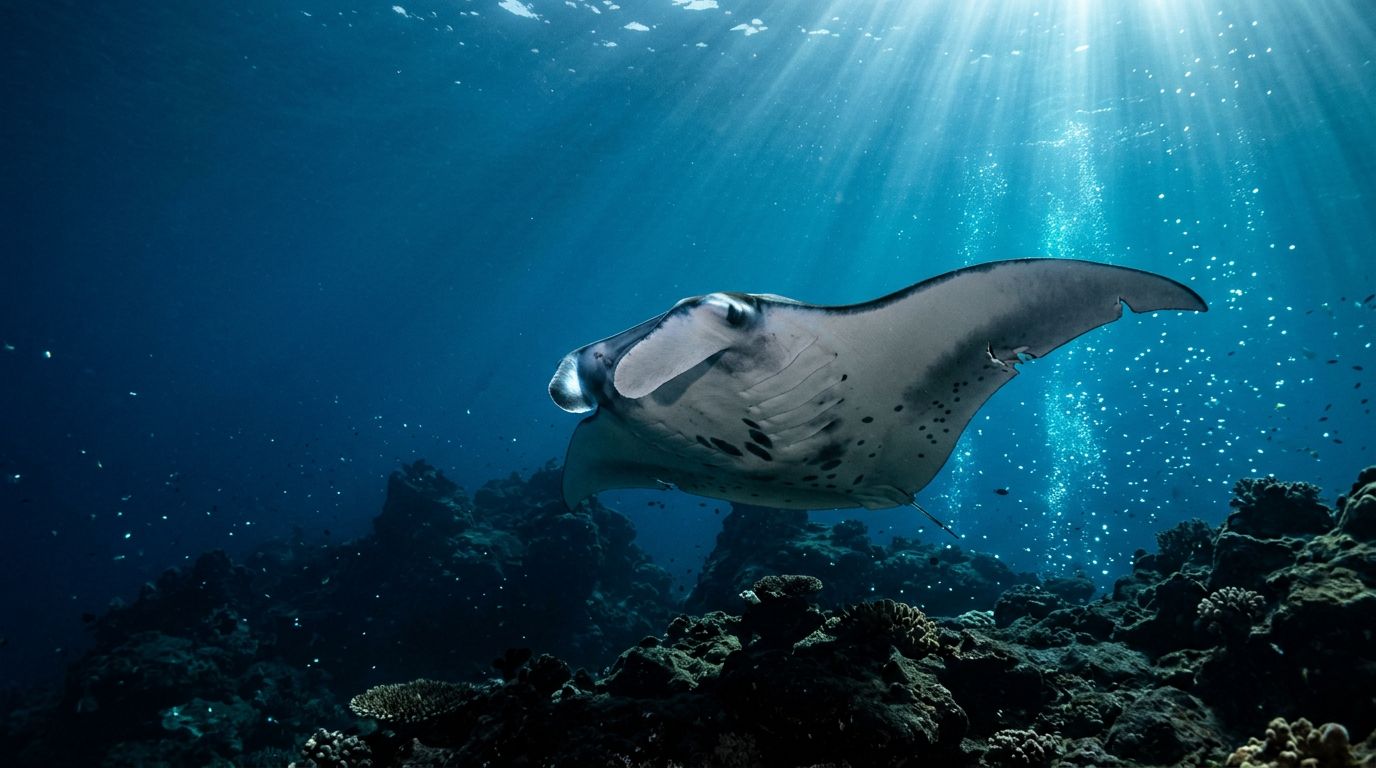
If you’re searching for “manta ray scars Hawaii,” you may have noticed pale lines, missing tissue, or notches on a ray’s body during a snorkel. Those marks can look alarming, especially when a manta glides within a few feet of you.
Most scars come from shark bites, fishing line, hooks, boat strikes, or other physical injuries. However, not every white mark is a scar. Some are natural pigmentation patterns that help researchers identify individual manta rays.
Once you know the difference, each mark tells a more complete story about the animal and the ocean it lives in.
Manta ray scars Hawaii: what you are actually seeing
The manta rays commonly seen around Kona are reef manta rays, Mobula alfredi. They have broad triangular wings, paired cephalic fins near the mouth, and dark backs with pale undersides. Their mouths filter plankton from the water, so they pose no hunting threat to swimmers.
A scar may appear as a smooth line, a crescent-shaped notch, a pale patch, or a section of missing tissue along a wing. Some injuries leave dark marks after healing, while others create lighter areas where the original skin color doesn’t return.
Natural markings can look similar. The spots and blotches on a manta’s belly are unique to each animal, much like fingerprints. A naturally pale shape usually has soft, irregular edges and follows the animal’s normal pattern. A healed wound often looks more linear, uneven, or sharply different from the surrounding skin.
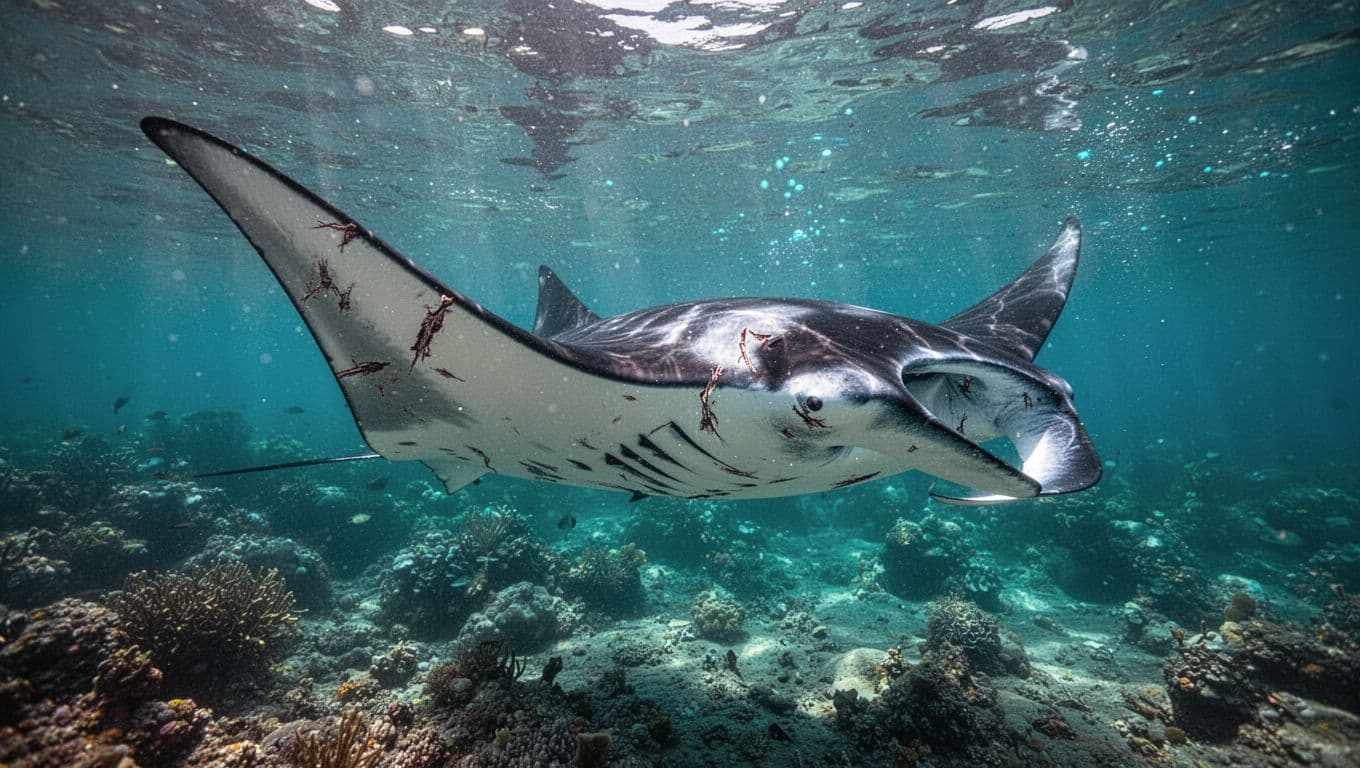
A manta ray’s scars can reveal past injuries, but they don’t tell you the animal’s age or personality. You also can’t identify the exact cause from one photograph alone. Researchers compare the location, shape, texture, and changes over time before assigning a likely cause.
Kona Snorkel Trips follows a “Reef to Rays” philosophy during its small-group ocean adventures. Lifeguard-certified guides focus on guest safety, reef-safe practices, and respectful wildlife viewing. The company also uses quality snorkeling equipment and custom-built lighted boards for nighttime manta encounters.
Another local option is Manta Ray Night Snorkel, which focuses on guided nighttime encounters in Kona. Whichever operator you choose, ask how the crew handles wildlife interactions and what behavior they expect from guests.
The main reasons Hawaiian manta rays have scars
A scar is a record of contact with something in the ocean. Around Hawaii, several causes appear repeatedly in manta research and photo-identification records.
Shark bites leave curved notches and missing tissue
Sharks are natural predators of manta rays. Tiger sharks and other large sharks can attack mantas, although a manta may survive the encounter and continue feeding.
Shark injuries often affect the outer edges of the wings. A bite may leave a rounded notch, a row of curved marks, or a section of tissue missing from the leading edge. Older injuries can heal into smooth, pale scars.
A 2019 study on reef manta healing found that only 24 percent of the Hawaiian population examined showed visible shark-bite injuries. The researchers also found that manta rays can heal quickly, which means visible scars may undercount the number of attacks that occurred. You can read the published reef manta study for details on how healing can hide the full extent of an injury.
The location of the scar matters. A bite along the wing edge looks different from a wound across the back or near a cephalic fin. Still, researchers avoid calling every notch a shark bite without supporting evidence.
Fishing line and hooks can cut into fins
Fishing gear is another source of injury. A manta can encounter a loose line, hook, net, or leader while feeding or swimming through coastal waters.
Line wrapped around a cephalic fin may create a narrow groove or cut. If the animal pulls away, the line can tighten and damage skin, cartilage, or the fin’s delicate edge. A hook can leave a puncture wound, while trailing line can create long abrasions across the body.
These injuries can affect feeding. Mantas use their cephalic fins to help direct plankton-rich water toward the mouth. Damage in that area may make feeding less efficient, especially if tissue remains swollen or restricted.
The danger doesn’t end when a manta escapes. Fishing line can continue to drag behind the animal, causing repeated cuts or limiting movement. A healed scar may be the only visible evidence that the encounter occurred.
A Scientific American account of manta entanglement describes cases in which mantas approached divers while entangled. That behavior shows how serious gear-related injuries can become, although you should never attempt a rescue without trained responders.
Boat strikes can create straight cuts and deep wounds
Mantas spend time near the surface, especially when feeding on plankton. That behavior brings them into the same space as boats, making collisions possible.
A propeller or hull can create a straight scar, parallel cuts, or a wide area of damaged tissue across the back. The injury may look clean at first, then become more irregular as it heals.
One documented Hawaiian manta, Kalena Ku, has a back scar associated with a boat strike. Her record also includes a cephalic fin scar connected to fishing-line entanglement. The Manta Trust record for Kalena Ku shows how one animal can carry evidence of more than one human-related injury.
You shouldn’t assume every straight mark came from a boat. A photograph may show the shape of a wound, but researchers need repeated observations and other evidence to determine the likely cause.
Contact with reefs and unknown injuries can leave marks
Mantas sometimes move through shallow coastal areas, around lava formations, and near submerged structures. Rough surfaces can cause abrasions, particularly if the animal is startled, injured, or forced into a tight space.
Other wounds may come from contact with debris, another animal, or an event no one witnessed. Some scars are too old to identify with confidence. The skin may have healed, the color may have changed, and the original injury may no longer be visible.
For that reason, scientists often classify a mark as an old injury without assigning a definite source. That approach protects the accuracy of long-term manta records.
A visible scar proves that an injury happened, but it doesn’t prove exactly what caused it.
Why manta ray scars stay visible after healing
Manta rays can heal from serious wounds, but healing doesn’t always restore the original appearance. New tissue may have a different texture or color. Pigment cells may not return evenly, leaving a pale, gray, or darker patch.
The outline of the injury can also remain visible because the skin tightens as it closes. A missing piece of tissue may heal with a rounded edge, while a deep cut may form a narrow line. If a fin was damaged, the healed edge may stay uneven for years.
Mantas have cartilage rather than bones. That flexible skeleton supports their wings, but it can suffer lasting damage when a line, hook, or propeller cuts deeply. A superficial scrape may fade. A wound that affects the fin’s structure can change the shape permanently.
Rapid healing is helpful, yet it can make injury records harder to interpret. A manta may appear healthy while still carrying a mark from an earlier event. The lack of an obvious scar doesn’t mean the animal has never been injured.
Most healed scars don’t stop a manta from swimming or feeding. Many scarred rays return to regular cleaning, feeding, and courtship areas. However, severe wounds can reduce movement, affect feeding, or create an opening for infection during recovery.
How researchers tell scars from natural markings
Researchers identify manta rays through photo identification. They photograph the underside of the animal, record its natural belly pattern, and compare new images with earlier sightings.
The process works best when a photograph shows the full underside. Researchers look at the arrangement of spots, the shape of larger patches, the edges of the wings, and marks around the cephalic fins. Scars add another clue, but natural pigmentation usually carries more weight.
A manta may have a distinctive mark on one side and a different pattern on the other. That detail helps separate animals that look similar from above. The record becomes stronger when the same individual appears at known locations over several years.
Repeated observations also show whether a mark is changing. A fresh wound may look swollen or sharply colored. Later images may show a smoother edge, fading pigment, or a permanent notch. That timeline helps researchers distinguish an active injury from an old scar.
You can help by taking clear photographs without chasing the animal. A distant image that captures the whole underside is more useful than a close photograph of one scar. Include the date, location, and approximate conditions if you share the sighting with a research group.
Do not touch a manta to inspect a mark. Contact can remove protective mucus from the skin and may change the animal’s behavior. You also risk turning a calm feeding encounter into a stressful escape.
Why Kona’s night snorkels attract manta rays
Night manta tours work because underwater lights attract plankton. Manta rays follow the food source, then circle through the illuminated water with their mouths open. They aren’t coming to interact with people. They are following a concentrated feeding opportunity.
The dark water makes scars easier to notice in some situations. A pale mark can stand out under the lights, especially when a manta rolls or banks beneath a floating board. However, changing angles and shadows can also make natural markings look like wounds.
Experienced guides help you read what you’re seeing. They can explain the difference between a belly pattern, an old bite, and a possible line injury without encouraging guests to touch or crowd the animal.
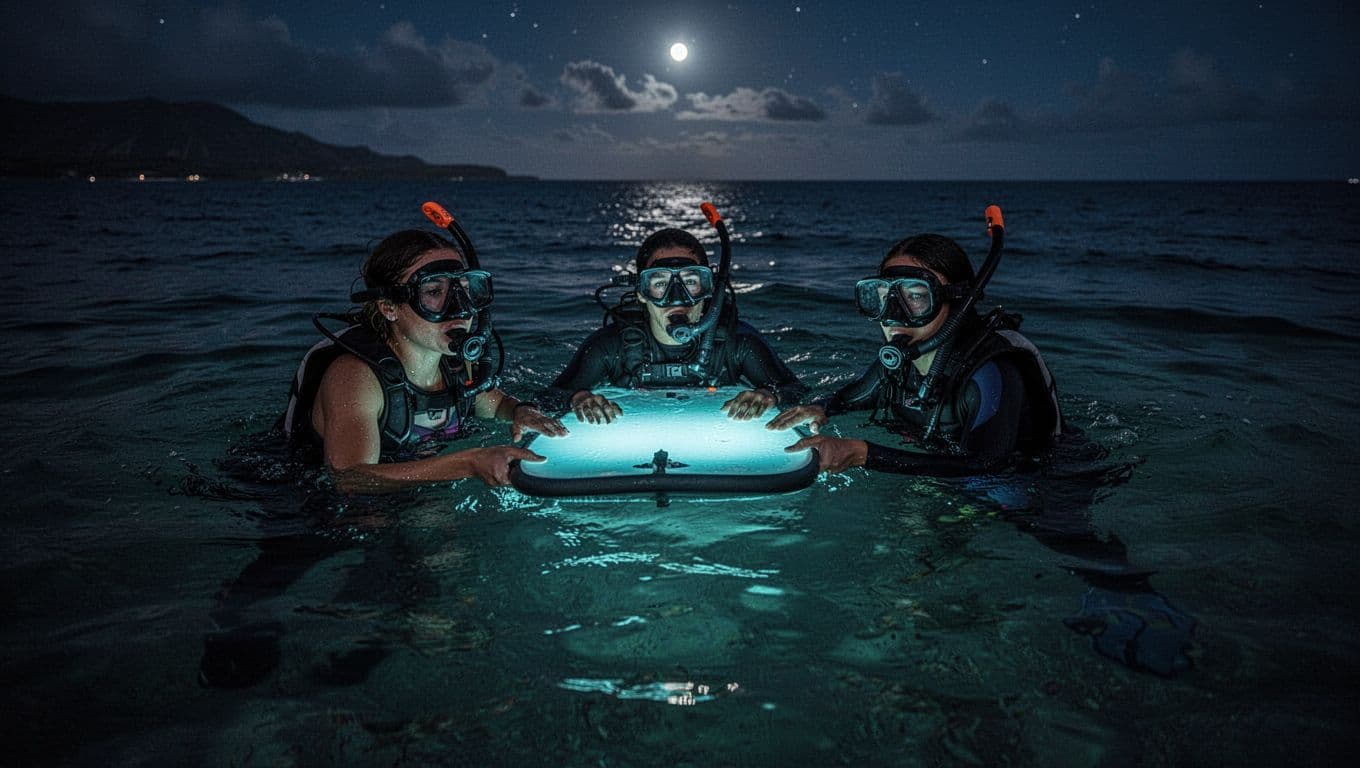
Kona Snorkel Trips keeps its manta experiences personal by limiting group size and using custom lighted boards. Its guides are lifeguard certified and provide instructions before you enter the water. The company also includes reef education and responsible viewing practices in its tours.
The goal is to give you a close view while leaving the manta’s path open. You float at the surface, keep your hands relaxed, and allow the animal to decide how close it wants to come.
If you’d like to see the experience for yourself, you can check availability for a Kona manta ray night snorkeling tour.
How to watch manta rays without causing harm
You can protect manta rays by changing a few simple habits during the encounter. Follow your guide’s instructions even when a manta approaches within arm’s reach.
- Keep your hands off the manta’s back, belly, wings, and cephalic fins.
- Stay at the surface and leave the animal a clear path beneath you.
- Avoid kicking toward a manta, diving after it, or blocking its turn.
- Use reef-safe sunscreen and keep loose equipment secured.
- Follow all instructions about boat entry, flotation boards, and lighting.
Touching may seem harmless, but manta skin has a protective mucus layer. Repeated contact can remove that layer and increase stress. A swimmer who reaches for a wing may also cause the manta to change direction suddenly.
Your fins can cause problems too. A kick near the head or wing may strike the animal, while a crowded group can force it away from the feeding area. Staying still gives you a better view and reduces the chance of accidental contact.
If you see fishing line, a hook, or a net on a manta, tell your guide immediately. Don’t grab the animal or pull on the gear. Trained crews can report the situation and contact the right responders.
Respect also means accepting that wildlife doesn’t follow a schedule. Some nights bring several close passes. Other nights may offer distant views. The animal’s comfort comes before a perfect photograph.
Choosing a responsible Big Island manta experience
If you search for snorkeling Big Island Hawaii, you’ll find trips that vary in group size, equipment, departure times, and water access. Look for a provider that explains safety rules before entering the water and treats manta encounters as wildlife observation, not an attraction with guaranteed animal behavior.
Ask how many guests share a lighted board. Smaller groups usually give you more room to float without bumping into other swimmers. You should also ask whether guides are trained in water safety and how the crew responds to an injured or entangled manta.
Families need to consider swimming ability, comfort in open water, and nighttime conditions. A child who enjoys a calm daytime reef may need more preparation for a dark-water experience. Couples and solo travelers should also confirm what flotation support is available.
If you want to snorkel Big Island reefs during the day, a standard reef trip can complement a night manta encounter. Clear water around volcanic coastlines gives you a different view of Hawaiian marine life, including reef fish, coral growth, and sea turtles when conditions allow.
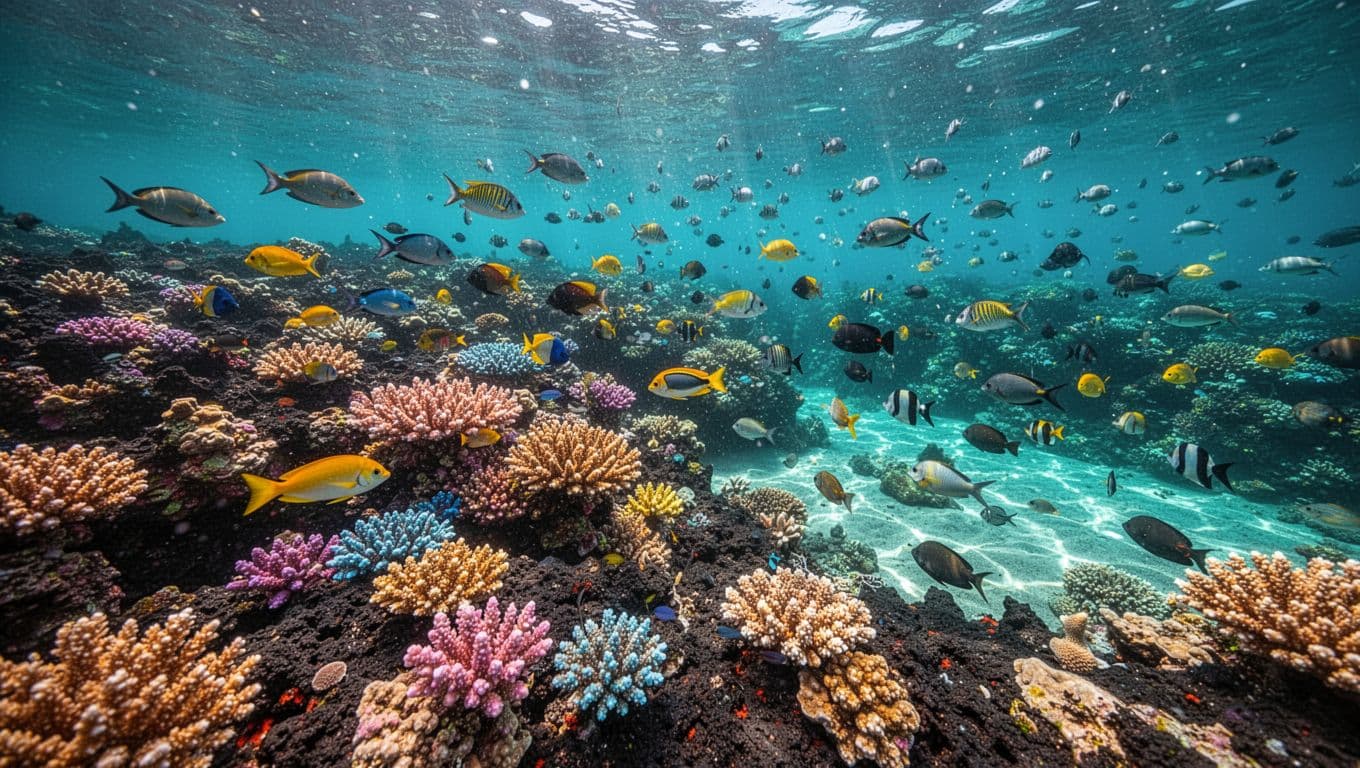
Good snorkeling Big Island conditions depend on wind, swell, visibility, and the site’s exposure. Ask your operator which location fits your comfort level rather than choosing only by the advertised animal.
Kona Snorkel Trips also offers private Kona boat tours for travelers who want a more flexible outing. A private trip can give your family or group more control over timing, reef stops, and the pace of the day, subject to ocean conditions and crew guidance.
For a dedicated night encounter, the company’s manta ray night snorkel page provides tour details and available options. You can also check availability for other guided snorkeling experiences in Kailua-Kona.
What a manta ray scar can teach you
A scar is more than an unusual mark on a beautiful animal. It may show that a manta survived a shark encounter, escaped fishing gear, or recovered from contact with a boat or rough surface.
Natural belly patterns can look similar, so you should avoid guessing from one photograph. Researchers use repeated images, body patterns, scar locations, and changes over time to identify individual mantas and understand their injuries.
During a Kona night snorkel, your best contribution is simple. Stay calm, keep your hands off the animal, leave room for it to feed, and report dangerous gear to your guide.
The next time you see a manta with scars in Hawaii, look beyond the mark. You may be seeing a survivor whose history is written across its wings.