
How Manta Ray Pups in Hawaii Learn to Swim
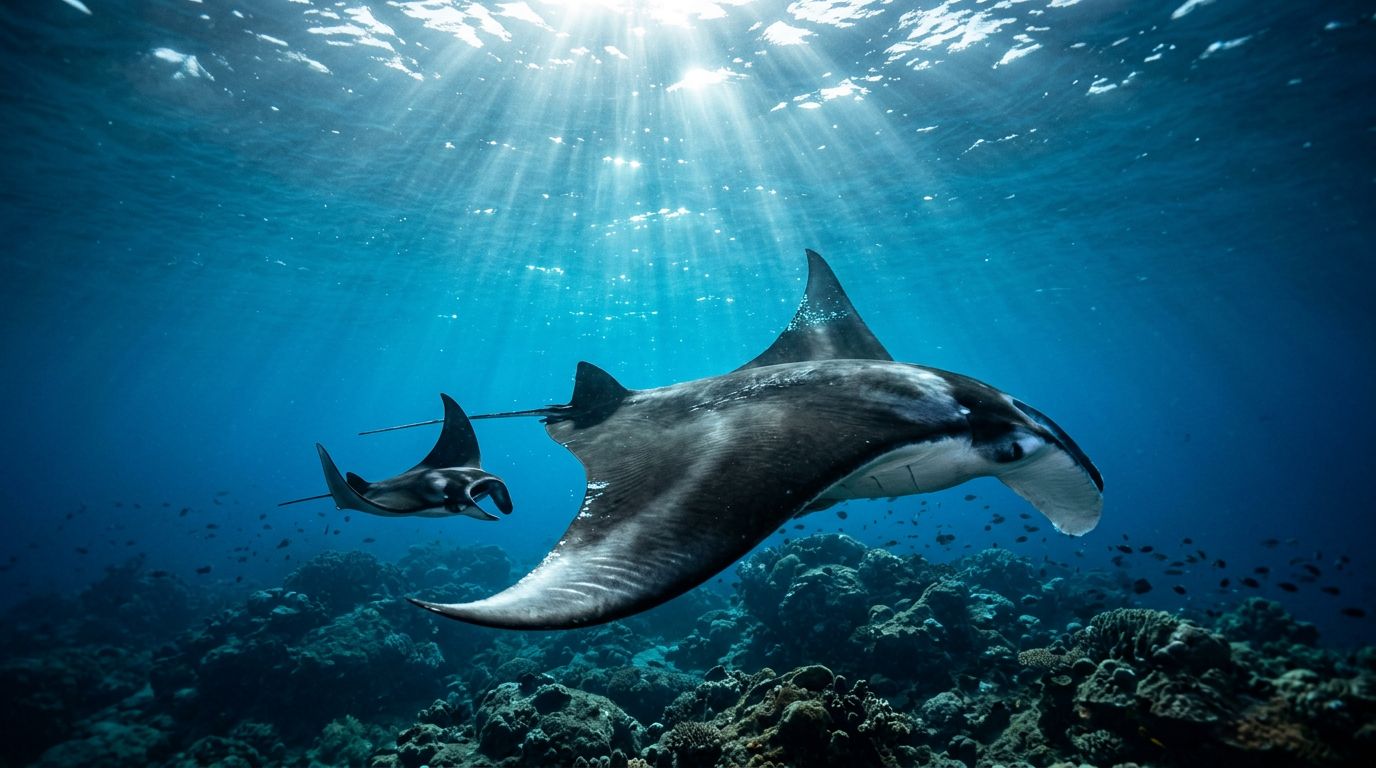
A newborn manta ray doesn’t wait for swimming lessons. Soon after birth, it must unfold its fins, find its balance, and move through open water using instincts built into its body.
Curiosity about manta ray pups Hawaii often begins with a picture of a tiny ray following its mother. The real story is more surprising. Manta pups arrive with the basic swimming skills they need, while practice helps them become more efficient and controlled.
To understand that first swim, you need to look at manta reproduction, body design, Hawaiian waters, and the limits of what researchers can observe.
A manta ray pup is born ready for the ocean
Manta rays give birth to live young. Their embryos develop inside the mother’s uterus rather than hatching from eggs on the seafloor. Early in development, the embryo uses nourishment from its yolk. Later, uterine fluids provide additional support before birth.
A female manta usually produces one pup at a time. She may also wait several years before reproducing again. That slow reproductive pace helps explain why every young manta matters to the health of a local population.
Gestation lasts about a year, although the exact timing can vary. When birth arrives, the pup leaves the uterus with its broad pectoral fins folded or rolled around its body. This compact position makes it easier for the newborn to pass through the reproductive tract.
After birth, the pup begins to open its fins. The movement may look awkward at first, but the young ray already has the same basic equipment as an adult. Its body contains the muscles, nerves, sensory organs, and fin structure needed for swimming.
Published estimates often place a newborn manta at roughly 1.5 meters, or about 5 feet, across. That makes a manta pup large compared with most newborn marine animals. It still needs time to improve its coordination, but it isn’t helpless.
Manta rays don’t raise their young in family groups. A mother doesn’t stay beside the pup to demonstrate each stroke. Once the young ray separates from her, it relies on inherited behavior and its own responses to the surrounding water.
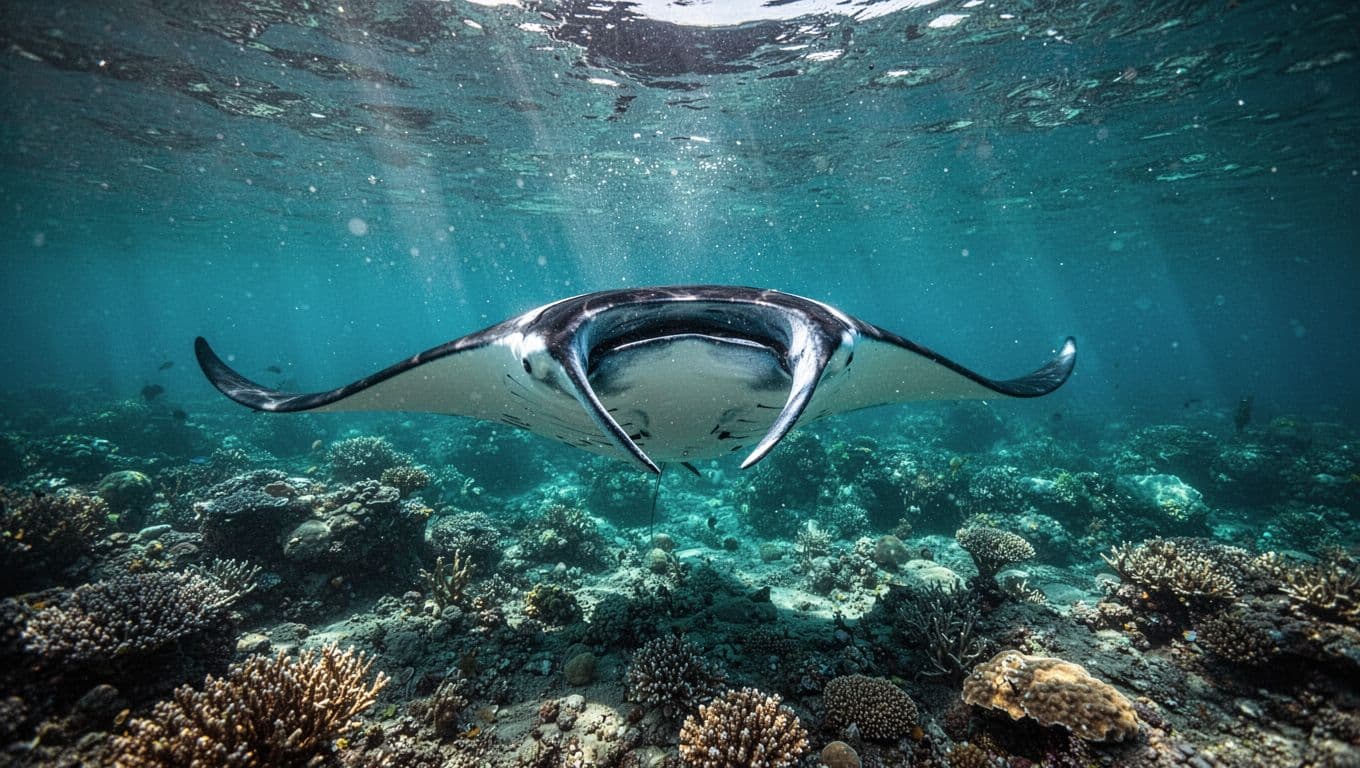
A newborn manta has the anatomy for swimming before it has the control of a mature adult.
Manta ray pups Hawaii and the first swim
The word “learn” needs some care when you apply it to a newborn manta. A pup doesn’t learn by watching its mother or listening to instructions. Instead, it begins with an inherited movement pattern and improves through repeated use.
Its first challenge is to coordinate both pectoral fins. Manta rays swim with their large, wing-shaped fins, so even a small difference in timing can affect balance. The pup must make both sides work together while keeping its body stable.
The newborn also needs to control its roll and pitch. Roll is the motion that tilts the body from side to side. Pitch changes the angle of the body as it moves upward or downward. These movements matter when a ray turns, rises toward food, or drops below a current.
The first movements rely on instinct
A pup’s nervous system already contains the basic pattern for fin movement. Water pressure then provides constant feedback. If one fin pushes harder, the body turns. If the ray angles its fins slightly upward, it gains lift. Each movement gives the pup information about what its body is doing.
The lateral line system adds another source of information. This network of sensory organs detects water movement around the animal. It can help a young manta sense currents, nearby motion, and changes in pressure even when visibility is limited.
The inner ear also helps the pup maintain orientation. Vision adds more information, especially in clear coastal water. Together, these senses help the young ray stay upright and respond to its surroundings.
Practice improves control
The pup’s first swim doesn’t need to be perfect. It only needs to work well enough to move, breathe, and avoid immediate danger. Repeated strokes gradually improve timing and energy use.
A young manta may spend less energy per stroke as its coordination improves. It also becomes better at turning, holding a depth, and adjusting to currents. These refinements are learned through experience, not through parental teaching.
A manta pup’s first swim comes from inherited anatomy and instinct. Practice turns that first movement into efficient adult swimming.
Direct observations of newborn mantas in Hawaiian waters are rare. Therefore, researchers can’t describe every stage of a Kona pup’s first hours with the detail available for animals raised in laboratories. Scientists infer much of the process from manta anatomy, behavior, and observations of young rays elsewhere.
The body design behind a manta’s swimming ability
A manta ray’s pectoral fins do most of the work. Unlike fish that rely mainly on a side-to-side tail motion, mantas move through the water with broad fin strokes that create both thrust and lift.
The leading edges of the fins meet the water first. As the fins move, pressure differences help the manta glide. The animal can change the shape and angle of each fin to rise, descend, turn, or hold position.
This design gives adult mantas their smooth, soaring movement. For a newborn, however, the same large fins create a coordination challenge. The pup must manage a wide surface area while controlling a body that is still developing strength and precision.
Manta rays also use their cephalic lobes, the curled structures at the front of the head, to guide plankton-rich water toward the mouth. These lobes can fold and unfold as the ray changes its feeding position. They are not paddles, but they affect how water flows around the head.
The tail plays a smaller role in propulsion than the pectoral fins. It can assist with stability and steering, while the fins provide the main swimming force. A manta’s skeleton is made of cartilage, which keeps the body lighter and more flexible than a comparable bony fish.
That flexibility helps a manta adjust to moving water. It also means a pup must coordinate many small changes across its body. Swimming becomes smoother as the young ray gains strength and experience.
The pup doesn’t need to invent a new technique. Its body already follows the same basic design that allows adult mantas to cruise, turn, and hover over reef and open-water habitats.
Why Kona’s waters are important to the story
Kona’s west coast has clear water, volcanic shoreline, and ocean conditions that bring people close to manta rays. Adult mantas gather where food becomes available, including areas where plankton collects in the water column.
Nighttime viewing works because lights on the surface or underwater attract plankton. Mantas then move into the area to feed. The lights don’t call the rays from great distances, and they don’t teach young mantas how to swim. They make a small feeding zone easier for visitors to observe.
Kona Snorkel Trips follows a “Reef to Rays” philosophy that combines small-group service, guest safety, and reef care. Lifeguard Certified guides lead the trips, provide well-maintained snorkeling equipment, and share information about the marine environment. Custom-built lighted boards support nighttime viewing while keeping the focus on the animals and their habitat.
You can learn about the company’s manta ray night snorkeling trip before choosing an outing. Manta Ray Night Snorkel is another company offering manta encounters in Hawaii, and you can visit Manta Ray Night Snorkel for its tour information.
The adults that visit Kona’s feeding areas are usually the stars of these encounters. A newborn pup may live in a different part of the ocean, or it may pass through an area when no tour is present. Seeing adult mantas gives you a valuable look at the species, but it doesn’t mean you’re watching a nursery.
You can check availability for a guided snorkeling tour with Kona Snorkel Trips.
A manta night trip can show you how adults use their fins and bodies in a controlled feeding area. It can’t show every stage of a pup’s development, and responsible guides won’t claim otherwise.
You can also check availability for a manta ray night snorkeling tour in Kona.
Why you rarely see newborn manta rays in Hawaii
When you look for manta ray pups Hawaii, you may expect to find a predictable nursery near a popular viewing site. Hawaii doesn’t offer a simple public schedule for newborn sightings.
Manta rays are wide-ranging animals. Even populations that return to familiar feeding or cleaning areas can spend much of their time elsewhere. A young ray may move through offshore water, follow plankton, or remain in a location that visitors never reach.
Their slow reproduction also limits the number of pups in any one area. Females usually have a single pup, then may wait years before producing another. A small number of births makes newborns much less common than adult sightings.
Size can also create confusion. A smaller manta isn’t automatically a newborn. Young rays can vary in size, and a reliable age estimate requires more information than a quick view from the surface.
Researchers use the unique markings on a manta’s underside to identify individuals. These patterns work much like fingerprints. Photographs collected over time can reveal when a ray returns, where it travels, and how often it appears at a particular site.
That method helps researchers understand local populations without capturing the animals. It can also show which rays are adults, which are younger, and whether the same individuals visit a feeding area repeatedly.
Still, photo identification has limits. A photograph may identify a ray without revealing its exact age or birthplace. Scientists may know that a young manta visited a location, but they may not know where it was born.
What researchers can tell you about manta development
A manta pup resembles a smaller version of an adult, but its swimming behavior continues to change as it grows. Body size affects how much lift the fins produce and how strongly currents push against the ray.
A larger pectoral fin creates more surface area for movement. It also requires more control. As a pup develops muscle and coordination, it can make longer glides and sharper adjustments without wasting as much energy.
Feeding adds another layer of skill. Mantas filter plankton from the water, so a young ray must position its mouth and cephalic lobes in productive water. It needs to match swimming speed with the flow of food through the water column.
The pup also learns to respond to changing conditions. A calm feeding area requires different control than a moving current. Depth, visibility, nearby animals, and food density all affect how the ray moves.
Researchers can study these behaviors through photographs, video, tracking, and repeated observations. However, newborn swimming remains difficult to document because births usually happen away from shore and outside predictable viewing areas.
Hawaii’s waters are valuable for long-term observation because individual manta rays often return to known locations. A guide or researcher may recognize an adult by its markings and compare new sightings with earlier records.
Those records can reveal residency and movement patterns. They don’t provide a complete diary of every pup, but they help scientists understand how young rays eventually join the wider population.
The most accurate answer is simple: manta pups are born with the ability to swim, then refine that ability through movement, feeding, and exposure to currents.
How to observe manta rays without disturbing them
A respectful encounter begins before you enter the water. Choose an operator that explains safety rules, uses trained guides, and treats the animals as wild wildlife rather than performers.
Once you’re in the water, keep your hands to yourself. Touching a manta can remove protective mucus from its skin and change its behavior. Chasing, blocking, or surrounding a ray can also make it leave the feeding area.
Your body position matters. Keep your fins below you, stay aware of the reef and other swimmers, and follow the guide’s viewing boundary. If a manta approaches, remain calm and let the animal control the distance.
Don’t feed the rays or use personal lights to force a close approach. Tour lighting should support observation without turning the encounter into a chase. The best views often happen when you remain still and allow the manta to circle naturally.
Reef-safe habits also matter during daytime snorkeling. Avoid standing on coral, use only the equipment you need, and choose sun protection that reduces contact with the water when possible. A rash guard, hat, and shade can reduce the amount of sunscreen that enters the sea.
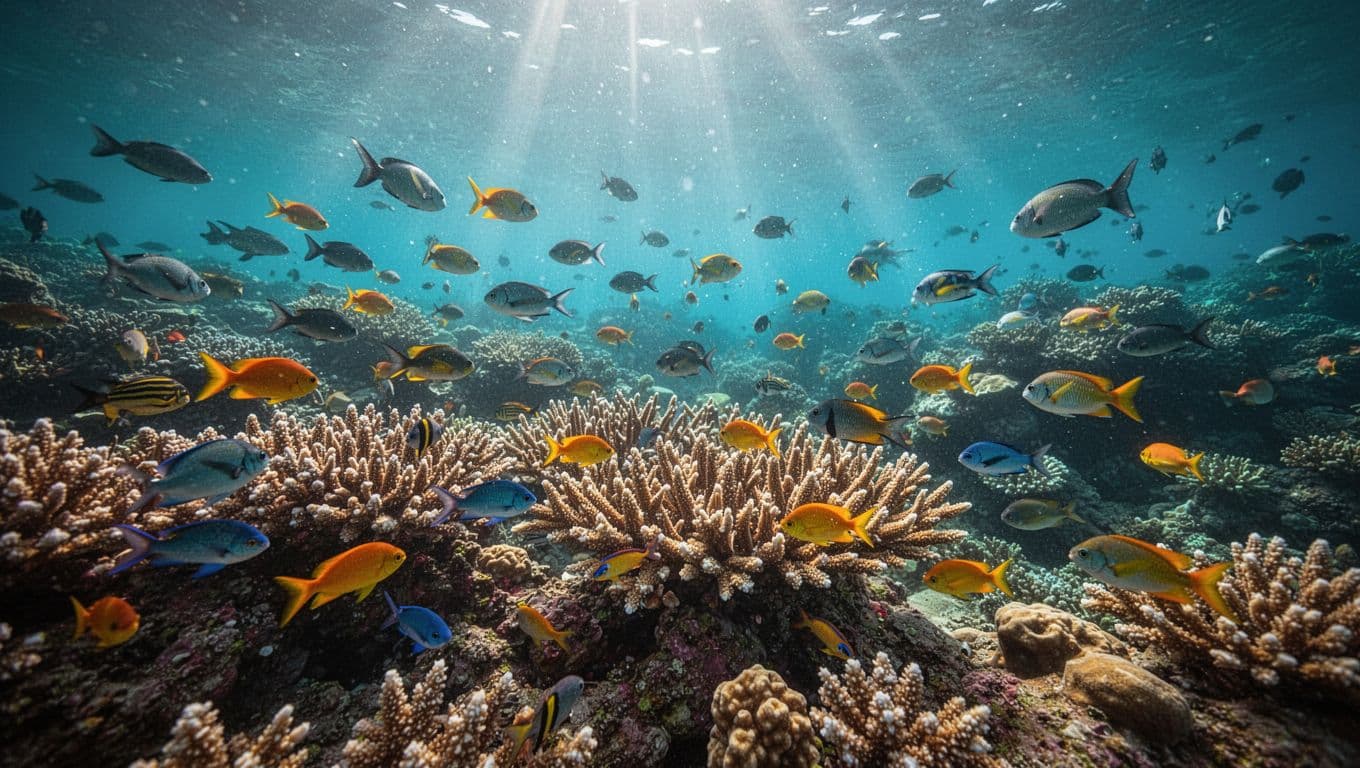
These habits protect more than manta rays. Healthy reefs support the small organisms that feed larger marine animals, including the plankton that brings mantas into Kona’s viewing areas.
Families should also be honest about swimming comfort. A nighttime ocean setting can feel different from a daytime beach. Ask the operator about flotation support, water conditions, medical concerns, and age requirements before booking.
Planning a manta encounter on the Big Island
If you’re planning snorkeling Big Island Hawaii, separate daytime reef trips from nighttime manta encounters. Each experience has a different setting, pace, and comfort level.
You can snorkel Big Island reefs during daylight, when you have a better view of coral, fish, lava formations, and the coastline. A night trip focuses on the water above you, the lights below, and the manta rays that arrive to feed.
For snorkeling Big Island, check the forecast and ask how the operator handles poor conditions. Clear water is helpful, but the ocean can change with wind, swell, and current. A flexible schedule gives you a better chance of enjoying the experience without rushing into uncomfortable conditions.
A manta trip is a strong choice for couples and adventurous solo travelers who want a focused wildlife encounter. Families should consider each swimmer’s confidence, especially if anyone feels uneasy in open water after sunset.
Kona Snorkel Trips offers guided Big Island snorkeling tours along with its manta experience. If you want to compare a nighttime outing with a daytime marine habitat, its Captain Cook snorkel tour visits Kealakekua Bay, where daylight makes it easier to see reef fish and underwater structure.
You can check avaialbility for a Captain Cook snorkeling trip.
A private outing can give your group more control over timing and location. Kona Snorkel Trips also offers private boat charters in Kona for groups that want a customized day on the water.
If you’re visiting during whale season, a seasonal whale watching trip adds another way to observe Hawaii’s marine life. It won’t show you a manta pup, but it can help you appreciate how many species depend on the same ocean conditions.
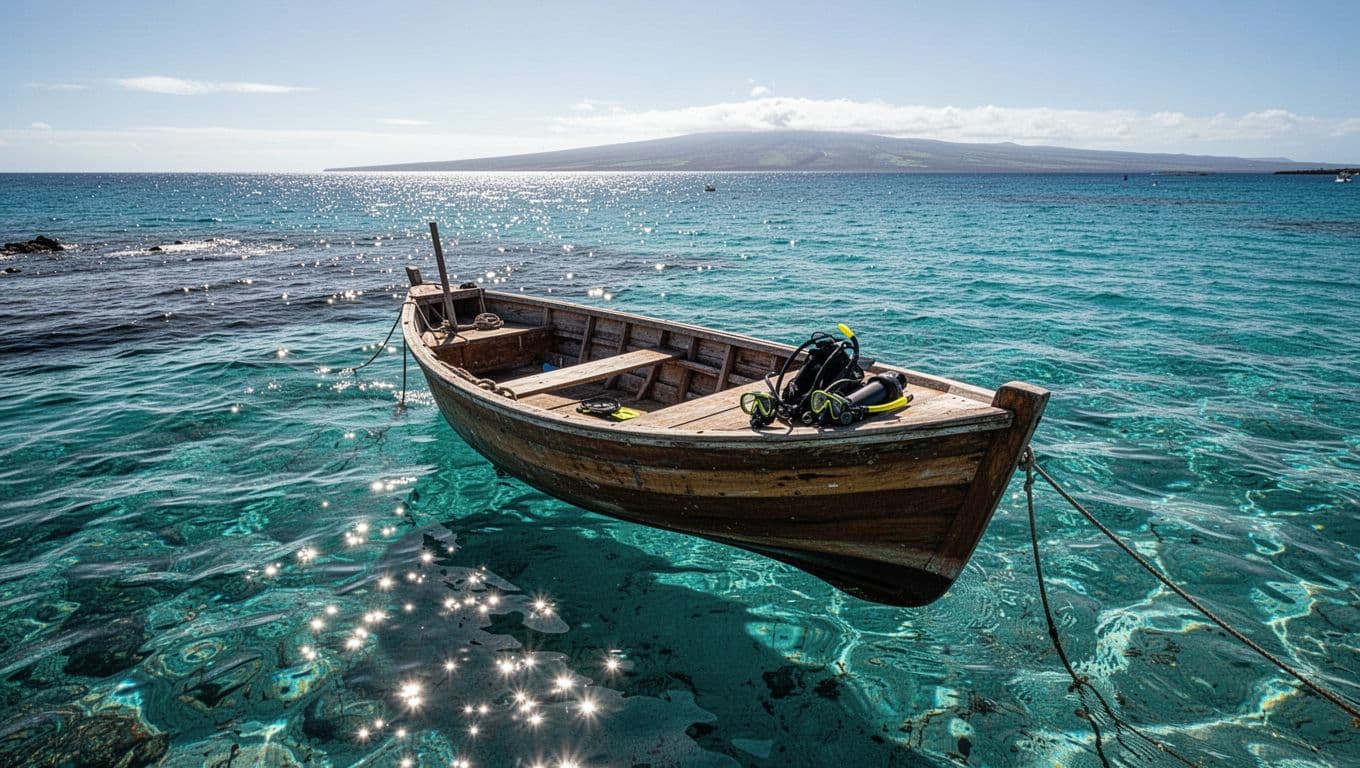
The most useful preparation is practical. Bring a swimsuit, towel, dry clothes, water, and any medication you may need. Follow the guide’s instructions, protect yourself from the sun, and leave room in your schedule for changing ocean conditions.
Conclusion
Manta ray pups in Hawaii don’t learn to swim through parental lessons. They are born with the anatomy and instincts needed to move, then improve through repeated strokes, changing currents, feeding, and growth.
Their first swim is rarely witnessed, but adult encounters near Kona let you see the same swimming design at full strength. When you watch without touching, chasing, or feeding, you protect the habitat that supports both today’s manta rays and the pups that will enter the ocean in the future.