
Manta Ray Night Snorkeling: Marine Life Beyond Mantas
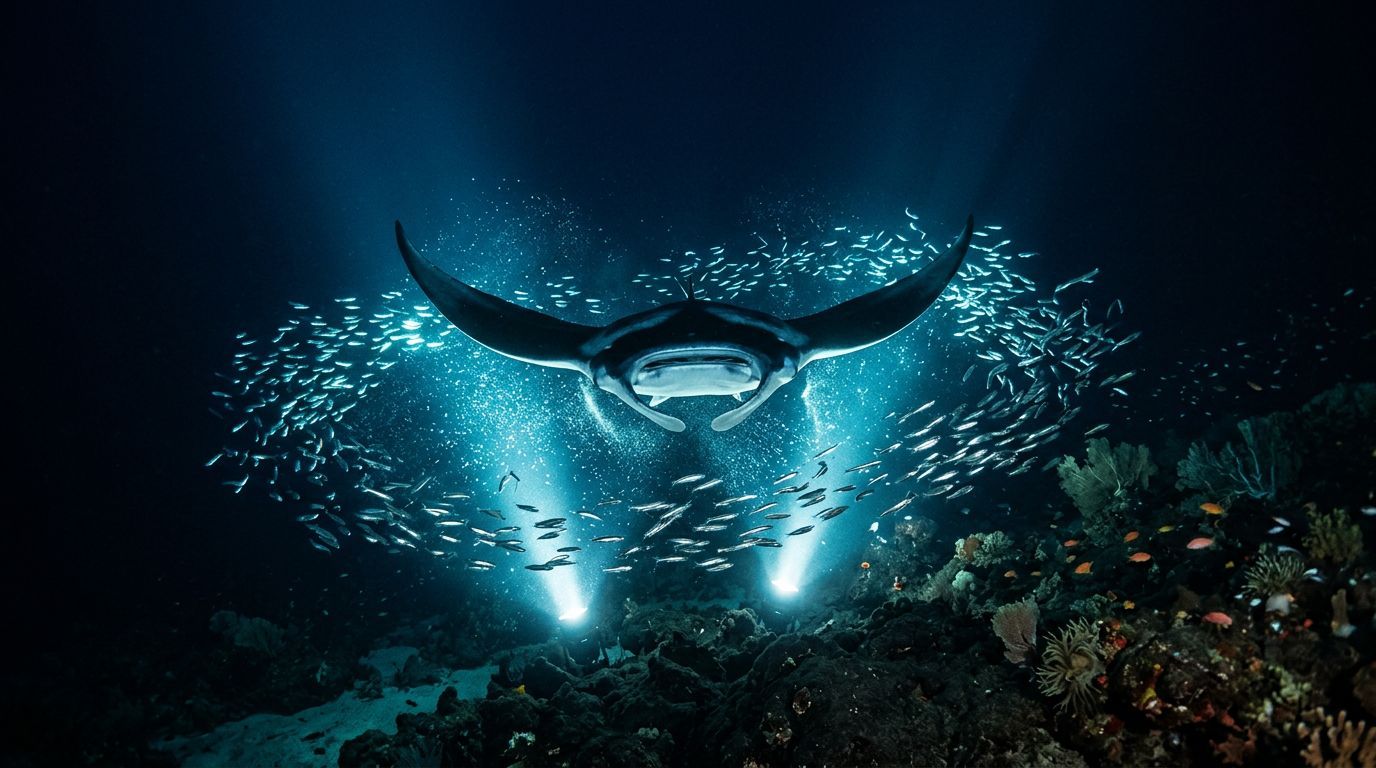
At night, the Kona coast can turn a quiet swim into a moving marine-life show. During manta ray night snorkeling, powerful underwater lights attract plankton, which brings a much larger community of ocean animals into view.
A search for snorkeling Big Island Hawaii experiences often starts with bright daytime reefs. However, you can snorkel Big Island waters after sunset and see a different side of the Pacific. Kona Snorkel Trips offers small-group nighttime adventures, while Manta Ray Night Snorkel provides another manta-focused option for visitors planning an evening on the water.
What you may see during manta ray night snorkeling
Manta rays are the main attraction, but they aren’t the only animals drawn to the lights. The viewing area can become a temporary gathering point for plankton, baitfish, reef residents, and occasional visitors passing through.
Your experience can change each night. Water clarity, current, weather, season, and the location of the light board all affect what appears below you.
Plankton starts the feeding chain
Manta rays are filter feeders. They swim with their mouths open and use specialized structures called gill rakers to collect small drifting prey.
The lights concentrate plankton near the surface. NOAA’s giant manta ray framework describes manta diets as mixed plankton communities that can include copepods, mysids, and euphausiids.
You may see the smallest animals first. Tiny crustaceans, larvae, and other translucent organisms can sparkle in the light as they drift through the water. Some nights also bring gelatinous animals that look like floating threads or tiny glass shapes.
These organisms may be difficult to identify while you’re wearing a mask. A knowledgeable guide can help you understand what you’re seeing without interrupting the wildlife.
Small fish follow the food
Where plankton gathers, small fish often appear. Baitfish may flash silver through the light beam, while juvenile jacks and other open-water fish circle the edges of the feeding area.
The fish aren’t there for the manta rays. They are feeding on the same concentrated food source or taking advantage of the activity around them. Their quick movements can add another layer to the scene, especially when a manta sweeps through and scatters them.
The University of Hawaii at Hilo explains that manta rays gather around nighttime lights as they feed on plankton. Its overview of manta ray feeding also notes that giant manta rays can reach enormous sizes, with some weighing up to 3,600 pounds.
Reef fish that appear after dark
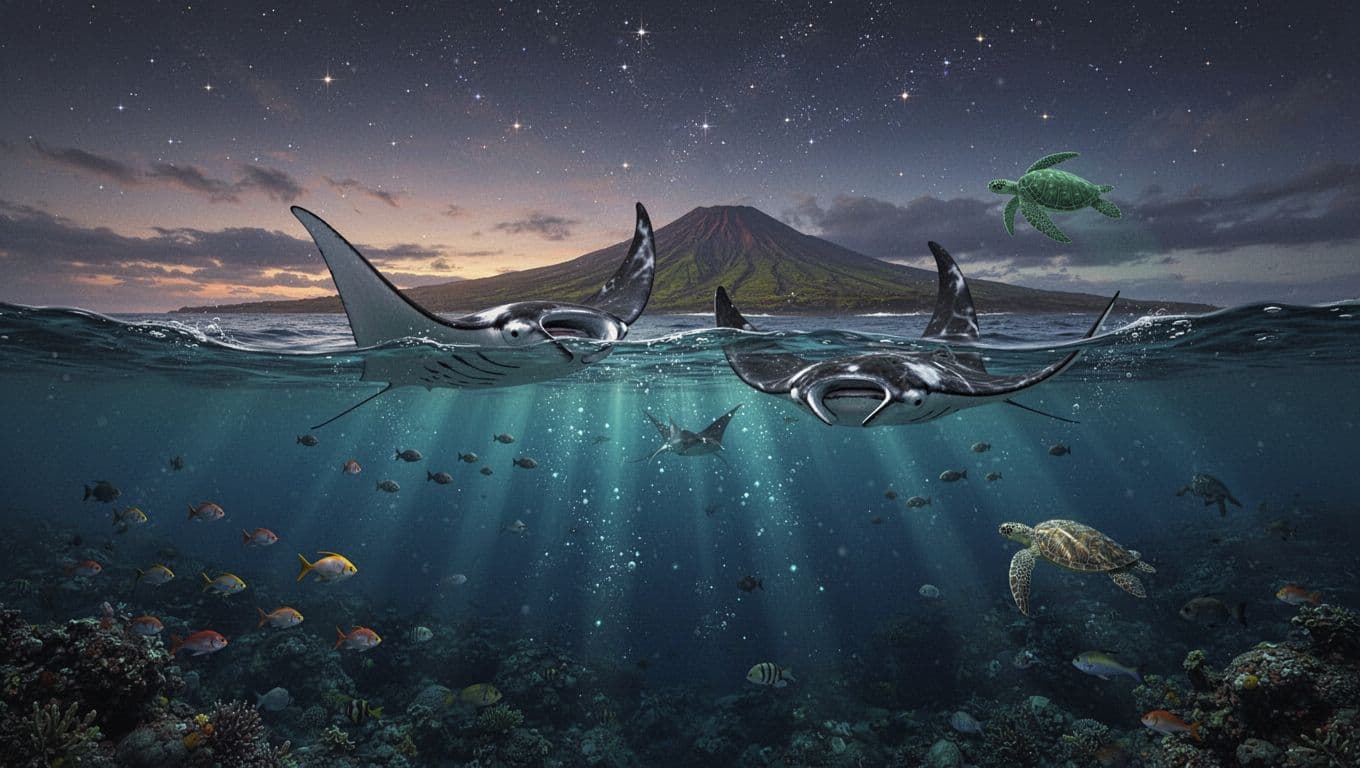
Many manta viewing sites sit near volcanic reef habitat. You may focus on the open water, but the darker edges can reveal animals that spend the day hiding in crevices or resting near the seafloor.
Look along the reef edges
Hawaiian reef fish include wrasses, surgeonfish, butterflyfish, triggerfish, and goatfish. Some stay close to the rock during nighttime hours, while others move through the illuminated water in search of food.
You might notice a parrotfish tucked against the reef or a small school moving through a narrow light beam. Their colors can look different after sunset because blue underwater light changes how you perceive red, yellow, and orange markings.
Small fish also help you understand the feeding scene. If baitfish suddenly scatter, a larger predator may have moved through the area. The behavior can be as interesting as the animal itself.
Night snorkeling Big Island waters gives you fewer obvious reef colors than a daytime trip. In return, you get movement and behavior that you may miss under bright sunlight.
Watch for hidden invertebrates
The lava rock around Kona creates countless gaps for nocturnal animals. An octopus may sit near a crevice, changing its color and texture as it rests or hunts. Crabs, shrimp, sea urchins, and slipper lobsters may also appear near the bottom.
These sightings aren’t guaranteed, and you shouldn’t expect the reef to look like an aquarium. Visibility changes with the site and conditions. Still, a guide who knows the local habitat can point out shapes that you might otherwise overlook.
Keep your attention wide. Looking only directly beneath the light can cause you to miss animals at the edges, where the reef meets open water.
Sea turtles and larger visitors
Sea turtles are among Hawaii’s most recognizable marine animals. They can appear near Kona’s reefs, although you shouldn’t book a manta trip expecting a guaranteed turtle encounter.
Hawaiian green sea turtles need space
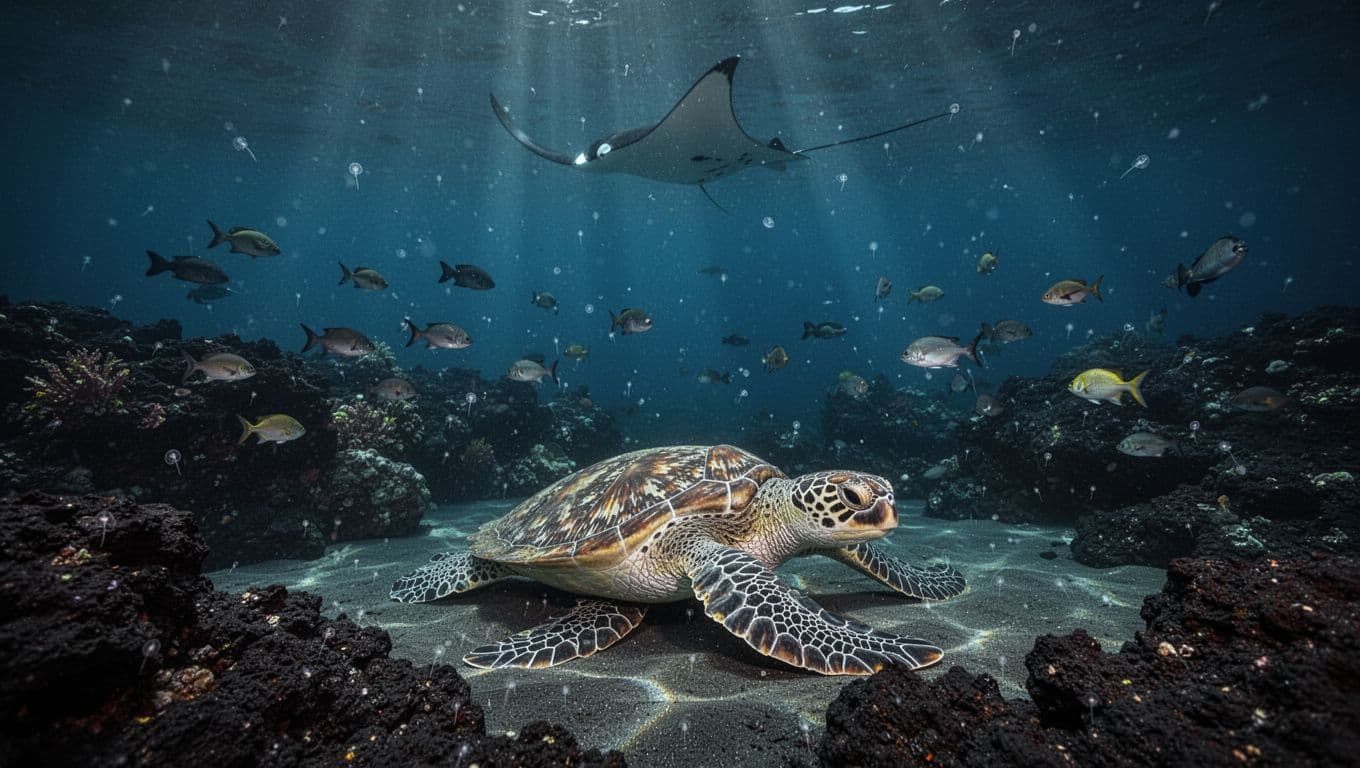
Hawaiian green sea turtles may rest near lava rock, cruise through shallow water, or surface for air. Their slow movements can look peaceful, but they still need room to swim and breathe.
If a turtle approaches, keep your body still and let it choose the direction. Never touch, feed, chase, or block its path. Hawaii’s marine wildlife viewing guidelines provide specific recommendations for observing turtles and other animals without causing stress.
A turtle may disappear before everyone in your group sees it. That short encounter is still valuable. Responsible wildlife viewing means accepting that animals control the timing.
Dolphins, flying fish, and seabirds add surprises
Spinner dolphins sometimes travel through Kona’s coastal waters. You may spot them from the boat before or after the snorkel, but a nighttime manta excursion isn’t a dedicated dolphin-watching trip.
Flying fish can skim across the surface during the ride. Seabirds may rest on the water or follow the boat, especially when the wind is light. Larger fish, including ulua and other jacks, can also pass below the boat or along the reef.
Whales are a seasonal possibility on the boat ride rather than a normal part of the underwater viewing session. NOAA’s Hawaiian Islands Humpback Whale National Marine Sanctuary says visitors can see humpbacks in Hawaii from November through April.
Which marine life appears by season?
Kona’s warm waters support marine life throughout the year. Seasonal patterns can improve your odds of seeing certain animals, but nature never follows a strict schedule.
| Marine life | Typical timing | What you should expect |
|---|---|---|
| Plankton and small drifting animals | Year-round, conditions vary | The foundation of the nighttime feeding scene |
| Reef fish and invertebrates | Year-round | Most visible near the reef edges and light boundary |
| Hawaiian green sea turtles | Year-round | Possible sighting, never a guarantee |
| Humpback whales | Usually November through April | More appropriate for a separate whale-watching trip |
| Spinner dolphins | No fixed viewing season | Brief surface encounters may occur during the boat ride |
The best month depends on your priorities. Winter gives you a chance to combine manta snorkeling with whale watching, while summer often offers warm, comfortable evenings for ocean activities.
Because the underwater light draws plankton, the number of visible animals can change even on consecutive nights. One evening may produce a busy feeding scene. Another may feel quieter but offer clearer views of individual manta rays.
Why water conditions change what you see
The Kona coast is known for sheltered ocean conditions, but the Pacific can still shift quickly. Even a calm evening may have current, surface movement, or suspended particles in the water.
Visibility affects the entire encounter
Clear water lets you see the reef boundary, small fish, and manta rays at greater distances. Turbidity reduces contrast and makes animals disappear sooner after they leave the light.
Current also affects the plankton. Moving water can spread the food source across a larger area, while gentle circulation may keep it concentrated near the board. Guides watch these changes and position the group where viewing conditions are safest and most useful.
Your eyes need time to adjust. Avoid judging the experience during the first few seconds in the water. Once your mask seals and your breathing settles, small movements become easier to notice.
Light, moon, and wind play different roles
The artificial lights provide the main attraction for plankton. A University of Hawaii coastal assessment describes how artificial light can attract plankton and affect the behavior of predators that feed on it. You can read the coastal water assessment for more background.
Moonlight can brighten the surface, but it doesn’t replace the underwater lights. Wind affects the boat ride and surface comfort, while clouds can make the illuminated area seem more pronounced against the dark water.
For that reason, guides don’t promise a fixed list of sightings. They work with the conditions available that evening.
How to observe marine life without disturbing it
Your behavior affects the animals and the people sharing the water with you. The best approach is calm, quiet, and hands-off.
Keep your body passive
Float with the board or approved flotation equipment. Keep your fins behind you and avoid kicking when a manta ray approaches. Sudden movements can change the animal’s path and make it harder for others to watch.
Never reach toward a manta ray, turtle, octopus, or fish. Touching can remove protective coatings, cause stress, or expose wildlife to bacteria and sunscreen.
You also shouldn’t dive beneath the viewing board to get closer. Manta rays need room to turn, and other snorkelers need a clear route back to the surface.
The closest-looking encounter often happens when you stop moving and let the animal choose its own path.
Let the guide manage the lights
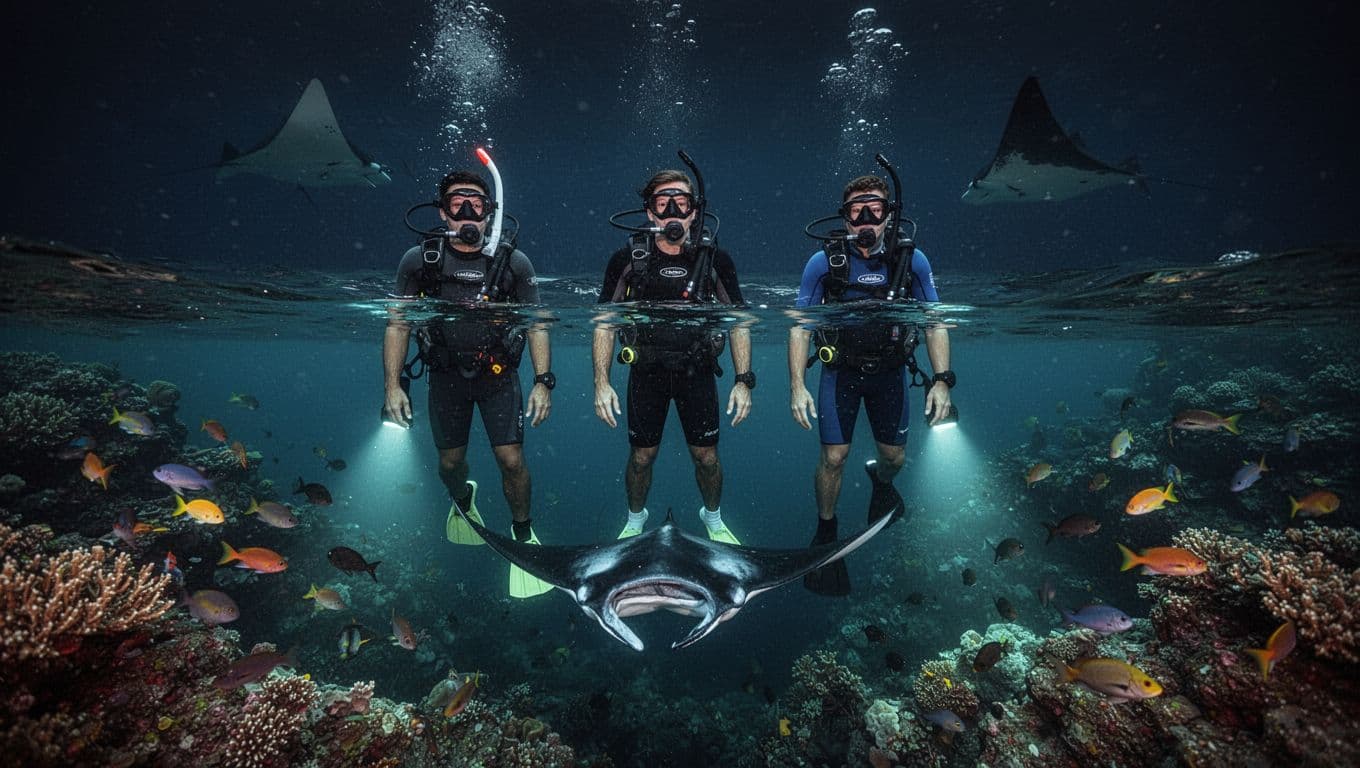
A guide controls the light board, group position, and viewing distance. Follow instructions about where to place your hands, how to move around the boat, and when to return to the ladder.
Personal dive lights can create glare and distract other snorkelers. Keep them off unless the crew permits them. Flash photography can also interfere with the experience, especially when many people point cameras at the same animal.
Reef-safe sunscreen, a rash guard, and a properly fitted mask reduce the need to adjust equipment in the water. Your goal is to spend less time handling gear and more time observing.
Choosing a Kona tour for marine-life viewing
A good tour affects more than comfort. It determines how well you understand the animals, how safely you enter the water, and how much space the group has around the light board.
Look for safety and clear instruction
Ask whether the crew provides a detailed water briefing, quality masks, flotation equipment, and help for guests who feel uncertain. Lifeguard Certified guides can explain breathing, boarding, surface movement, and emergency procedures before you enter the ocean.
Small groups also make it easier to see the guide’s hand signals and hear instructions. They reduce crowding around the board, which gives marine animals more space and creates a calmer experience for you.
Before booking, check the departure harbor, trip duration, age requirements, cancellation terms, and weather policy. Those details matter when you’re planning an evening around dinner, transportation, or a tired child.
What Kona Snorkel Trips provides
Kona Snorkel Trips follows a “Reef to Rays” philosophy. Its small-group trips combine professional service, Lifeguard Certified guides, quality snorkeling equipment, and custom-built lighted boards for nighttime manta encounters.
The company also puts education and reef-safe practices into its tours. Guides help you understand the feeding behavior around the lights while reinforcing rules that protect Kona’s volcanic reef ecosystems.
You can compare the company’s Big Island snorkeling tours if you’re deciding between a manta experience, reef trip, whale watch, or private charter. The dedicated Kona manta ray night snorkel page includes information about departure details and seasonal combination options.
A five-star reputation matters most when it matches practical care. Look for crews that answer questions clearly, fit your equipment carefully, and treat wildlife as the reason for the trip rather than a prop.
Match the trip to your group
Couples may prefer a quieter departure with time to focus on photography and animal behavior. Families often benefit from extra guidance, calm water, and crew members who can help children feel comfortable.
If you want more control over the pace, a private Kona boat charter can let your group combine snorkeling, sightseeing, wildlife watching, and time on the boat. Private trips are also useful for proposals, reunions, and guests with different swimming abilities.
Add a daytime reef trip to your itinerary
Night snorkeling shows you the feeding activity around the lights. A daytime trip adds the habitat and color that darkness hides.
See the reef in daylight
During the day, snorkeling Big Island waters gives you a better view of coral formations, lava shelves, reef fish markings, and shallow resting areas. Kealakekua Bay is a popular choice because its protected setting and clear water offer strong daytime viewing opportunities.
A Kealakekua Bay snorkeling tour can complement a manta excursion without repeating the same experience. You’ll see how fish use the reef structure during daylight, then watch plankton-feeding activity after sunset.
The two trips also use different skills. Daytime snorkeling rewards slow exploration along the reef. Night snorkeling asks you to stay relaxed at the surface and observe the open water.
You can check avaialbility for a Captain Cook and Kealakekua Bay snorkeling trip.
Add whale watching during winter
Humpback whales migrate through Hawaiian waters during the cooler months. You may spot a spout, breach, or tail from the boat, although sightings depend on animal behavior and sea conditions.
A dedicated Kona whale watching tour gives you more time to search for whales than a manta trip does. Kona’s coastal waters can also bring spinner dolphins, flying fish, and other marine life during the ride.
If whales are part of your vacation plan, you can check availability for a seasonal whale-watching excursion.
Prepare for a comfortable night in the water
A little preparation helps you stay focused when the ocean gets dark. You don’t need advanced snorkeling skills, but you do need to feel comfortable floating and breathing through a mask.
Pack for warmth and easy movement
Bring a swimsuit, towel, dry clothing, water, and any medication you may need. A light jacket helps after the trip because ocean air can feel cool when you’re wet.
Consider bringing:
- A rash guard or thin wetsuit layer for warmth and sun protection during the boat ride.
- Reef-safe personal care products that won’t add unnecessary chemicals to the water.
- Prescription mask information if you normally use corrective lenses.
- A small camera with a secure wrist strap, if the crew allows photography.
Eat a light meal before departure. Heavy food can feel uncomfortable on a moving boat, while arriving hungry can make the evening harder.
If you experience motion sickness, ask your medical provider about suitable options before your vacation. Follow the product instructions and tell the crew how you feel before entering the water.
Set realistic expectations for the encounter
Manta ray night snorkeling is a wildlife experience, so every trip has its own rhythm. You may watch several rays make repeated passes, or you may spend more time observing plankton and smaller fish between appearances.
The animals may swim above, below, or around the light board. Their movements can be slow and graceful, then suddenly change as they follow the densest food.
Book the trip because you want to observe a living ecosystem, not because you expect a staged performance. That mindset makes the smaller sightings meaningful and helps you appreciate the night even when conditions change.
When you’re ready to plan the manta experience, you can check availability.
Conclusion
The manta rays may draw you into the water, but plankton, baitfish, reef animals, turtles, dolphins, and seasonal visitors create the full experience. Each animal responds to the light and conditions in its own way, so no two nights look exactly alike.
Choose a safety-focused crew, stay still around wildlife, and give the ocean room to set the pace. The best manta ray night snorkeling memories come from watching a real marine community gather without asking it to perform.