
Kealakekua Bay Snorkel: Spotting Octopus on Dark Rock
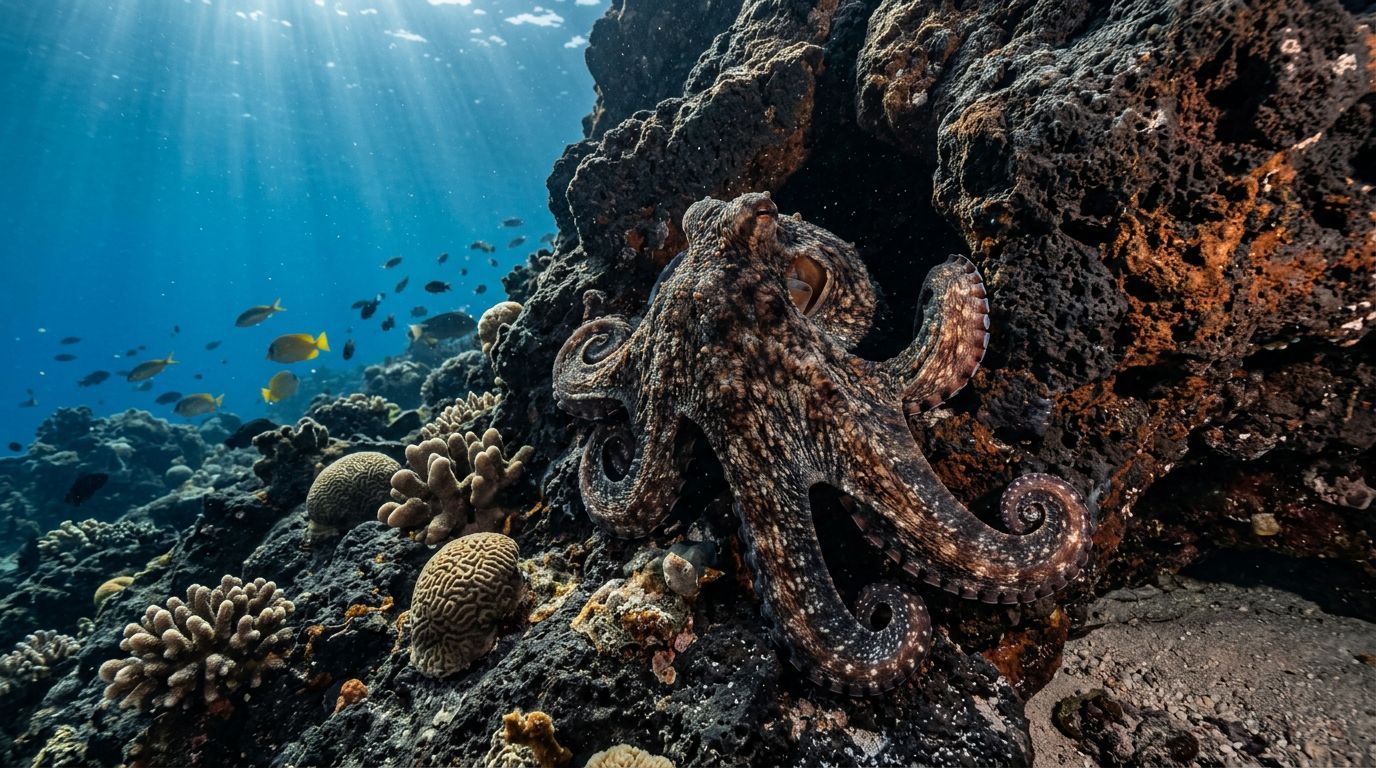
An octopus can vanish in plain sight, even when you are floating only a few feet above it.
During a Kealakekua Bay snorkel, you may see one change from a pale, sandy pattern to a dark, mottled disguise within moments. The black volcanic rock around Captain Cook creates the perfect background for this display.
If you’re planning snorkeling Big Island Hawaii adventures, learning how camouflage works will help you notice more marine life. Kona Snorkel Trips offers guided outings for visitors who want a safer, more personal way to explore the bay.
Once you know what to watch for, the reef starts to look different.
Why Dark Volcanic Rock Is an Ideal Hiding Place
Kealakekua Bay has clear water, lava formations, coral growth, and shaded cracks. Those features give octopuses places to hunt, rest, and hide from predators.
Basalt creates a broken visual background
Dark basalt rarely has one even color. Its surface includes black patches, gray edges, reddish-brown areas, holes, ridges, and bright spots created by sunlight.
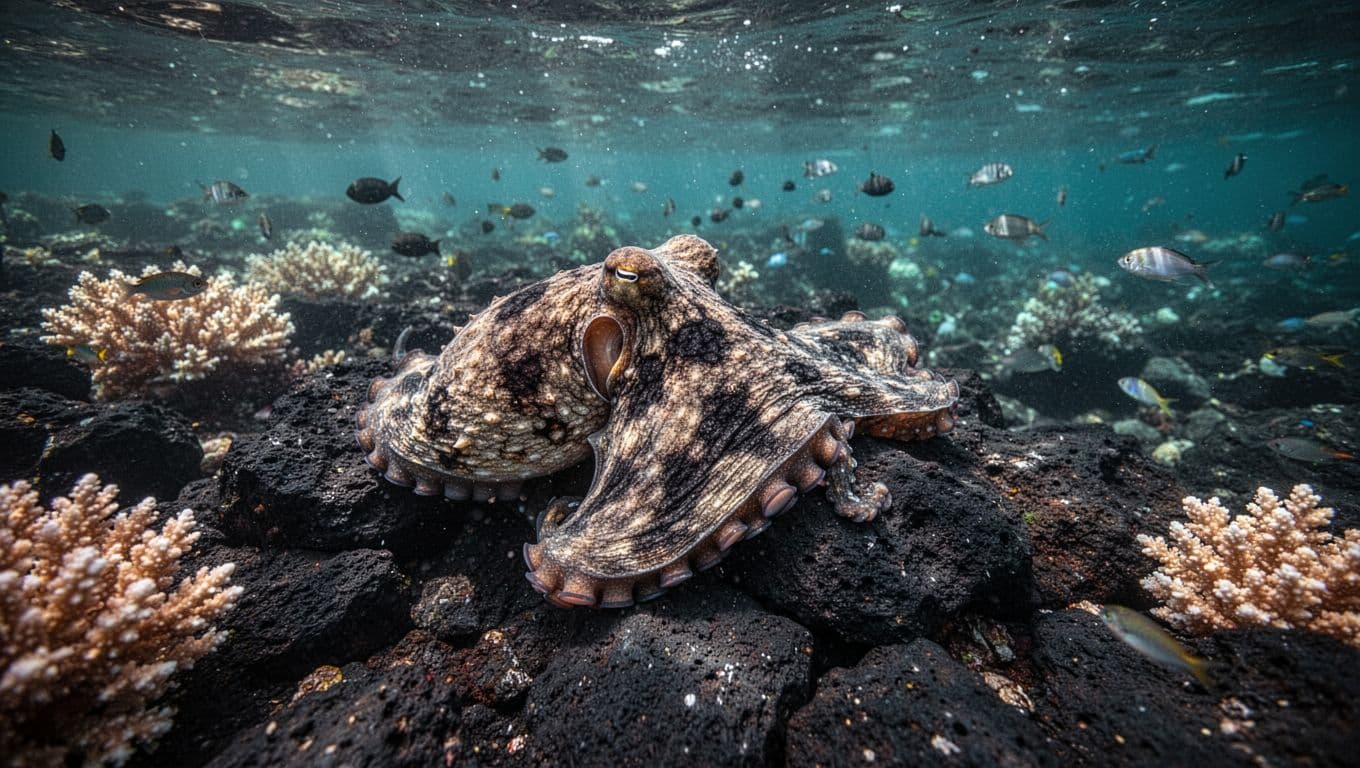
An octopus can adjust its skin pattern to fit this uneven background. Instead of becoming one solid shade, it may form blotches that follow the rock’s shadows. The result breaks up the outline of its body.
That outline is what your eyes need to detect an animal. When the edges disappear against the stone, your brain may register only another piece of reef.
Water movement makes the disguise harder to read. Sunbeams shift across the bottom, while suspended particles soften the contrast. An octopus can remain almost invisible until it moves an arm or changes its skin texture.
Rock cracks provide shelter and hunting ground
Octopuses often use small holes and ledges as temporary dens. You may spot a few shells near an opening, which can indicate that an octopus has been feeding there.
The animal may rest with its arms tucked into a crevice. Sometimes only one eye, a faint arm edge, or a patch of skin gives away its position. Look along the transition between open rock and shadow, rather than scanning only the brightest reef areas.
What a Kealakekua Bay Snorkel Reveals About Camouflage
Octopus camouflage is an active process. The animal reads its surroundings and changes its appearance through specialized skin structures.
Color begins with fast-acting skin cells
Chromatophores are pigment-filled sacs in the skin. When surrounding muscles expand or contract them, the visible color changes. You can learn more through the Smithsonian Ocean color-change explanation, which describes how these tiny pigment sacs work.
Other skin layers help reflect and scatter light. Together, these systems create colors, patterns, and brightness levels that suit the setting. Neural control allows many cephalopods to change their appearance within milliseconds, according to this Nature camouflage overview.
That speed matters in a place such as Kealakekua Bay. An octopus may move from a sunlit slab to a shaded crack and need a new pattern immediately.
Texture completes the disguise
Color alone wouldn’t make an octopus look like rough lava. The animal can also alter the surface of its skin.
Small projections called papillae can rise or flatten. Raised papillae make the body appear rougher, while a smoother surface can suit sand or a flat rock. The octopus may also change its posture by spreading its arms, flattening its body, or pulling itself into a narrow space.
Pay attention to the whole shape, not only the color. A rock with a soft, rounded edge may be an animal holding still. Likewise, an unnatural-looking shadow can come from an arm tucked beneath the body.
The easiest octopus to miss is often the one that looks slightly wrong, not the one showing bright color.
How to Spot an Octopus Without Chasing It
You don’t need to swim fast or search every inch of the bay. A slow, organized scan gives you a better chance of seeing a camouflaged animal.
Scan the rock, not open water
Start with areas that offer cover. Check the edges of cracks, the underside of small overhangs, and the space beside isolated rocks.
Move your eyes in sections. Study one patch for several seconds, then shift to the next. This gives your vision time to notice small changes in pattern. A quick glance often misses an octopus because the animal looks like part of the bottom.
Watch for details that don’t repeat naturally:
- A line that resembles an arm
- Two eyes sitting above a flat body
- A smooth patch interrupting rough basalt
- Shells gathered near a small opening
- A color change that begins after you approach
If you see something unusual, stop kicking and let the water settle. Fins can stir sand and make the animal harder to see.
Watch for movement and pattern changes
An octopus may reveal itself without swimming away. Its skin could darken, lighten, pulse with spots, or develop raised texture. One arm may extend as the animal tests the area around it.
Give the animal space when that happens. Sudden movement can cause it to flee into a crack or release ink. You may miss the most interesting behavior if you rush closer.
Keep your face and body at a comfortable distance. Use your mask and natural sunlight to observe. Avoid reaching toward the animal, even if it appears calm.
Plan Your Snorkel Around Light, Water, and Safety
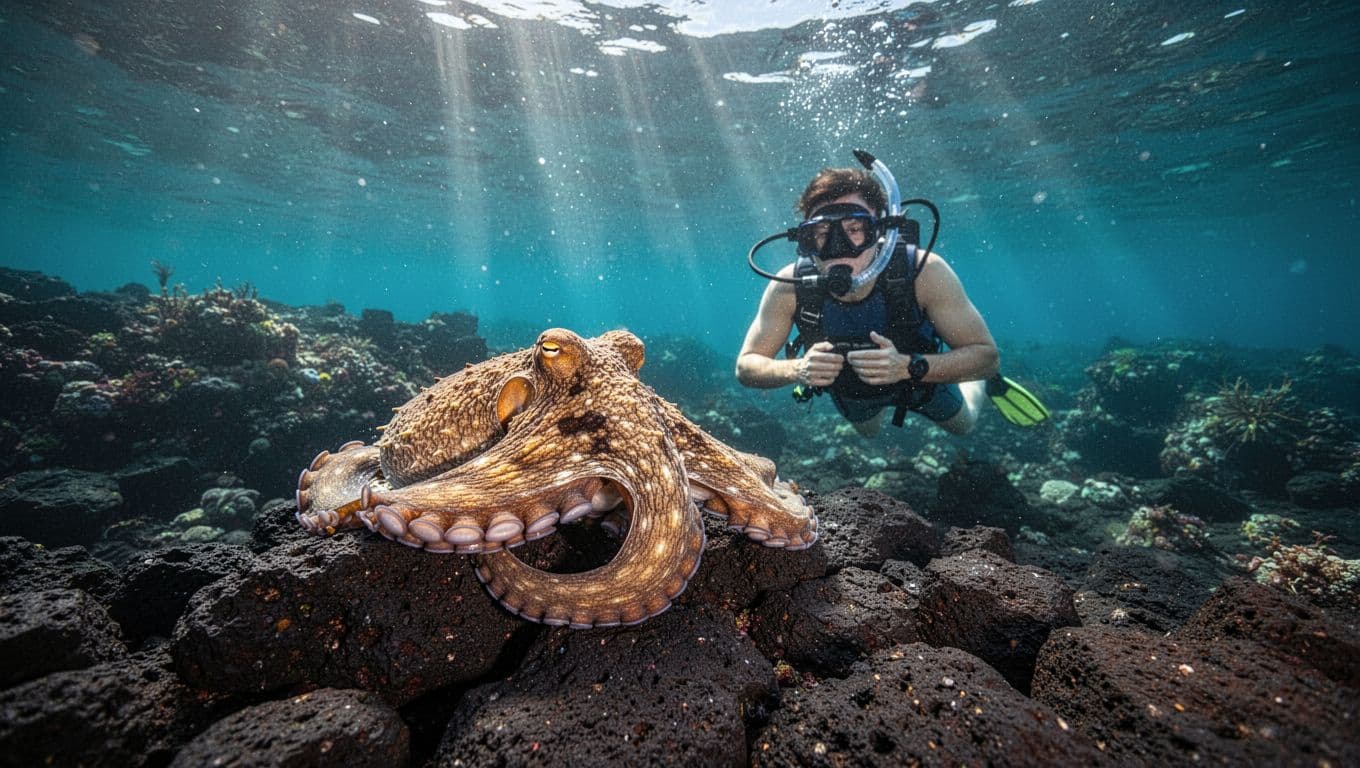
Good visibility helps you notice fine details, but calm conditions matter just as much. Choose a day when you can float comfortably without fighting current or waves.
Use natural light to read the reef
Sunlight changes the way basalt and octopus skin appear. A rock may look nearly black in shadow, then show brown or gray tones when a beam reaches it.
Clear water also helps you see an animal’s outline. Check the forecast and follow local guidance before entering the bay. If the water becomes cloudy or surge pushes you toward the rocks, focus on your position instead of searching for wildlife.
A mask that seals well makes a major difference. Defog it before entering, adjust your fins, and use a flotation aid if you need extra comfort. Families should stay together and choose a viewing area that matches each swimmer’s ability.
Snorkeling on the Big Island is more enjoyable when you can relax enough to observe. You don’t need advanced freediving skills to spot a day octopus in shallow water.
Protect the habitat you came to see
Kealakekua Bay has protected marine habitat, and local visitor information describes limits on fishing and other activities in the area. Review this Kealakekua Bay protection overview before your visit.
Keep your hands off rocks, coral, turtles, and octopuses. Touching can damage living surfaces or stress an animal. Never stand on the bottom, drag fins across the reef, or collect shells.
Use reef-safe habits throughout the trip:
- Apply sunscreen well before entering the water, then cover up when practical.
- Keep your equipment away from the reef.
- Follow guide instructions about distance and entry points.
- Leave every animal and rock where you found it.
Responsible snorkeling protects the small details that make the bay special, including the octopus dens you may never notice.
Choosing a Guided Kealakekua Bay Snorkel
A guide can help you read the reef, manage safety, and understand animal behavior without crowding the habitat. That support is useful for first-time snorkelers, families, and anyone hoping to see more than the obvious fish.
Kona Snorkel Trips keeps the group personal
Kona Snorkel Trips follows a “Reef to Rays” philosophy, with guided ocean adventures built around safety, education, and respect for marine life. Small groups allow lifeguard-certified guides to give you more direct attention than a crowded boat experience.
The crew provides quality snorkeling equipment and explains reef-safe practices before you enter the water. Guides can also point out subtle signs, such as a shell pile near a den or a pattern that doesn’t match the surrounding basalt.
You can compare Kealakekua Bay snorkeling trips and other guided options through Kona Snorkel Trips before choosing a departure. The company also offers private outings for travelers who want a more flexible experience.
Captain Cook Snorkeling Tours focuses on the bay
For another Kealakekua-focused option, Captain Cook Snorkeling Tours provides information about snorkeling near the Captain Cook Monument and the bay’s protected waters.
When you compare tours, look at group size, safety support, gear, departure location, and the amount of naturalist guidance included. A good operator should explain how to observe wildlife without touching or chasing it.
If you want to snorkel the Big Island with a guide who can help you search the lava formations, choose the trip that matches your comfort level and schedule. For a Captain Cook outing, you can check avaialbility before planning the rest of your day.
Conclusion
A dark patch of basalt may hide a living octopus only inches away. During your Kealakekua Bay snorkel, slow observation gives you the best chance to see changes in color, texture, posture, and movement.
Look along cracks and rock edges, keep your distance, and let the animal decide whether to remain visible. With calm water, good light, and reef-safe habits, snorkeling on the Big Island becomes a closer study of how marine life adapts to its surroundings.