
Manta Ray Night Snorkel Kona: Wildlife Policy Questions
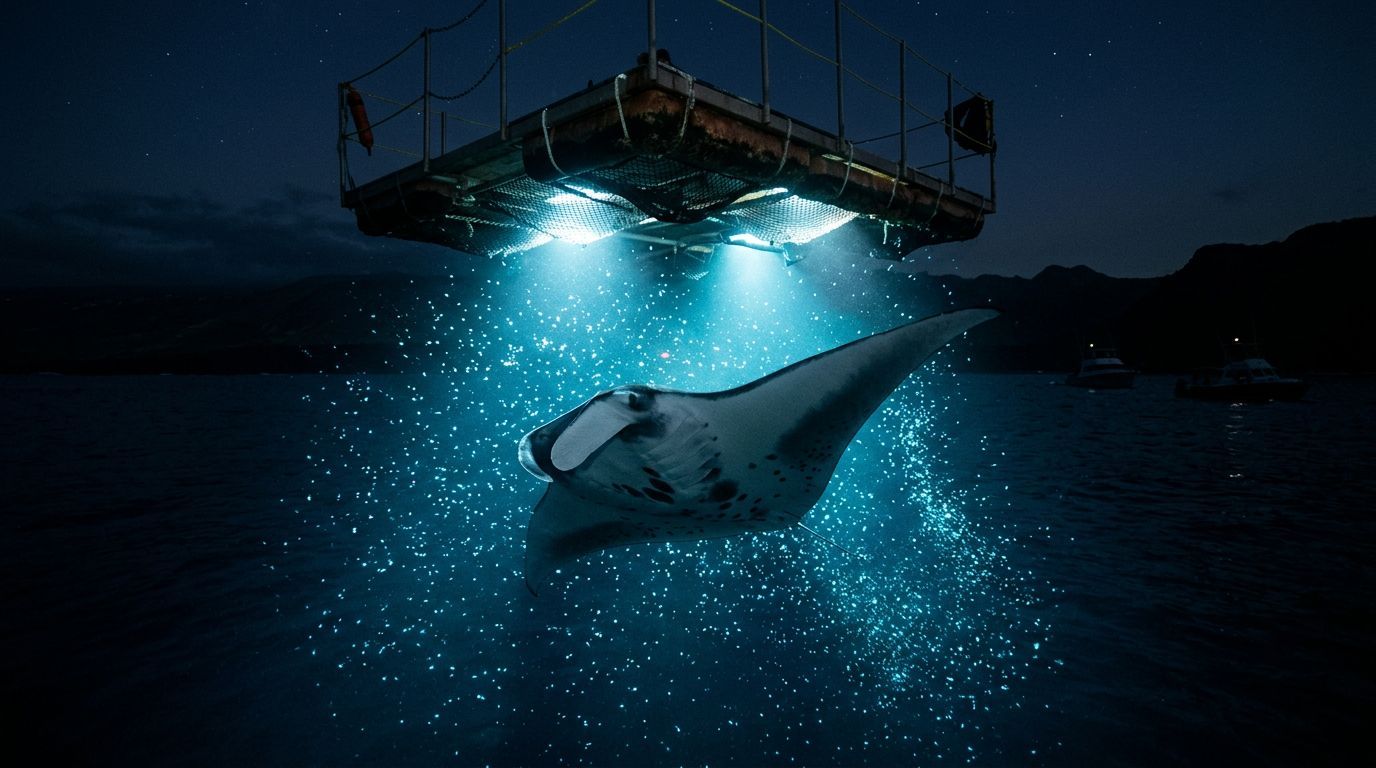
A manta ray night snorkel in Kona can bring you within view of one of Hawaii’s most impressive marine animals. However, the quality of that encounter depends on more than clear water and bright lights. Your operator should have firm rules for boat movement, guest behavior, guide supervision, and wildlife protection.
Kona Snorkel Trips puts its “Reef to Rays” philosophy at the center of its small-group ocean adventures. If you’re comparing local providers, Manta Ray Night Snorkel Hawaii is another manta-focused option to review. Before you reserve a trip, ask the questions below so you know how the company protects both you and the animals.
What a responsible manta ray night snorkel in Kona looks like
A responsible trip gives manta rays room to move while allowing you to watch from the surface. You shouldn’t need to touch, chase, dive after, or surround a ray to have a memorable experience.
Most Kona night tours use a floating viewing board or raft with lights underneath. Those lights attract plankton, which can bring manta rays into the area to feed. You hold the board or remain near it while the animals swim through the illuminated water.
Stay at the surface and follow the board setup
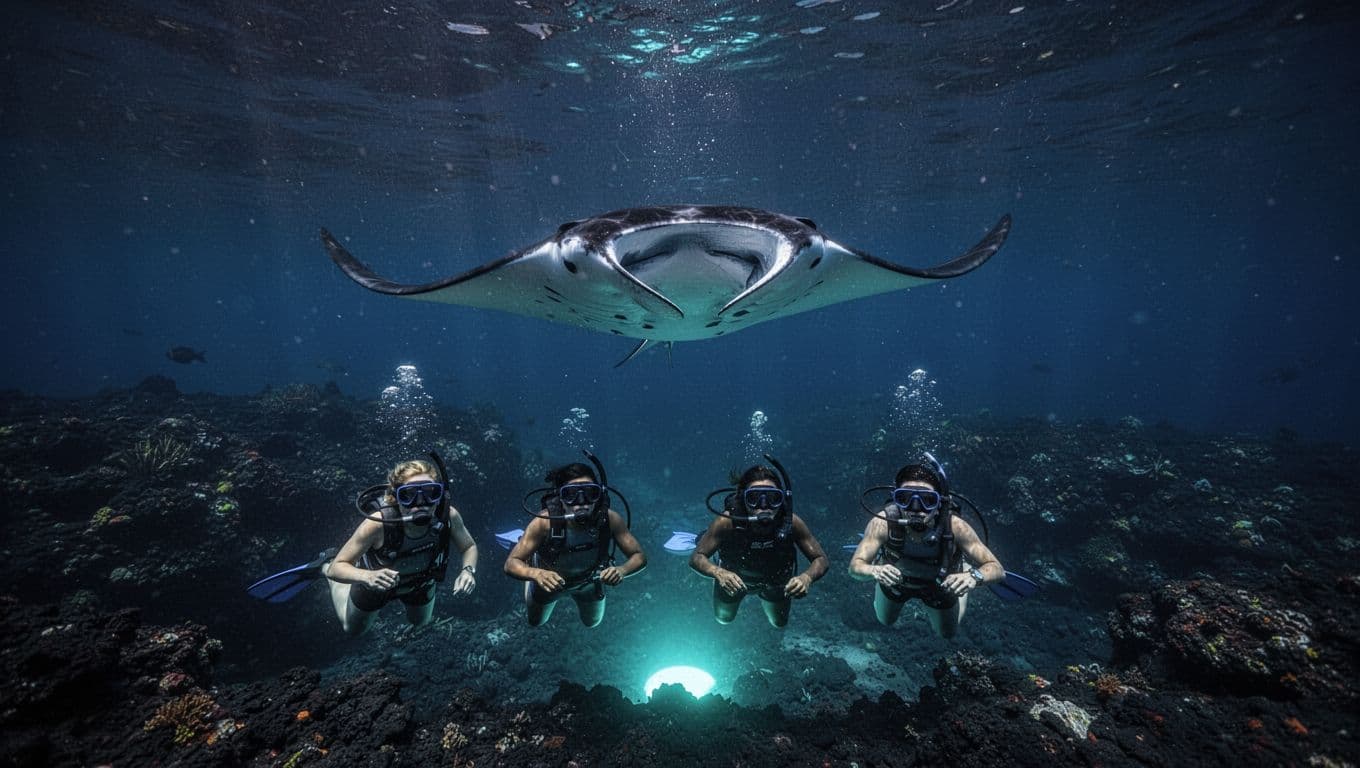
Ask whether guests remain on the surface for the entire viewing portion. Surface-based observation gives mantas a clear path and reduces the chance of accidental contact.
Your fins should stay behind you rather than pointing toward the animal. Keep your body flat, avoid sudden kicks, and let the guide manage your position around the board. If a manta changes direction, move only when instructed.
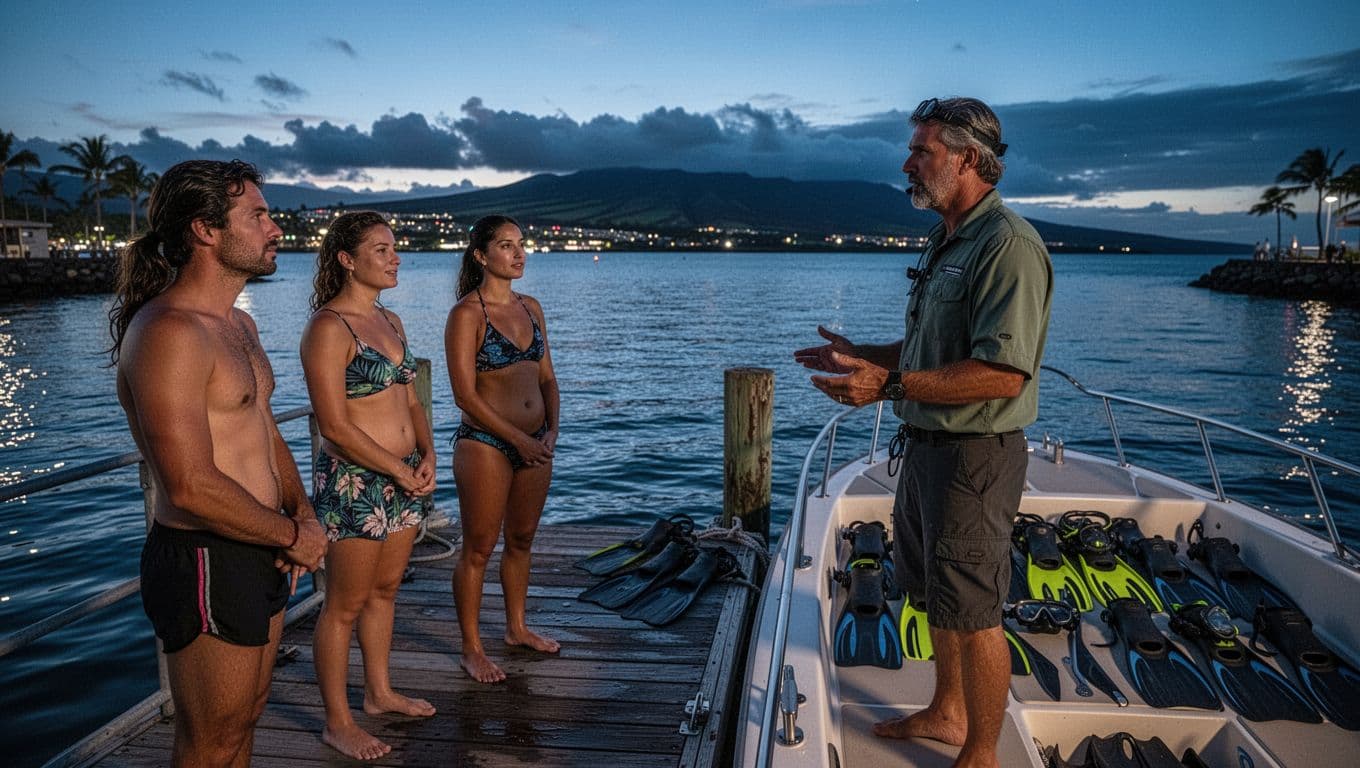
A good operator explains this before you enter the water. You should also receive a clear explanation of where to hold the board, how to climb back onto the boat, and what to do if you become tired.
For trip details, equipment information, and the general viewing format, review the Kona manta ray night snorkel experience before booking.
Remember that the animals are wild
Manta rays may appear close to the viewing area, pass through several times, or stay farther away. No ethical company can promise a specific number of rays or guarantee a particular interaction.
Ask how the operator handles a slow night. A clear answer might include a rebooking policy, a partial refund, or another option. The company should explain the policy before you pay, not after the boat returns to the harbor.
A responsible guide also avoids describing the animals as trained or predictable. The lights may attract plankton, but the rays decide whether they enter the area.
Ask which rules apply at the viewing site
Wildlife policies include both binding boating rules and voluntary conduct standards. Ask your operator to explain which rules apply at the exact site and how the crew follows them.
Kona’s manta viewing areas have specific operating requirements. The details matter because a trip can look respectful while still creating problems if boats, lights, or guest groups spread beyond the permitted operating area.
Confirm the mooring and campfire setup
DLNR rule text for manta ray viewing zones describes commercial mooring requirements during manta viewing hours, listed as 4:00 pm to 4:00 am. It also places limits around the viewing-zone campfire, which is the floating light platform used during many nighttime encounters.
The rule text states that participants and guides must stay within 150 feet of the campfire during manta viewing activities. It also restricts motorboats from navigating within 100 feet of the campfire during viewing hours, except for arrival, departure, or emergency situations.
You can read the DLNR manta ray viewing rules and then ask the operator:
- Do you operate from a commercial mooring during manta viewing hours?
- How do you keep guests and guides within the required viewing area?
- Who monitors boat traffic near the light platform?
- What happens if the designated mooring is unavailable?
The answers should be direct. Crew members should know the site’s operating boundaries without searching for the information while guests wait.
Ask how lights and vessels are managed
The same DLNR material limits the use of point-source illumination intended to attract plankton or manta rays. It states that these lights must not be used more than 100 feet from a campfire.
Ask whether the operator uses one centralized light board or several scattered lights. A centralized setup usually makes it easier for guides to manage the group and gives manta rays a consistent feeding area.
You should also ask whether a crew member acts as a lookout when the vessel operates without a propeller guard. This question connects wildlife protection with basic boating safety. A good answer should identify who watches the water and what the lookout does during loading, departure, and return.
Ask for a clear no-touch wildlife policy
“No touching” should be more than a sentence in a pre-trip email. Ask how the crew prevents contact, how guides position guests, and what they do when a manta swims close to your body.
Keep your hands, fins, and cameras away
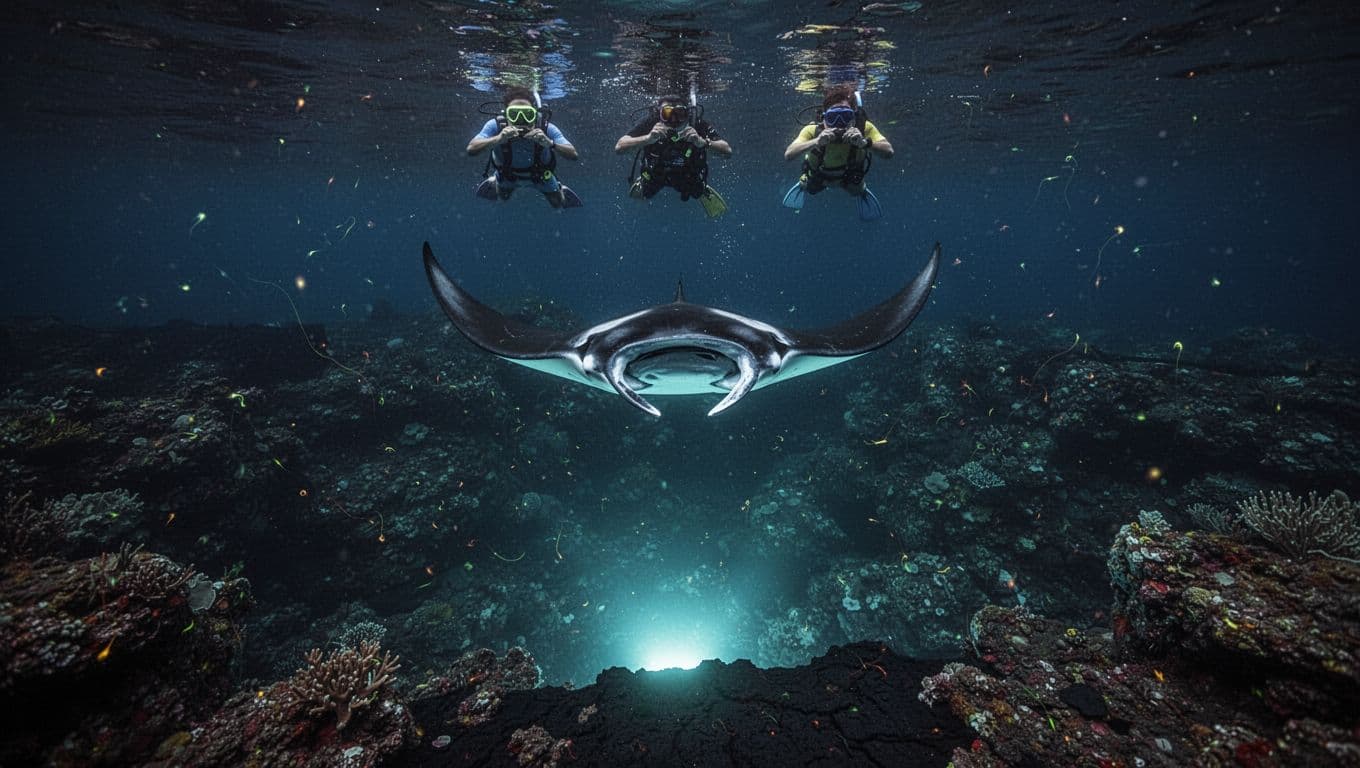
Never reach toward a manta ray, even if it passes within arm’s length. Don’t grab a wingtip, block its path, touch its underside, or attempt to turn the animal toward your camera.
Your fins can cause harm without deliberate contact. Avoid kicking when a manta approaches. Stay flat and let the ray pass beneath or beside you.
DLNR wildlife protocols advise people not to closely approach, chase, encircle, leapfrog, or trap marine animals with vessels. The advice applies well to a night snorkel, even when a manta appears comfortable near the group. You can review the full DLNR wildlife protocol before your trip.
Hawaii fishing regulations also prohibit knowingly capturing, taking, possessing, abusing, or entangling a ray, whether alive or dead, and prohibit killing rays in state waters. That makes careful observation a matter of conservation and personal responsibility, not only good manners. Read the current Hawaii fishing regulations if you want to understand the state’s protections.
Find out how guides enforce the rules
Ask what happens if a guest reaches toward a manta or repeatedly kicks into its path. The guide should be willing to correct the behavior immediately and remove a guest from the viewing area if necessary.
The strongest answer describes a process. Guides give the briefing before entering the water, watch guest positions throughout the encounter, and speak up as soon as someone forgets the rules.
A good wildlife policy tells you what the guide will do when a manta swims too close, not only what guests should avoid.
Ask whether guides remain in the water with the group. You should know who gives directions, who watches less confident swimmers, and who helps guests return to the boat.
Check guide training, group size, and equipment
Your experience depends on the crew’s ability to manage people in dark open water. Ask about guide qualifications, group size, emergency procedures, and the equipment included in your fare.
Ask who leads the water session
Kona Snorkel Trips uses Lifeguard Certified guides who lead guests through the briefing and water portion of its ocean adventures. The company focuses on small-group service, marine education, and reef-safe practices.
Its “Reef to Rays” approach covers both daytime reefs and nighttime manta encounters. The crew provides quality snorkeling gear and uses custom-built lighted boards for the evening experience. Most of the company’s tours cap groups at 18 guests, according to its tour information, although you should confirm the size of your specific departure.
You can compare the company’s Big Island snorkeling tours when you want to see how manta trips fit alongside daytime reef excursions and other guided options.
Ask these questions before booking:
- Are the guides lifeguard certified?
- Does a guide stay in the water with guests?
- How many guides will join your specific departure?
- What emergency equipment and communication systems are onboard?
- How does the crew assist a tired or anxious swimmer?
The answers matter more than a polished tour description. You want to know how the crew behaves when someone needs help.
Confirm what the equipment does and does not include
Find out whether your trip includes a mask, snorkel, fins, wetsuit, flotation support, and light-board access. Ask whether you can request a different mask or flotation option if the first fit doesn’t work.
You should also ask about ladder access. Night snorkeling requires you to enter and exit the water in low light, often from a boat ladder. If you have limited shoulder strength, balance concerns, or difficulty climbing, explain that before arrival.
A company may offer a ride-along option for guests who don’t want to snorkel. That can help families and mixed groups avoid pressuring someone into water activity that doesn’t feel safe.
Kona Snorkel Trips combines small-group attention with purpose-built equipment and guides who explain local marine life. You can check availability for a Kona Snorkel Trips departure.
Ask what happens if mantas don’t appear
Wildlife sightings change with weather, water conditions, plankton, boat traffic, and animal behavior. Your operator should describe those limits clearly.
Review the sighting and rebooking policy
Some operators offer a rebooking option when mantas don’t appear. Others may offer a credit or partial refund, while some make no guarantee at all.
Read the exact terms before you reserve. Pay attention to phrases such as “manta sighting not guaranteed,” “subject to availability,” and “weather permitting.” These terms aren’t automatically a warning sign. They reflect the fact that a wild animal controls the encounter.
Ask whether the policy applies when mantas appear briefly but leave before you enter the water. Also ask whether the company counts a distant sighting as a successful encounter.
For a manta-focused trip with Kona Snorkel Trips, use the manta night snorkel availability link after reviewing the current terms.
Understand weather and safety decisions
Ask who decides whether the trip runs. The captain should have authority to cancel or shorten the activity when wind, waves, visibility, or water conditions create a safety problem.
Find out how much notice you’ll receive and whether the company offers a refund, rebooking, or credit. You should also know the meeting location, check-in time, parking details, and expected return time.
A responsible operator won’t pressure you to enter the water when you’re uncomfortable. If conditions change after departure, the captain may adjust the route or end the snorkel. That decision protects the entire group.
Discuss cameras, lights, and personal space
Underwater photography can add to your memories, but it can also distract guests and affect how animals move through the viewing area.
Ask about flashes and video lights
Find out whether the operator permits cameras, strobes, or external video lights. If cameras are allowed, ask where you may point them and whether the guide limits their use near a manta’s face or underside.
Avoid shining a bright light directly into a manta’s eyes. Keep your camera close to your body when the animal approaches, and never swim after a ray to keep it in frame.
NOAA’s marine life viewing guidelines include species-specific advice for marine mammals. Manta rays aren’t marine mammals, so don’t copy a whale or dolphin distance rule and assume it applies to mantas. Instead, follow the local operator briefing and keep a safe distance.
Leave room for the animals and other guests
A busy viewing board can tempt people to compete for the closest position. Ask whether the crew rotates guests, limits the number of swimmers around the board, or uses more than one viewing platform.
You can improve the experience by staying in your assigned area. Don’t drift behind a manta, cut across another swimmer’s space, or position yourself beneath the animal.
NOAA sanctuary guidance also tells divers to keep a safe distance from marine life, including manta rays. Its sanctuary diving guidance supports the same basic principle: observe without turning the encounter into a pursuit.
Choose the right Kona tour for your group
The right trip depends on your swimming ability, comfort in open water, schedule, and interest in wildlife. Group composition matters too. A family with young children may need different support than a confident couple or solo traveler.
Match the experience to your water confidence
Before you book, ask about minimum ages, swimming requirements, flotation equipment, and ladder access. Policies vary between operators and between shared and private trips.
If snorkeling Big Island Hawaii is part of your vacation, don’t assume a daytime reef snorkel prepares you for nighttime open water. Darkness can make distance, boat position, and body orientation feel different.
Families should discuss the trip with children in advance. Explain that they may watch from the boat if they become tired, and that the guide’s instructions take priority over getting a closer view.
Couples and solo travelers should ask about the group atmosphere. A smaller departure may offer more room around the board and more direct access to the guide.
Consider a private or daytime alternative
You can snorkel Big Island reefs during the day if a night activity doesn’t match your comfort level. Kona Snorkel Trips also offers a Kealakekua Bay snorkeling tour for guests who want clear reef water, marine-life viewing, and a daytime schedule.
When comparing snorkeling Big Island choices, a private charter can give your group more control over timing, pace, and water activities. Review the private Kona boat tours if you want a custom plan for family members with different interests.
You might also pair a manta trip with seasonal whale watching. Kona Snorkel Trips lists Kona whale watching tours for the months when humpback whales visit Hawaiian waters.
Questions to send before you book
A short message can reveal whether an operator has a real wildlife policy or only general marketing language. Ask the following:
- Which exact site will you use, and does it operate under a designated manta viewing zone?
- Do you use a commercial mooring during the site’s manta viewing hours?
- How do you keep boats, lights, guides, and guests within the permitted operating area?
- What is your policy on touching, chasing, diving after, or blocking manta rays?
- Will a guide remain in the water with the group?
- What is the maximum passenger count for my departure?
- Are cameras, flashes, and video lights allowed, and what limits apply?
- What happens if conditions become unsafe or mantas don’t appear?
- What equipment is included, and can you provide flotation support?
- What are the cancellation, rebooking, and refund terms?
Look for answers that mention specific procedures. “We care about the ocean” sounds positive, but “our guide stays in the water and corrects unsafe positioning immediately” tells you how the policy works.
For snorkeling Big Island planning, save the company’s reply with your booking details. That gives you a useful reference if weather changes, your group size shifts, or someone in your party needs extra support.
Your choices shape the encounter
A manta ray night snorkel is most rewarding when you treat the animals as wild neighbors rather than performers. Ask about moorings, light placement, guide supervision, group size, camera rules, and the policy for missed sightings before you book.
Kona Snorkel Trips combines lifeguard-certified guidance, small-group service, custom lighted boards, and reef-conscious practices for guests who want a respectful evening on the water. Once you understand the rules and choose a company that follows them, you can focus on staying calm, holding your position, and watching the mantas move through the light.