
How Manta Ray Night Snorkeling Began in Kona
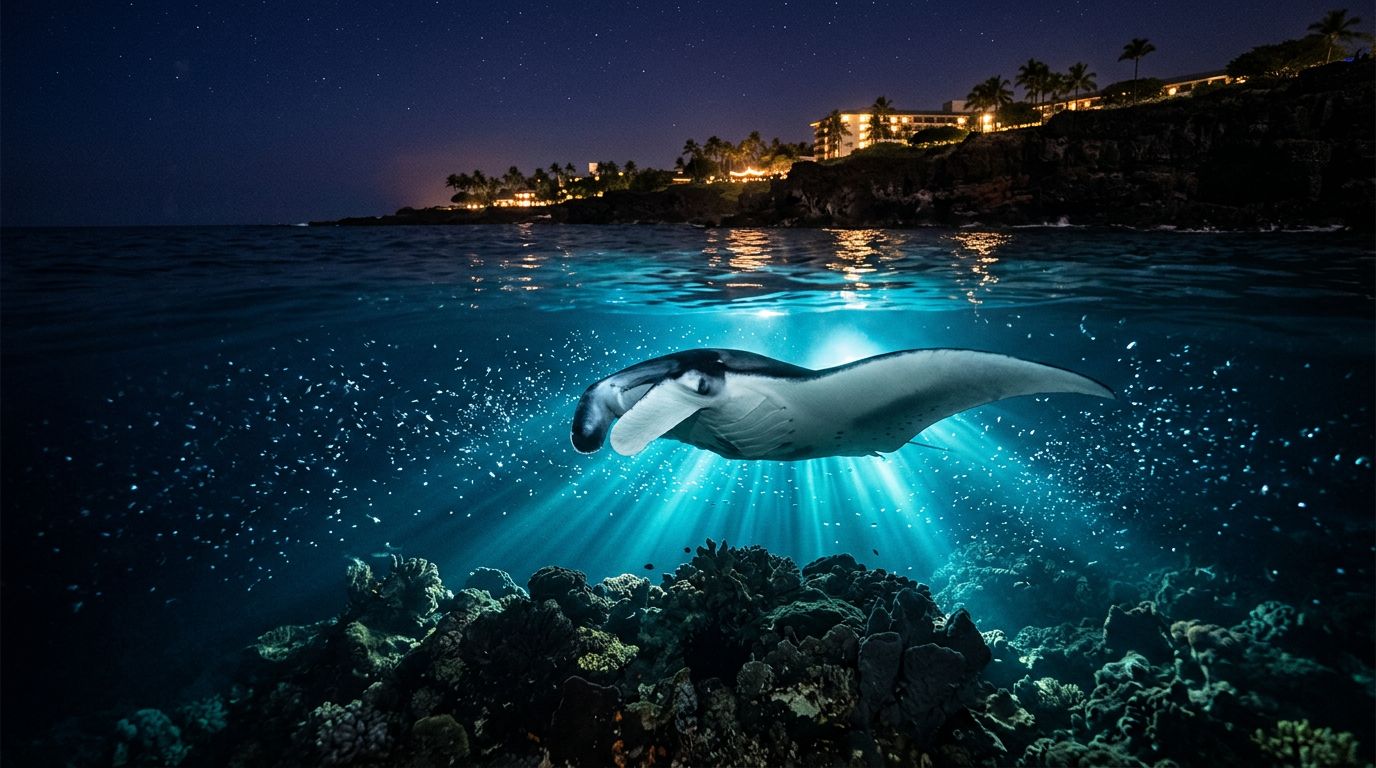
A chance encounter with one manta ray helped create one of Hawaii’s most unusual ocean experiences. Today, you can float above these gentle animals at night while underwater lights draw plankton into the sea.
Kona Snorkel Trips carries that story forward with small-group tours, lifeguard-certified guides, reef-safe practices, and custom lighted boards. To understand why this experience exists, you need to return to the hotel lights that started it all.
The accidental beginning at Kona Surf Hotel
Manta ray night snorkeling in Kona began by accident, not through a carefully designed attraction. In the late 1970s, the Kona Surf Hotel installed bright floodlights along its beachfront. The lights helped diners see the ocean after sunset and added atmosphere to the seaside restaurant.
Those beams also changed the water below. Plankton, attracted to the light, gathered near the surface. A manta ray followed the food source and began feeding in the illuminated water.
Local accounts identify 1979 as the year of the first recorded encounter at the hotel. The sighting may have lasted only minutes, but it revealed a repeatable pattern. When lights brought plankton close to shore, manta rays sometimes arrived to feed.
The animals did not come to entertain guests. They came for food. Their wide mouths opened as they glided through the plankton, then their cephalic fins guided the food toward them. That feeding style created the smooth, close passes people now associate with Kona’s nighttime encounters.
The early story is summarized in the history of the manta ray night dive, which also describes Hawaii’s role in making nocturnal manta viewing famous.
The original attraction was a food chain set in motion by artificial light: plankton gathered, manta rays followed, and people began watching.
A similar event happened during construction of a new hotel at Keauhou Bay in the early 1980s. Construction lights attracted plankton, and manta rays appeared near the work area. That second location later became known as Manta Village.
How scuba encounters became popular night snorkeling tours
At first, people watched the manta rays from shore or hotel dining areas. The experience changed in 1992, when dive operators began taking scuba divers to the Kona Surf Hotel area on some nights.
Scuba diving allowed visitors to stay in the water after dark, but the activity required certification and heavier equipment. As interest grew, operators recognized that snorkelers could also observe the rays from the surface. This opened the encounter to families, couples, and travelers who didn’t scuba dive.
By the early 2000s, manta ray night snorkel tours had become a regular Kona activity. Boats carried guests to established viewing sites, where lights were placed in the water or attached to floating platforms. The light attracted plankton, and the mantas arrived when feeding conditions were right.
The timeline wasn’t perfectly smooth. The Kona Surf Hotel closed in 2002, and the floodlights disappeared. Manta sightings at that site declined when the plankton source vanished. After the property reopened as the Sheraton Kona Resort & Spa at Keauhou Bay in 2004, the lights returned, and the manta rays returned as well.
That connection helped establish Manta Village as the original and most recognized location. A Kona manta ray guide provides additional background on the area’s hotel lights, feeding behavior, and tour history.
For you as a visitor, the important point is simple: the tour doesn’t place captive animals in an attraction. You enter a natural feeding area where wild manta rays choose whether to approach.
Manta Village, Manta Heaven, and Kona’s changing sites
Kona has more than one place where you may see manta rays at night. Each location has a different history and access pattern.
Manta Village sits offshore from Keauhou Bay, near the Sheraton Kona Resort & Spa. Its official geographic name is Kaukalaelae Point. Because the original hotel lights helped establish the feeding pattern, this site became the center of Kona’s manta tourism.
The location is close to shore, which makes it accessible by boat and, under suitable conditions, from nearby shoreline areas. Its long history also means many operators know the entry points, currents, and usual staging areas well.
Manta Heaven, also called Garden Eel Cove, is near Kona International Airport at Keahole. It is farther from central Kona and is generally reached by boat. This site offers another option when conditions or operations make Manta Village less suitable.
A third area lies between Kawaihae Harbor and the Kohala resort coastline. Operators may use different sites depending on weather, ocean conditions, wildlife activity, and local operating plans.
The names can confuse first-time visitors. A tour described as a manta ray night snorkel may visit Manta Village, Manta Heaven, or another approved viewing area. Ask where your boat plans to go, how long you’ll spend in the water, and what happens if conditions change.
No site guarantees manta sightings. Wild animals control the encounter, and responsible crews won’t chase them or handle them to create a better view.
Why lights changed the experience, and why care matters
The lights used during a manta tour don’t make the animals appear on command. They concentrate plankton, which can create a feeding opportunity. Manta rays learn that certain areas may offer food, so some return repeatedly.
Kona’s nightly encounters also created new responsibilities. More boats, swimmers, and lights can affect wildlife and other ocean users if crews ignore limits. By 2012, Hawaii stakeholders had begun developing operating standards focused on sustainable manta tourism.
Good practices now shape the experience. Guides give you instructions before entering the water. You usually hold onto a floating board or rest near a stable light source instead of swimming after the animals. You should keep your hands off the rays, leave space for their turns, and follow crew directions when a guide asks you to move.
Reef-safe behavior matters even during a sandy-bottom night encounter. Secure your fins, avoid standing on coral, and don’t bring sunscreen that can wash into the water. If you feel cold, tired, or uncomfortable, tell your guide immediately.
The best operators also explain what you are seeing. You may learn how manta rays feed, why their bodies are shaped for gliding, and how plankton drives the entire encounter. That education gives the experience more meaning than a quick photograph.
A good night tour lets you watch the mantas without turning their feeding area into a playground.
Experiencing the history with Kona Snorkel Trips today
When you plan snorkeling Big Island Hawaii, you may first picture sunny reefs and colorful fish. Kona’s nighttime manta experience offers a different setting, with dark water, focused lights, and wild animals moving below you.
Kona Snorkel Trips puts a strong “Reef to Rays” philosophy into its ocean adventures. Its guides are lifeguard certified, and its small-group format gives you more personal attention than a crowded commercial outing. The company provides snorkeling gear, flotation support, and custom-built lighted boards for the nighttime encounter.
That setup connects today’s tours to the original hotel-light discovery while giving you a more organized way to enter the water. You can expect a safety briefing, equipment guidance, and an explanation of how to observe the rays without interfering with them.
Manta Ray Night Snorkel Hawaii is another local manta-focused company you may encounter while comparing Kona experiences. Whichever operator you choose, look for clear safety instructions, small groups, trained guides, and a firm policy against touching wildlife.
Kona Snorkel Trips also offers daytime reef trips, Captain Cook and Kealakekua Bay excursions, whale watching during the seasonal period, and private boat adventures. You can review its guided Big Island snorkeling tours if you want to compare a manta outing with other ocean activities.
If the manta experience fits your plans, you can check availability before choosing your date. Tours often last several hours in total, with roughly 30 to 45 minutes spent at the viewing site, although schedules vary.
When you search for a way to snorkel Big Island waters after sunset, prepare for conditions rather than a guaranteed performance. Bring a swimsuit, towel, and warm layer for the boat ride. Follow the check-in time, listen to the crew, and remember that the manta rays decide whether they visit.
For a visitor-focused look at current tour formats and reviews, you can also browse this Kona manta snorkel tour listing.
Conclusion
Kona’s manta ray night snorkeling story began with hotel floodlights, gathered plankton, and a single manta ray in 1979. Over time, scuba trips became snorkel tours, established sites developed, and safety standards helped shape the experience you can enjoy today.
Your nighttime encounter connects you to that unusual history, but the animals remain wild. When you choose a responsible crew and respect the feeding area, you help keep Kona’s manta tradition safe for future visitors and the rays themselves. A snorkeling Big Island itinerary may begin in daylight, but the story of Kona’s ocean often continues after sunset.