
Is a manta ray night snorkel Kona available every night?
A manta ray night snorkel Kona trip can be available on many nights, but no operator can promise a departure every evening of the year. Tour calendars change with demand, boat schedules, seasonal hours, and ocean conditions.
The manta rays remain in Kona year-round. However, rough seas, strong winds, poor visibility, or a temporary safety concern can close a departure at short notice. Your best approach is to check the live calendar, understand the cancellation policy, and keep one flexible evening in your itinerary.
Key Takeaways
- Kona manta ray tours operate on many nights, but availability depends on each company’s schedule.
- Manta rays are present year-round, while calm conditions are often more common from spring through early fall.
- Weather and sea conditions can cancel a tour even when the calendar showed open spaces earlier.
- Booking early gives you more choice, while scheduling the tour early in your trip gives you room to reschedule.
- Kona Snorkel Trips offers guided nighttime manta encounters with lifeguard-certified guides and custom lighted boards.
How a manta ray night snorkel Kona schedule works
The short answer is usually, but not automatically.
Several Kona operators list manta ray night snorkels on most days of the week. Some run trips seven nights a week, while others depart only on selected evenings. A company may also offer more than one departure time during busy periods, then reduce its schedule during slower seasons.
The calendar you see online is the most useful starting point. Look for the exact date, departure time, meeting location, number of spaces, and current cancellation terms. A tour that operates on Monday does not necessarily run every Monday throughout the year.
Kona has two major manta viewing areas. Manta Village is near Keauhou Bay, south of Kailua-Kona, while Manta Heaven is closer to the airport. Operators choose a site based on their route, conditions, permits, and the best current opportunity for a safe encounter.
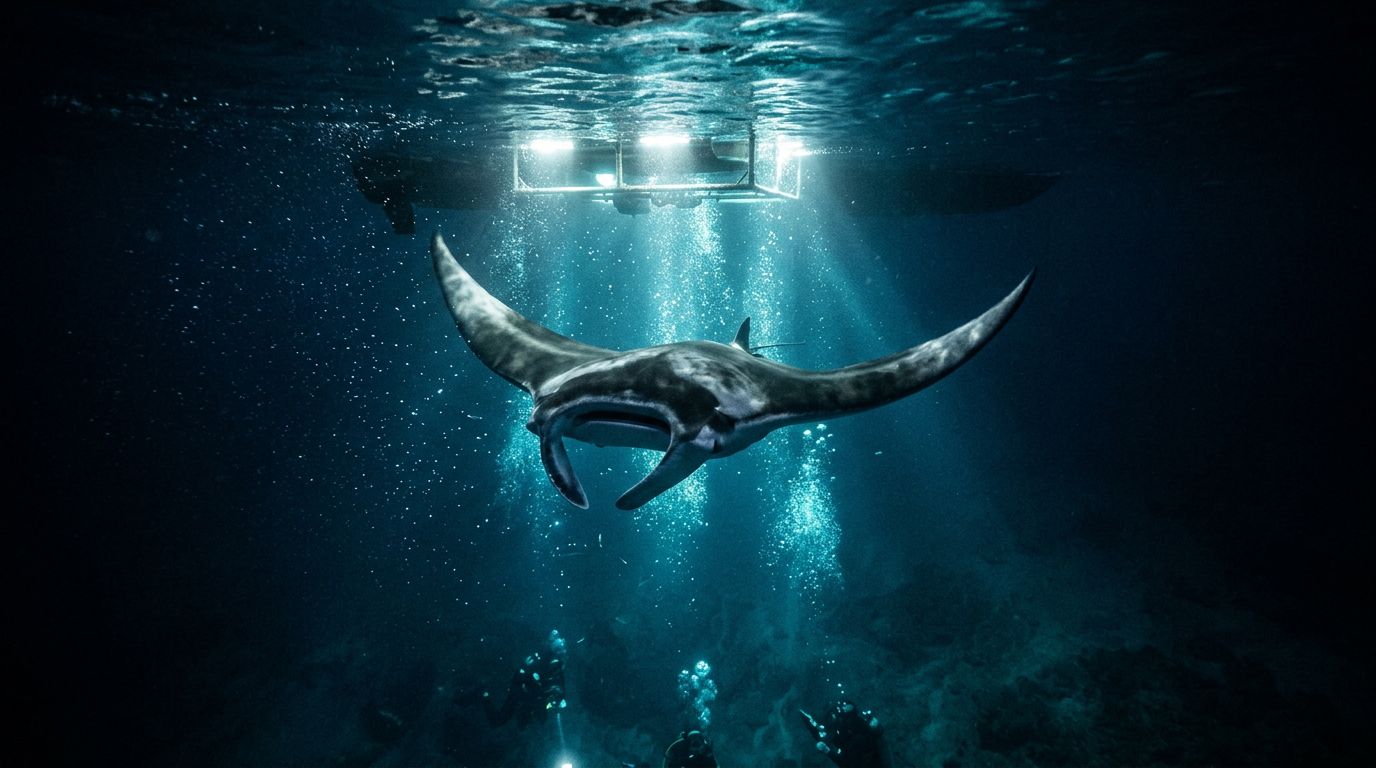
During a typical trip, you travel offshore near sunset. Once the boat reaches the viewing area, the crew places bright lights in the water. Plankton gathers around the light, and manta rays may arrive to feed. You float at the surface beside a lighted raft or board while the animals glide below and around you.
The rays don’t come because they are trained or fed. They follow a natural food source. According to NOAA’s giant manta ray guide, mantas filter plankton from the water by opening their mouths wide and directing water through their gills.
Why some nights have fewer available manta tours
A full calendar doesn’t mean the ocean will cooperate. Kona’s coast can look calm from shore while conditions offshore become uncomfortable for a small boat or a swimmer.
Weather and ocean conditions
Wind, swell, currents, and visibility all affect the decision to leave the harbor. A captain may cancel a trip when the water becomes too rough for guests to board, swim, or return to the boat safely.
Winter can bring larger surf and less predictable conditions. Summer and early fall often offer calmer water and warm temperatures, although a calm season can still produce an occasional rough evening. Ocean conditions can change within hours, so the forecast you check in the morning isn’t a guarantee for that night’s trip.
Rain alone doesn’t always cancel a manta tour. The more important factors are wind, swell, current, lightning, and visibility. Your operator should make the final call based on conditions at sea, not on the weather in your hotel parking lot.
A tour may show available seats at noon and still be canceled later if the captain determines that conditions are unsafe.
If a cancellation occurs, ask whether you can move to another date, receive a refund, or join a later departure. Policies differ, so read the booking terms before you pay.
Demand and seasonal scheduling
Availability also changes with the number of visitors on the island. Summer holidays, school breaks, and winter travel periods can fill popular departure times quickly. A company may run additional trips during busy weeks, but those extra spaces can disappear fast.
During slower periods, an operator may combine departures or offer fewer time slots. That doesn’t mean the manta rays have left. It means the business is matching its schedule to reservations, crew, and boat operations.
You may see several evening times listed, such as an early sunset departure and a later trip after dark. The best time depends on your dinner plans, transportation, seasickness concerns, and how much time you want to spend on the water.
What “available every night” really means
When you search for a manta ray night snorkel Kona tour, “every night” can describe an operator’s normal schedule rather than a guarantee for your specific date.
Use the calendar to separate three different questions:
| Question | What to check |
|---|---|
| Does the company normally operate tonight? | Look at the weekly schedule and seasonal hours. |
| Are seats open for your date? | Check the live booking calendar, not only the tour description. |
| Will the boat actually depart? | Review the weather policy and cancellation rules. |
The first question concerns the company’s operating pattern. The second concerns remaining inventory. The third depends on conditions that may not be known until close to departure.
For example, a tour can operate seven nights a week but have no seats left on Saturday. Another operator may have seats on Saturday but run only four evenings each week. A third company may accept reservations but cancel if the harbor or offshore conditions become unsafe.
You should also confirm the meeting point. Kona manta tours may check in at Keauhou Bay, a nearby hotel, a harbor office, or another location in Kailua-Kona. Allow extra time for parking and check-in, especially if your reservation requires a separate drive from the booking office to the boat.
A calendar with open spaces is a positive sign, but it isn’t a promise of manta sightings. Wildlife encounters are natural events. Responsible operators don’t feed, chase, grab, or trap the rays to create a guaranteed show.
How to choose and book the right night
Your choice of date can affect the whole experience. If you’re staying in Kona for several days, book the manta tour near the beginning of your trip rather than the final evening.
That gives you a backup window if weather forces a cancellation. It also gives you time to recover from travel before spending an evening on a moving boat.
When you compare tours, look at the details that affect your comfort in the water:
- Departure location: Confirm whether you check in at the harbor or another office.
- Total duration: Many trips take about two hours, including transportation, briefing, and time on the water.
- In-water time: Ask how long you’ll typically snorkel rather than assuming the entire tour is spent swimming.
- Group size: Smaller groups can make it easier to hear the guide and find space around the viewing board.
- Guide qualifications: Lifeguard-certified guides and clear safety briefings matter, especially for families and first-time night snorkelers.
- Equipment: Confirm whether the operator provides masks, fins, flotation, wetsuits, and lights.
- Cancellation policy: Read what happens when the company cancels because of conditions.
- No-sighting policy: Some operators offer a re-ride or another remedy, while others don’t guarantee an animal encounter.
You should also be honest about your swimming comfort. A night snorkel can feel different from a daytime reef tour. Darkness reduces your sense of distance, and the water may feel cooler once the sun goes down. Flotation support can help you relax and focus on the animals.
If you’re prone to motion sickness, choose a departure that gives you enough time to eat lightly and hydrate. Avoid a heavy meal immediately before boarding. Bring a dry change of clothes, a towel, reef-safe sunscreen for earlier parts of your day, and a warm layer for the ride home.
For families, check minimum age, height, swimming requirements, and whether children must stay with an adult. Some guests may prefer watching from the boat instead of entering the water. Ask about that option before booking.
Kona Snorkel Trips and its nighttime manta experience
Kona Snorkel Trips is a Kailua-Kona ocean adventure company built around a “Reef to Rays” philosophy. Its tours focus on personalized service, guest safety, and responsible interaction with Hawaii’s marine environment.
The company uses state-of-the-art snorkeling equipment and custom-built lighted boards for nighttime manta encounters. Lifeguard-certified guides lead the experience and explain how to move around the animals without touching or crowding them.
You can review the company’s guided Big Island snorkeling tours to compare its reef and wildlife experiences. For the nighttime option, the dedicated manta ray snorkel Kona tour page includes departure details and available tour types.
Manta Ray Night Snorkel Hawaii is another company you may see when comparing local nighttime manta experiences. You can visit Manta Ray Night Snorkel Hawaii for its current information and booking options. Always compare the meeting point, trip length, equipment, group size, and cancellation terms before selecting a departure.
Because availability changes, use the current booking calendar rather than relying on an old schedule in a travel post. If you want to reserve a Kona Snorkel Trips manta experience, you can check availability for your preferred date.
Kona Snorkel Trips also offers other ocean outings, including daytime reef snorkeling, seasonal whale watching, and private boat trips. That makes it easier to choose another water experience if your first preferred manta date fills or weather affects the schedule.
A daytime snorkel can also help you decide whether a nighttime swim suits you. You get familiar with saltwater, fins, flotation, and the rhythm of a guided trip before entering the water after sunset.
What to expect on the night of your tour
Most manta trips begin around sunset. You check in, meet your guide, receive equipment, and listen to a safety briefing before heading to the viewing area.
The briefing usually covers how to enter the water, where to hold the lighted board, how to keep your fins away from the rays, and what to do if you need help. Pay attention even if you’ve snorkeled before. Night operations have different procedures from a daytime reef tour.
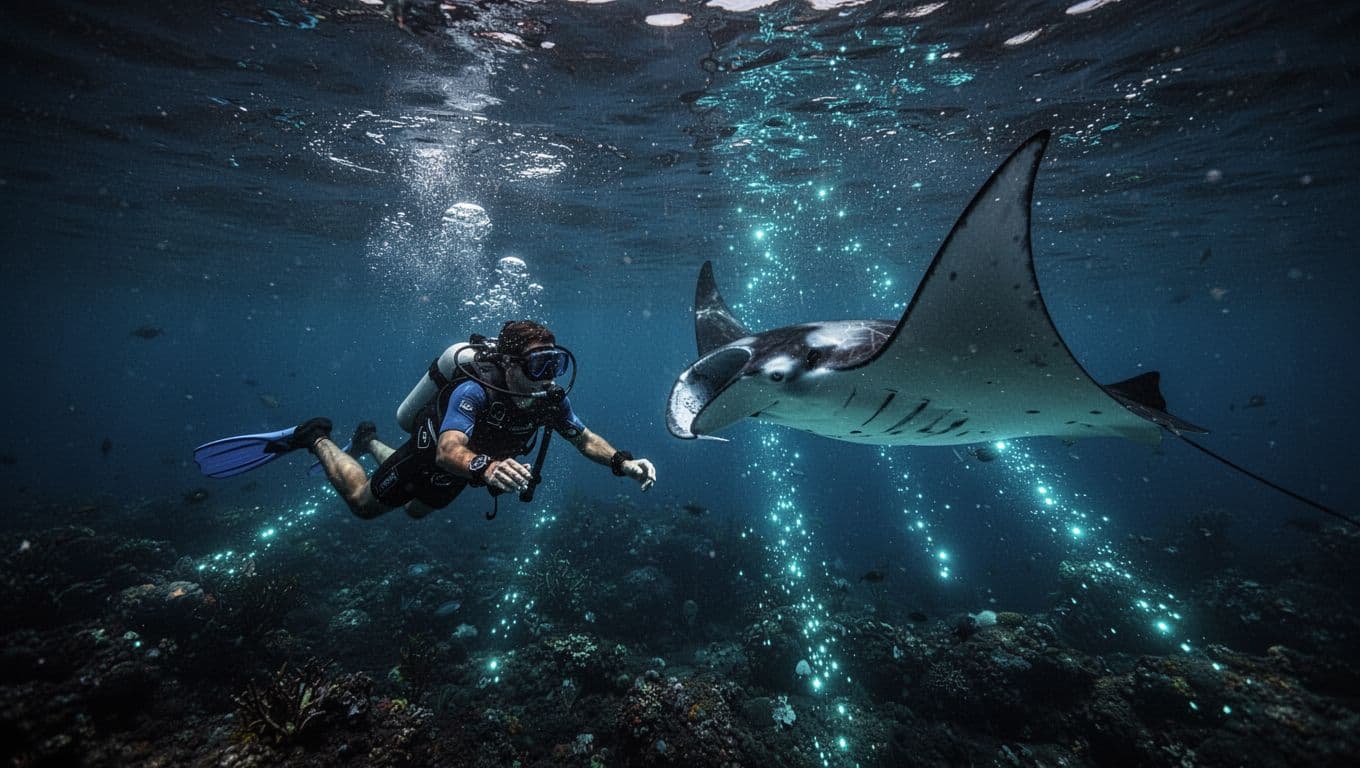
Once you enter the water, keep your body relaxed and your movements slow. Hold the board as directed and leave room for the animals to pass. Manta rays may swim close, but you should never reach toward them or attempt to touch their wings, tail, or underside.
Your guide may ask you to keep your face in the water and avoid splashing. That helps you conserve energy and keeps the viewing area calmer. If you become tired, cold, anxious, or uncomfortable, tell the crew immediately.
The rays often make repeated passes through the illuminated plankton. You may see one animal or several during your time in the water, but the number and length of encounters vary. Clear water can make the animals seem close enough to touch, even when they remain at a safe distance.
Bring realistic expectations. A manta tour is a wildlife encounter, not an aquarium performance. The best operators protect the animals and let their natural feeding behavior set the pace.
You can also help protect the reef by using reef-safe products, avoiding contact with coral, and following every instruction from your guide. Don’t bring loose items into the water unless the crew approves them. Phones, cameras, and accessories can become hazards when they fall near swimmers or wildlife.
When a manta tour isn’t the right fit
A nighttime manta snorkel may not suit every traveler. If you aren’t comfortable swimming in open water, ask whether the operator offers enough flotation support or a boat-based viewing option.
People with serious mobility limitations, heart conditions, breathing problems, or severe motion sickness should discuss the activity with a medical professional and the tour company before booking. The crew can explain boarding steps and water requirements, but it can’t assess your health.
You may also want a daytime alternative if the ocean forecast looks unsettled. Daylight reef trips provide a different experience, with better visibility of coral, tropical fish, and sea turtles. For a broader snorkeling plan, compare Kona Snorkel Trips’ Big Island water adventures and choose an option that matches your group.
Travelers searching for snorkeling Big Island Hawaii activities often focus on manta rays, but the island offers several distinct environments. Kealakekua Bay, calm coves, lava-rock shorelines, and offshore reefs each create different conditions. A good guide can help you select an experience based on your swimming ability and the day’s ocean forecast.
If your schedule is tight, book the most weather-sensitive activity first. You can fill the rest of your itinerary with land-based attractions, beach time, or a daytime tour that has a different operating window.
For visitors who want to snorkel Big Island waters more than once, spacing two ocean activities across separate days gives you flexibility. It also prevents one rough-weather day from canceling your only planned time in the sea.
Booking advice for your Kona vacation
The most practical answer to “Is a manta ray night snorkel Kona available every night?” is this: many nights have departures, but every date needs its own confirmation.
Check the live calendar before you build dinner reservations or airport plans around a tour. Confirm the meeting point, arrival time, included equipment, swimming requirements, and cancellation policy. Then keep one open evening if your vacation allows it.
For the best choice of times, reserve early during summer, holiday weeks, and other busy travel periods. If your trip falls during a rougher weather season, flexibility matters more than choosing a particular departure time.
Finally, remember that snorkeling Big Island locations can have different conditions on the same day. A calm beach doesn’t guarantee calm water at a nighttime manta site. Your captain and guide have the final say because they can evaluate the actual conditions offshore.
Conclusion
A manta ray night snorkel Kona tour is available on many evenings, and some operators run trips throughout the week. Still, schedules vary, open seats can disappear, and weather can cancel a departure even after you book.
Reserve early, place the tour near the start of your vacation, and choose a company that explains its safety and cancellation policies clearly. With a flexible plan, you give yourself the best chance to enjoy Kona’s manta rays without treating a wild ocean encounter like a guaranteed show.