
How Crew Ratios Shape Kona Boat Tours
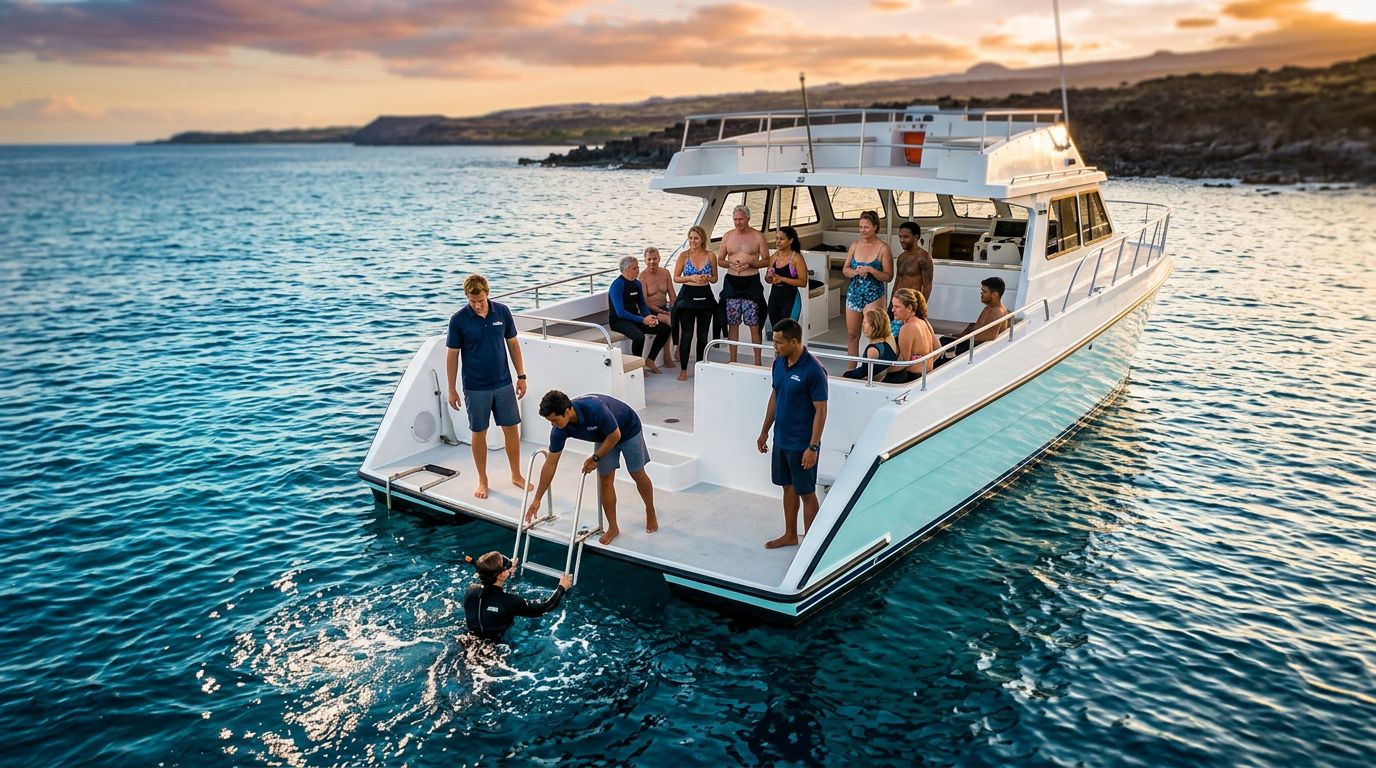
A boat can hold many guests, but that doesn’t mean it should. On Kona boat tours, the crew-to-guest ratio affects how closely you’re guided, how quickly help reaches you, and how much space you have on deck and in the water.
If you choose based only on price or departure time, you may miss one of the clearest signs of tour quality. A smaller group with enough trained crew can make snorkeling calmer, safer, and more personal. The right ratio also depends on the trip itself, because a daytime reef tour and a nighttime manta excursion place different demands on the crew.
What the crew-to-guest ratio actually tells you
The crew-to-guest ratio compares the number of working crew members with the number of passengers. A tour with two crew members and 12 guests has a 1:6 ratio. A boat with three crew members and 24 guests has a 1:8 ratio.
Both numbers may sound reasonable, but the ratio doesn’t tell the whole story. You also need to know who counts as crew and what each person does during the trip.
A captain may count in the total, yet remain at the helm while guests snorkel. A deckhand may handle lines, fuel, and equipment but not enter the water. A lifeguard-certified guide may focus on swimmers, explain local wildlife, and respond to changing conditions. Those roles create very different guest experiences.
Ask these questions before booking:
- How many guests are allowed on the boat?
- How many crew members work during the water portion?
- Will a trained guide enter the water with you?
- Does the captain count in the advertised ratio?
- How does the crew manage guests who need extra support?
- What happens if someone becomes tired, cold, or uncomfortable?
A low number looks good on a booking page, but active supervision matters more than a simple headcount. If one person handles the boat while another watches a dozen swimmers, your practical experience differs from a trip with two guides in the water.
Why small groups change Kona boat tours
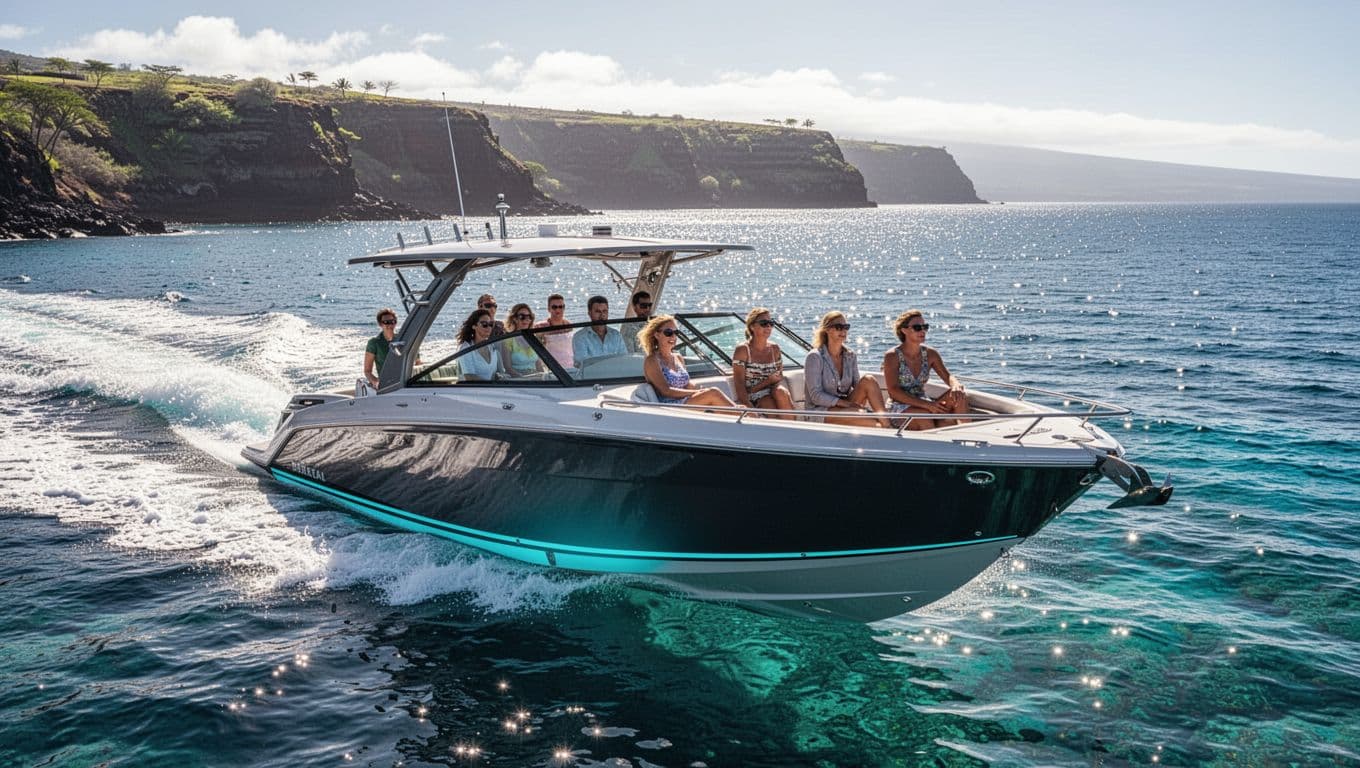
A lower crew-to-guest ratio gives your guides more time to watch the water and the people in it. That matters even when the ocean looks calm. Wind, current, boat traffic, fatigue, and changing visibility can affect a swimmer within minutes.
With fewer guests, a guide can notice when your mask leaks, your fins feel uncomfortable, or you need help adjusting your pace. You don’t have to wave across a crowded group or wait while several other guests receive attention.
Small groups also make instructions easier to hear. On a busy boat, engine noise and overlapping conversations can bury a safety briefing. On a smaller vessel, you can usually hear where to enter, how to stay clear of the boat, and what behavior protects marine life.
The ratio shapes the experience after you enter the water, too. Guides can point out a moray eel tucked into the reef, identify a fish, or direct you toward a better viewing area without gathering a large crowd around one spot.
That personal guidance helps if you’re new to snorkeling. You may know how to swim but still feel unsure about breathing through a mask. A patient guide can stay nearby while you settle into the equipment and gain confidence.
Families often notice the difference first. Children may change speed, tire sooner, or need reminders about fins and flotation. With enough crew, one guide can support a young swimmer while another keeps watch over the rest of the group.
A low ratio matters most when the crew has enough time to act, not merely enough people listed on the passenger manifest.
Safety depends on roles, not only numbers
You should treat a crew ratio as one part of a wider safety picture. Training, communication, equipment, weather decisions, and local knowledge all affect the day.
Hawaii’s Department of Land and Natural Resources published a safety assessment for manta ray viewing operations that recommended formal lifeguard training and a maximum swimming-to-lifeguard ratio of 25:1 during swimming activities. That recommendation is a risk benchmark, not a guarantee that every tour at that number will feel attentive. You can review the Hawaii manta viewing safety assessment for the full context.
The assessment also shows why you should ask what guides do once guests enter the water. A captain, a shore-based coordinator, and an in-water lifeguard don’t provide the same level of direct supervision.
Look for operators that explain their procedures clearly. You should know where flotation equipment is stored, how guides communicate, and how the crew responds to changing ocean conditions. A professional answer usually tells you more than a vague promise about having a “small group.”
Different tours need different crew ratios
The ideal ratio changes with the activity, time of day, and location. You shouldn’t compare every Kona excursion using one fixed number.
| Tour style | What the crew manages | Why the ratio matters |
|---|---|---|
| Morning reef snorkeling | Gear, entries, swimmers, reef etiquette, and changing skill levels | Guests may spread out while exploring |
| Kealakekua Bay snorkeling | Boat positioning, water entry, current, reef awareness, and history | Clear guidance helps you stay with the group |
| Manta ray night snorkeling | Darkness, flotation equipment, lights, swimmers, and vessel awareness | Guests need closer direction and reassurance |
| Whale watching | Passenger movement, wildlife distance, weather, and viewing angles | Crew helps everyone share limited viewing space |
| Private charter | Your group’s pace, activities, and comfort | Crew can tailor support to your specific needs |
Daytime reef and Kealakekua Bay trips
Day trips often include guests with different comfort levels. One person may swim confidently while another has never used a snorkel. A lower ratio lets the crew divide attention without making anyone feel rushed.
At Kealakekua Bay, the guide’s job includes more than helping you find fish. You need clear instructions for entering and exiting the water, staying with the boat, and avoiding contact with coral. A guide may also share information about the Captain Cook Monument and the bay’s cultural and historical importance.
The Captain Cook snorkel tour is a good example of why location knowledge and supervision belong together. The water may look inviting, but your guide still needs to track the group, monitor conditions, and help guests make responsible choices around the reef.
If you want to compare timing and availability for this type of trip, you can check avaialbility before choosing your date.
Manta ray night snorkeling
Night snorkeling places more responsibility on the crew. You enter the water after sunset, use flotation support, and depend on lights to see the activity below. Your guide must help you remain oriented while also protecting the animals from unsafe contact.
You may feel relaxed once the manta rays arrive, but the boat, other swimmers, and support equipment still surround you. A strong crew keeps the viewing area organized and watches for fatigue, anxiety, or separation from the group.
The guide-to-guest ratio affects how much time you spend waiting for help. If your mask fills with water or you need to return to the boat, a nearby guide can respond without leaving the rest of the swimmers unattended.
Kona Snorkel Trips offers a Manta Ray Night Snorkel Kona experience built around small-group attention, quality equipment, and Lifeguard Certified guides. The company also uses custom-built lighted boards for nighttime encounters, which gives guests a stable place to rest while observing the rays.
You can check availability for a manta ray night snorkeling trip when you know your travel dates.
Whale watching and private charters
Whale watching doesn’t require swimmers in the water, but crew numbers still shape the experience. Guests move between seats, gather along one side of the boat, and try to share views when a whale surfaces. Crew members help distribute passengers and remind everyone to keep a safe distance from wildlife.
Private charters offer a different advantage. Your group may have one shared comfort level, so the crew can adjust the pace and activity choices around you. You might spend more time snorkeling, stop for a swim, or focus on wildlife viewing without coordinating with a full boat of strangers.
A private trip isn’t automatically better for every traveler. If you enjoy meeting other guests, a small shared tour may offer a more social experience at a lower price. The best choice depends on how much control and personal attention you want.
How crew ratios affect comfort on the boat
The crew-to-guest ratio influences your time on deck before it affects your time in the water. A crowded boat can make gear distribution feel rushed. You may wait for a mask, search for an open seat, or stand while other guests prepare.
With more room and enough crew, the pre-trip process feels easier. Guides can check your equipment, answer questions, and explain what you can expect without rushing through each interaction.
Comfort also matters for guests who don’t plan to snorkel the entire time. You may want to stay on the boat, take photos, or watch children from the deck. Additional crew can supervise the water while another person helps guests on board.
Motion sickness deserves attention as well. If you start feeling unwell, a crewmember can help you move to a better position, provide water, and monitor your condition. On a full boat, that support may take longer.
The ratio can also affect noise. Fewer guests create less competing conversation, so you can hear local history and marine-life information. That makes the ride more meaningful, especially when your guide explains why you should avoid standing on coral or touching wildlife.
If you’re planning snorkeling Big Island Hawaii activities with children or first-time swimmers, ask about flotation devices and in-water supervision before you reserve. Those details tell you more about the trip than a polished photograph.
How to compare advertised ratios before booking
Tour companies don’t always present crew numbers in the same way. One operator may advertise the maximum passenger capacity. Another may describe a typical group size. A third may list all employees aboard, even when only one guide enters the water.
Use the following process to compare tours fairly.
First, identify the maximum number of guests. A “small group” could mean eight passengers on one boat or 16 passengers on a larger vessel. The phrase has no universal definition.
Next, ask about the crew during the actual activity. A 1:6 boat ratio may become 1:12 in the water if one crew member remains at the helm and the other leads the group alone.
Then, ask how the company handles different swimming abilities. A strong answer should cover flotation, buddy procedures, entry support, and what happens if someone wants to return early.
You should also check whether the boat design supports the advertised group size. A vessel with wide side access, clear boarding points, and organized gear storage may feel more comfortable than a larger boat with limited deck space.
Finally, read recent reviews for details rather than relying only on star ratings. Look for comments about guide attentiveness, safety explanations, equipment quality, group size, and how the crew treated nervous swimmers.
A useful comparison might look like this:
- Best value for confident swimmers: A shared tour with a moderate ratio and a well-organized crew.
- Best for families: A smaller group with guides who support children and first-time snorkelers.
- Best for nighttime activities: A tour with direct in-water supervision and clear flotation procedures.
- Best for full control: A private charter where your group sets the pace.
The goal isn’t to find the smallest number at any price. You want enough trained crew for the activity you plan to do.
How Kona Snorkel Trips uses a small-group approach
When you compare Kona boat tours, Kona Snorkel Trips places its focus on small-group service, guest safety, and responsible ocean use. The company follows a “Reef to Rays” philosophy across its guided snorkeling, manta ray, whale watching, and private boat experiences.
Its Lifeguard Certified guides work with guests at different comfort levels. The crew provides snorkeling gear, explains reef-safe practices, and helps you understand what you’re seeing without treating the ocean like an amusement park.
That approach matters when you snorkel Big Island reefs. A guide can remind you to keep your fins away from coral, avoid touching marine life, and give animals room to move. You get more than equipment and transportation. You receive support that helps you participate responsibly.
Kona Snorkel Trips also offers custom-built lighted boards for nighttime manta encounters. These boards give swimmers a stable viewing area while helping keep the group organized around the lights.
The company’s Big Island snorkeling tours include options for travelers who want a shorter local reef trip or a longer excursion. You can choose based on your schedule, swimming experience, and interest in specific locations.
A smaller operation can also respond more naturally to the group. If your family needs extra time with masks, or your partner wants to remain on board, the crew can account for those needs without reshaping the day around dozens of passengers.
You can check availability for a Kona Snorkel Trips excursion before you finalize the rest of your itinerary.
What a good ratio feels like during your trip
You may not think about crew numbers once the boat leaves the marina. Instead, you’ll notice whether instructions are clear, equipment fits, and help is available when you need it.
A good ratio gives you room to enjoy the experience without constant crowd management. You can ask a question while a guide keeps an eye on your child. You can pause at the edge of the group while another swimmer receives assistance. You can return to the boat without creating confusion for everyone else.
During snorkeling, watch how the crew positions itself. Guides should keep track of the group rather than staying in one place with a single guest. They should also set boundaries around wildlife and respond when swimmers drift too far.
For nighttime manta trips, notice how the crew manages lights, flotation equipment, and boarding. Clear directions reduce stress, especially if you’re unfamiliar with ocean activities after dark.
On a reef tour, look for guidance that protects both you and the environment. A good guide doesn’t need to touch the reef to point out a fish. Clear verbal direction and calm positioning are usually enough.
People who love snorkeling Big Island conditions often focus on water clarity and marine life. Those details matter, but the crew determines how comfortably you can enjoy them. The best memories usually come when you feel supported without being hurried.
Choosing the right boat tour for your group
Start with your group rather than the tour name. If everyone swims confidently, you may prefer a longer shared trip with several viewing locations. If you have young children, older relatives, or nervous swimmers, place more weight on in-water support and easy boarding.
Consider the activity’s timing, too. Morning snorkeling usually offers daylight and a straightforward routine. A night manta trip requires comfort with darkness, flotation gear, and a longer period in the water. Whale watching may suit guests who want an ocean experience without swimming.
Your budget matters, but compare what the price includes. Gear, snacks, transportation, guide support, and a smaller passenger count can change the value of a trip. A cheaper ticket may not feel cheaper if you spend the day waiting for equipment or competing for space.
When you want to snorkel Big Island waters, ask whether the crew can help you choose a site based on conditions. Ocean plans sometimes need adjustment. A responsible operator puts safety and marine conditions ahead of a rigid promise about one exact location.
For a standard group, a well-run small-group tour often provides the right balance. Couples may prefer the quieter feel of a limited passenger count. Families may value hands-on guidance. Adventurous singles can enjoy a social boat while still receiving direct support.
Conclusion
Crew-to-guest ratios shape nearly every part of Kona boat tours, including boarding, safety briefings, snorkeling support, wildlife viewing, and comfort on deck. The number matters, but the crew’s training and actual responsibilities matter more.
Before booking, ask how many guests will be aboard, how many crew members work in the water, and how the team supports different swimming abilities. When the ratio matches the activity, you can spend less time managing logistics and more time enjoying the reef, the open coast, or a manta ray encounter.