
Manta Ray Night Snorkel Kona: A First-Timer’s Guide
A manta ray night snorkel Kona experience can sound intimidating when you’ve never swum in the ocean after dark. You may wonder how you’ll see, where you’ll hold on, and whether you need advanced snorkeling skills.
The good news is that a guided trip gives you structure, equipment, and support at every stage. You still need to feel comfortable swimming, but you don’t need to be an expert snorkeler. With the right preparation, your first night in the water can feel calm, clear, and unforgettable.
Why Kona’s Night Manta Snorkel Is Different
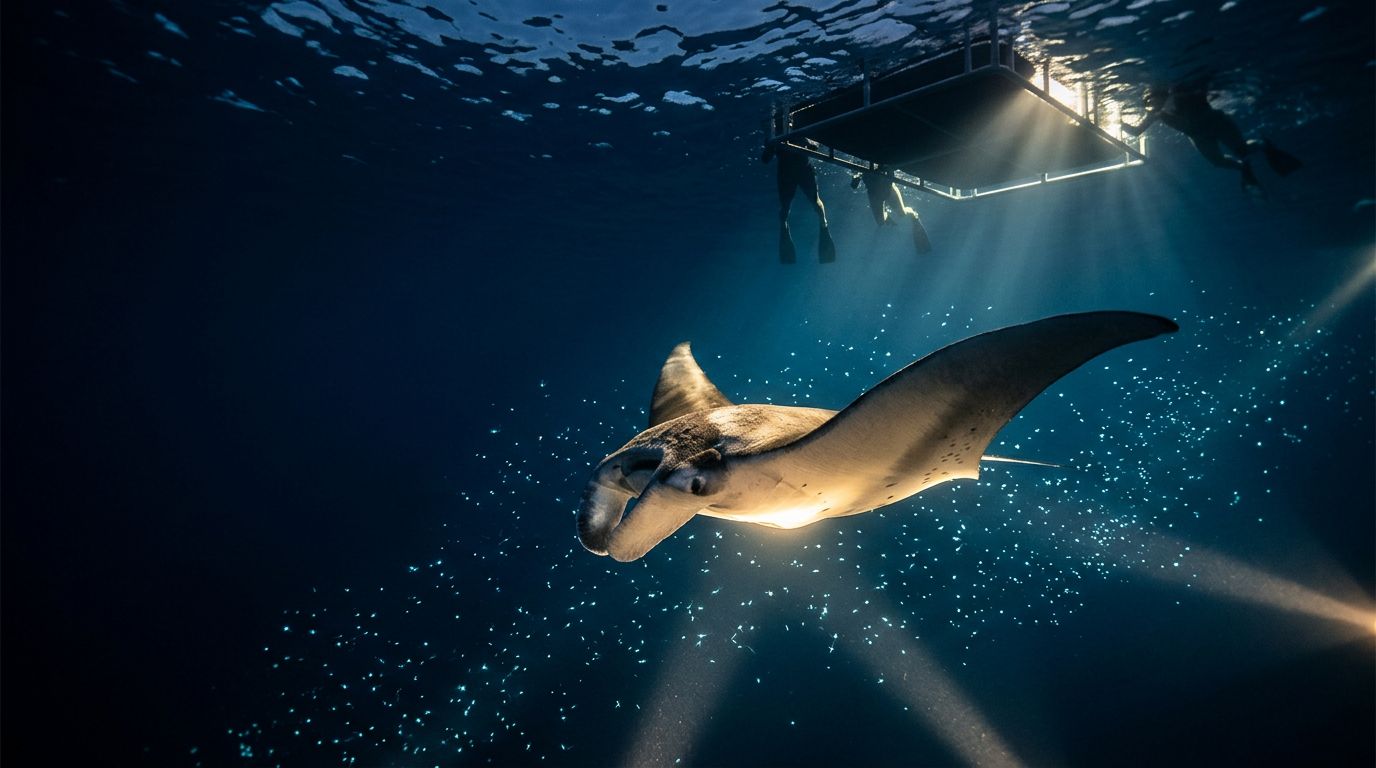
During daylight, you watch reef fish move through coral gardens. At night, the ocean changes completely. Tour operators place bright underwater lights near the surface, which attract plankton. Manta rays then glide through the illuminated water as they feed.
The rays don’t hunt swimmers, and they don’t need to touch you to create an incredible encounter. They move with wide wingspans, often passing beneath or beside the viewing area while filtering tiny organisms from the water.
Your focus stays on the lighted area rather than the darkness around you. That detail matters when you’re a first-time night swimmer. Instead of swimming through open water with a flashlight, you stay near a floating viewing board while guides monitor the group.
Kona’s manta sites include areas near Keauhou and Garden Eel Cove. Departure details vary by operator, but Kona Snorkel Trips lists Honokohau Harbor as its departure location for its manta tours. The listed outing is about two hours, with a longer seasonal whale watch and manta combination available during January and February.
For a helpful description of how underwater lights bring plankton close to the surface, read this Kona night manta feeding guide. The feeding behavior is the reason you can see these animals so close to the boat.
Your experience also depends on ocean conditions, wildlife behavior, and the guide’s instructions. Manta rays are wild animals, so no responsible operator can promise a particular number of sightings. A good crew gives you a safe viewing setup without chasing or touching the animals.
Is a manta ray night snorkel Kona trip right for you?
A night manta excursion can suit first-time snorkelers, couples, families with older children, and confident swimmers who want something different from a daytime reef tour.
You should be able to swim comfortably in the ocean and remain calm while wearing a mask and snorkel. The Kona Snorkel Trips tour details state that guests need to swim at least 50 yards without additional flotation. That requirement protects you and the rest of the group because the lighted board supports viewing, but it isn’t a substitute for swimming ability.
You may want to choose another activity if you panic in open water, struggle to float, or feel unable to follow guide instructions. A private conversation with the operator before booking can help you decide. Be honest about your experience, comfort level, and any medical concerns.
Night swimming feels different because your eyes lose the visual reference points you have during the day. You may not see the seafloor, the shoreline, or the full size of the group. The guide’s voice, the lighted board, and your breathing rhythm become your main points of orientation.
That adjustment usually becomes easier after a few minutes. Keep your face in the water, breathe slowly through the snorkel, and avoid lifting your head every few seconds to check your position. If you need a break, tell the guide and return to the boat or a designated rest area.
Families should check age, swimming, and supervision requirements before booking. Children who are strong swimmers may enjoy the experience, while younger guests may find the dark water overwhelming. Every passenger should understand that the trip involves a boat ride, ocean conditions, and time in the water after sunset.
What to expect during your first night snorkel
Your trip usually begins with check-in, gear fitting, and a safety briefing. Guides explain how to clear your mask, use your snorkel, enter the water, and hold your position near the lighted board.
The boat ride gives you time to adjust to the evening conditions. Bring a light layer for the return trip because the air can feel cooler after you leave the water. Once you reach the viewing site, the crew checks conditions before allowing anyone to enter.
You may wear a mask, snorkel, fins, and a flotation aid approved by the operator. Some trips also provide wetsuits or thermal protection. Ask what is included before you arrive, especially if you get cold easily.
After entering the water, you move toward the custom-built lighted board. The bright beams shine downward and attract plankton. You can hold the board or rest your arms along its edge while keeping your body relaxed.
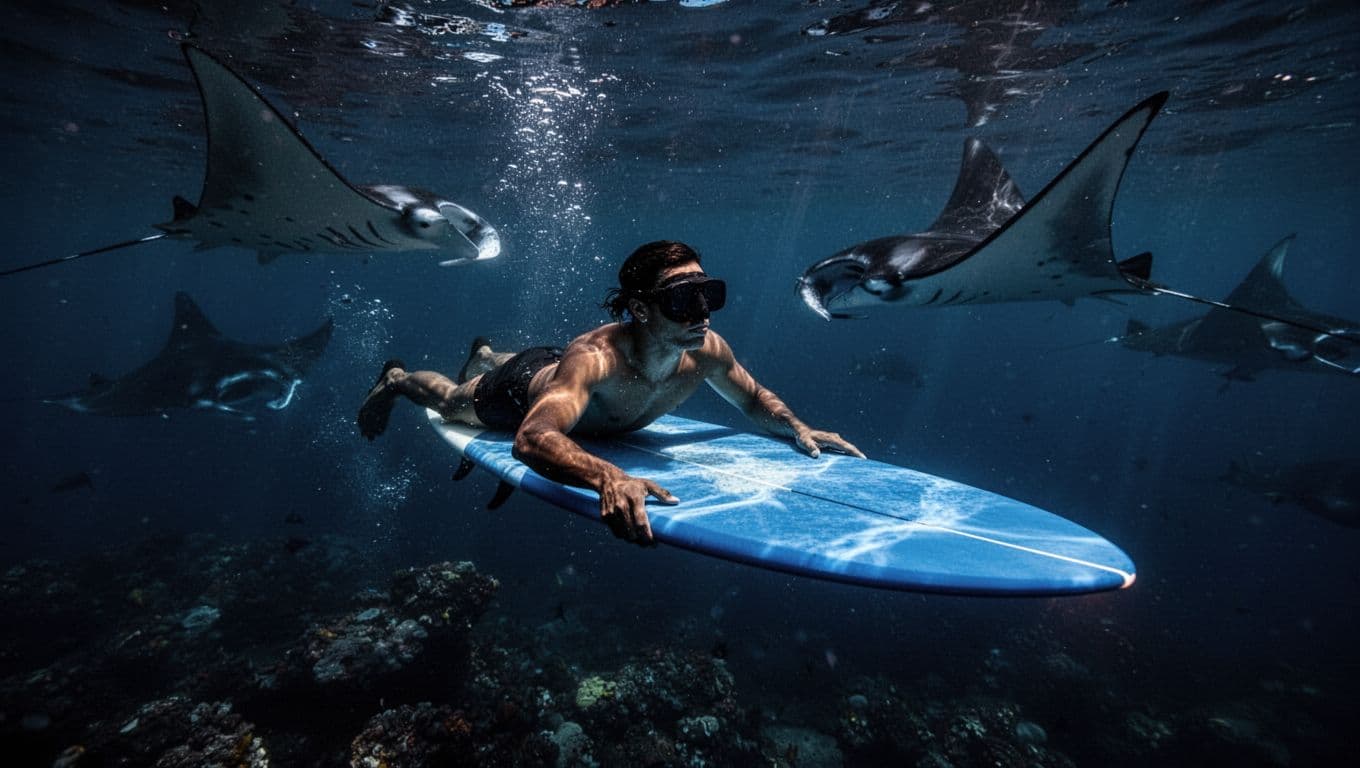
The lighted viewing board gives first-time night swimmers a clear place to stay while manta rays feed below.
The first sighting may surprise you. A manta can appear as a dark shape at the edge of the light, then turn beneath you with its mouth open. The animal’s movement looks slow, but it can change direction smoothly without warning.
Follow the guide’s position and keep your body near the viewing area. Don’t kick toward a manta or reach out as it passes. Touching can damage the animal’s protective coating and may cause it to leave the site.
A typical trip includes time to watch, listen, and settle into the experience. You don’t need to search for rays constantly. Look down into the light, then scan the edges where the animals may enter and exit.
The guides may point out feeding patterns, markings, or other marine life. Listen through the water whenever possible. Their instructions help you understand where to look and keep the group together.
When the water portion ends, the crew helps everyone return to the boat. You’ll have time to warm up, remove wet gear, and talk about what you saw during the ride back to shore.
How to prepare for night snorkeling in Kona
Preparation affects your comfort more than expensive equipment. Start by choosing a trip that matches your swimming ability and schedule. Evening outings can run late, so avoid booking one immediately after a long flight or a full day of hiking.
Eat a light meal before departure. Heavy food can make boat motion feel worse, while skipping food may leave you tired. Drink water during the day, but don’t overdo it right before boarding.
If you get seasick, ask your doctor or pharmacist about appropriate options before your trip. Follow product directions and avoid taking anything that could make you too drowsy to swim safely.
Pack these items:
- A swimsuit and a dry change of clothes
- A towel, water bottle, and light jacket
- Reef-safe sunscreen for earlier parts of the day
- Prescription medication and any needed medical information
- A waterproof phone case if the operator permits personal phones
Leave valuable jewelry and loose accessories at home. Saltwater, boat movement, and low light make dropped items difficult to recover.
Wear your mask strap over your head without pulling it too tight. A tight strap can cause discomfort and doesn’t create a better seal. Instead, place the mask evenly on your face and test it before entering the water.
New snorkelers often breathe too quickly when they first put their face in the ocean. Practice slow breathing in shallow water or a pool before your trip. Take calm breaths through your mouth and avoid talking while the snorkel is in place.
You can also practice floating without looking at the bottom. Close your eyes for a few seconds while keeping your breathing steady. This small exercise helps you understand how your body feels without constant visual feedback.
Don’t apply lotion or sunscreen immediately before entering the water unless the crew approves it. Products can affect masks and add unnecessary contaminants to the ocean. Ask the operator what reef-safe products they recommend for the day.
Staying safe and comfortable after dark
Your guide’s briefing matters, even if you’ve snorkeled many times during the day. Night conditions change how you judge distance, direction, and the movement of other swimmers.
Stay with the group and keep the lighted board within easy reach. If you drift away, signal the guide instead of swimming hard to catch up. Strong kicking can increase fatigue and make it harder to control your breathing.
Never dive beneath the board to get closer to a manta. The best view comes from staying on the surface and letting the animal choose its path. Mantas may pass close enough to see their markings without any pursuit.
Tell the crew if you feel cold, tired, seasick, anxious, or short of breath. You don’t need to wait until discomfort becomes a serious problem. Lifeguard-certified guides can help you return to the boat or adjust your position.
The boat’s safety rules also apply after the snorkel. Hold the rail when boarding, wait for instructions, and keep fins secured until you’re clear of entry points. Wet decks can be slippery, especially at night.
A responsible operator also protects the site. That means avoiding contact with manta rays, keeping boats positioned safely, and teaching guests how their behavior affects marine life. Kona Snorkel Trips builds its tours around small groups, safety, reef education, and low-impact wildlife viewing.
The lighted board helps you stay oriented, but your own swimming ability still matters. You should be able to swim independently before booking a night snorkel.
Choosing a first-time manta tour in Kona
When comparing tours, look beyond the headline price. The smallest fare may not include every item you need, while a slightly different schedule may fit your trip much better.
Check the following details before booking:
- Departure harbor and parking information
- Total trip length and time spent in the water
- Swimming requirements and age limits
- Included gear, flotation, and thermal protection
- Group size and guide-to-guest ratio
- Weather and cancellation policies
- Photo or video options
- Whether the boat has a restroom
A smaller group can make a real difference when you are nervous. You’ll have more room around the board, easier access to the guide, and less confusion during entry and exit.
Kona Snorkel Trips focuses on small-group ocean adventures led by Lifeguard Certified guides. Its “Reef to Rays” approach combines marine education with reef-safe practices. The company also uses custom-built lighted boards for its nighttime manta encounters.
You can review the company’s manta ray snorkel Kona tour details before choosing a date. The page includes departure information, swimming expectations, and seasonal tour options.
When you compare times, remember that sunset schedules change during the year. A later departure may offer a darker sky, while an earlier one can feel easier if you want to return to your hotel at a reasonable hour. Ask about the expected water temperature and return time.
A daytime reef trip can be a good warm-up if you have never snorkeled in Hawaii. Visitors planning snorkeling Big Island Hawaii activities often begin with a calm daytime outing, then choose the manta experience after becoming comfortable with local water conditions.
Kona Snorkel Trips also offers other guided options, including Big Island snorkeling tours for reef-focused experiences. If you want to snorkel Big Island waters during the day, a trip to Kealakekua Bay provides a different setting with clear water, reef fish, and historical surroundings.
What to do if you’re nervous in the water
Nervousness doesn’t automatically mean you should cancel. It does mean you should prepare and communicate clearly.
Tell the guide that you’re a first-time night swimmer before entering the water. Ask where you should hold the board, how to signal for help, and where you can rest if you need a break.
Start at the edge of the viewing area. You can watch other swimmers and observe how the lights attract plankton before placing your face in the water. Once your breathing feels steady, lower your mask and look down for a few seconds.
Keep your movements small. Fins work best with slow kicks from the hips, not rapid bicycle movements. Relax your shoulders and let the flotation support your body.
A familiar breathing pattern can also help. Try inhaling through your mouth, then exhaling slowly through the snorkel. If water enters the snorkel, lift your head, clear it according to the guide’s instructions, and reset.
You can leave the water at any time. Seeing manta rays from the boat is still part of the experience, and staying comfortable matters more than forcing yourself to continue.
Friends and family can support you by avoiding pressure. A calm companion is more helpful than someone urging you to swim farther or get closer. Everyone should follow the same wildlife rules, even when excitement runs high.
Booking your Kona manta ray night snorkel
Book early if your travel dates are fixed, especially during busy holiday periods. Evening manta trips are popular, and smaller boats may have fewer spaces than large sightseeing vessels.
Before paying, read the swimming requirements carefully. If the booking page says you need to swim without additional flotation, take that condition seriously. Contact the operator if you have questions about a medical condition, pregnancy, prior injury, or medication.
Use the operator’s stated cancellation policy when weather affects the trip. Ocean tours can change because of wind, waves, visibility, or safety decisions. A responsible captain may delay, relocate, or cancel a departure when conditions aren’t suitable.
You can check availability for a Kona Snorkel Trips manta ray night tour. Review the date, departure time, meeting location, and guest requirements before completing your reservation.
Kona Snorkel Trips also publishes guest feedback through its review widget, which can help you understand how different travelers experienced the crew, equipment, and night water.
When another local option catches your attention, compare its swimming standards, group size, departure point, and wildlife policies rather than relying on photos alone. For a first night swim, clear instructions and a patient crew matter as much as the manta viewing site.
Conclusion
Your first manta ray night snorkel Kona trip doesn’t require advanced snorkeling skills, but it does require comfortable swimming, calm breathing, and attention to your guide. The lighted board gives you a stable viewing point while wild manta rays move through the plankton-rich water below.
Choose a small-group tour with clear requirements, quality equipment, and a safety-focused crew. Prepare for the evening, respect the animals’ space, and let the mantas come to you. That approach turns dark water into a peaceful front-row view of one of Kona’s most memorable marine encounters.