
Manta Ray Night Snorkel: When Your Buddy Drifts Away
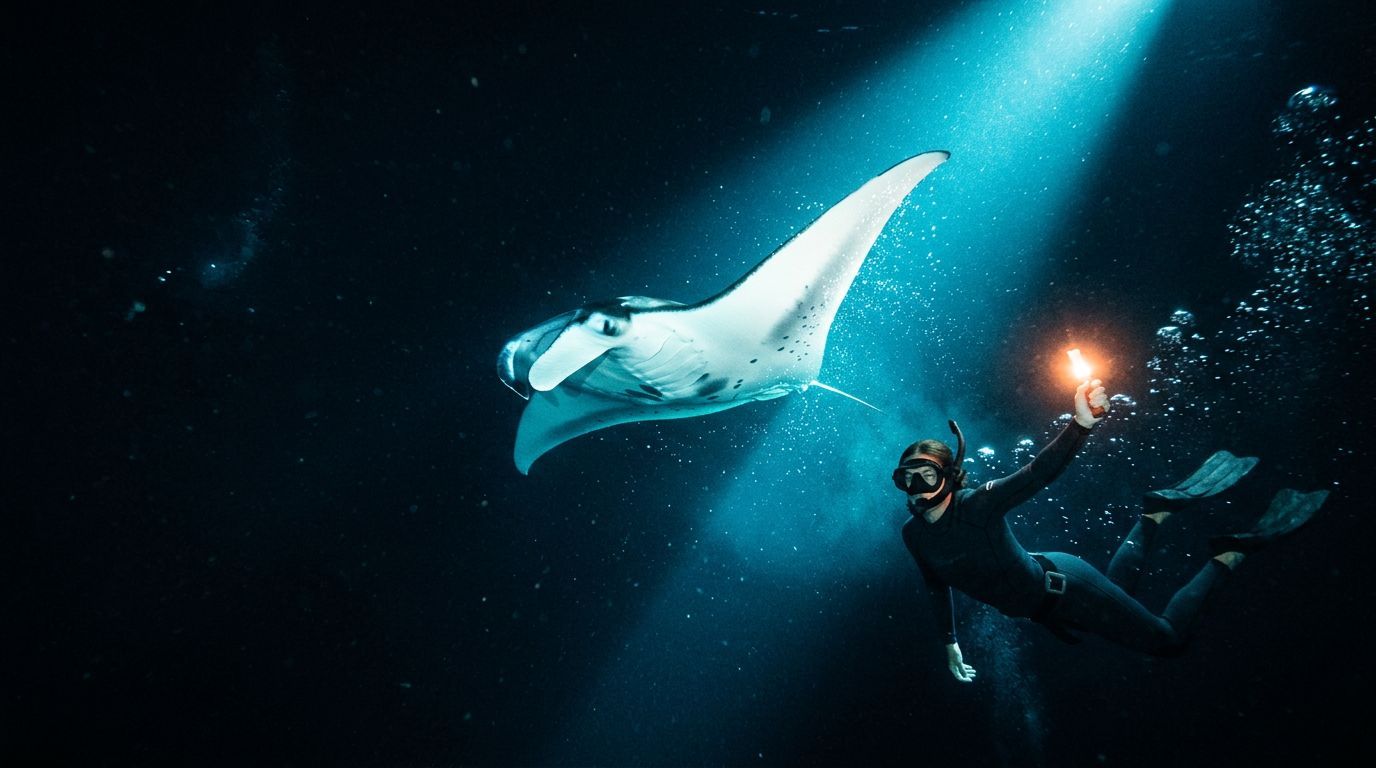
A manta ray night snorkel can feel peaceful one second and confusing the next. Dark water, bright lights, gentle current, and excitement can separate you from your buddy before you notice.
When you’re snorkeling Big Island Hawaii waters after sunset, your first job is staying calm and visible. Kona Snorkel Trips builds its night tours around small groups, trained guides, quality equipment, and careful wildlife practices. If you’re comparing providers, Manta Ray Night Snorkel Hawaii is another manta-focused company to review.
Knowing what to do before you enter the water helps you respond quickly without chasing your buddy or disturbing the manta rays.
Why buddy separation feels different after dark
Night snorkeling changes how you judge distance. During the day, you can use the coastline, boat, sun, and other swimmers as reference points. After sunset, those visual cues fade.
The water may look like a wide, open space with only a few lights nearby. A buddy who was close a moment ago can appear several yards away after a short kick or small change in current.
Your eyes lose familiar reference points
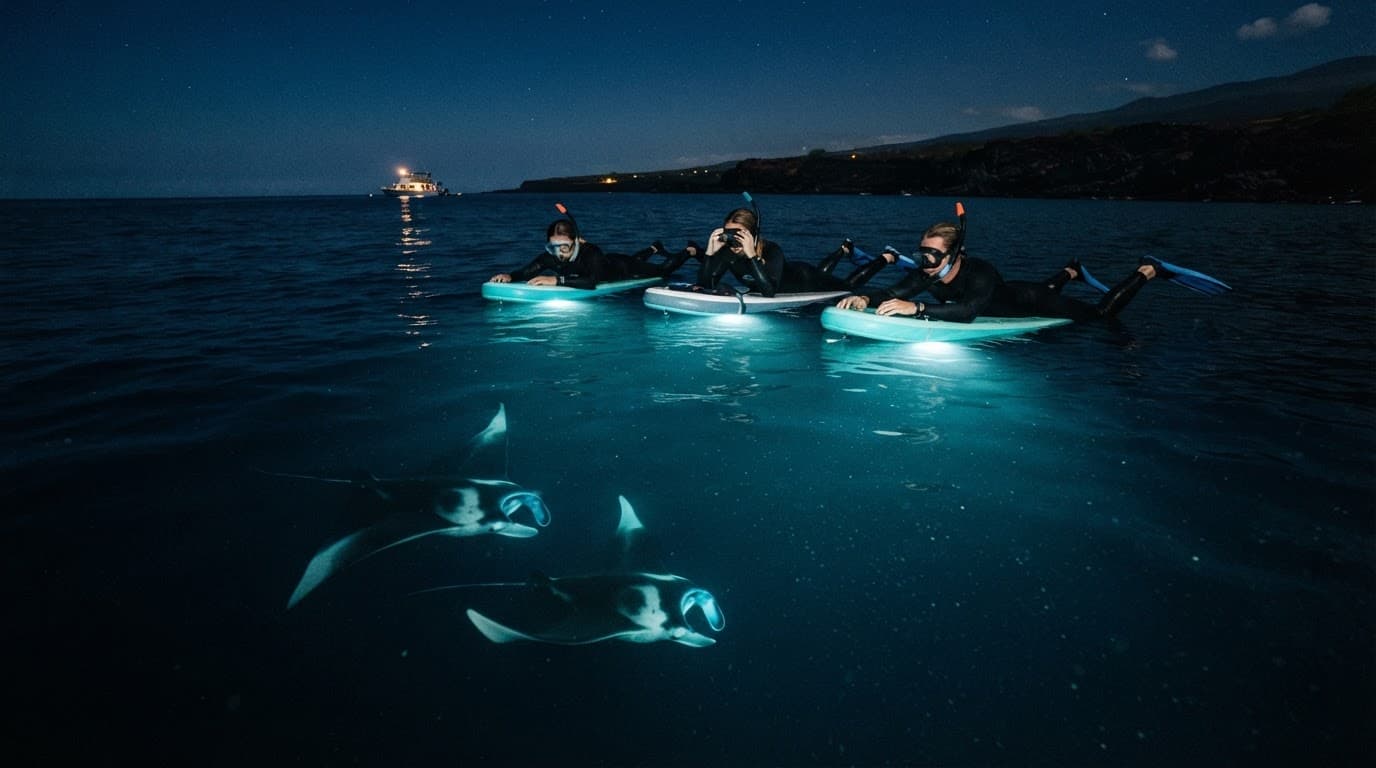
Most nighttime manta tours take place near floating light boards or a boat. The lights attract plankton, which brings manta rays close to the surface. However, those same lights can make it harder to identify your buddy.
Glare may reflect across your mask. A swimmer’s dark wetsuit can blend into the water. You might also focus on a manta ray below you and stop checking your buddy’s position.
Before entering, agree on a simple plan. Know which guide you’ll follow, where the board is located, and which signal means you need help. Keep checking for your buddy instead of staring downward for the entire encounter.
Small movements create larger gaps
You don’t need strong waves to drift apart. A few relaxed kicks, a fin slipping out of rhythm, or a moment spent adjusting your mask can create distance.
Your buddy system works only when both people actively maintain it. Stay close enough to make eye contact without swimming side by side or touching. If you can’t identify your buddy’s mask or light with one quick glance, stop moving and look for them.
Your best safety response starts before separation becomes a problem: stay near the group, keep your guide in view, and check your buddy often.
Your first move when your buddy drifts away
Whether you are the person who drifted or the person who noticed the gap, follow the same basic order: stop, breathe, look, and signal.
Don’t swim after your buddy immediately. Chasing can take you farther from the group and make it harder for the guide to locate both of you.
If you can still see your buddy
Stop kicking and bring your face out of the water if you need a clearer view. Hold the flotation board or another approved support, then signal your buddy to stop.
Use the hand signal from your briefing. If you don’t remember a signal, wave one arm clearly and call out. Speak loudly enough for nearby guides to hear, but don’t thrash or dive.
Your buddy should also stop and wait. Once both of you are stationary, a guide can close the gap and return you to the correct position. Keep your body relaxed while you wait, and continue watching the guide rather than the manta below.
If your buddy disappears from view
Tell the guide immediately. Point in the direction you last saw your buddy, then stay with the board or group.
Don’t leave the viewing area to search. A guide and boat crew can coordinate a headcount and follow their established response plan. Your decision to remain visible gives them a fixed location to work from.
If you are the person who became separated, call out as soon as you realize it. Keep your light pointed down if that’s part of the tour instructions, and avoid swimming beneath the board or toward another boat.
A calm voice and clear signal are more useful than speed. The guide needs to see where you are, understand what happened, and keep the rest of the group together.
Manta behavior sets the safety rules
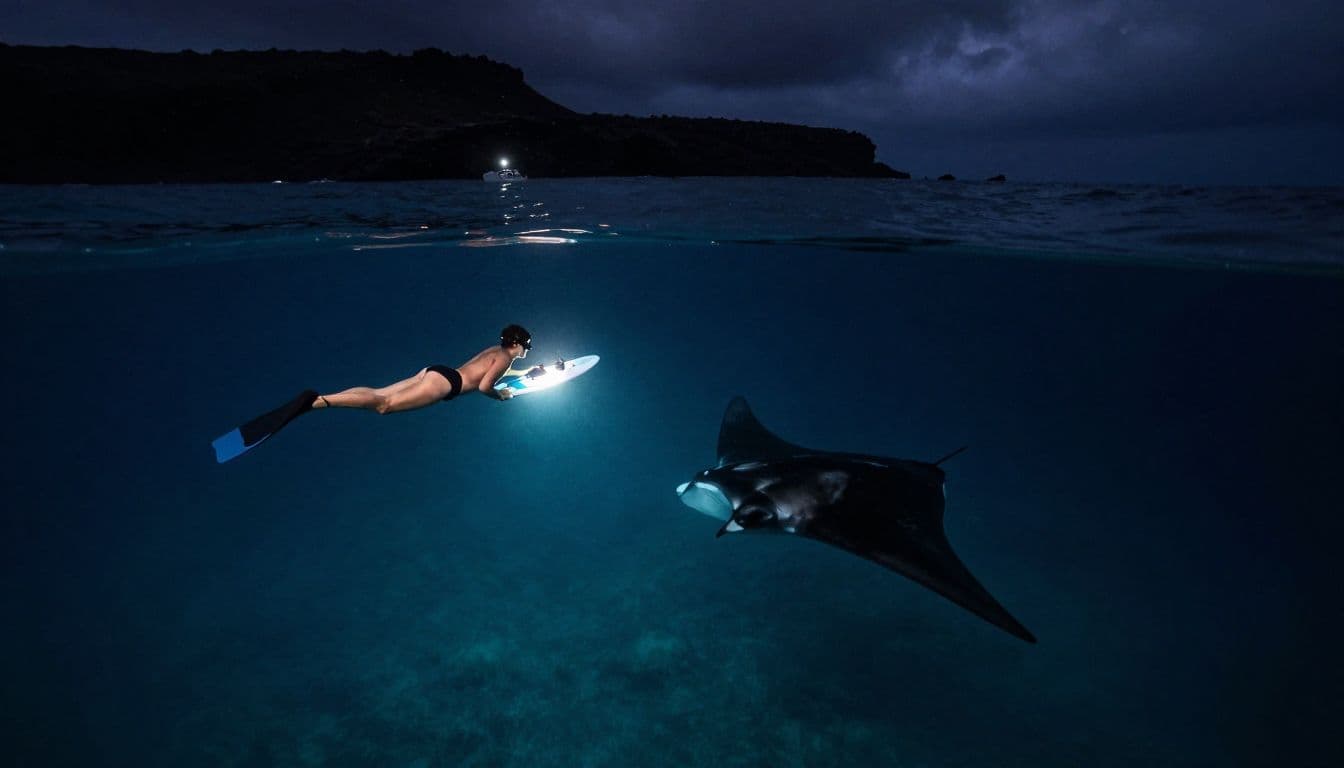
Kona’s famous nighttime encounters usually take place at Manta Village near Keauhou Bay or Manta Heaven near Garden Eel Cove and the Honokohau area. Tour boats use underwater lights to attract plankton, and reef manta rays move through the light to feed.
The animals are wild. Their movements can change without warning, even when the water looks calm.
Stay on the surface and let the manta approach
A snorkeling position keeps you at the surface above the feeding area. You hold the flotation board, keep your body flat, and watch the manta glide below.
You don’t need to free-dive for a closer look. Diving toward a manta can surprise the animal and pull you away from your buddy or guide. The best encounters happen when you remain predictable and allow the ray to choose its path.
Manta rays are harmless to people and don’t have a stingray-style barb. They are also large animals, with some reef mantas reaching around 12 feet across. Give them room to turn, and keep your fins away from their wings.
The NOAA giant manta ray guidance advises people not to entice manta rays to approach. Disturbance can interrupt feeding, resting, or other normal behavior.
Keep your hands, fins, and equipment away
Never touch, grab, ride, or chase a manta ray. Contact can damage the animal’s protective mucus coating and may cause it to leave the feeding area.
Keep your hands resting on the board or at your sides. Don’t reach down when a manta passes beneath you. You should also avoid shining a light directly into its face or exhaling a stream of bubbles toward it.
The NOAA marine wildlife viewing guidance explains why close approaches and touching can injure marine animals. Hawaii’s DLNR also advises visitors not to chase, touch, or feed marine life, including coral and other reef species, in its ocean stewardship guidance.
Your distance protects the manta and keeps you from making a sudden movement that separates you from the group.
What a guided manta ray night snorkel should include
A good guided tour reduces the chance of buddy separation before you enter the water. The crew should explain the layout, signals, equipment, wildlife rules, and response plan in language you understand.
Kona Snorkel Trips follows a “Reef to Rays” philosophy. Its Lifeguard Certified guides lead personalized, small-group ocean outings with carefully selected snorkeling gear and custom-built lighted boards for nighttime encounters.
Look for a clear briefing before launch
Your guide should cover more than how to put on a mask. You should learn where to gather, how to reach the board, how to signal for help, and what to do if you lose sight of your buddy.
Ask questions before the boat leaves. Confirm whether you may use a personal light, how flotation support works, and whether the tour has swimming requirements. If you feel uncertain about entering the water, tell the crew before the group reaches the viewing site.
The briefing is also the right time to mention asthma, recent injuries, pregnancy, medication, anxiety around open water, or a history of seasickness. Your guide can explain whether the activity fits your situation.
Choose a crew that keeps the group personal
A small group makes it easier for the guide to notice when someone changes position. It also gives you more room around the light board and less confusion when several manta rays pass beneath the swimmers.
Kona Snorkel Trips focuses on guest safety, reef-safe practices, marine education, and respectful viewing. The company has built a five-star reputation by avoiding the crowded feel of large commercial outings and keeping attention on each guest’s comfort.
Its other ocean experiences include reef snorkeling, seasonal whale watching, and private boat charters. You can browse the company’s Big Island snorkeling tours before choosing the trip that matches your group.
When you’re ready to compare departure options and tour types, you can check availability.
Prepare before you leave shore
The right preparation helps you stay comfortable enough to pay attention. Night tours can include a boat ride, time in the water, and a cooler return trip after sunset.
Pack lightly, but bring what helps you stay warm and focused.
Check your swimming comfort honestly
You should feel comfortable floating, kicking, and putting your face in the water before booking a nighttime snorkel. Some operators require guests to swim a set distance without extra flotation, while others may have different policies.
Read the tour’s swimming requirements carefully. If you aren’t a confident swimmer, ask whether the company offers a suitable daytime activity instead. Never rely on a flotation device to compensate for a condition that makes open-water swimming unsafe.
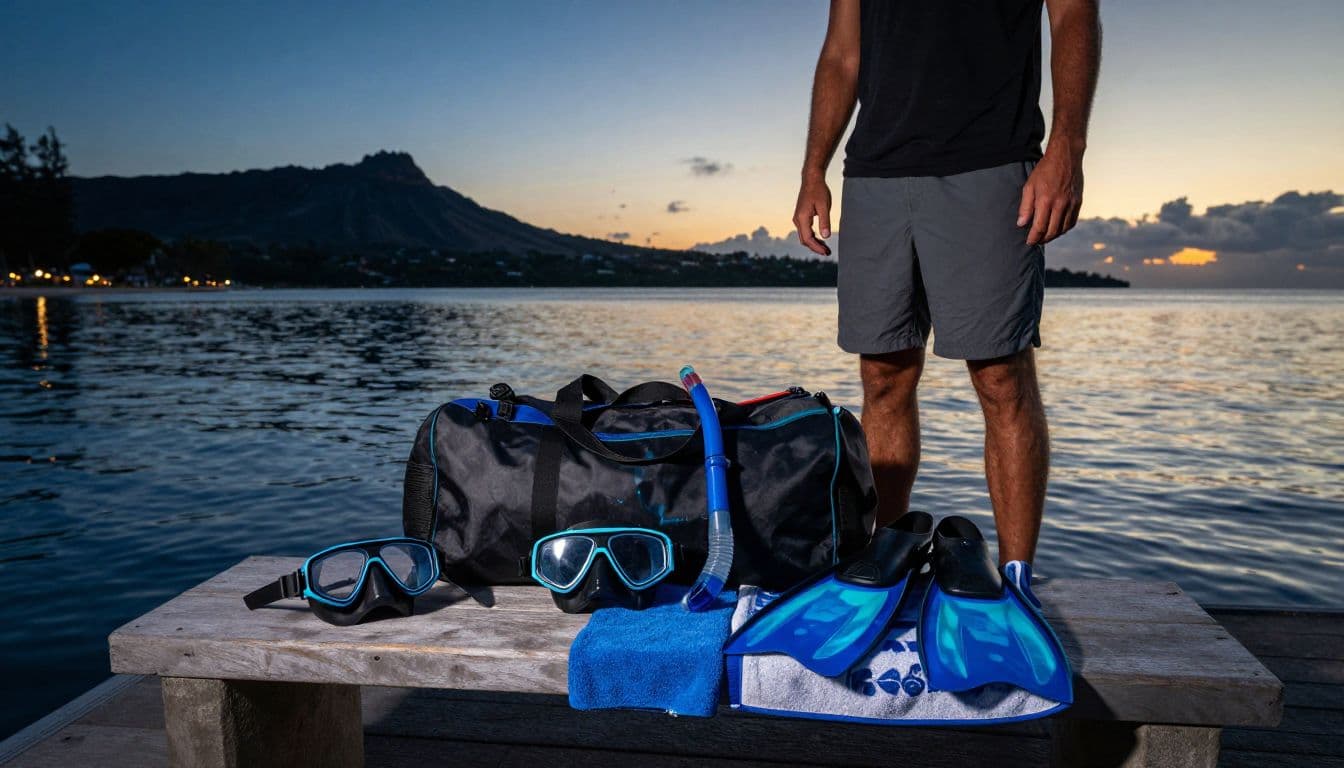
A 3 mm wetsuit is a common recommendation for Kona night snorkeling. Water temperatures are often described in the 75 to 80 degree Fahrenheit range, but you can still feel cold after floating in one position.
Bring a sweatshirt and a large towel for the ride back. If you get seasick, ask your healthcare provider or tour operator about appropriate medicine and timing before departure.
Fit your mask and understand the equipment
A leaking mask can distract you at the exact moment you need to watch your buddy. Test the seal on shore, adjust the strap, and tell the guide if the fit feels wrong.
Fins should stay secure without squeezing your feet. Your snorkel should sit comfortably, and you should know how to clear your mask if water enters.
Some operators don’t allow full-face snorkel masks. Policies also vary for personal flotation gear, cameras, and lights. Ask before you arrive instead of discovering a restriction at the dock.
Keep loose items secured. A dropped camera, fin, or light creates a reason to dive or turn away from the group. During the encounter, follow the guide’s instructions for every piece of equipment.
Read the booking details before you choose
A manta excursion may depart around sunset or later in the evening. Many trips leave near 6:00 or 7:00 p.m. and return around 9:30 or 10:00 p.m., although exact times change with the season, sunset, launch site, and tour schedule.
Some boats depart from Honokohau Small Boat Harbor. Others use Keauhou Bay. Check your confirmation for the meeting point, parking instructions, check-in time, and expected return.
Know the operating area and viewing window
Hawaii state materials describe manta viewing hours as 4:00 p.m. to 4:00 a.m. the following day. They also describe commercial manta viewing operations using commercial moorings during those hours.
Live boating is limited to entering and leaving the viewing area, rafting is prohibited, and a vessel can’t leave while participants or crew remain in the water. The official Hawaii manta operations document provides the detailed operating language.
The state Department of Land and Natural Resources also publishes manta viewing information. Rules and site procedures can change, so review your operator’s current instructions before departure.
Ask how the tour handles separation
Before you pay, ask direct questions:
- What should you do if your buddy drifts out of sight?
- Which guide should you signal?
- Will the group use one light board or several?
- How many swimmers does each guide supervise?
- What flotation support is available?
- What happens if you decide the water isn’t comfortable?
A reputable operator should answer without making you feel difficult. You need practical information, not a vague promise that someone will be watching.
Kona Snorkel Trips offers a dedicated Kona manta ray night snorkel with options that may include a standard night outing, a private manta trip, or a whale watch and manta combination when available.
For the manta-specific schedule, you can check availability.
Match the experience to your travel group
A nighttime manta encounter can suit couples, families with strong swimmers, and solo travelers who enjoy joining a guided group. However, the dark water and surface time may not suit everyone.
Your snorkeling Big Island itinerary should leave room for your actual comfort level. A packed schedule can make you tired before an evening activity, especially if you have already spent hours in the sun.
Consider a private trip for more control
A private outing can help if your group has mixed experience levels, wants more space, or prefers a custom schedule. You can discuss the pace, route, and activity plan with the crew instead of adapting to a larger public group.
Kona Snorkel Trips offers private Kona boat tours for groups that want a more personal day on the water. Depending on conditions and availability, private trips can include snorkeling, wildlife watching, coastal sightseeing, or time to relax aboard the boat.
A private trip doesn’t remove the need to follow wildlife rules. You still stay on the surface, avoid touching manta rays, and listen to the guide.
Choose a daytime alternative if nighttime feels wrong
If you want to snorkel Big Island reefs by daylight, Kealakekua Bay offers a different pace and setting. Clear daytime water makes it easier to keep track of your buddy, read the reef, and notice how you respond to open-water swimming.
Kona Snorkel Trips’ Captain Cook snorkeling tour includes reef viewing and guidance about local marine life and history. You can check avaialbility for that daytime option.
During whale season, you can also plan a separate Kona whale watching tour instead of adding another nighttime activity. Choosing the right experience is better than forcing every excursion into one vacation schedule.
What to do after a close call
A buddy separation doesn’t automatically mean you need to leave the tour. Once the guide brings everyone together, take a moment to check your breathing, mask, fins, and comfort.
Tell the guide what happened
Explain when you lost sight of your buddy and which direction you were facing. Mention whether you swallowed water, felt panicked, lost equipment, or became disoriented.
Your guide can decide whether to change your position, pair you with another swimmer, keep you near the boat, or end your water time. Honest information gives the crew a better chance to help.
Don’t feel embarrassed about returning to the boat. A short wildlife encounter isn’t worth ignoring a safety concern.
Decide whether you should continue
If you feel calm and the guide confirms that the group is organized, you may choose to continue while staying close to the board. Make eye contact with your buddy more often, and keep your body in the same area as the guide.
If you remain anxious, cold, tired, or unable to maintain your position, leave the water. You can still enjoy the boat ride and learn about the manta rays without staying in the water.
A good tour company respects that decision. The ocean will still be there, and you don’t need to prove anything to it.
Conclusion
A manta ray night snorkel is safer and more enjoyable when you treat group awareness as part of the experience. Stop moving when your buddy drifts, signal the guide, stay with the flotation board, and never swim away to search.
The manta rays deserve calm, predictable behavior too. When you remain at the surface, avoid contact, and let the animals choose their path, you protect the encounter for yourself and future visitors. Staying together is the first step toward seeing more.