
Kealakekua Bay Snorkeling: Kalaniopuu’s Story
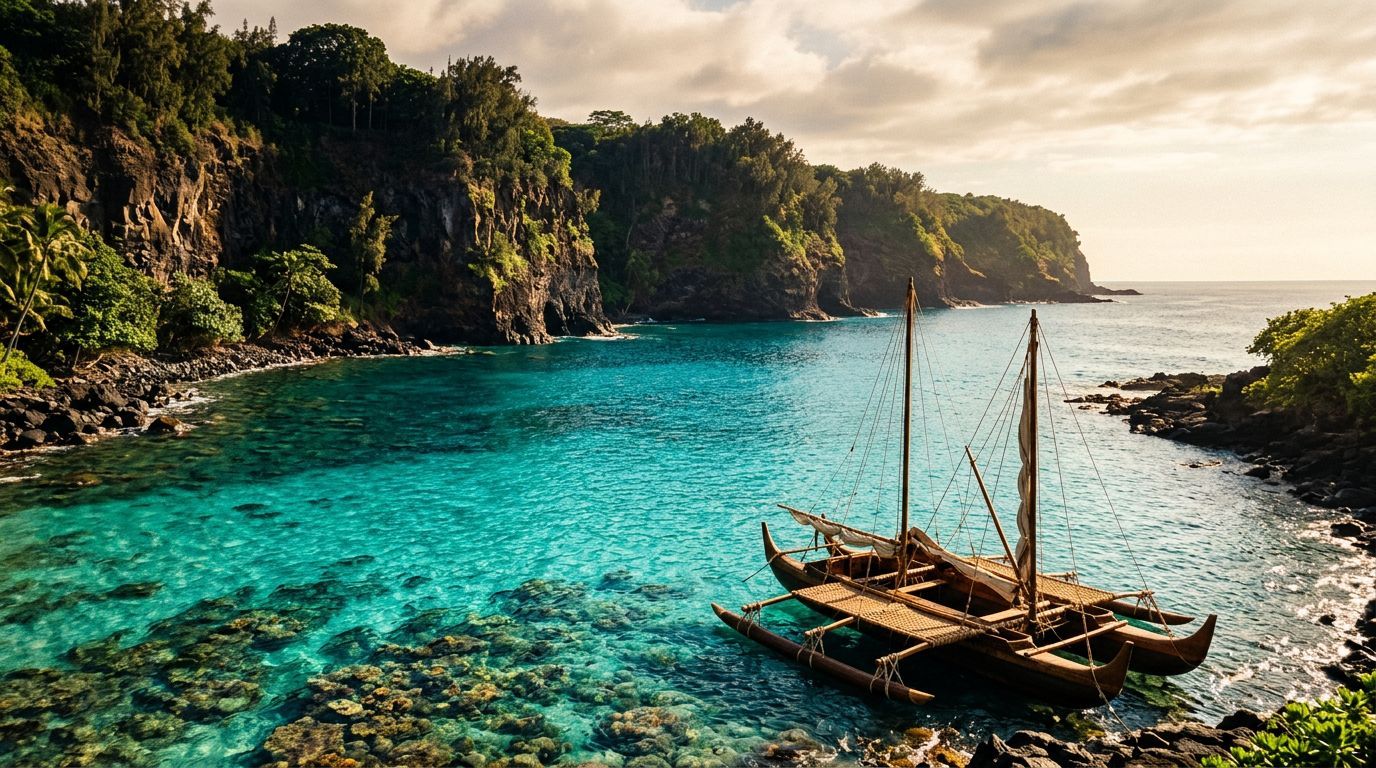
Captain Cook’s name appears on maps, monuments, and tour descriptions across Hawaii Island. Yet the 1779 encounter at Kealakekua Bay makes more sense when you learn about Kalani’opu’u, the ali’i nui, or high chief, who ruled Hawaii Island at the time.
If you’re planning a snorkeling Big Island Hawaii adventure, Kealakekua Bay gives you much more than clear water and colorful reef fish. You’ll also visit a place shaped by Hawaiian leadership, religious tradition, European contact, and a tragic clash that changed the course of island history.
Kona Snorkel Trips offers guided Captain Cook snorkeling tours for visitors who want to experience the bay with safety guidance and historical context. Captain Cook Snorkeling Tours is another company focused on Kealakekua Bay and the Captain Cook site. You can learn more at Captain Cook Snorkeling Tours.
Who Was Kalani’opu’u?
Kalani’opu’u-a-Kaiamamao was the ali’i nui of Hawaii Island when Captain James Cook visited the Hawaiian Islands. His authority covered the island that people now call the Big Island, although political control in Hawaii was based on chiefs, alliances, family relationships, and military strength rather than a modern state system.
Kalani’opu’u was not a minor figure standing in the background of Cook’s story. He was the island’s highest-ranking ruler, and his decisions shaped the encounters that took place at Kealakekua Bay.
The high chief of Hawaii Island
When Cook returned to Hawaii Island in January 1779, Kalani’opu’u held significant political and religious authority. His presence mattered because Kealakekua Bay was more than a convenient anchorage. The surrounding area included important settlements, temples, agricultural land, and sites connected to Hawaiian chiefs.
The Office of Hawaiian Affairs account of Kalani’opu’u describes his meeting with Cook and the exchange of a treasured feather cloak and helmet. These objects were not casual gifts. Hawaiian featherwork carried great status and connected the wearer to chiefly rank.
You should also remember that written accounts of the meeting largely come from Cook’s expedition and later colonial records. Hawaiian perspectives and oral traditions provide essential context, especially when you consider the encounter as a meeting between two political systems rather than a simple explorer story.
His connection to Kamehameha
Kalani’opu’u was the uncle of Kamehameha, who later became the first ruler to unite the Hawaiian Islands. Kamehameha was present during Cook’s final visit and served under Kalani’opu’u’s authority.
The future king was still building his reputation in 1779. At that point, Kalani’opu’u remained the senior chief, while Kamehameha was one of the younger leaders connected to his court and military network. The National Park Service history of Kamehameha places the later unification of Hawaii within the larger political changes that followed this period.
That connection gives Kealakekua Bay another layer of meaning. When you look across the water toward the monument, you’re also looking at a place tied to the early history of the man who would later unite the islands.
Why Kealakekua Bay Mattered in 1779
Kealakekua Bay offered a sheltered harbor, fresh water, access to nearby communities, and a location with strong religious importance. Those qualities made it a natural stop for Cook’s ships, but they also meant the ships entered a cultural center with established rules and expectations.
The National Register description of the Kealakekua Bay Historical District documents the bay’s historic importance and the communities that lived around it. Its landscape remains central to understanding the events that took place there.
Cook arrived during Makahiki
Cook first reached the Hawaiian Islands in 1778, when his expedition visited Kauai. He returned to the islands early the following year and entered Kealakekua Bay in January 1779.
His arrival coincided with Makahiki, a major Hawaiian religious season associated with Lono. The season included ceremonies, restrictions on warfare, athletic contests, tribute, and travel between communities. Hawaiian religious life shaped how visitors were received and how the ships’ presence was interpreted.
You may hear simplified claims that Hawaiians believed Cook was literally the god Lono. The reality was more complex. Religious symbolism, ceremony, political strategy, and the practical needs of both sides all influenced the encounter. A respectful visit should avoid reducing Hawaiian history to a single dramatic explanation.
The exchange of the feather cloak
During the 1779 visit, Kalani’opu’u met Cook and placed a valuable feather cloak over him. He also presented a feather helmet. The gesture showed respect and recognized Cook’s unusual status within the encounter, but it shouldn’t be read as proof that Kalani’opu’u surrendered authority.
Kalani’opu’u remained the ruling chief. He was managing an unfamiliar situation involving armed foreign sailors, large ships, new trade goods, and a religious season with its own protocols. The exchange was part of a diplomatic meeting, not a transfer of Hawaiian sovereignty.
What Happened Between Kalani’opu’u and Captain Cook?
Cook’s first stay at Kealakekua Bay lasted several weeks. At first, trade and contact continued. As time passed, however, tension grew between the expedition and local communities.
The situation involved more than one disagreement. Problems included theft, demands for supplies, damaged equipment, misunderstandings about ownership, and the strain created by ships remaining in the bay. The balance between ceremony and conflict became harder to maintain.
Why Cook returned to the bay
Cook’s ships left Kealakekua Bay in early February 1779. Soon afterward, one of the ships suffered damage to its foremast, forcing the expedition to return.
The second arrival changed the mood. The ships had already used local resources, and the earlier exchange of goods had created expectations on both sides. When the expedition returned, Cook no longer entered the bay as a welcomed visitor during the opening part of Makahiki. The relationship had become tense.
A small boat, or cutter, was stolen from the expedition. Cook responded according to a tactic he had used elsewhere in the Pacific: he attempted to take a high-ranking chief hostage until the missing boat was returned.
The attempted hostage-taking
On February 14, 1779, Cook went ashore and tried to persuade Kalani’opu’u to come aboard his ship. The plan depended on getting the high chief away from the growing crowd and holding him until the cutter came back.
Kalani’opu’u did not leave peacefully. His attendants and local chiefs recognized the danger, and the crowd resisted the attempt. A confrontation developed between the Hawaiians and Cook’s armed party.
Cook and several of his Marines were killed during the struggle. The National Archives of the United Kingdom records the date as February 14, 1779. Kalani’opu’u survived the encounter, and the expedition withdrew from the bay.
Kalani’opu’u was not simply a character in Captain Cook’s final chapter. He was the ruling chief whose attempted abduction turned a tense dispute into a deadly confrontation.
The event is often presented as a dramatic endpoint in Cook’s voyages. For you as a visitor, the more useful approach is to see it within the local setting. Kealakekua Bay was a Hawaiian place with its own leaders, customs, and sacred associations long before the monument was built.
Kealakekua Bay Snorkeling: What You See Today
The historic story is one reason to visit, but the bay’s marine environment is what brings many travelers into the water. Kealakekua Bay has protected, clear conditions in the right weather, along with coral habitat and abundant reef fish.
The Hawaii Tourism Authority guide to Kealakekua Bay identifies the area as both a historic site and a major destination on the Kona coast. When you snorkel here, you experience those two parts together.
Coral reefs and marine life
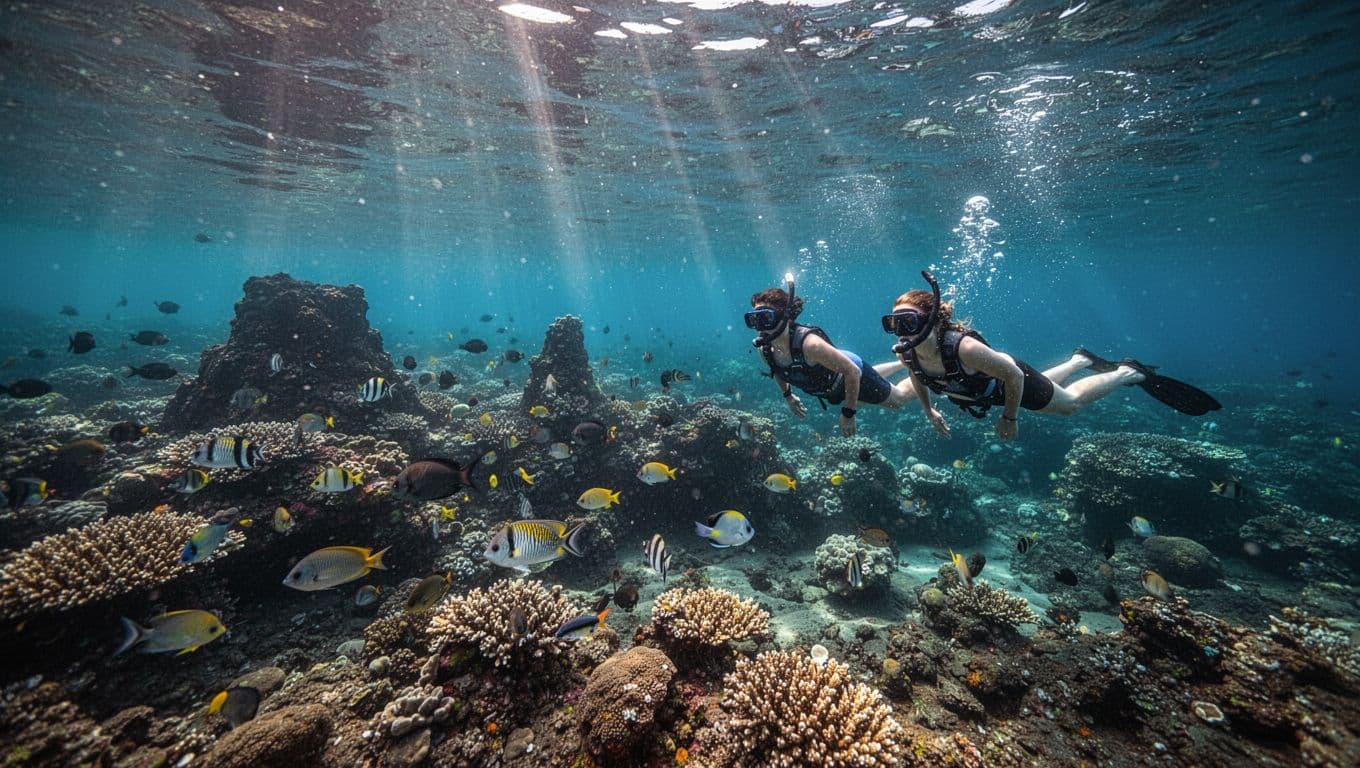
Ka’awaloa Cove, near the Captain Cook Monument, is the most famous snorkeling area in the bay. Underwater visibility can be excellent when the ocean is calm. You may see parrotfish, butterflyfish, surgeonfish, wrasse, sea urchins, and green sea turtles.
The reef is a living habitat, not an underwater attraction built for visitors. Coral grows slowly, and careless fins, hands, or standing feet can cause damage. Keep your body horizontal, avoid touching the bottom, and give turtles plenty of space.
When you’re snorkeling Big Island waters, conditions can change even on a sunny day. Wind, swell, current, and visibility all affect your comfort. Listen to your guide and stay within the area your boat team identifies as safe.
Ka’awaloa Cove and the monument
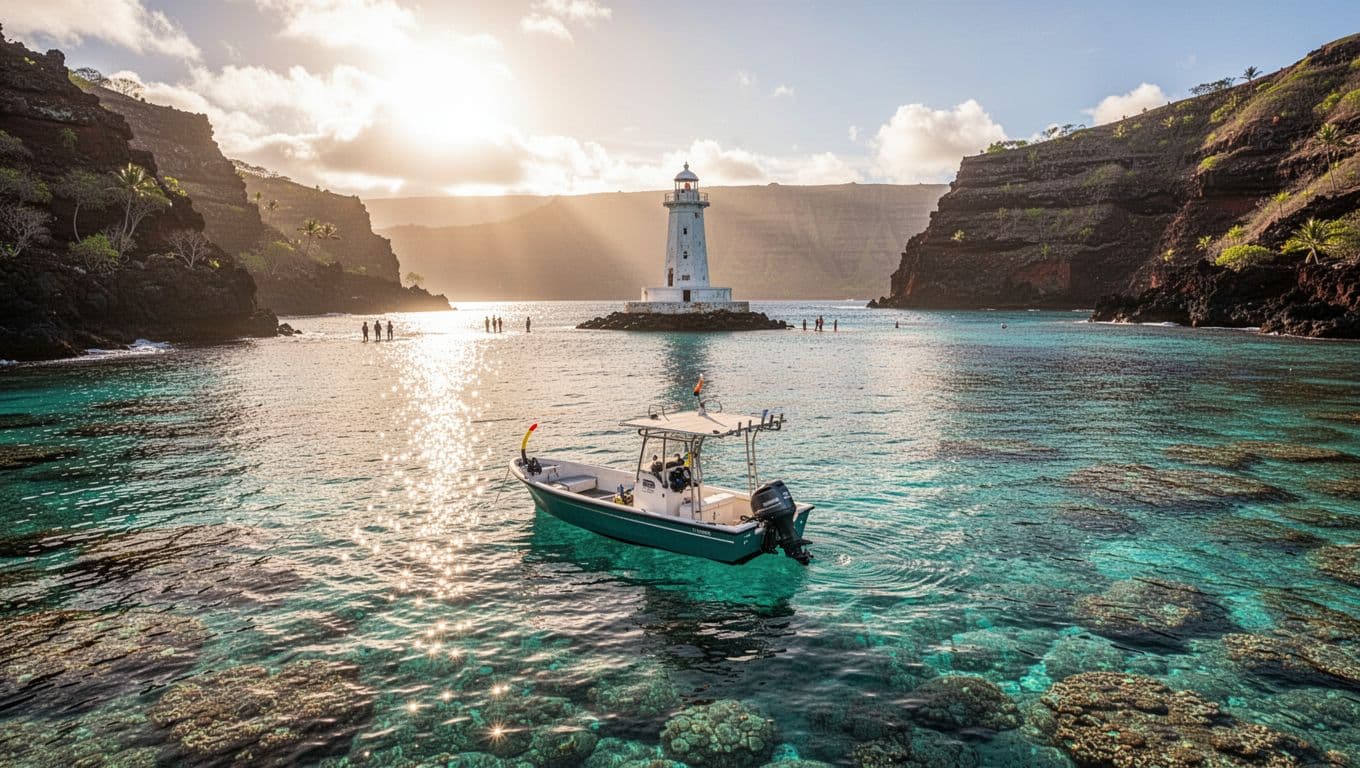
The white Captain Cook Monument stands on the north shore of Kealakekua Bay at Ka’awaloa Cove. It marks the location associated with Cook’s death, although the monument itself isn’t a full representation of Hawaiian history.
The area is difficult to reach by car. Most visitors arrive by boat, kayak, or a demanding hike down the coastal trail. That limited access helps preserve the site’s quiet character, but it also means you should plan carefully before you go.
The Hawaii Division of Aquatic Resources identifies the waters near Cook Monument as an important marine area. Its guidance describes excellent diving near Ka’awaloa Cove, with depths ranging from shallow areas to approximately 120 feet. Snorkelers usually stay in the shallower zones where they can maintain comfortable surface swimming.
How You Can Visit the Captain Cook Monument
You have several ways to experience Kealakekua Bay, but each option requires different preparation. Your choice depends on swimming ability, mobility, comfort with open water, and how much time you want to spend on logistics.
Boat tours offer the simplest access
A guided boat trip takes you directly across the bay to the snorkeling area. You avoid the steep hike and don’t need to transport your own kayak or bulky gear. A knowledgeable crew can also monitor conditions and select a safer entry point.
Boat tours work well for families, couples, and first-time visitors who want to focus on the water rather than route planning. They also give you a chance to hear about Kalani’opu’u, Cook, the monument, and the marine reserve during the trip.
If you prefer a more personal experience, small-group tours reduce crowding and make it easier to ask questions. A private charter can give you more control over departure time, snorkeling pace, and the amount of historical interpretation you want.
What to bring and how to prepare
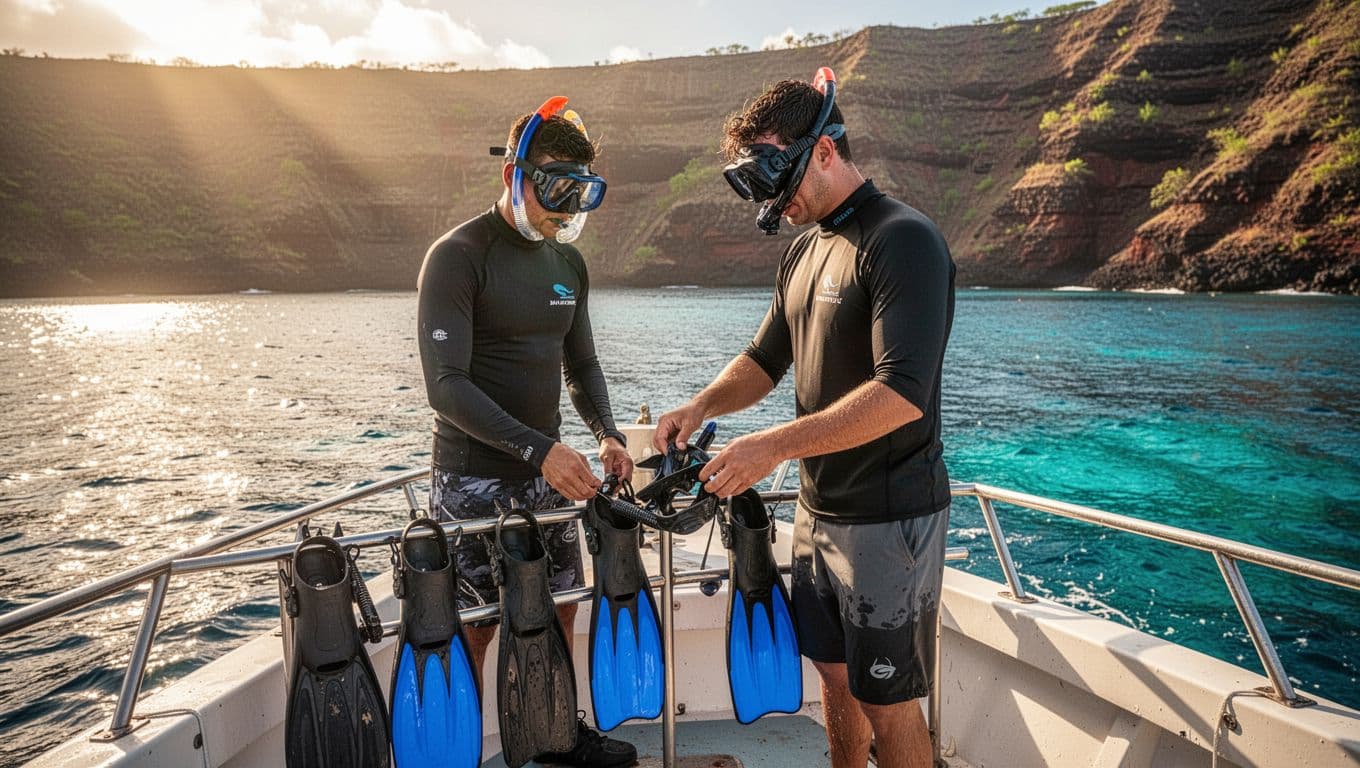
Wear a swimsuit and bring a towel, drinking water, sunglasses, and a hat for the boat ride. Use reef-safe sunscreen, and apply it well before entering the water. Your guide may provide a mask, snorkel, fins, flotation equipment, and other safety gear, but check what your tour includes before leaving your hotel.
If you’re not a strong swimmer, tell your guide before entering the water. You can often use a flotation aid, stay close to the boat, or enjoy the bay from the deck. You don’t need to swim far from shore to appreciate the setting.
Check the weather and ocean forecast on the morning of your trip. Rough conditions may affect visibility or lead to a change in the itinerary. A responsible operator puts safety ahead of reaching one specific location.
Choosing a Captain Cook Snorkel Tour in Kona
A Captain Cook tour should give you more than transportation to a popular reef. The best experience combines safe water access, well-maintained equipment, local knowledge, and enough time to enjoy the bay without feeling rushed.
You should also look for clear communication before departure. Confirm the meeting location, trip duration, age requirements, swimming expectations, cancellation policy, and what happens if ocean conditions become unsafe.
Why a small group can improve your day
A small-group crew can watch swimmers more closely and answer questions without competing with a large crowd. You also get more room on the boat and a better chance to hear the guide’s explanation of the bay.
Kona Snorkel Trips follows a “Reef to Rays” philosophy built around ocean education, guest safety, and responsible reef access. The company uses quality snorkeling equipment and works with Lifeguard Certified guides. Its approach suits travelers who want a guided experience with personal attention rather than a high-volume excursion.
Match the tour to your travel group
Families should ask how children are supported in the water and whether flotation equipment is available. Couples may prefer a smaller departure with more time to relax between snorkeling sessions. Adventurous singles often value a guide who can explain the reef while still allowing independent exploration within safe boundaries.
A private trip can work well for celebrations, family reunions, proposals, or travelers who want to combine Kealakekua Bay with other Kona coastline stops. If your plans include snorkeling Big Island sites beyond the monument, ask whether the route can be customized.
The main goal is simple: choose a tour that fits your comfort level. A clear itinerary and attentive crew will make the historic setting easier to appreciate.
Planning with Kona Snorkel Trips
Kona Snorkel Trips is a Kailua-Kona ocean adventure company centered on guided snorkeling, marine life encounters, whale watching, and private boat experiences. Its focus on small groups, professional service, and reef-safe practices makes it a natural choice for visitors heading to Kealakekua Bay.
The company’s guides combine water safety with local interpretation. You can learn about the reef, the bay’s history, and the importance of leaving marine life undisturbed while you explore.
A reef-first approach
Kona Snorkel Trips treats each outing as part of a larger relationship with the ocean. The company’s “Reef to Rays” philosophy includes careful guest instruction, quality gear, and respect for volcanic reef ecosystems.
That approach matters at Kealakekua Bay because the site’s cultural and natural value are connected. You aren’t visiting an empty backdrop for photographs. You’re entering a protected marine environment and a historic Hawaiian landscape.
The company also offers other ocean experiences, including nighttime manta ray snorkeling, seasonal whale watching, and private charters. However, a Captain Cook outing is the right fit when you want to combine a reef session with the history of Kalani’opu’u and Kealakekua Bay.
Reserve a Captain Cook snorkeling trip
Availability can change with seasonal demand and ocean conditions. You can check availability while planning your Kona itinerary.
If Captain Cook is your priority, you can check avaialbility for a Kealakekua Bay snorkeling tour.
How to Visit Kealakekua Bay Respectfully
Your behavior in the water matters, especially at a site that carries cultural meaning and supports a fragile reef. Small choices protect the bay for the people, animals, and future visitors who depend on it.
Treat the history as more than a monument
The Captain Cook Monument is a marker connected to a complicated encounter. It doesn’t tell the entire story of Hawaiian leadership, Makahiki, or the consequences of Cook’s arrival.
Learning about Kalani’opu’u helps you understand why the event unfolded as it did. He was a powerful island chief dealing with foreign visitors during a significant religious season. His meeting with Cook involved diplomacy, status, and ceremony before relations broke down.
Take time to look beyond the monument. Notice the cliffs, shoreline, water, and nearby land. The physical setting helps you understand why Kealakekua Bay was important to Hawaiian communities long before European contact.
Protect the reef while you swim
Keep your fins away from coral, avoid standing in shallow areas, and never touch turtles or fish. Don’t chase marine life for a photograph. If a turtle changes direction because you approach, you’ve moved too close.
Use only reef-safe sunscreen and follow the rules for the marine managed area. Your guide can show you where to enter, where to swim, and how to avoid sensitive habitat.
You can snorkel Big Island waters for a lifetime, but every visit depends on healthy reefs. Respectful habits help keep Kealakekua Bay clear, lively, and available for future generations.
Conclusion
Kalani’opu’u was the ruling ali’i nui of Hawaii Island when Captain Cook arrived at Kealakekua Bay in 1779. His meeting with Cook included a significant exchange of chiefly featherwork, but the relationship later collapsed after Cook attempted to take him hostage.
Today, Kealakekua Bay snorkeling lets you experience the same coastline from the water while exploring coral habitat near the Captain Cook Monument. When you choose a responsible guide, prepare for ocean conditions, and respect the site’s history, your visit becomes more than a swim. It becomes a closer look at the people, place, and reef that shaped one of Hawaii’s most important historic sites.