
Manta Ray Night Snorkel: Enter the Water Quietly
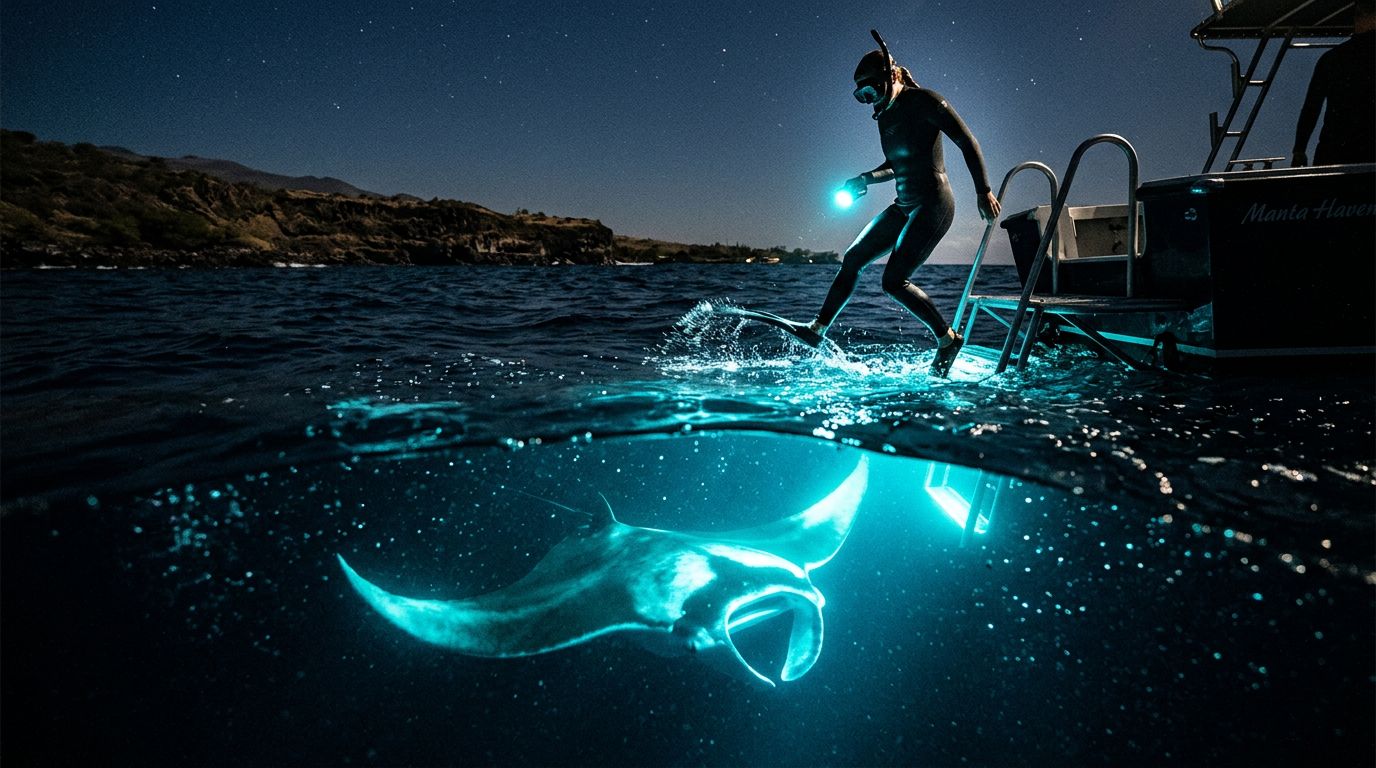
A manta ray night snorkel starts before your mask touches the Pacific. If you jump, lose a fin, or splash hard, you spend the first minutes adjusting instead of watching the water.
At Kona Snorkel Trips, the entry is part of the guided experience. The small-group crew uses lifeguard-certified guides and a controlled step-by-step approach. The team at Manta Ray Night Snorkel Hawaii also shares practical manta ray snorkel tips for entering and observing responsibly.
The right technique is simple: prepare your equipment early, wait for the guide’s cue, lower yourself feet-first, and settle your breathing before swimming toward the light board.
Why a Quiet Entry Matters on a Manta Ray Night Snorkel
A quiet entry doesn’t mean making zero sound. Boats shift, fins tap against steps, and water moves around the platform. The goal is a controlled, low-splash entry that keeps you balanced and gives the group room to enter safely.
Night snorkeling feels different from a daytime swim. You may see the boat’s ladder, guide, and other swimmers clearly, but the open water beyond the lights quickly becomes dark. That change can make you rush. Rushing leads to loose masks, tangled snorkels, awkward fin movements, and unnecessary splashing.
A calm entry also helps you reach the viewing area ready to observe. Kona’s manta rays gather near underwater lights because plankton concentrates around the illuminated water. The rays glide, bank, and turn beneath the surface while snorkelers float above them.
Manta rays are filter feeders, not hunters. NOAA Fisheries explains that manta rays feed on zooplankton as they move through the water with their mouths open. Your job is to watch without touching, chasing, blocking, or trying to redirect a ray.
The best entry is the one that lets you become calm before you reach the viewing board.
The same habits help when you’re snorkeling Big Island reefs during daylight. Slow movements give you better control near coral, ladders, rocks, and other swimmers.
Prepare Before You Reach the Boat’s Edge
Your entry becomes easier when you make every decision before you sit down. The boat’s edge is the wrong place to adjust a mask strap, search for a snorkel, or decide which fin goes on first.
Kona Snorkel Trips focuses on small-group ocean adventures with high-quality snorkeling gear, lifeguard-certified guides, and custom-built lighted boards for nighttime manta encounters. The crew also teaches reef-safe practices and asks guests to respect the volcanic reef environment.
The Kona manta ray night snorkel page includes important trip requirements, departure details, and information about swimming ability. Read those details before booking, especially if you’re traveling with children or anyone who has limited snorkeling experience.
Finish your gear check on deck
Before the guide calls you forward, make sure your mask seals comfortably and your snorkel sits in the correct position. Clear hair away from the mask skirt because even a small strand can create a leak.
Check that your fins fit securely without squeezing your feet. Loose fins can slip off during the first kick, while tight fins can cause cramping. If the crew asks you to enter without fins and put them on in the water, follow that method instead.
Keep personal items in the place the crew provides. Phones, cameras, sunglasses, and loose jewelry can fall into the water during an entry. If you’re using a personal camera, attach it before you move toward the platform.
A simple pre-entry check includes:
- Your mask strap lies flat and your hair is clear of the seal.
- Your snorkel is attached securely and positioned beside your head.
- Your fins are ready, but you won’t put them on until the guide gives instructions.
- Your flotation support or safety line is within easy reach.
- You know where to move after entering the water.
Use the briefing to set your pace
Listen for the exact entry order. The guide may ask one person to enter at a time, wait on a ladder, or move directly to a floating light board. That system prevents people from crowding the platform.
Tell the guide if you feel nervous, cold, seasick, or unsure about your equipment. A short conversation on deck is easier than trying to explain a problem in dark water.
During a snorkeling Big Island Hawaii tour, ask how you’ll enter before you reserve. Boat designs vary, and so do water conditions. A professional crew should explain the entry point, where you’ll wait, and what signal to use if you need help.
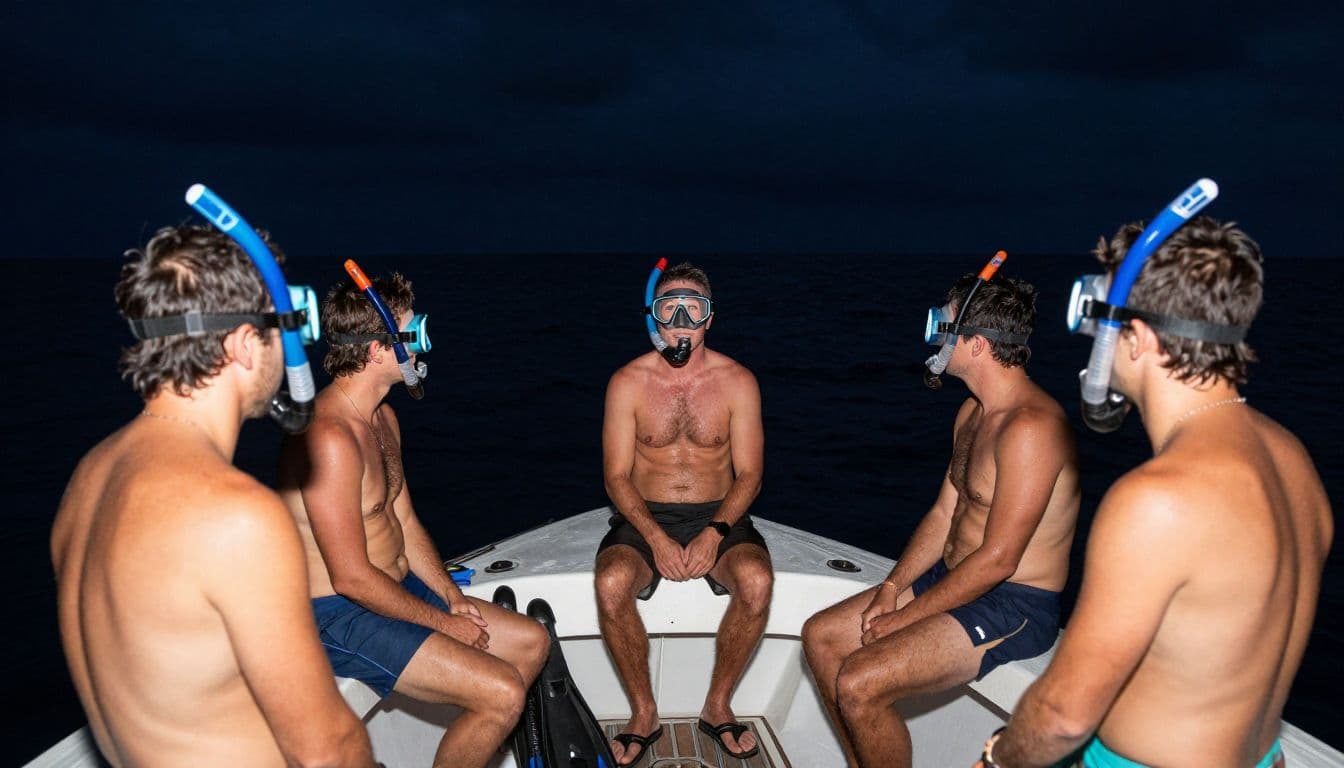
How to enter the water during a manta ray night snorkel
Your guide has the final say on timing and technique. Use the following sequence as a practical outline, then adjust it to the boat and conditions.
- Wait until the entry area is clear. Stay seated or hold your position until the guide signals you forward. Watch where the previous swimmer goes so you know whether to move toward the ladder, stern, or light board.
- Sit down before you turn. Lower yourself onto the platform or edge rather than stepping straight into the water. Sitting lowers your center of gravity and keeps your body stable if the boat moves.
- Secure your mask and snorkel. Place one hand over the front of your mask and keep the snorkel in your mouth. Hold the rail or boat handle with your other hand if the guide permits it.
- Lower your feet first. Slide forward until your feet enter the water. Keep your legs together and avoid kicking until your body is fully clear of the boat. If you already have fins on, point your toes away from the platform so the blades don’t catch.
- Pause at the surface. Once you’re in, move a short distance from the entry point and take two or three steady breaths. Check your mask, snorkel, and fins before swimming toward the group.
A seated entry works better than a backward jump for most manta tours. Jumping can shift your mask, dislodge a snorkel, or send you into another swimmer’s space. It also gives you less control if the boat rises on a small swell.
Keep your movements compact. Large arm swings create more splash and can bump nearby guests. Your body only needs enough motion to lower you into the water and clear the boat.
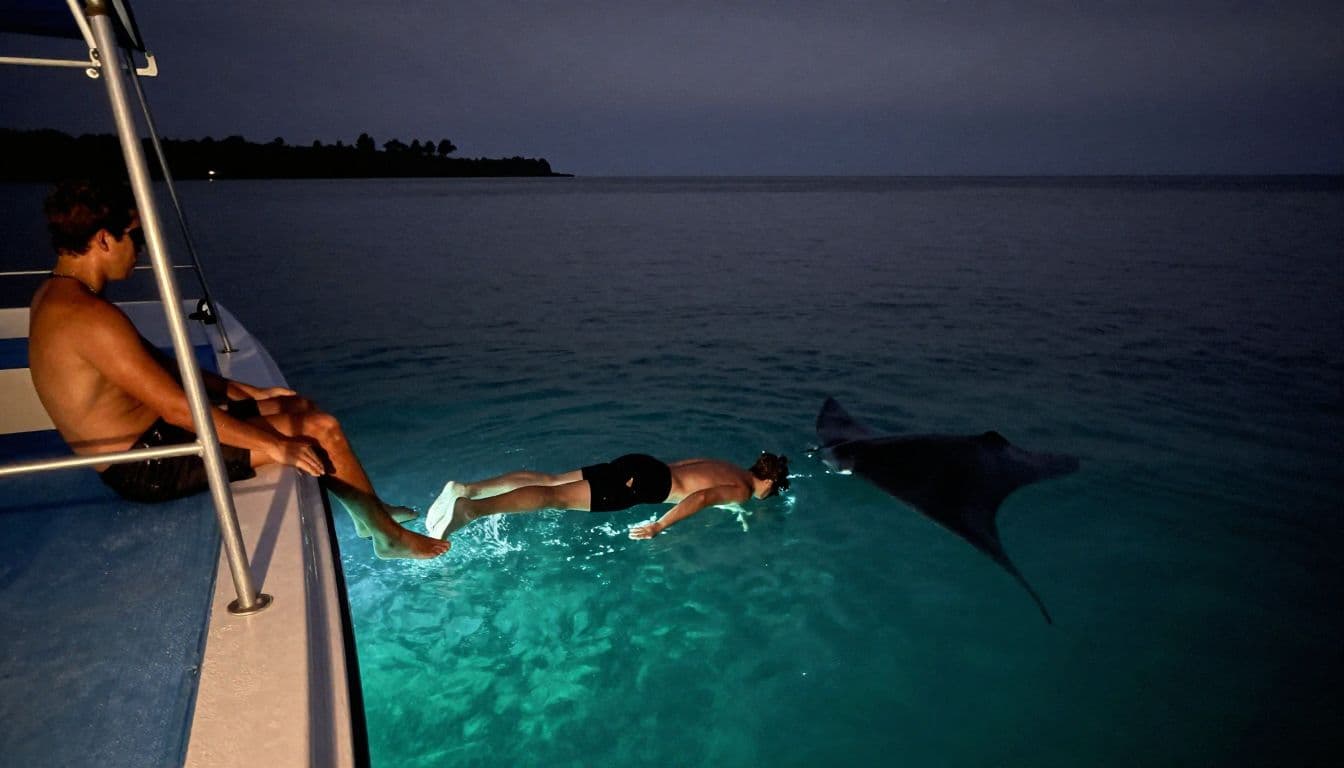
After you surface, don’t swim hard toward the light board. Use short, relaxed strokes and follow the guide’s route. If the crew provides a line or asks you to hold a specific part of the float, keep that position until everyone is ready.
Avoid stopping directly beneath the entry point. The next swimmer needs a clear path, and the boat’s ladder or platform may be difficult to see in low light. Move only as far as the guide instructs, then wait.
A low splash comes from controlled movement, not from holding your breath or moving in slow motion. Breathe normally, keep your shoulders relaxed, and let the water support you.
Stay Calm Once You’re in the Water
The first minute in the water often feels less comfortable than the rest of the tour. Your eyes adjust to the dark, your ears hear water instead of conversation, and the light board may look farther away than it is.
Keep your face in the water only when your mask feels secure. If the mask leaks, lift your head, signal the guide, and fix it before continuing. Trying to adjust a leaking mask while swimming can make you swallow water or drift into another guest.
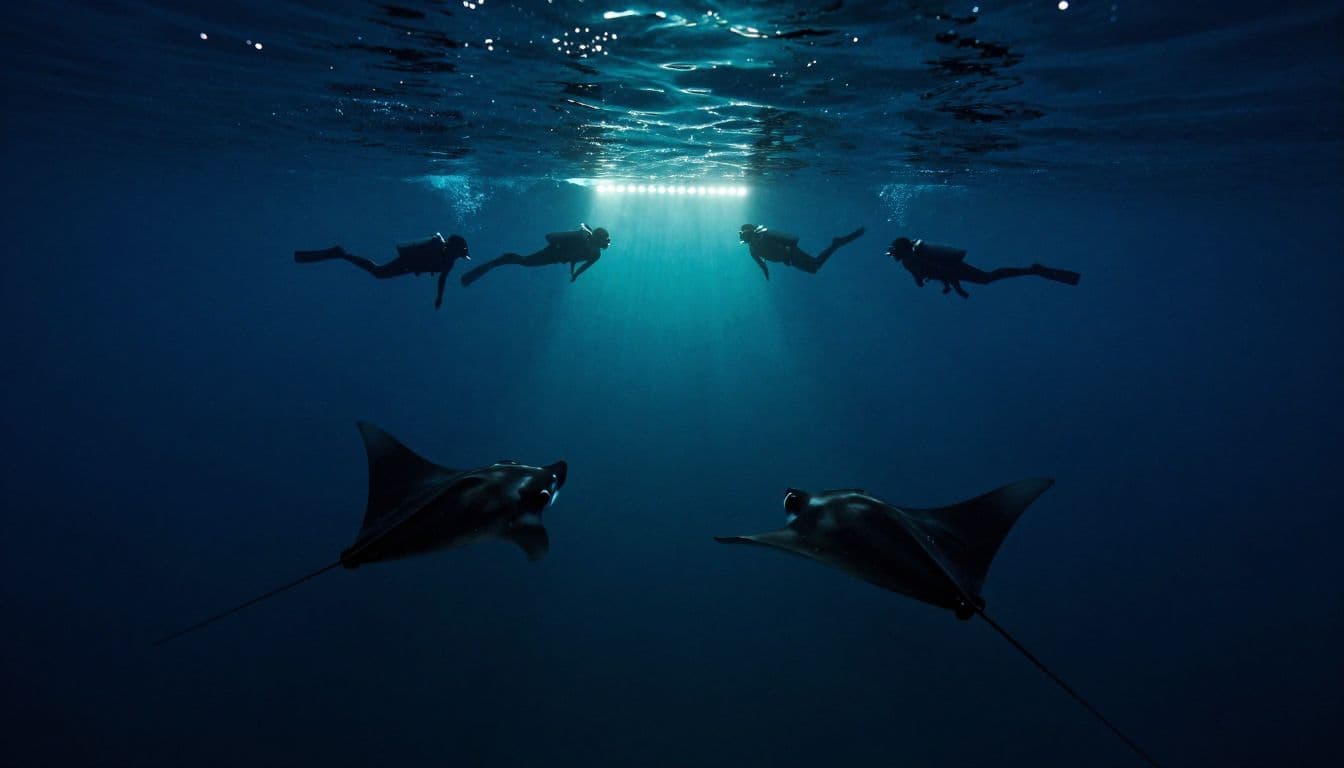
When you reach the viewing area, keep your body horizontal. Let your legs trail behind you, and use small fin movements only when you need to change position. Avoid vertical kicking because it creates splashes and can place your feet close to a manta ray below.
The rays may pass directly beneath the board, then disappear into darker water before returning. You don’t need to follow them. Stay in your assigned area and let the animals choose their path.
NOAA’s manta ray viewing guidance supports a respectful approach to wildlife encounters. Keep your hands to yourself, avoid chasing, and give the animals room to move naturally.
If a ray turns toward you, stay still and let it pass. Don’t reach down, grab a wingtip, or move your camera into its path. Even a gentle touch can remove protective mucus from the animal’s skin and alter its behavior.
Your breathing also affects the experience. Slow, regular breaths help you float without constant kicking. They make it easier to hear the guide and respond to signals.
During a manta ray night snorkel, you may feel tempted to move closer when a ray passes underneath. Resist that impulse. The viewing board already gives you a useful position, and the animal needs open water around its wings.
The NOAA reef manta ray document provides additional information about responsible encounters. Read it if you want to understand why distance and predictable movement matter during wildlife viewing.
What to Do If Your Entry Feels Awkward
Even with preparation, your first attempt may create more splash than you wanted. That doesn’t ruin the experience. Pause, breathe, and let the guide help you reset.
If your mask leaks, keep your face above water and signal for assistance. Don’t remove the mask while you swim toward the light board. A guide can help you reseat the skirt or adjust the strap.
A flooded snorkel can feel alarming, especially at night. Lift your head, breathe through your mouth if needed, and signal the guide. If you’ve practiced clearing a snorkel, use the method your guide taught you. Otherwise, ask for help.
Should a fin slip off, stop kicking and tell the crew. Swimming after a loose fin can make you tired quickly and increase your distance from the group.
Feeling nervous is also a valid reason to pause. You can hold approved flotation support, stay beside the guide, or return to the boat. Tell the crew before anxiety becomes difficult to manage.
When you snorkel Big Island waters after sunset, you need enough swimming ability to stay comfortable without depending on the boat. Kona Snorkel Trips lists the ability to swim 50 yards without additional flotation and prior snorkeling experience among the requirements for its manta trip.
People with regular back or neck problems, expectant mothers, and guests who cannot swim independently should discuss restrictions before booking. A night ocean tour isn’t the right fit for every traveler, and an honest conversation protects you and the crew.
Choose a Tour That Supports a Controlled Entry
A good operator makes the entry plan clear before you leave the harbor. Look for a crew that explains the water access point, checks equipment, limits crowding, and keeps a trained guide close to the swimmers.
Kona Snorkel Trips uses a small-group format rather than an impersonal high-volume approach. Its guides combine safety instruction with information about manta behavior, reef conditions, and responsible ocean travel. The company also uses custom lighted boards that give guests a stable place to gather at the surface.
If you prefer a slower pace or want the boat reserved for your group, consider a private Kona snorkeling charter. A private trip doesn’t remove the swimming requirements, but it can give families and couples more room for questions and equipment adjustments.
You can also build confidence during a daytime trip before trying a night encounter. A Kealakekua Bay snorkeling tour lets you practice mask fitting, fin movement, surface breathing, and boat etiquette in daylight. Those skills help, although nighttime swimming still requires comfort in open water.
When comparing snorkeling Big Island Hawaii tours, check these details before paying:
- The minimum swimming and snorkeling requirements.
- The number of guests in the group.
- The guide’s safety credentials and water supervision plan.
- The type of entry used by the boat.
- The equipment included in the reservation.
- The departure harbor and expected time on the water.
Kona Snorkel Trips’ manta tour is designed for guests who can swim independently and follow guide instructions. If that matches your experience, you can check availability for a Kona Snorkel Trips ocean adventure.
Before choosing a manta departure, you can also check availability for the dedicated night snorkeling option.
Conclusion
A quiet entry comes down to preparation and control. Check your gear before reaching the boat’s edge, sit before you turn, lower yourself feet-first, and pause at the surface before swimming toward the light board.
Once you’re in the water, let the guide set the pace. Stay calm, keep your movements small, and give each manta ray room to pass naturally. That approach helps you enjoy the encounter with greater comfort and respect for the animals that make Kona’s night water so special.