
Water Visibility on a Manta Ray Night Snorkel
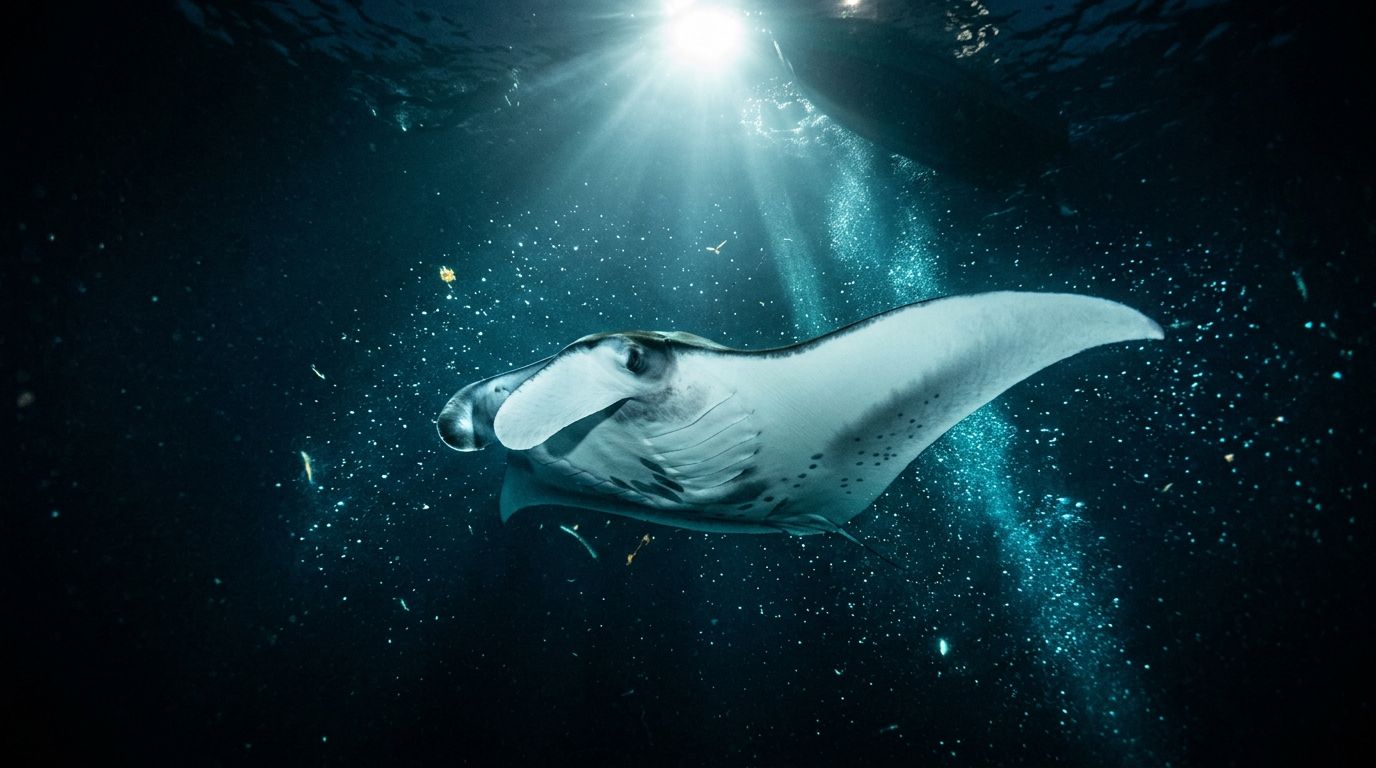
At night, a manta ray can appear as a pale shape, then vanish when it leaves the beam. That shifting view is why a manta ray night snorkel depends as much on water visibility as on the animals themselves.
When you plan a nighttime ocean adventure, clear water can give you long views of approaching rays. Hazy water can make each encounter feel closer, while rough surface conditions may affect comfort and safety. Understanding those changes helps you choose a tour, prepare your gear, and set realistic expectations before entering the water.
What Water Visibility Means After Sunset
Water visibility describes how far you can see through the ocean. During the day, sunlight spreads through the water and gives you a broad view. At night, your sight depends almost entirely on artificial lights carried by the boat, guides, or floating light boards.
That difference matters. Even when the water is reasonably clear, you won’t see the entire ocean around you. You see a bright, limited area where the light reaches. Beyond that zone, the water becomes dark.
A light beam also reveals particles suspended in the water. Tiny pieces of plankton, sand, and organic matter can scatter the light and create a faint haze. Stronger beams don’t always solve the problem. More light can sometimes make the particles more noticeable, much like headlights show fog on a dark road.
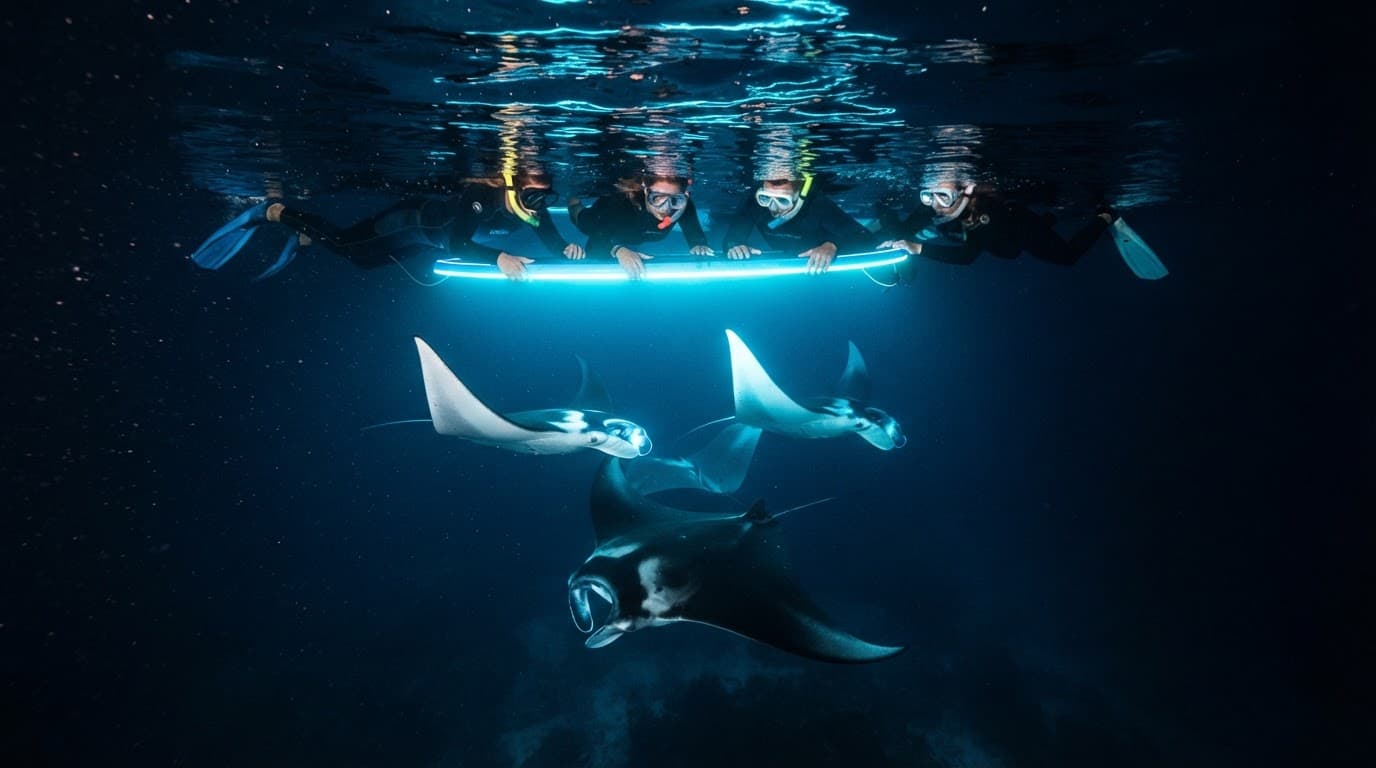
Visibility and contrast are different
You may still see a manta ray in hazy water if the animal passes close to the light. However, the ray’s outline will have less contrast against the surrounding water. Its wings may blend into the blue-gray background until it turns or passes through a brighter section.
Clear water gives you more time to notice movement. You might spot a manta approaching from below, watch its full turn, and see it continue beyond the lighted area. With lower visibility, the encounter often feels more sudden.
Your mask also affects the view. A fogged lens, salt residue, or water inside the mask can reduce clarity before you even enter the ocean. Good preparation helps you make the most of whatever conditions the sea provides.
How Water Visibility Changes a Manta Ray Night Snorkel
A clear night can make a manta ray night snorkel feel spacious. You can often follow the animal’s full body as it glides through the light. The broad cephalic fins near its mouth become easier to see, and you have more time to keep your body still as the ray approaches.
Several rays may also be easier to track when visibility is high. One manta can circle below you while another passes across the edge of the light. That wider view helps you understand the movement around the group instead of focusing on one animal at a time.
Moderate haze changes the rhythm. A manta may appear only when it reaches the strongest part of the light. It can seem to materialize from the darkness, sweep beneath you, and disappear within seconds. You may see less of the surrounding reef, but the close approach can feel more immediate.
Heavy haze limits distance and detail. You might see a wingtip before recognizing the full animal. Guides may ask you to stay closer together, adjust the viewing position, or wait for a better area. If poor visibility comes with strong wind, surge, or unsafe surface conditions, the crew may change the plan.
A cloudy water column can shorten your view without ending the encounter. The most important question is whether the conditions remain safe and comfortable for the group.
Your position also changes what you see. Looking directly into a light can produce glare and reduce contrast. Keeping your face angled toward the illuminated water usually gives you a better view than staring at the light source itself.
Why Plankton Can Reduce Clarity and Attract Mantas
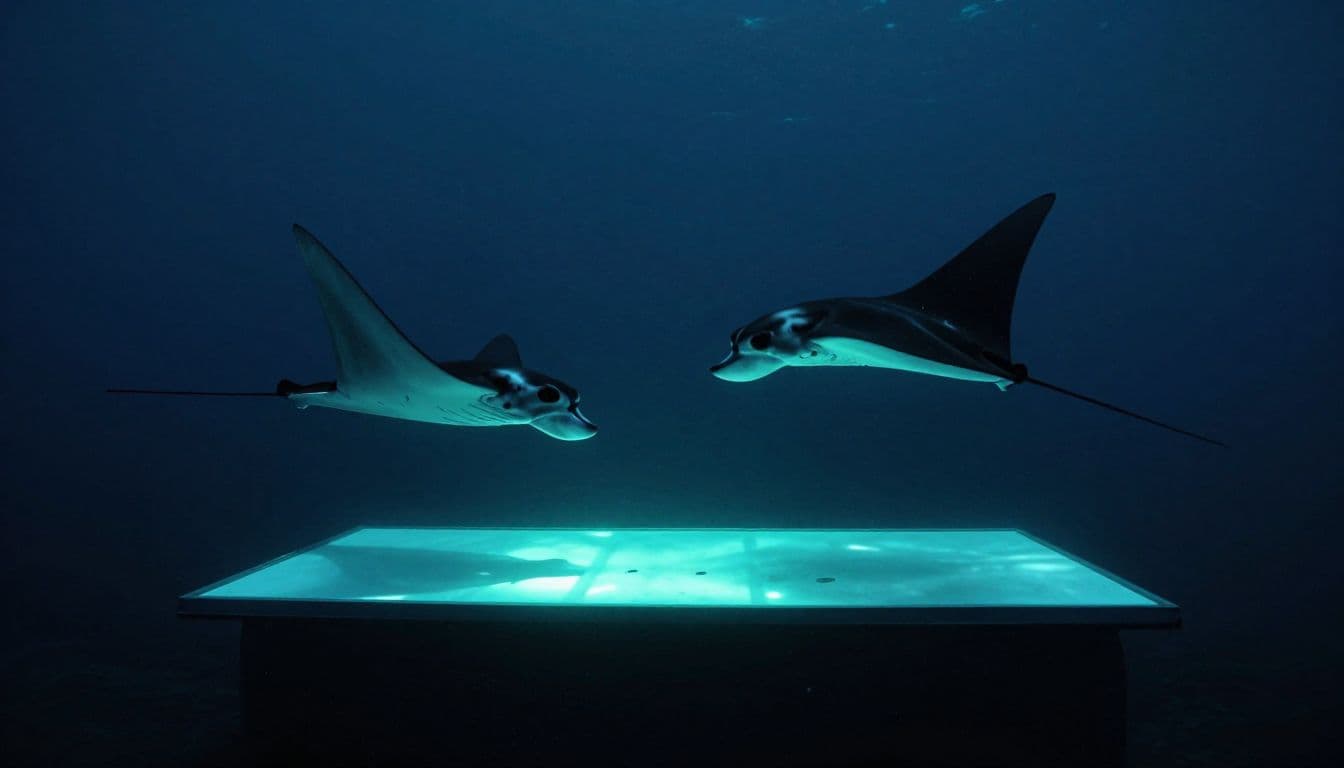
Manta rays feed on plankton, so the conditions that bring food into the area can also make the water look less clear. Artificial lights attract small organisms toward the surface. Mantas follow that food source and use the illuminated area to feed.
This creates a natural tradeoff. More plankton near the light can support active feeding, while the same particles can scatter light and limit your view. A slightly hazy night doesn’t automatically mean poor manta activity.
Water movement affects the pattern as well. Currents can spread plankton across a larger area or gather it near the light. When the food moves, the mantas may change direction, circle wider, or make repeated passes through the brightest zone.
You may notice that one side of the light looks clearer than another. The crew can use that difference when positioning guests. A small change in angle may improve your view without changing the entire location.
The amount of plankton is only one part of the decision. Wind, waves, current strength, recent rain, and the condition of the surface all matter. A guide has to consider the complete setting rather than judge the trip by visibility alone.
For that reason, a clear afternoon doesn’t guarantee identical conditions after dark. The ocean can change between sunset and the time you enter the water. Your guide checks those conditions in real time and explains what they mean for the evening.
How Guides Adjust the Experience
A professional crew can improve your view by controlling the details within its reach. Guides may manage spacing between swimmers, direct attention toward the strongest lighted area, and remind guests to keep their bodies calm near feeding mantas.
Small groups help because fewer people compete for the same viewing space. You can hear instructions more easily, move with less contact, and maintain a better line of sight. A calm group also creates less turbulence near the surface.
Kona Snorkel Trips follows a “Reef to Rays” philosophy that combines guided ocean experiences with reef-safe practices. Its Lifeguard Certified guides provide a safety briefing, high-quality snorkeling gear, and a small-group setting. The company also uses custom-built lighted boards for nighttime manta encounters.
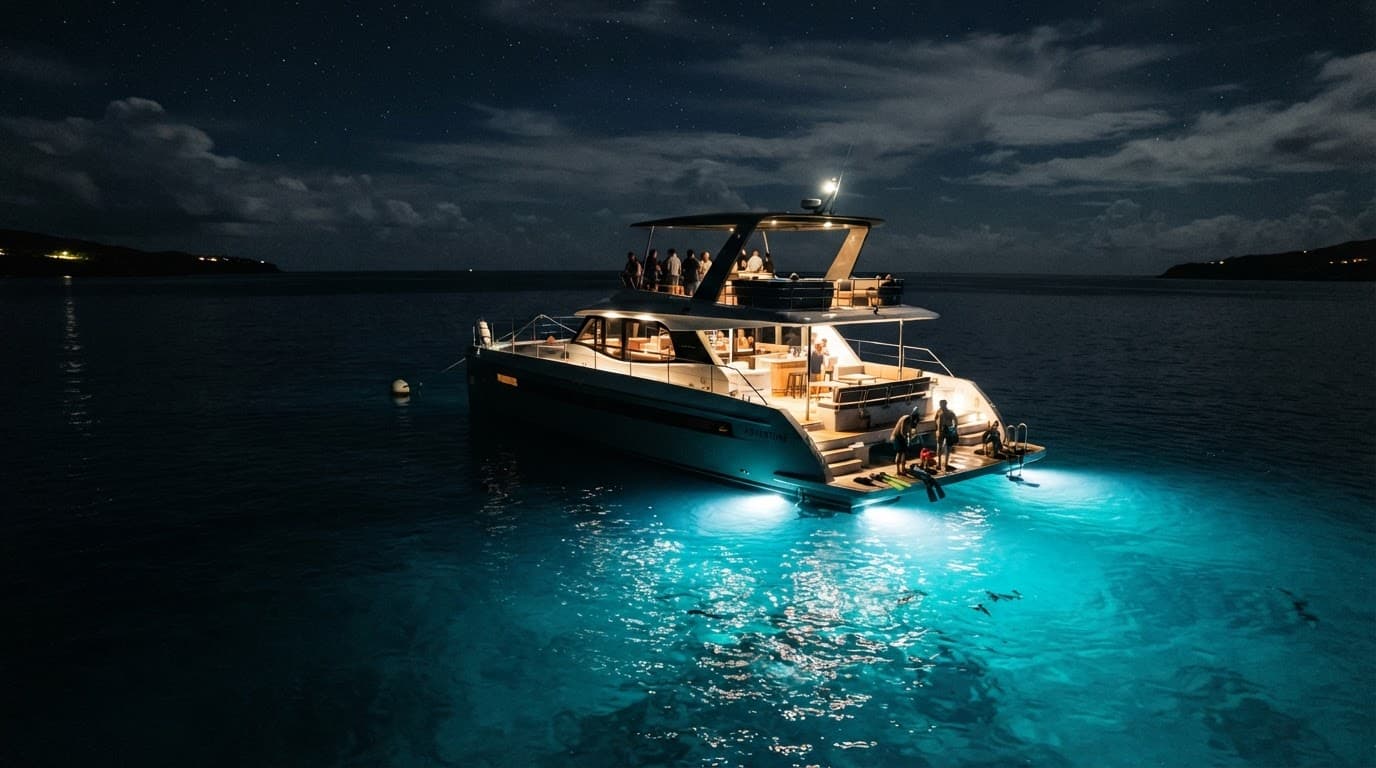
The operation departs from Honokohau Marina, between downtown Kona and the airport. Its own dock makes boarding easier than using a crowded public launch area. A shaded harbor area gives you space for the briefing before the boat leaves.
You can review the company’s Big Island snorkeling tours before choosing an outing. For the manta experience itself, the manta ray night snorkel Kona page lists the swimming requirements and tour details.
If you are comparing local operators, Manta Ray Night Snorkel is another company focused on nighttime manta encounters. Compare departure details, swimming requirements, group setup, and cancellation policies before you book.
The tour page for Kona Snorkel Trips lists the ability to swim 50 yards without additional flotation and prior snorkeling experience. Review those requirements for every person in your group. A calm surface can still require steady swimming and comfort in open water.
After you confirm that everyone meets the requirements, you can check availability for a Kona Snorkel Trips ocean adventure.
What You Can Do to Improve Your View
You can’t control the ocean, but you can remove several common problems before they affect your night snorkel.
Start with your mask. A clean, well-fitted mask gives you a wider and sharper view. Ask the crew about anti-fog preparation, and avoid touching the inside of the lens once it is ready. Fingerprints and sunscreen residue can create a soft blur around lights.
Arrive prepared to follow the safety briefing. Guides may explain where to hold the board, how to keep your fins away from other swimmers, and how to respond when a manta approaches. Those instructions protect both your view and the animals’ space.
In the water, keep your movements slow. Large kicks stir the surface and make it harder for people behind you to see. They can also create unnecessary turbulence near a manta that is feeding.
A few habits make a noticeable difference:
- Keep your face in the water when the guide directs you toward the lighted area, rather than lifting your head after every movement.
- Look slightly past the brightest point if glare makes the water look washed out.
- Stay within the assigned area so you don’t drift into another swimmer’s sightline.
- Let the manta choose its path, and never reach toward, chase, or block an approaching animal.
- Tell the guide if your mask leaks, fogs, or feels uncomfortable before the problem distracts you.
Buoyancy also affects visibility. If you spend the evening trying to stay upright, you’ll miss more of the action. Practice floating calmly before the trip if you haven’t snorkeled recently.
The best view usually comes when you relax without becoming passive. Listen for instructions, keep your breathing steady, and let the light reveal the manta instead of searching wildly through the dark.
Questions to Ask Before Booking
A few direct questions can help you understand how a company handles changing visibility. Ask whether the crew provides a same-day conditions update, what happens if the sea becomes unsafe, and whether the tour has specific swimming requirements.
You can also ask about the viewing setup. Does the group use a floating light board? How many guests typically enter the water? Will a Lifeguard Certified guide remain in the water with the group?
Families should confirm requirements for every swimmer, including anyone who feels nervous in open water. Couples and solo travelers may also want to ask about group size and how the crew keeps guests together after dark.
Look at the departure location as well. Honokohau Marina is convenient for travelers staying near Kailua-Kona or the airport. Easy boarding can make the evening less stressful, especially when you need time to organize masks, towels, and personal items.
If you are researching snorkeling Big Island Hawaii experiences, don’t judge a tour by underwater photos alone. Images usually show the clearest moments under ideal lighting. Read the safety information and ask how the crew responds when visibility changes.
Book with enough flexibility to accept a weather-related change. A responsible operator may delay, relocate, or cancel an outing when conditions create a risk. That decision protects guests and keeps pressure away from the animals.
Once you know the requirements and policies, you can check availability for a manta ray night snorkeling tour with Kona Snorkel Trips.
Daytime Reef Visibility Gives You a Useful Comparison
Nighttime conditions feel different when you have spent the day snorkeling in bright, shallow water. Sunlight lets you see reef texture, fish colors, and the shape of the seafloor across a much larger area.
For snorkeling Big Island reefs, Kealakekua Bay offers a useful daytime contrast. The bay is a marine sanctuary with the historic Captain Cook Monument, and daylight gives you a broader view of the underwater environment. You can compare that open, colorful perspective with the focused light zone of a manta encounter.
The difference doesn’t make one experience better than the other. Daytime snorkeling rewards slow observation across the reef. A night manta trip concentrates your attention on movement above and below the light.
If you want to snorkel Big Island waters on more than one day, spacing these experiences apart can help you notice how strongly light changes your perception. You may see more distant detail during the day, then feel closer to wildlife after dark because the light limits your field of view.
Kona Snorkel Trips offers a Captain Cook snorkel tour for travelers who want to visit Kealakekua Bay by boat. The tour page includes information about equipment, guides, marine life, and the historic site.
That daytime trip can also give you a better sense of how your mask fits, how comfortable you feel in open water, and how well you follow a guide’s instructions before you enter the ocean at night.
The Right Expectation for Changing Conditions
A manta ray night snorkel is a guided wildlife experience, not a fixed underwater show. Water visibility may change during the evening, and the animals decide how they move through the light.
Clear water can give you long views and better detail. Hazy water can shorten the distance but create sudden, close passes. When plankton gathers near the surface, feeding activity may remain strong even though the water looks less transparent.
Your role is simple. Prepare your mask, follow the briefing, stay calm, and give the mantas room. Then choose a company that treats safety, small-group service, and reef protection as part of the experience.
When you understand how light and water work together, a brief shape in the darkness becomes easier to appreciate. The most memorable sight may be the manta you see clearly, or the one that appears for a moment and disappears into the blue.